
www globe gov Student Collection Reporting and Analysis
www. globe. gov Student Collection, Reporting, and Analysis of GLOBE Data Sandra Henderson, Chief Educator GLOBE Ed Geary, DLESE Community Services and GLOBE University Corporation for Atmospheric Research Boulder, CO
Presentation Overview § Overview of GLOBE § GLOBE Student Data § Lessons Learned § GLOBE in the next 10 years § Promoting Inquiry
Presentation Overview § Overview of GLOBE § GLOBE Student Data Collection, Reporting, and Analysis § Lessons Learned § GLOBE in the next 10 years § Promoting Inquiry
But first, a Pop Quiz…. .
Problem: Pop Quiz…. . • You have two buckets to take to Lake Breckenridge – 5 liter container – 3 liter container • You need to bring back exactly 4 liters of water in the 5 liter bucket Work with a partner to solve this problem
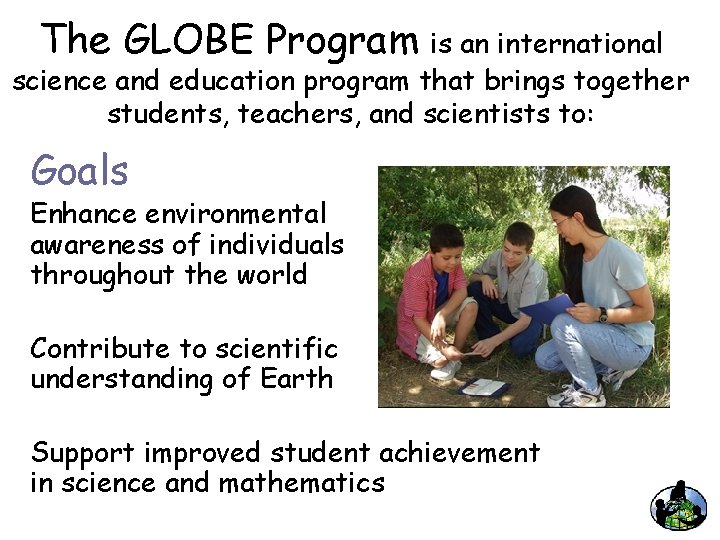
The GLOBE Program is an international science and education program that brings together students, teachers, and scientists to: Goals Enhance environmental awareness of individuals throughout the world Contribute to scientific understanding of Earth Support improved student achievement in science and mathematics
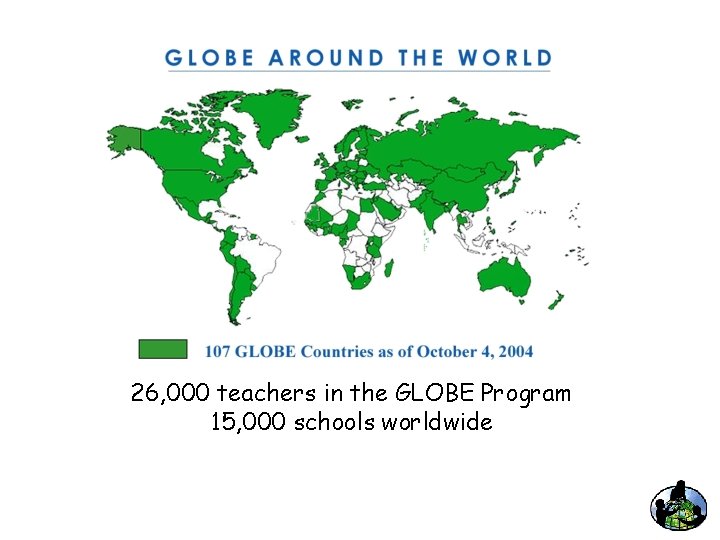
26, 000 teachers in the GLOBE Program 15, 000 schools worldwide
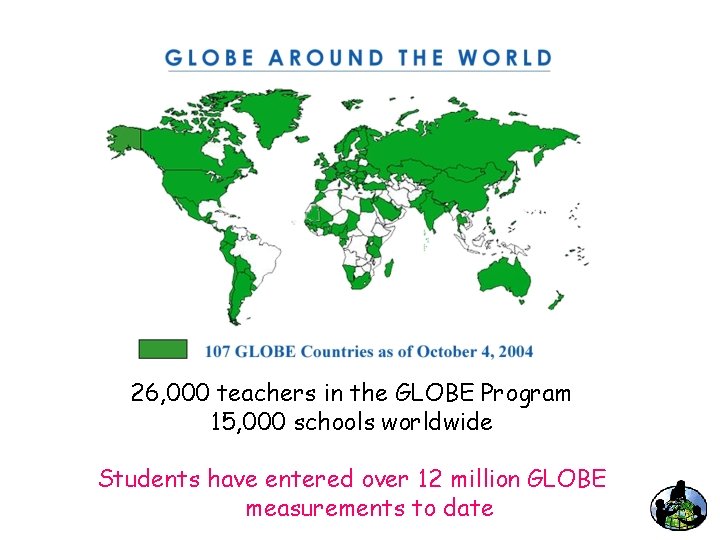
26, 000 teachers in the GLOBE Program 15, 000 schools worldwide Students have entered over 12 million GLOBE measurements to date
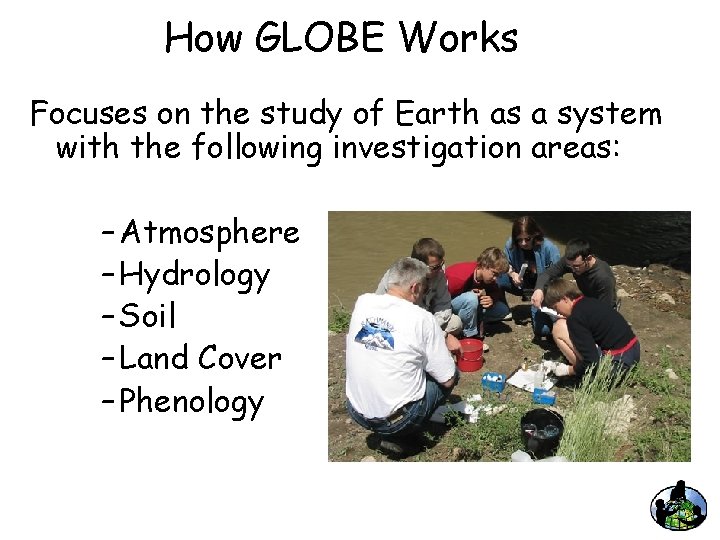
How GLOBE Works Focuses on the study of Earth as a system with the following investigation areas: – Atmosphere – Hydrology – Soil – Land Cover – Phenology
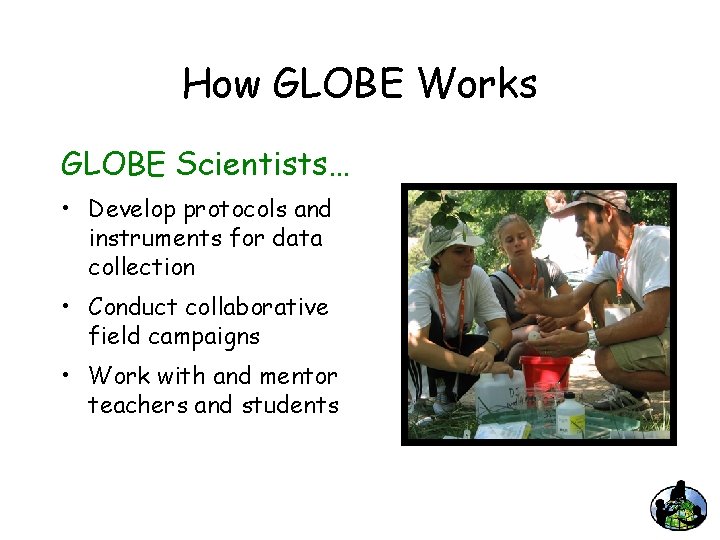
How GLOBE Works GLOBE Scientists… • Develop protocols and instruments for data collection • Conduct collaborative field campaigns • Work with and mentor teachers and students
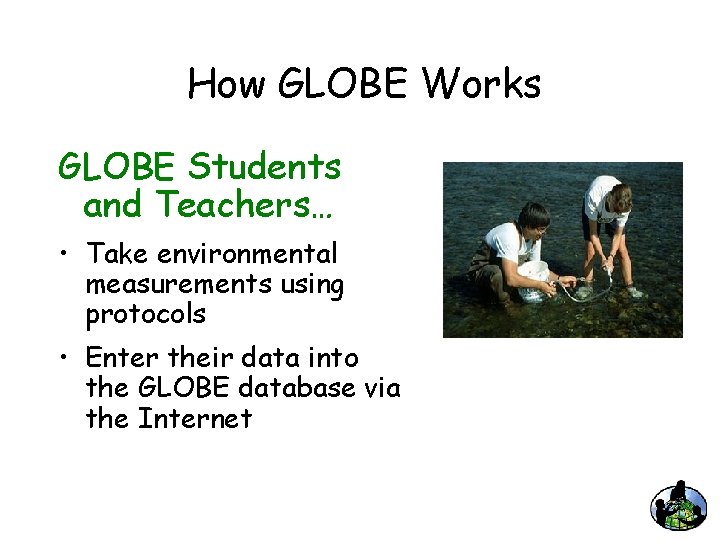
How GLOBE Works GLOBE Students and Teachers… • Take environmental measurements using protocols • Enter their data into the GLOBE database via the Internet
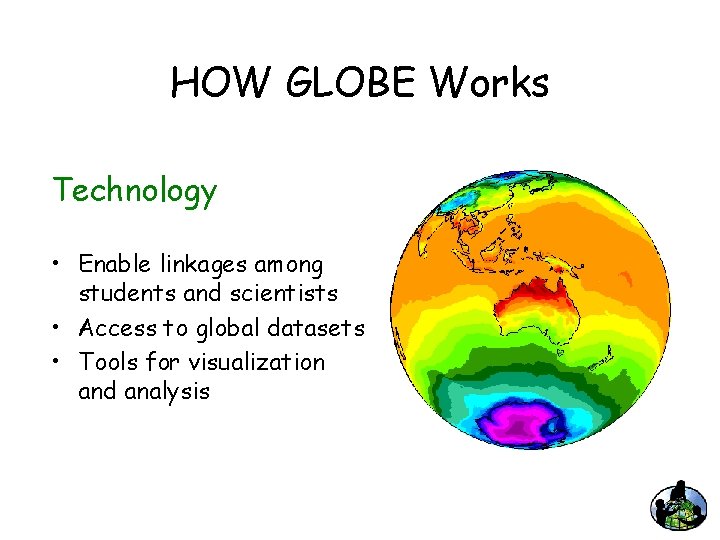
HOW GLOBE Works Technology • Enable linkages among students and scientists • Access to global datasets • Tools for visualization and analysis
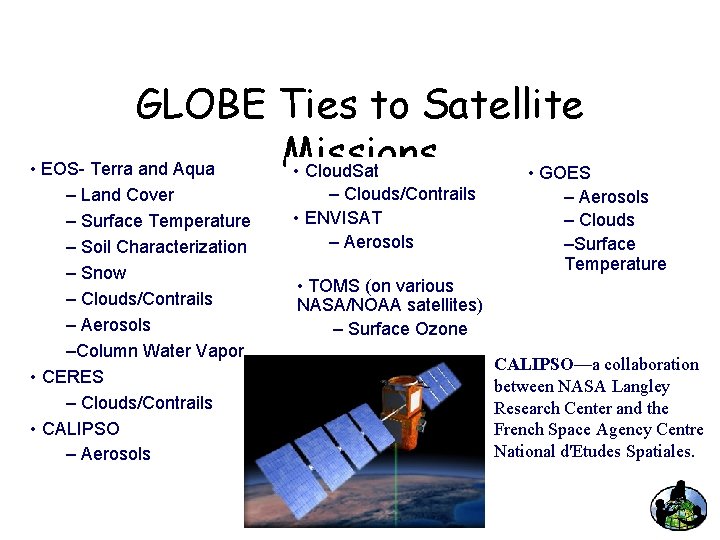
GLOBE Ties to Satellite Missions • EOS- Terra and Aqua • Cloud. Sat • GOES – Land Cover – Surface Temperature – Soil Characterization – Snow – Clouds/Contrails – Aerosols –Column Water Vapor • CERES – Clouds/Contrails • CALIPSO – Aerosols – Clouds/Contrails • ENVISAT – Aerosols – Clouds –Surface Temperature • TOMS (on various NASA/NOAA satellites) – Surface Ozone CALIPSO—a collaboration between NASA Langley Research Center and the French Space Agency Centre National d'Etudes Spatiales.
What is the result of scientists, teachers, and students and technology working together? 12 million student generated data in a global data base
GLOBE DATA (need to address quality control issues/concerns) • How is this data used? • Publish the results of their work • Study the environment using GLOBE data, maps, and graphs and other GLOBE educational materials
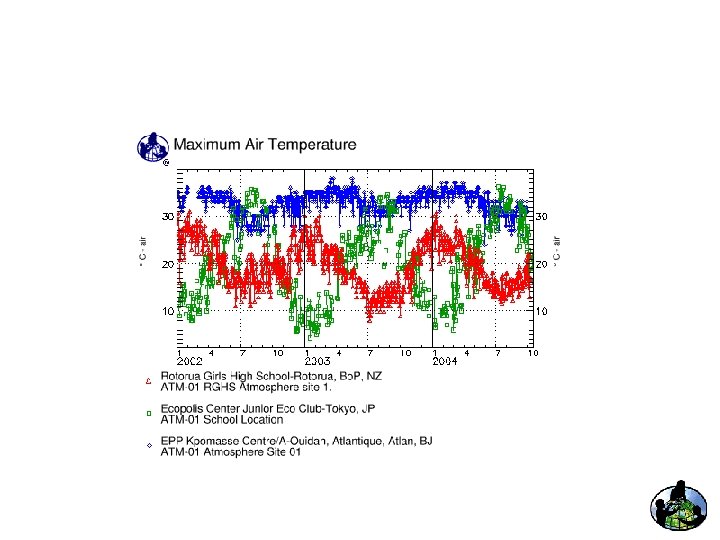
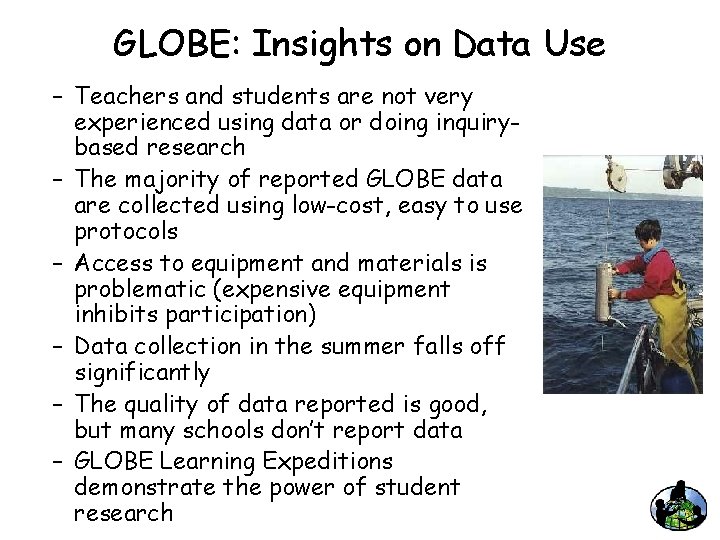
GLOBE: Insights on Data Use – Teachers and students are not very experienced using data or doing inquirybased research – The majority of reported GLOBE data are collected using low-cost, easy to use protocols – Access to equipment and materials is problematic (expensive equipment inhibits participation) – Data collection in the summer falls off significantly – The quality of data reported is good, but many schools don’t report data – GLOBE Learning Expeditions demonstrate the power of student research
What Else is Needed to Promote Data Use? • Professional Development that includes: content enhancement, exposure to exemplary curricula, and experiences doing hands-on, inquiry-based investigations • Professional Development on curriculum integration, finding and using non-GLOBE data, and “how to” lessons on using technology tools and software • Mentoring by scientists and follow-up support by partners to help answer questions and solve problems as needed • Incentives and time for teachers to incorporate research experiences into their classrooms
GLOBE: Lessons Learned • Consider…. – – – 10 years of effort 107 participating countries 26, 000 Teachers trained 12 million measurements……. Evaluation-research data that show GLOBE helps improve student interest and achievement in science, including underrepresented populations…. Yet…. …. . GLOBE is still on the margins of the K-12 curriculum
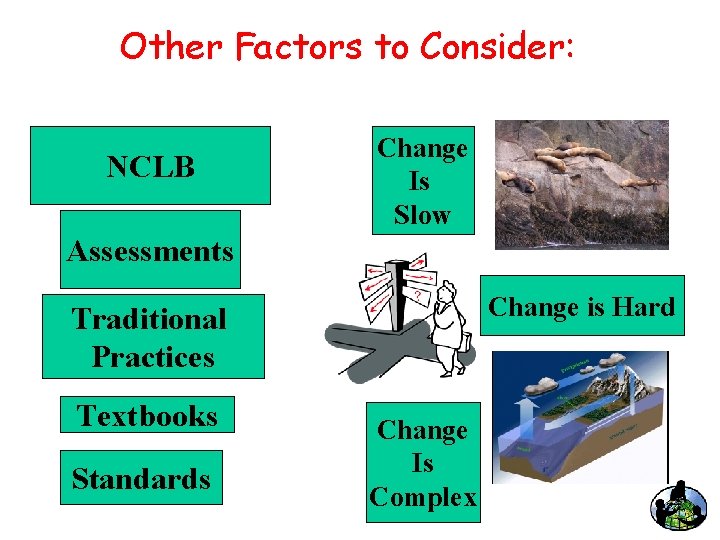
Other Factors to Consider: NCLB Change Is Slow Assessments Change is Hard Traditional Practices Textbooks Standards Change Is Complex
Parting Thoughts • EET Modules can be a great resource for promoting student research and data use • There are numerous opportunities to collaborate for mutual benefit • Don’t forget the constraints of the current education system… but don’t let those constraints hold you back • If you really want to see students do relevant research using real data, join the Revolution in ESSE
Conclusion • Since 1994, a pioneering program in the use of computers and networking technology in science education • Will continue to use appropriate levels of new and existing technology to support student learning • Looking forward to the next 10 years
Never doubt that a small, group of thoughtful, committed citizens can change the world. Indeed, it is the only thing that ever has. Margaret Mead
Never doubt that a small, group of thoughtful, committed geoscientists/educators can change the world. Indeed, it is the only thing that ever has. Margaret Mead
Cloud module? • Five essesntial features of inqiury? ?
- Slides: 25