
www Apushreview com American History Chapter 2 Review
- Slides: 18
www. Apushreview. com
American History: Chapter 2 Review Video Transplantations and Borderlands
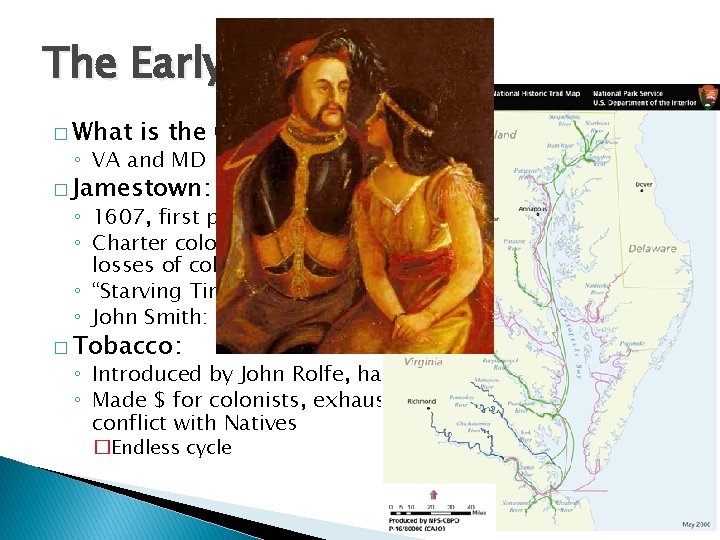
The Early Chesapeake � What is the Chesapeake? ◦ VA and MD � Jamestown: ◦ 1607, first permanent English settlement ◦ Charter colony: group of individuals shared in profits and losses of colony ◦ “Starving Time”: Winter 1609 – 1610, fevers, deaths, etc. ◦ John Smith: helped save colony from starvation � Tobacco: ◦ Introduced by John Rolfe, hated by King James I ◦ Made $ for colonists, exhausted land, led to expansion, conflict with Natives �Endless cycle
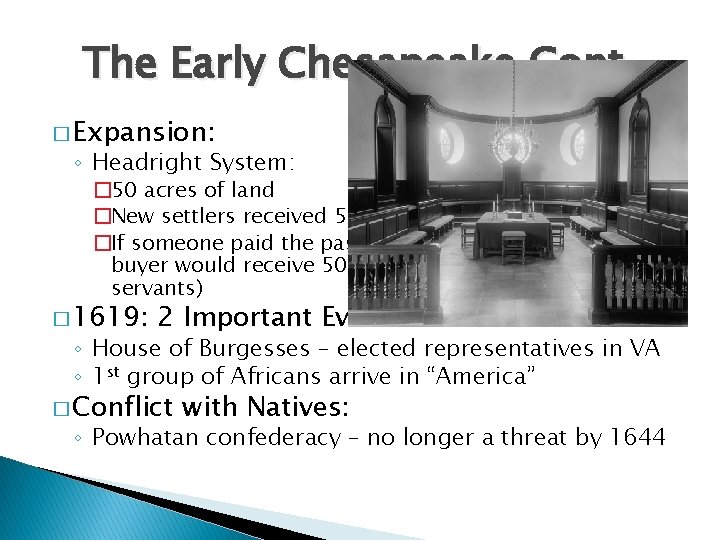
The Early Chesapeake Cont. � Expansion: ◦ Headright System: � 50 acres of land �New settlers received 50 acres of land �If someone paid the passage of an immigrant, the buyer would receive 50 acres (encouraged indentured servants) � 1619: 2 Important Events ◦ House of Burgesses – elected representatives in VA ◦ 1 st group of Africans arrive in “America” � Conflict with Natives: ◦ Powhatan confederacy – no longer a threat by 1644
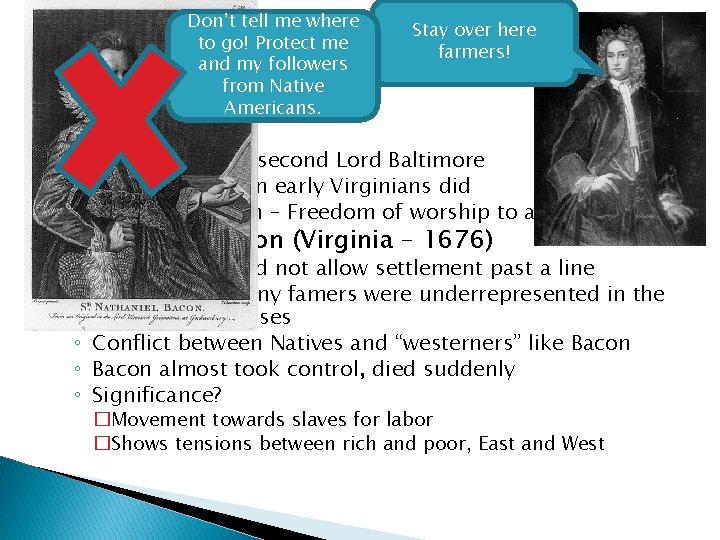
Don’t tell me where to go! Protect me and my followers from Native Americans. Stay over here farmers! The Early Chesapeake Cont. � Maryland: ◦ Founded by the second Lord Baltimore ◦ Fared better than early Virginians did ◦ Act of Toleration – Freedom of worship to all Christians � Bacon’s Rebellion (Virginia – 1676) ◦ Gov. Berkeley did not allow settlement past a line ◦ In the “west” many famers were underrepresented in the House of Burgesses ◦ Conflict between Natives and “westerners” like Bacon ◦ Bacon almost took control, died suddenly ◦ Significance? �Movement towards slaves for labor �Shows tensions between rich and poor, East and West
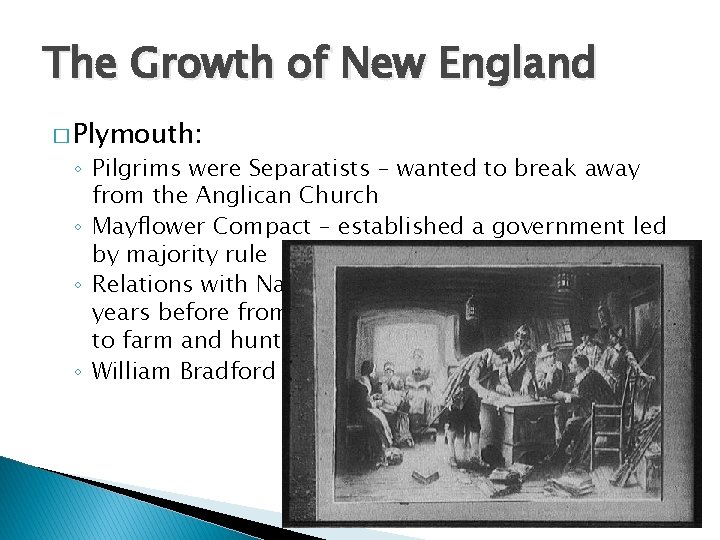
The Growth of New England � Plymouth: ◦ Pilgrims were Separatists – wanted to break away from the Anglican Church ◦ Mayflower Compact – established a government led by majority rule ◦ Relations with Natives – many Natives died a few years before from disease; Natives taught colonists to farm and hunt ◦ William Bradford – governor of Plymouth
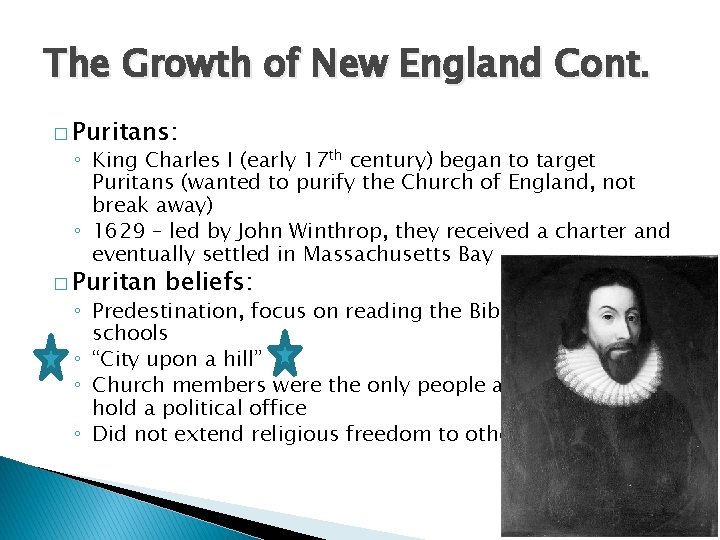
The Growth of New England Cont. � Puritans: ◦ King Charles I (early 17 th century) began to target Puritans (wanted to purify the Church of England, not break away) ◦ 1629 – led by John Winthrop, they received a charter and eventually settled in Massachusetts Bay � Puritan beliefs: ◦ Predestination, focus on reading the Bible – led to schools ◦ “City upon a hill” ◦ Church members were the only people allowed to vote or hold a political office ◦ Did not extend religious freedom to others
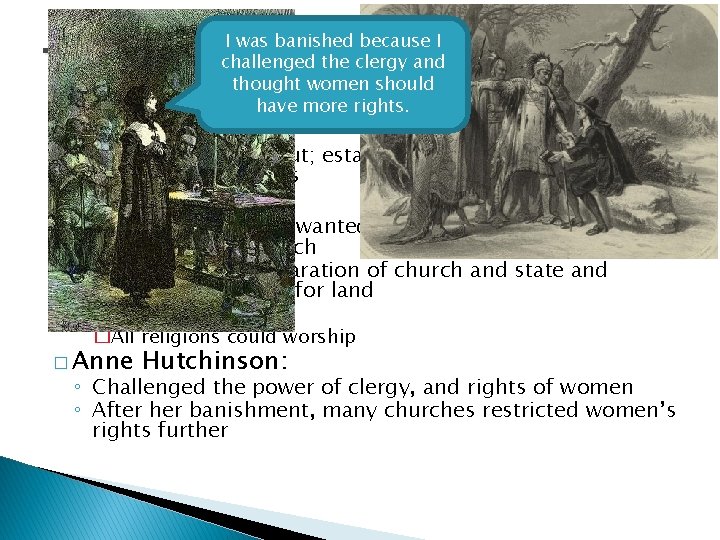
I was banished because I challenged the clergy and thought women should have more rights. The Growth of New England Cont. � Thomas Hooker: ◦ Founded Connecticut; established a constitution, Fundamental Orders � Roger Williams ◦ Extreme Separatist, wanted MBC to completely break away from the Church ◦ Also advocated separation of church and state and payment to Natives for land ◦ Banished to RI �All religions could worship � Anne Hutchinson: ◦ Challenged the power of clergy, and rights of women ◦ After her banishment, many churches restricted women’s rights further
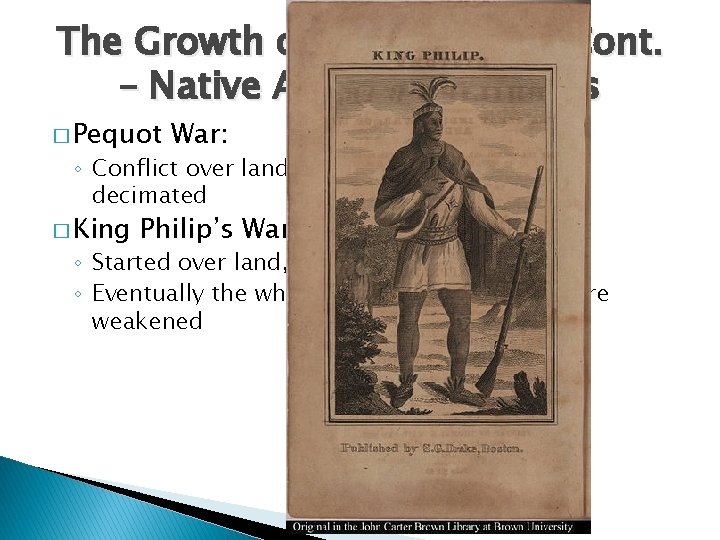
The Growth of New England Cont. – Native American Conflcts � Pequot War: ◦ Conflict over land trade, Peqouts were decimated � King Philip’s War: ◦ Started over land, lasted several years ◦ Eventually the whites won, Wampanoag’s were weakened
The Restoration Colonies � Carolina: ◦ Similar to MD, headright system, religious toleration to all Christians ◦ North: poorer farmers, isolated ◦ South: wealthy plantations, aristocratic, trade with Barbados -> slavery � NY: originally belonged to the Dutch, various groups, some religious toleration and local governments � NJ: Was a proprietor colony, becomes a royal one ◦ Most citizens were small farmers
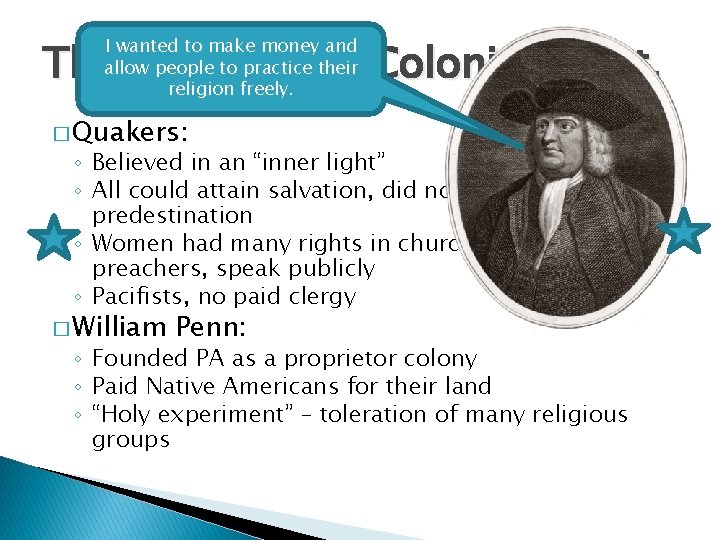
The Restoration Colonies Cont. I wanted to make money and allow people to practice their religion freely. � Quakers: ◦ Believed in an “inner light” ◦ All could attain salvation, did not favor predestination ◦ Women had many rights in church – could become preachers, speak publicly ◦ Pacifists, no paid clergy � William Penn: ◦ Founded PA as a proprietor colony ◦ Paid Native Americans for their land ◦ “Holy experiment” – toleration of many religious groups
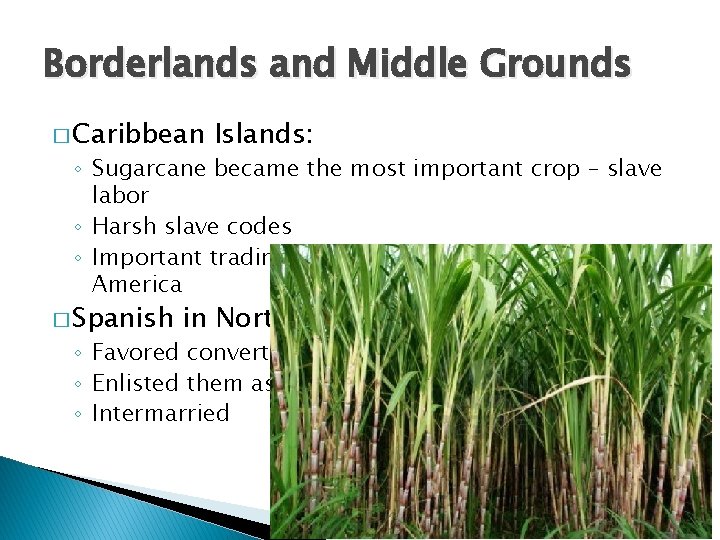
Borderlands and Middle Grounds � Caribbean Islands: ◦ Sugarcane became the most important crop – slave labor ◦ Harsh slave codes ◦ Important trading partner with British North America � Spanish in North America: ◦ Favored converting Natives to Christianity ◦ Enlisted them as trading partners ◦ Intermarried
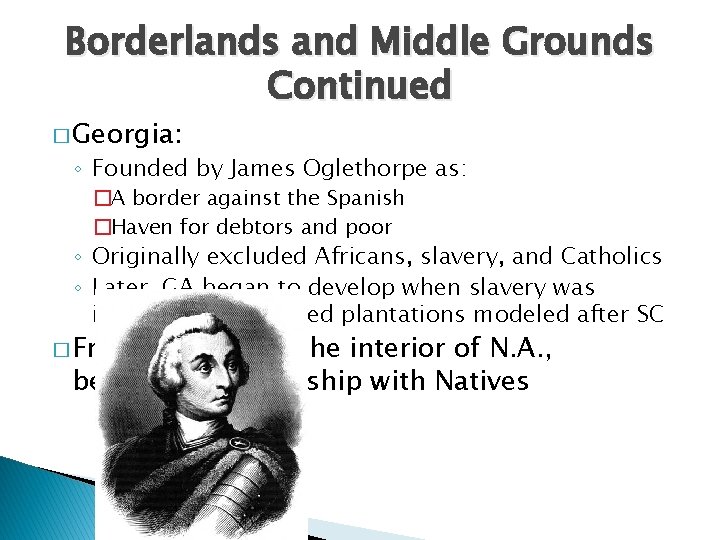
Borderlands and Middle Grounds Continued � Georgia: ◦ Founded by James Oglethorpe as: �A border against the Spanish �Haven for debtors and poor ◦ Originally excluded Africans, slavery, and Catholics ◦ Later, GA began to develop when slavery was introduced, instituted plantations modeled after SC � French settled in the interior of N. A. , beneficial relationship with Natives
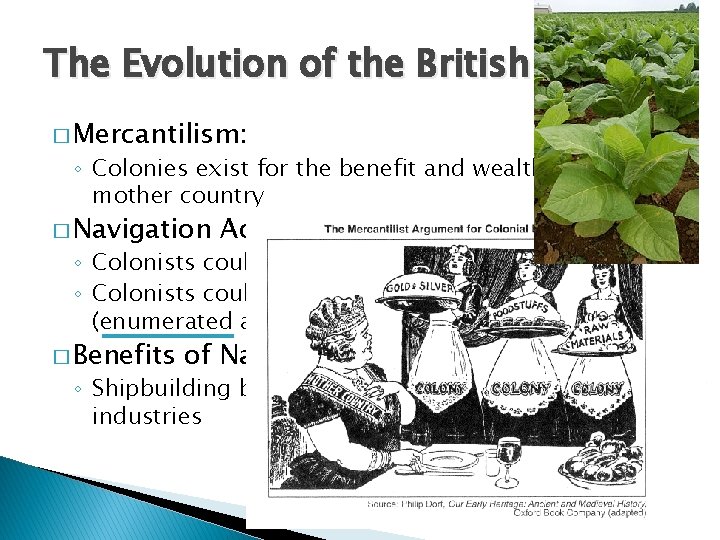
The Evolution of the British Empire � Mercantilism: ◦ Colonies exist for the benefit and wealth of the mother country � Navigation Acts: ◦ Colonists could only trade with England ◦ Colonists could only ship certain goods (enumerated articles) to England - tobacco � Benefits of Navigation Acts on colonies? ◦ Shipbuilding blossomed, growth of lumber and iron industries
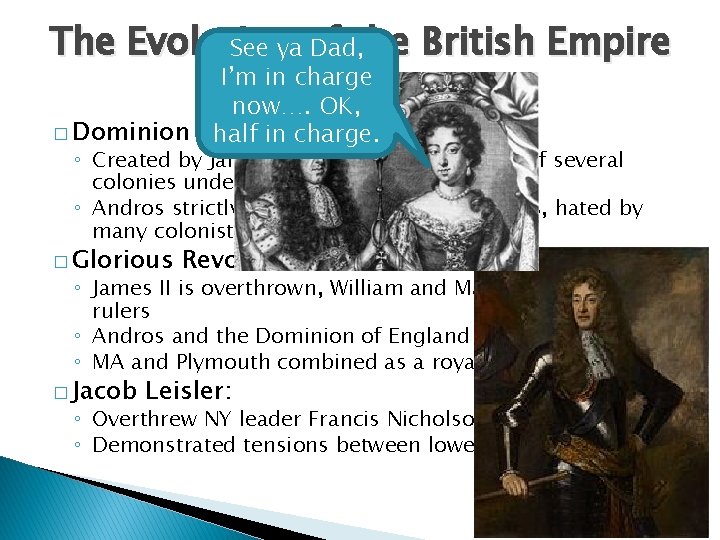
The Evolution See ya of Dad, the British Empire I’m in charge Cont. now…. OK, � Dominion ofhalf England: in charge. ◦ Created by James II, combined the control of several colonies under Sir Edmund Andros ◦ Andros strictly enforced the Navigation Acts, hated by many colonists � Glorious Revolution: ◦ James II is overthrown, William and Mary installed as joint rulers ◦ Andros and the Dominion of England were overthrown ◦ MA and Plymouth combined as a royal colony � Jacob Leisler: ◦ Overthrew NY leader Francis Nicholson ◦ Demonstrated tensions between lower class and wealthy
The Evolution of the British Empire Cont. � Impact of Glorious Revolution? ◦ Colonists successfully resisted some English policies ◦ Strengthened their belief that England should consider their views
Past Essay Topics � Compare and contrast the ways in which economic development affected politics in Massachusetts and Virginia in the period from 1607 to 1750. (2005) � In what ways did ideas and values held by Puritans influence the political, economic, and social development of the New England colonies from 1630 through the 1660 s? (DBQ, 2010)
That’s it! �Subscribe to my channel �Help spread the word � Questions? Comments? Ideas for videos? ◦ Leave in comments Subsc r Down ibe here! If only I subscribed, I might not have been overthrown….