
WWII The U S at War Pearl Harbor
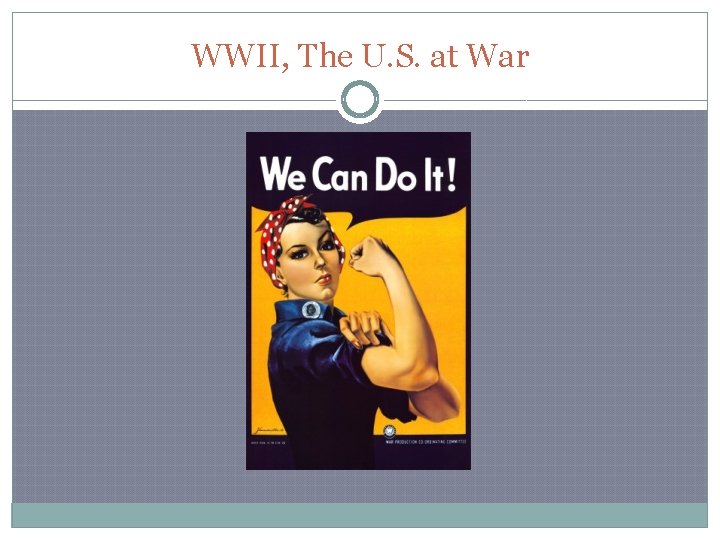
WWII, The U. S. at War
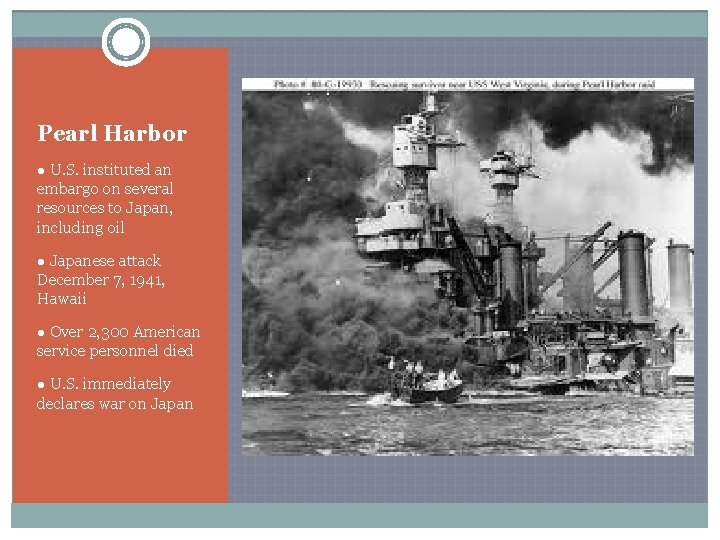
Pearl Harbor ● U. S. instituted an embargo on several resources to Japan, including oil ● Japanese attack December 7, 1941, Hawaii ● Over 2, 300 American service personnel died ● U. S. immediately declares war on Japan
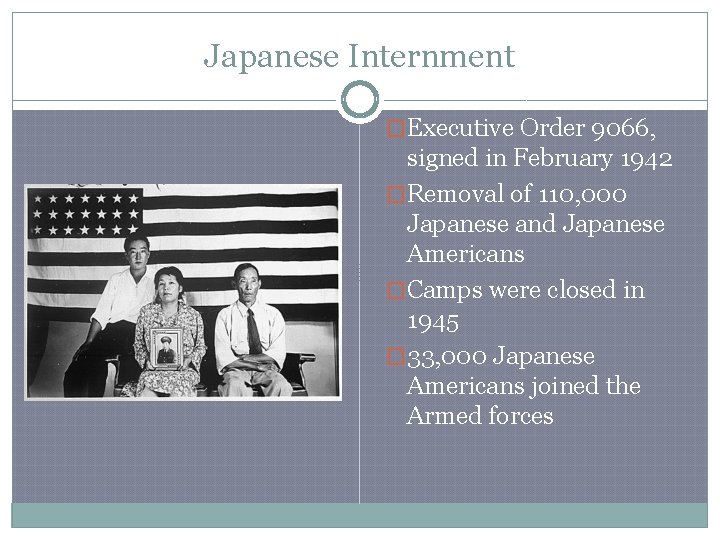
Japanese Internment �Executive Order 9066, signed in February 1942 �Removal of 110, 000 Japanese and Japanese Americans �Camps were closed in 1945 � 33, 000 Japanese Americans joined the Armed forces
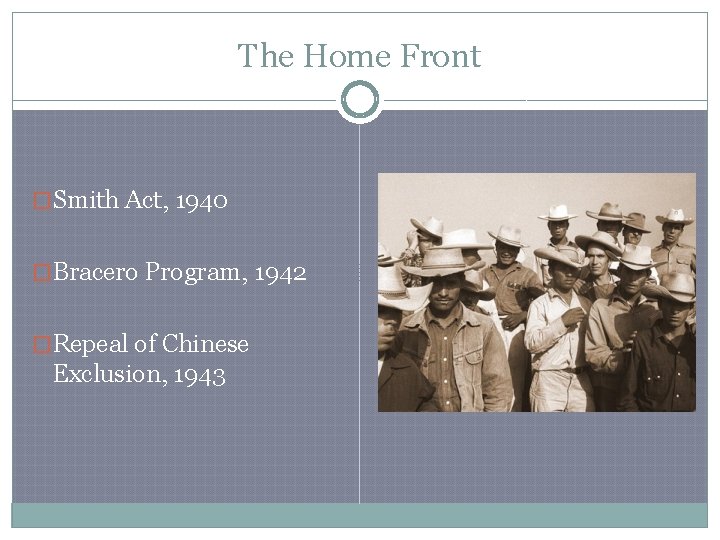
The Home Front �Smith Act, 1940 �Bracero Program, 1942 �Repeal of Chinese Exclusion, 1943
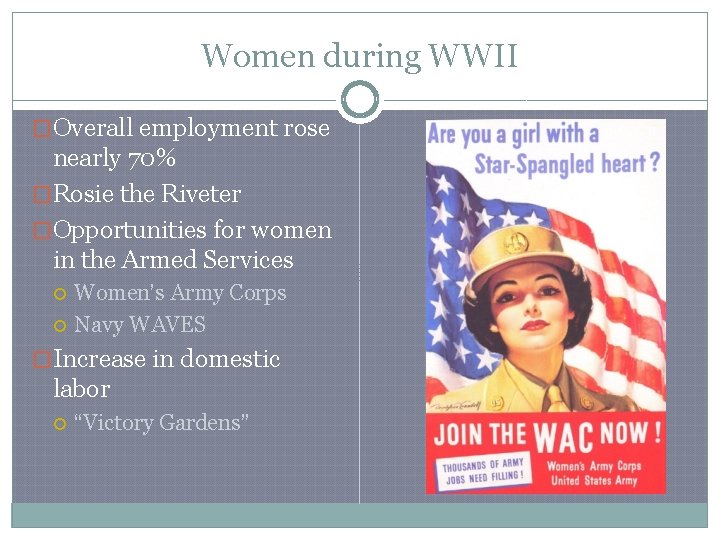
Women during WWII �Overall employment rose nearly 70% �Rosie the Riveter �Opportunities for women in the Armed Services Women’s Army Corps Navy WAVES �Increase in domestic labor “Victory Gardens”
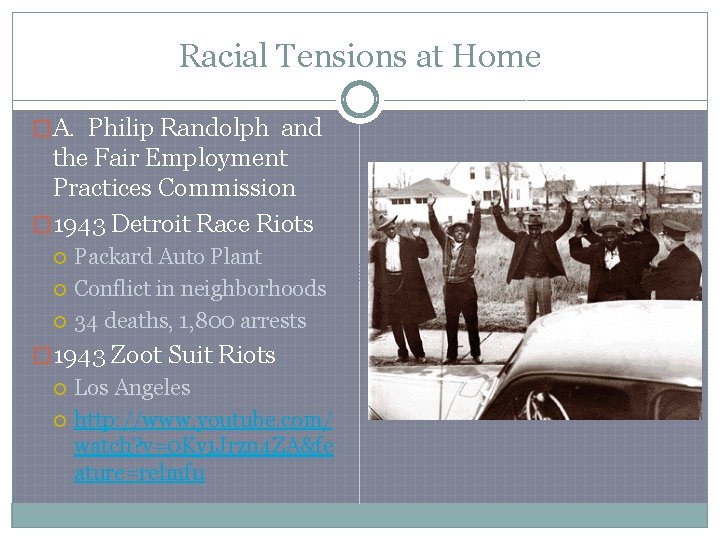
Racial Tensions at Home �A. Philip Randolph and the Fair Employment Practices Commission � 1943 Detroit Race Riots Packard Auto Plant Conflict in neighborhoods 34 deaths, 1, 800 arrests � 1943 Zoot Suit Riots Los Angeles http: //www. youtube. com/ watch? v=0 Ky 1 Jrzn 4 ZA&fe ature=relmfu
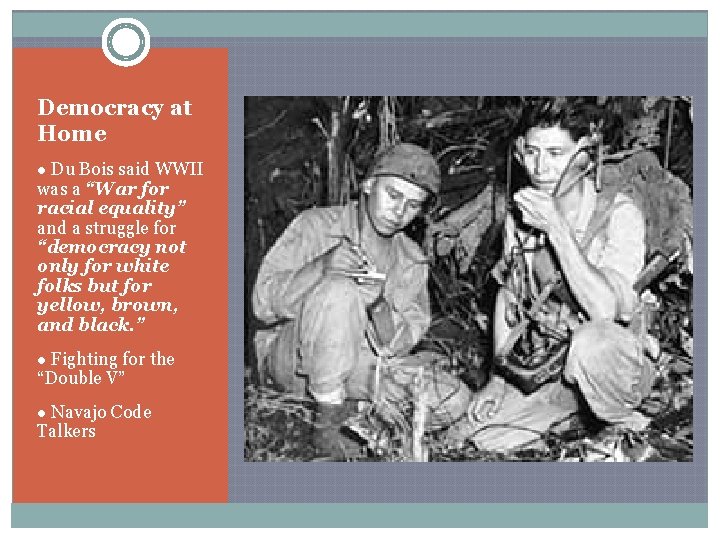
Democracy at Home ● Du Bois said WWII was a “War for racial equality” and a struggle for “democracy not only for white folks but for yellow, brown, and black. ” ● Fighting for the “Double V” ● Navajo Code Talkers
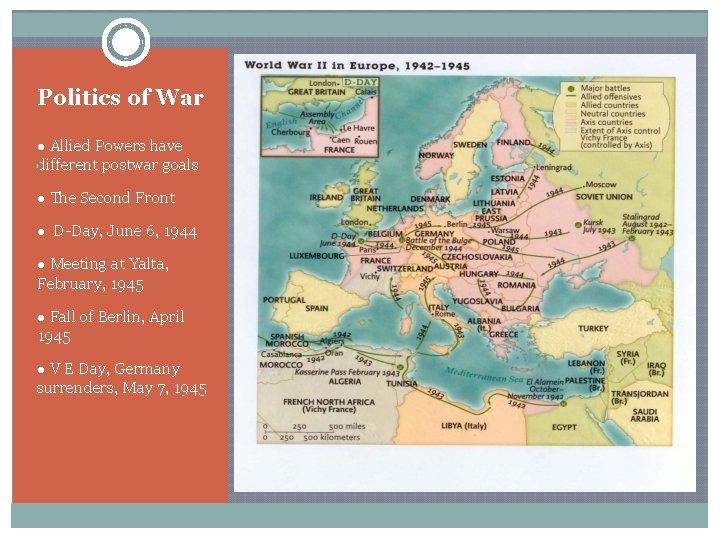
Politics of War ● Allied Powers have different postwar goals ● The Second Front ● D-Day, June 6, 1944 ● Meeting at Yalta, February, 1945 ● Fall of Berlin, April 1945 ● V E Day, Germany surrenders, May 7, 1945
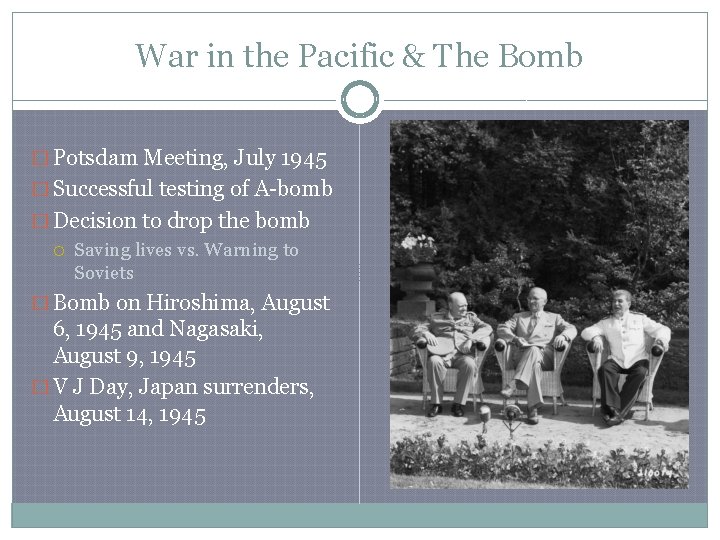
War in the Pacific & The Bomb � Potsdam Meeting, July 1945 � Successful testing of A-bomb � Decision to drop the bomb Saving lives vs. Warning to Soviets � Bomb on Hiroshima, August 6, 1945 and Nagasaki, August 9, 1945 � V J Day, Japan surrenders, August 14, 1945
WWII, The U. S. at War �Key terms: Pearl Harbor, Japanese Internment, Smith Act, Bracero Program, Rosie the Riveter, Women’s Army Corps, “Victory Gardens”, Detroit Race Riots, Zoot Suit Riots, Navajo Code Talkers, Double V, Second Front, Potsdam
- Slides: 10