
WWII Period 7 1920 to 1945 Think About
WWII Period 7 1920 to 1945
Think About It ► Evaluate to what extent foreign issues and developments helped to maintain continuity and foster change in American foreign policy from 1920 to 1945. ► Evaluate the impact of World War II on the growth and power of the federal government. ► To what extend did World War II help to maintain continuity and foster change in the social experiences of women and minorities from 1940 to 1945.
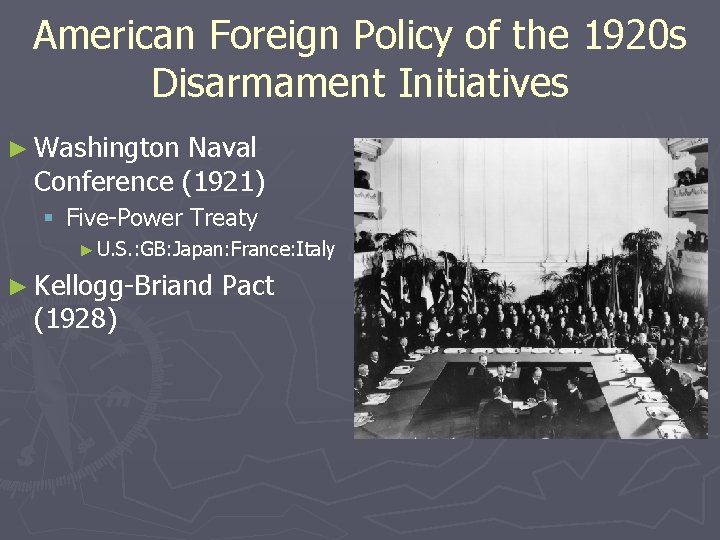
American Foreign Policy of the 1920 s Disarmament Initiatives ► Washington Naval Conference (1921) § Five-Power Treaty ► U. S. : GB: Japan: France: Italy ► Kellogg-Briand (1928) Pact
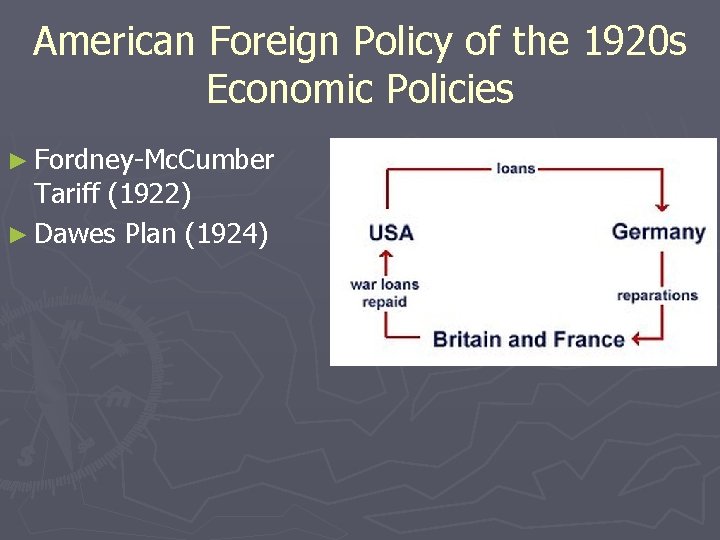
American Foreign Policy of the 1920 s Economic Policies ► Fordney-Mc. Cumber Tariff (1922) ► Dawes Plan (1924)
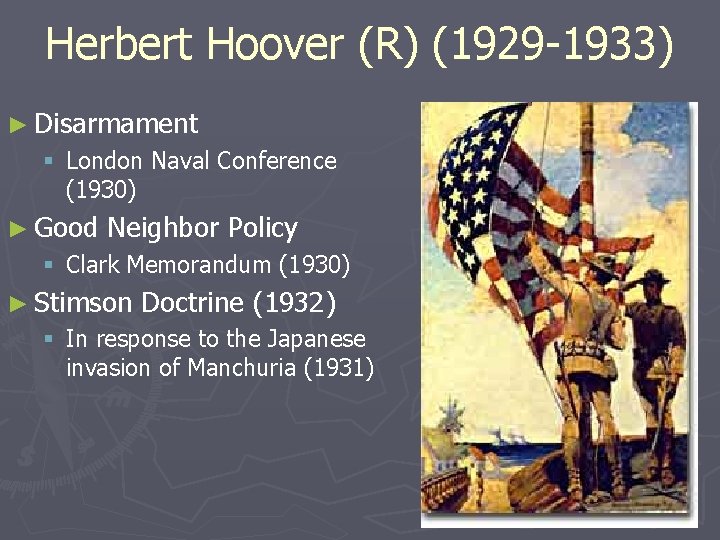
Herbert Hoover (R) (1929 -1933) ► Disarmament § London Naval Conference (1930) ► Good Neighbor Policy § Clark Memorandum (1930) ► Stimson Doctrine (1932) § In response to the Japanese invasion of Manchuria (1931)
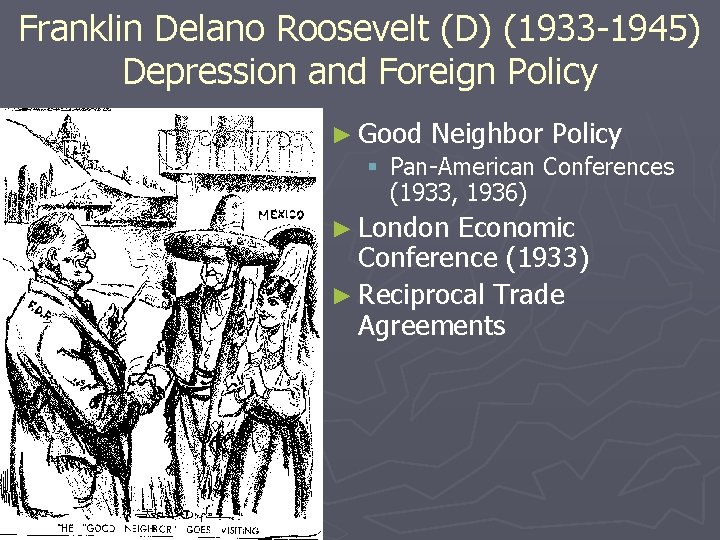
Franklin Delano Roosevelt (D) (1933 -1945) Depression and Foreign Policy ► Good Neighbor Policy § Pan-American Conferences (1933, 1936) ► London Economic Conference (1933) ► Reciprocal Trade Agreements
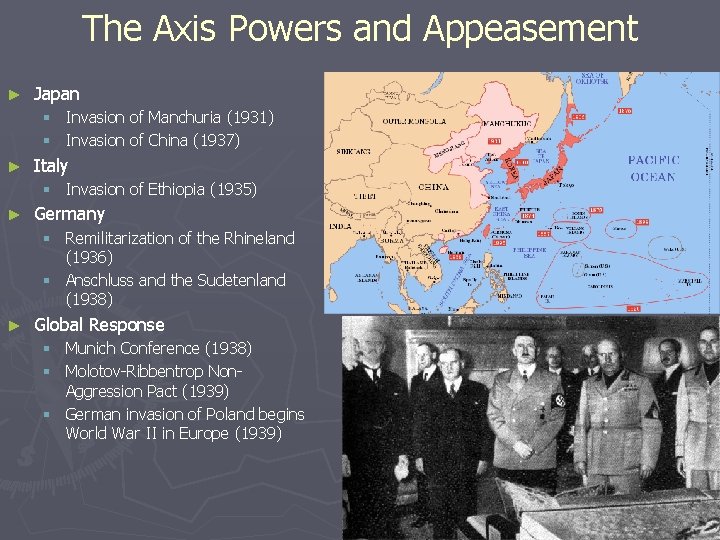
The Axis Powers and Appeasement ► Japan § Invasion of Manchuria (1931) § Invasion of China (1937) ► Italy § Invasion of Ethiopia (1935) ► Germany § Remilitarization of the Rhineland (1936) § Anschluss and the Sudetenland (1938) ► Global Response § Munich Conference (1938) § Molotov-Ribbentrop Non. Aggression Pact (1939) § German invasion of Poland begins World War II in Europe (1939)
American Isolationists ► Characteristics § § § Midwest region Rural sectors Republicans and conservatives ► Nye Committee § “Merchants of Death” ► America First Committee § Avoid possible entanglements with European affairs in WWII § Promote isolationism across the nation
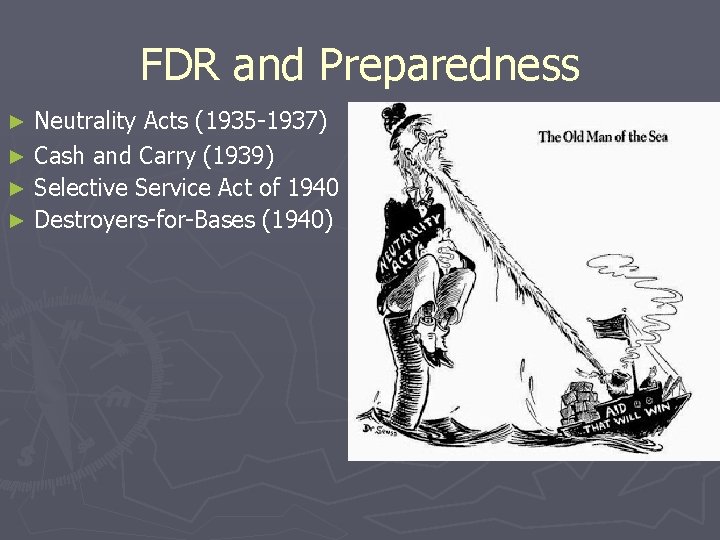
FDR and Preparedness Neutrality Acts (1935 -1937) ► Cash and Carry (1939) ► Selective Service Act of 1940 ► Destroyers-for-Bases (1940) ►
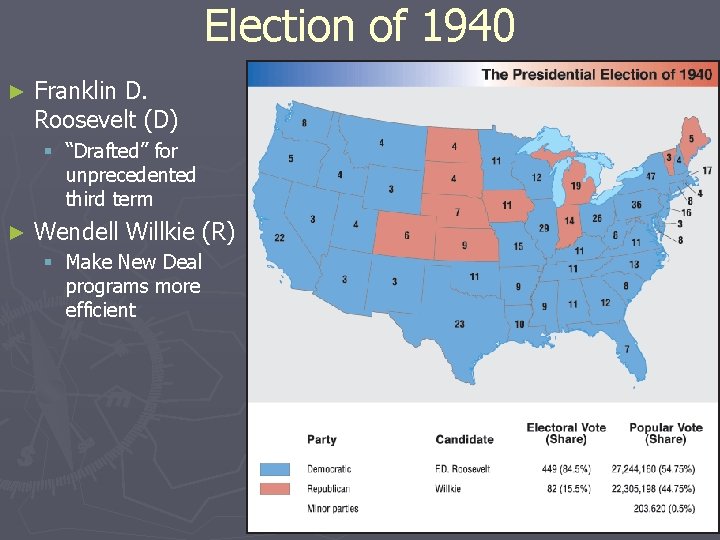
Election of 1940 ► Franklin D. Roosevelt (D) § “Drafted” for unprecedented third term ► Wendell Willkie (R) § Make New Deal programs more efficient
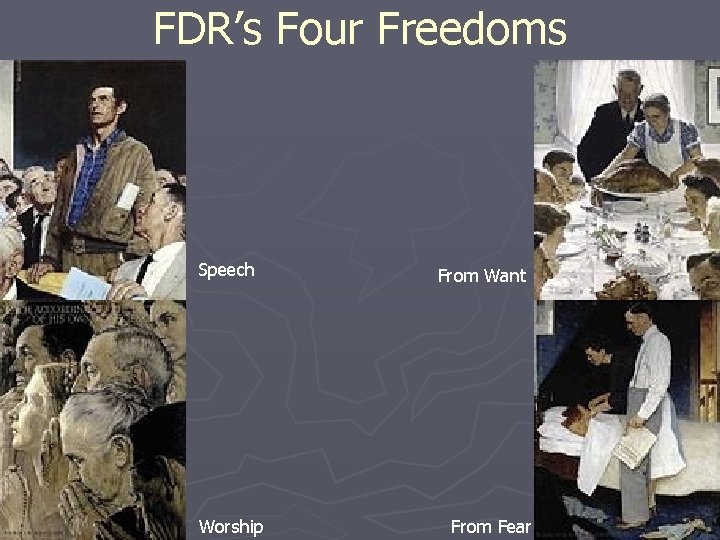
FDR’s Four Freedoms Speech Worship From Want From Fear
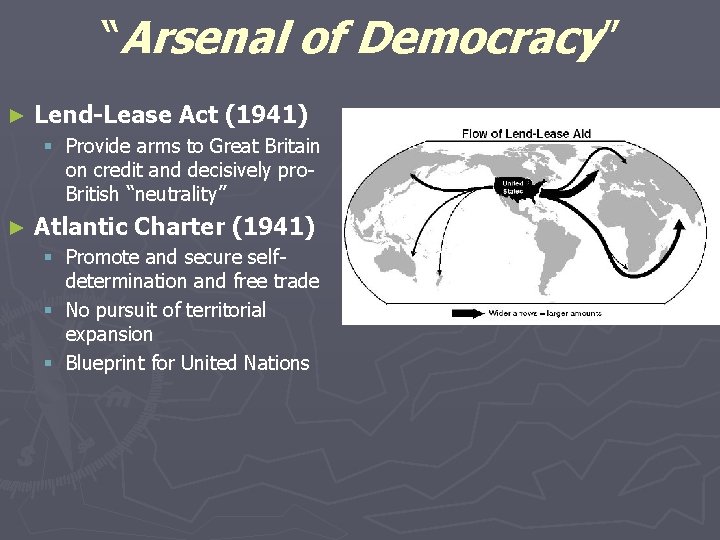
“Arsenal of Democracy” ► Lend-Lease Act (1941) § Provide arms to Great Britain on credit and decisively pro. British “neutrality” ► Atlantic Charter (1941) § Promote and secure selfdetermination and free trade § No pursuit of territorial expansion § Blueprint for United Nations
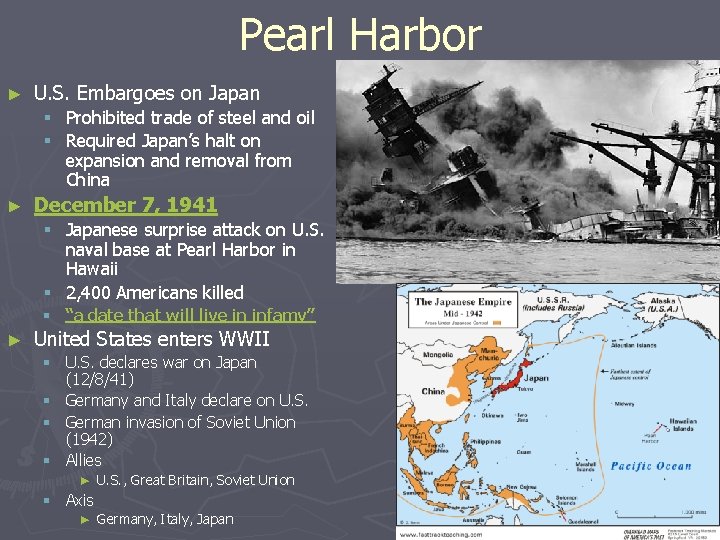
Pearl Harbor ► U. S. Embargoes on Japan § § ► Prohibited trade of steel and oil Required Japan’s halt on expansion and removal from China December 7, 1941 § Japanese surprise attack on U. S. naval base at Pearl Harbor in Hawaii § 2, 400 Americans killed § “a date that will live in infamy” ► United States enters WWII § U. S. declares war on Japan (12/8/41) § Germany and Italy declare on U. S. § German invasion of Soviet Union (1942) § Allies ► U. S. , Great Britain, Soviet Union § Axis ► Germany, Italy, Japan

The Economy and World War II ► Economic Recovery and Growth ► § GDP § Factories converted for war production § Doubled industrial production § Real wages increased by 50% ► $103. 6 B - 1929 ► $56. 4 B - 1933 ► $101. 4 B - 1940 ► $223. 1 B - 1945 § Unemployment ► ► 3. 2% - 1929 ► 24. 9% - 1933 ► 1. 2% - 1944 ► Fiscal Policy § War cost $304 B ► $136 B from tax revenue § Revenue Act of 1942 ► $168 B from war bonds § National Debt ► $25 B in 1918 ► $20 B in 1933 ► $39. 65 B in 1939 ► $251 B in 1945 Agriculture § § ► 17 million new jobs ► 14. 6% - 1940 Industry ► Net farm income doubled $20 B increase in land value $11 B savings accumulated 17% decline in farm population Labor Unions § National War Labor Board § Smith-Connally War Act (1943) § Union membership ► 9 million – 1940 ► 14. 8 million - 1945

Economic Impact of World War II
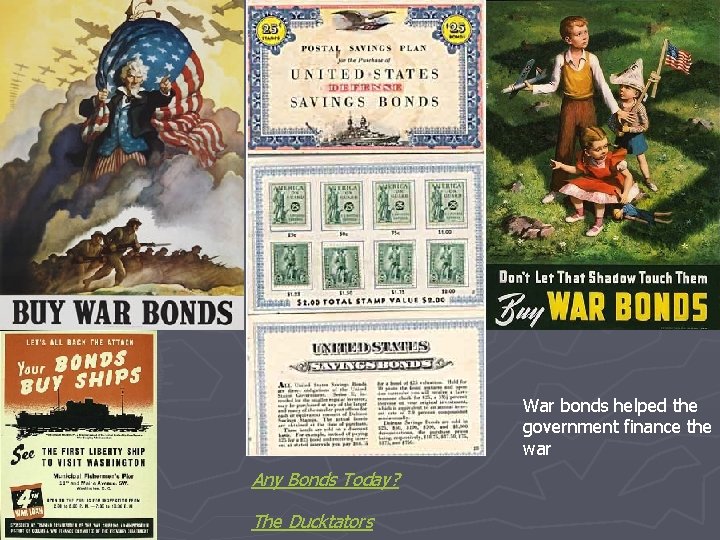
War bonds helped the government finance the war Any Bonds Today? The Ducktators
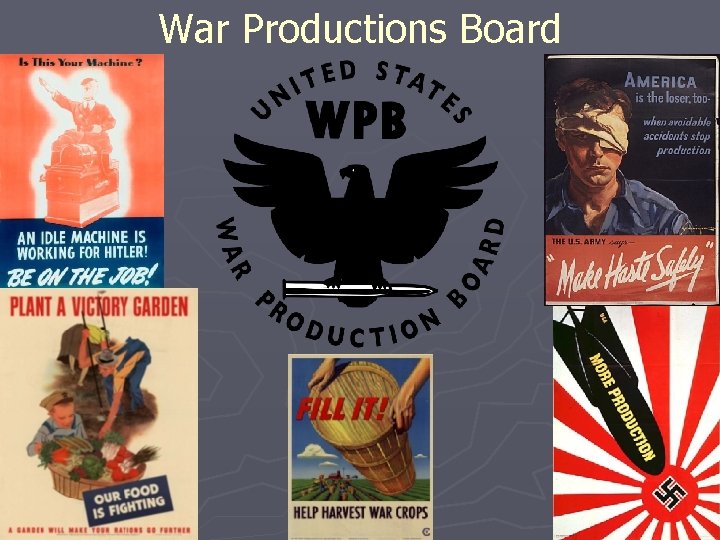
War Productions Board
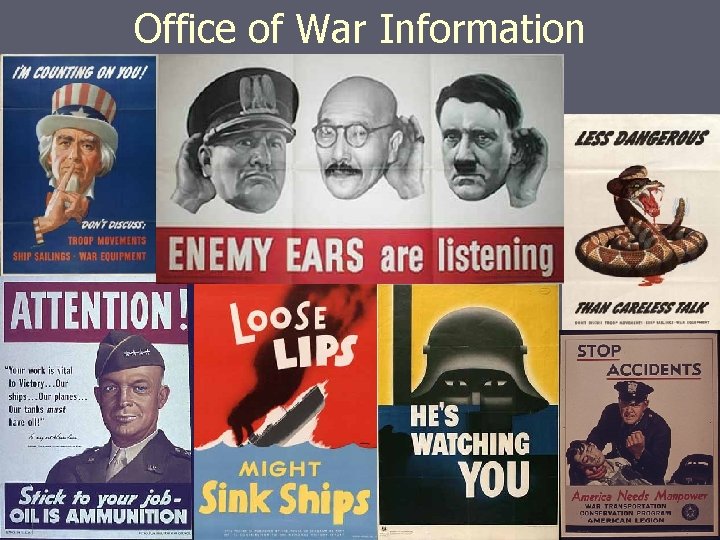
Office of War Information
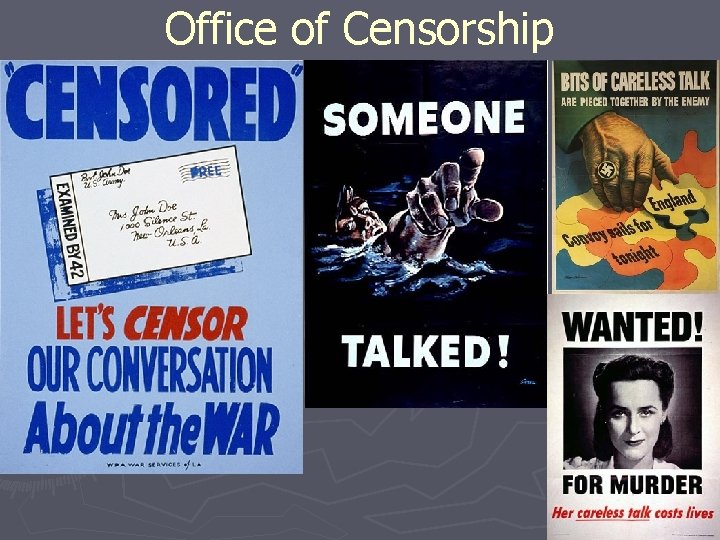
Office of Censorship

Office of Price Administration (OPA) and Ration Books
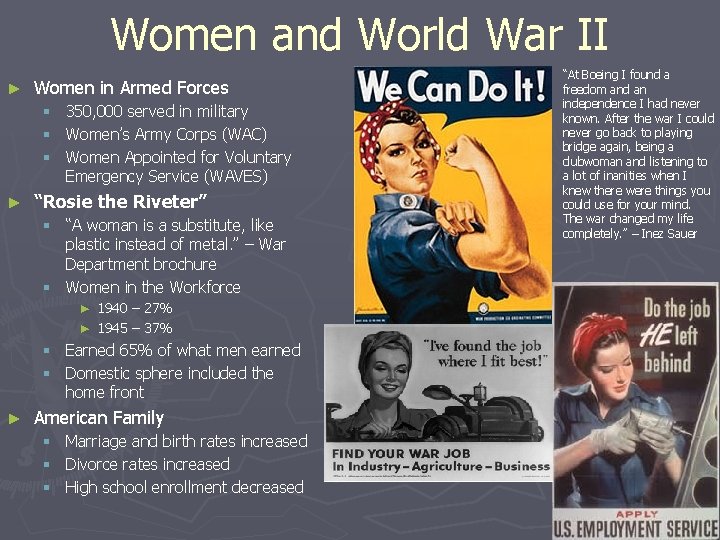
Women and World War II ► Women in Armed Forces § 350, 000 served in military § Women’s Army Corps (WAC) § Women Appointed for Voluntary Emergency Service (WAVES) ► “Rosie the Riveter” § “A woman is a substitute, like plastic instead of metal. ” – War Department brochure § Women in the Workforce ► 1940 – 27% ► 1945 – 37% § Earned 65% of what men earned § Domestic sphere included the home front ► American Family § Marriage and birth rates increased § Divorce rates increased § High school enrollment decreased “At Boeing I found a freedom and an independence I had never known. After the war I could never go back to playing bridge again, being a clubwoman and listening to a lot of inanities when I knew there were things you could use for your mind. The war changed my life completely. ” – Inez Sauer
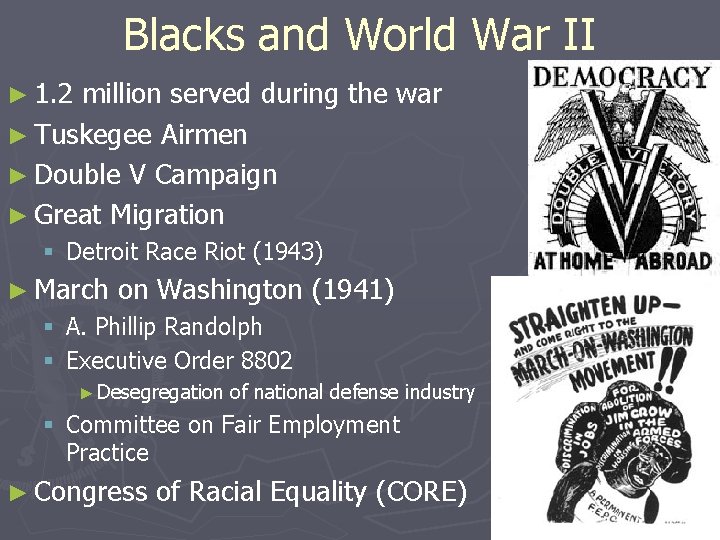
Blacks and World War II ► 1. 2 million served during the war ► Tuskegee Airmen ► Double V Campaign ► Great Migration § Detroit Race Riot (1943) ► March on Washington (1941) § A. Phillip Randolph § Executive Order 8802 ► Desegregation of national defense industry § Committee on Fair Employment Practice ► Congress of Racial Equality (CORE)
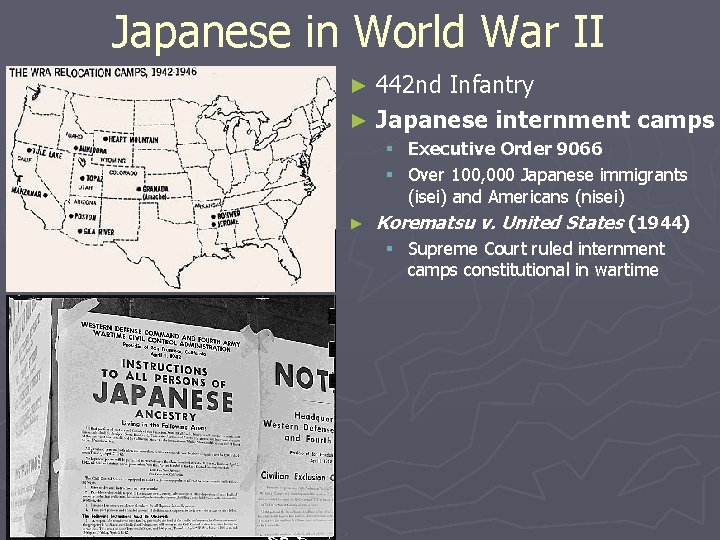
Japanese in World War II 442 nd Infantry ► Japanese internment camps ► § Executive Order 9066 § Over 100, 000 Japanese immigrants (isei) and Americans (nisei) ► Korematsu v. United States (1944) § Supreme Court ruled internment camps constitutional in wartime
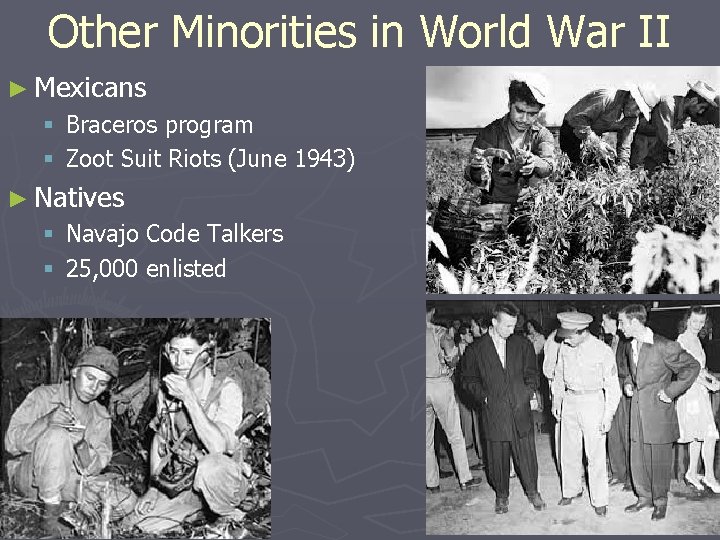
Other Minorities in World War II ► Mexicans § Braceros program § Zoot Suit Riots (June 1943) ► Natives § Navajo Code Talkers § 25, 000 enlisted
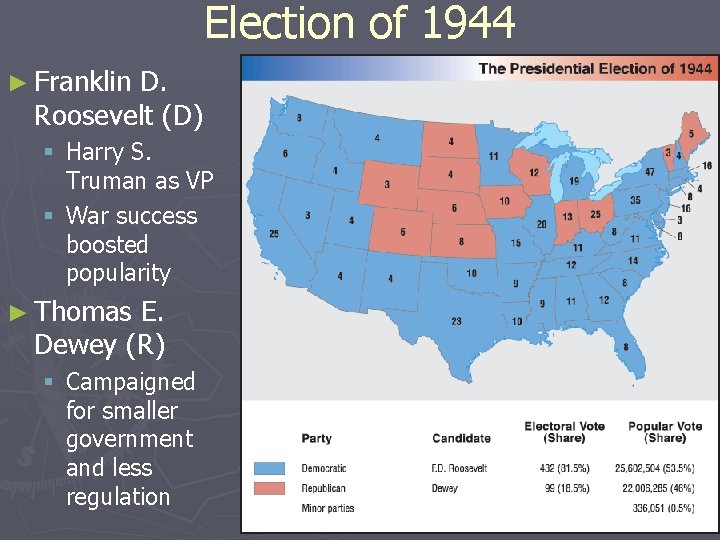
Election of 1944 ► Franklin D. Roosevelt (D) § Harry S. Truman as VP § War success boosted popularity ► Thomas E. Dewey (R) § Campaigned for smaller government and less regulation
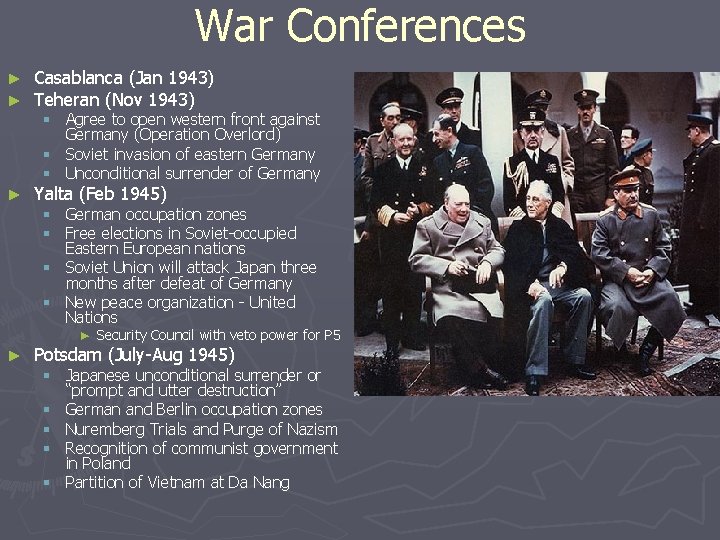
War Conferences ► ► Casablanca (Jan 1943) Teheran (Nov 1943) ► Yalta (Feb 1945) § Agree to open western front against Germany (Operation Overlord) § Soviet invasion of eastern Germany § Unconditional surrender of Germany § German occupation zones § Free elections in Soviet-occupied Eastern European nations § Soviet Union will attack Japan three months after defeat of Germany § New peace organization - United Nations ► Security Council with veto power for P 5 ► Potsdam (July-Aug 1945) § Japanese unconditional surrender or “prompt and utter destruction” § German and Berlin occupation zones § Nuremberg Trials and Purge of Nazism § Recognition of communist government in Poland § Partition of Vietnam at Da Nang
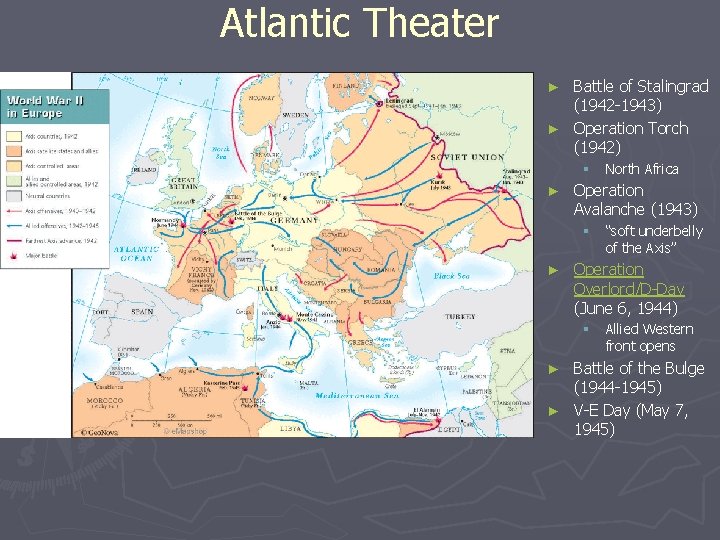
Atlantic Theater Battle of Stalingrad (1942 -1943) ► Operation Torch (1942) ► § ► Operation Avalanche (1943) § ► North Africa “soft underbelly of the Axis” Operation Overlord/D-Day (June 6, 1944) § Allied Western front opens Battle of the Bulge (1944 -1945) ► V-E Day (May 7, 1945) ►
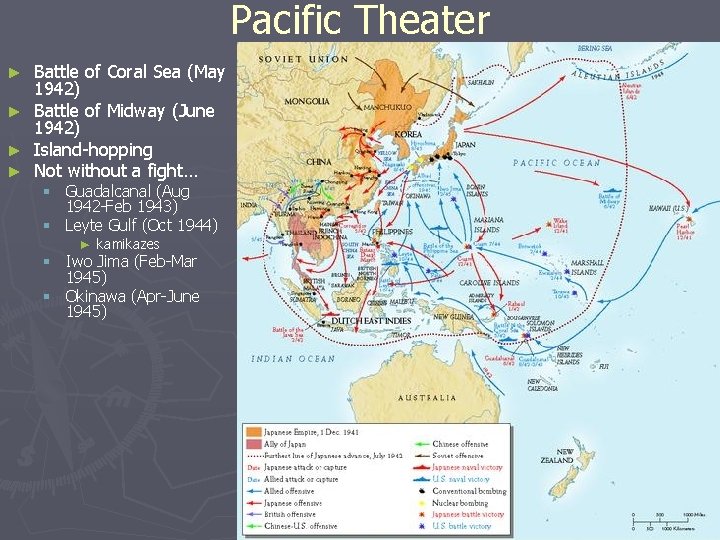
Pacific Theater ► ► Battle of Coral Sea (May 1942) Battle of Midway (June 1942) Island-hopping Not without a fight… § Guadalcanal (Aug 1942 -Feb 1943) § Leyte Gulf (Oct 1944) ► kamikazes § Iwo Jima (Feb-Mar 1945) § Okinawa (Apr-June 1945)
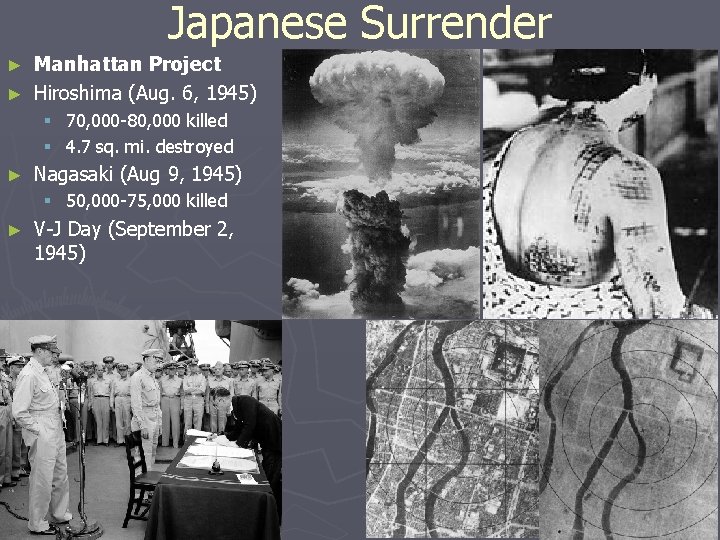
Japanese Surrender Manhattan Project ► Hiroshima (Aug. 6, 1945) ► § 70, 000 -80, 000 killed § 4. 7 sq. mi. destroyed ► Nagasaki (Aug 9, 1945) § 50, 000 -75, 000 killed ► V-J Day (September 2, 1945)
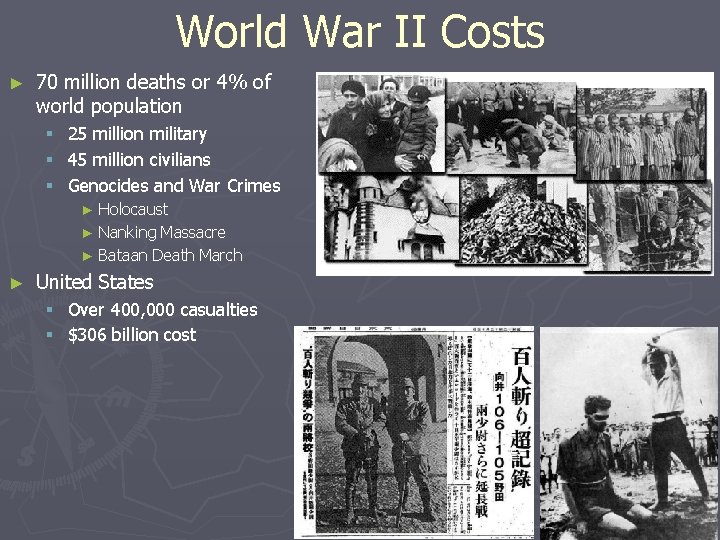
World War II Costs ► 70 million deaths or 4% of world population § § § 25 million military 45 million civilians Genocides and War Crimes Holocaust ► Nanking Massacre ► Bataan Death March ► ► United States § Over 400, 000 casualties § $306 billion cost
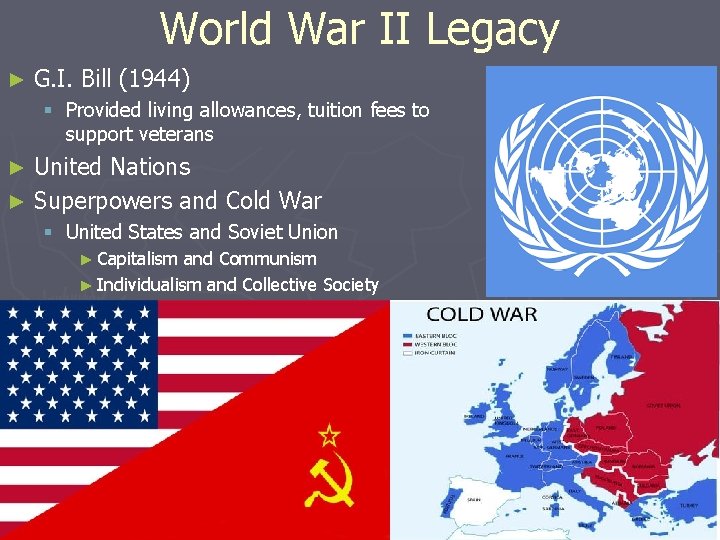
World War II Legacy ► G. I. Bill (1944) § Provided living allowances, tuition fees to support veterans United Nations ► Superpowers and Cold War ► § United States and Soviet Union ► Capitalism and Communism ► Individualism and Collective Society
- Slides: 31