
WWII and the Atomic Bomb WWII Technology Machine
WWII and the Atomic Bomb
WWII Technology • • • Machine Guns: Bigger faster and more deadly Improved airplanes: dropped bombs Bigger deadlier bombs Sonar: used to detect submarines Radar: used to detect airplanes Walkie-talkies Faster more improved tanks Faster more improved airplanes Faster more improved submarines Aircraft carriers Medical advances
WWII Facts • The majority of deaths in WWII were civilian deaths. • Allied leaders did not trust each other. • The Japanese fought with ruthless stubbornness, and refused to surrender. • The Japanese used kamikaze attacks against the U. S. • Americans still held bitter resentment after Pearl Harbor. • The Japanese were known for ruthless treatment of POWs.
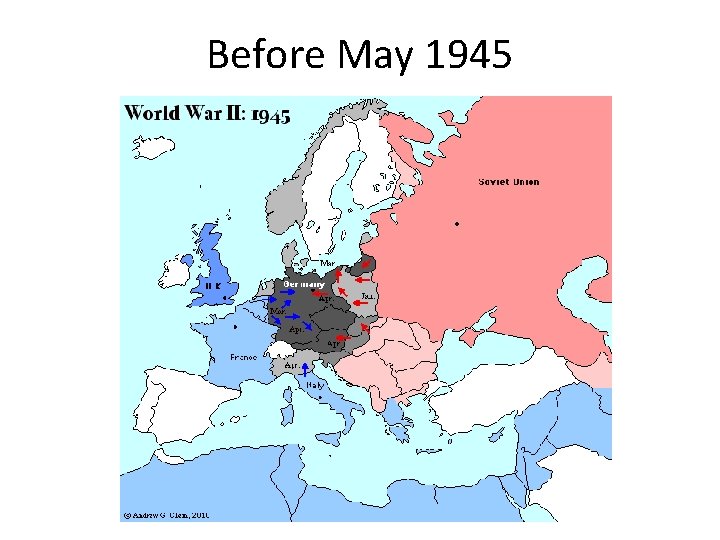
Before May 1945
WWII Ends: A Timeline • February 1945: The Yalta Conference. – Roosevelt, Churchill, and Stalin agree to divide Germany into 4 sectors – Soviets “liberate” Poland set up a communist government there. – Stalin pressures Romania into establishing communist government. – Tensions between the US and USSR intensify. • February 1945: Battle of Iwo Jima: Nearly 7, 000 Americans die. • March- June 1945: Battle of Okinawa. 12, 000 Americans die. • April 1945: FDR, Mussolini, and Hitler die • May 7, 1945: Germany surrenders
WWII Ends: A Timeline • August 6, 1945: The U. S. drops an atomic bomb on Hiroshima. – 70, 000 civilians killed • August 8: The Soviet Union declares war on Japan • August 9: The U. S. drops a second bomb on Nagasaki – 35 -50, 000 civilians killed – Japan surrendered unconditionally (Emperor Hirohito was taken out of power)
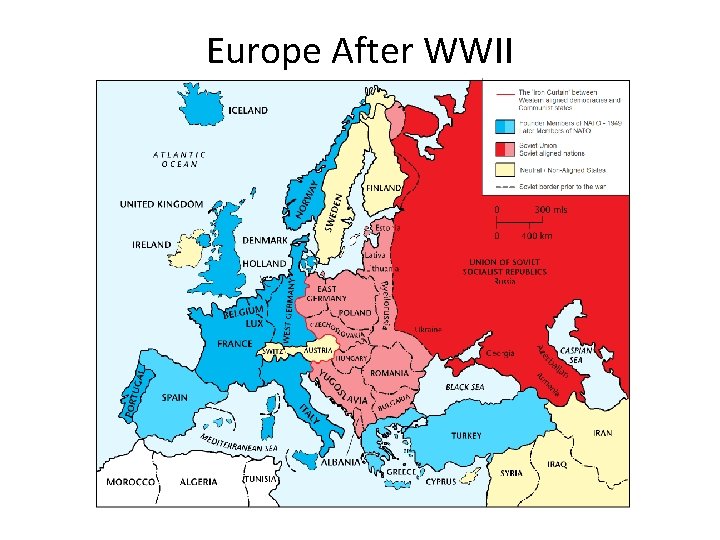
Europe After WWII
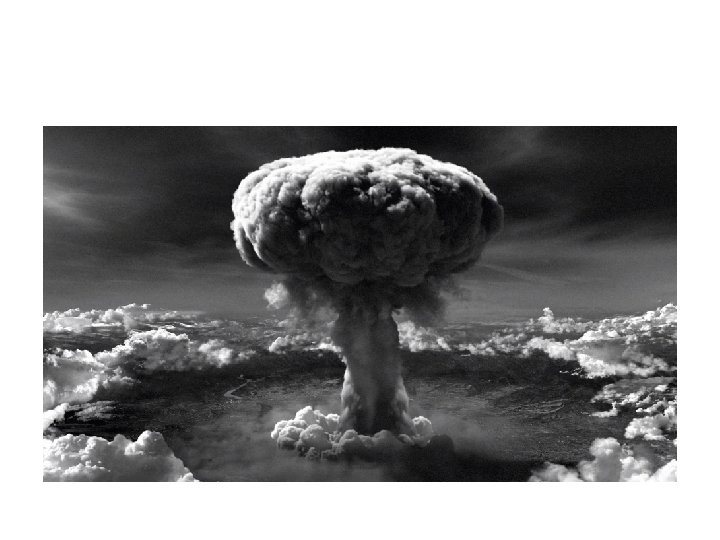
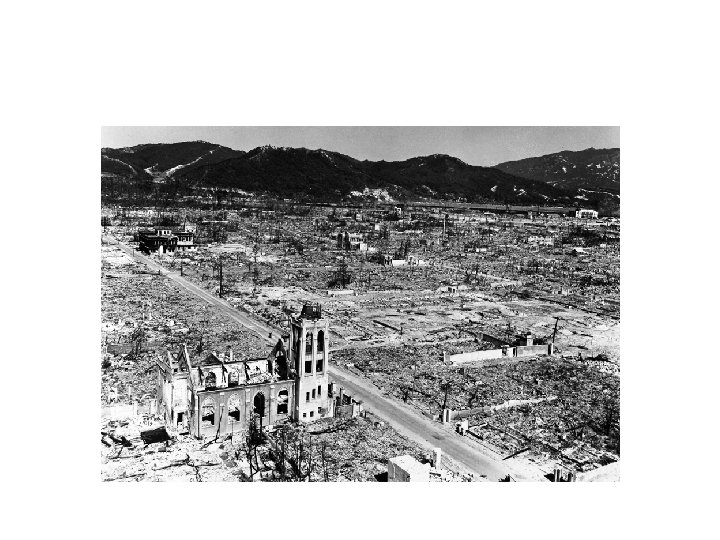
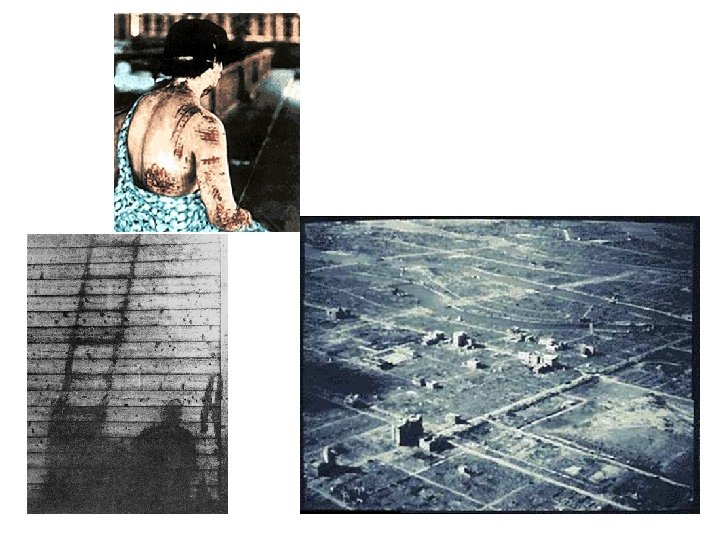
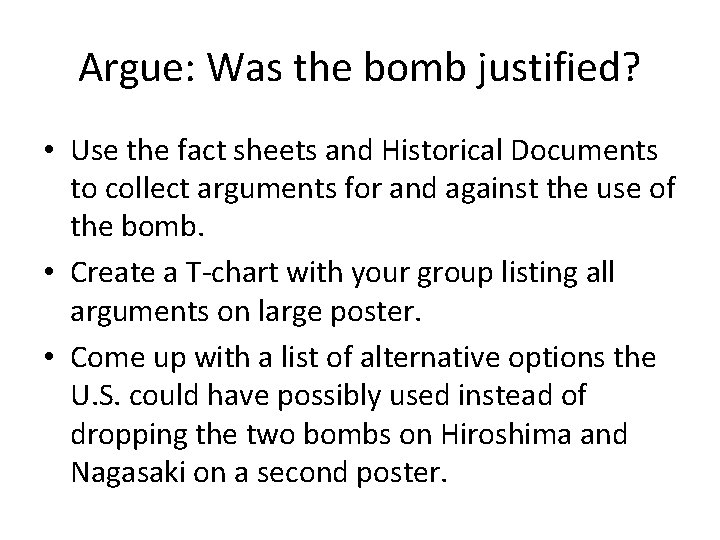
Argue: Was the bomb justified? • Use the fact sheets and Historical Documents to collect arguments for and against the use of the bomb. • Create a T-chart with your group listing all arguments on large poster. • Come up with a list of alternative options the U. S. could have possibly used instead of dropping the two bombs on Hiroshima and Nagasaki on a second poster.
- Slides: 11