
WSO 2 Enterprise Service Bus WSO 2 ESB
WSO 2 Enterprise Service Bus (WSO 2 ESB)
What is an ESB? ESB “is a software architecture model used for designing and implementing the interaction and communication between mutually interacting software applications in Service Oriented Architecture” Promotes asynchronous message mediation Message identification and routing between applications and services. Allows messages to flow across different transport protocols Transforming of messages Allows secure, reliable communications Extensible architecture (based on pluggable components)
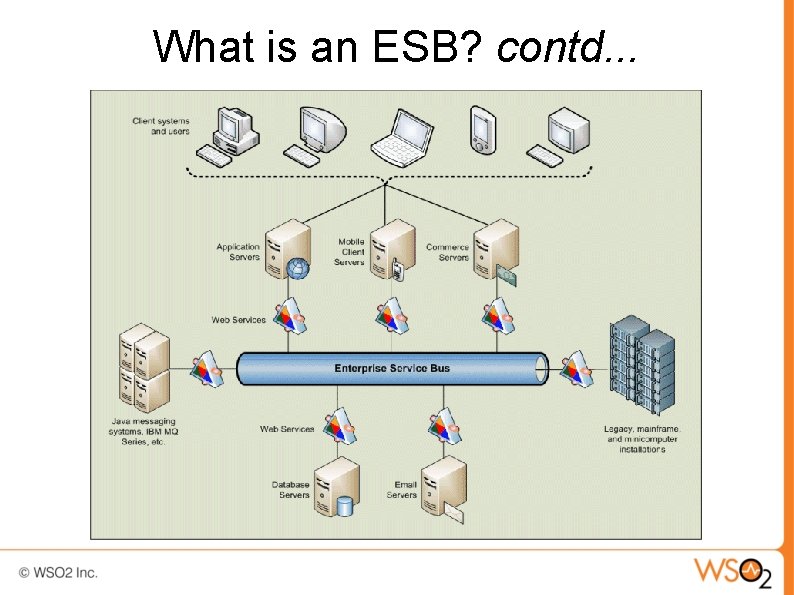
What is an ESB? contd. . .
Apache Synapse “is a lightweight and high-performance ESB with a powerful mediation engine. ” Default transport – HTTP-NIO (configurable pool of non-blocking worker threads) Support for XML, SOAP, plain text, binary, Hessian, JSON and many more. Supports HTTP, HTTPS, Mail (POP 3, IMAP, SMTP), JMS, TCP, UDP, VFS, SMS, XMPP and FIX Non-blocking HTTP/HTTPS transports Support for WS-* standards (WS-Addressing, WS-Security and WS -Reliable Messaging)
JMS (Java Message Service) Two Models available 1. Point-to-point Only one consumer The consumer does not need to be active 2. Publish-subscribe 0 or more consumers The consumer must be active to consume the message
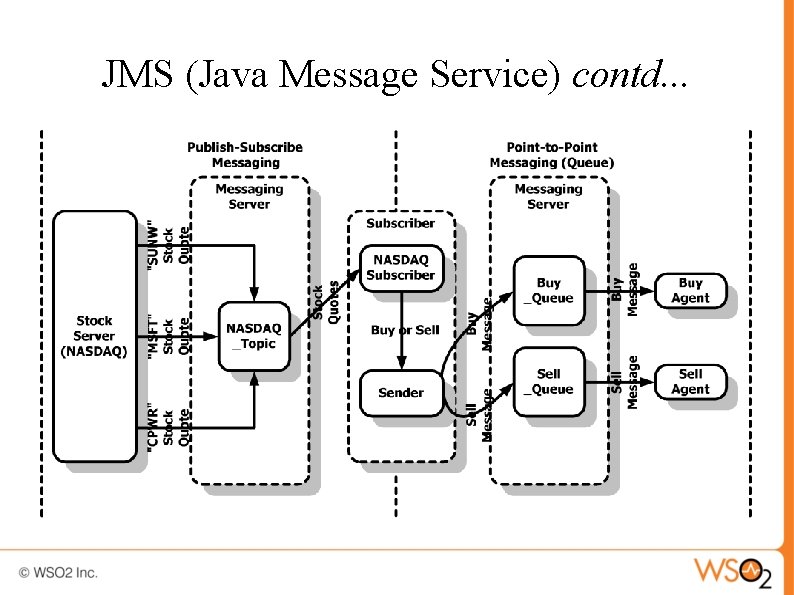
JMS (Java Message Service) contd. . .
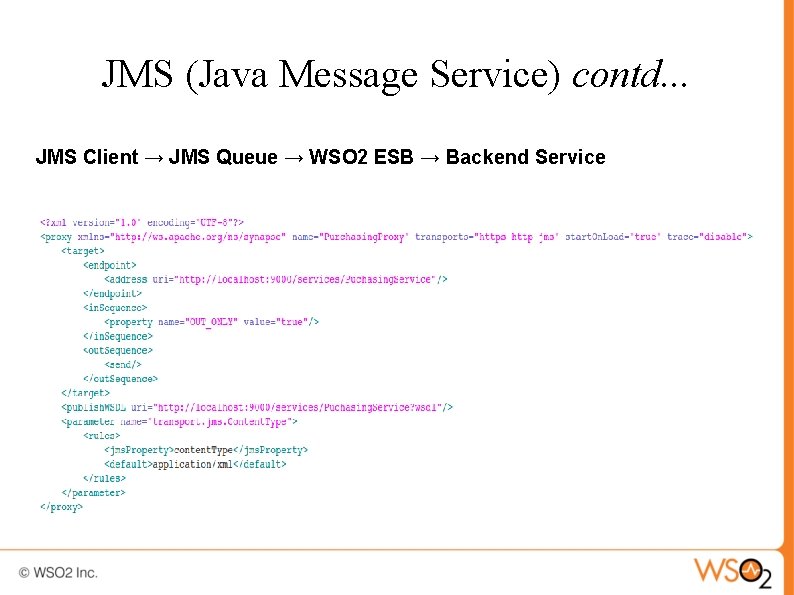
JMS (Java Message Service) contd. . . JMS Client → JMS Queue → WSO 2 ESB → Backend Service
WS-Security with Proxy Services Secured Client → Non-secured service Non-Secured client → Secured service Secured Client → Secured service
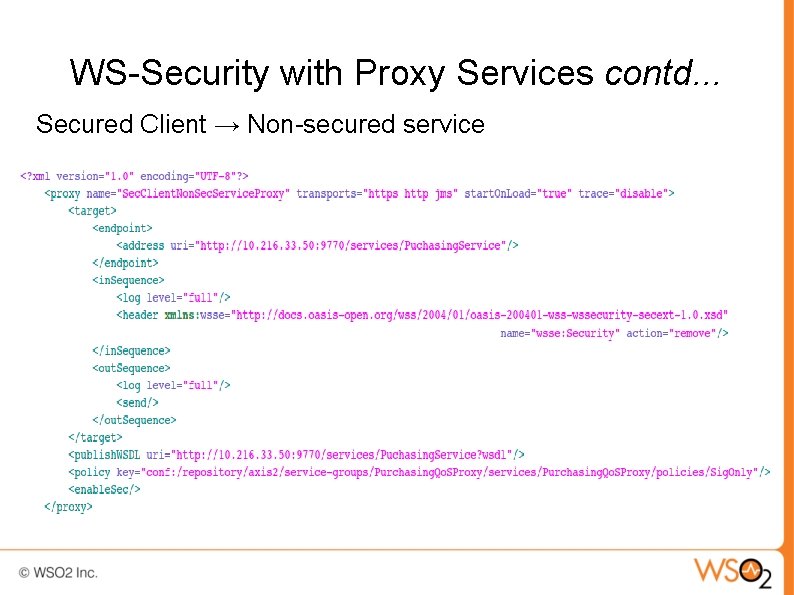
WS-Security with Proxy Services contd. . . Secured Client → Non-secured service
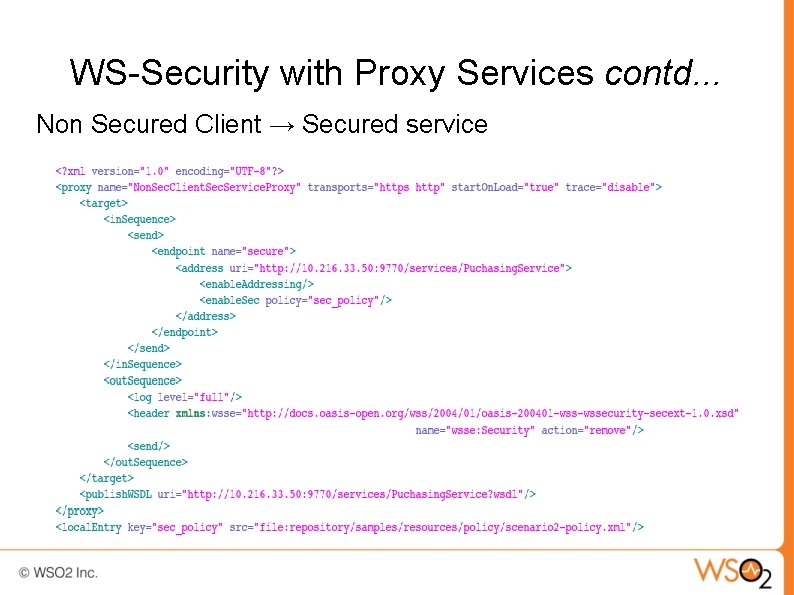
WS-Security with Proxy Services contd. . . Non Secured Client → Secured service
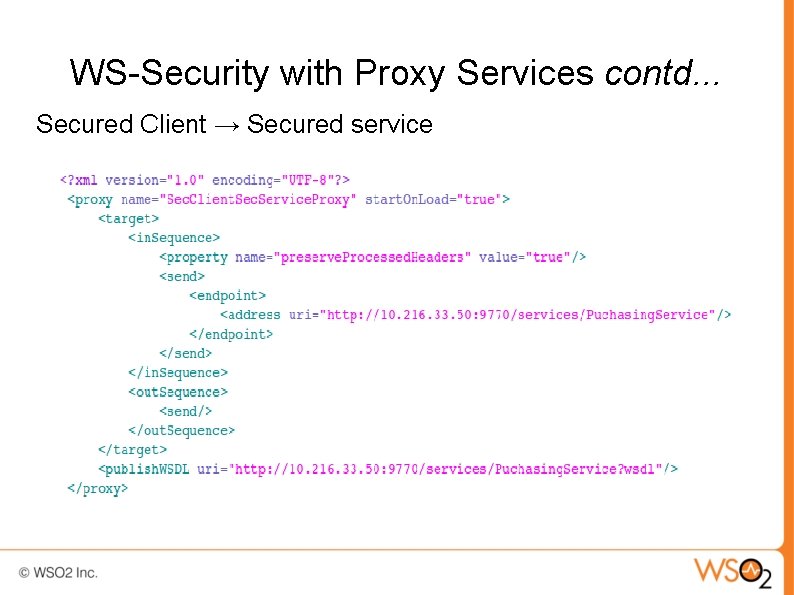
WS-Security with Proxy Services contd. . . Secured Client → Secured service
Scheduled Tasks Can be executed in two ways Execute at specified time intervals Using cron expressions - http: //www. quartzscheduler. org/documentation/quartz-1. x/tutorials/crontrigger
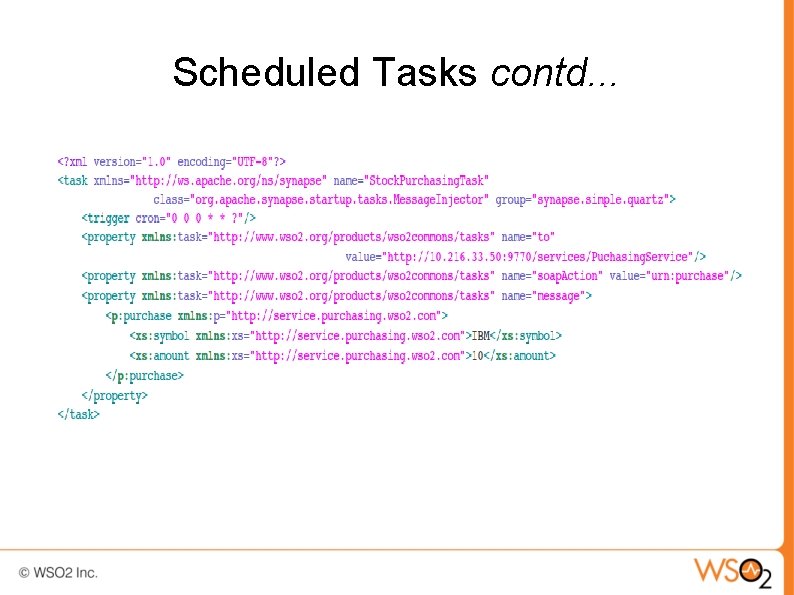
Scheduled Tasks contd. . .
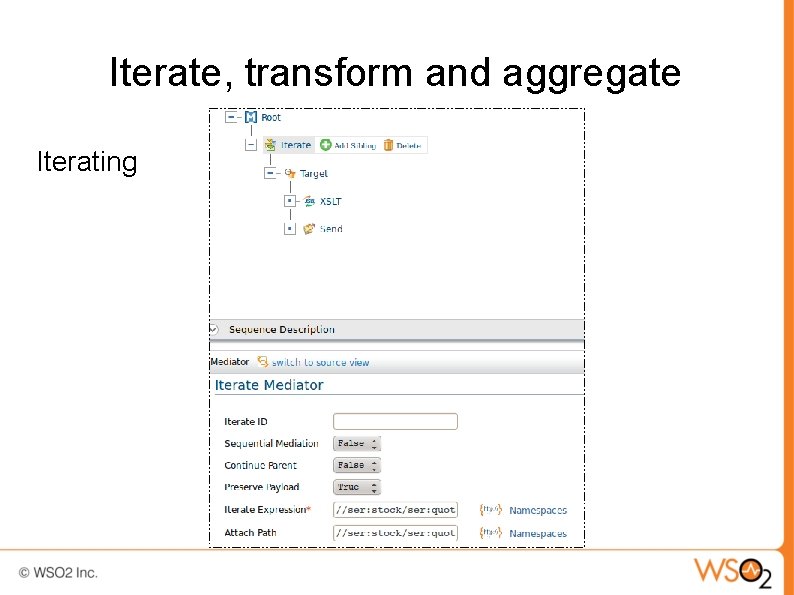
Iterate, transform and aggregate Iterating
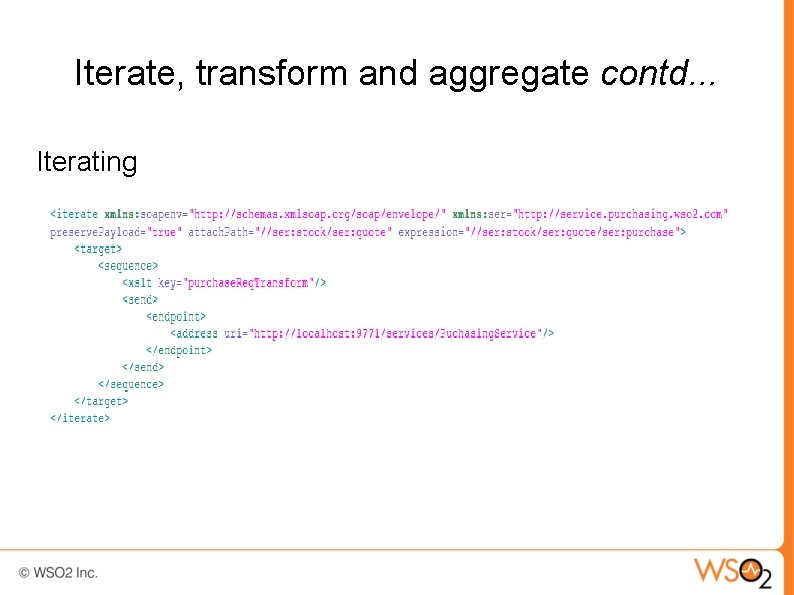
Iterate, transform and aggregate contd. . . Iterating
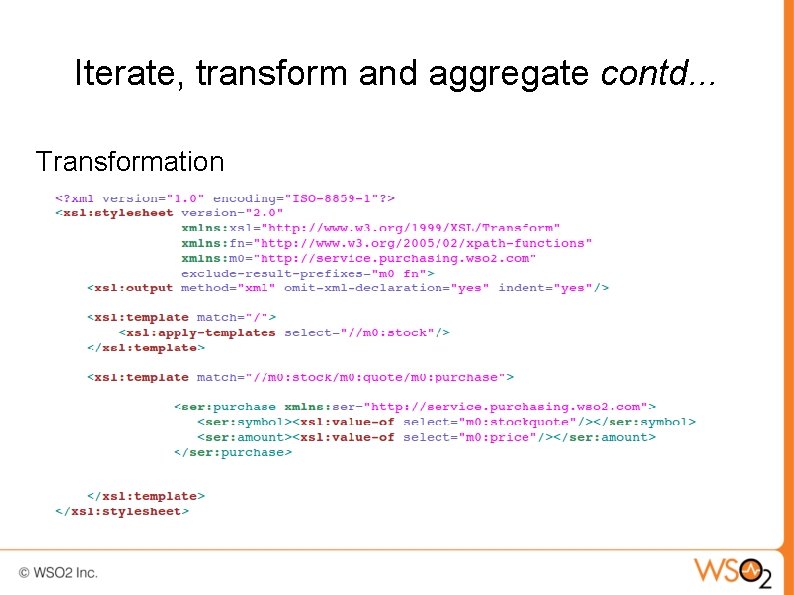
Iterate, transform and aggregate contd. . . Transformation
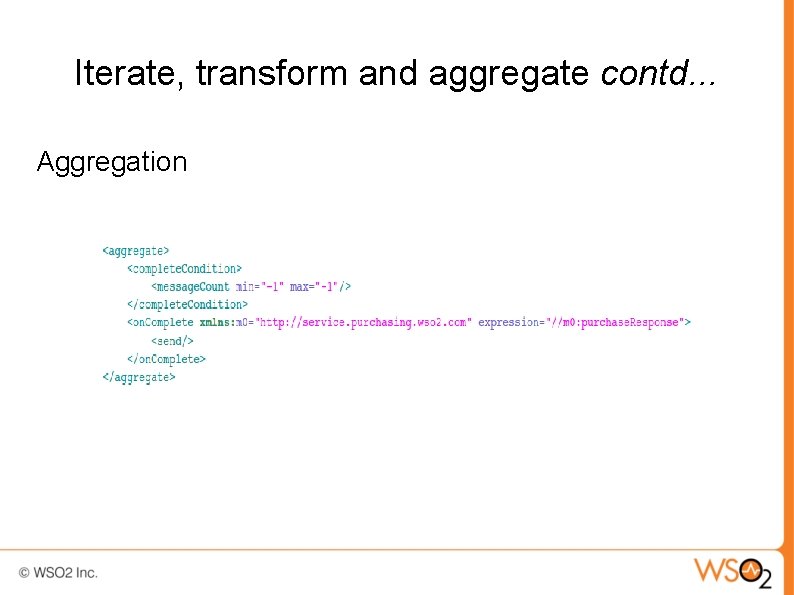
Iterate, transform and aggregate contd. . . Aggregation
Store and forward message patterns Why do we need message stores? When we have BE service that accepts messages at a given rate Incoming messages to ESB have different message rates Can be used as a temporary storage In-Memory message stores JMS messages stores
Store and forward message patterns contd. . . Types of message stores In-Memory message stores - message persistence not available - faster than persistence message stores JMS messages stores - stores messages in JMS queue in an ordered way - used for order delivery and reliability
Thank you!
- Slides: 20