
WSN Routing Protocol n n Flooding Gossiping Sensor
- Slides: 33
WSN Routing Protocol n n Flooding Gossiping Sensor Protocols for Information via Negotiation (SPIN) Directed Diffusion 1
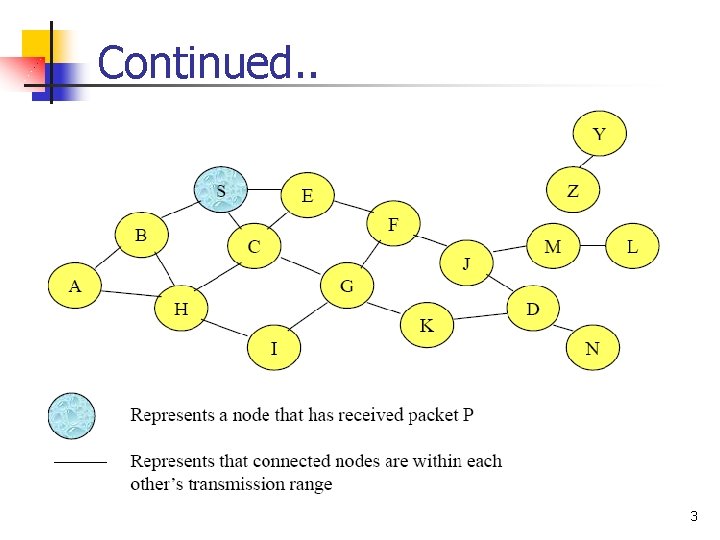
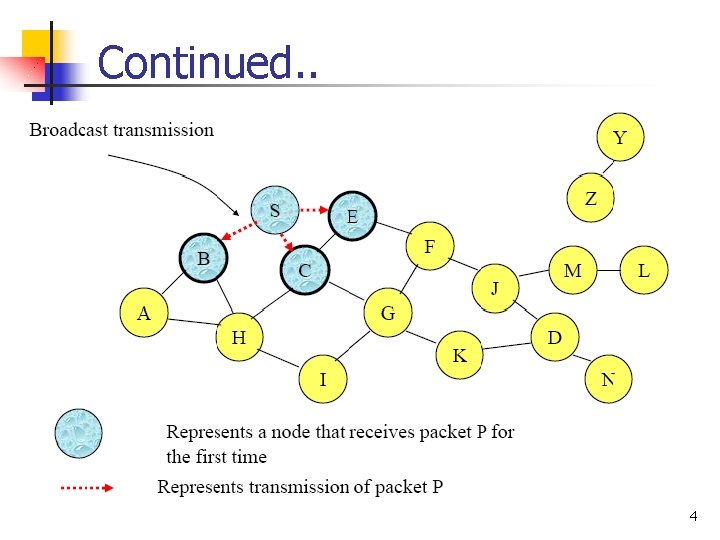
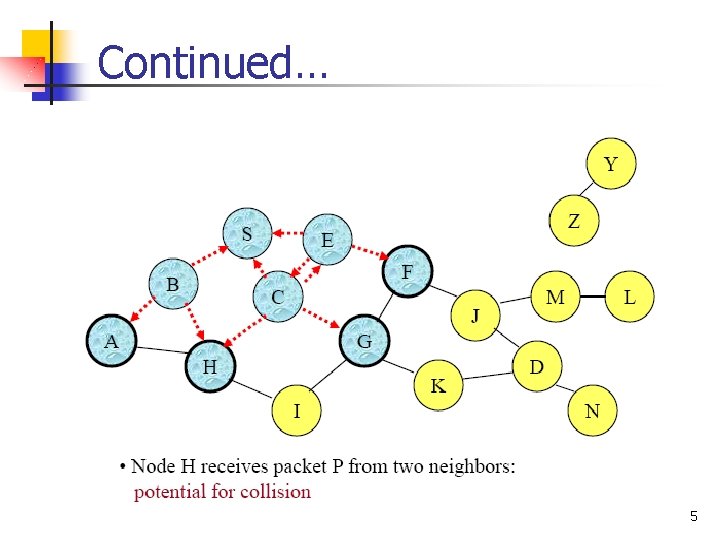
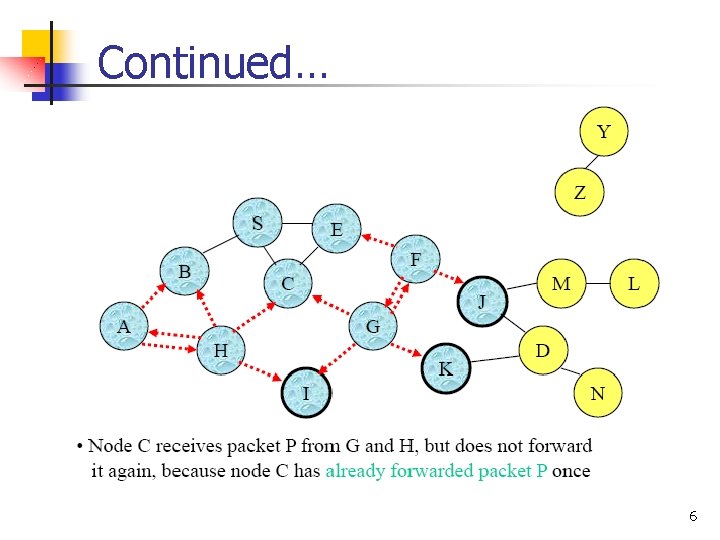
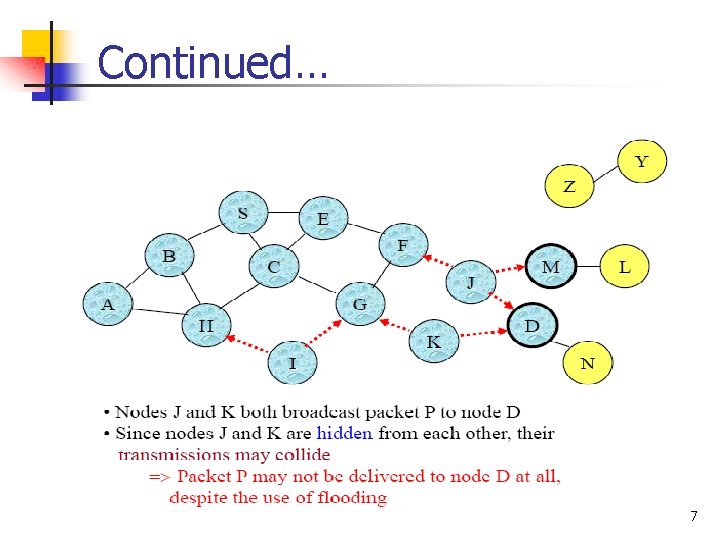
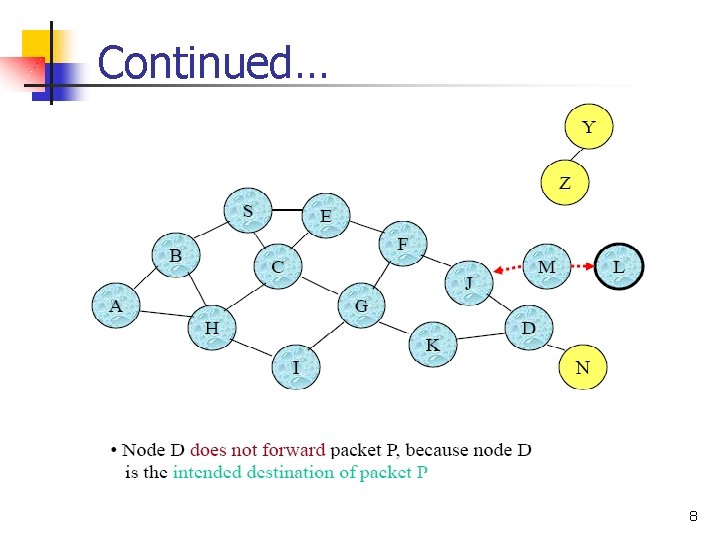
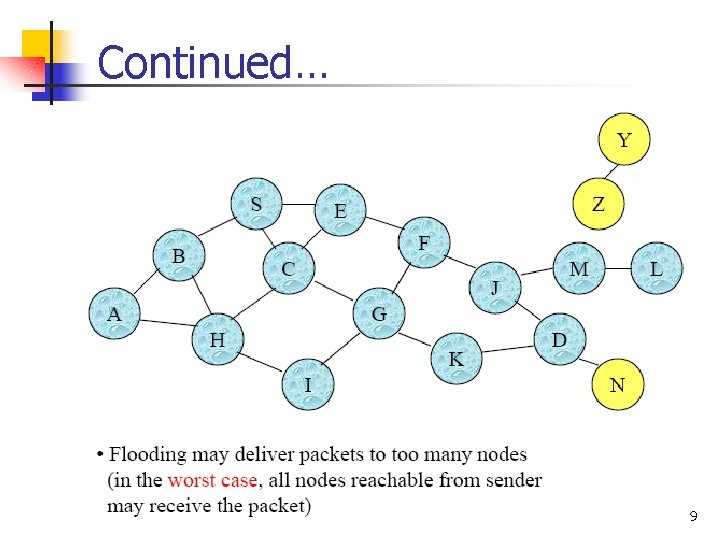
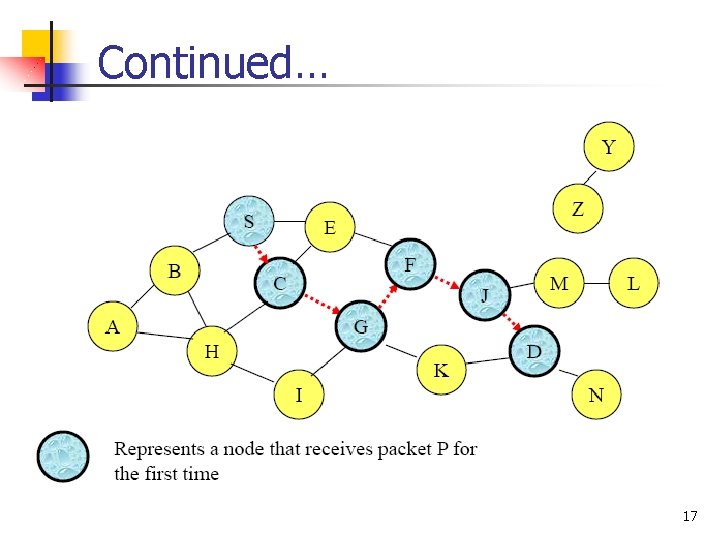
Flooding n n Flooding is a very simple solution to deliver data packets It is also extremely robust against node failures 2
Continued. . 3
Continued. . 4
Continued… 5
Continued… 6
Continued… 7
Continued… 8
Continued… 9
Flooding n The main disadvantage with flooding is the redundant transmissions in the network overlap. 10
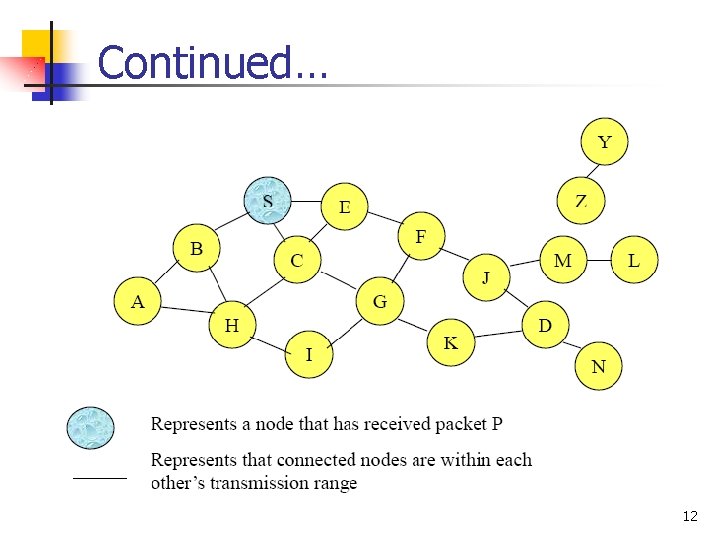
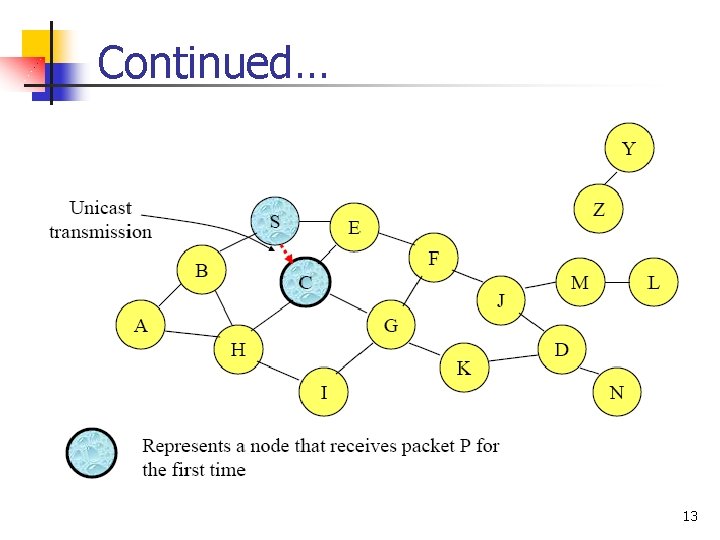
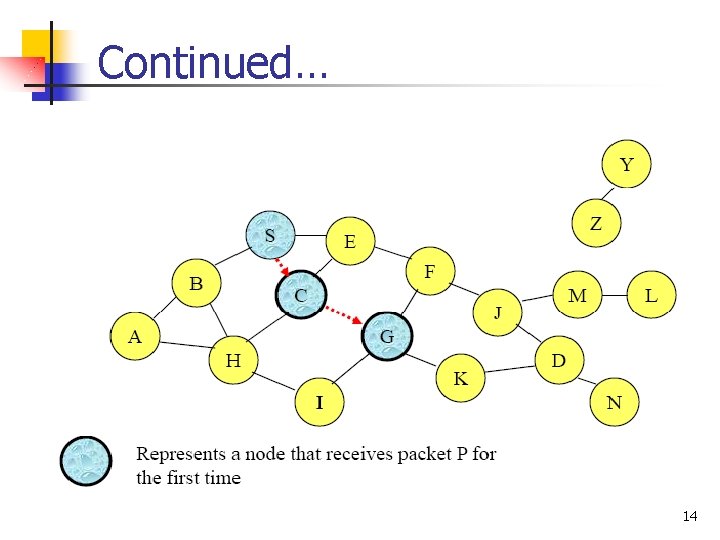
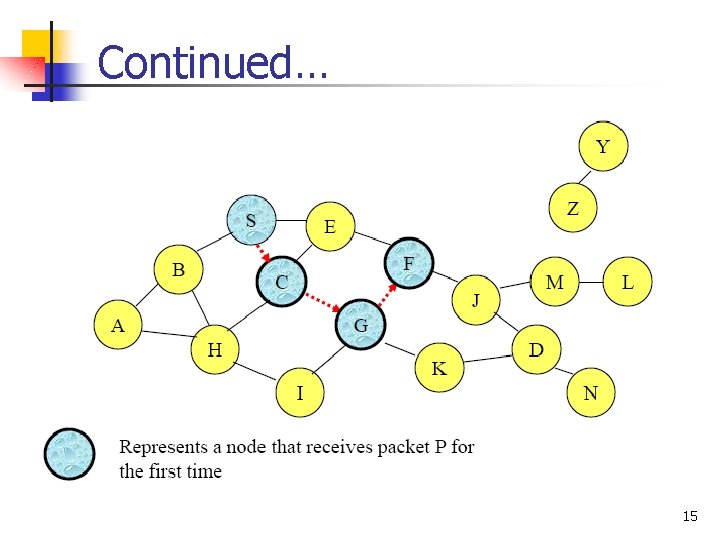
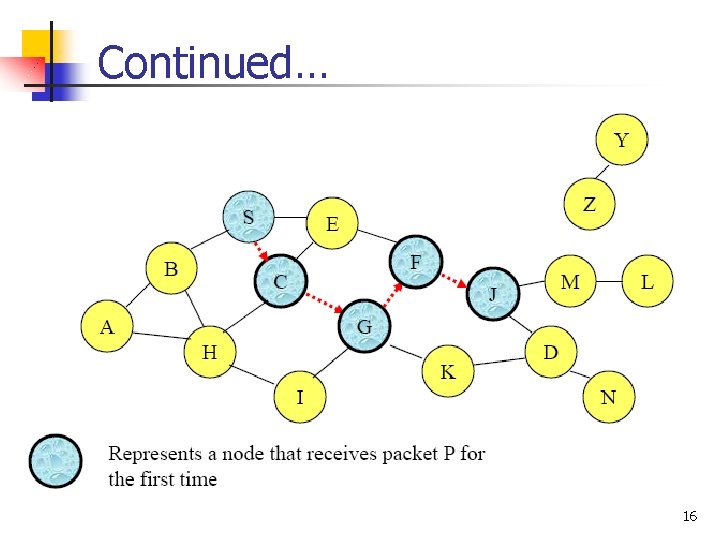
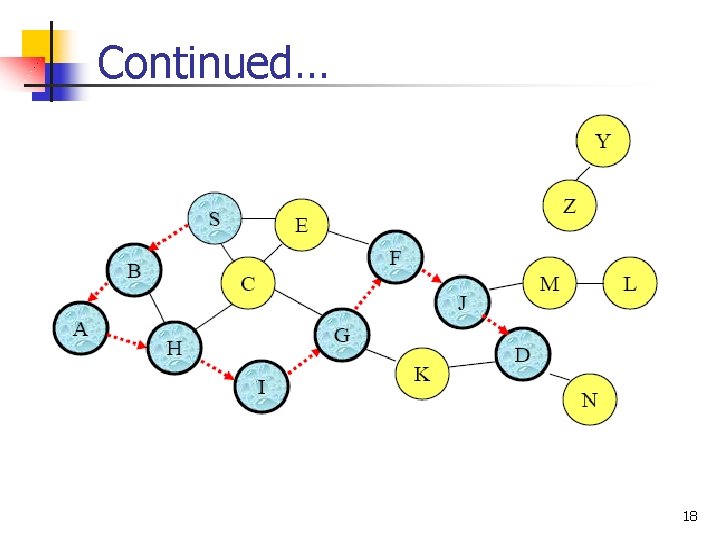
Gossiping n n Gossiping reduces the redundant transmissions In gossiping, every node forwards the packets only to one randomly selected neighbour 11
Continued… 12
Continued… 13
Continued… 14
Continued… 15
Continued… 16
Continued… 17
Continued… 18
Gossiping n n Gossiping reduces the overhead of redundant transmissions However, gossiping can result in very longer paths, which lead to: n n n Delay Energy wastage on intermediate nodes Possible failure of delivery of sensor data 19
Sensor Protocols for Information via Negotiation (SPIN) n n SPIN is a data‐centric protocol that negotiates the sensed data to other nodes in the WSN The base station can then get the data quickly by querying any node in the network 20
Continued… n n n A data descriptor called “meta‐data” is used to describe and negotiate the data Meta‐data is used to completely describe a data collected by sensor node A key requirement is that if “a” describes the metadata for some “A” the size of “a” must be less than size of “A” 21
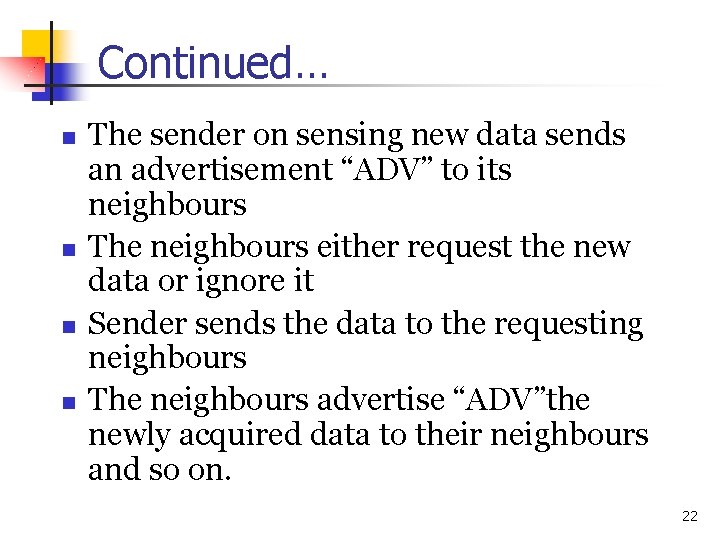
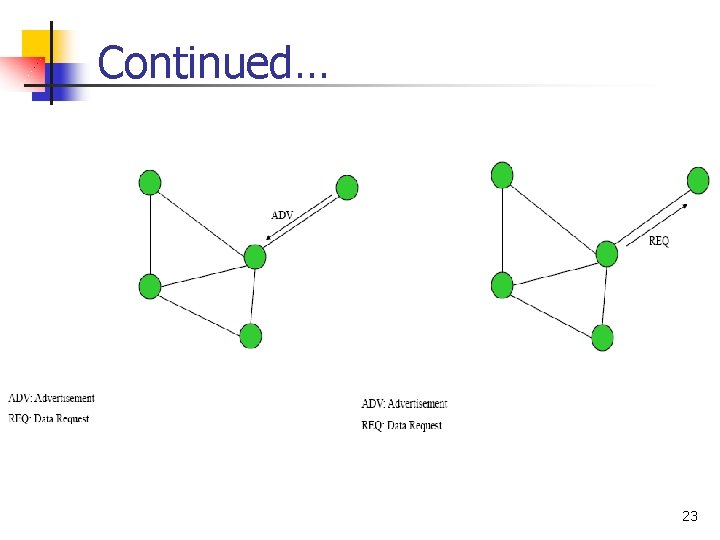
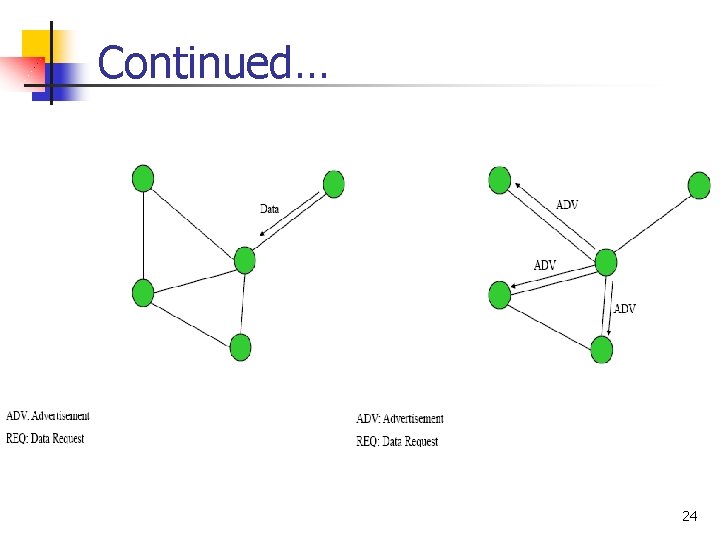
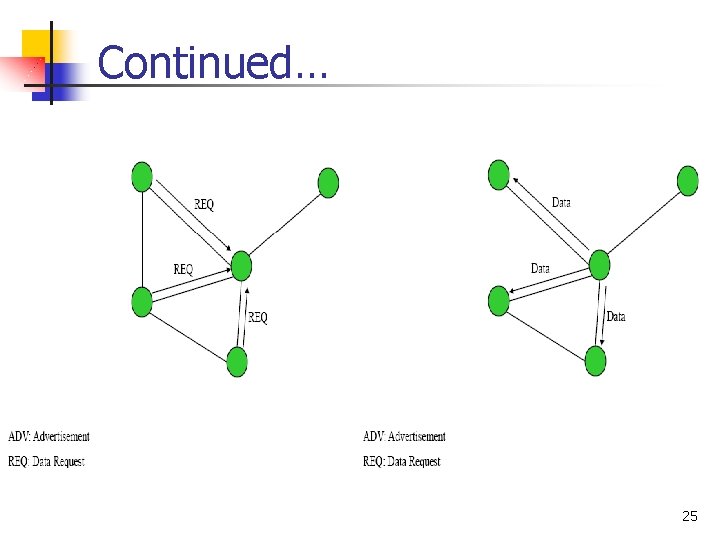
Continued… n n The sender on sensing new data sends an advertisement “ADV” to its neighbours The neighbours either request the new data or ignore it Sender sends the data to the requesting neighbours The neighbours advertise “ADV”the newly acquired data to their neighbours and so on. 22
Continued… 23
Continued… 24
Continued… 25
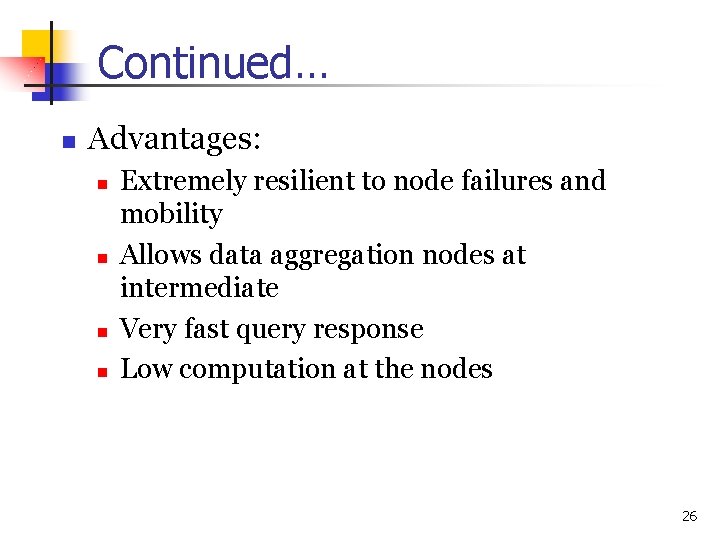
Continued… n Advantages: n n Extremely resilient to node failures and mobility Allows data aggregation nodes at intermediate Very fast query response Low computation at the nodes 26
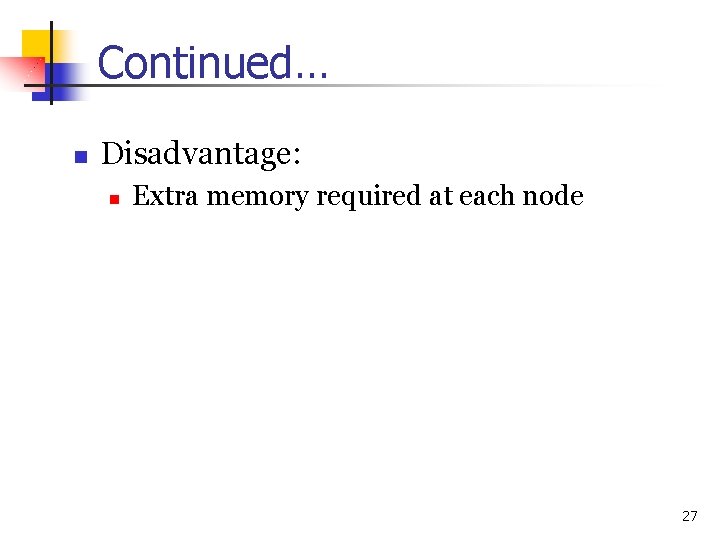
Continued… n Disadvantage: n Extra memory required at each node 27
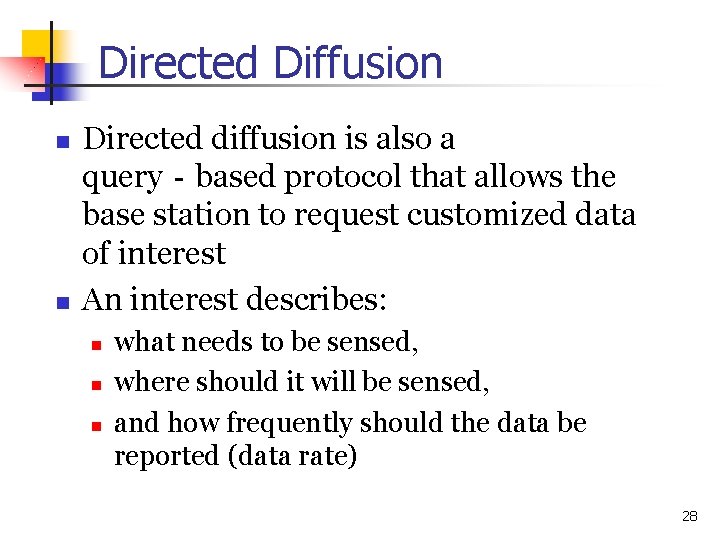
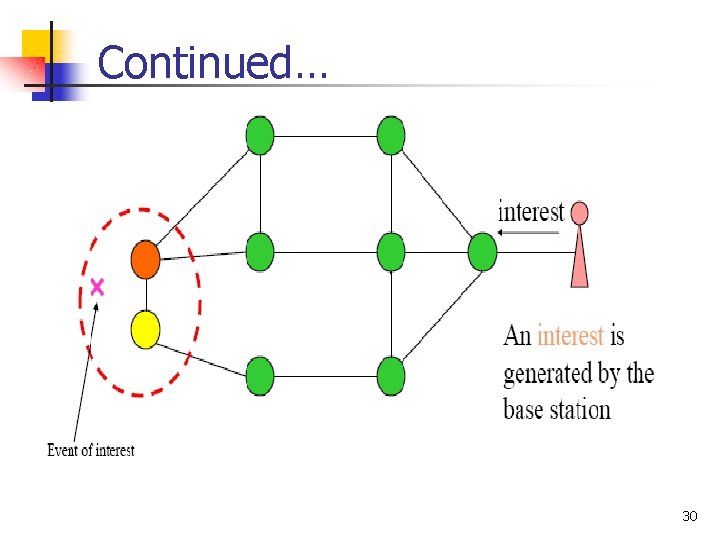
Directed Diffusion n n Directed diffusion is also a query‐based protocol that allows the base station to request customized data of interest An interest describes: n n n what needs to be sensed, where should it will be sensed, and how frequently should the data be reported (data rate) 28
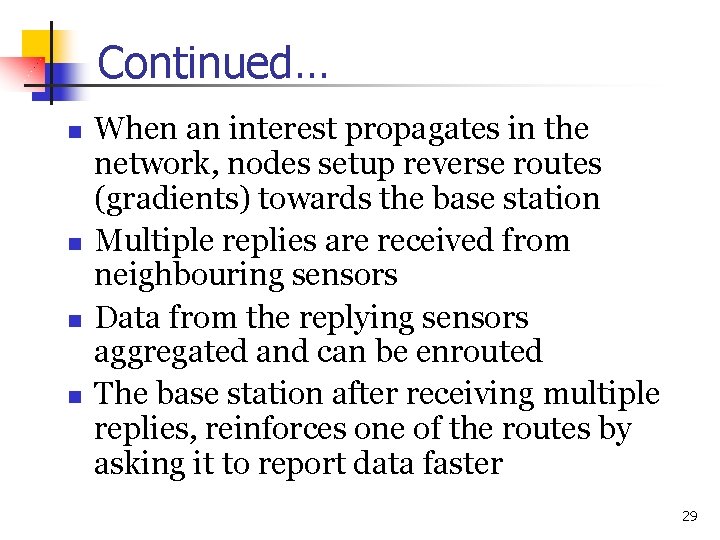
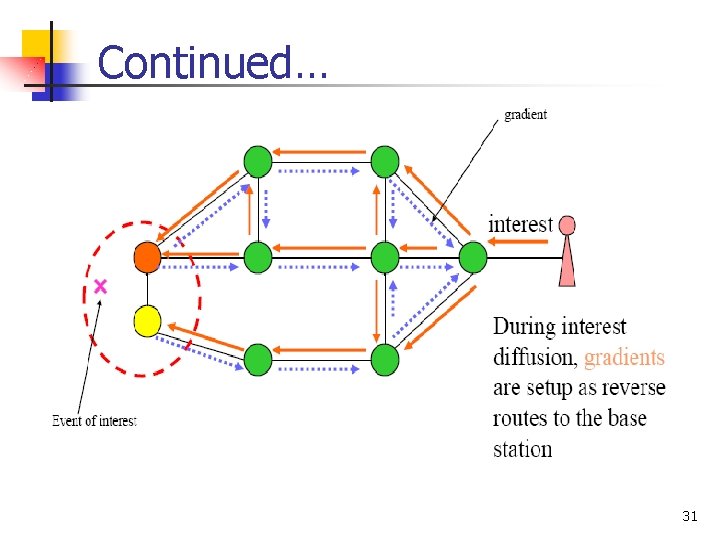
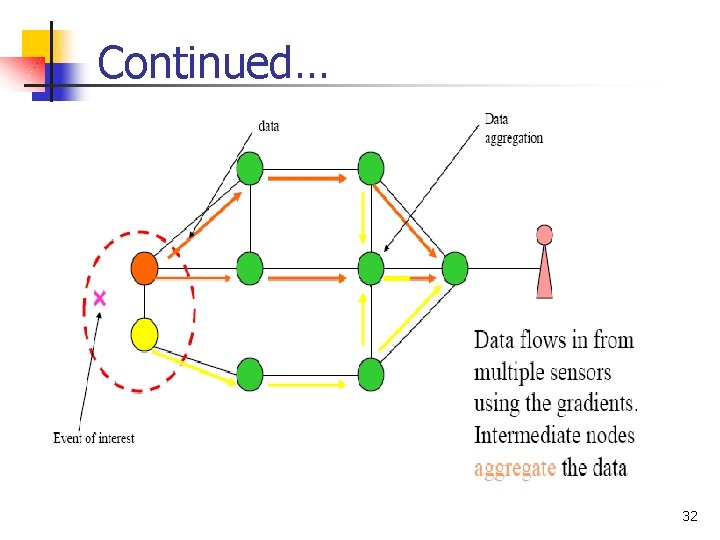
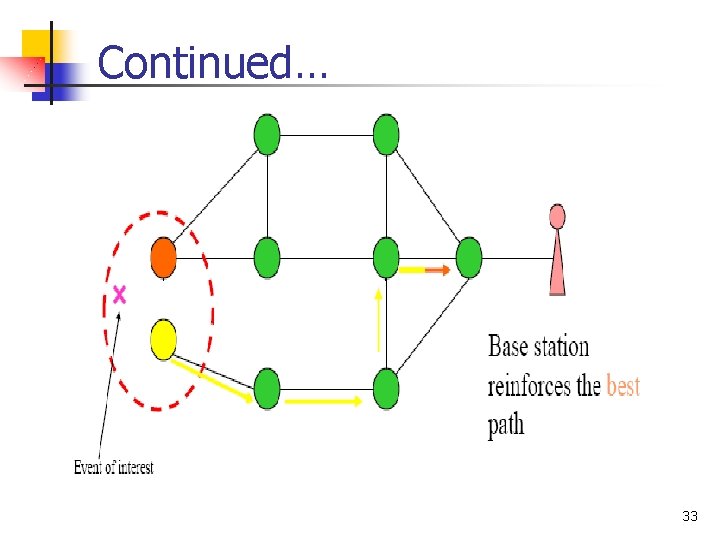
Continued… n n When an interest propagates in the network, nodes setup reverse routes (gradients) towards the base station Multiple replies are received from neighbouring sensors Data from the replying sensors aggregated and can be enrouted The base station after receiving multiple replies, reinforces one of the routes by asking it to report data faster 29
Continued… 30
Continued… 31
Continued… 32
Continued… 33