
WRITING WITH A PLAN Prewriting and Brainstorming WHAT
WRITING WITH A PLAN Prewriting and Brainstorming
WHAT IS THE POINT OF BRAINSTORMING? � Encouraging Creative Energy � Experimenting � Thought � Trial with Organization Collection and Error
HOW TO APPROACH PREWRITING It’s good practice to approach writing like taking a trip. Prewriting is the planning stage. Ask yourself: � Where are you going? (topic/argument) � What kind of trip are you taking? (genre) � Who is going with you? (audience) � How are you going to get there? (plan for approaching and organizing your paper) � What will you be doing and why? (your sub-topics, supports, and examples)
WHAT ARE SOME WAYS WE “BRAINSTORM” IN EVERYDAY LIFE?
BRAINSTORMING METHODS The “Brainstorming” stage of prewriting allows you to collect and generate ideas that may make it into whatever you’re writing. Some Idea-Generating Brainstorming Methods � Idea Encouraging Activities � Asking & Answering Questions � List Building � Thought Maps � Free-Writing
IDEA ENCOURAGING ACTIVITIES Activities or tasks that allow/encourage your mind to work through your topic away from the pressure of the blank page. AKA “The Shower Principle” � Exercising � Taking walks—without music � Meditation � Reading � Going to a coffee shop
ASKING & ANSWERING QUESTIONS This practice allows you to sift through ideas by asking yourself about them and then answering those questions. � Why is this information important? � How can I best communicate this information to readers? � Is this point necessary? � How can I emphasize this point’s importance?
LIST BUILDING The fairly simple practice of making lists that can help you see connections, contrasts and relevance that might not be obvious otherwise. � Examples � Causes/Effects � Characteristics � Etc. � *You should never limit yourself when listing, write until you run out of ideas then start thinking more critically—can be combined with “Asking & Answering”
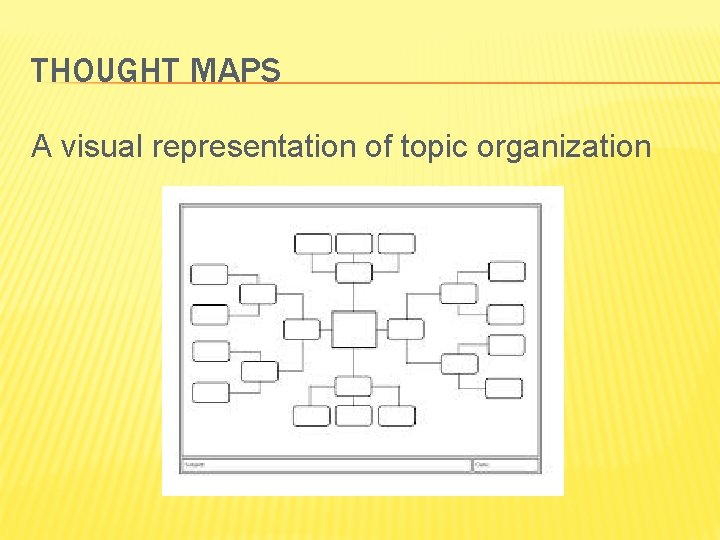
THOUGHT MAPS A visual representation of topic organization
FREE-WRITING “Free-Writing” is essentially the practice of sitting down with a pen, a piece of paper, and a topic and writing whatever comes into your head. � This allows you to gauge what your ideas and feelings on your topic are before you start sorting through them to make connections or decide which ideas to expand upon. � It is best if you time yourself (ex: limit yourself to 20 minutes or something manageable)
- Slides: 10