
Writing Task Two LO To plan the build
Writing Task Two LO: To plan the build up and problem to my story. I can use my plan to organise my ideas. I can include emotive language to add effect to my writing. I can use a variety of features such as adjectives and expanded noun phrases in my writing.

Before you start, follow this link to the website: https: //play. edshed. com/login Type in your details and click sign in. Click play.
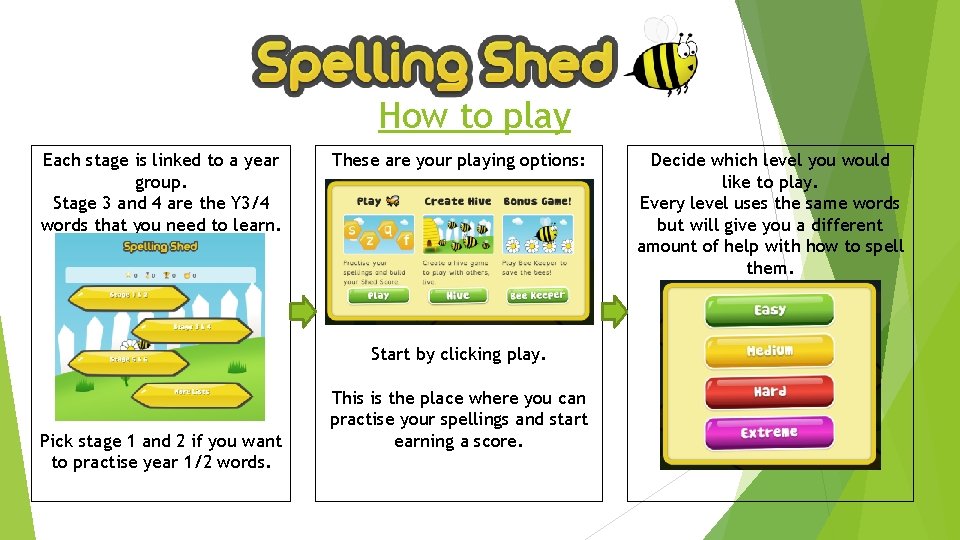
How to play Each stage is linked to a year group. Stage 3 and 4 are the Y 3/4 words that you need to learn. These are your playing options: Start by clicking play. Pick stage 1 and 2 if you want to practise year 1/2 words. This is the place where you can practise your spellings and start earning a score. Decide which level you would like to play. Every level uses the same words but will give you a different amount of help with how to spell them.

Playing against friends Click the ‘create Hive’ button. Pick how hard you want the game to be. You will get a code. Give your friends this code so they can join your Hive game. To join a Hive game, go to your account, click on the 3 lines in the top left hand corner. Select join hive game and enter the code you have been given. You can then have a spelling competition against those who have joined the ‘hive’ game. Things to remember: 1. You can only play a hive game when all those in the ‘hive’ are online. 2. Only people in your school will be able to join your ‘hive’ game. 3. Only one person can start a hive game.
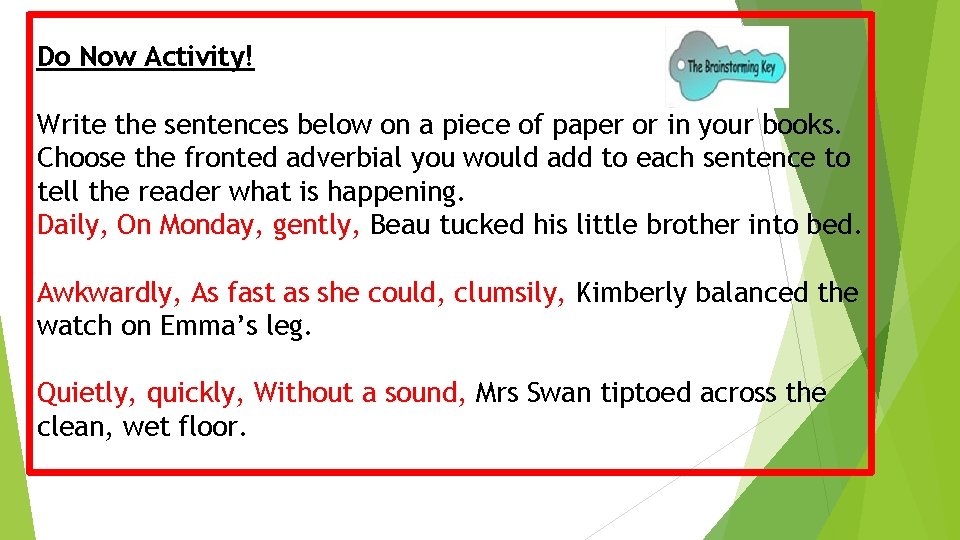
Do Now Activity! Write the sentences below on a piece of paper or in your books. Choose the fronted adverbial you would add to each sentence to tell the reader what is happening. Daily, On Monday, gently, Beau tucked his little brother into bed. Awkwardly, As fast as she could, clumsily, Kimberly balanced the watch on Emma’s leg. Quietly, quickly, Without a sound, Mrs Swan tiptoed across the clean, wet floor.
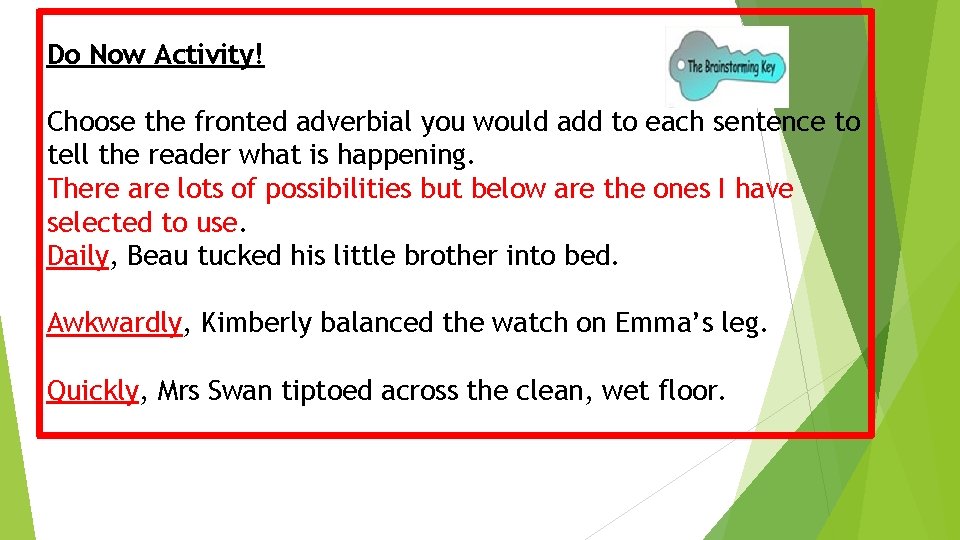
Do Now Activity! Choose the fronted adverbial you would add to each sentence to tell the reader what is happening. There are lots of possibilities but below are the ones I have selected to use. Daily, Beau tucked his little brother into bed. Awkwardly, Kimberly balanced the watch on Emma’s leg. Quickly, Mrs Swan tiptoed across the clean, wet floor.
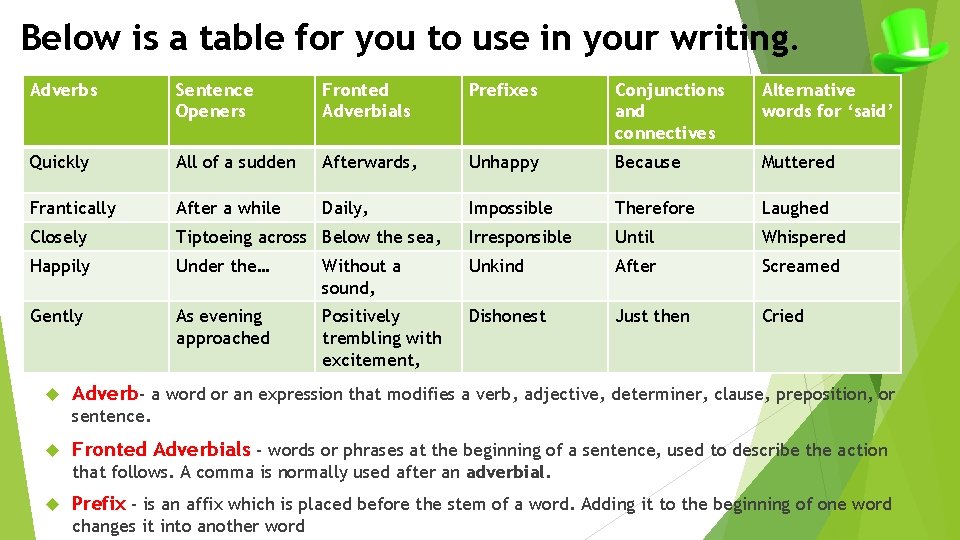
Below is a table for you to use in your writing. Adverbs Sentence Openers Fronted Adverbials Prefixes Conjunctions and connectives Alternative words for ‘said’ Quickly All of a sudden Afterwards, Unhappy Because Muttered Frantically After a while Daily, Impossible Therefore Laughed Closely Tiptoeing across Below the sea, Irresponsible Until Whispered Happily Under the… Without a sound, Unkind After Screamed Gently As evening approached Positively trembling with excitement, Dishonest Just then Cried Adverb- a word or an expression that modifies a verb, adjective, determiner, clause, preposition, or sentence. Fronted Adverbials - words or phrases at the beginning of a sentence, used to describe the action that follows. A comma is normally used after an adverbial. Prefix - is an affix which is placed before the stem of a word. Adding it to the beginning of one word changes it into another word
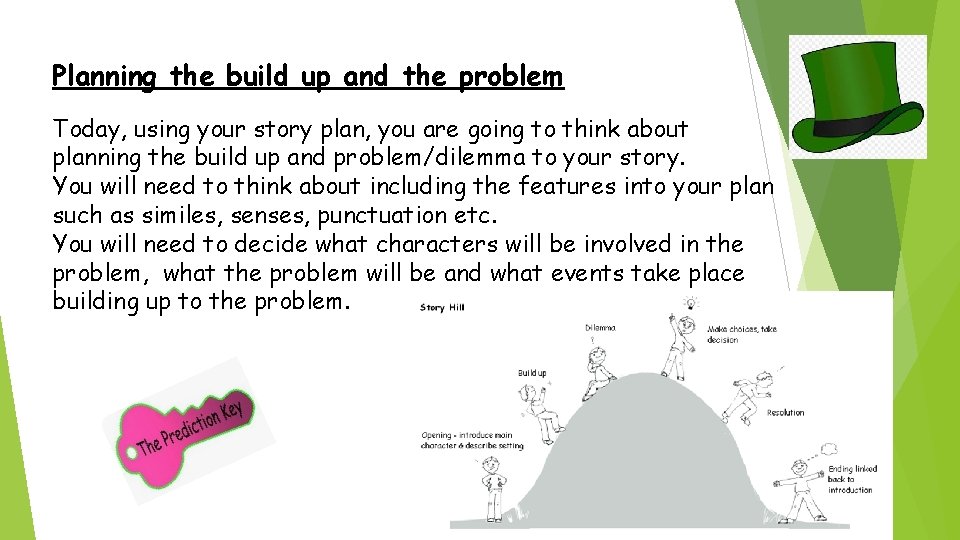
Planning the build up and the problem Today, using your story plan, you are going to think about planning the build up and problem/dilemma to your story. You will need to think about including the features into your plan such as similes, senses, punctuation etc. You will need to decide what characters will be involved in the problem, what the problem will be and what events take place building up to the problem.
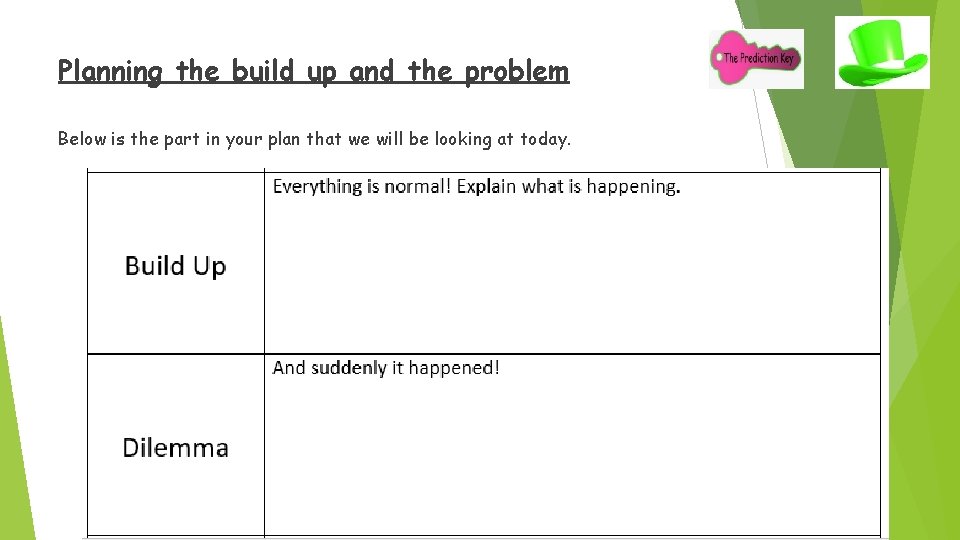
Planning the build up and the problem Below is the part in your plan that we will be looking at today.
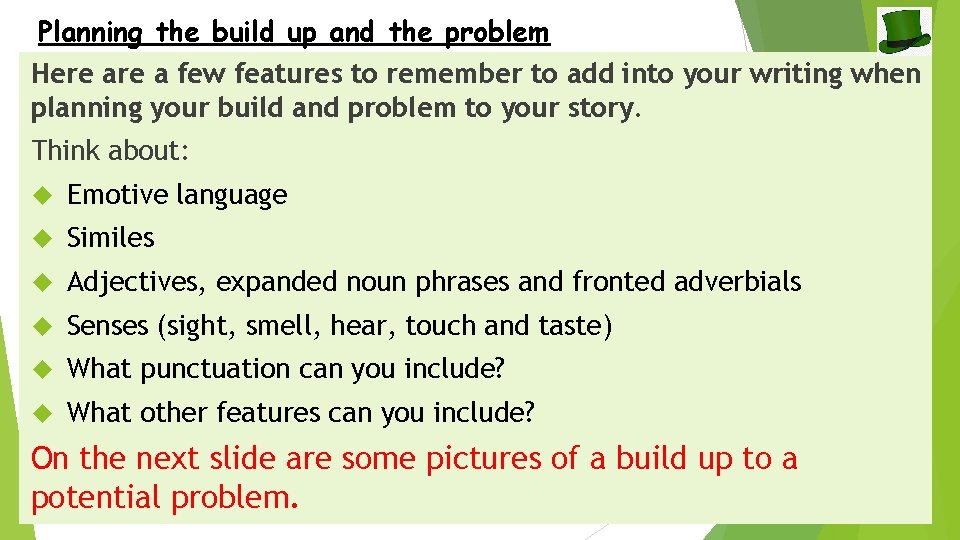
Planning the build up and the problem Here a few features to remember to add into your writing when planning your build and problem to your story. Think about: Emotive language Similes Adjectives, expanded noun phrases and fronted adverbials Senses (sight, smell, hear, touch and taste) What punctuation can you include? What other features can you include? On the next slide are some pictures of a build up to a potential problem.
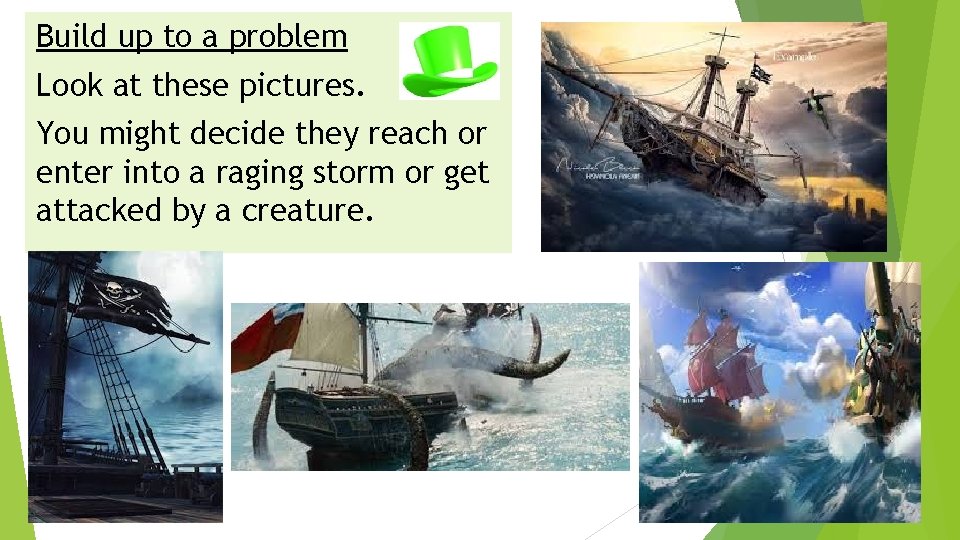
Build up to a problem Look at these pictures. You might decide they reach or enter into a raging storm or get attacked by a creature.
Planning the build up and the problem Here a few features to remember to add into your writing when planning your build and problem to your story. Think about: Emotive language Similes Adjectives, expanded noun phrases and fronted adverbials Senses (sight, smell, hear, touch and taste) What punctuation can you include? What other features can you include?
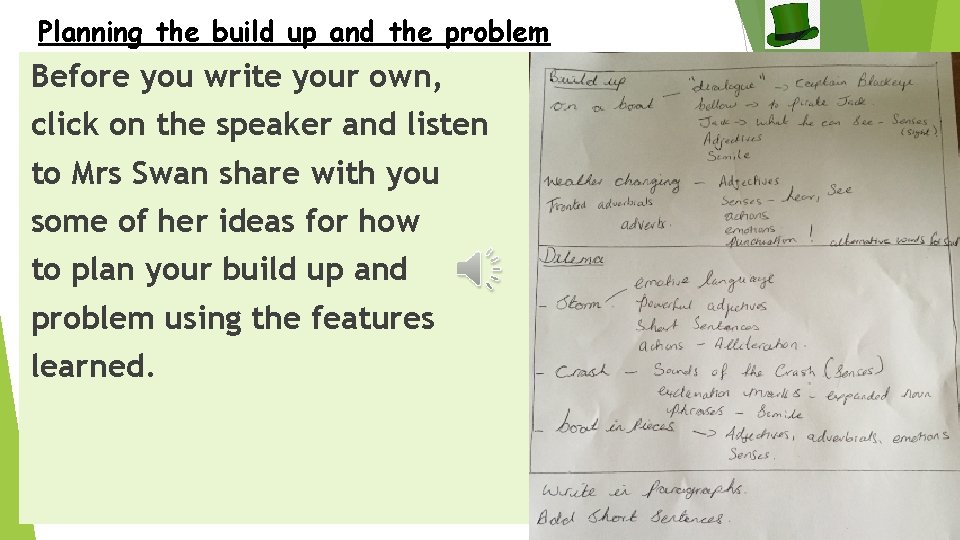
Planning the build up and the problem Before you write your own, click on the speaker and listen to Mrs Swan share with you some of her ideas for how to plan your build up and problem using the features learned.
Once you have completed your task, read back through it and check for any errors. Also, check that you are happy with it and that you have not missed anything out. Now is the time for you to make any changes to it before writing it up. Remember to check your spelling too. Tomorrow, we will look at this in more detail and I will reveal what I have written for my story. However, I will not reveal all as it is your ideas we want to read.
Exit ticket Write down a list of things that your build up should include.
Exit ticket Write down a list of things that your build up should include. Your build up should contain powerful language to describe the start of the build up. Using exclamation marks to show the emotion. Senses to describe what is happening. Different sentence starters, using alternative words for ‘said’, using speech whether it is one person speaking or a conversation between characters. Fronted adverbials to make the sentences sound interesting, alliteration, similes, short sentences and paragraphs.
- Slides: 16