
Writing Subject Level TEF in Biomedical Sciences Kim
Writing Subject Level TEF in Biomedical Sciences Kim Greenwood and Sal Jarvis
Context UH Context • Ten Schools: Biomedical Science is in the School of Life and Medical Sciences • Students: 579 on Biosciences Programme across 5 pathways - 356 Biomedical Science. • 50% BME, over 50% female, 14% mature. Subject Level Pilot • In model B pilot – but also entered TEF 3 – this was quite hard work! • Twenty three subjects in the mix in the subject level pilot • Biomedical Science subject featured under Subjects Allied to Medicine – not Biosciences

The UH approach to Subject Level TEF • To work at a central and a local level simultaneously. Used local teams with a core team (made up of representatives from local teams and a subject level central team) • We appointed critical friends to each group, to support and challenge teams, and to maintain a connection with the ‘big picture’ being developed at UH. • We made additional central administration support available, to help with the teaching intensity survey or other administration. • There were different levels of activity going on: • At university level – for example Careers and Employment service • At School level – for example Academic Support Units • At programme level – for example Research Informed Teaching activity “Knitting” these together was a real challenge!

UH Biosciences Programme TEF Category Natural Sciences Medical and Health Sciences Subjects Allied to Medicine Biomedical Science Biosciences Biological Science Biochemistry Molecular Biology Pharmacology
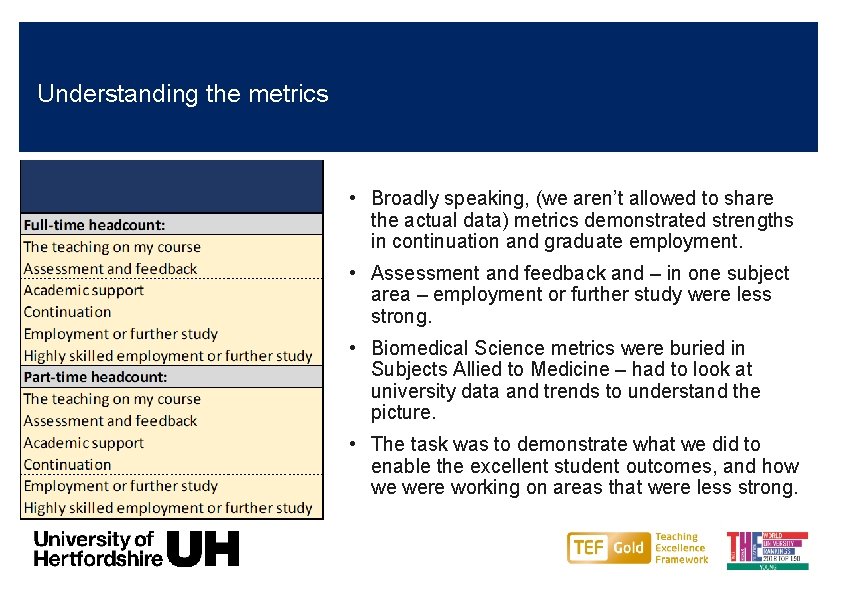
Understanding the metrics • Broadly speaking, (we aren’t allowed to share the actual data) metrics demonstrated strengths in continuation and graduate employment. • Assessment and feedback and – in one subject area – employment or further study were less strong. • Biomedical Science metrics were buried in Subjects Allied to Medicine – had to look at university data and trends to understand the picture. • The task was to demonstrate what we did to enable the excellent student outcomes, and how we were working on areas that were less strong.
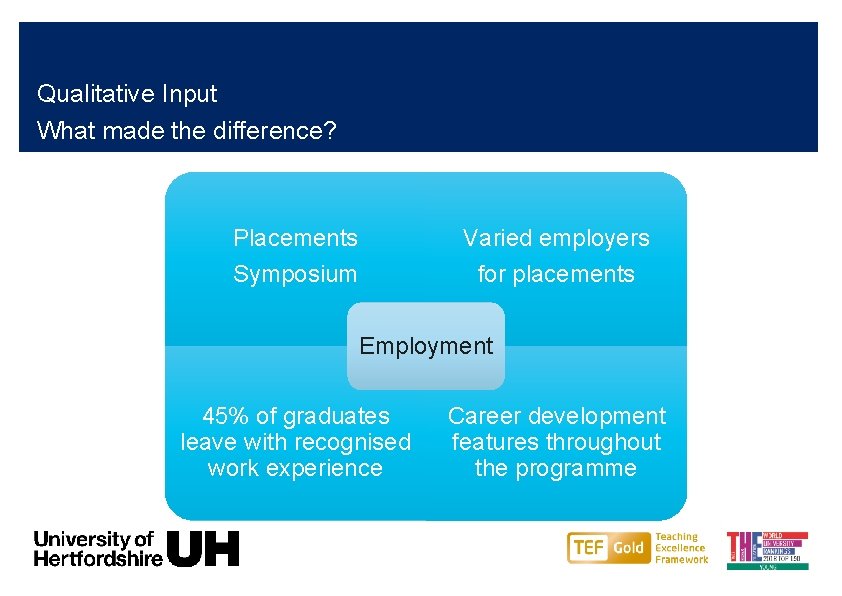
Qualitative Input What made the difference? Placements Varied employers Symposium for placements Employment 45% of graduates leave with recognised work experience Career development features throughout the programme
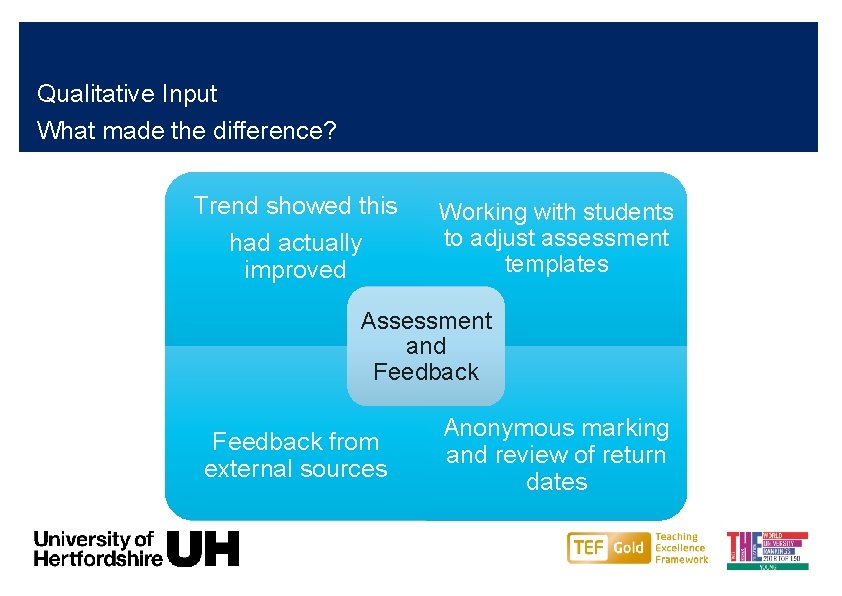
Qualitative Input What made the difference? Trend showed this had actually improved Working with students to adjust assessment templates Assessment and Feedback from external sources Anonymous marking and review of return dates
Reflections • Connect your story to your university vision, values and strategy • Be confident and positive about your programmes • Review initiatives – demonstrate impact • Involve people – include staff and students at all levels • Challenge yourselves – and find a critical friend! • Understand your data from institution to programme level - & then interrogate the metrics • Use the experience to improve your programmes to review good practice.
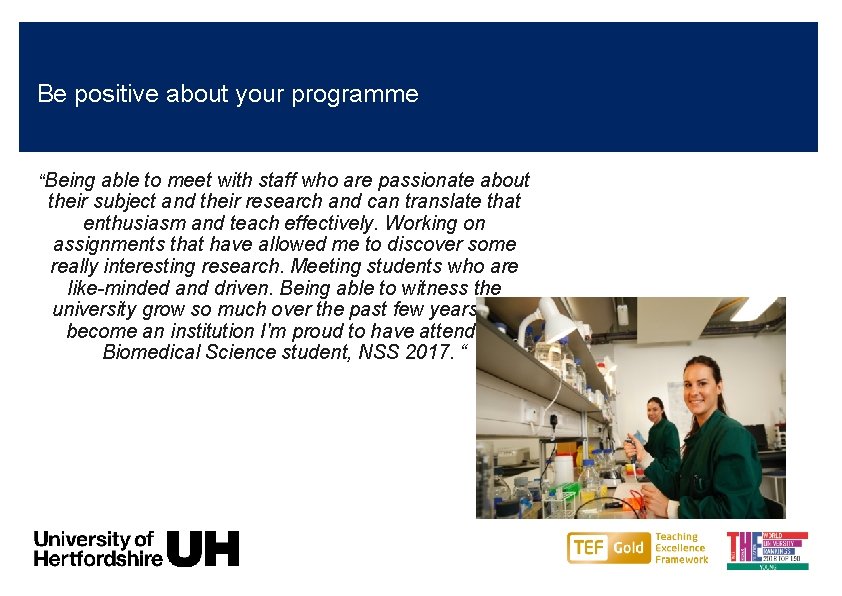
Be positive about your programme “Being able to meet with staff who are passionate about their subject and their research and can translate that enthusiasm and teach effectively. Working on assignments that have allowed me to discover some really interesting research. Meeting students who are like-minded and driven. Being able to witness the university grow so much over the past few years and become an institution I'm proud to have attended. Biomedical Science student, NSS 2017. “
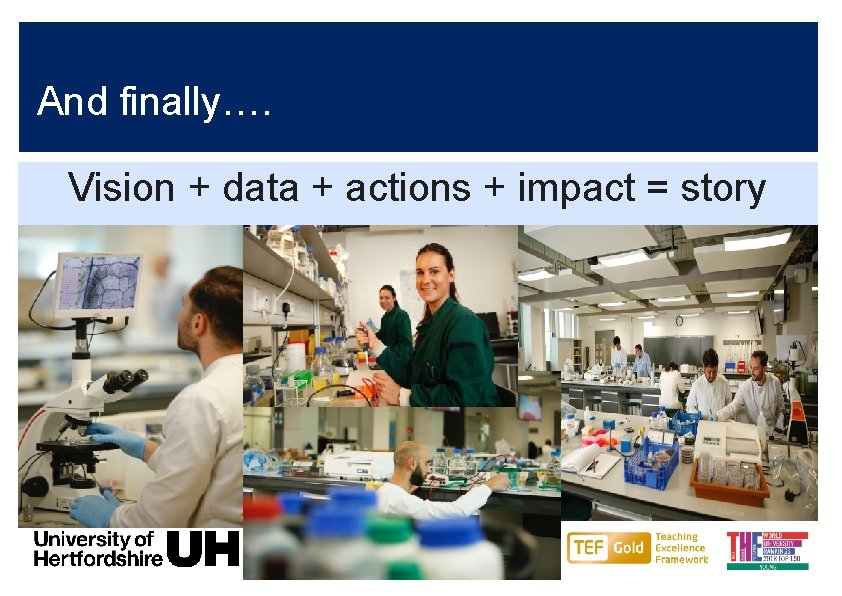
And finally…. Vision + data + actions + impact = story
Acknowledgements • Dr Pryank Patel – Provided the Biosciences narratives to feed into submissions. • Sarah Flynn – Natural Sciences Submission • Dr Shivani Sharma – Medical & Health Sciences Submission • Dr Frank Haddleton – (Director of AQ) SL-TEF support
- Slides: 11