
Writing Persuasive Messages Copyright 2010 Pearson Education International
- Slides: 30
Writing Persuasive Messages Copyright © 2010 Pearson Education International Chapter 10 - 1
Learning Objectives • Apply the three-step writing process to persuasive messages • Identify seven ways to establish credibility in persuasive messages • Describe the AIDA model for persuasive messages Copyright © 2010 Pearson Education International Chapter 10 - 2
Learning Objectives • Distinguish between emotional and logical appeals and discuss how to balance them • Describe five essential steps in developing sales and marketing messages • Identify steps you can take to avoid ethical lapses in marketing and sales messages Copyright © 2010 Pearson Education International Chapter 10 - 3
The Three-Step Process • Persuasion – Asking for something of value – Asking audience to take action Copyright © 2010 Pearson Education International Chapter 10 - 4
Plan the Message • Analyze your situation • Gather information • Select the medium • Organize your information Copyright © 2010 Pearson Education International Chapter 10 - 5
Analyze the Situation • Audience • Purpose – Demographics – Request action – Psychographics – Prompt decisions – Motivation – Change attitudes Copyright © 2010 Pearson Education International Chapter 10 - 6
Gather Information • Knowledge • Beliefs • Emotions Copyright © 2010 Pearson Education International Chapter 10 - 7
Select the Medium • Electronic mail • Social media • Personal attention • Technological reach Copyright © 2010 Pearson Education International Chapter 10 - 8
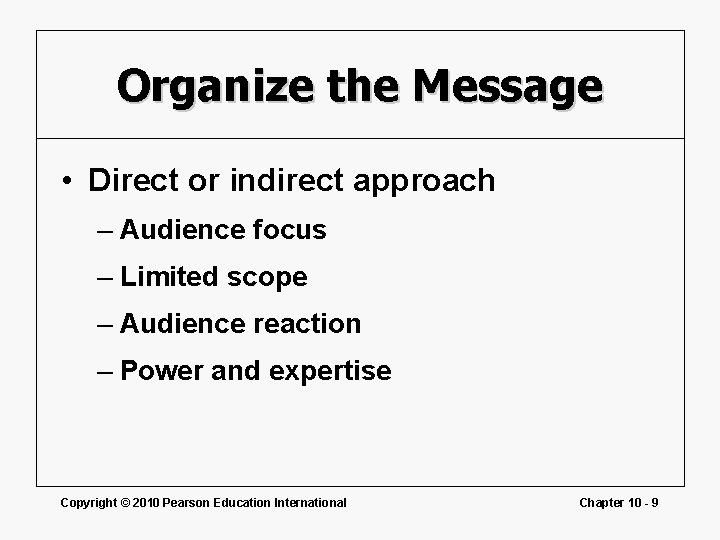
Organize the Message • Direct or indirect approach – Audience focus – Limited scope – Audience reaction – Power and expertise Copyright © 2010 Pearson Education International Chapter 10 - 9
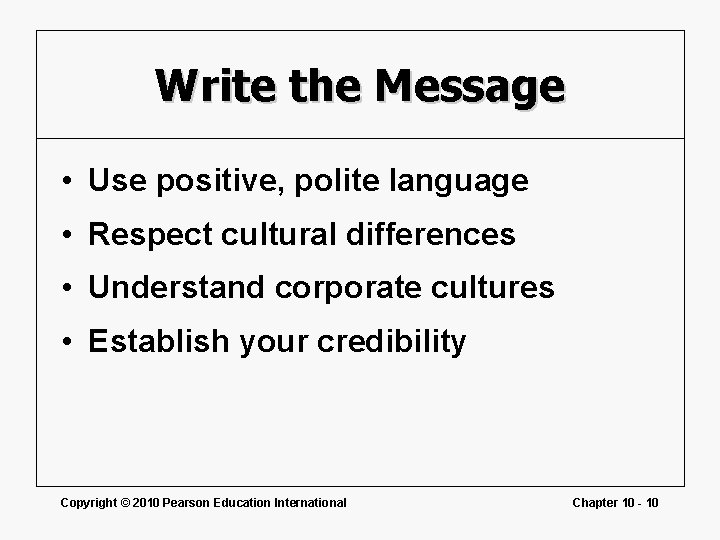
Write the Message • Use positive, polite language • Respect cultural differences • Understand corporate cultures • Establish your credibility Copyright © 2010 Pearson Education International Chapter 10 - 10
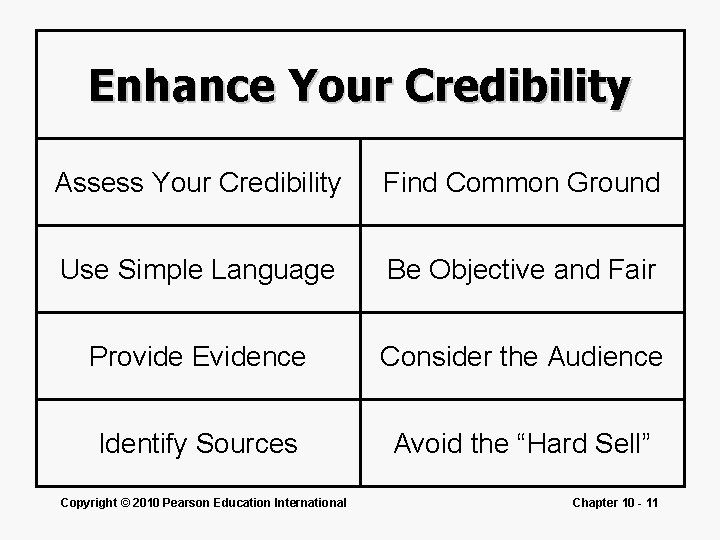
Enhance Your Credibility Assess Your Credibility Find Common Ground Use Simple Language Be Objective and Fair Provide Evidence Consider the Audience Identify Sources Avoid the “Hard Sell” Copyright © 2010 Pearson Education International Chapter 10 - 11
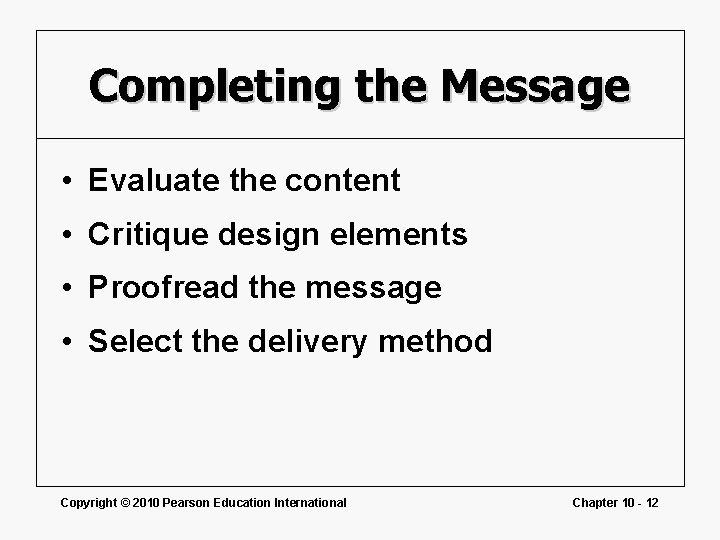
Completing the Message • Evaluate the content • Critique design elements • Proofread the message • Select the delivery method Copyright © 2010 Pearson Education International Chapter 10 - 12
Persuasive Messages • Four essential strategies – Frame your arguments (AIDA Model) – Balance emotion and logic – Reinforce your position – Anticipate objections Copyright © 2010 Pearson Education International Chapter 10 - 13
Using the AIDA Model • Attention • Interest • Desire • Action Copyright © 2010 Pearson Education International Chapter 10 - 14
Write Balanced Messages • Emotions • Logic – Feelings – Analogy – Sympathies – Induction – Needs – Deduction Copyright © 2010 Pearson Education International Chapter 10 - 15
Avoiding Faulty Logic • • Hasty generalizations Circular reasoning Attacking the opponent Oversimplification Cause and effect assumptions Faulty analogies Illogical support Copyright © 2010 Pearson Education International Chapter 10 - 16
Reinforce Your Position • Powerful words • Figures of speech • Right timing Copyright © 2010 Pearson Education International Chapter 10 - 17
Anticipate Objections • Test your theories • Ask the audience • Present all sides Copyright © 2010 Pearson Education International Chapter 10 - 18
Types of Persuasive Messages • Requests for action • Presentation of ideas • Requests for claims or adjustments Copyright © 2010 Pearson Education International Chapter 10 - 19
Marketing and Selling • Marketing messages – Information – Goodwill • Sales messages – Action – Purchase Copyright © 2010 Pearson Education International Chapter 10 - 20
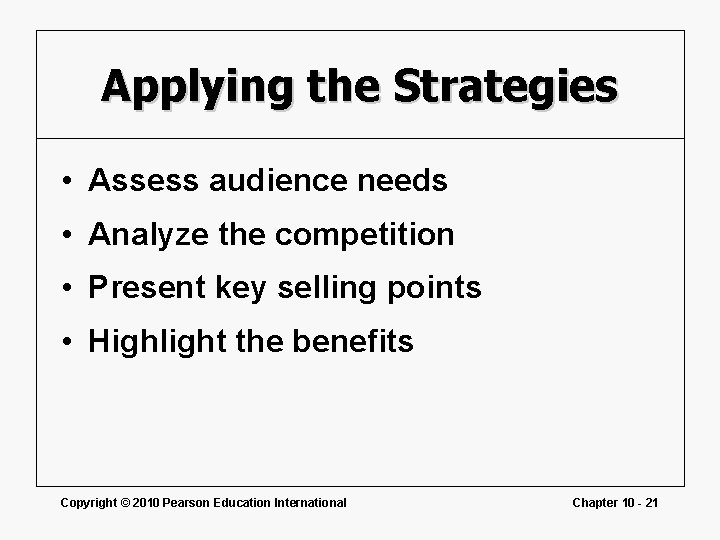
Applying the Strategies • Assess audience needs • Analyze the competition • Present key selling points • Highlight the benefits Copyright © 2010 Pearson Education International Chapter 10 - 21
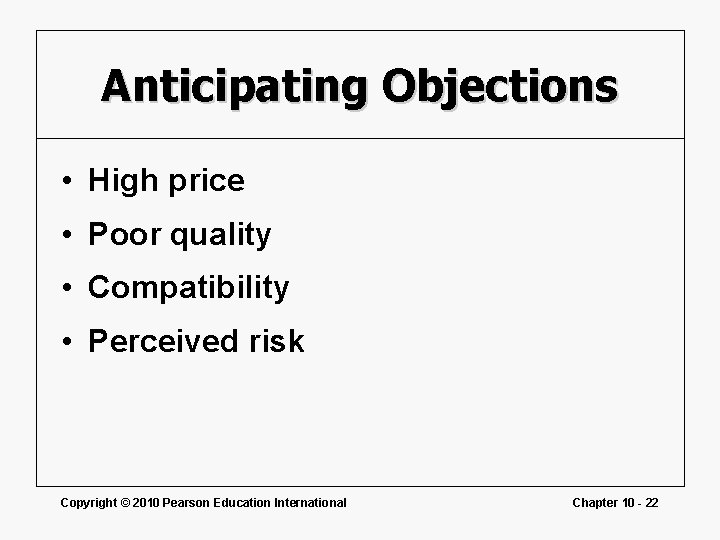
Anticipating Objections • High price • Poor quality • Compatibility • Perceived risk Copyright © 2010 Pearson Education International Chapter 10 - 22
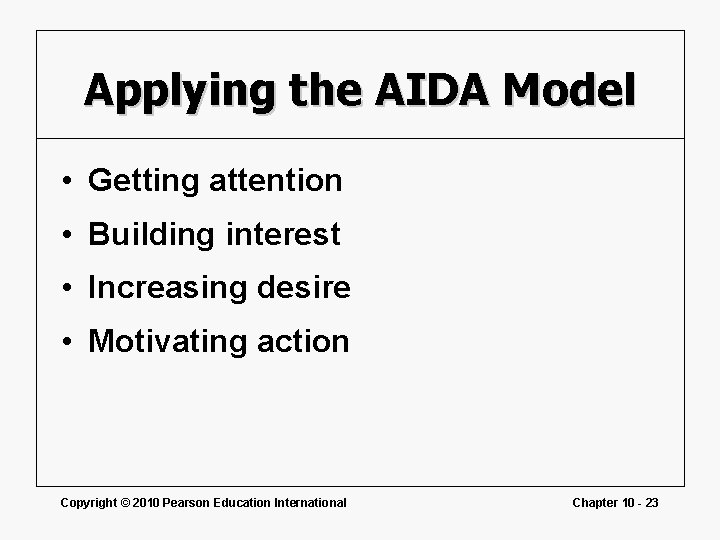
Applying the AIDA Model • Getting attention • Building interest • Increasing desire • Motivating action Copyright © 2010 Pearson Education International Chapter 10 - 23
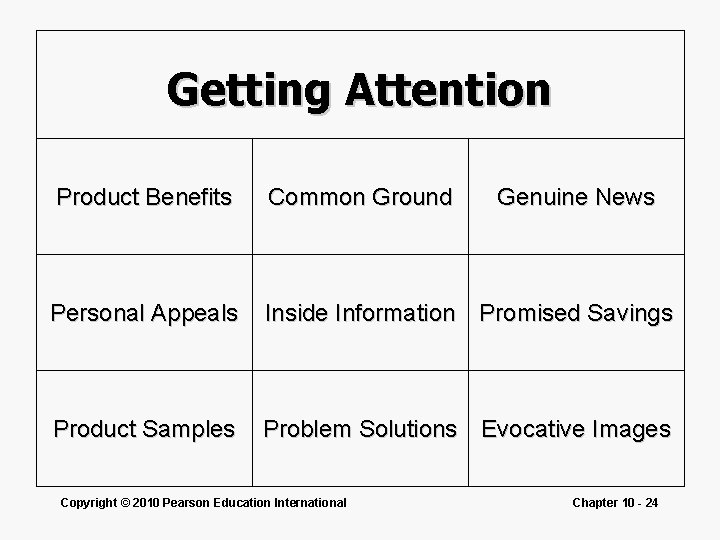
Getting Attention Product Benefits Common Ground Personal Appeals Inside Information Promised Savings Product Samples Problem Solutions Evocative Images Copyright © 2010 Pearson Education International Genuine News Chapter 10 - 24
Building Interest • Build intrigue • Support promises • Highlight benefits Copyright © 2010 Pearson Education International Chapter 10 - 25
Increasing Desire • Focus on the audience • Emphasize the benefits • Support your claims Copyright © 2010 Pearson Education International Chapter 10 - 26
Motivating Action • The next step • A sense of urgency • Professionalism Copyright © 2010 Pearson Education International Chapter 10 - 27
Using Social Media • Conversation marketing and social commerce – Interactive – Networked – Multidirectional – Persuasive Copyright © 2010 Pearson Education International Chapter 10 - 28
Social Media Guidelines • Facilitate community building • Initiate and respond to conversations • Identify and support your champions • Don’t rely on the news media • Use the AIDA model as needed Copyright © 2010 Pearson Education International Chapter 10 - 29
Maintaining High Standards • Business ethics • Legal compliance • Business etiquette Copyright © 2010 Pearson Education International Chapter 10 - 30