
Writing Negative Messages Prentice Hall 2008 Business Communication
Writing Negative Messages © Prentice Hall, 2008 Business Communication Today, 9 e 1
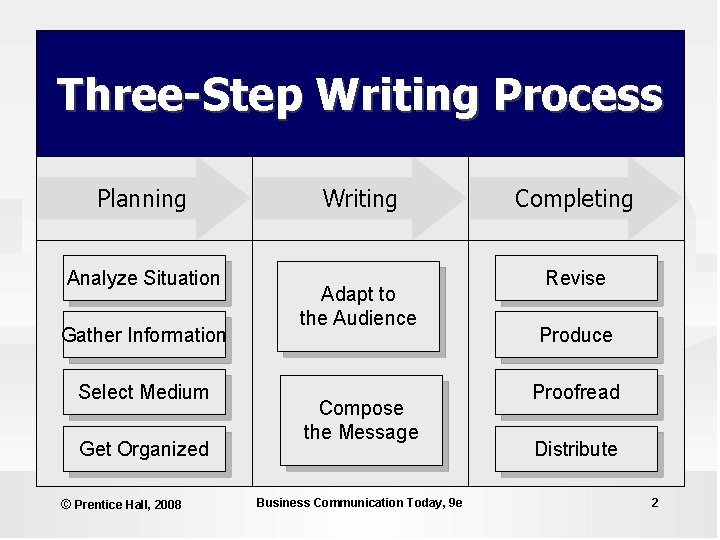
Three-Step Writing Process Planning Analyze Situation Gather Information Select Medium Get Organized © Prentice Hall, 2008 Writing Adapt to the Audience Compose the Message Business Communication Today, 9 e Completing Revise Produce Proofread Distribute 2

Convey the Message Gain Acceptance Negative Messages Maintain Goodwill Build Corporate Image Minimize Future Correspondence © Prentice Hall, 2008 Business Communication Today, 9 e 3
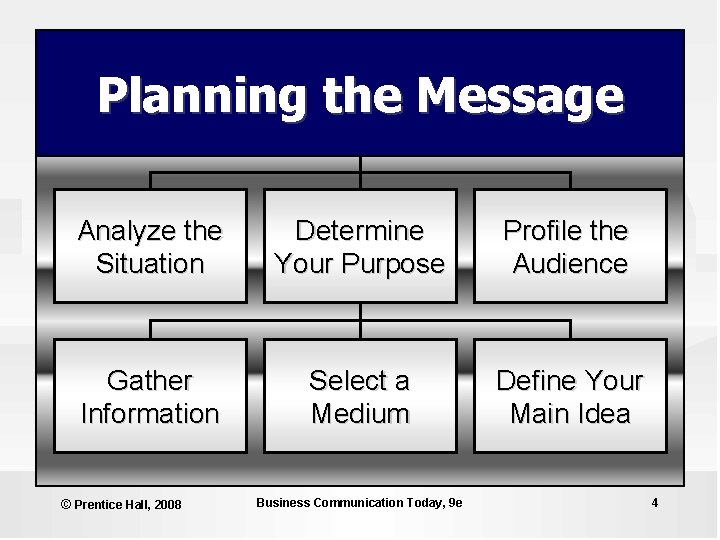
Planning the Message Analyze the Situation Determine Your Purpose Profile the Audience Gather Information Select a Medium Define Your Main Idea © Prentice Hall, 2008 Business Communication Today, 9 e 4
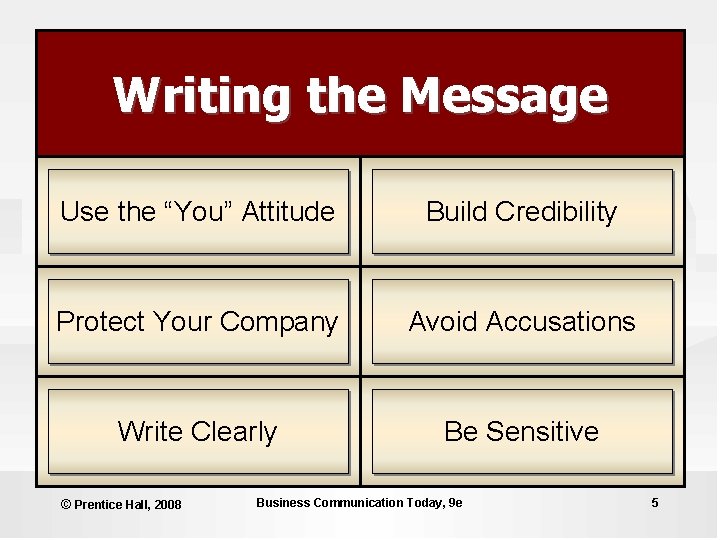
Writing the Message Use the “You” Attitude Build Credibility Protect Your Company Avoid Accusations Write Clearly Be Sensitive © Prentice Hall, 2008 Business Communication Today, 9 e 5
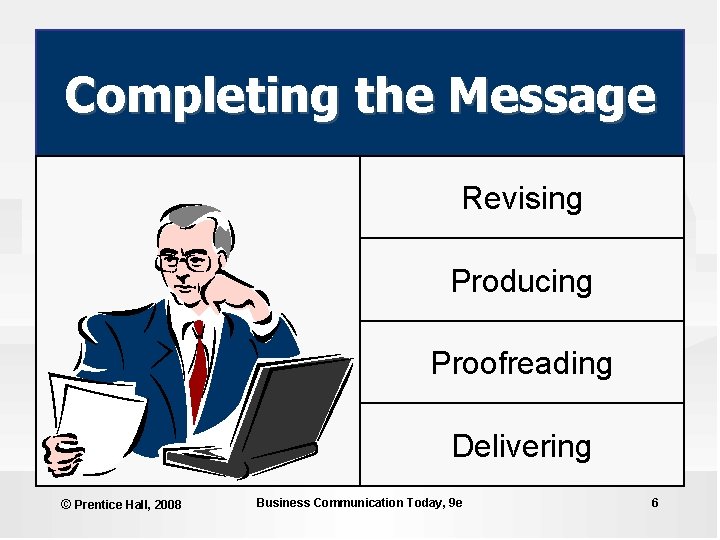
Completing the Message Revising Producing Proofreading Delivering © Prentice Hall, 2008 Business Communication Today, 9 e 6
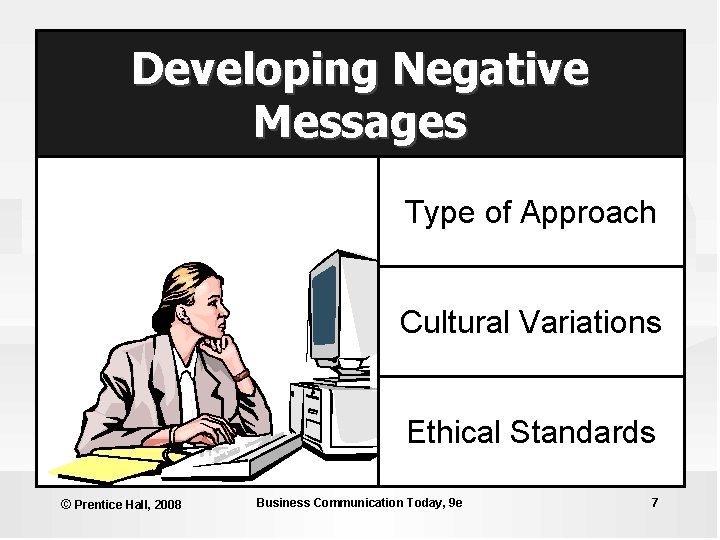
Developing Negative Messages Type of Approach Cultural Variations Ethical Standards © Prentice Hall, 2008 Business Communication Today, 9 e 7
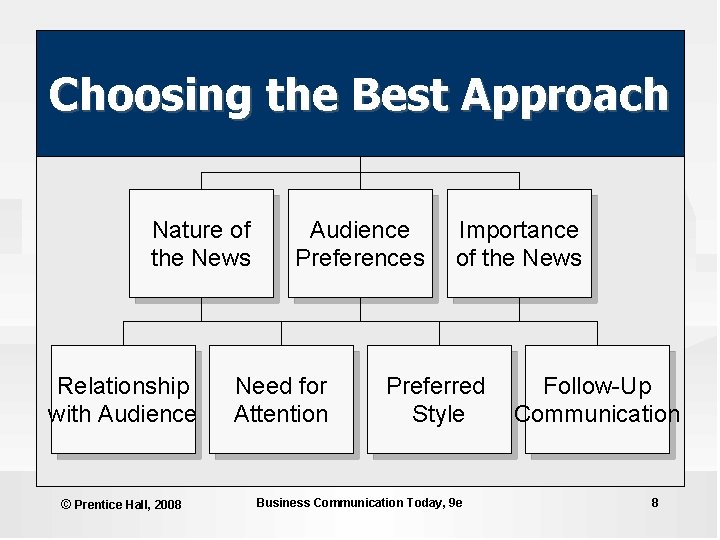
Choosing the Best Approach Nature of the News Relationship with Audience © Prentice Hall, 2008 Audience Preferences Need for Attention Importance of the News Preferred Style Business Communication Today, 9 e Follow-Up Communication 8
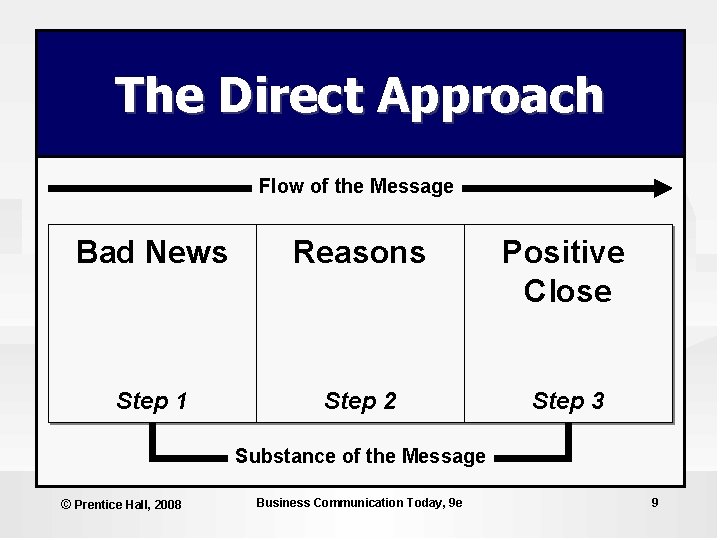
The Direct Approach Flow of the Message Bad News Reasons Positive Close Step 1 Step 2 Step 3 Substance of the Message © Prentice Hall, 2008 Business Communication Today, 9 e 9
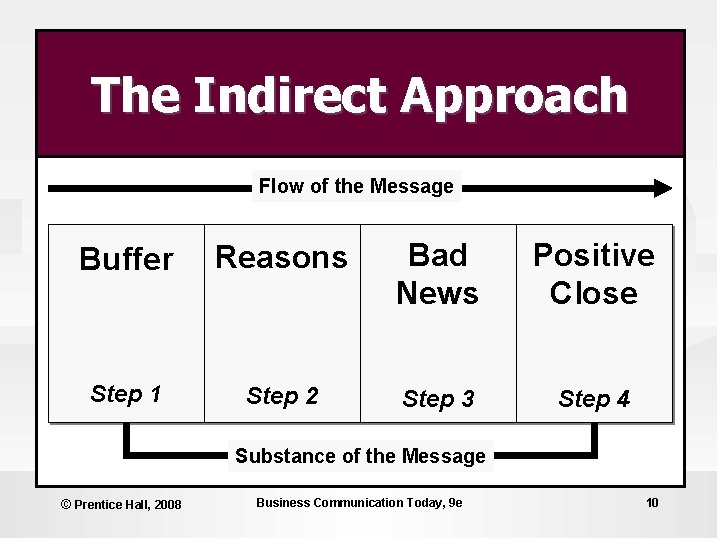
The Indirect Approach Flow of the Message Buffer Reasons Bad News Positive Close Step 1 Step 2 Step 3 Step 4 Substance of the Message © Prentice Hall, 2008 Business Communication Today, 9 e 10
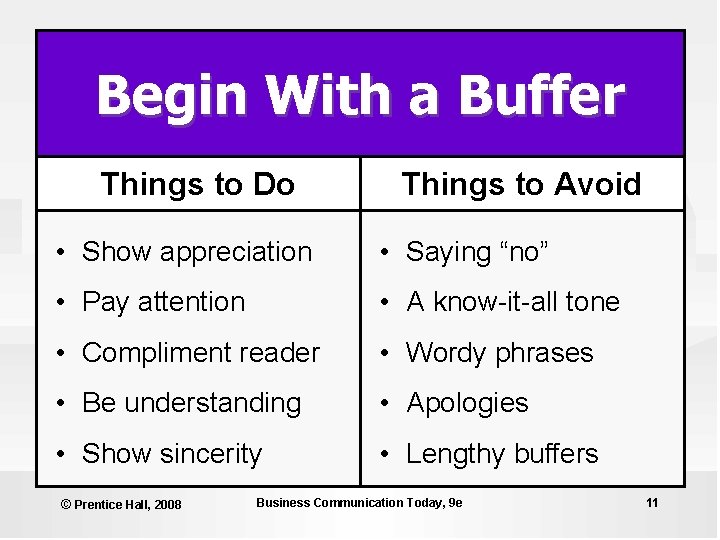
Begin With a Buffer Things to Do Things to Avoid • Show appreciation • Saying “no” • Pay attention • A know-it-all tone • Compliment reader • Wordy phrases • Be understanding • Apologies • Show sincerity • Lengthy buffers © Prentice Hall, 2008 Business Communication Today, 9 e 11
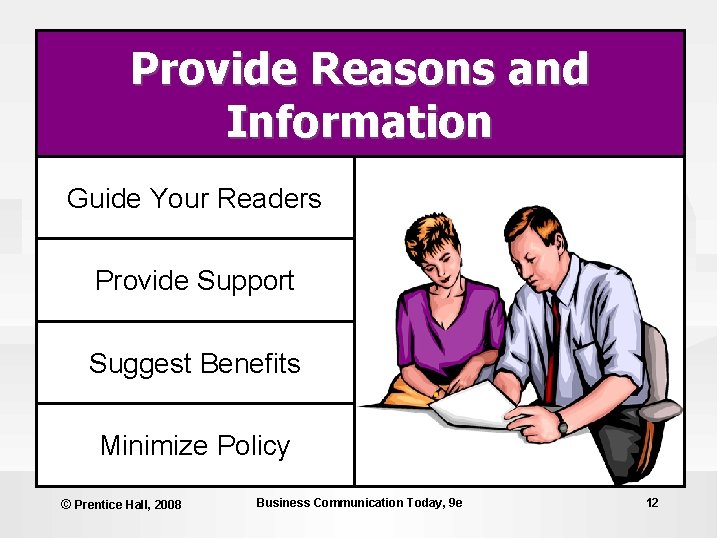
Provide Reasons and Information Guide Your Readers Provide Support Suggest Benefits Minimize Policy © Prentice Hall, 2008 Business Communication Today, 9 e 12
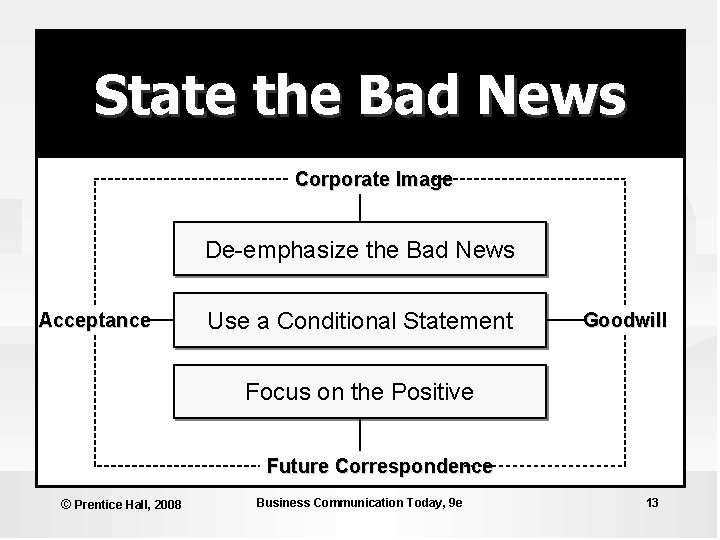
State the Bad News Corporate Image De-emphasize the Bad News Acceptance Use a Conditional Statement Goodwill Focus on the Positive Future Correspondence © Prentice Hall, 2008 Business Communication Today, 9 e 13
Close on a Positive Note • Avoid negativity or uncertainty • Limit future correspondence • Be optimistic about the future • Be sincere and avoid clichés • Conclude with confidence © Prentice Hall, 2008 Business Communication Today, 9 e 14
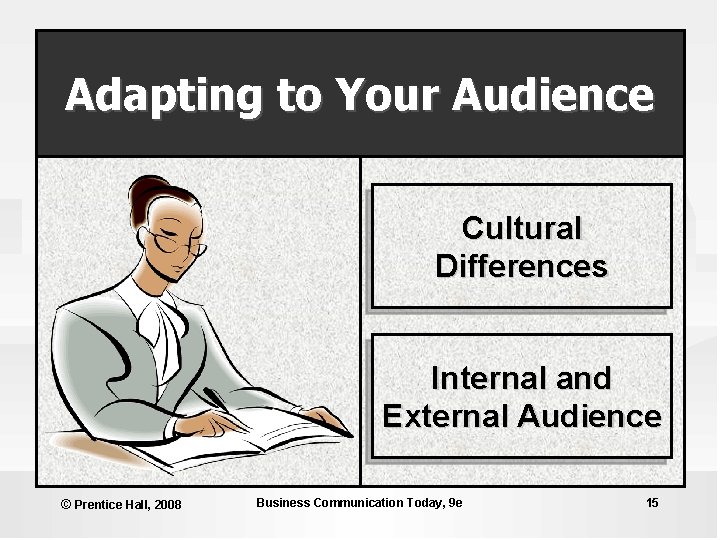
Adapting to Your Audience Cultural Differences Internal and External Audience © Prentice Hall, 2008 Business Communication Today, 9 e 15
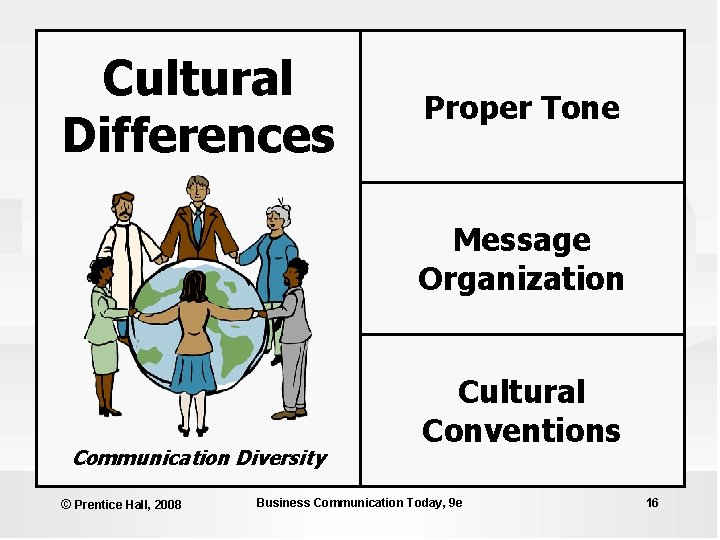
Cultural Differences Proper Tone Message Organization Communication Diversity © Prentice Hall, 2008 Cultural Conventions Business Communication Today, 9 e 16
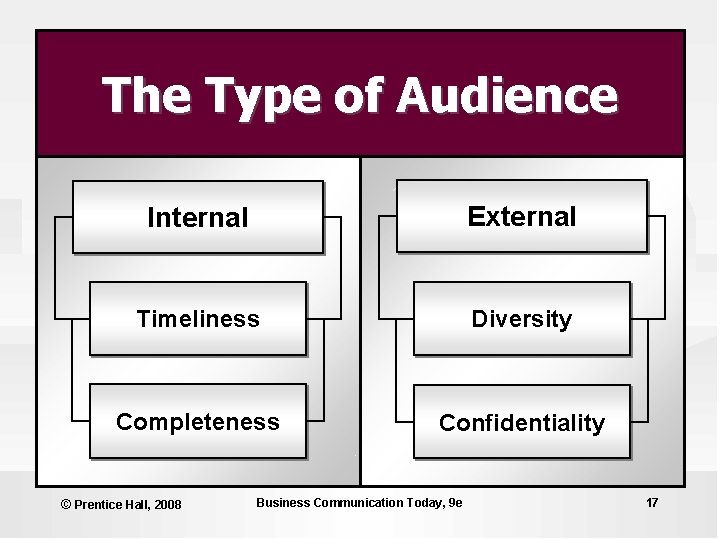
The Type of Audience Internal External Timeliness Diversity Completeness Confidentiality © Prentice Hall, 2008 Business Communication Today, 9 e 17
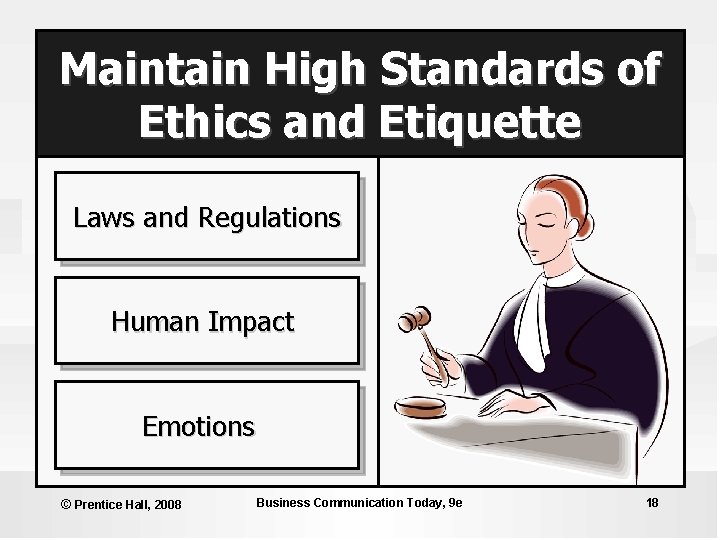
Maintain High Standards of Ethics and Etiquette Laws and Regulations Human Impact Emotions © Prentice Hall, 2008 Business Communication Today, 9 e 18
Types of Negative Messages Routine Matters Organizational News Employment Issues © Prentice Hall, 2008 Business Communication Today, 9 e 19
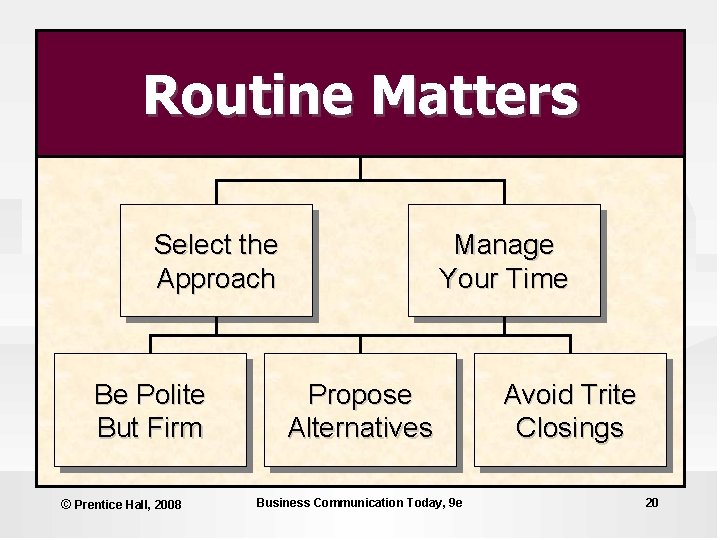
Routine Matters Select the Approach Be Polite But Firm © Prentice Hall, 2008 Manage Your Time Propose Alternatives Business Communication Today, 9 e Avoid Trite Closings 20
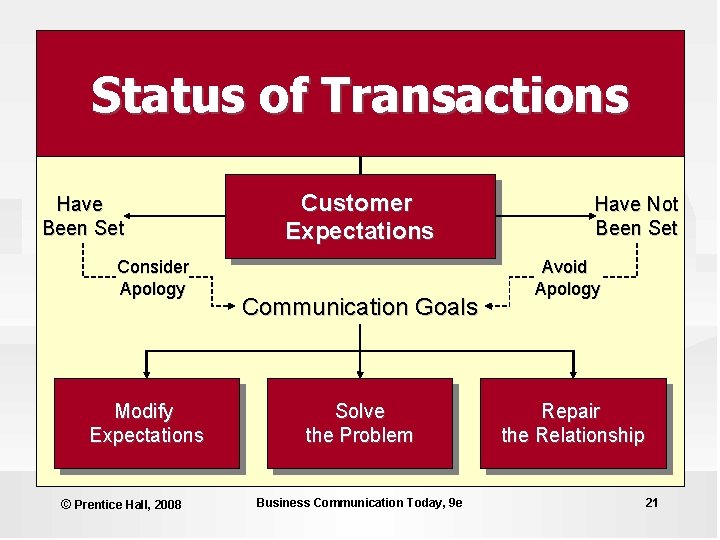
Status of Transactions Have Been Set Consider Apology Modify Expectations © Prentice Hall, 2008 Customer Expectations Communication Goals Solve the Problem Business Communication Today, 9 e Have Not Been Set Avoid Apology Repair the Relationship 21
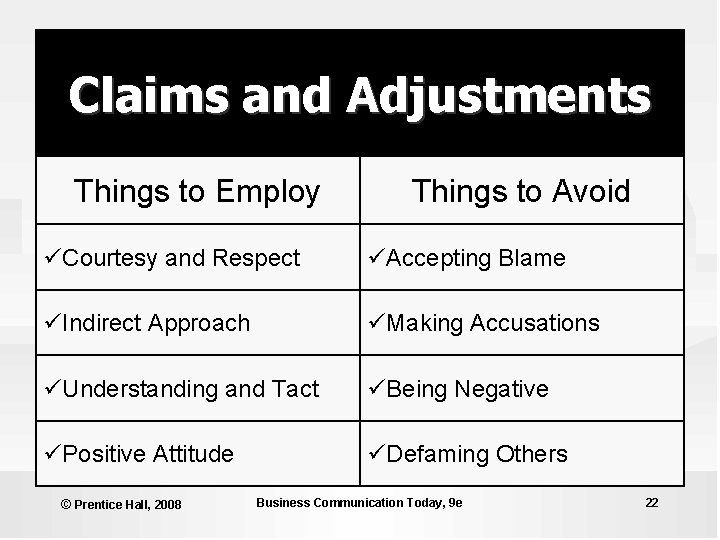
Claims and Adjustments Things to Employ Things to Avoid üCourtesy and Respect üAccepting Blame üIndirect Approach üMaking Accusations üUnderstanding and Tact üBeing Negative üPositive Attitude üDefaming Others © Prentice Hall, 2008 Business Communication Today, 9 e 22
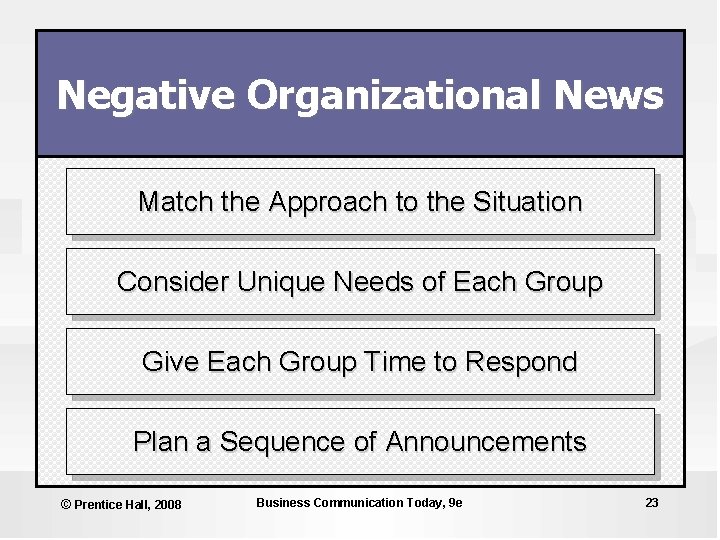
Negative Organizational News Match the Approach to the Situation Consider Unique Needs of Each Group Give Each Group Time to Respond Plan a Sequence of Announcements © Prentice Hall, 2008 Business Communication Today, 9 e 23
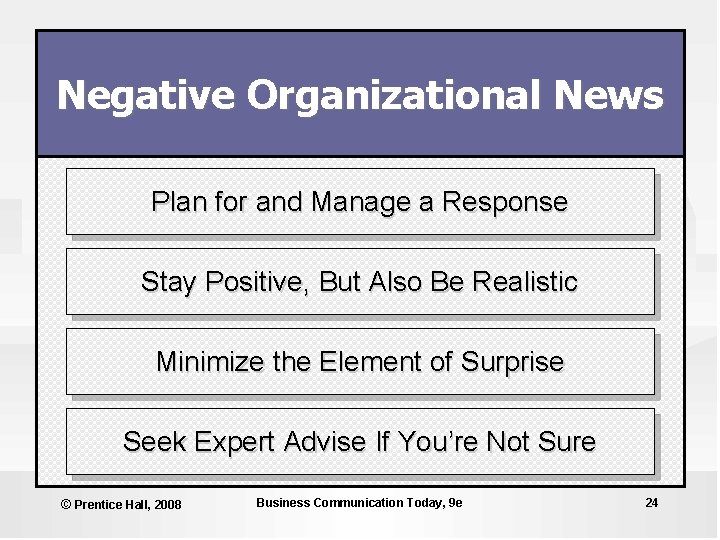
Negative Organizational News Plan for and Manage a Response Stay Positive, But Also Be Realistic Minimize the Element of Surprise Seek Expert Advise If You’re Not Sure © Prentice Hall, 2008 Business Communication Today, 9 e 24
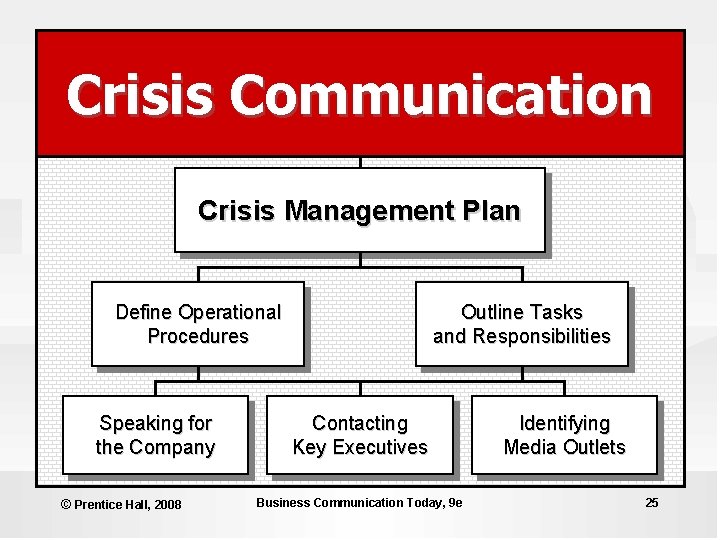
Crisis Communication Crisis Management Plan Define Operational Procedures Speaking for the Company © Prentice Hall, 2008 Outline Tasks and Responsibilities Contacting Key Executives Business Communication Today, 9 e Identifying Media Outlets 25
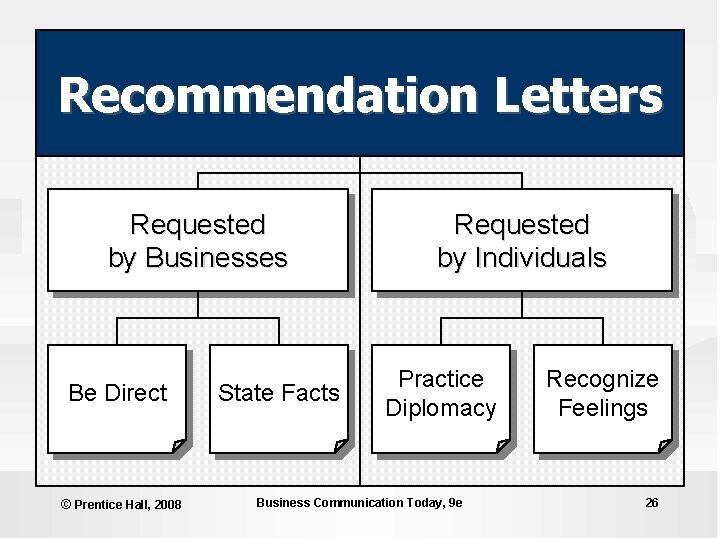
Recommendation Letters Requested by Businesses Be Direct © Prentice Hall, 2008 State Facts Requested by Individuals Practice Diplomacy Business Communication Today, 9 e Recognize Feelings 26
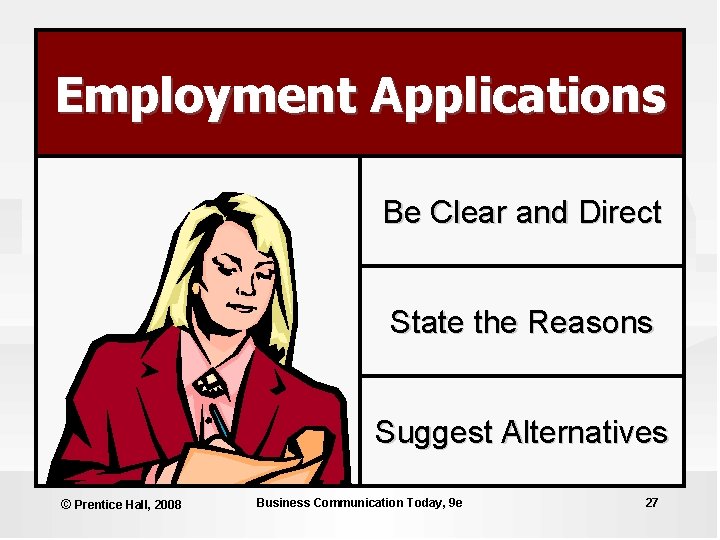
Employment Applications Be Clear and Direct State the Reasons Suggest Alternatives © Prentice Hall, 2008 Business Communication Today, 9 e 27
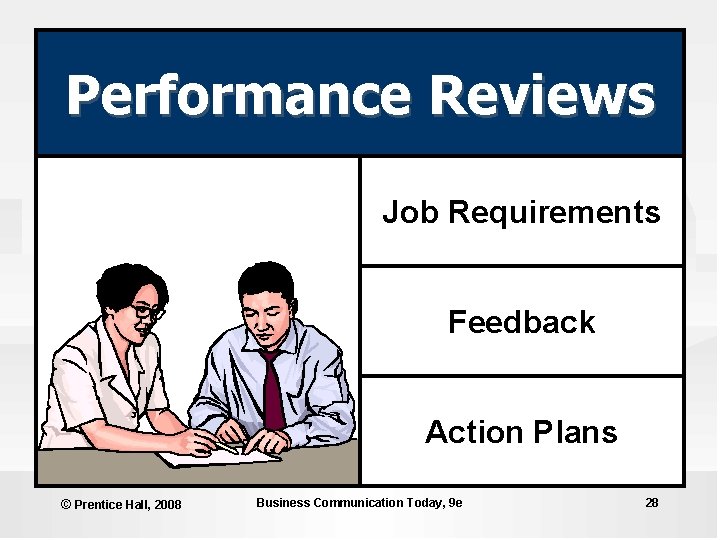
Performance Reviews Job Requirements Feedback Action Plans © Prentice Hall, 2008 Business Communication Today, 9 e 28
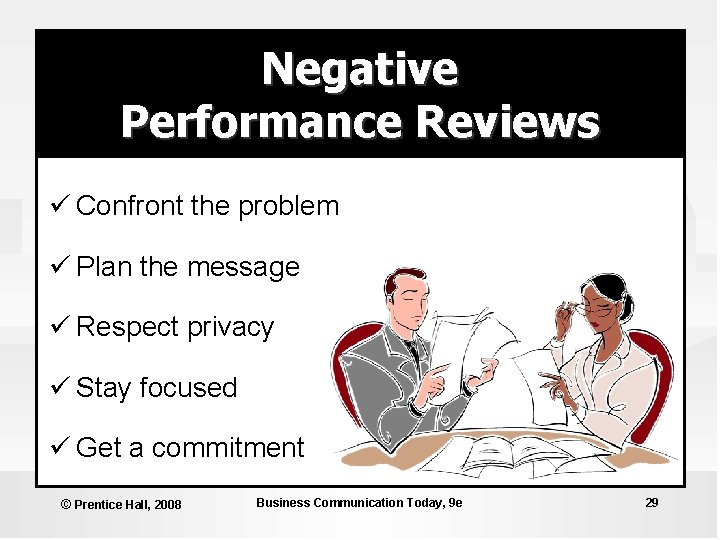
Negative Performance Reviews ü Confront the problem ü Plan the message ü Respect privacy ü Stay focused ü Get a commitment © Prentice Hall, 2008 Business Communication Today, 9 e 29
Termination Letters Express the Decision Avoid Litigious Statements Minimize Negative Feelings © Prentice Hall, 2008 Business Communication Today, 9 e 30
- Slides: 30