
Writing Negative Messages Copyright 2010 Pearson Education International
- Slides: 30
Writing Negative Messages Copyright © 2010 Pearson Education International Chapter 9 - 1
Learning Objectives • Apply the three-step writing process to negative messages • Compare and contrast the direct and indirect approaches to negative messages, including when it’s appropriate to use each one • Identify the risks of using the indirect approach and explain how to avoid problems Copyright © 2010 Pearson Education International Chapter 9 - 2
Learning Objectives • Explain the importance of maintaining high standards of ethics and etiquette when delivering negative messages • Explain the role of communication in crisis management • List and discuss three guidelines for delivering negative news to job applicants Copyright © 2010 Pearson Education International Chapter 9 - 3
Goals of Negative Messages • Convey the message • Ensure acceptance • Promote goodwill • Maintain a good corporate image • Minimize future correspondence Copyright © 2010 Pearson Education International Chapter 9 - 4
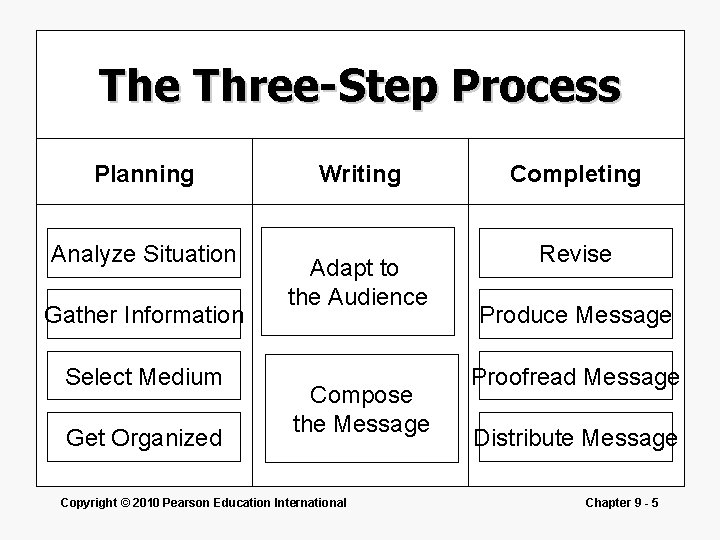
The Three-Step Process Planning Analyze Situation Gather Information Select Medium Get Organized Writing Adapt to the Audience Compose the Message Copyright © 2010 Pearson Education International Completing Revise Produce Message Proofread Message Distribute Message Chapter 9 - 5
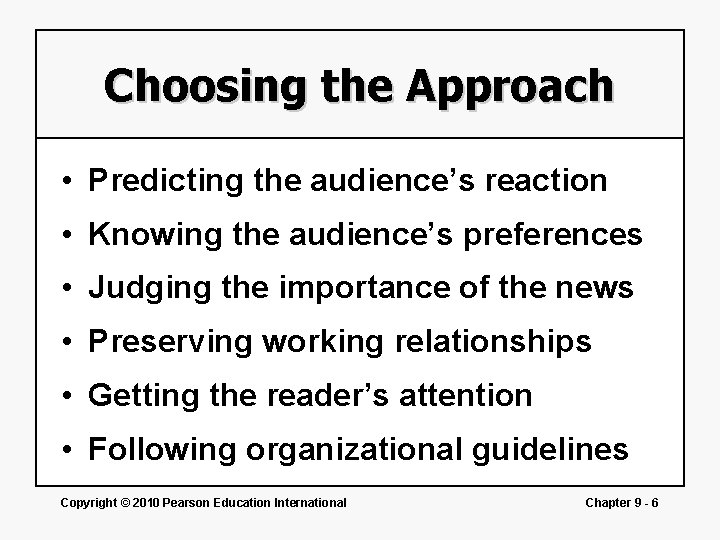
Choosing the Approach • Predicting the audience’s reaction • Knowing the audience’s preferences • Judging the importance of the news • Preserving working relationships • Getting the reader’s attention • Following organizational guidelines Copyright © 2010 Pearson Education International Chapter 9 - 6
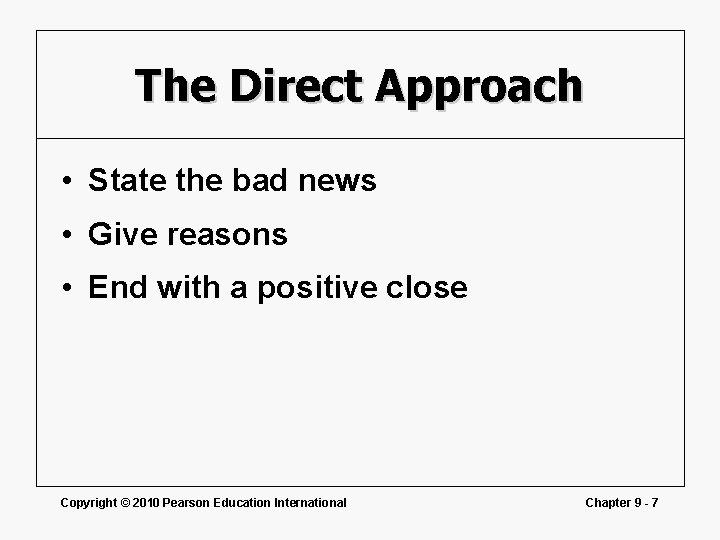
The Direct Approach • State the bad news • Give reasons • End with a positive close Copyright © 2010 Pearson Education International Chapter 9 - 7
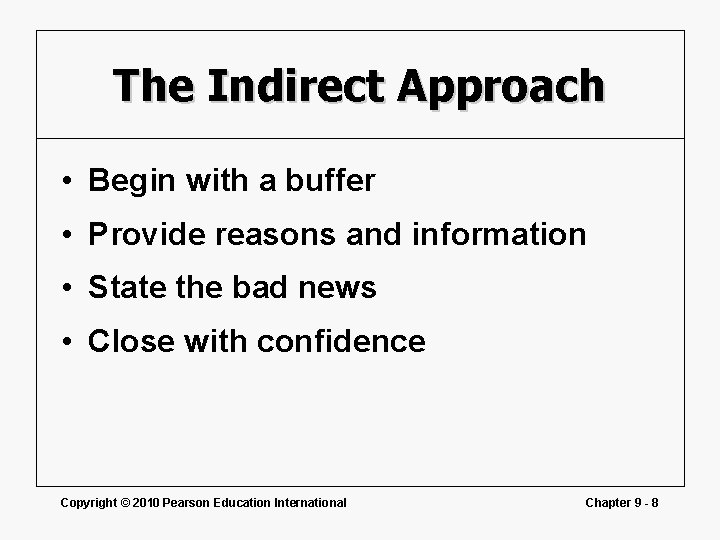
The Indirect Approach • Begin with a buffer • Provide reasons and information • State the bad news • Close with confidence Copyright © 2010 Pearson Education International Chapter 9 - 8
Open With a Buffer • • Respectful Relevant Neutral Transitional Copyright © 2010 Pearson Education International Chapter 9 - 9
Reasons and Information • Explanation section – Guide readers’ responses – Provide sufficient details for support – Explain company policy Copyright © 2010 Pearson Education International Chapter 9 - 10
Deliver the Bad News • De-emphasize the bad news • Use a conditional statement • Emphasize the positive Copyright © 2010 Pearson Education International Chapter 9 - 11
Close on a Positive Note • Avoid a negative, uncertain conclusion • Limit future correspondence • Be optimistic about the future • Be sincere Copyright © 2010 Pearson Education International Chapter 9 - 12
Adapting to Your Audience • Cultural differences • Internal versus external Copyright © 2010 Pearson Education International Chapter 9 - 13
Cultural Differences • Proper tone • Organization • Cultural conventions Copyright © 2010 Pearson Education International Chapter 9 - 14
The Type of Audience • Internal – Timeliness – Completeness • External – Diversity – Confidentiality Copyright © 2010 Pearson Education International Chapter 9 - 15
Maintain High Standards • Ethics and etiquette – Laws and regulations – Human impact – Emotional reactions Copyright © 2010 Pearson Education International Chapter 9 - 16
Negative Messages • Routine business matters • Employment messages • Organizational news Copyright © 2010 Pearson Education International Chapter 9 - 17
Routine Business Requests • • • Select the approach Manage your time Be polite but firm Propose alternatives Don’t imply compliance Copyright © 2010 Pearson Education International Chapter 9 - 18
Status of Transactions • Customer expectations – Have been set – Have not been set • Communication goals – Modify expectations – Resolve the situation – Repair the relationship Copyright © 2010 Pearson Education International Chapter 9 - 19
Claims and Adjustments • Things to employ • Things to avoid – Courtesy and tact – Accepting blame – Indirect approach – Making accusations – Understanding – Being negative – Positive attitude – Defaming others Copyright © 2010 Pearson Education International Chapter 9 - 20
Organizational News • Normal circumstances • Crisis communication Copyright © 2010 Pearson Education International Chapter 9 - 21
Normal Circumstances • Match the approach to the situation • Consider unique needs of each group • Give each audience time to react • Allow time to plan/manage response Copyright © 2010 Pearson Education International Chapter 9 - 22
Normal Circumstances • Stay positive but avoid false optimism • Minimize the element of surprise • Seek expert advice when needed • Offer leadership and encouragement Copyright © 2010 Pearson Education International Chapter 9 - 23
Crisis Communication • Crisis management plan – Operational procedures – Tasks and responsibilities Copyright © 2010 Pearson Education International Chapter 9 - 24
Employment Messages • Answering recommendation requests • Reviewing job applications • Reviewing performance • Terminations Copyright © 2010 Pearson Education International Chapter 9 - 25
Recommendation Letters • Requested by businesses – Conciseness – Directness • Requested by individuals – Diplomacy – Preparation Copyright © 2010 Pearson Education International Chapter 9 - 26
Employment Applications • Choose an approach carefully • State why applicant was not selected • Close by suggesting alternatives Copyright © 2010 Pearson Education International Chapter 9 - 27
Performance Reviews • Improve performance – Clarify job requirements – Give employees feedback – Develop a plan of action Copyright © 2010 Pearson Education International Chapter 9 - 28
Negative Reviews • Confront the problem • Plan the message • Respect privacy • Focus on the problem • Obtain commitment Copyright © 2010 Pearson Education International Chapter 9 - 29
Terminating Employment • Present the reasons • Choose your words carefully • Minimize negative feelings Copyright © 2010 Pearson Education International Chapter 9 - 30