
Writing Measurable and Benchmarked IEP Goals Professional Development
Writing Measurable and Benchmarked IEP Goals Professional Development Video Brent C. Elder, Ph. D. Assistant Professor Interdisciplinary and Inclusive Education Rowan University
Benchmarking IEP Goals What is it? • Breaking an IEP goal in an the following: • Annual goal (aligned with annual IEP) • Benchmark 1 (next marking period) • Benchmark 2 (next marking period) • Benchmark 3 (next marking period)

IEP Benchmarking Why? Benefits of implementation? • Accountability • Avoids stagnation • Increase clarity • Clarity scope and sequence
Goals and Objectives • By May 2021…(Annual Goal) • By November 2020… (Benchmark 1) • By January 2021… (Benchmark 2) • By March 2021… (Benchmark 3) Note: Benchmarks can vary by prompting level/level of independence, by skill level (think Bloom's Taxonomy), by criteria (4 out of 10, 6 out of 10, 8 out of 10…), etc.
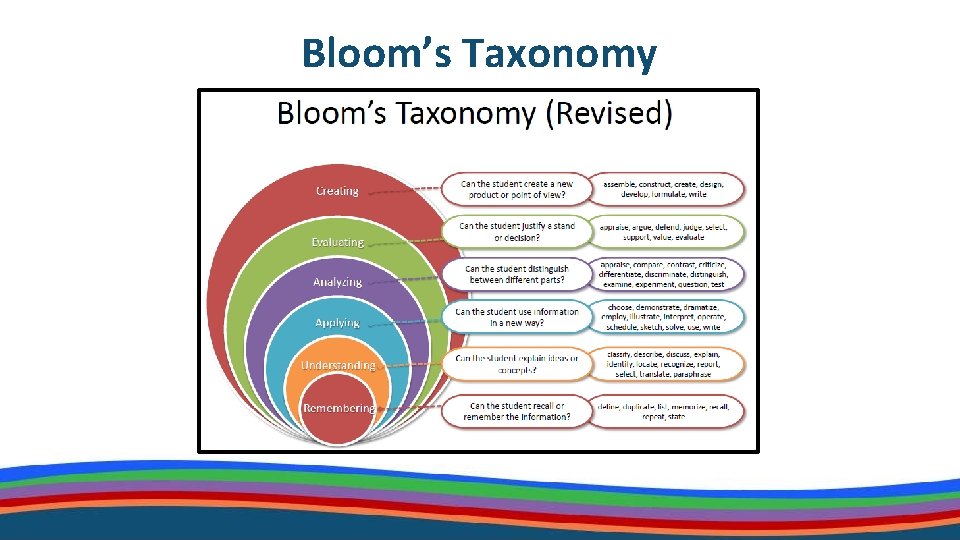
Bloom’s Taxonomy
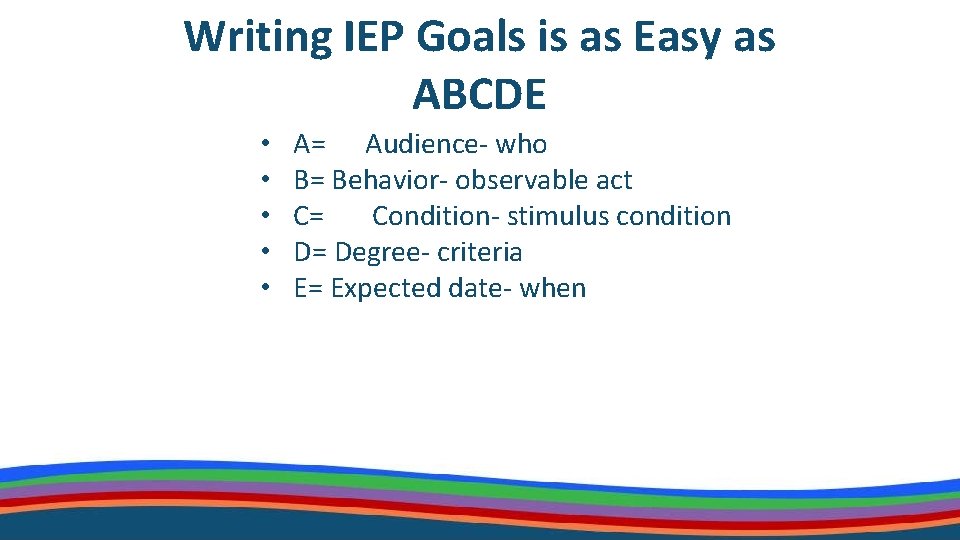
Writing IEP Goals is as Easy as ABCDE • • • A= Audience- who B= Behavior- observable act C= Condition- stimulus condition D= Degree- criteria E= Expected date- when
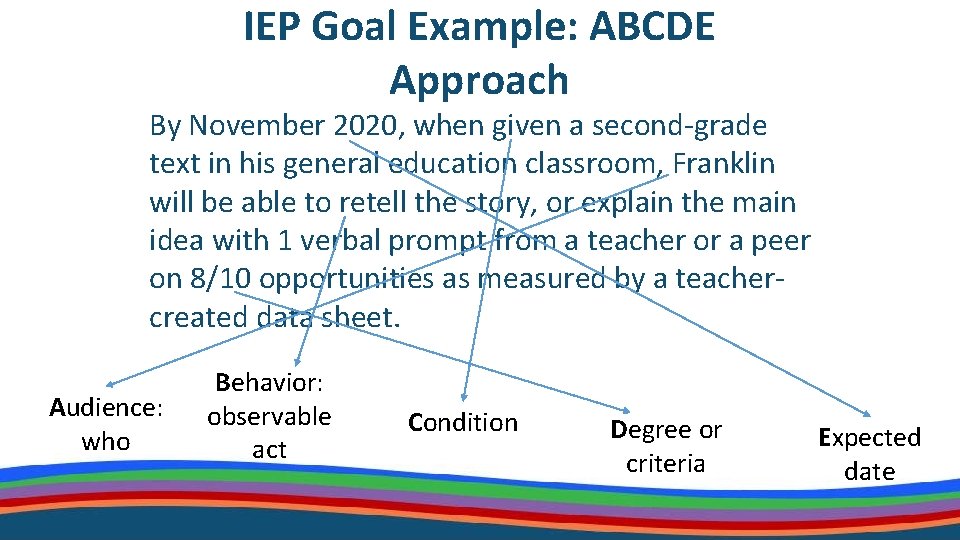
IEP Goal Example: ABCDE Approach By November 2020, when given a second-grade text in his general education classroom, Franklin will be able to retell the story, or explain the main idea with 1 verbal prompt from a teacher or a peer on 8/10 opportunities as measured by a teachercreated data sheet. Audience: who Behavior: observable act Condition Degree or criteria Expected date
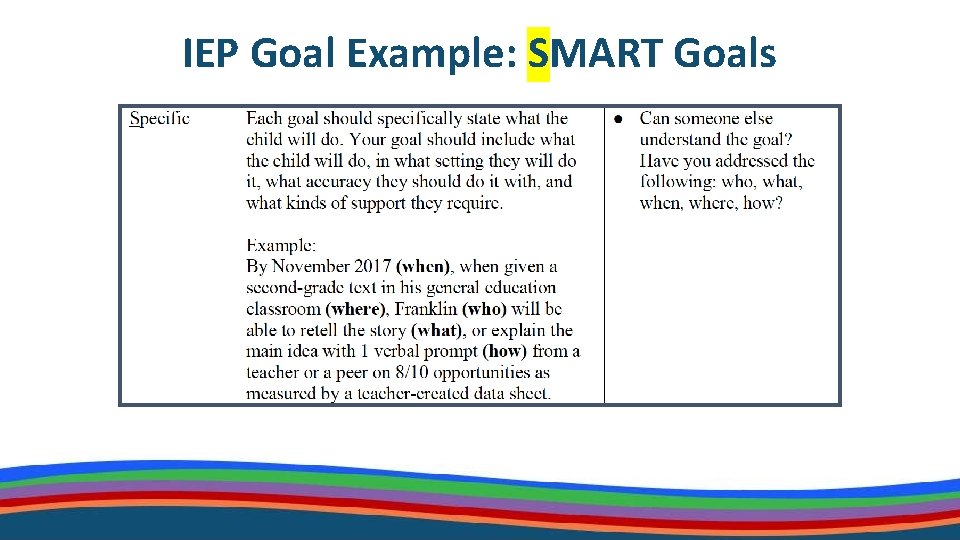
IEP Goal Example: SMART Goals
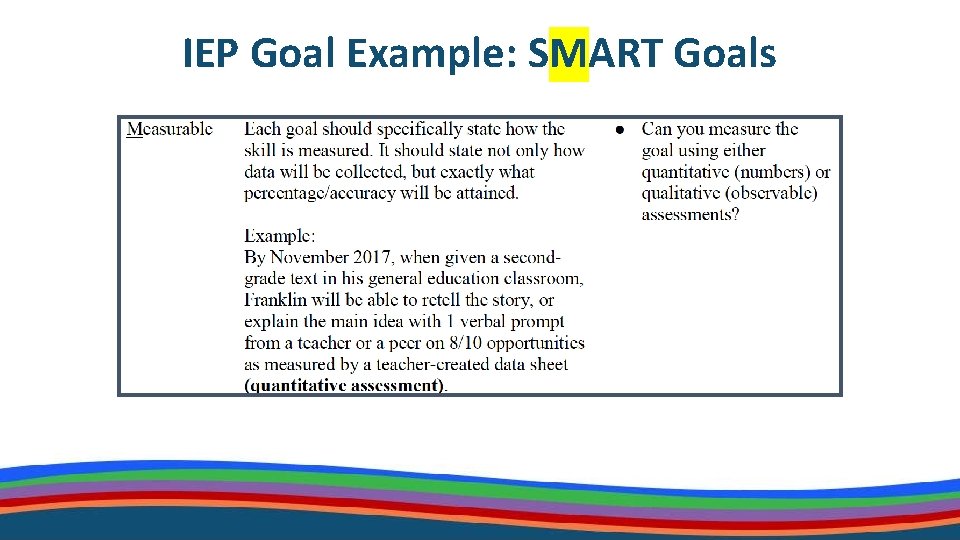
IEP Goal Example: SMART Goals
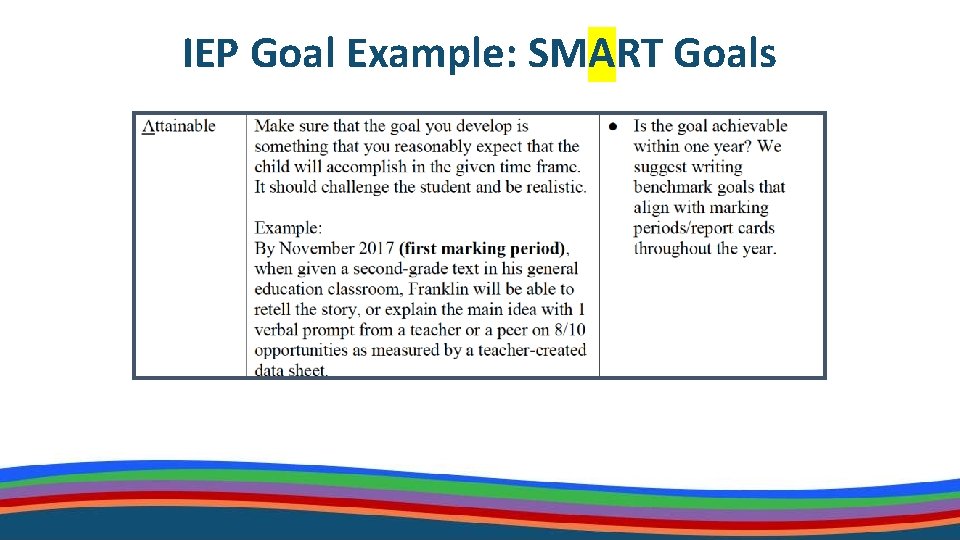
IEP Goal Example: SMART Goals
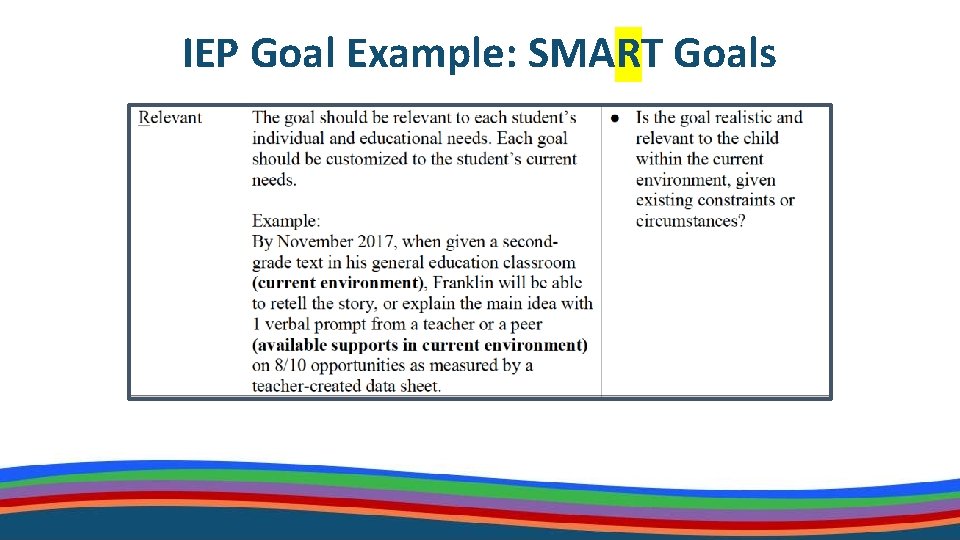
IEP Goal Example: SMART Goals

IEP Goal Example: SMART Goals
A Deeper Dive • For a more in-depth explanation of how to write measurable and benchmarked IEP goals, see pgs. 134 -137 in Elder, Rood, & Damiani (2018)
References Elder, B. C. , Rood, C. E. , & Damiani, M. L. (2018). Writing strength-based IEPs for students with disabilities in inclusive classrooms. International Journal of Whole Schooling, 14(1), 116 -153.

go. rowan. edu/lrcsouth
- Slides: 15