
Writing Letters Format and Types 1 Writing Letters


- Slides: 13
Writing Letters Format and Types 1
Writing Letters • An important aspect of your provincial exam is the “Business Letter” • This is PART C of the provincial and is combined with the information needed for the “visual design” aspect 2
Video! • https: //www. youtube. com/watch? v=I 2 txr 6 OY 5 d. Y 3
But I’m not going into business… • This will cover the format for writing effective letters • Letters of complaint, letter requesting information, a letter to the editor, memo’s to employees, emails, etc. All very important information to know for any field! • What are some of the aspects you will need? 4
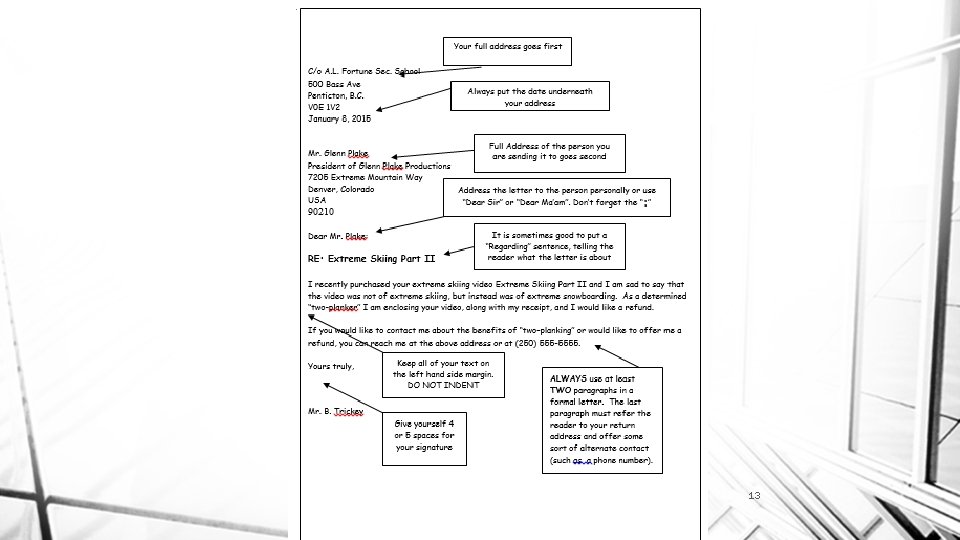
Return Address • Use your OWN ADDRESS or the address of the COMPANY THAT you REPRESENT On the Provincial exam you will be provided an address, use that one. Date • Skip 2 lines after the return address. Always spell out the DATE and include the MONTH a COMMA and the YEAR. 5
Inside Address (who you are writing to) • Skip TWO more lines. Then write the address of the person or company to whom you are WRITING. Salutation (greeting) • Write DEAR followed by the person’s name. End the line with a COLON. If you don’t know the name of the person, use a title instead (ie: Dear Editor, Dear Madam) 6
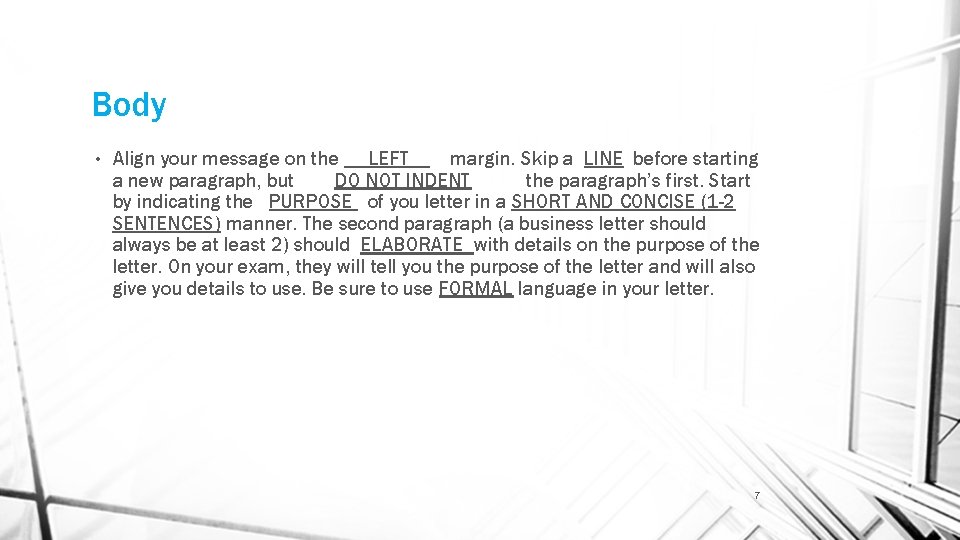
Body • Align your message on the LEFT margin. Skip a LINE before starting a new paragraph, but DO NOT INDENT the paragraph’s first. Start by indicating the PURPOSE of you letter in a SHORT AND CONCISE (1 -2 SENTENCES) manner. The second paragraph (a business letter should always be at least 2) should ELABORATE with details on the purpose of the letter. On your exam, they will tell you the purpose of the letter and will also give you details to use. Be sure to use FORMAL language in your letter. 7
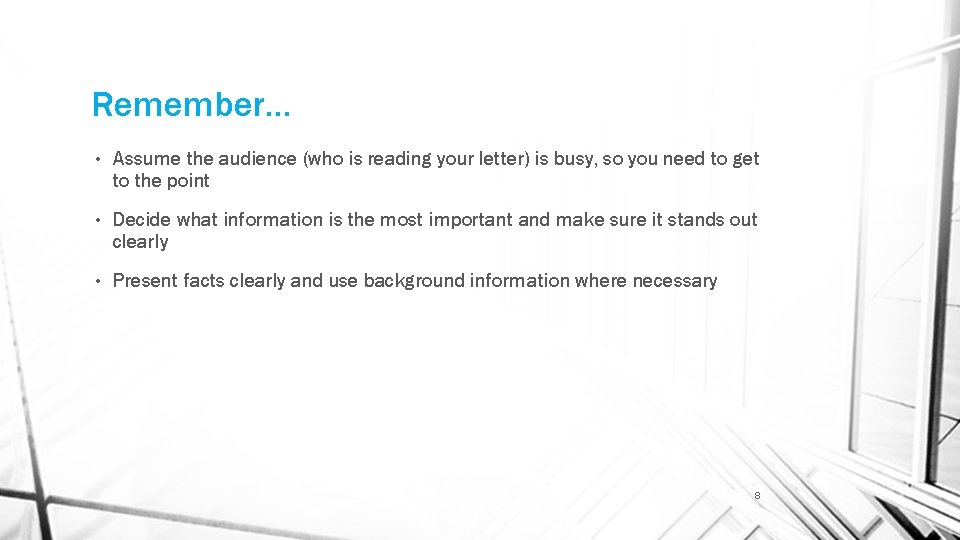
Remember… • Assume the audience (who is reading your letter) is busy, so you need to get to the point • Decide what information is the most important and make sure it stands out clearly • Present facts clearly and use background information where necessary 8
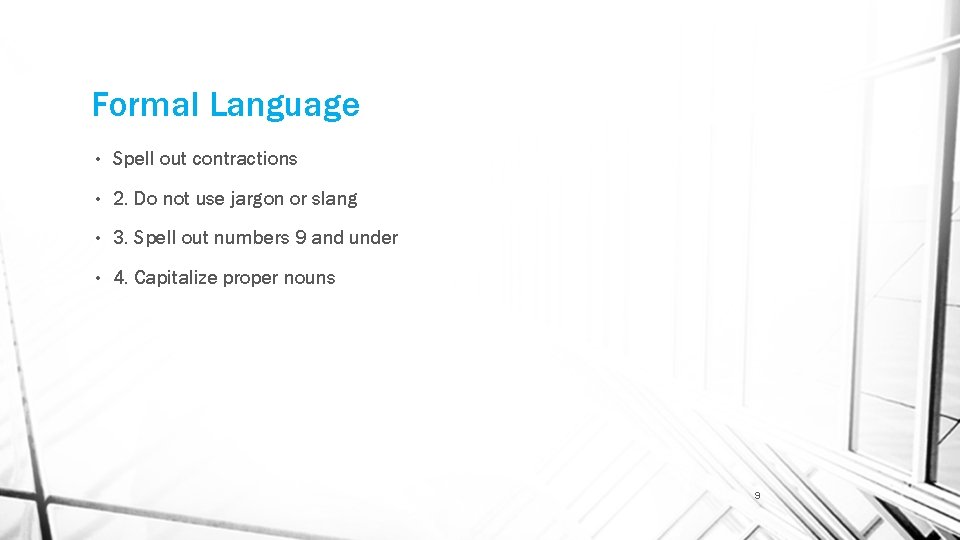
Formal Language • Spell out contractions • 2. Do not use jargon or slang • 3. Spell out numbers 9 and under • 4. Capitalize proper nouns 9
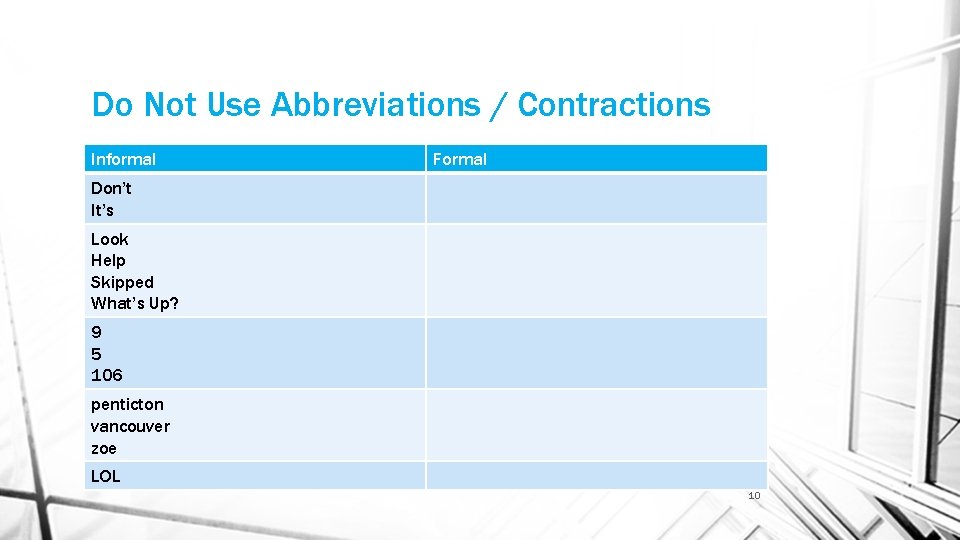
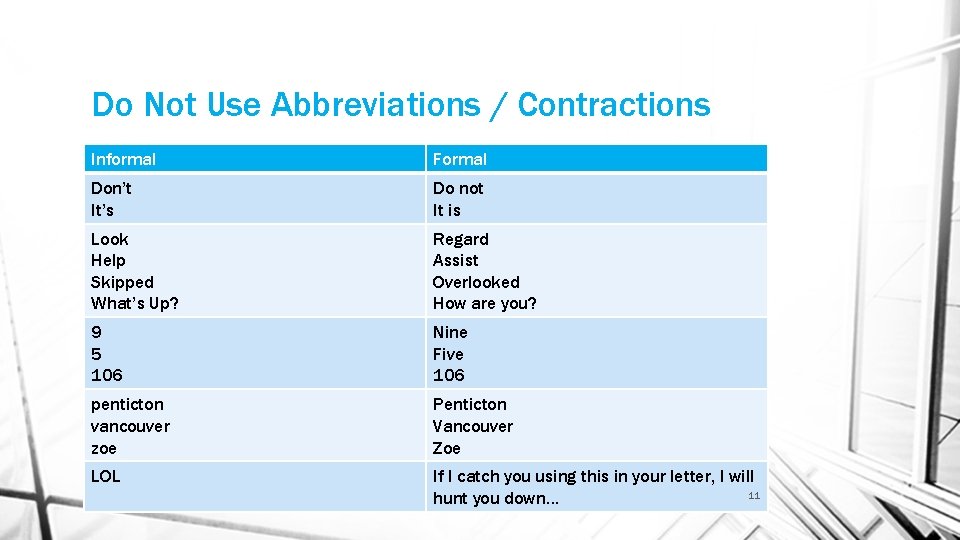
Do Not Use Abbreviations / Contractions Informal Formal Don’t It’s Look Help Skipped What’s Up? 9 5 106 penticton vancouver zoe LOL 10
Do Not Use Abbreviations / Contractions Informal Formal Don’t It’s Do not It is Look Help Skipped What’s Up? Regard Assist Overlooked How are you? 9 5 106 Nine Five 106 penticton vancouver zoe Penticton Vancouver Zoe LOL If I catch you using this in your letter, I will 11 hunt you down…
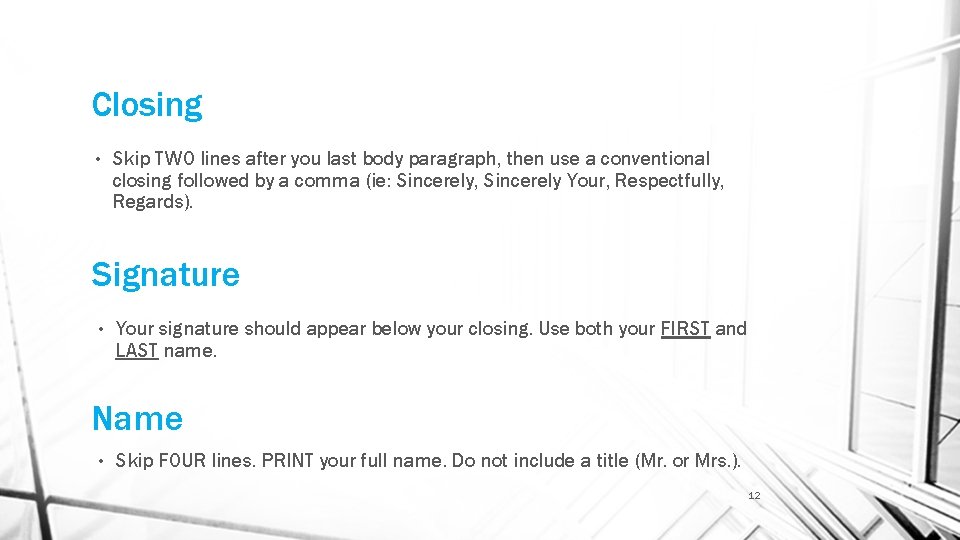
Closing • Skip TWO lines after you last body paragraph, then use a conventional closing followed by a comma (ie: Sincerely, Sincerely Your, Respectfully, Regards). Signature • Your signature should appear below your closing. Use both your FIRST and LAST name. Name • Skip FOUR lines. PRINT your full name. Do not include a title (Mr. or Mrs. ). 12
13