
Writing for NACADA 2014 REGIONAL CONFERENCES Add Presenter
- Slides: 40
Writing for NACADA 2014 REGIONAL CONFERENCES **Add Presenter information here: Name, Institution for each presenter
NACADA Publications The NACADA Journal Academic Advising Today NACADA Clearinghouse of Academic Advising Resources Monographs, books, CDs, DVD NACADA Blog
What we’ll talk about today… Purpose Content Writing Guidelines Acceptance Process How do I get published…?
What would you like to add to the literature? Write down at least one idea you have for writing about an advising related issue
NACADA Publications Philosophy Research, theory, and practice qualitative research quantitative research mixed methodology applying existing theory to advising developing new theory relevant to advising implications for advising practice etc.
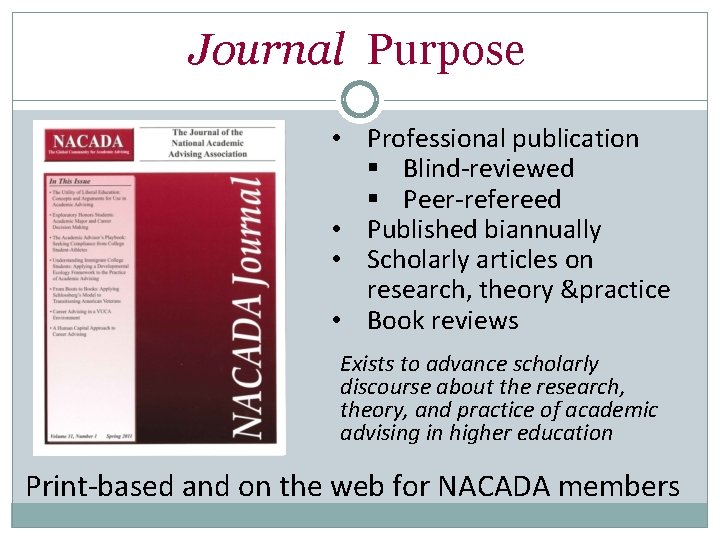
Journal Purpose • Professional publication § Blind-reviewed § Peer-refereed • Published biannually • Scholarly articles on research, theory &practice • Book reviews Exists to advance scholarly discourse about the research, theory, and practice of academic advising in higher education Print-based and on the web for NACADA members
Journal Guidelines Manuscripts should not exceed 6, 000 words (excluding title page, abstract, and references) Most studies are based on a standard qualitative or quantitative research methodology Journal and APA style guides NACADA online guide page Publication Manual of the American Psychological Association, Sixth Edition
Journal Recent Titles Assessing students learning in academic advising using social cognitive theory Assessing academic risk of student- athletes: Applicability of the NCAA graduation risk overview model to GPA Academic advising and first-generation college students: a quantitative study on student retention
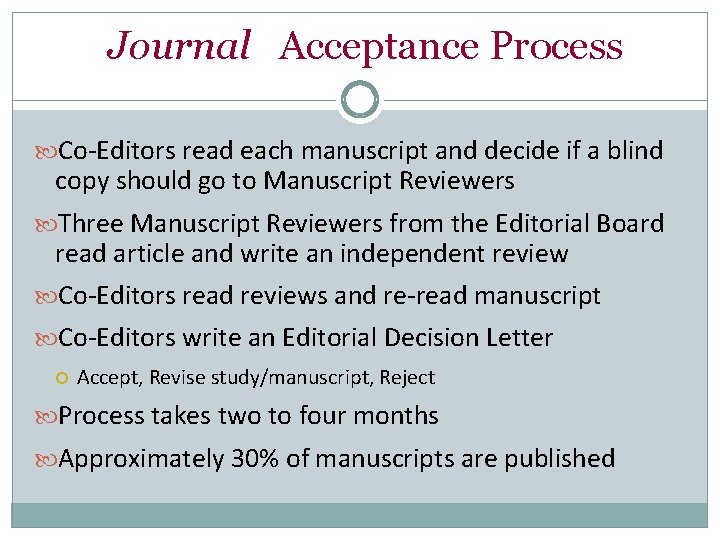
Journal Acceptance Process Co-Editors read each manuscript and decide if a blind copy should go to Manuscript Reviewers Three Manuscript Reviewers from the Editorial Board read article and write an independent review Co-Editors read reviews and re-read manuscript Co-Editors write an Editorial Decision Letter Accept, Revise study/manuscript, Reject Process takes two to four months Approximately 30% of manuscripts are published
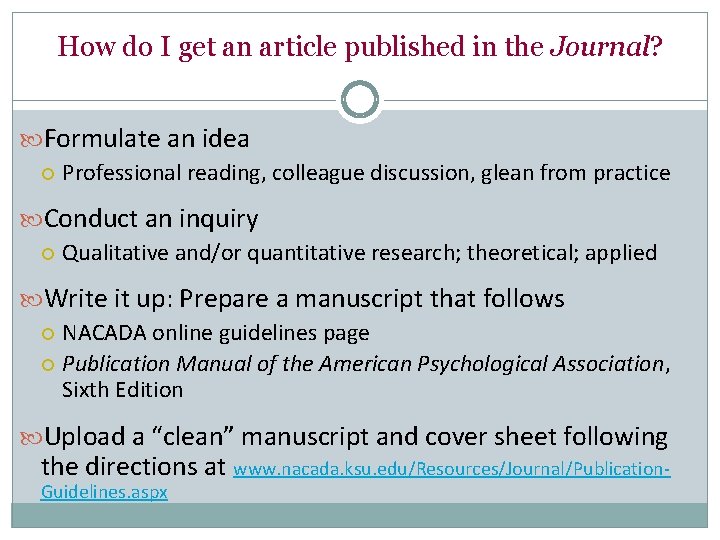
How do I get an article published in the Journal? Formulate an idea Professional reading, colleague discussion, glean from practice Conduct an inquiry Qualitative and/or quantitative research; theoretical; applied Write it up: Prepare a manuscript that follows NACADA online guidelines page Publication Manual of the American Psychological Association, Sixth Edition Upload a “clean” manuscript and cover sheet following the directions at www. nacada. ksu. edu/Resources/Journal/Publication. Guidelines. aspx
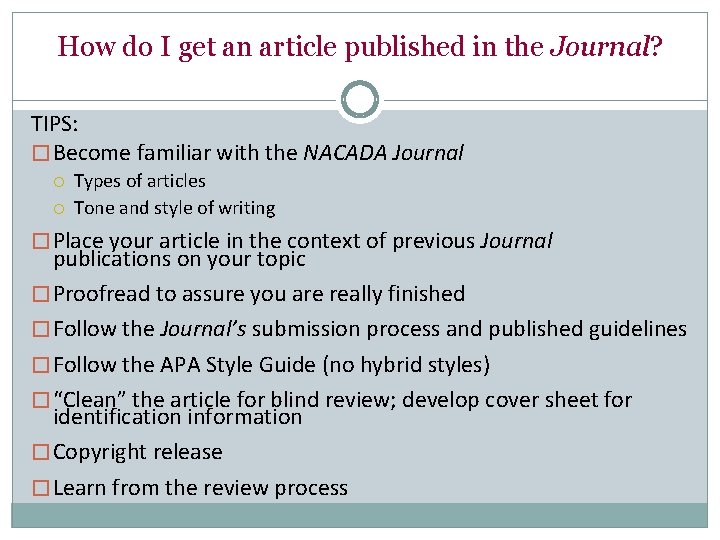
How do I get an article published in the Journal? TIPS: � Become familiar with the NACADA Journal Types of articles Tone and style of writing � Place your article in the context of previous Journal publications on your topic � Proofread to assure you are really finished � Follow the Journal’s submission process and published guidelines � Follow the APA Style Guide (no hybrid styles) � “Clean” the article for blind review; develop cover sheet for identification information � Copyright release � Learn from the review process
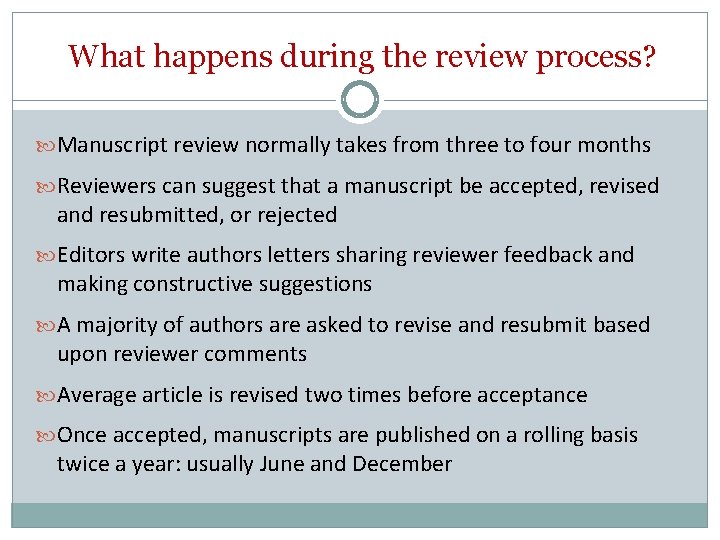
What happens during the review process? Manuscript review normally takes from three to four months Reviewers can suggest that a manuscript be accepted, revised and resubmitted, or rejected Editors write authors letters sharing reviewer feedback and making constructive suggestions A majority of authors are asked to revise and resubmit based upon reviewer comments Average article is revised two times before acceptance Once accepted, manuscripts are published on a rolling basis twice a year: usually June and December
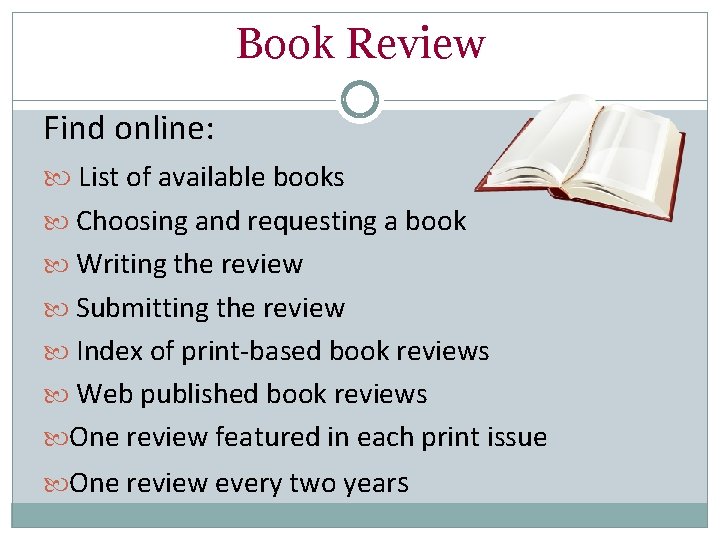
Book Review Find online: List of available books Choosing and requesting a book Writing the review Submitting the review Index of print-based book reviews Web published book reviews One review featured in each print issue One review every two years
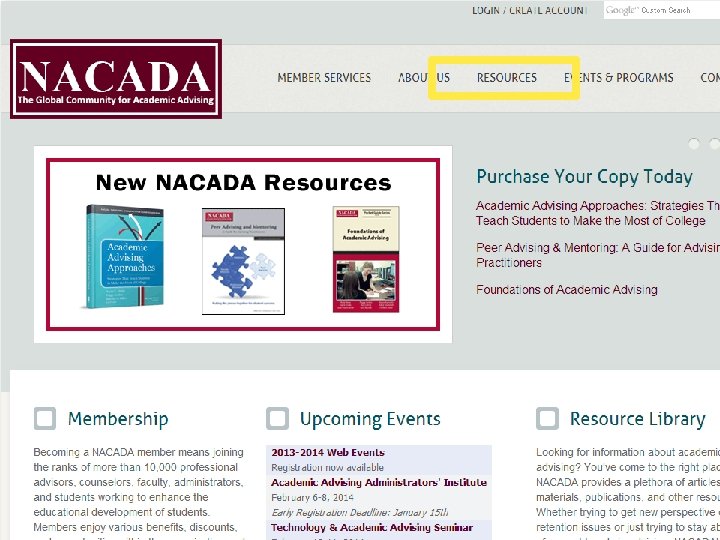
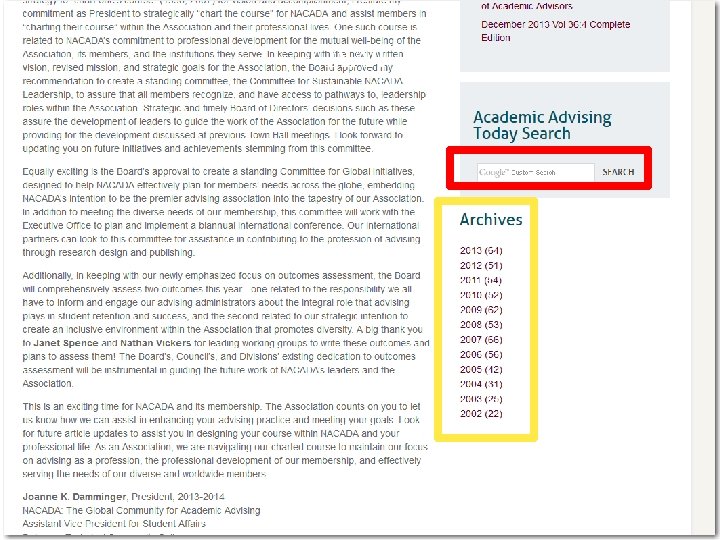
AAT
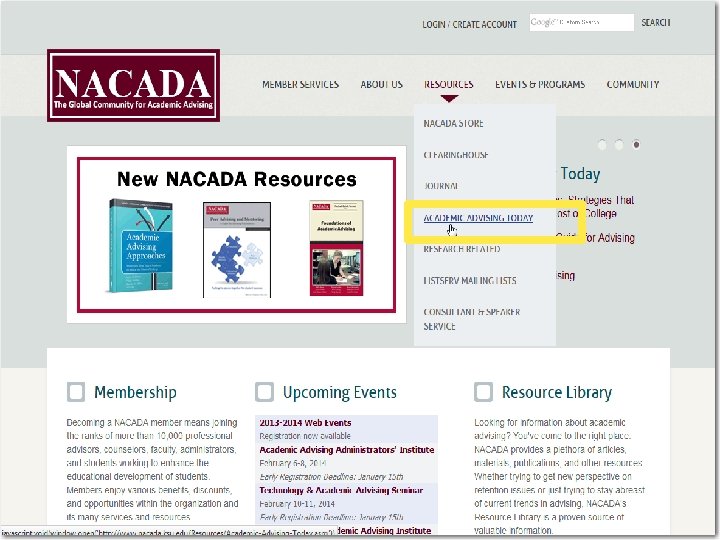
AAT
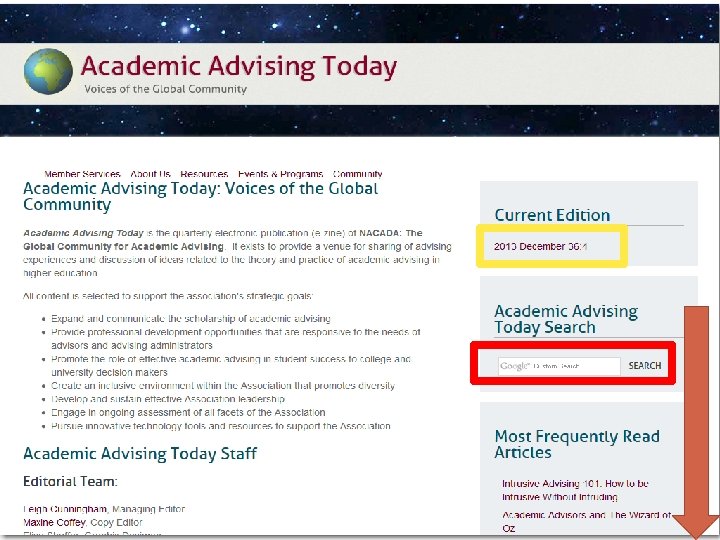
AAT
AAT
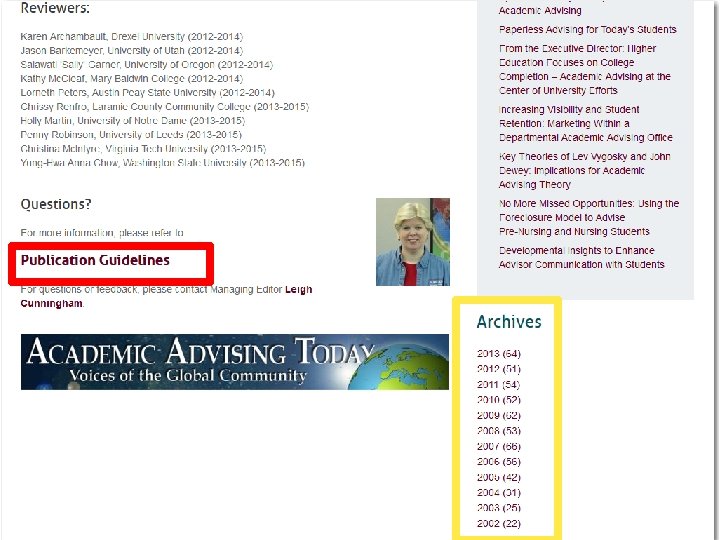
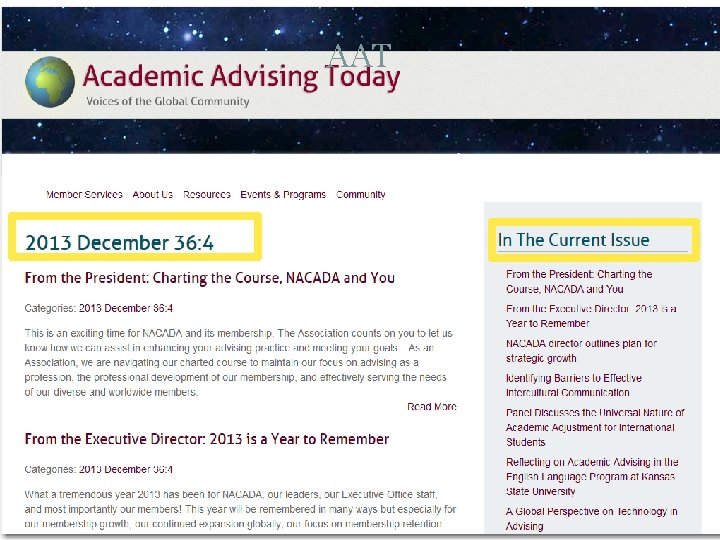
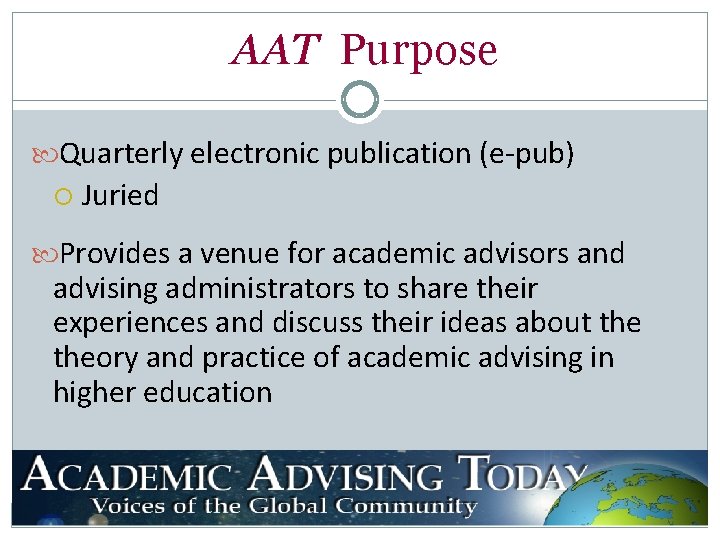
AAT Purpose Quarterly electronic publication (e-pub) Juried Provides a venue for academic advisors and advising administrators to share their experiences and discuss their ideas about theory and practice of academic advising in higher education
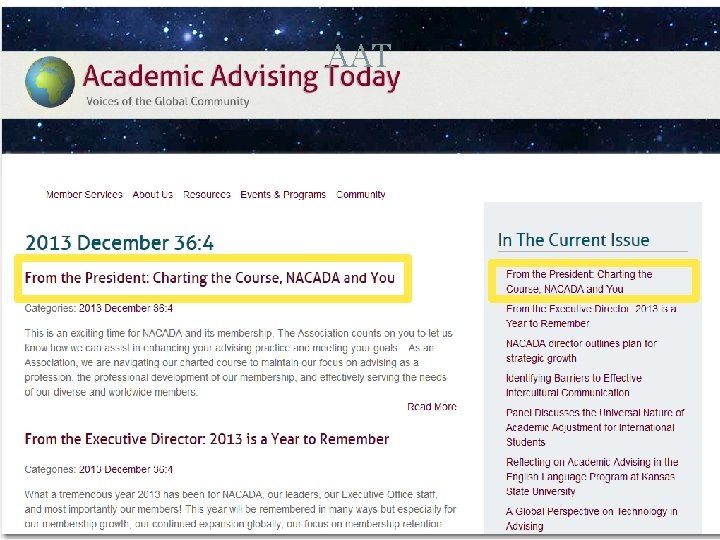
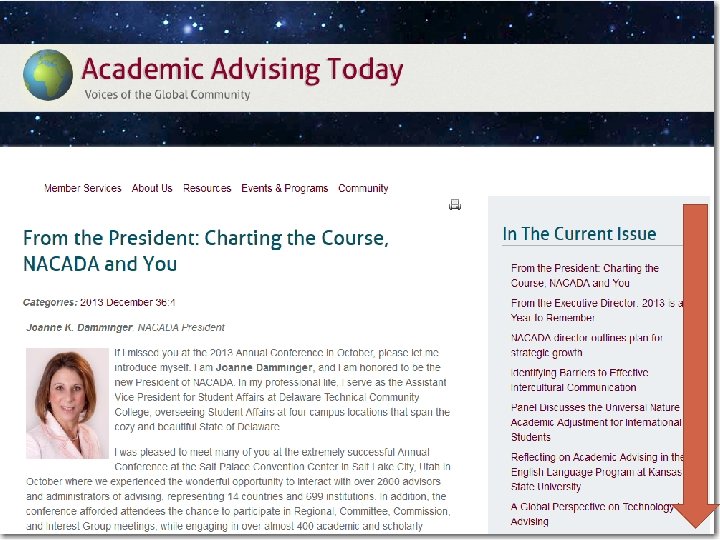
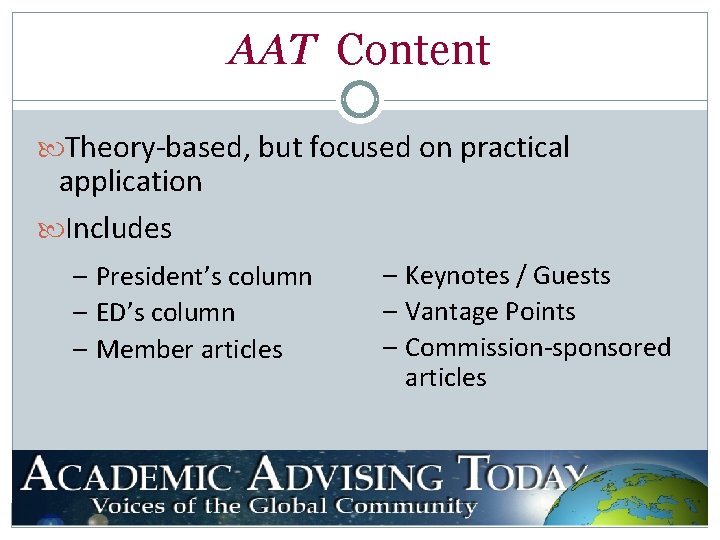
AAT Content Theory-based, but focused on practical application Includes – President’s column – ED’s column – Member articles – Keynotes / Guests – Vantage Points – Commission-sponsored articles
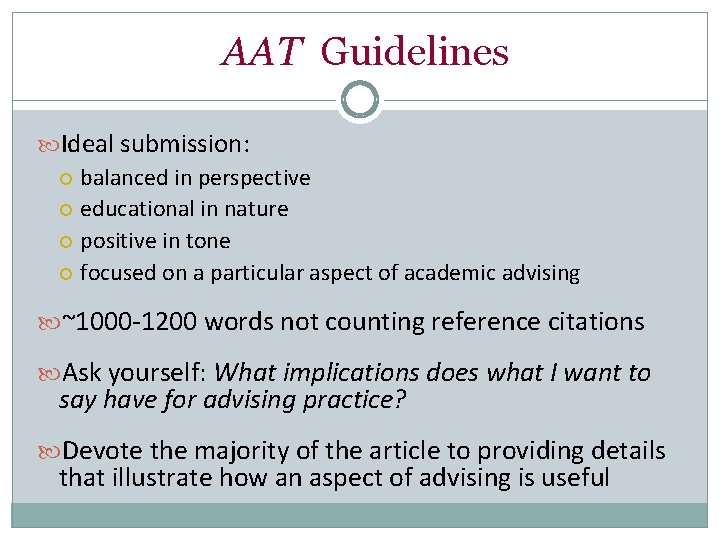
AAT Guidelines Ideal submission: balanced in perspective educational in nature positive in tone focused on a particular aspect of academic advising ~1000 -1200 words not counting reference citations Ask yourself: What implications does what I want to say have for advising practice? Devote the majority of the article to providing details that illustrate how an aspect of advising is useful
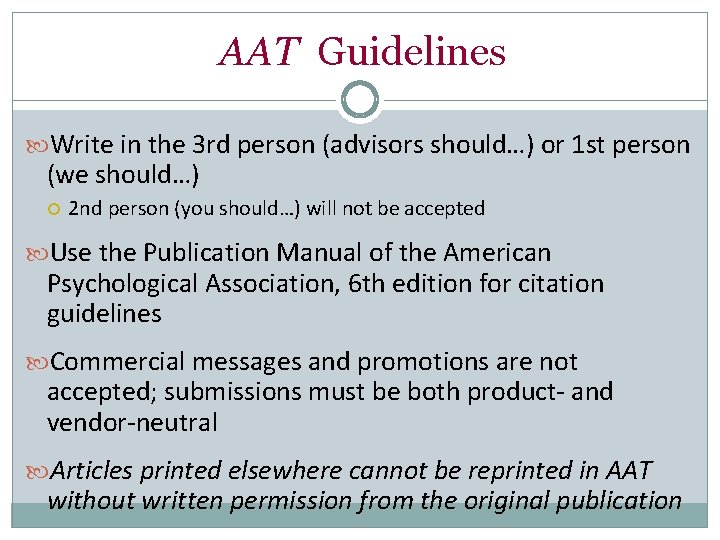
AAT Guidelines Write in the 3 rd person (advisors should…) or 1 st person (we should…) 2 nd person (you should…) will not be accepted Use the Publication Manual of the American Psychological Association, 6 th edition for citation guidelines Commercial messages and promotions are not accepted; submissions must be both product- and vendor-neutral Articles printed elsewhere cannot be reprinted in AAT without written permission from the original publication
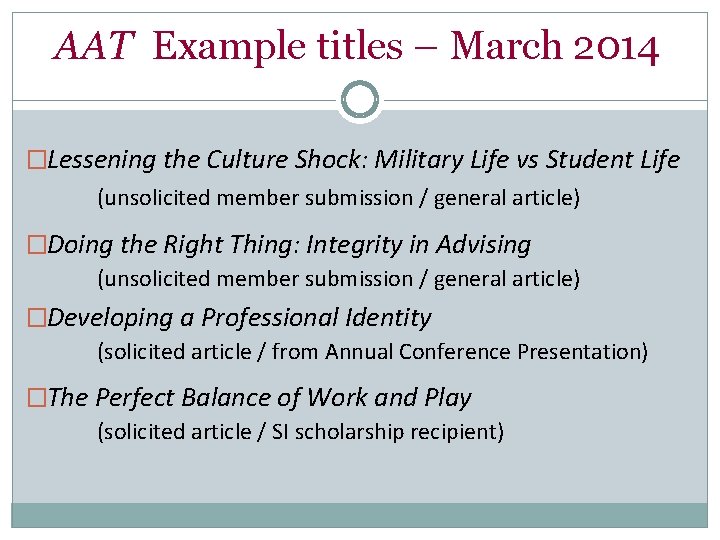
AAT Example titles – March 2014 �Lessening the Culture Shock: Military Life vs Student Life (unsolicited member submission / general article) �Doing the Right Thing: Integrity in Advising (unsolicited member submission / general article) �Developing a Professional Identity (solicited article / from Annual Conference Presentation) �The Perfect Balance of Work and Play (solicited article / SI scholarship recipient)
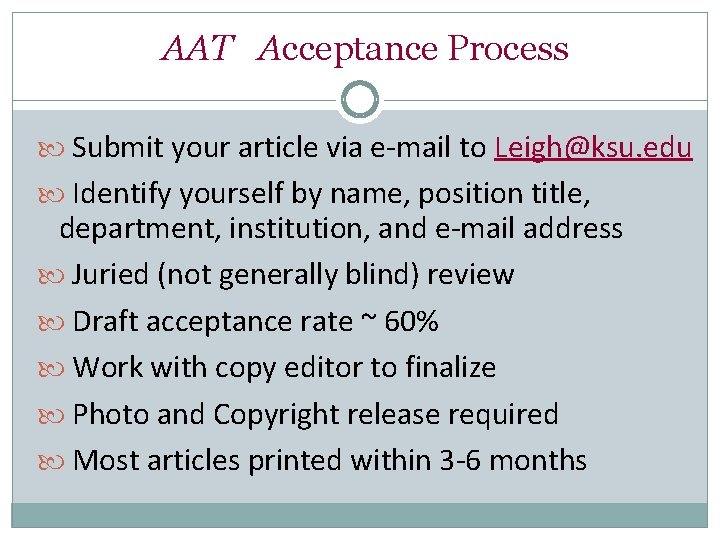
AAT Acceptance Process Submit your article via e-mail to Leigh@ksu. edu Identify yourself by name, position title, department, institution, and e-mail address Juried (not generally blind) review Draft acceptance rate ~ 60% Work with copy editor to finalize Photo and Copyright release required Most articles printed within 3 -6 months
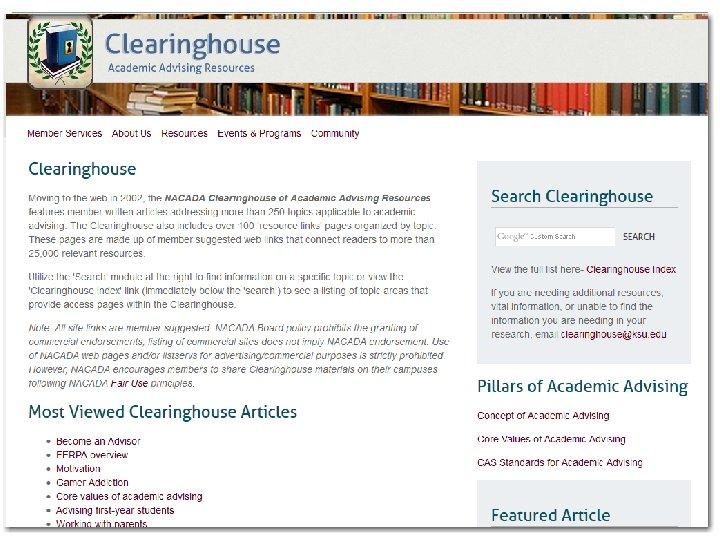
Clearinghouse Purpose / Content Promote the advancement of academic advising by providing members with electronic access to: Advising Issues & Resources Anchor article Resource links to Web sites and articles Pillar documents for academic advising links to recognized definitions, standards and values of advising Member Produced Handbooks & Web Publications suggested by NACADA members as useful
Clearinghouse Guidelines Juried (not blind) publication Anchor article is an overview of a 'Critical Issue' within advising Article can be read in 5 -10 minutes ~ 1600 words Written in 3 rd person Includes resources to “read more about it” APA format Copyright release
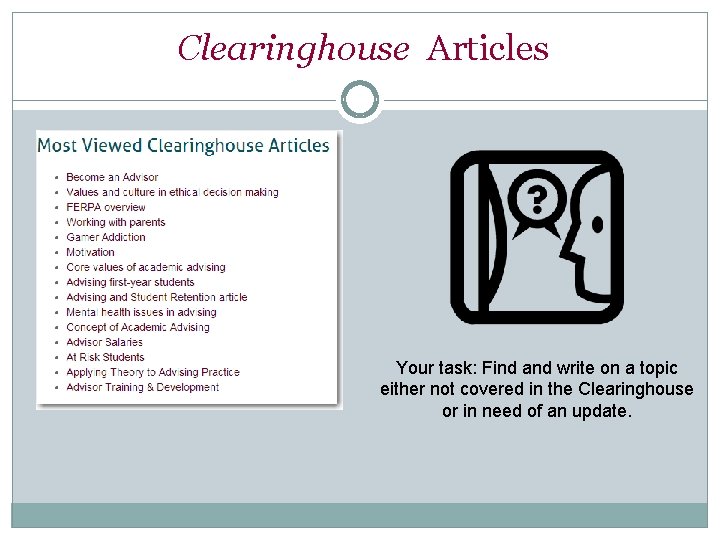
Clearinghouse Articles Your task: Find and write on a topic either not covered in the Clearinghouse or in need of an update.
How do I get an article published in the Clearinghouse? Have an idea Professional reading, colleague discussion, practice Check the Clearinghouse at to see what already has been said about this issue Email Clearinghouse Curator George Steele at clearinghouse@ksu. edu to discuss possible article Write it Submit it
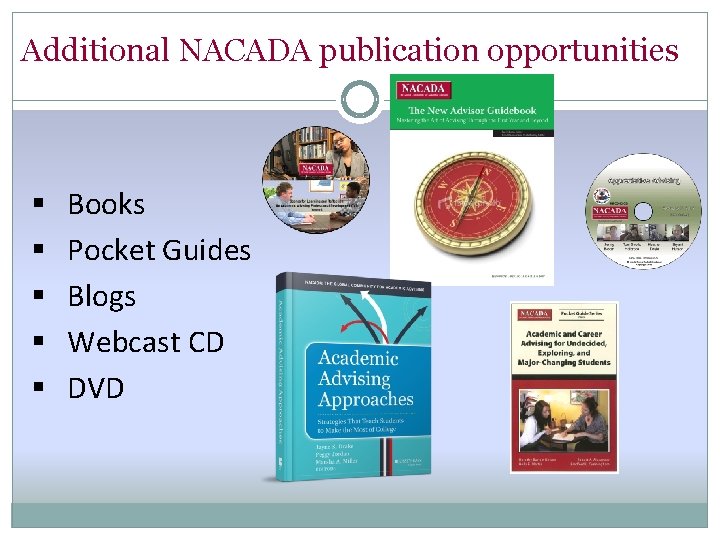
Additional NACADA publication opportunities § § § Books Pocket Guides Blogs Webcast CD DVD
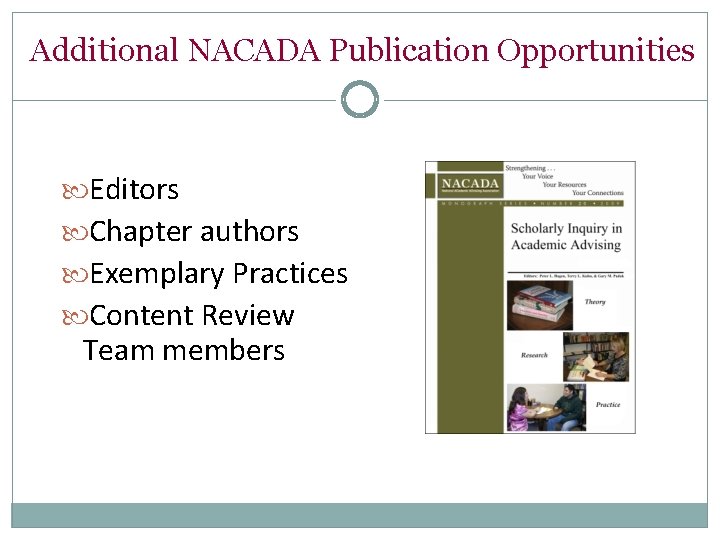
Additional NACADA Publication Opportunities Editors Chapter authors Exemplary Practices Content Review Team members
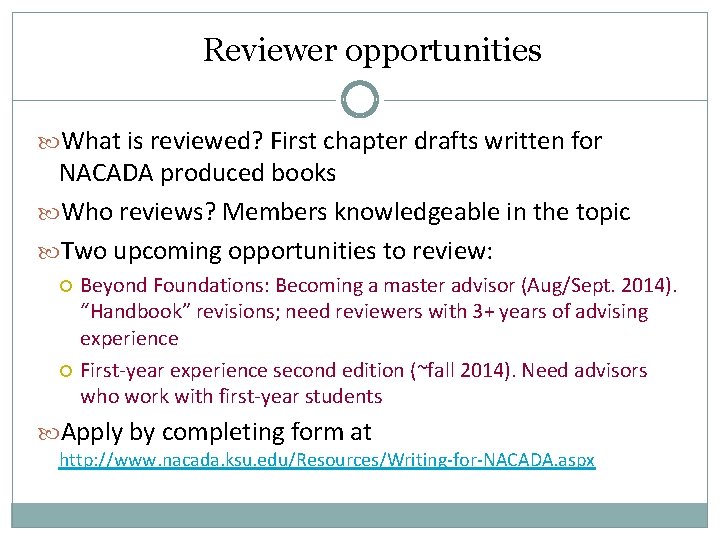
Reviewer opportunities What is reviewed? First chapter drafts written for NACADA produced books Who reviews? Members knowledgeable in the topic Two upcoming opportunities to review: Beyond Foundations: Becoming a master advisor (Aug/Sept. 2014). “Handbook” revisions; need reviewers with 3+ years of advising experience First-year experience second edition (~fall 2014). Need advisors who work with first-year students Apply by completing form at http: //www. nacada. ksu. edu/Resources/Writing-for-NACADA. aspx
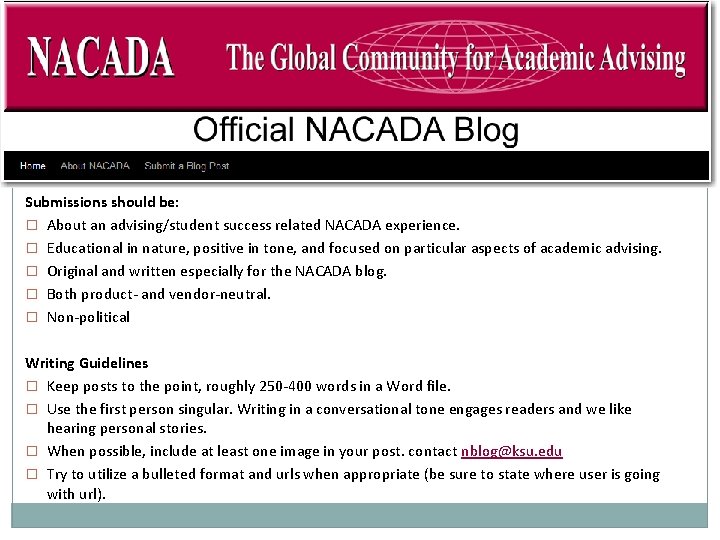
Submissions should be: � About an advising/student success related NACADA experience. � Educational in nature, positive in tone, and focused on particular aspects of academic advising. � Original and written especially for the NACADA blog. � Both product- and vendor-neutral. � Non-political Writing Guidelines � Keep posts to the point, roughly 250 -400 words in a Word file. � Use the first person singular. Writing in a conversational tone engages readers and we like hearing personal stories. � When possible, include at least one image in your post. contact nblog@ksu. edu � Try to utilize a bulleted format and urls when appropriate (be sure to state where user is going with url).
How to get started Guidelines Samples Collaborators/reviewers Time, place to write Set deadline Brainstorm ideas Delineate points Write, review and revise
What will you write? Write your idea, venue, and timeline on your business card
Summary/Quiz • Where would you send a scholarly article based on formal inquiry? • Where would you send an article based on your advising experience? • Where would you send an idea for a yet-to-be published topic? • Where would you send an idea for improving practice?
Questions u o y k n ng a h di T ten at r o f P leas ses e fill sion out the eva luat ion