
Writing Development PrinciplesConcepts Assessment Learning to Look at
- Slides: 28
Writing Development • Principles/Concepts • Assessment • Learning to Look at Print • Writing Instruction Dianne Frasier, Ph. D. Fort Bend ISD dianne. frasier@fortbend. k 12. tx. us
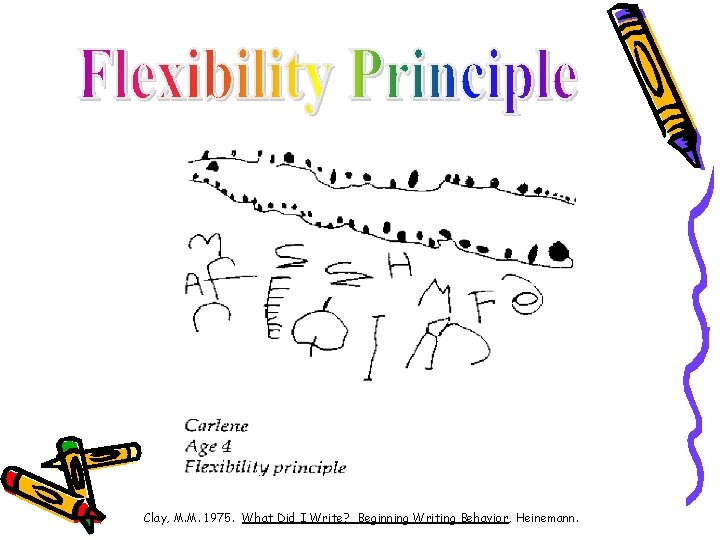
Early Writing Theory • Organizes the visual analysis of print • Directionality • Objective evidence of what child has learned • Close connection to early reading Clay, M. M. 1975. What Did I Write? Beginning Writing Behavior, Heinemann.
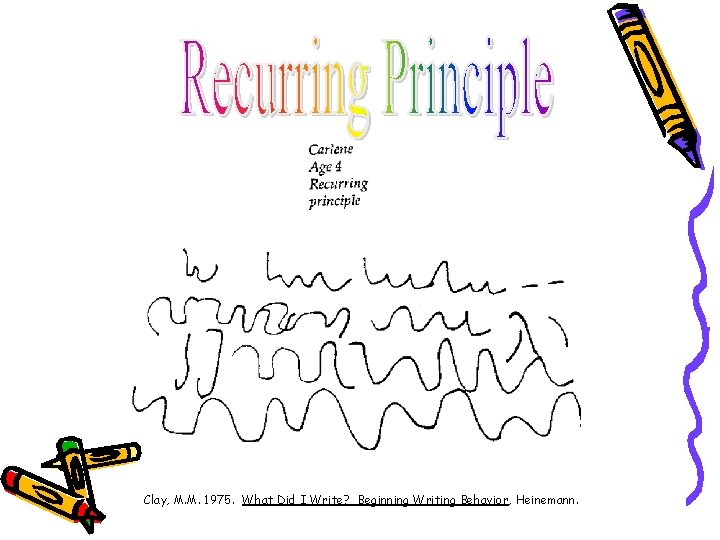
Clay, M. M. 1975. What Did I Write? Beginning Writing Behavior, Heinemann.
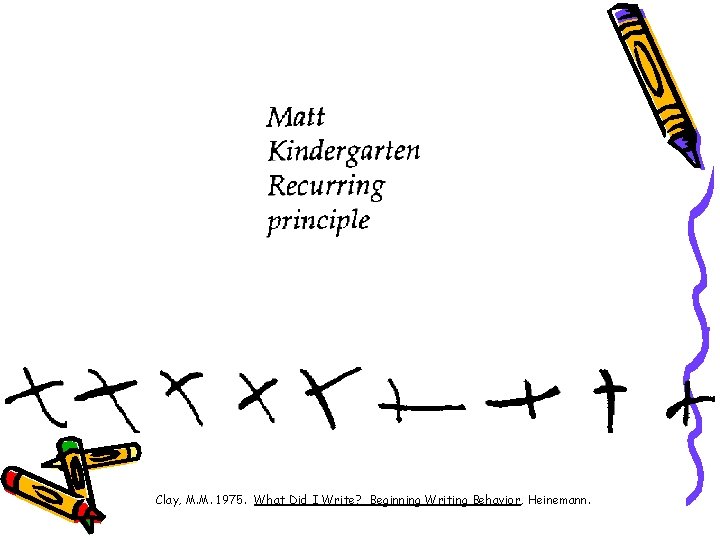
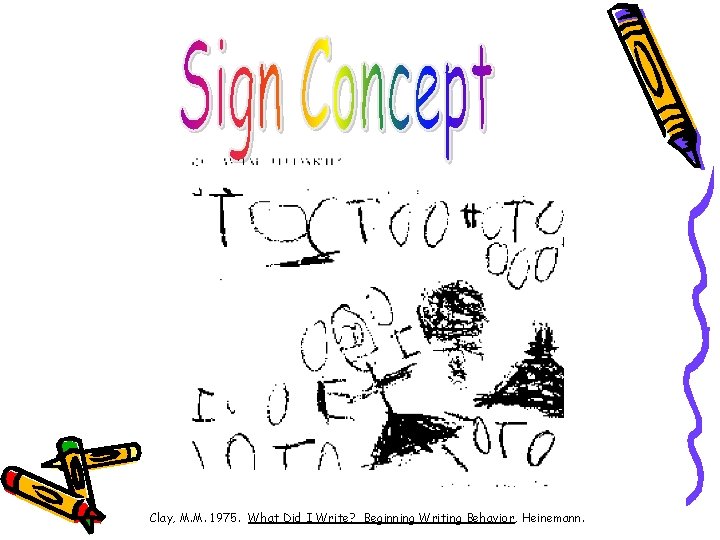
Clay, M. M. 1975. What Did I Write? Beginning Writing Behavior, Heinemann.
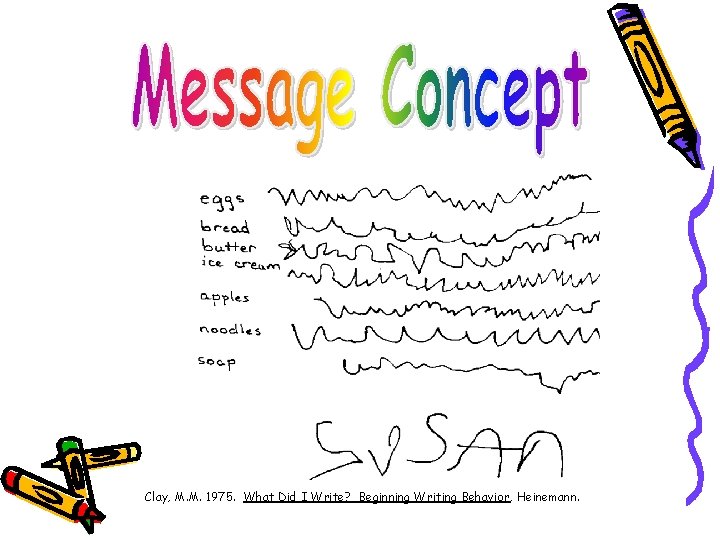
Clay, M. M. 1975. What Did I Write? Beginning Writing Behavior, Heinemann.
Clay, M. M. 1975. What Did I Write? Beginning Writing Behavior, Heinemann.
Clay, M. M. 1975. What Did I Write? Beginning Writing Behavior, Heinemann.
Clay, M. M. 1975. What Did I Write? Beginning Writing Behavior, Heinemann.
Clay, M. M. 1975. What Did I Write? Beginning Writing Behavior, Heinemann.
Clay, M. M. 1975. What Did I Write? Beginning Writing Behavior, Heinemann.
Clay, M. M. 1975. What Did I Write? Beginning Writing Behavior, Heinemann.
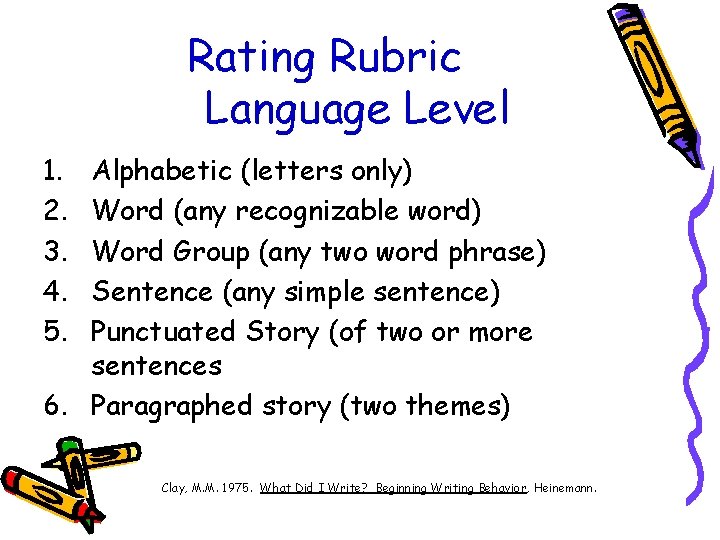
Rating Rubric Language Level 1. 2. 3. 4. 5. Alphabetic (letters only) Word (any recognizable word) Word Group (any two word phrase) Sentence (any simple sentence) Punctuated Story (of two or more sentences 6. Paragraphed story (two themes) Clay, M. M. 1975. What Did I Write? Beginning Writing Behavior, Heinemann.
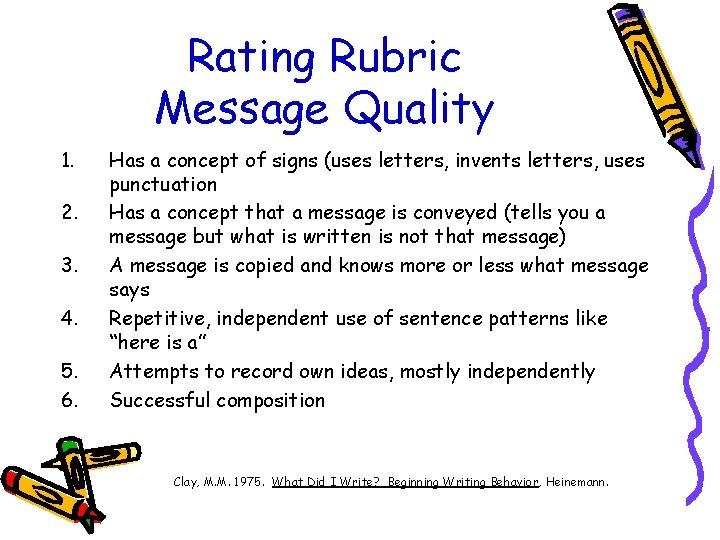
Rating Rubric Message Quality 1. 2. 3. 4. 5. 6. Has a concept of signs (uses letters, invents letters, uses punctuation Has a concept that a message is conveyed (tells you a message but what is written is not that message) A message is copied and knows more or less what message says Repetitive, independent use of sentence patterns like “here is a” Attempts to record own ideas, mostly independently Successful composition Clay, M. M. 1975. What Did I Write? Beginning Writing Behavior, Heinemann.
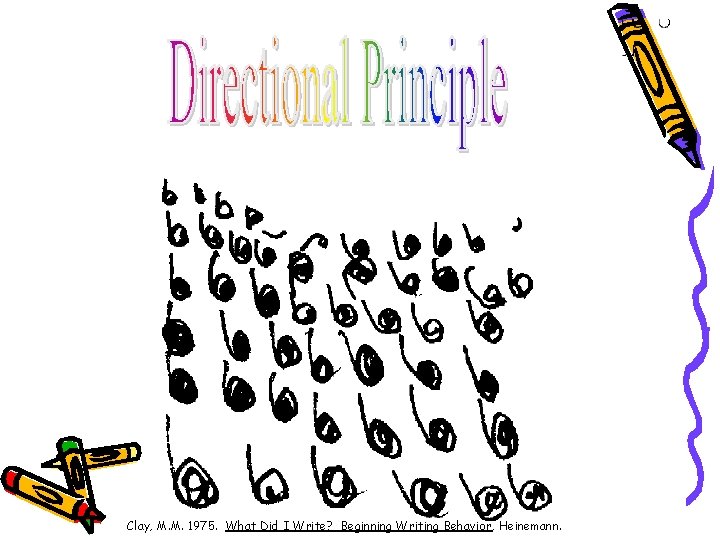
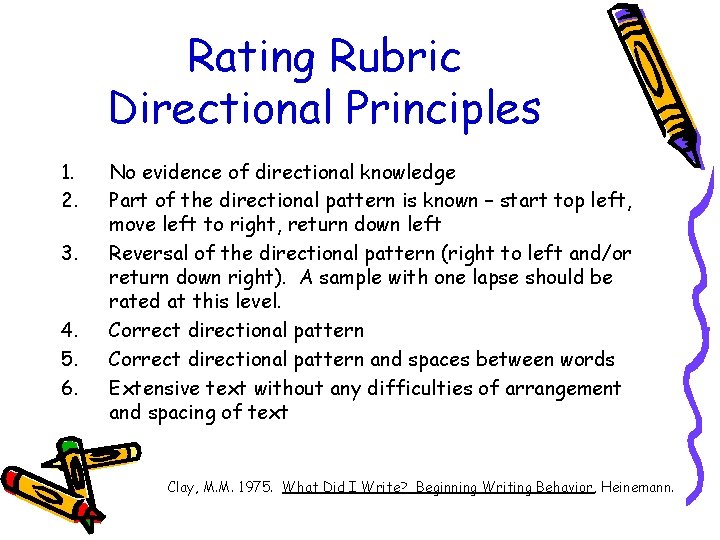
Rating Rubric Directional Principles 1. 2. 3. 4. 5. 6. No evidence of directional knowledge Part of the directional pattern is known – start top left, move left to right, return down left Reversal of the directional pattern (right to left and/or return down right). A sample with one lapse should be rated at this level. Correct directional pattern and spaces between words Extensive text without any difficulties of arrangement and spacing of text Clay, M. M. 1975. What Did I Write? Beginning Writing Behavior, Heinemann.
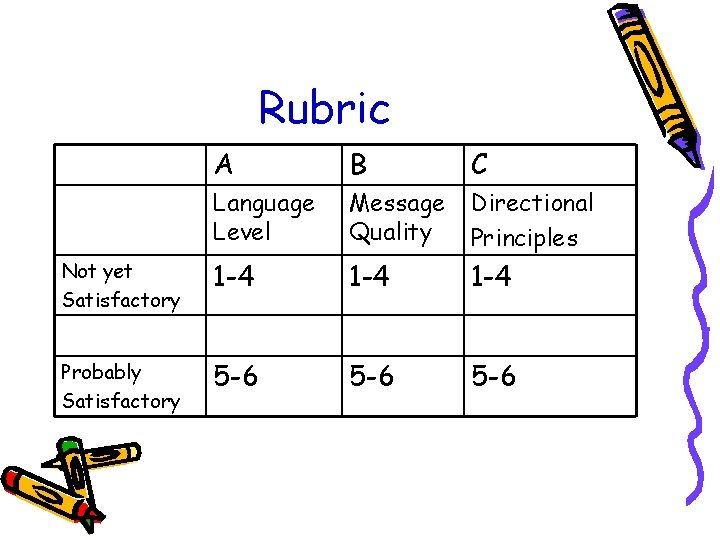
Rubric A B C Language Level Message Quality Directional Principles Not yet Satisfactory 1 -4 1 -4 Probably Satisfactory 5 -6 5 -6
Writing Samples
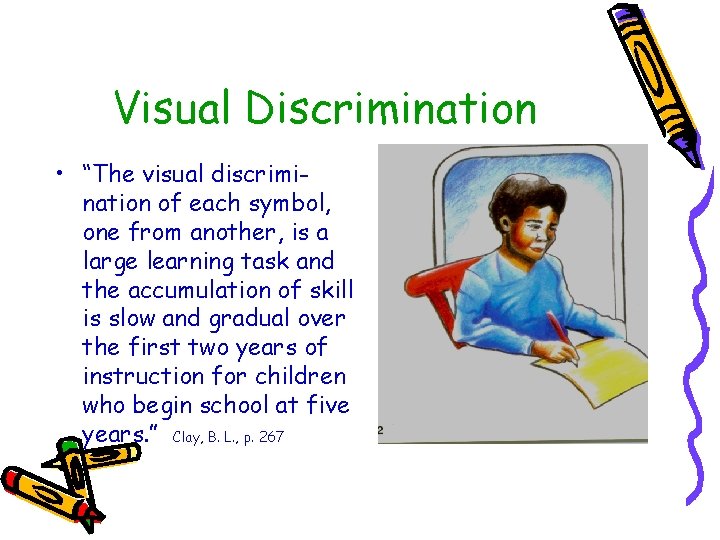
Visual Discrimination • “The visual discrimination of each symbol, one from another, is a large learning task and the accumulation of skill is slow and gradual over the first two years of instruction for children who begin school at five years. ” Clay, B. L. , p. 267
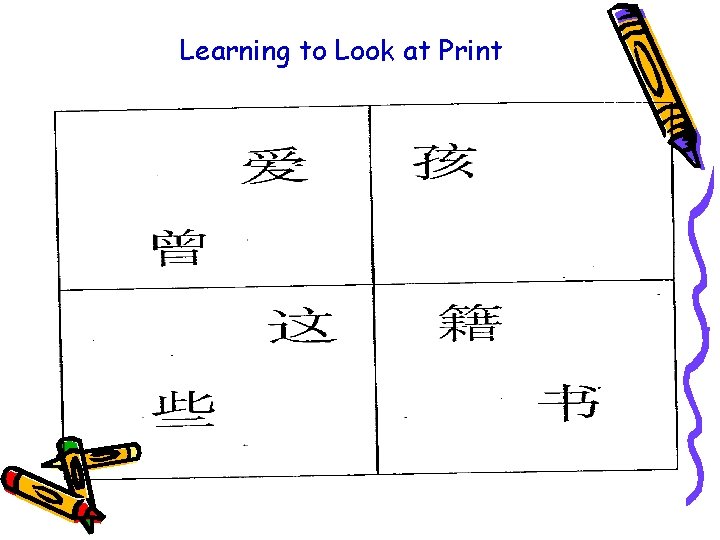
Learning to Look at Print
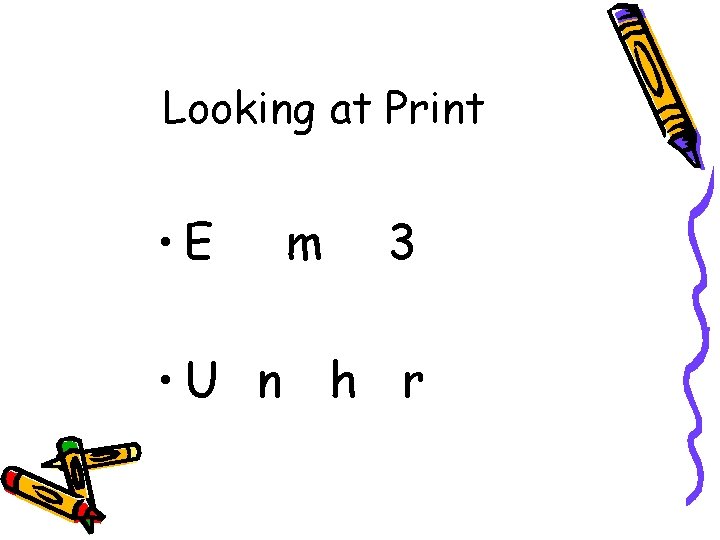
Looking at Print • E m 3 • U n h r
“Often the first two or three letters that occur in a child’s name become distinctive because of these efforts. ” (learning to write his/her name). Clay, B. L. , p. 267
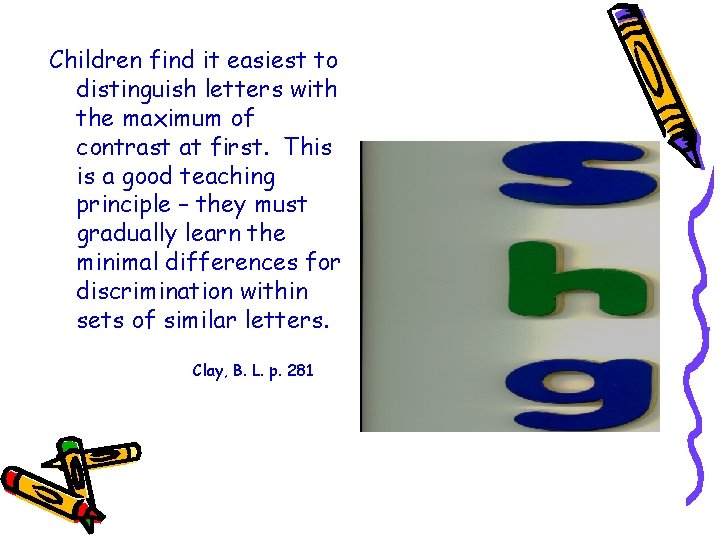
Children find it easiest to distinguish letters with the maximum of contrast at first. This is a good teaching principle – they must gradually learn the minimal differences for discrimination within sets of similar letters. Clay, B. L. p. 281
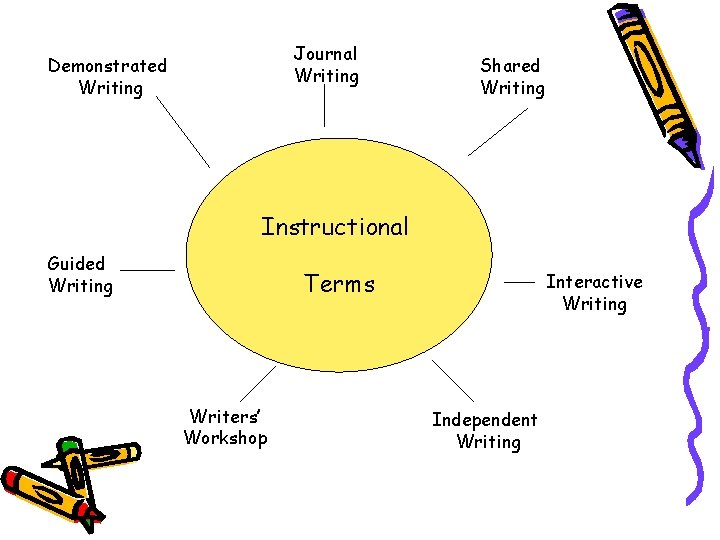
Journal Writing Demonstrated Writing Shared Writing Instructional Guided Writing Terms Writers’ Workshop Interactive Writing Independent Writing
Interactive Writing
During Video Think About • Teacher’s role – Decision making – Teacher’s language • Student’s role – Active • Construction of Text
“In the end, I suspect that excellent teachers will do what they have always done: grow. And the growing will be as it has ever been: the result of their tuning in to their students, responding to them, and learning from and with them even as they “teach” them. ” Lindfors, 1987, p. 386
Baghdan, M. (1984). Our Daughter Learns to Read and Write. International Reading Association. Clay, M. (1975). What Did I Write? Beginning Writing Behavior. Heinemann. Clay, M. (1991). Becoming Literate: The Construction of Inner Control. Heinemann. Ferreiro, E. & Terberosky, A. (1982). Literacy Before Schooling. Heinemann. Schickedanz, J. A. (1999). Much More than the ABC’s: The Early Stages of Reading and Writing. National Association for the Education of Young Children. Teale, W. H. and Sulzby, E. (Eds. ) (1986). Emergent Literacy: Writing and Reading. Ablex.