
Writing a Teaching Philosophy Statement Beth Fisher Ph
Writing a Teaching Philosophy Statement Beth Fisher, Ph. D. , Assistant Director, The Teaching Center, Washington University 2/27/2021
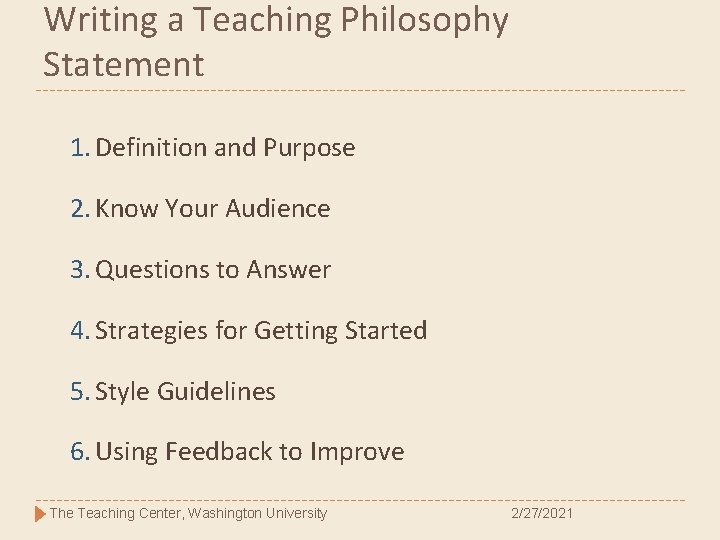
Writing a Teaching Philosophy Statement 1. Definition and Purpose 2. Know Your Audience 3. Questions to Answer 4. Strategies for Getting Started 5. Style Guidelines 6. Using Feedback to Improve The Teaching Center, Washington University 2/27/2021
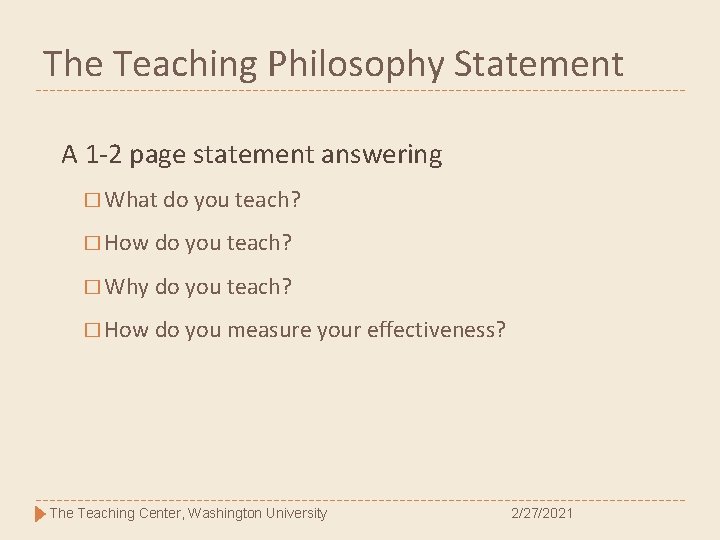
The Teaching Philosophy Statement A 1 -2 page statement answering � What do you teach? � How do you teach? � Why do you teach? � How do you measure your effectiveness? The Teaching Center, Washington University 2/27/2021
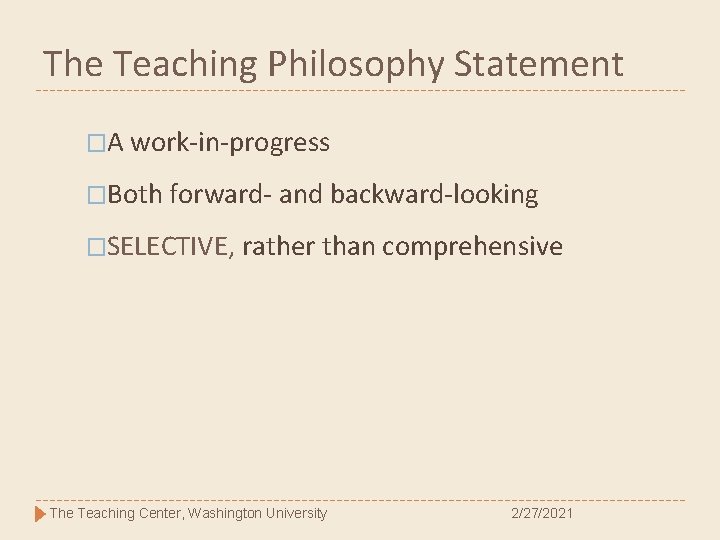
The Teaching Philosophy Statement �A work-in-progress �Both forward- and backward-looking �SELECTIVE, rather than comprehensive The Teaching Center, Washington University 2/27/2021
The Teaching Philosophy Statement �A brief, concise, and specific description of the ideas, objectives, and approaches that inform your teaching �NOT a rehashing of your CV or a narrative account of the history of your teaching experience �NOT an article on pedagogy The Teaching Center, Washington University 2/27/2021
Why Write a Teaching Philosophy? �To develop, clarify, and reflect on ideas and approaches your teaching �To help you prepare for the academic job search The Teaching Center, Washington University 2/27/2021
Timing � Write a first draft during your first year of graduate school or your first year of teaching � REVISE it for the job market The Teaching Center, Washington University 2/27/2021
Know Your Audience �What are the most important teaching issues and challenges in your field? � Discuss with faculty and peers � Read articles on teaching � Attend seminars and panel discussions at conferences � Reflect on your experience as both an instructor and a student The Teaching Center, Washington University 2/27/2021
Know Your Audience �Why does a search committee ask for a teaching philosophy statement? What do they want to know? � Would this candidate be a good “fit”? � If I were to step into a classroom and observe this candidate teaching, what would I see? � How does this candidate respond to the most common challenges of teaching? The Teaching Center, Washington University 2/27/2021
Why do you teach? � What can you accomplish in teaching that you can’t accomplish in research or other activities? � What draws you to teaching, rather than to other fields? The Teaching Center, Washington University 2/27/2021
What do you teach? �Courses �Topics �Goals for student learning � What should your students learn? �Identify knowledge and skills that they should remember and use 5 -10 years The Teaching Center, Washington University 2/27/2021
How do you teach? (Link Methods to Goals) � Lectures, discussions, small-group work � Active-learning activities � Questioning strategies � Types of assignments The Teaching Center, Washington University 2/27/2021
How do you measure your effectiveness? � How do you know when you are meeting your goals? � How can you tell if your students are they need to learn? learning what � When do you seek out feedback and how do you respond? The Teaching Center, Washington University 2/27/2021
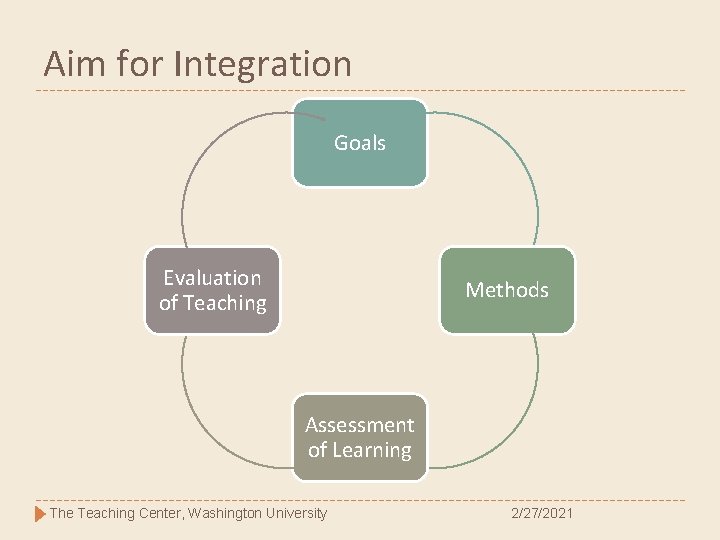
Aim for Integration Goals Evaluation of Teaching Methods Assessment of Learning The Teaching Center, Washington University 2/27/2021
Strategies for Getting Started �Write a letter explaining why you want to teach �List the qualities of an effective teacher �Write about a memorable experience in the classroom �Develop your “dream course” The Teaching Center, Washington University 2/27/2021
Strategies for Getting Started � Begin by answering a single question, such as � What are the teaching methods that you favor? � Why? � What are the specific skills and knowledge that students should gain in the classroom? � How would an observer describe your teaching? � How would your research interests influence your approach to teaching an introductory course? The Teaching Center, Washington University 2/27/2021
Use Feedback to Improve � Show your statement to faculty members and peers whose opinion you trust � Ask for honest feedback � How would a search committee view this statement? � Where can I be more clear? The Teaching Center, Washington University 2/27/2021
Style Guidelines �Limit statement to 1 -2 pages, single-spaced �Use the first-person pronoun �Use the present tense whenever possible �Avoid technical jargon �Avoid clichés and empty phrases (e. g. , “student-centered teaching”) �Use specific language and The Teaching Center, Washington University examples 2/27/2021
Consider Creating a Teaching Portfolio �Teaching Philosophy Statement �Sample Syllabi �Sample Assignments and Assessments �Evidence of Teaching Effectiveness �Evidence of Professional Development The Teaching Center, Washington University 2/27/2021
Key Concepts 1. Know your audience 2. Take the time to write and revise an effective statement 3. Aim for specific, concise language 4. Ask for and use feedback to improve 5. The process is the point The Teaching Center, Washington University 2/27/2021
Sample Teaching Philosophies For an online selection of graduate students’ Teaching Philosophy Statements, see http: //www. ctl. uga. edu/teach_asst/ta_mentors/phil osophy/index. html#07 Caveat: These statements are NOT ideal or perfect; nor do I intend to suggest that they are models to emulate. The Teaching Center, Washington University 2/27/2021
For Additional Ideas and Assistance Visit The Teaching Center Web site: http: //teachingcenter. wustl. edu Schedule a teaching consultation: Beth Fisher, Ph. D. Assistant Director Eads Hall, Rm. 113 bfisher@wustl. edu 314 -935 -5921 The Teaching Center, Washington University 2/27/2021
- Slides: 22