
Writing a paper Choosing a topic Think about
Writing a paper
Choosing a topic Think about the different kinds of papers you could write: Report analyze and organize the information and communicate it clearly in written form Issue Analysis analysis of the issue and its solutions, possibly from both historical and current perspectives. The posture of the writer is frequently that of a neutral observer more than an advocate for a particular position
Choosing a topic Relate your prior experience and learning Jot down your questions and ideas about possible topics Brainstorm, alone and with others Info Survey - what print and electronic resources are available
Choosing a topic General subject: Media Narrowed topic: Commercials Specific topic: How commercials manipulate their audience General subject: Dragons Narrowed topic: Fire-breathing dragons Specific topic: Problems in fighting the medieval fire-breathing dragon.
Choosing a topic Say you have to do a research project about World War II, and you don't know a thing about it, nor are you at all interested in it. Try to find a subtopic that connects to your interests. If you like cars, try comparing the land vehicles used by the Germans and the Americans. If you like fashion, look at women's fashions during the war and how they were influenced by military uniforms and the shortage of certain materials.
Choosing a topic If you like animals, look at the use of dogs by the US Armed Forces. If you like puzzles and brain teasers, look at the fascinating topic of decoding secret messages. If you like music, find out what types of music American teenagers were listening to during the war years.
Choosing a topic If you are a pacifist, find out what the anti-war movement was like during the war in any country. Find out what was happening during the war on your birth date. Find out if any of your relatives fought in the war and research that time and place.
Choosing a topic Remember, you can always slightly change your topic!! Nothing is set in stone until you hand the paper in!!
Researching/Choosing a topic Where should I find information? ?
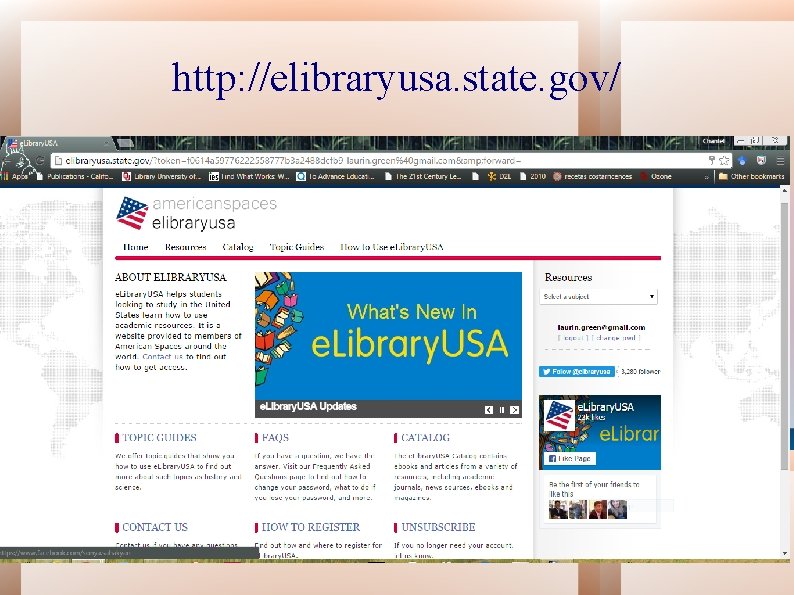
http: //elibraryusa. state. gov/
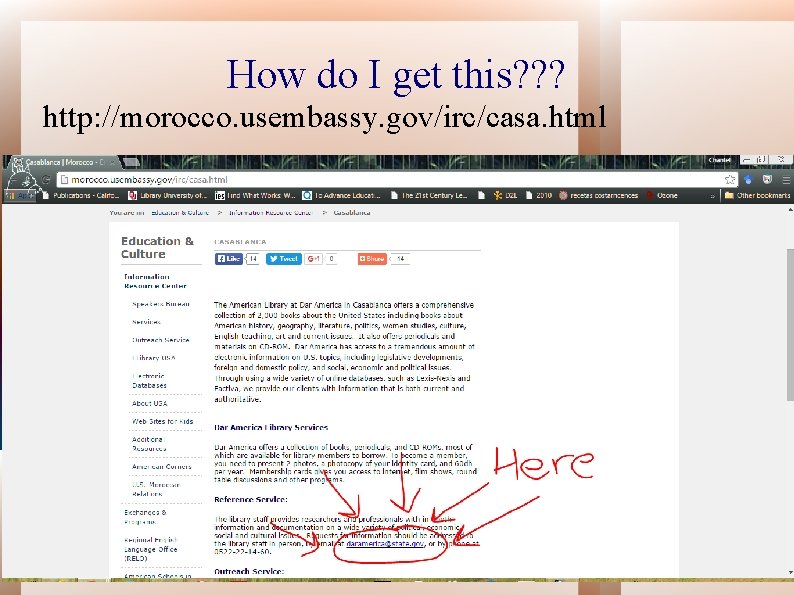
How do I get this? ? ? http: //morocco. usembassy. gov/irc/casa. html
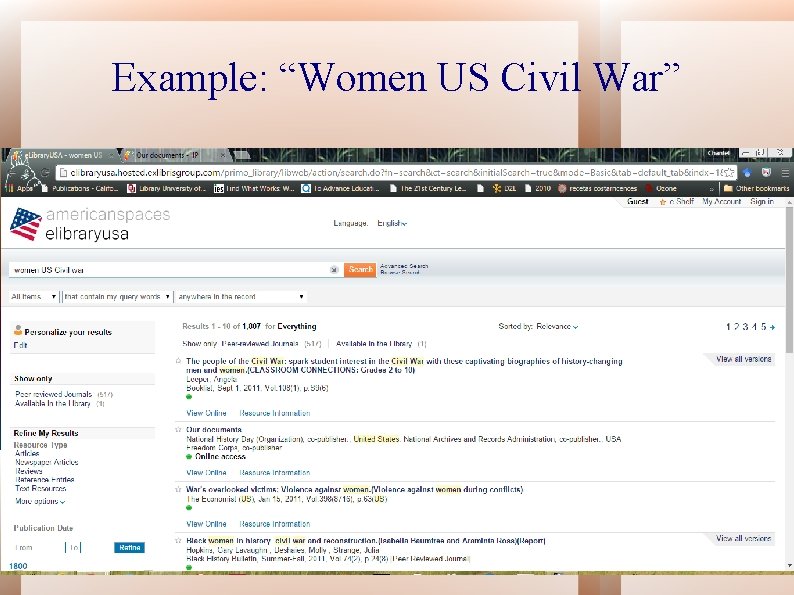
Example: “Women US Civil War”
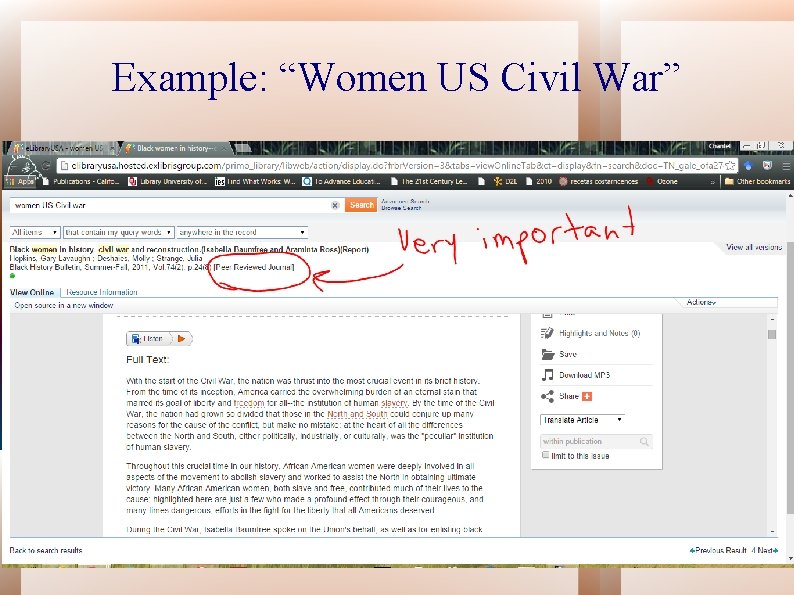
Example: “Women US Civil War”
Choosing a Topic Before you can decide on a focus, you need to explore your topic, to become informed about the topic, to build on your knowledge and experience Do some preliminary note taking As you read, start taking notes of what you're learning about your topic—concepts, issues, problems, areas where experts agree or disagree. Keep track of the bibliographic references for the information you're using, and write down a note or two of what's contained in the book, article, Website, etc.
Write a Purpose Statement Writing a statement of purpose will do 4 things to help you: You will get more interested in your project. It will keep you from getting overwhelmed and panicky at all the information you may find. It will help you develop a Thesis Statement, which comes later on in the research process. It saves you valuable time and effort.
Write a Purpose Statement To write the sentence, first answer these questions for yourself as best as you can: 1. What is my real personal interest in the topic? (There will always be something that can interest you) 2. What do I specifically want to learn about my topic? (Don't overwhelm yourself with too many things. Two or three are plenty. ) Start your Statement of Purpose with words like "I want to learn about. . . "
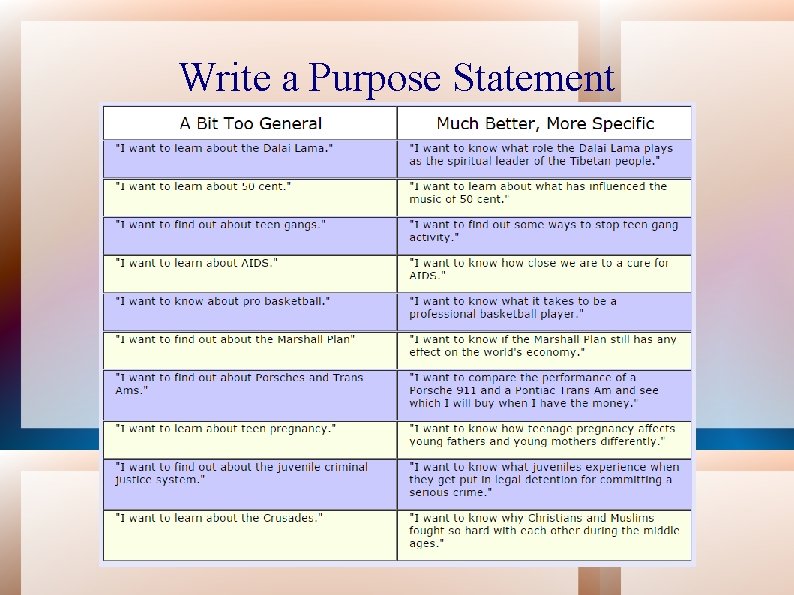
Write a Purpose Statement
- Slides: 17