
Writing a Design Brief Introduction to Engineering Design
Writing a Design Brief Introduction to Engineering Design © 2012 Project Lead The Way, Inc.
Writing a Design Brief People are constantly surrounded by objects that compete for their attention. What were the designers thinking when they created these objects? What purposes do their creations serve, and what problems do they address? © 2012 Project Lead The Way, Inc.
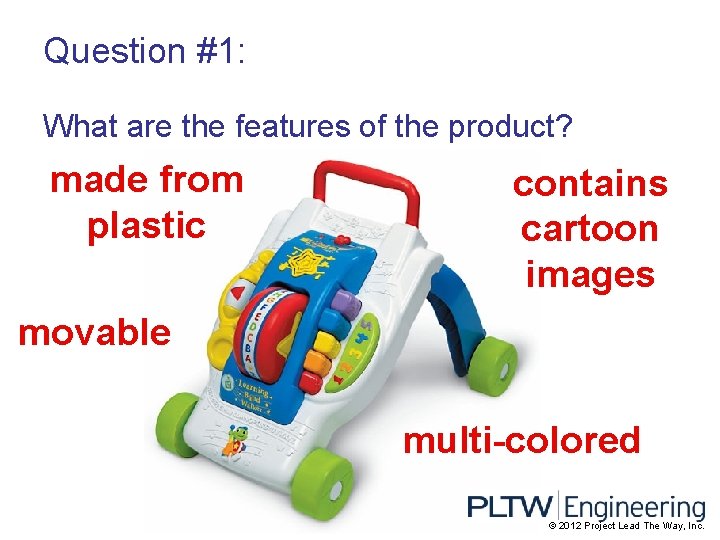
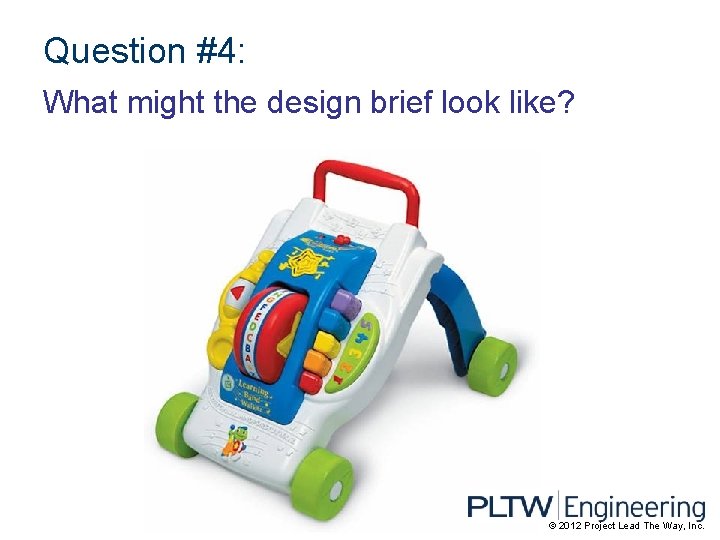
Question #1: What are the features of the product? made from plastic contains cartoon images movable multi-colored © 2012 Project Lead The Way, Inc.
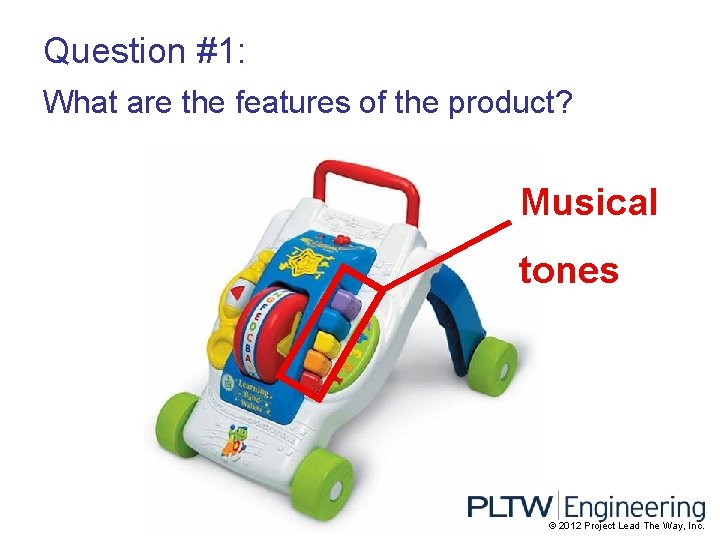
Question #1: What are the features of the product? Musical tones © 2012 Project Lead The Way, Inc.
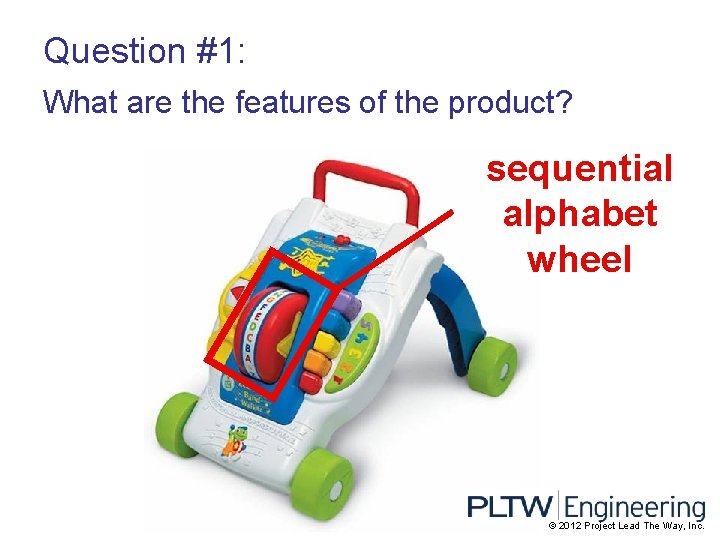
Question #1: What are the features of the product? sequential alphabet wheel © 2012 Project Lead The Way, Inc.
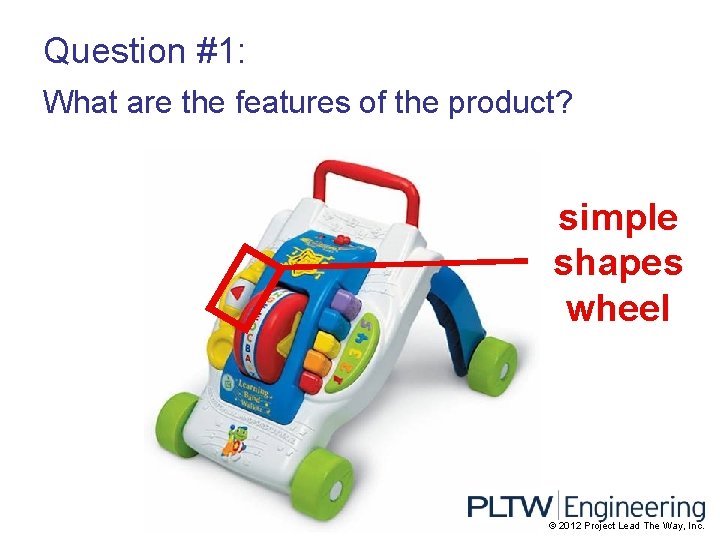
Question #1: What are the features of the product? simple shapes wheel © 2012 Project Lead The Way, Inc.
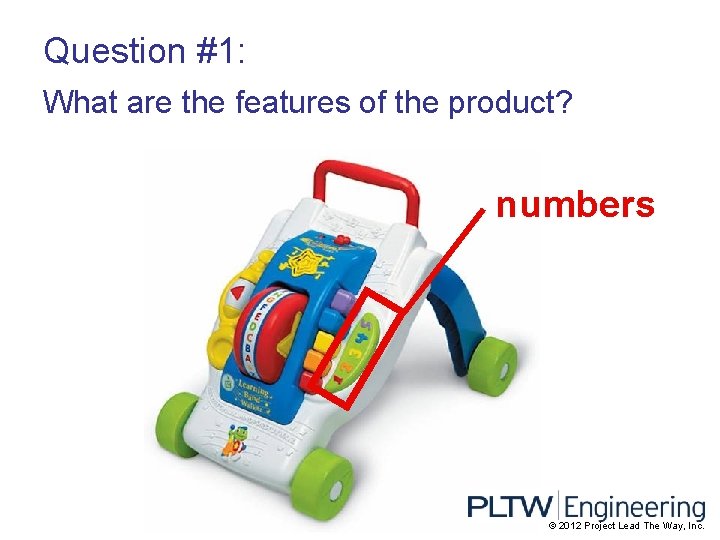
Question #1: What are the features of the product? numbers © 2012 Project Lead The Way, Inc.
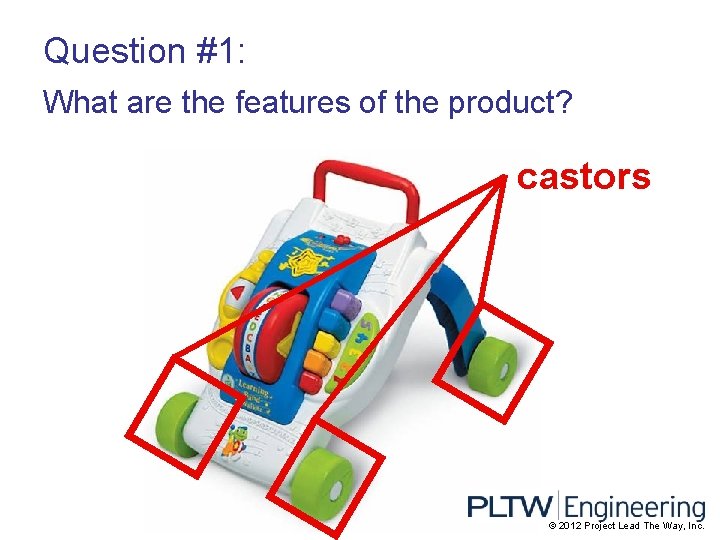
Question #1: What are the features of the product? castors © 2012 Project Lead The Way, Inc.
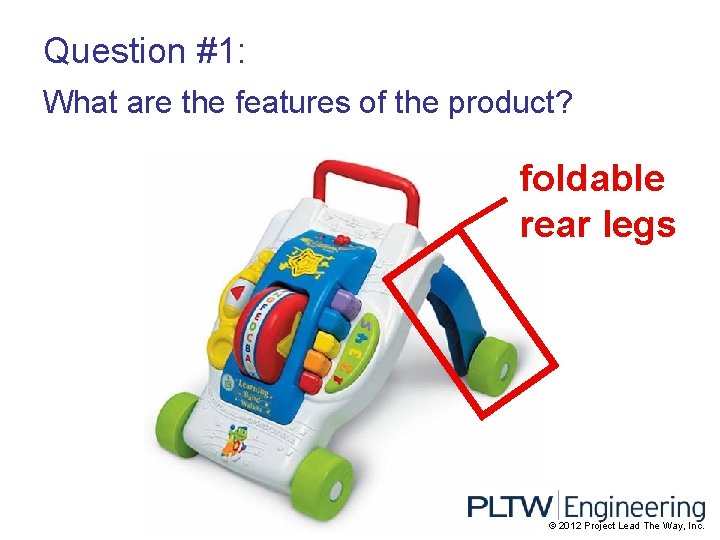
Question #1: What are the features of the product? foldable rear legs © 2012 Project Lead The Way, Inc.
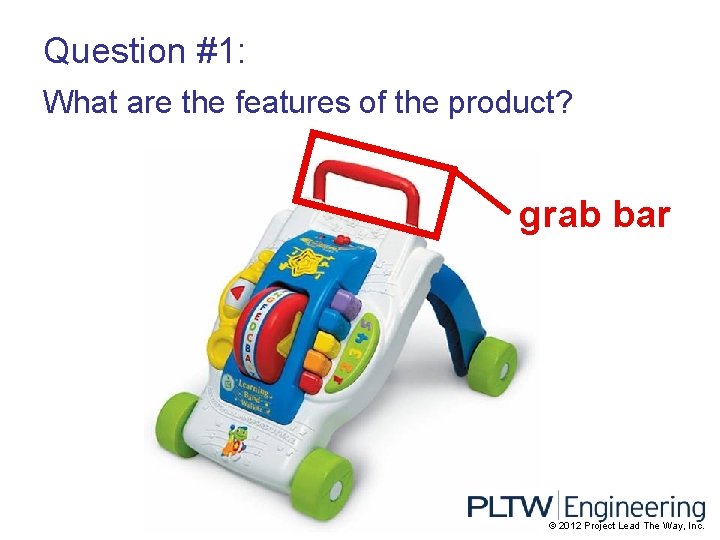
Question #1: What are the features of the product? grab bar © 2012 Project Lead The Way, Inc.
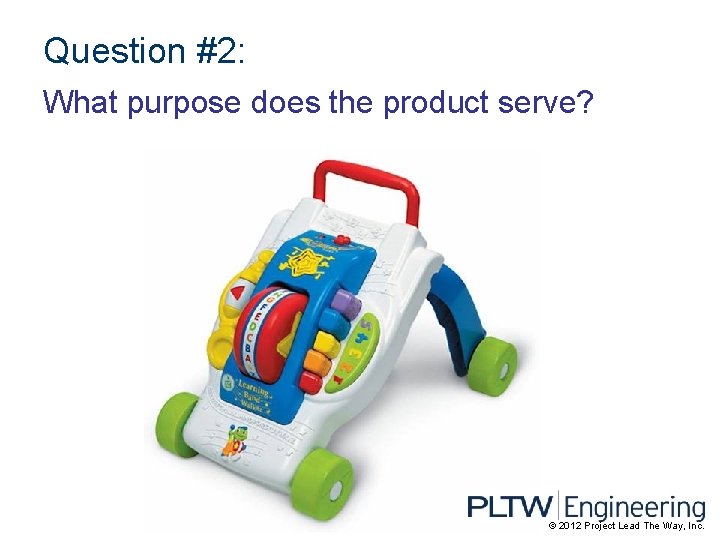
Question #2: What purpose does the product serve? © 2012 Project Lead The Way, Inc.
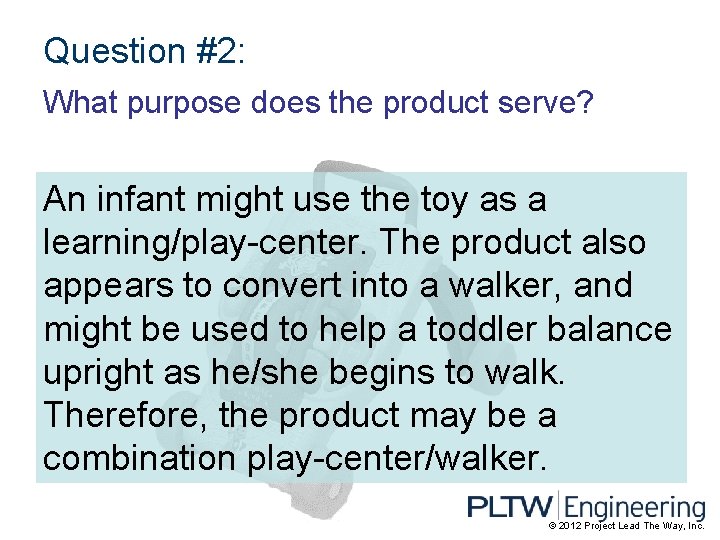
Question #2: What purpose does the product serve? An infant might use the toy as a learning/play-center. The product also appears to convert into a walker, and might be used to help a toddler balance upright as he/she begins to walk. Therefore, the product may be a combination play-center/walker. © 2012 Project Lead The Way, Inc.
Question #3: What issues might the product address? • Children need to prepare for school. • Parents need toys to keep their children occupied. • Children quickly outgrow their toys. • Children need toys to help them develop their cognitive abilities and fine motor skills. © 2012 Project Lead The Way, Inc.
Question #4: What might the design brief look like? © 2012 Project Lead The Way, Inc.
Question #4: What might the design brief look like? Client / End User / Target Consumer Problem Statement Design Statement Constraints © 2012 Project Lead The Way, Inc.
Question #4: What might the design brief look like? Client / End User / Target Consumer Problem Statement Design Statement Constraints © 2012 Project Lead The Way, Inc.
Who might the Client be? A large toy manufacturer, such as Playskool™, Fisher Price™, Leap Frog™, etc. Who was the Target Consumer? Obviously, a child is the end user, but a person (parent, family member, or family friend) considering the purchase of an educational toy for an infant or toddler would be the target consumer. © 2012 Project Lead The Way, Inc.
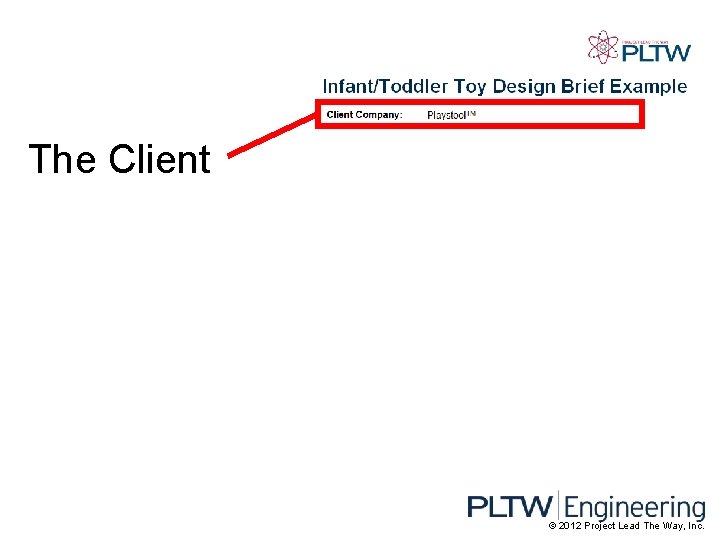
The Client © 2012 Project Lead The Way, Inc.
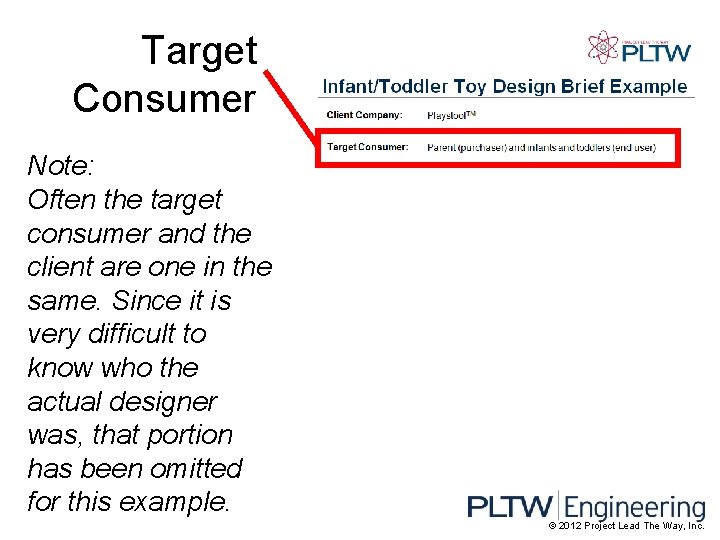
Target Consumer Note: Often the target consumer and the client are one in the same. Since it is very difficult to know who the actual designer was, that portion has been omitted for this example. © 2012 Project Lead The Way, Inc.
Question #4: What might the design brief look like? Client / End User / Target Consumer Problem Statement Design Statement Constraints © 2012 Project Lead The Way, Inc.
What could the Problem Statement have looked like? Most parents expect their children to be able to walk, talk, sing, count and recite the alphabet before entering elementary school. A growing expectation is that infants and toddlers will develop cognitive abilities and fine motor skills during the first three years of life. © 2012 Project Lead The Way, Inc.
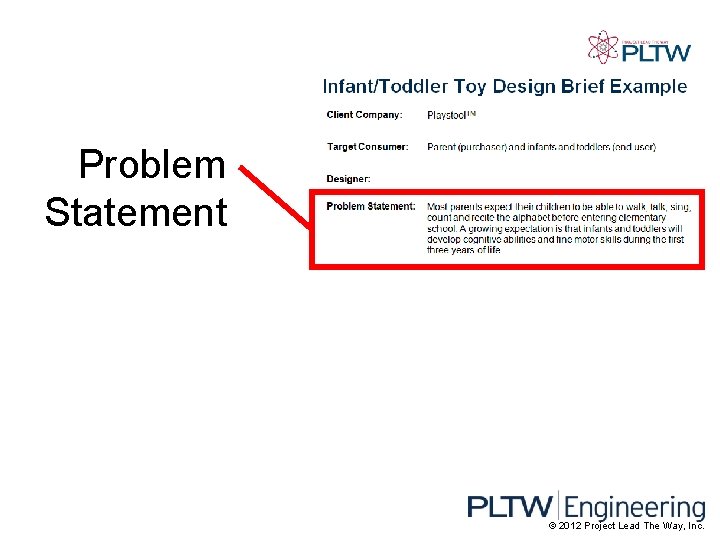
Problem Statement © 2012 Project Lead The Way, Inc.
Question #4: What might the design brief look like? Client / End User / Target Consumer Problem Statement Design Statement Constraints © 2012 Project Lead The Way, Inc.
What could the Design Statement have looked like? Design, market, test, and mass produce a multi-function educational toy that is an infant activity center and a toddler walking aid. © 2012 Project Lead The Way, Inc.
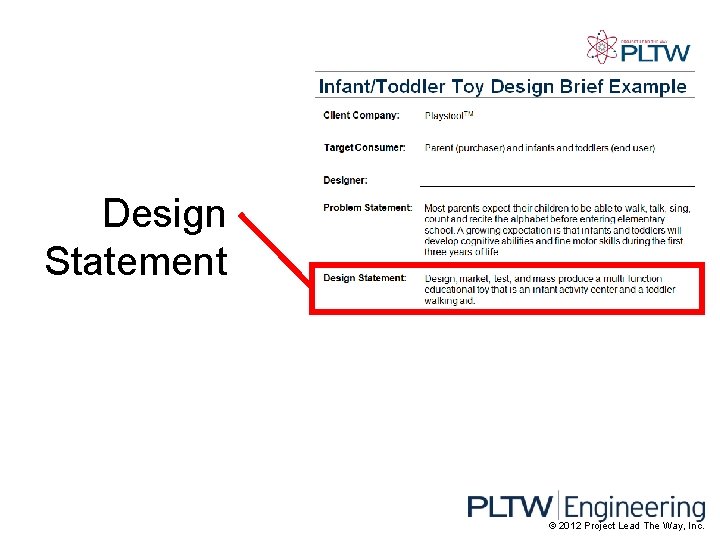
Design Statement © 2012 Project Lead The Way, Inc.

Question #4: What might the design brief look like? Client / End User / Target Consumer Problem Statement Design Statement Constraints © 2012 Project Lead The Way, Inc.
What might the Constraints have been? Easy to assemble Visually stimulating to a child Contains multiple shapes, numbers and letters Plays music Complies with all applicable health and safety codes Easy to clean © 2012 Project Lead The Way, Inc.
What might the Constraints have been? Easy to configure to infant or toddler mode Weighs less than 4 lb Retail price less than $20 Parts are primarily injection moldings © 2012 Project Lead The Way, Inc.
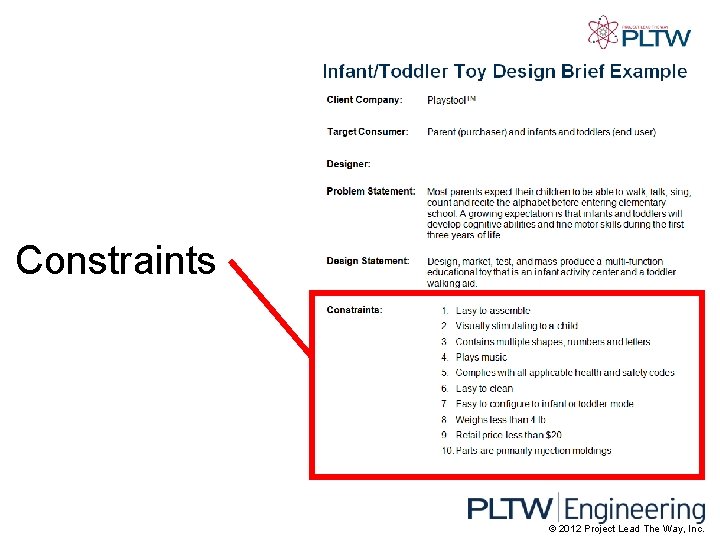
Constraints © 2012 Project Lead The Way, Inc.
Extend Your Understanding Engineers need to know what problems they are addressing. They must have an idea about the degree to which the solution should be carried out, along with what the solution should do to solve the problem. The engineer must also work within constraints, such as time and budget. A design brief is a tool that is used to concisely identify the problem, solution expectations, and project constraints. The engineer will often return to the design brief throughout a design process to assess the progress and validity of his or her creative work.
Extend Your Understanding Imagine that you are part of that design team. The project leader has given you the responsibility of creating a design brief that defines the problem, states the expectations that the solution must meet, and identifies the project criteria and constraints. Your design brief will serve as a guide to the team as they work through the design process. From your observations of the video, record your information in the design brief on the following page or in your engineering notebook.
- Slides: 31