
Write your name on a sticky notes Place

















- Slides: 48
Write your name on a sticky notes ● Place one under what grade band you teach Take another sticky note ● ANONYMOUSLY place it under the rating how comfortable you are teaching engineering to students
Break it to Make it! Everyday Engineering Jori Konrad Lauren Marlatt STEMazing training April 13 th, 2019
Introductions
https: //www. youtube. com/watch? v=Woc 0 GZk. Da 7 k
Public Narrative ‘A story of self, a story of us, a story of now’
Public Narrative defined Public narrative is the art of translating values into action. It is a discursive process through which individuals, communities, and nations construct their identity, make choices, and inspire action. Because it engages both “head” and “heart”, narratives can instruct and inspire- teaching us not only how we should act, but moving us to act. Leaders use public narrative to interpret themselves to others, engage others in a sense of shared community, and inspire others to act on challenges that community must face. It is learning to tell a story of self, a story of us, and a story of now. - Marshall Ganz
Ice Breaker
A Musical STEAM Challenge Adapted and modified from the Accord Fall Summit, Las Vegas, 2016
The Musical STEAM Challenge is an engineering activity which will show STEAM is in everyday life.
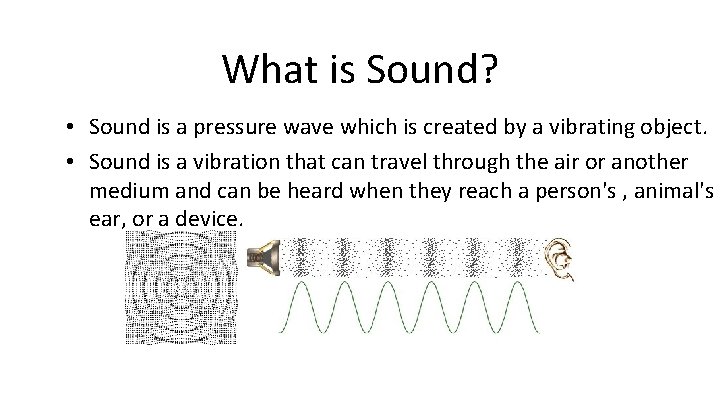
What is Sound? • Sound is a pressure wave which is created by a vibrating object. • Sound is a vibration that can travel through the air or another medium and can be heard when they reach a person's , animal's ear, or a device.
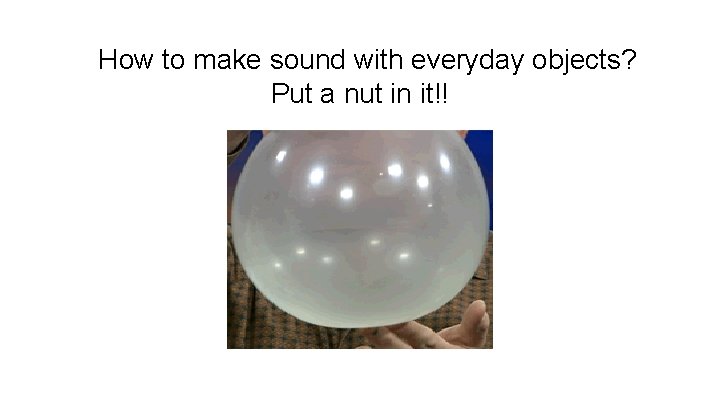
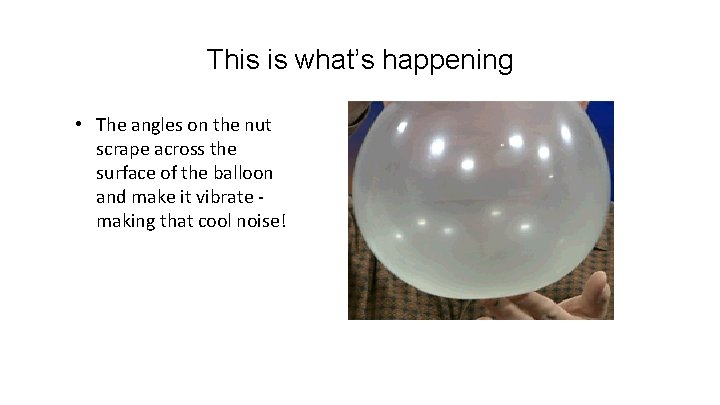
How to make sound with everyday objects? Put a nut in it!!
What’s going on with that?
This is what’s happening • The angles on the nut scrape across the surface of the balloon and make it vibrate making that cool noise!
The Challenge: Working in teams, construct a musical instrument and play a tune as a ‘band’. Get ready for a fun, noisy activity!
YOUR SCHEDULE • 20 minute – build your instrument and test your instrument. • 10 min – improve your design, compose, and conduct! • PERFORM-We will try to guess your song
Procedure: • Working in teams, each table will construct 4* musical instruments, using provided materials. • Once you build your instrument, you should be able to play a tune as a team. • Only the Materials Manager can leave the table to get more materials. • Use the “Engineering Design Process” and start working as a team. *At least one wind, one string and one percussion instrument.
REFLECTION HOW WAS THE ENGINEERING PROCESS USED?
Formative assessment
Rosie Revere
Bandage Activity
Deconstructing Bandages
Questions to ponder ✣ What is the purpose of a bandage? ✣ What are some problems with bandages? ✣ How do you think the structure of a bandage relates to its functions? 22
Procedure Overview 1. Compare 4 different bandages. Record how they are different and how they are the same. 2. Have one member of your group put a different bandage on the knuckle of several different fingers. 3. wash hands for at least 20 seconds using a mild soap. 4. After drying, inspect each bandages condition and record your observations. 5. Discuss with your group the following explorable question: How might you test to see whether a bandage is indeed waterproof? 23
Procedure Overview Continued 6. Design a science investigation to determine whether different bandages are waterproof. Test several different types of bandages, each one at two places on your hand. Think about the following questions as you design your experiment: How long will you submerge the bandaged hand in the coffee? Will you move your hand while it is in the coffee? How will you be sure not to get the gauze wet when you remove the bandage from your hand? 7. After your teacher approves your plan, carry out your investigation and record your data in a table. 8. Use the evidence to draw some conclusions to answer the following 24
One test was conducted by Consumer Reports (2010), which had people put their bandaged hand in room temperature coffee. When they removed their hand took off the bandage, they could tell whether it leaked if the gauze was tinted brown by the coffee. So, if there is brown tint on the gauze, the bandage has leaked and is not waterproof. 25
1. Design a waterproof bandage for use on the middle knuckle of your index finger. 2. Make a plan and draw and label a sketch of what you will make and the materials you will need. 3. Once the teacher approves the plan, construct your bandage 4. Test your design 5. Share results with the class. What worked best? What didn’t work? Any perfect 26
Compare 27
I like I wonder What if 28
It’s Zipped in the Bag
Investigate the closing mechanisms of the different bags. ● Fill in the similarities and differences of the different bags. ● Draw a picture of how the closing mechanism seems to work.
How can you apply this idea to creating a closing mechanism for a file folder? Draw your design and get approval.
What about zipper bags?
What would you invent?
NEW STANDARD S
Arizona Science Standards 2018
…. . . ‘a story of us, a story of now’ We will use the Expert Jigsaw protocol and annotation symbols to read annotate the introduction to the Standards document. You will first have a home group of 5 and then an expert group Questions for expert groups: 1. 2. 3. What was the most important part for you? What did you find surprising or exciting and why? What did you find confusing or puzzling?
Return to your home groups Implement your share out plan that you decided upon in your expert groups with your home group. Be ready to share one big ‘take away’ either individually or as a group.
A Focus on Cross Cutting Concepts - CCCs Directions: Cut out the pictures and decide which CCC you think best describes it using your CCC mat.
COLD BAG CHALLENGE
What’s the deal with the cold bag?
Take it apart. Describe the layers - what do you think their purpose is?
● Design your experiment to test the effectiveness of each layer. ● Get approval ● Test and record data and observations
Design your cold bag Constraints: ● Must be no bigger in area than 100 cm squared ● Must fit one ice cube inside
TEST YOUR BAG!
Apply what you know to a cooler and show heat transfers.
Back to the engineering design process. How did we do?
Evaluations
Thank you for a great day!