
Write the following key terms on the back

• Write the following key terms on the back of your notes!
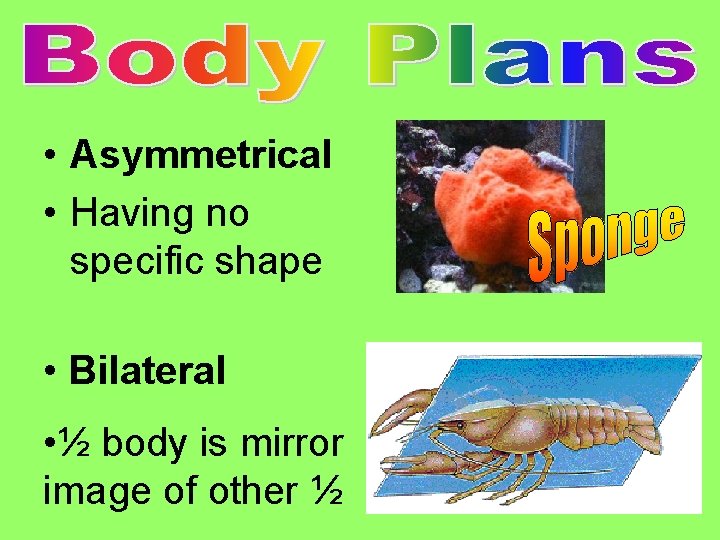
• Asymmetrical • Having no specific shape • Bilateral • ½ body is mirror image of other ½
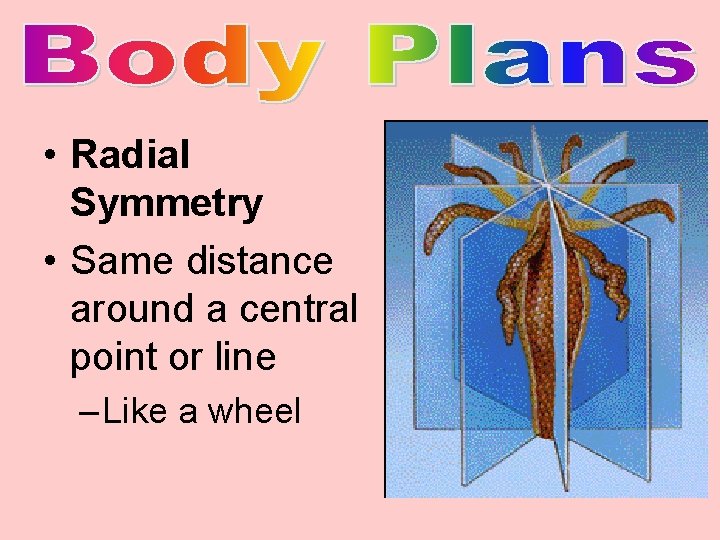
• Radial Symmetry • Same distance around a central point or line – Like a wheel
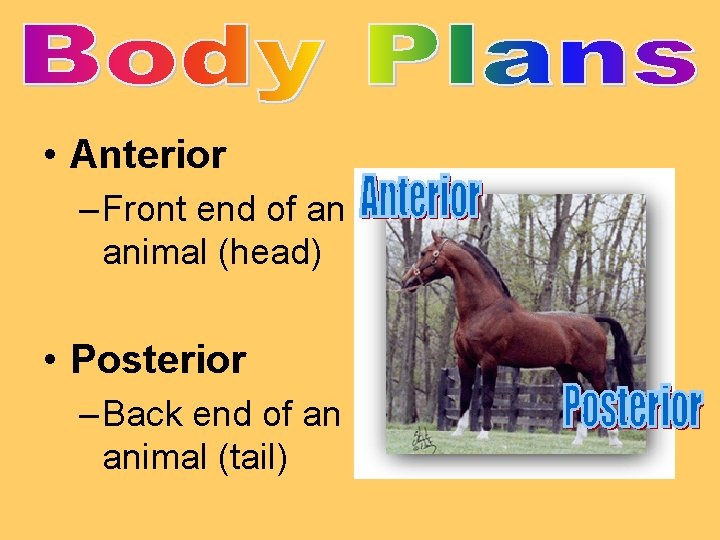
• Anterior – Front end of an animal (head) • Posterior – Back end of an animal (tail)

• Dorsal – Back • Ventral – Belly or underside (stomach)
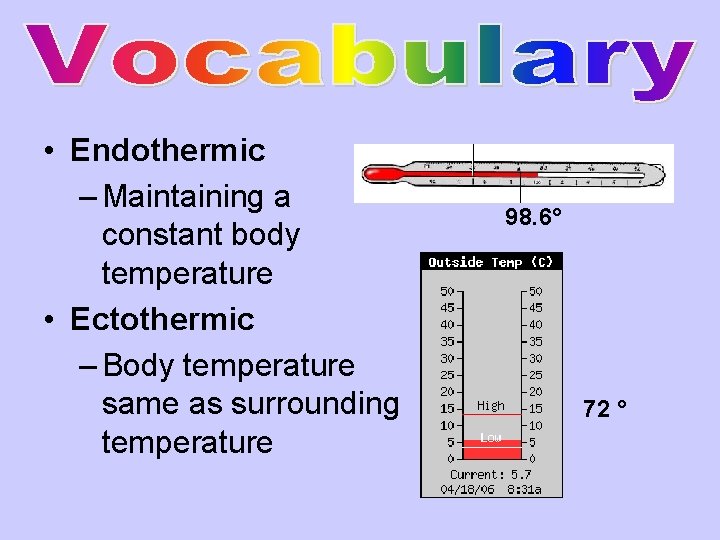
• Endothermic – Maintaining a constant body temperature • Ectothermic – Body temperature same as surrounding temperature 98. 6° 72 °
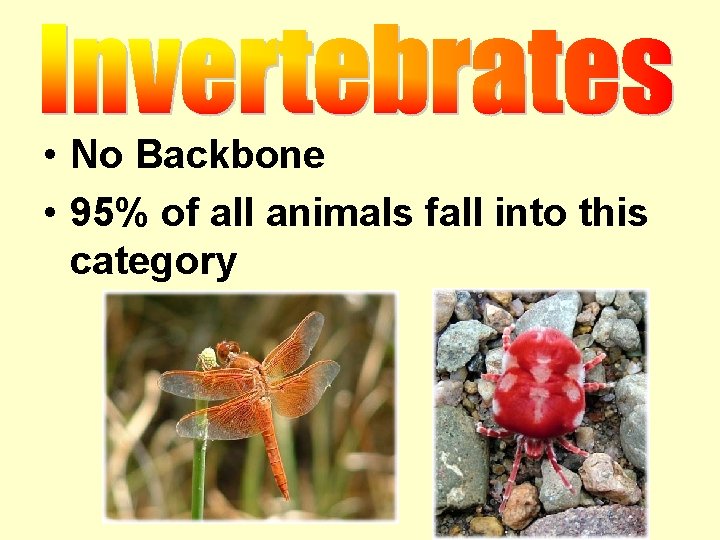
• No Backbone • 95% of all animals fall into this category
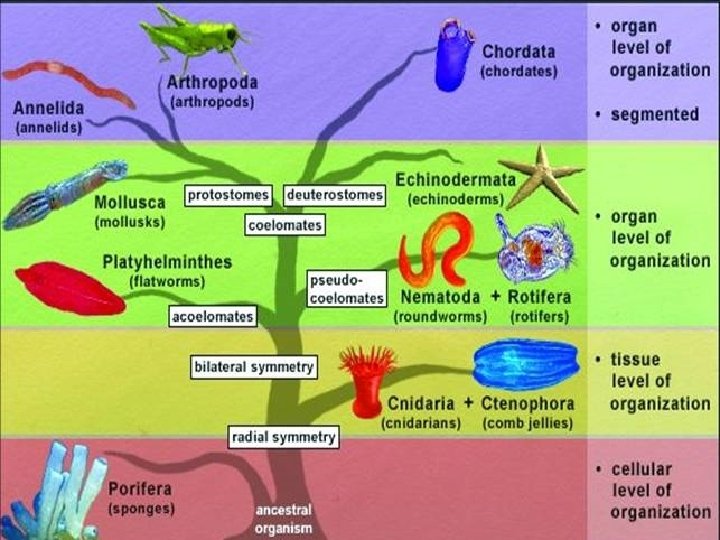
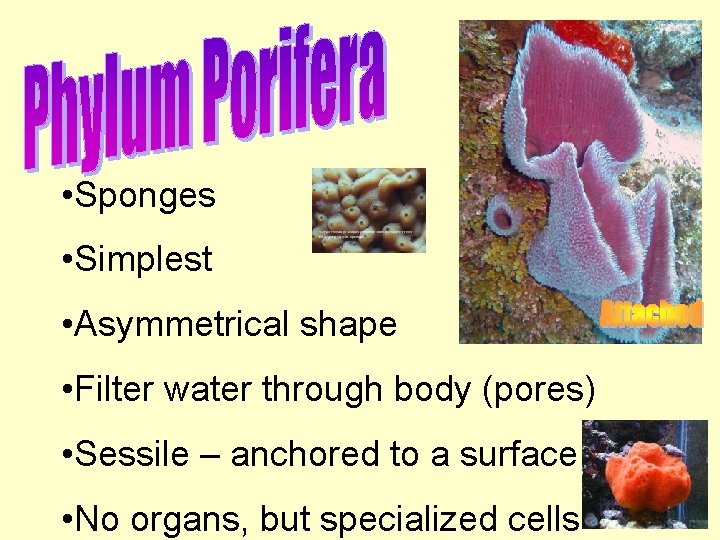
• Sponges • Simplest • Asymmetrical shape • Filter water through body (pores) • Sessile – anchored to a surface • No organs, but specialized cells
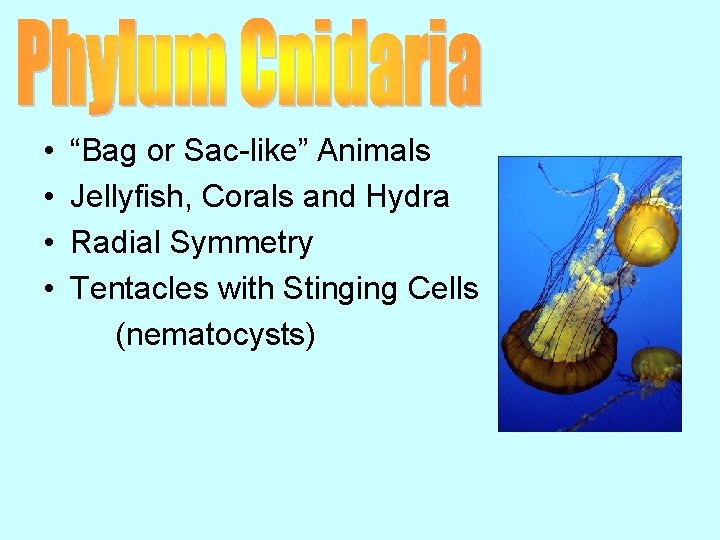
• • “Bag or Sac-like” Animals Jellyfish, Corals and Hydra Radial Symmetry Tentacles with Stinging Cells (nematocysts)
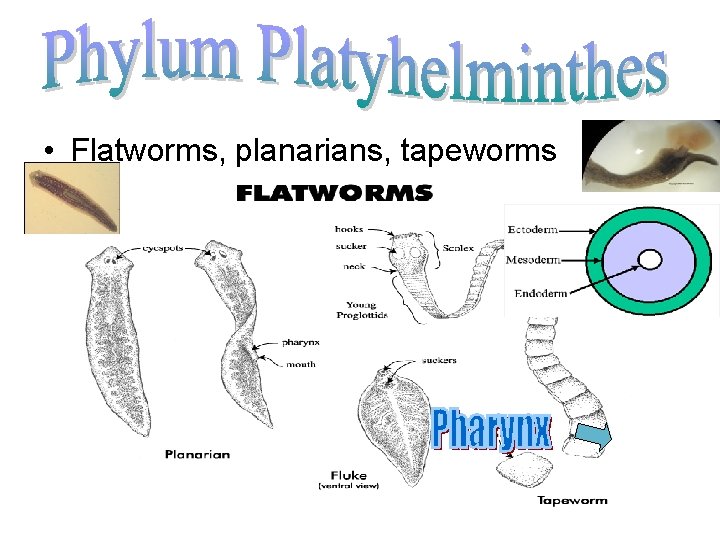
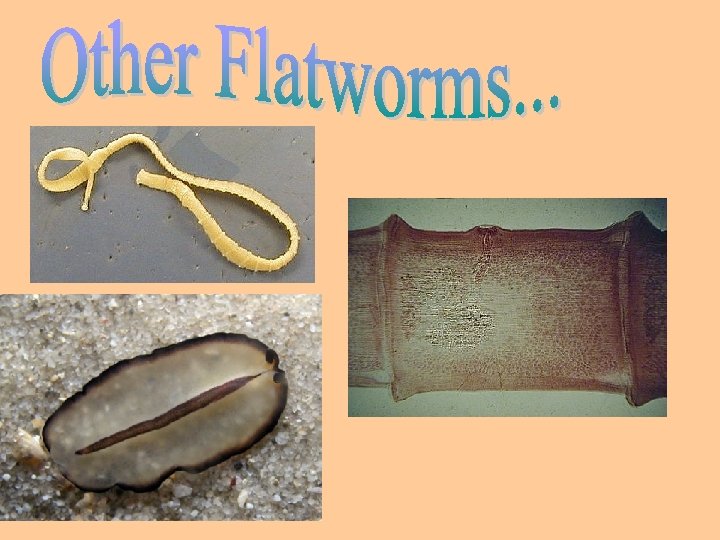
• Flatworms, planarians, tapeworms • Bilaterial symmetry • Tissues – Endoderm, Ectoderm & Mesoderm • Single body opening – Pharynx – used like a straw to ingest food • Two-way digestion – Food in, waste out
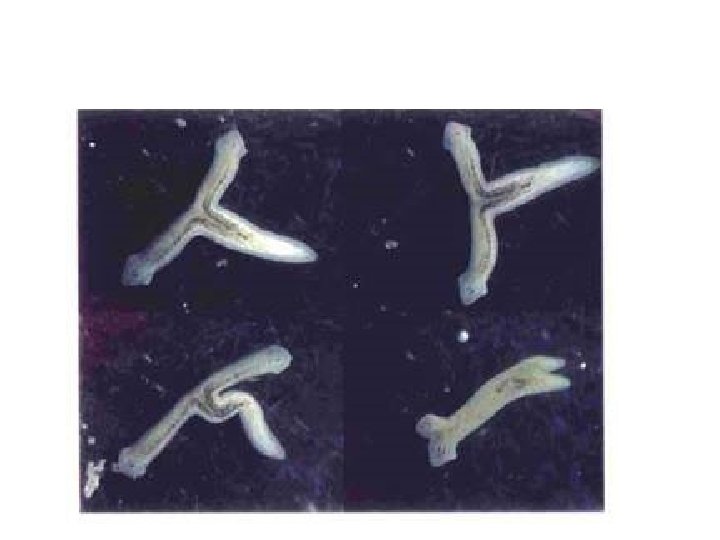
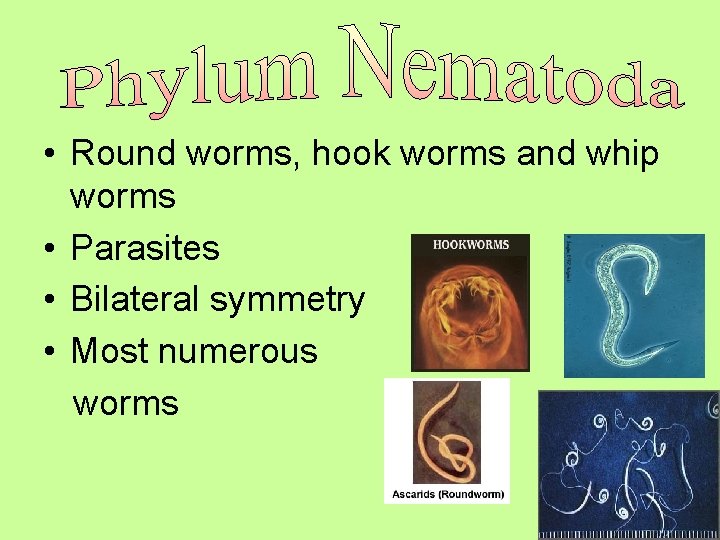
• Round worms, hook worms and whip worms • Parasites • Bilateral symmetry • Most numerous worms
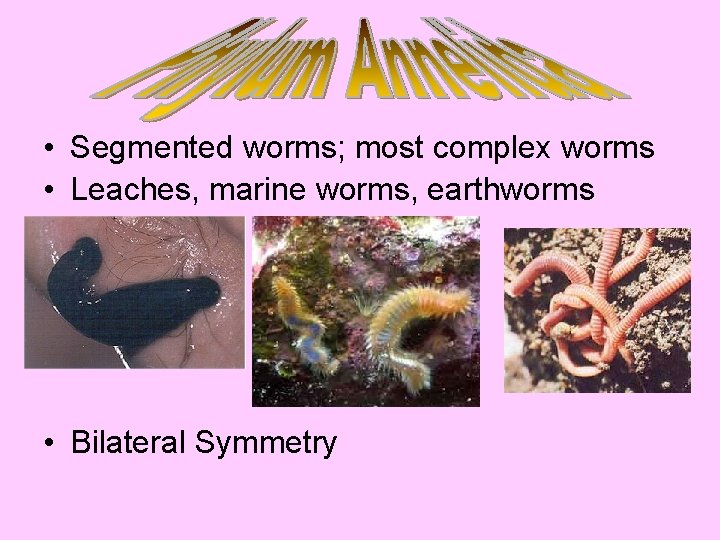
• Segmented worms; most complex worms • Leaches, marine worms, earthworms • Bilateral Symmetry
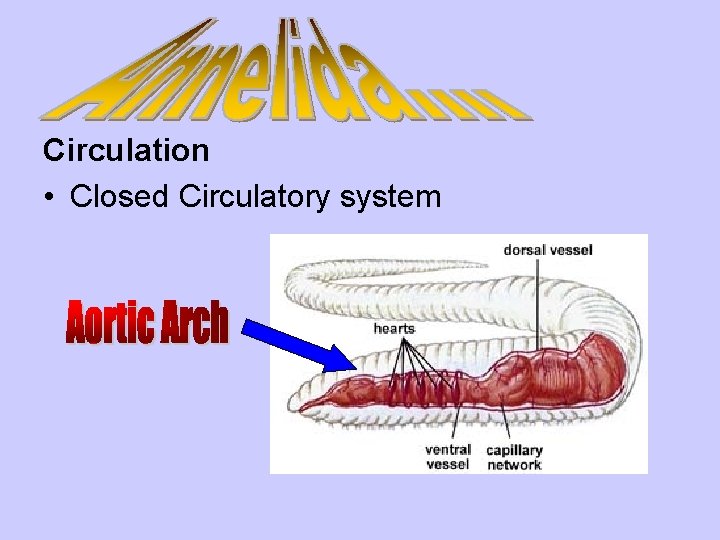
Circulation • Closed Circulatory system
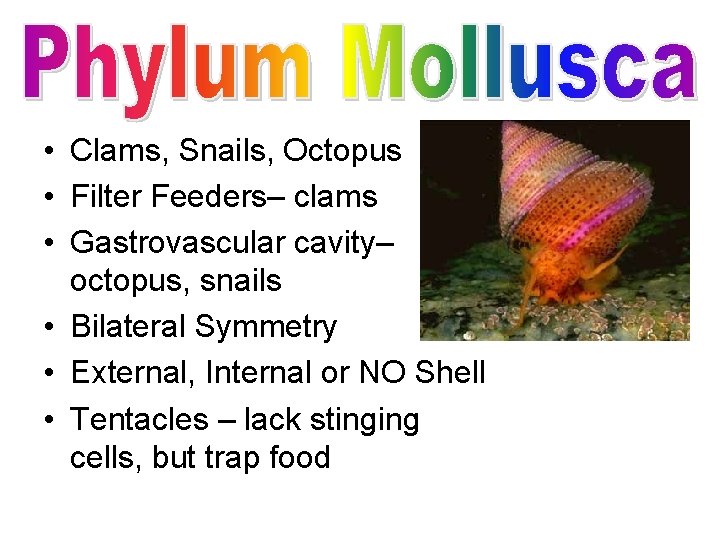
• Clams, Snails, Octopus • Filter Feeders– clams • Gastrovascular cavity– octopus, snails • Bilateral Symmetry • External, Internal or NO Shell • Tentacles – lack stinging cells, but trap food
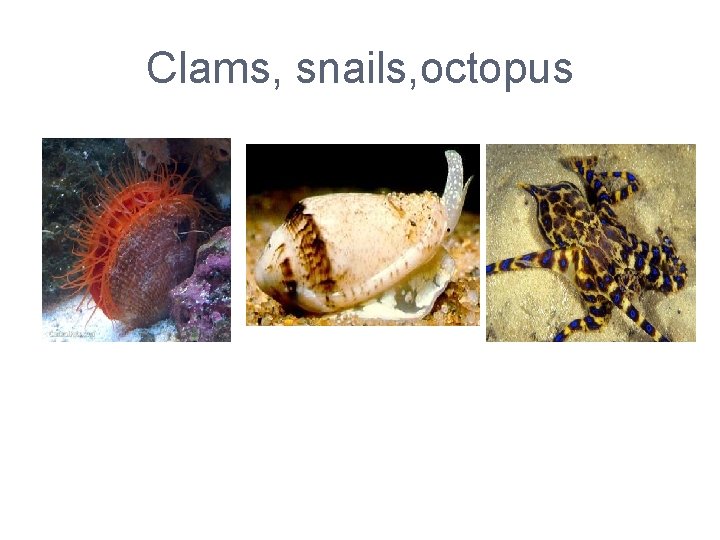
Clams, snails, octopus
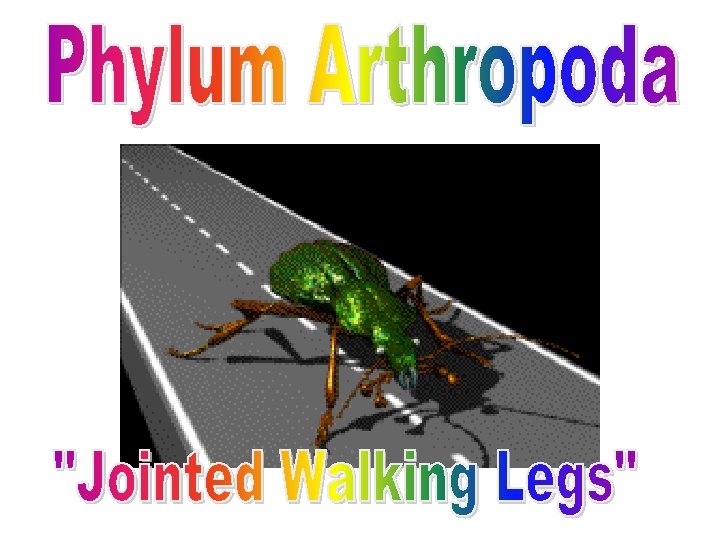
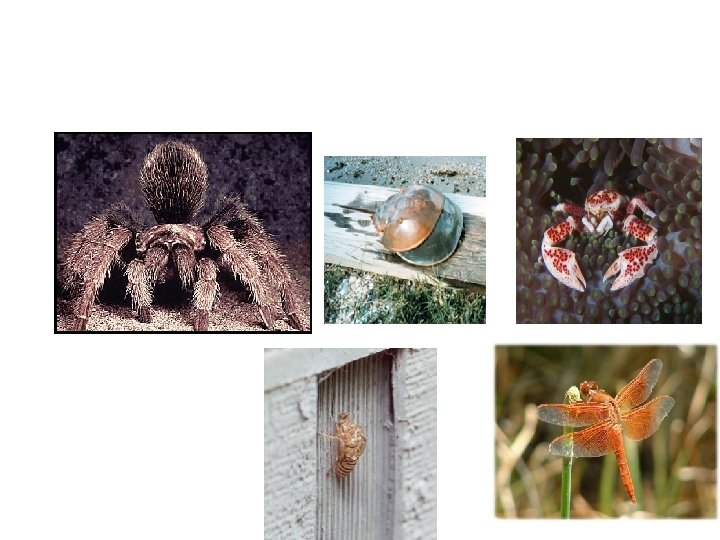
• • • Lobster, Crayfish, Insects and Crabs Insects: Most successful group on earth Largest Phylum Bilateral symmetry Exoskeleton: outer skeleton made of Chitin Must molt or shed their shell to grow
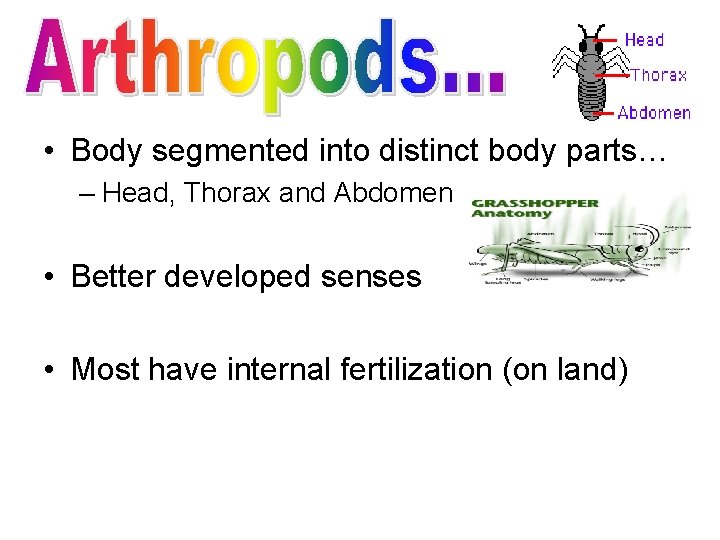
• Body segmented into distinct body parts… – Head, Thorax and Abdomen • Better developed senses • Most have internal fertilization (on land)
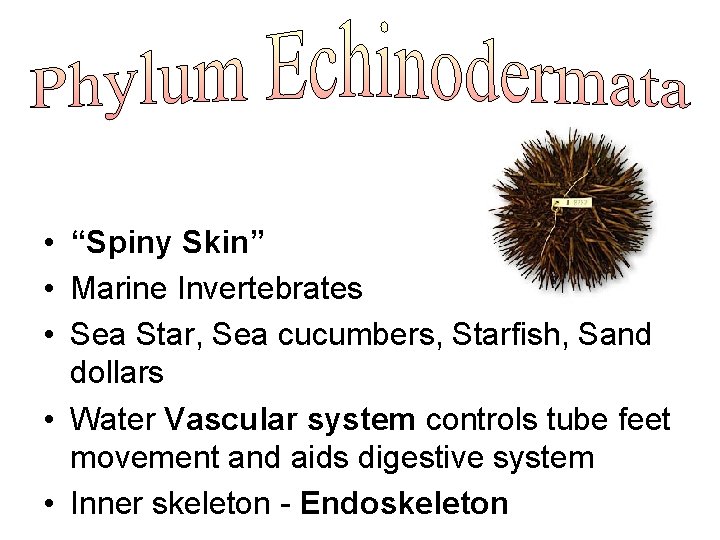
• “Spiny Skin” • Marine Invertebrates • Sea Star, Sea cucumbers, Starfish, Sand dollars • Water Vascular system controls tube feet movement and aids digestive system • Inner skeleton - Endoskeleton
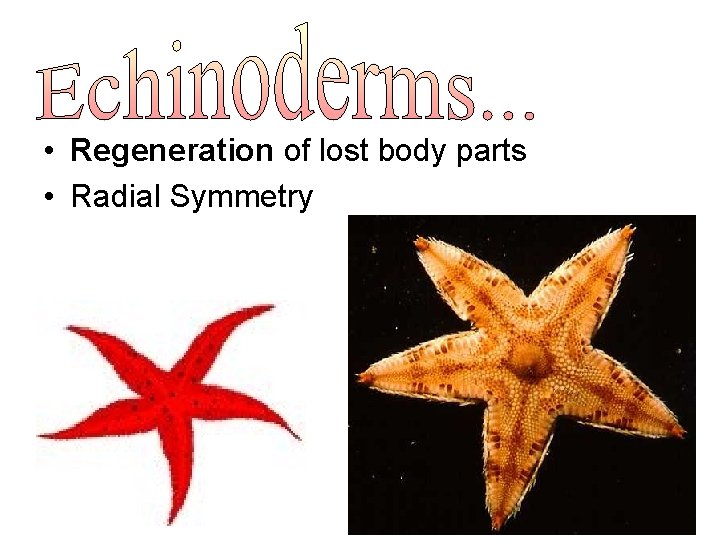
• Regeneration of lost body parts • Radial Symmetry
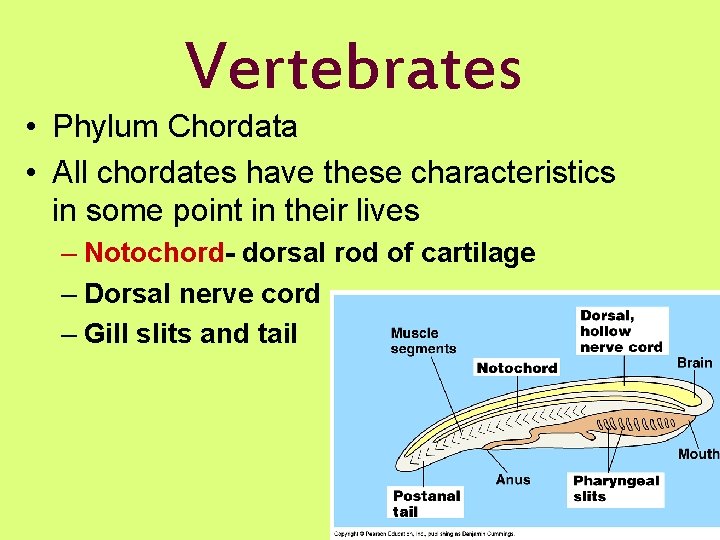
Vertebrates • Phylum Chordata • All chordates have these characteristics in some point in their lives – Notochord- dorsal rod of cartilage – Dorsal nerve cord – Gill slits and tail
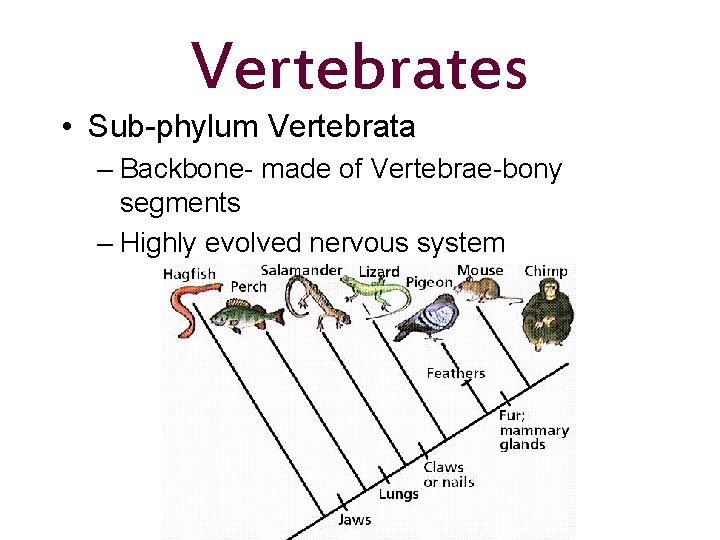
Vertebrates • Sub-phylum Vertebrata – Backbone- made of Vertebrae-bony segments – Highly evolved nervous system
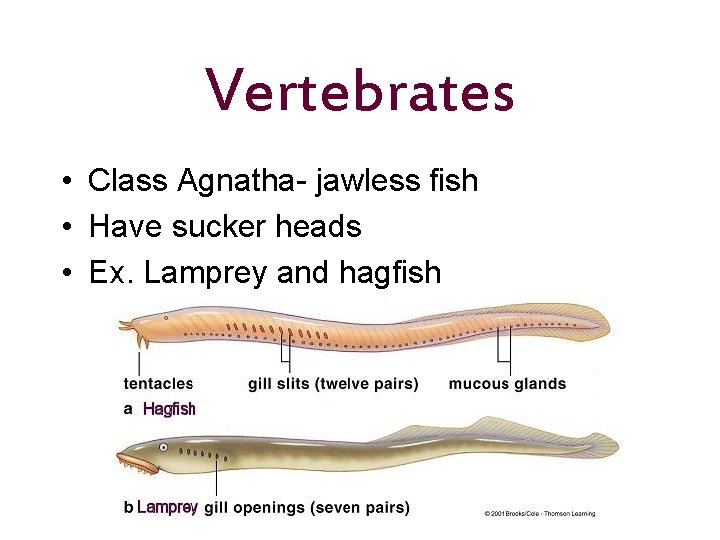
Vertebrates • Class Agnatha- jawless fish • Have sucker heads • Ex. Lamprey and hagfish
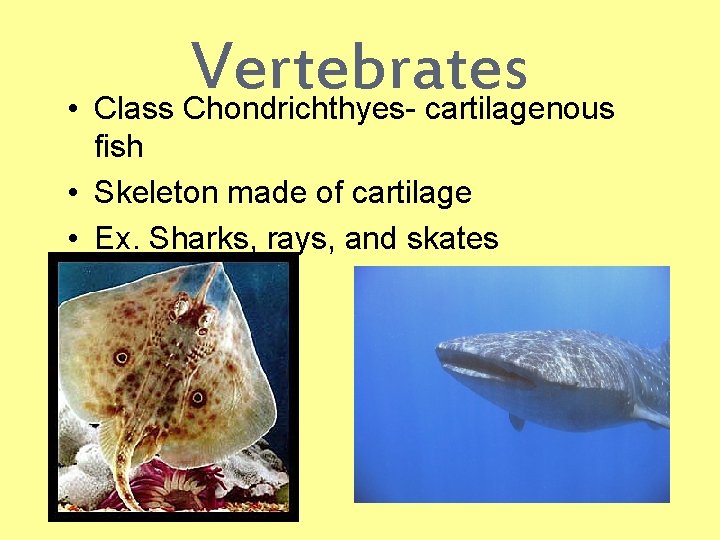
Vertebrates • Class Chondrichthyes- cartilagenous fish • Skeleton made of cartilage • Ex. Sharks, rays, and skates
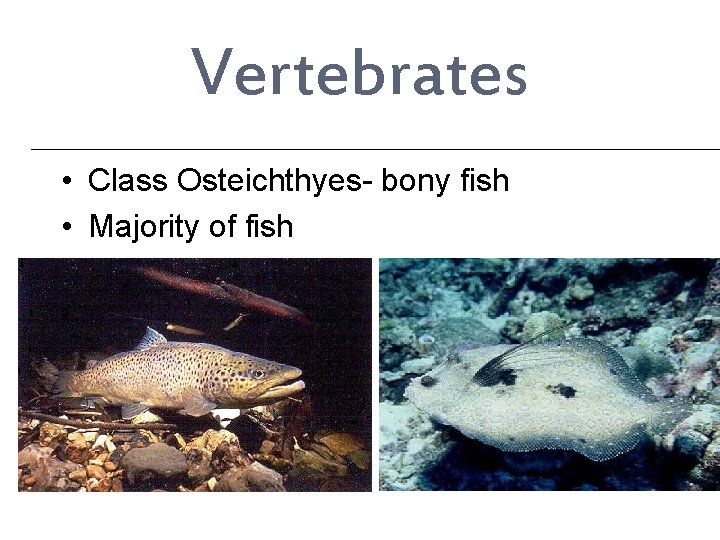
Vertebrates • Class Osteichthyes- bony fish • Majority of fish
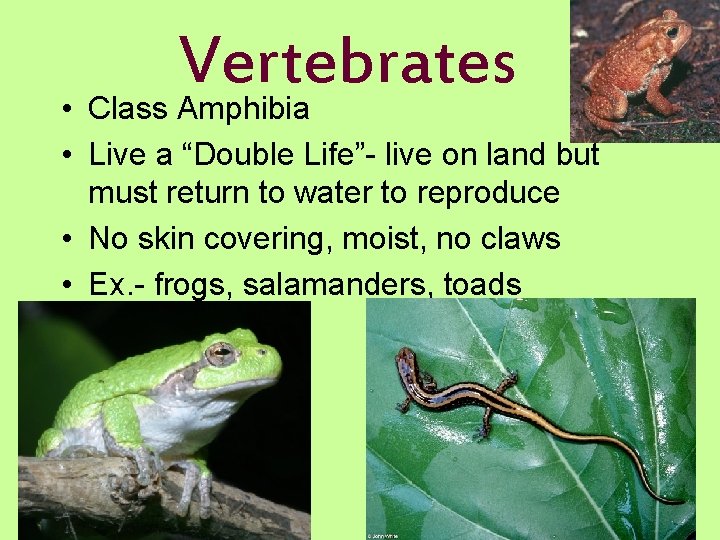
Vertebrates • Class Amphibia • Live a “Double Life”- live on land but must return to water to reproduce • No skin covering, moist, no claws • Ex. - frogs, salamanders, toads
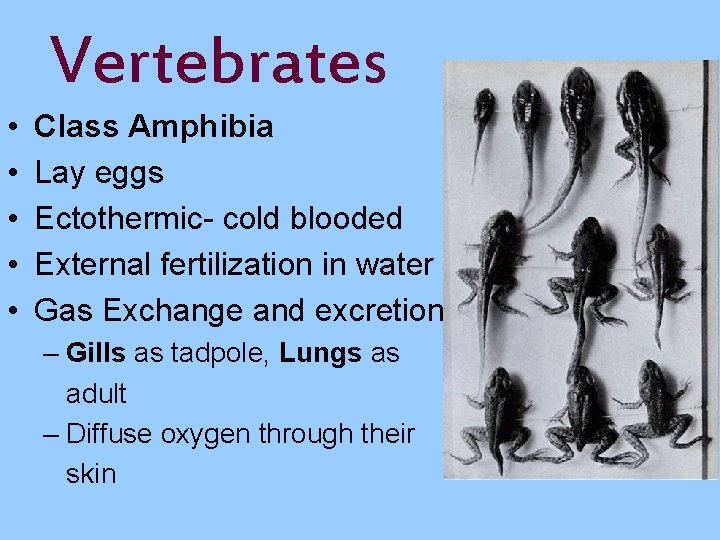
Vertebrates • • • Class Amphibia Lay eggs Ectothermic- cold blooded External fertilization in water Gas Exchange and excretion – Gills as tadpole, Lungs as adult – Diffuse oxygen through their skin
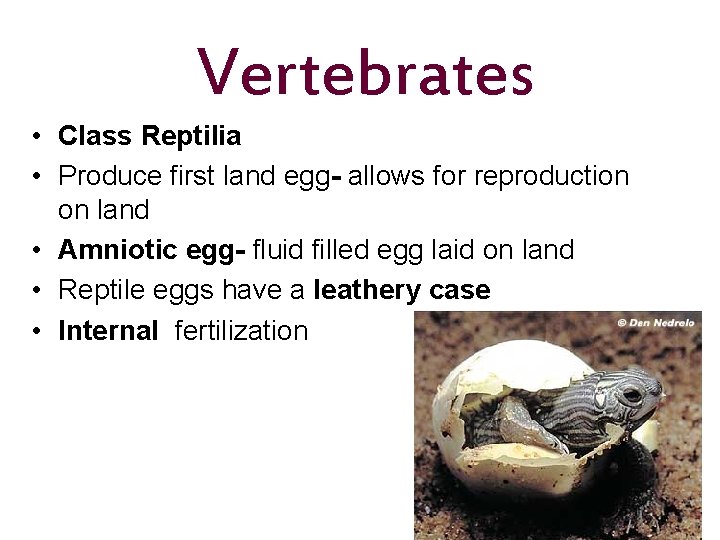
Vertebrates • Class Reptilia • Produce first land egg- allows for reproduction on land • Amniotic egg- fluid filled egg laid on land • Reptile eggs have a leathery case • Internal fertilization
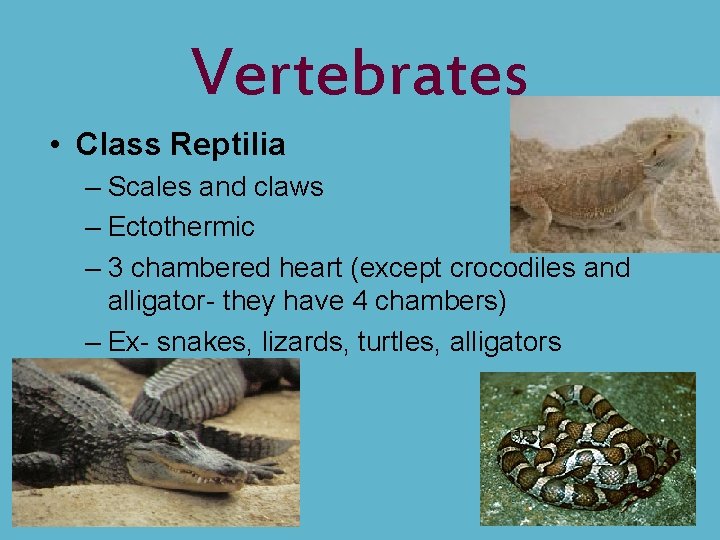
Vertebrates • Class Reptilia – Scales and claws – Ectothermic – 3 chambered heart (except crocodiles and alligator- they have 4 chambers) – Ex- snakes, lizards, turtles, alligators
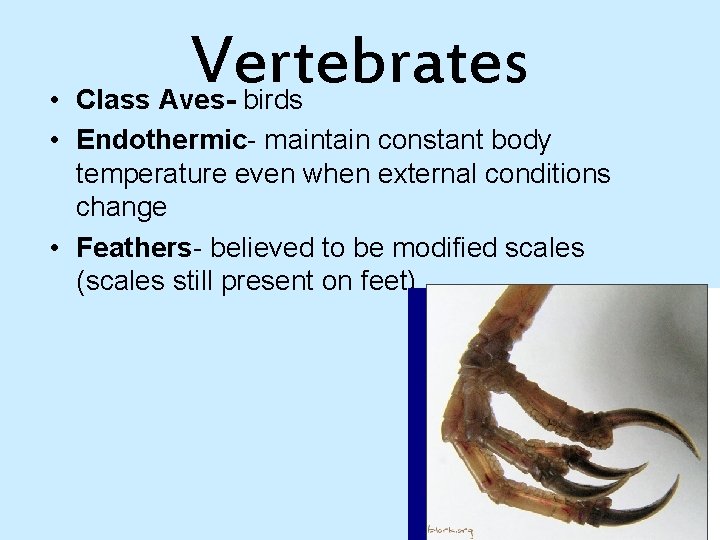
Vertebrates • Class Aves- birds • Endothermic- maintain constant body temperature even when external conditions change • Feathers- believed to be modified scales (scales still present on feet)
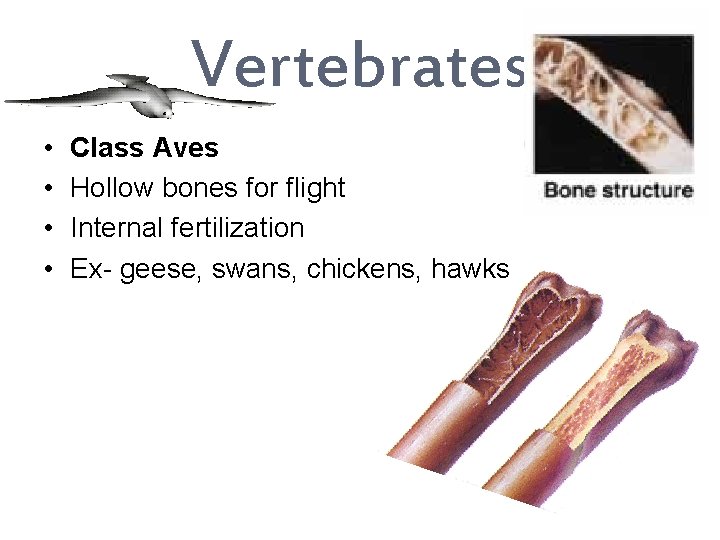
Vertebrates • • Class Aves Hollow bones for flight Internal fertilization Ex- geese, swans, chickens, hawks
Birds • http: //www. mcwdn. org/Animals/birdsvideo s. html
Vertebrates • • • Class Mammalia About 70 million years old Mammary glands- nurse young Reproduction- internal fertilization Internal development & parental care of young
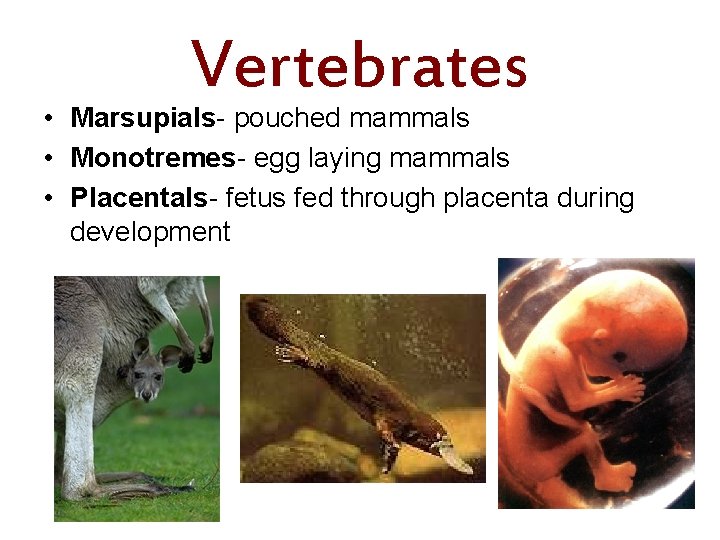
Vertebrates • Marsupials- pouched mammals • Monotremes- egg laying mammals • Placentals- fetus fed through placenta during development
Other Mammal Features • Insulation hair or fur • Endothermic maintains a constant body temperature • Complex organ systems (nervous, digestive, circulatory, etc. • Circulatory 4 chambered heart
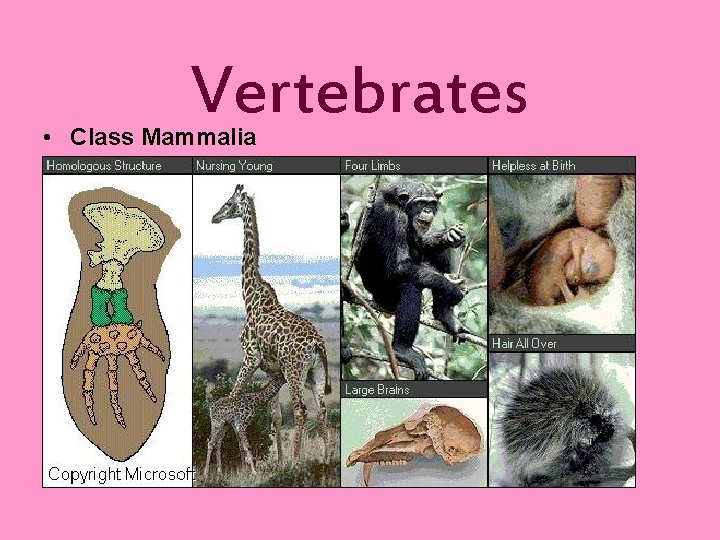
• • Vertebrates Class Mammalia Insulation- hair on body Endothermic Legs under body Complex nervous system Circulatory- 4 chambered heart Gas exchange and excretion – Lungs – Kidneys-nephrons and bladder
- Slides: 42