
Write Meiosis Sex Cell Reproduction ALL LIVING THINGS
- Slides: 21
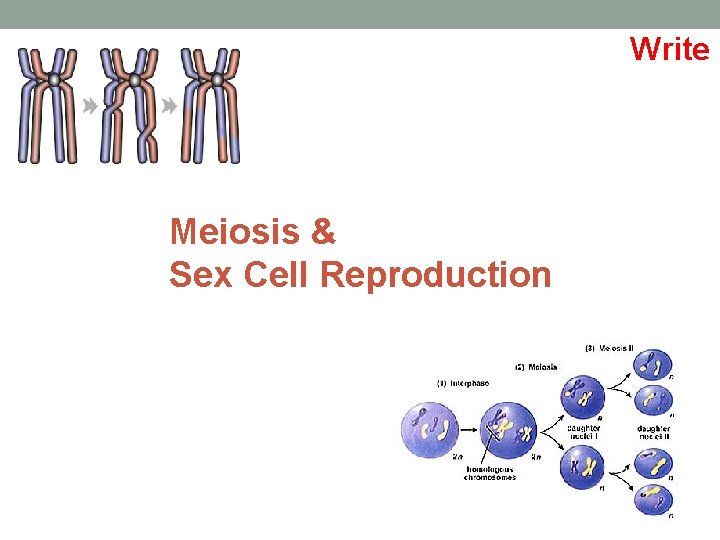
Write Meiosis & Sex Cell Reproduction
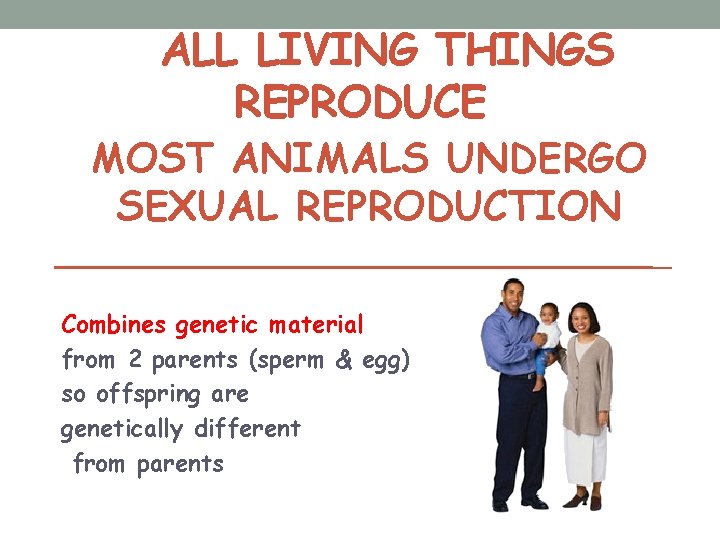
ALL LIVING THINGS REPRODUCE MOST ANIMALS UNDERGO SEXUAL REPRODUCTION Combines genetic material from 2 parents (sperm & egg) so offspring are genetically different from parents
Review BEFORE WE LEARN ABOUT SEX CELL REPRODUCTION, LET’S REVISIT SOMATIC CELL REPRODUCTION…MITOSIS • Mitosis • occurs in somatic (body) cells • Includes all cells except sex cells(eggs and sperm) • produces cells with same genetic information • identical daughter cells • same number of chromosomes in all cells
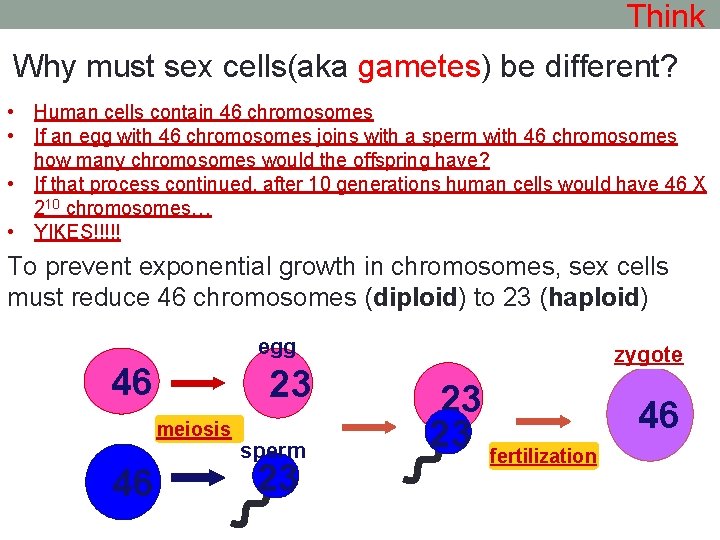
Think Why must sex cells(aka gametes) be different? • Human cells contain 46 chromosomes • If an egg with 46 chromosomes joins with a sperm with 46 chromosomes how many chromosomes would the offspring have? • If that process continued, after 10 generations human cells would have 46 X 210 chromosomes… • YIKES!!!!! To prevent exponential growth in chromosomes, sex cells must reduce 46 chromosomes (diploid) to 23 (haploid) egg 46 23 meiosis 46 sperm 23 zygote 23 23 fertilization 46
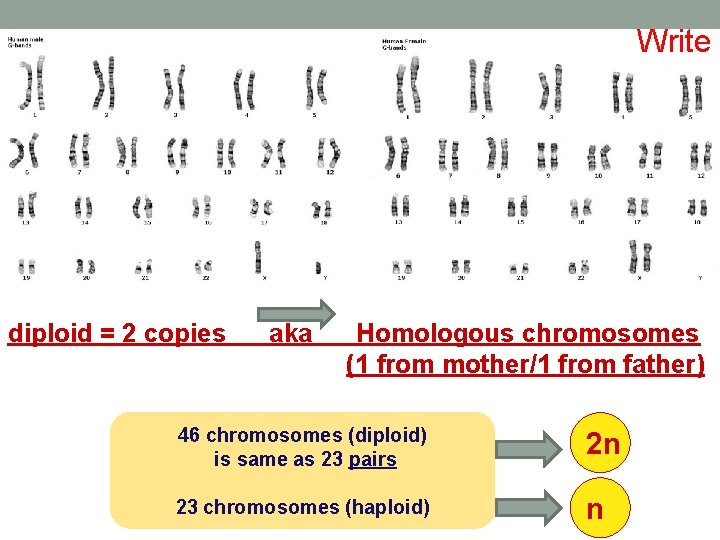
Write diploid = 2 copies aka Homologous chromosomes (1 from mother/1 from father) 46 chromosomes (diploid) is same as 23 pairs 2 n 23 chromosomes (haploid) n
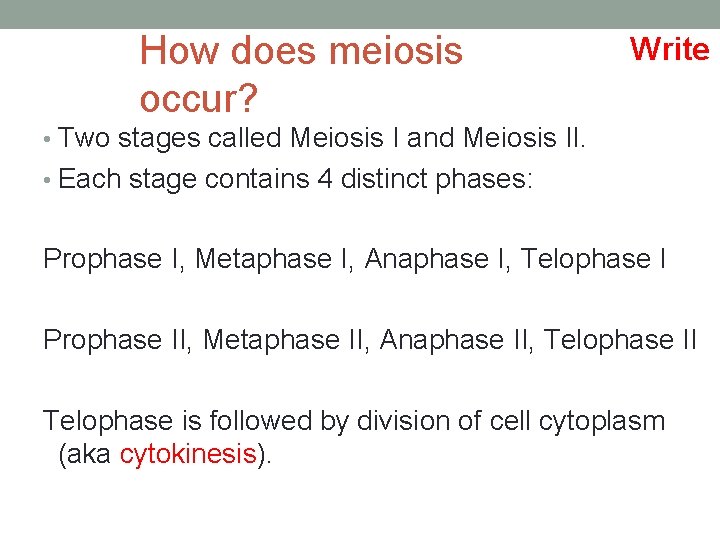
How does meiosis occur? Write • Two stages called Meiosis I and Meiosis II. • Each stage contains 4 distinct phases: Prophase I, Metaphase I, Anaphase I, Telophase I Prophase II, Metaphase II, Anaphase II, Telophase II Telophase is followed by division of cell cytoplasm (aka cytokinesis).
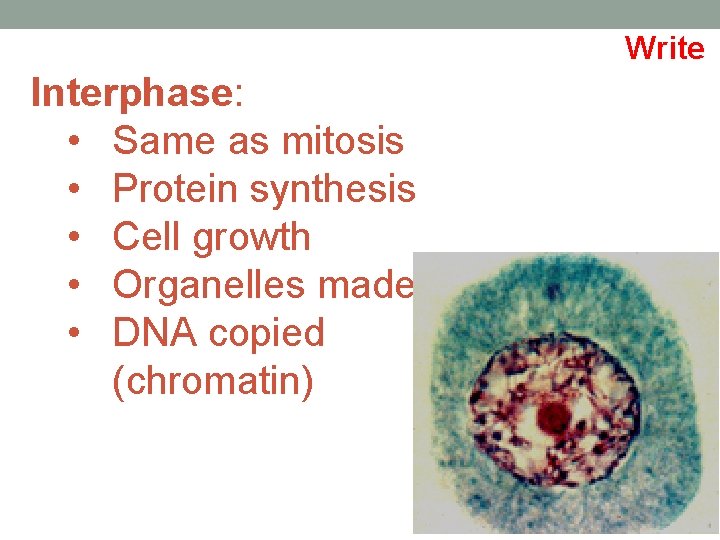
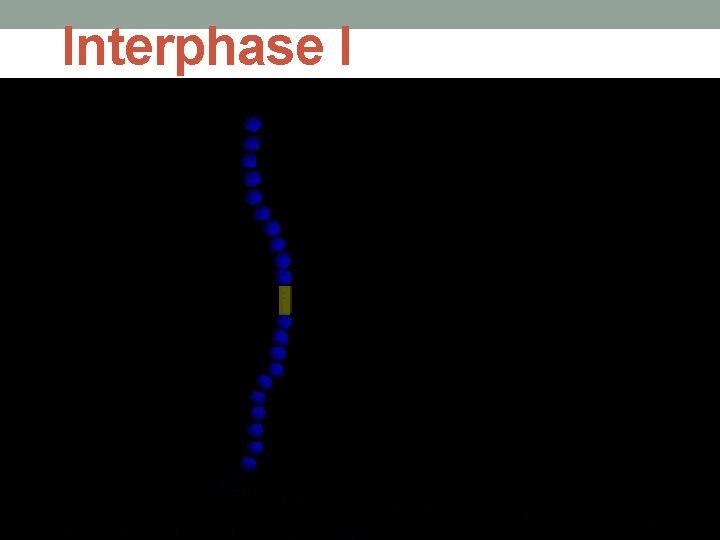
Write Interphase: • Same as mitosis • Protein synthesis • Cell growth • Organelles made • DNA copied (chromatin)
Interphase I
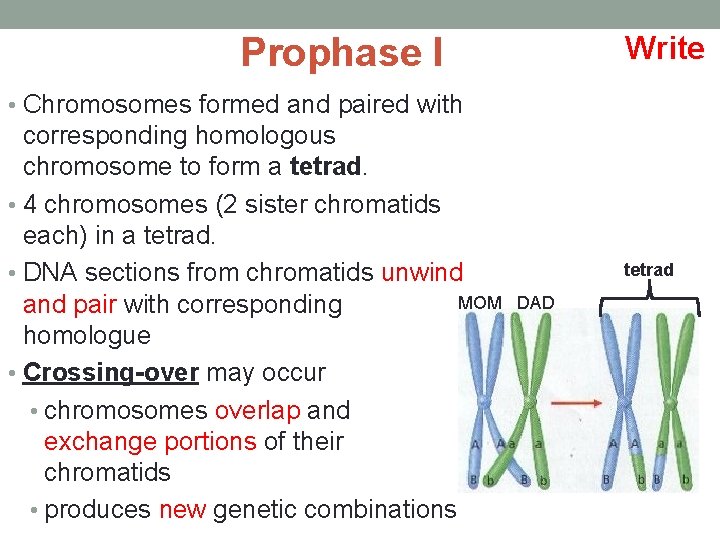
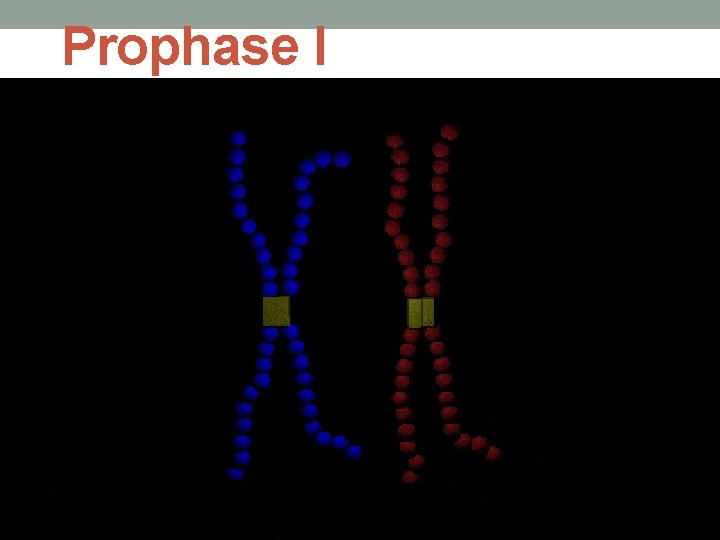
Write Prophase I • Chromosomes formed and paired with corresponding homologous chromosome to form a tetrad. • 4 chromosomes (2 sister chromatids each) in a tetrad. • DNA sections from chromatids unwind MOM and pair with corresponding homologue • Crossing-over may occur • chromosomes overlap and exchange portions of their chromatids • produces new genetic combinations tetrad DAD
Prophase I
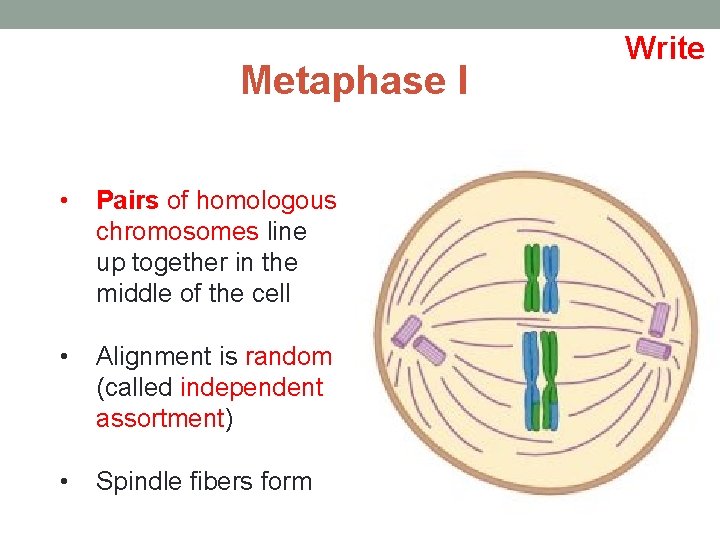
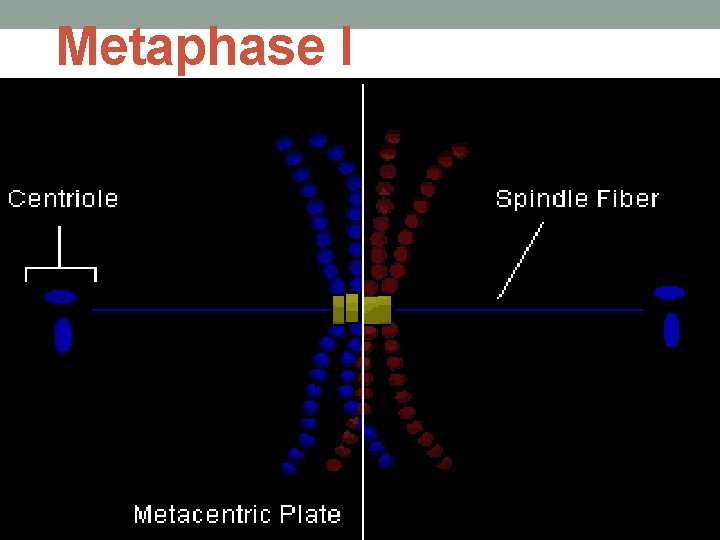
Metaphase I • Pairs of homologous chromosomes line up together in the middle of the cell • Alignment is random (called independent assortment) • Spindle fibers form Write
Metaphase I
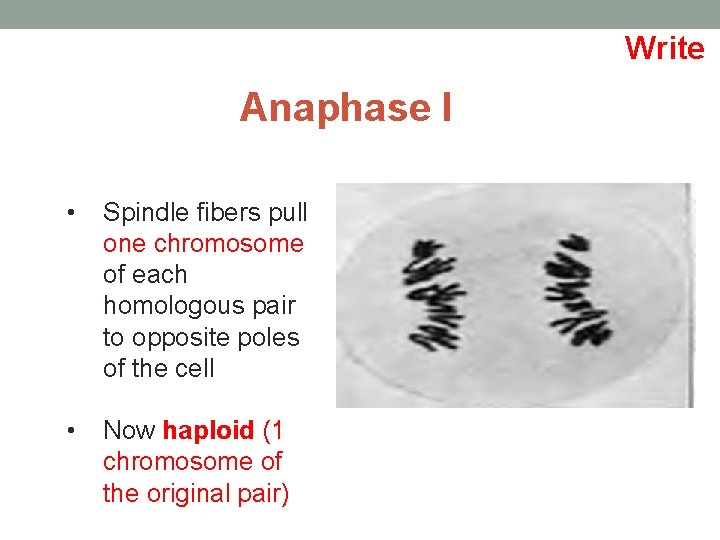
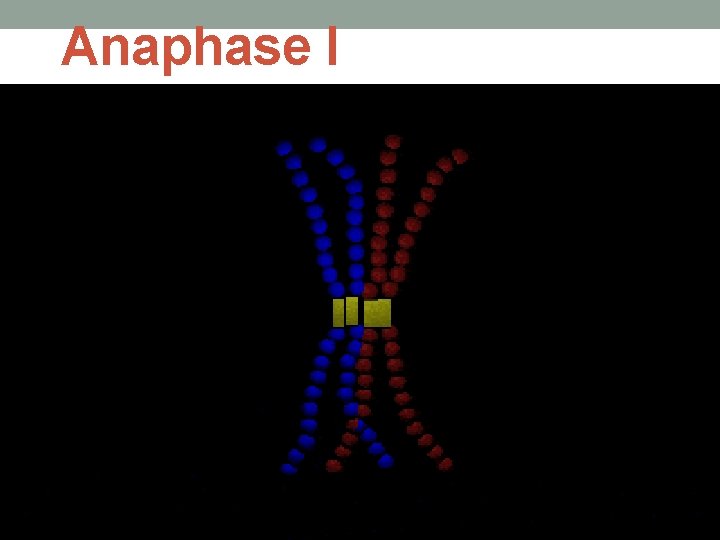
Write Anaphase I • Spindle fibers pull one chromosome of each homologous pair to opposite poles of the cell • Now haploid (1 chromosome of the original pair)
Anaphase I
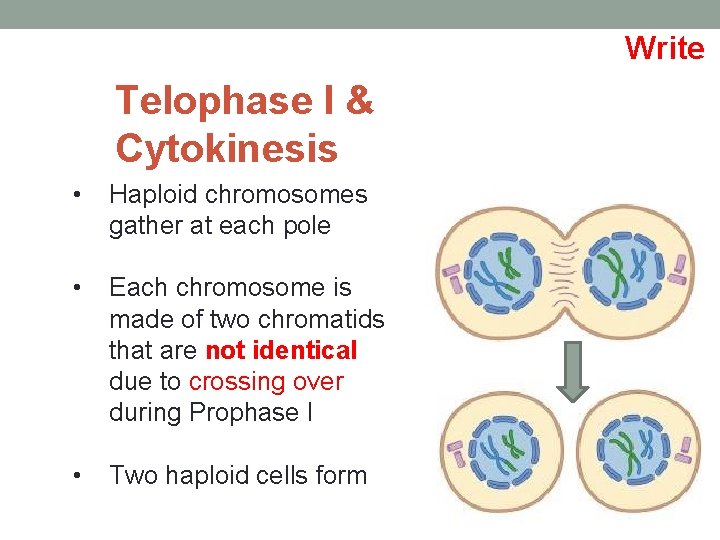
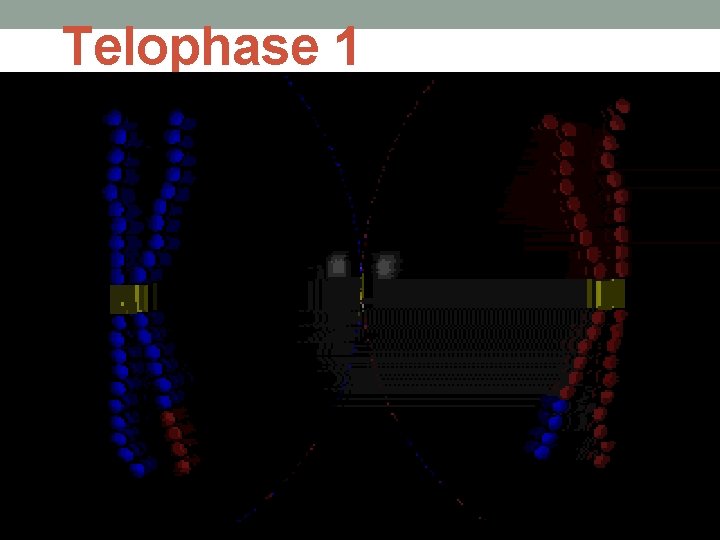
Write Telophase I & Cytokinesis • Haploid chromosomes gather at each pole • Each chromosome is made of two chromatids that are not identical due to crossing over during Prophase I • Two haploid cells form
Telophase 1
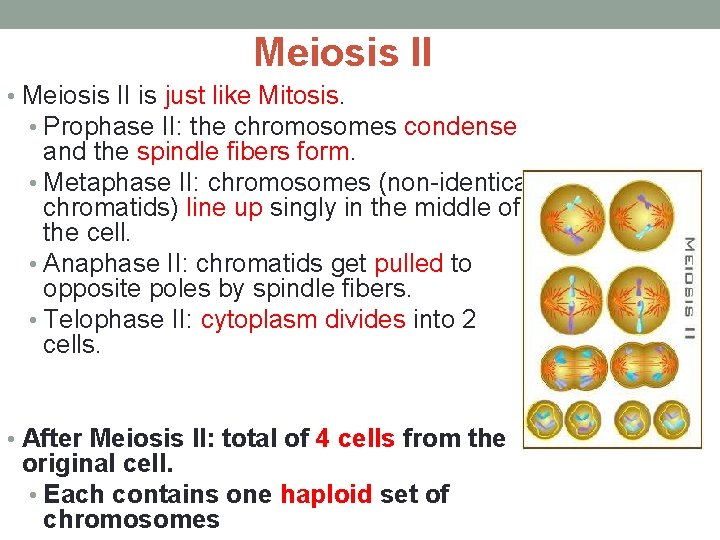
Meiosis II • Meiosis II is just like Mitosis. • Prophase II: the chromosomes condense and the spindle fibers form. • Metaphase II: chromosomes (non-identical chromatids) line up singly in the middle of the cell. • Anaphase II: chromatids get pulled to opposite poles by spindle fibers. • Telophase II: cytoplasm divides into 2 cells. • After Meiosis II: total of 4 cells from the original cell. • Each contains one haploid set of chromosomes
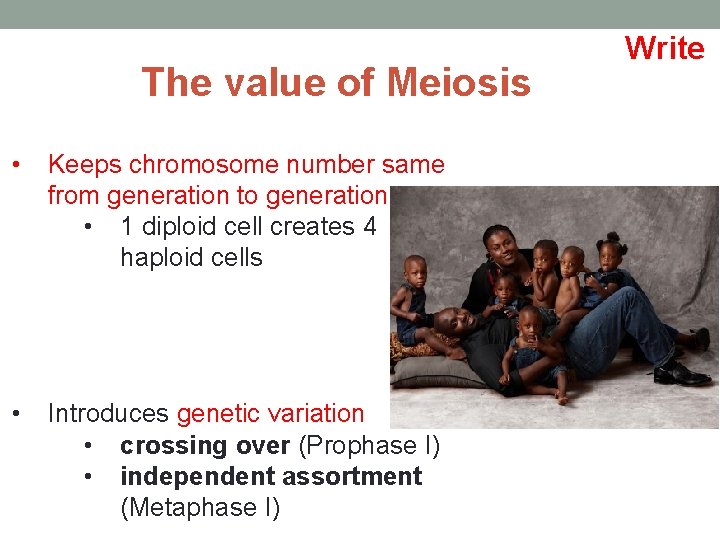
The value of Meiosis • Keeps chromosome number same from generation to generation • 1 diploid cell creates 4 haploid cells • Introduces genetic variation • crossing over (Prophase I) • independent assortment (Metaphase I) Write
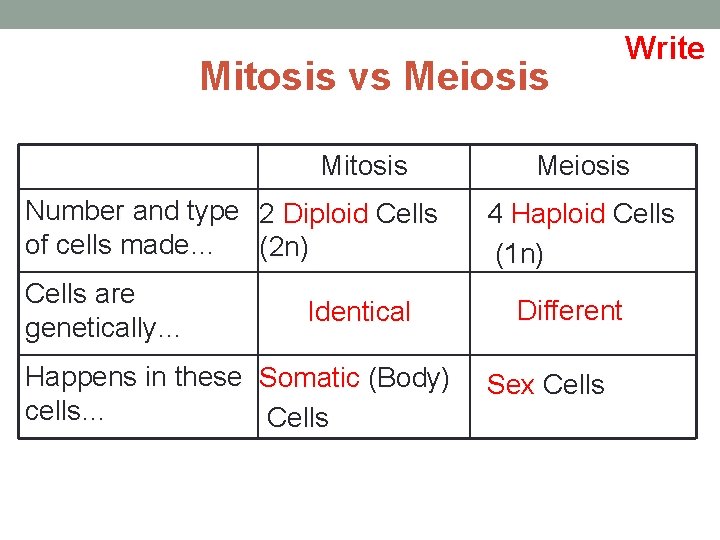
Mitosis vs Meiosis Mitosis Number and type 2 Diploid Cells of cells made… (2 n) Cells are genetically… Identical Happens in these Somatic (Body) cells… Cells Write Meiosis 4 Haploid Cells (1 n) Different Sex Cells