
WRITE IN PLANNERS Embry Riddle University Field Trip
WRITE IN PLANNERS § Embry Riddle University Field Trip – 2/6 §January 29 th – TRi. O in class § Scholarship Essay #1 – January 31 st (Next Friday) §February PERT (Registration Deadline 2/5) § Juniors – Khan Academy Worksheet due Monday § Seniors – College Concerns Project need to be completed by this Friday, January 24 th. Presentations on Monday.
11 TH – COLLEGE PORTFOLIO The next few months we will be working on a variety of assignments that will have you explore your college interests and will prepare you for the college application process for next year. We will decide the top 4 schools you will be applying to, create a resume and do a mock interview, FAFSA requirements, possible local scholarships you can apply to, how to write an awesome college essay and how to set up your recommendation letter for success.
11 th Grade – College ■ What you will need: Portfolio – Binder (1 -1 ½ inch) College Portfolio Project – Due: May 15 th, 2020 We will be creating a college portfolio that will have everything you need to apply for colleges next year. There are many steps and paperwork involved in applying for college. It is important to keep all assignments/ handouts and stay organized. – – – ■ Accesses to printing Sheet Protectors USB (not needed but recommended) Some of the Assignments/Informational handouts that will need to be completed for this project: – Cover Sheet – Table of Content – Personal Information Sheet – Password Sheet – Personal Statement – High School Resume – Four Year Plan – FAFSA Application Checklist – Federal Student Aid FAFSA 4 caster – FAFSA Login-in* – – – – Financial Aid One-Pager PSAT/ACT Scores Excellence in Orange Application Community Service Hours The Common App Information Letter of Recommendation from a teacher* What Colleges Want in a Letter of Recommendation Student Data Sheet Local Scholarship Tracking Sheet Common App – College Essay* Personal Inventory Essay Planning for College Application Tracker List of Colleges with Free Applications Summer Priorities
Creating an Educational Resumé ■ Let’s read through “The Art of the Resumé” handout. ■ As you read, put a star next resume sections you can include in your resume and underline sections you do not have or have not done. ■ Complete the following handout today: – Resume Worksheet – Save The Art of Resumé handout – Save Resume Example ■ Homework: Buy Binder & plastic sheet protectors by next Friday, Jan. 31 st

SENI ORS § Continue to work on your College Concerns project or your Scholarship Essay #1.
th 9 Grade – Socratic Seminar Notes Please take out the article from yesterday.
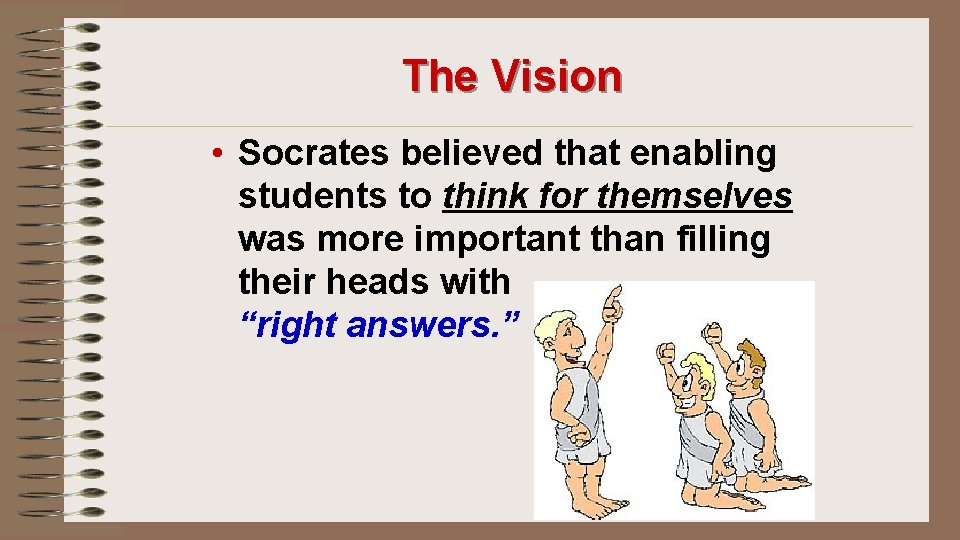
The Vision • Socrates believed that enabling students to think for themselves was more important than filling their heads with “right answers. ”
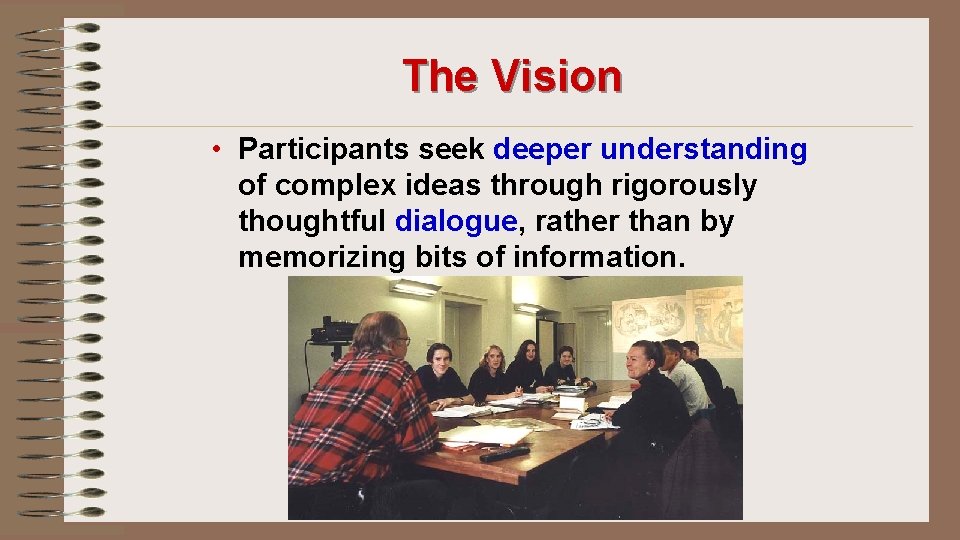
The Vision • Participants seek deeper understanding of complex ideas through rigorously thoughtful dialogue, rather than by memorizing bits of information.
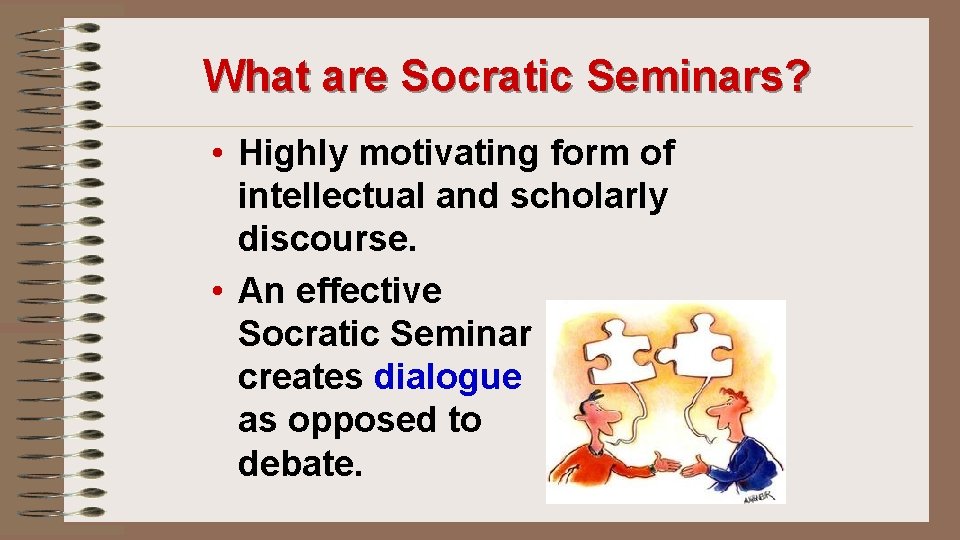
What are Socratic Seminars? • Highly motivating form of intellectual and scholarly discourse. • An effective Socratic Seminar creates dialogue as opposed to debate.
Starting Dialogue • Asking questions is the key! • A leader prompts the use of dialogue – Participants learn to be less attached to their ideas and less reliant on persuasion for influencing opinions. • Dialogue is a skill of collaboration that enables groups to create collective thinking.
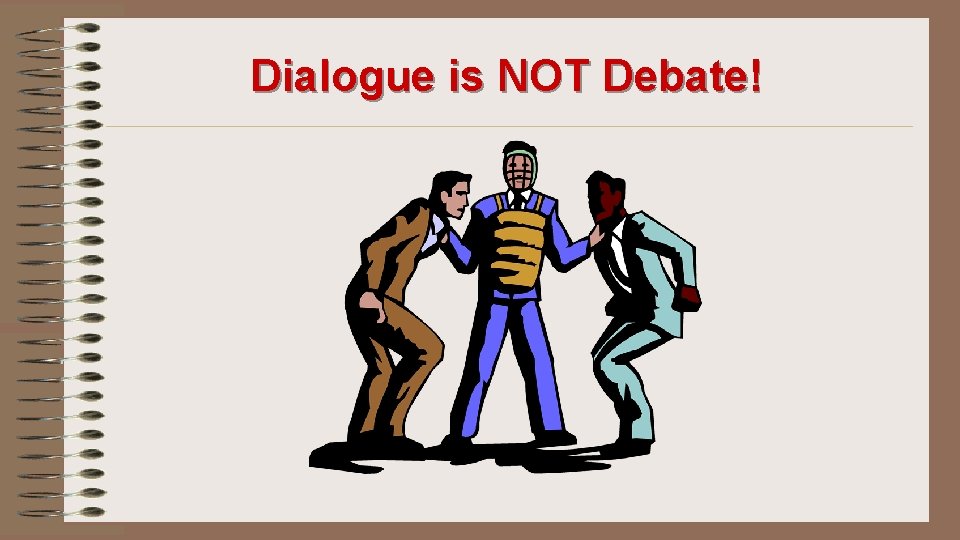
Dialogue is NOT Debate!
Four Elements • An effective seminar consists of four interdependent elements: 1. the text being considered 2. the questions raised 3. the seminar leader, and 4. the participants and observers
Marking the Text Element #1
What is Marking the Text?
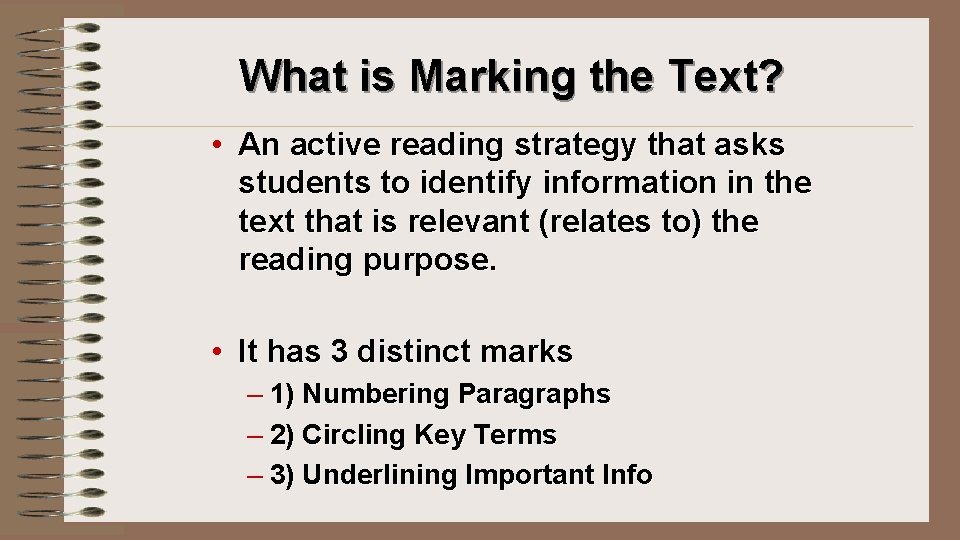
What is Marking the Text? • An active reading strategy that asks students to identify information in the text that is relevant (relates to) the reading purpose. • It has 3 distinct marks – 1) Numbering Paragraphs – 2) Circling Key Terms – 3) Underlining Important Info
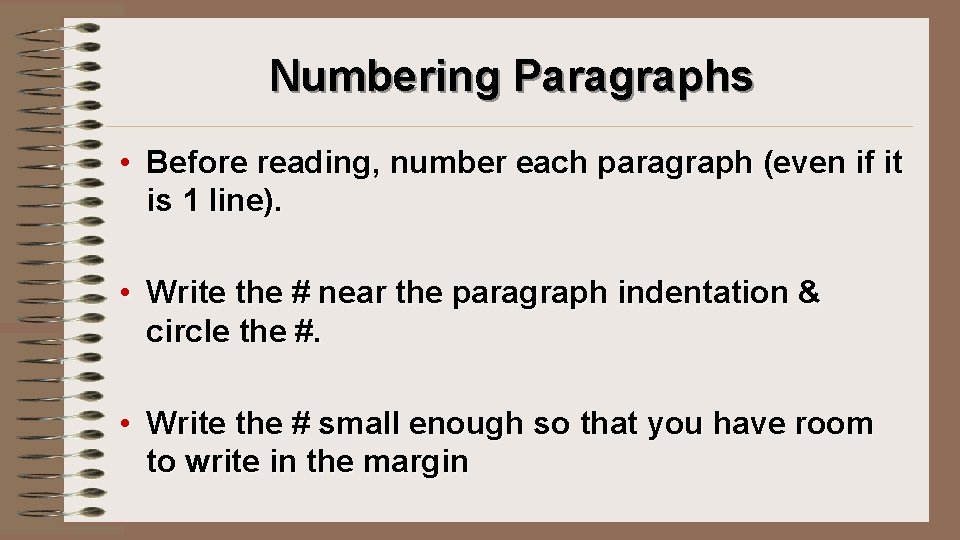
Numbering Paragraphs • Before reading, number each paragraph (even if it is 1 line). • Write the # near the paragraph indentation & circle the #. • Write the # small enough so that you have room to write in the margin
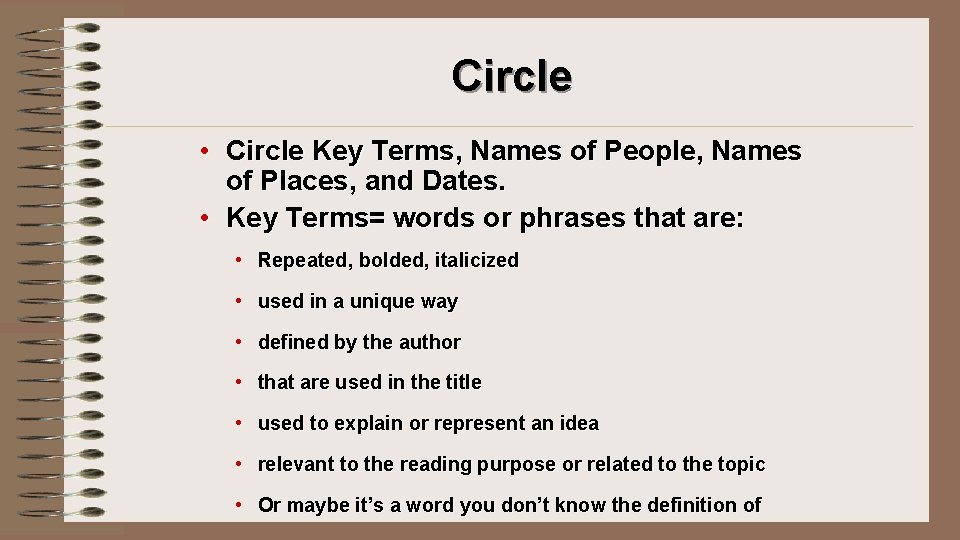
Circle • Circle Key Terms, Names of People, Names of Places, and Dates. • Key Terms= words or phrases that are: • Repeated, bolded, italicized • used in a unique way • defined by the author • that are used in the title • used to explain or represent an idea • relevant to the reading purpose or related to the topic • Or maybe it’s a word you don’t know the definition of
Underline • Underline an author’s claim • A claim is a statement that is argued or asserted (declared; stated) by the author • Sometimes author’s make many claims • A claim may not be written out in the article • A claim can be found anywhere in the article • Underline relevant information as well
The Questions Element #2
The Question • An open-ended question has no right answer – It reflects a genuine curiosity on the part of the leader. Example: Should human embryos be cloned in order to save lives?
The Question • An effective opening question leads participants back to the text as they speculate, evaluate, define, and clarify the issues involved. – Responses to the opening question generate new questions – The line of inquiry evolves on the spot rather than being predetermined by the leader.
Guidelines for Questioning • • Ask questions that raise questions Avoid using YES/NO questions Ask hypothetical questions Ask questions with no right or wrong answers
Guidelines for Questioning • Continue to ask “why? ” – Probe the responses of the participants with further questioning • Allow yourself to both guide the discussion but to go with it as well
Example Questions • By what reasoning did you come to that conclusion? • What would you say to someone who said __? • Are the reasons adequate? Why? • What led you to that belief? • How does that apply to this case? • What would change your mind? • Who is in the position to know if that is so? • Why did you say “they? ” • What view would be in opposition to what you are saying?
The Leader Element #3
The Leader • Plays a dual role as leader and participant – Consciously leads a thoughtful exploration of the ideas in the text. – As a seminar participant, actively engages in the group's exploration of the text.
The Leader • Helps participants clarify their positions when arguments become confused • Involves reluctant participants while restraining their more vocal peers
The Leader • Must be patient enough to allow participants’ understandings to evolve • Be willing to help participants explore nontraditional insights and unexpected interpretations
Participants & Observers Element #4
The Participants & Observers • Share responsibility for the quality of the seminar. • Most effective when you: – study the text closely in advance – listen actively – share your ideas and questions in response to others – search for evidence in the text to support other’s ideas
Rules – Socratic Seminar • • • Listen carefully Speak clearly - one person at a time Discuss and Participate openly Make sure to refer back to the text Avoid side conversations Give others your respect - accept answers without judgement • No phones or earbuds are allowed. Points will be taken off. • Each person is responsible to talk at least three times: Ask one question, Answer one question, and either answer or ask another question.
- Slides: 31