
Wrist and Hand Anatomy Bone Anatomy Scapoid Lunate
Wrist and Hand Anatomy
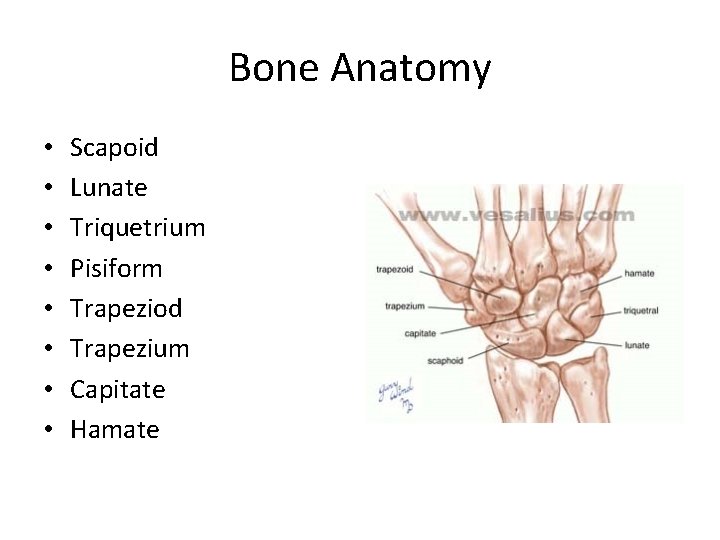
Bone Anatomy • • Scapoid Lunate Triquetrium Pisiform Trapeziod Trapezium Capitate Hamate
Hand Wrist Anatomy • 14 phalanges – 2 sesamoid bones (thumb) • 5 metacarpals • 8 carpal bones • Distal Radius – Forms small ulnar notch to accept the ulnar head – Radial styloid process • Distal Ulna – Ulnar styloid process arises from medial surface – Ulnar head
Articulations • Distal Radioulnar – Formed by ulnar head and ulnar notch – Allows 1 degree freedom of movement • Pronation/supination – Radius glides around the ulna
• Radiocarpal joint – Reinforced by ligamentous thickening – Formed by distal radius articulating with scaphoid, lunate and triangular fibrocartilage disk(TFCC) – Ellipsoid joint (2 degrees freedom) • Flexion/extension • Radial/ulnar deviation
• Intercarpal Joints – Palmar/dorsal/interosseous ligaments between each carpal – Very little gliding
• Midcarpal Joints – Proximal/distal carpal row separated by a single joint cavity with small fibrous projections connecting the rows – Limited mobility in flex/ext, radial/ulnar deviation
• Carpometacarpal Joint (CMC) – MC 1/trapezium – MC 2/trapezoid – MC 3/capitate – MC 4 and 5/hamate (forms 1 articulation)
• 1 st CMC (thumb) – Saddle joint • 2 degrees of freedom(3) – Flexion/extension – Abduction/adduction • Accessory rotation – Allows for opposition
• 2 -4 CMC – Plane/synovial joint – 1 degree freedom • Flexion/extension • 5 th CMC – 2 degree freedom • Flexion/extension • Abduction/adduction
• Metacarpophalangeal Joint (MCP) – Two degrees freedom of movement • Flexion/extension • Abduction/adduction – Thumb can abduct at any point/fingers only when extended – Collateral ligaments • Varus/valgus force – When fingers are in flexion they tighten and limit abduction/adduction
• Interphalangeal Joint – One degree freedom of movement • Flexion/extension – Collateral ligaments
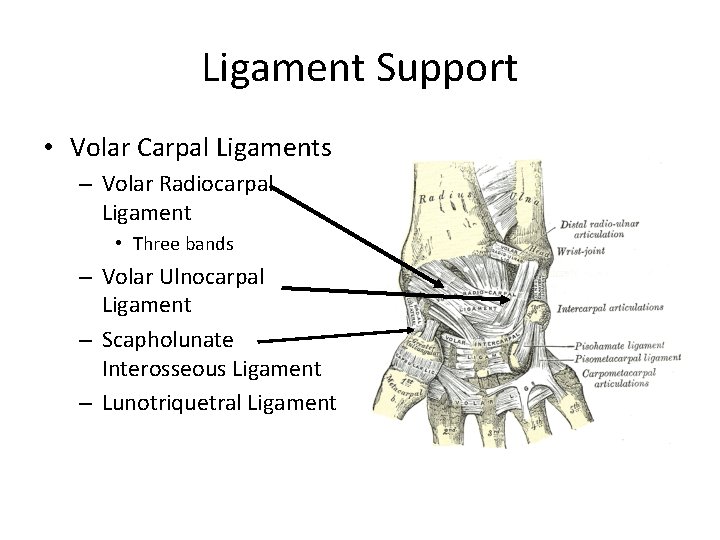
Ligament Support • Volar Carpal Ligaments – Volar Radiocarpal Ligament • Three bands – Volar Ulnocarpal Ligament – Scapholunate Interosseous Ligament – Lunotriquetral Ligament
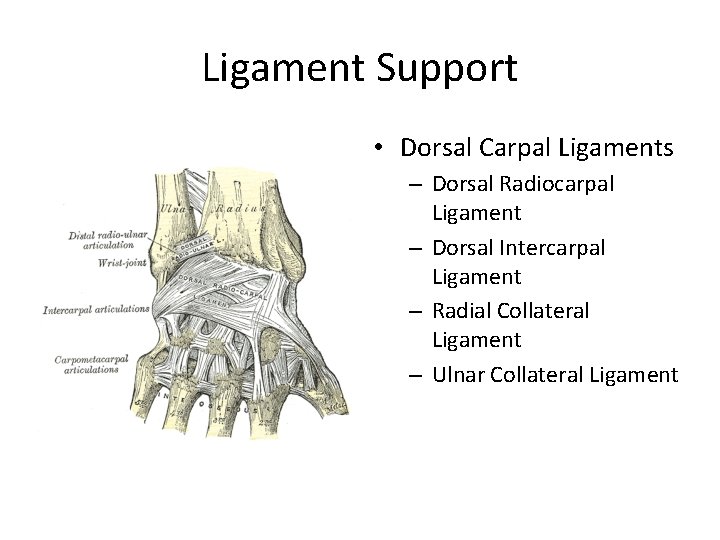
Ligament Support • Dorsal Carpal Ligaments – Dorsal Radiocarpal Ligament – Dorsal Intercarpal Ligament – Radial Collateral Ligament – Ulnar Collateral Ligament
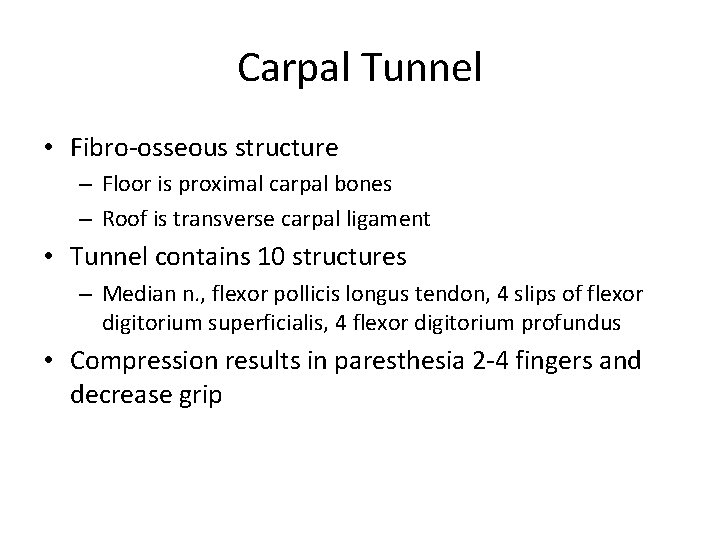
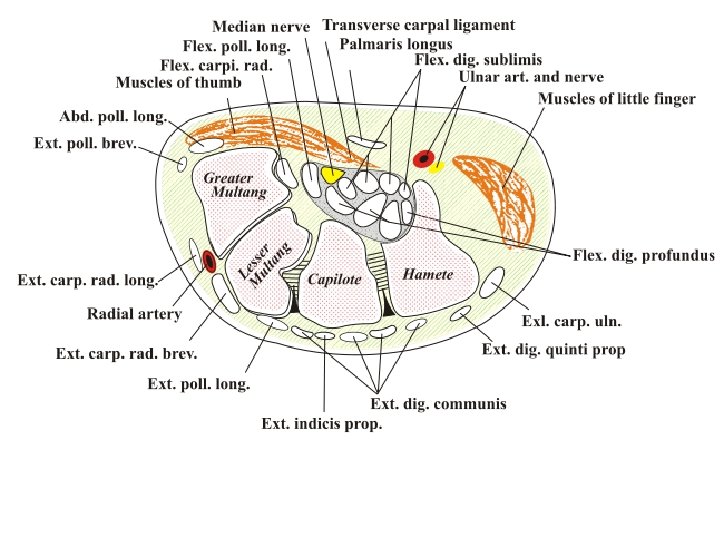
Carpal Tunnel • Fibro-osseous structure – Floor is proximal carpal bones – Roof is transverse carpal ligament • Tunnel contains 10 structures – Median n. , flexor pollicis longus tendon, 4 slips of flexor digitorium superficialis, 4 flexor digitorium profundus • Compression results in paresthesia 2 -4 fingers and decrease grip
Hand
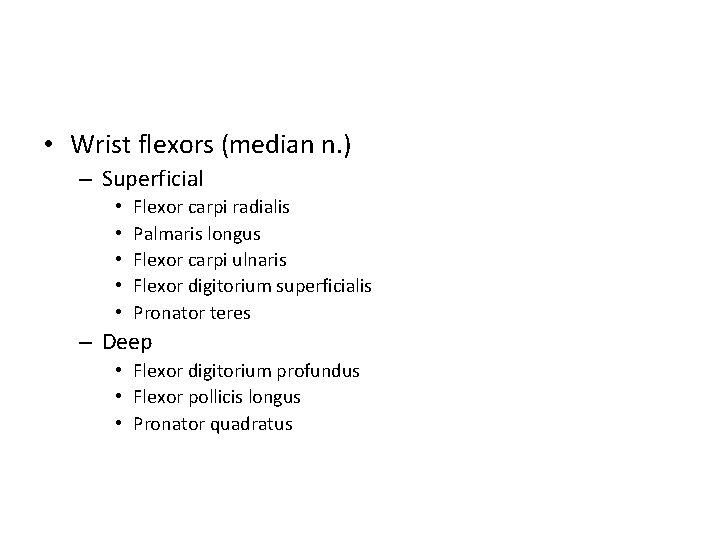
• Wrist flexors (median n. ) – Superficial • • • Flexor carpi radialis Palmaris longus Flexor carpi ulnaris Flexor digitorium superficialis Pronator teres – Deep • Flexor digitorium profundus • Flexor pollicis longus • Pronator quadratus
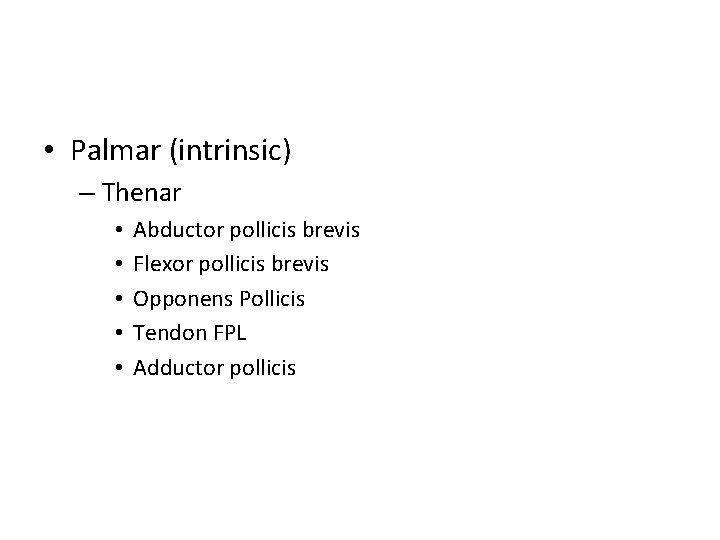
• Palmar (intrinsic) – Thenar • • • Abductor pollicis brevis Flexor pollicis brevis Opponens Pollicis Tendon FPL Adductor pollicis
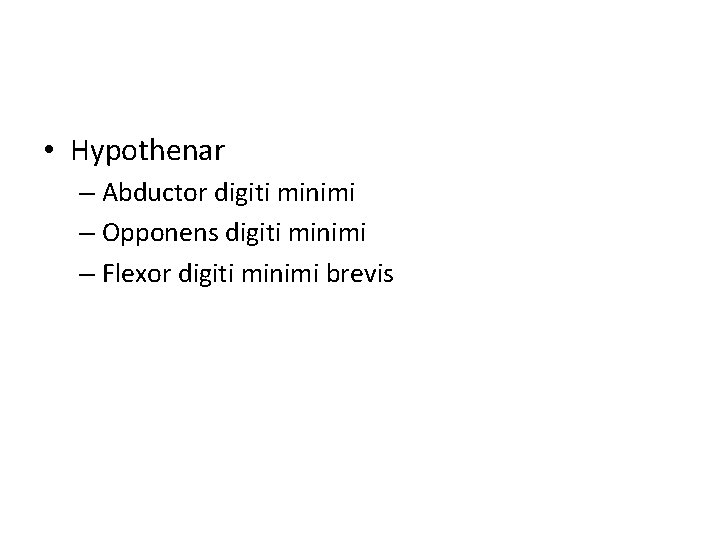
• Hypothenar – Abductor digiti minimi – Opponens digiti minimi – Flexor digiti minimi brevis
• Central – Tendons FDS/FDP • Superficialis (PIP) • Profundus (DIP) • Lumbricales – Radial side profundus tendon(extensor hood) • Flex MP/ext PIP/DIP • Palmar aponeurosis • Interossei – 4 palmar/4 dorsal
Extrinsic Hand Muscles
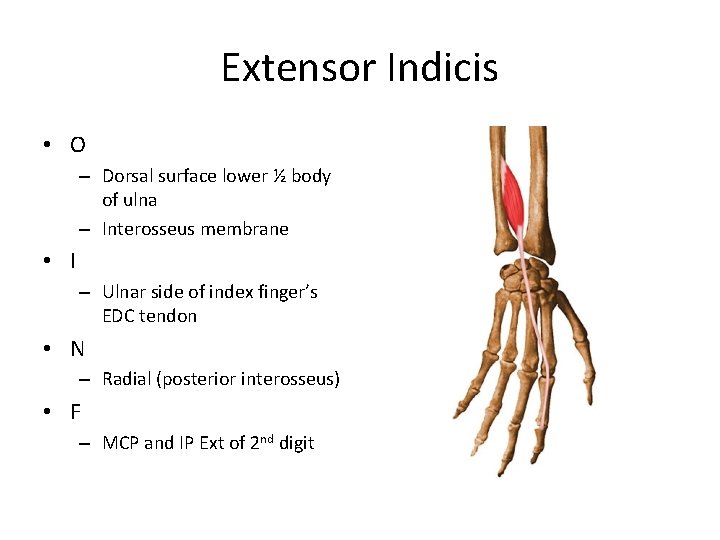
Extensor Indicis • O – Dorsal surface lower ½ body of ulna – Interosseus membrane • I – Ulnar side of index finger’s EDC tendon • N – Radial (posterior interosseus) • F – MCP and IP Ext of 2 nd digit
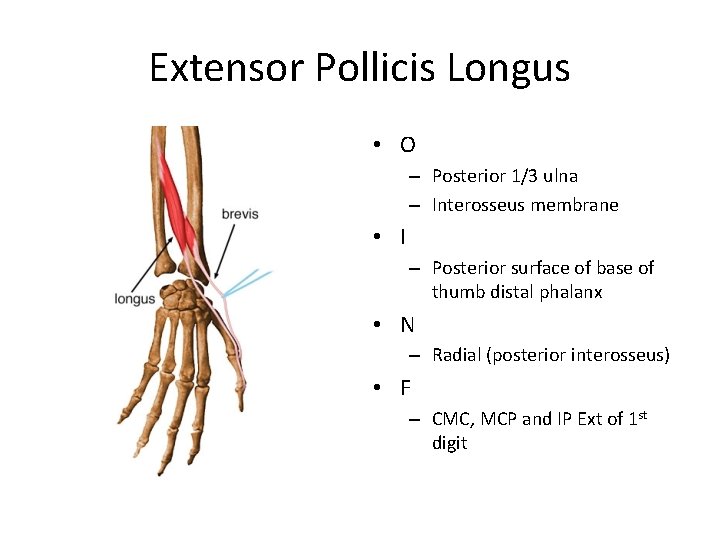
Extensor Pollicis Longus • O – Posterior 1/3 ulna – Interosseus membrane • I – Posterior surface of base of thumb distal phalanx • N – Radial (posterior interosseus) • F – CMC, MCP and IP Ext of 1 st digit
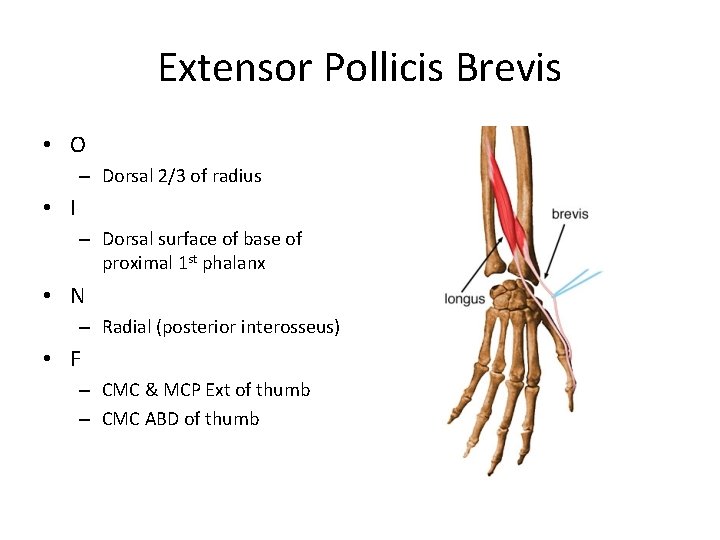
Extensor Pollicis Brevis • O – Dorsal 2/3 of radius • I – Dorsal surface of base of proximal 1 st phalanx • N – Radial (posterior interosseus) • F – CMC & MCP Ext of thumb – CMC ABD of thumb
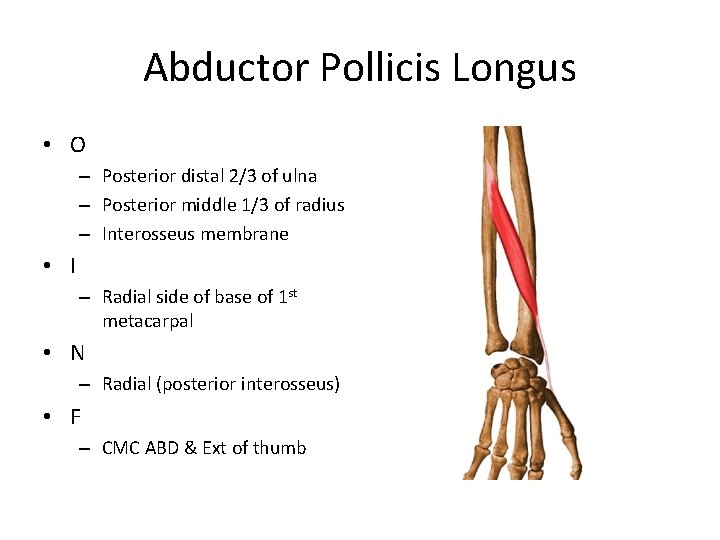
Abductor Pollicis Longus • O – Posterior distal 2/3 of ulna – Posterior middle 1/3 of radius – Interosseus membrane • I – Radial side of base of 1 st metacarpal • N – Radial (posterior interosseus) • F – CMC ABD & Ext of thumb
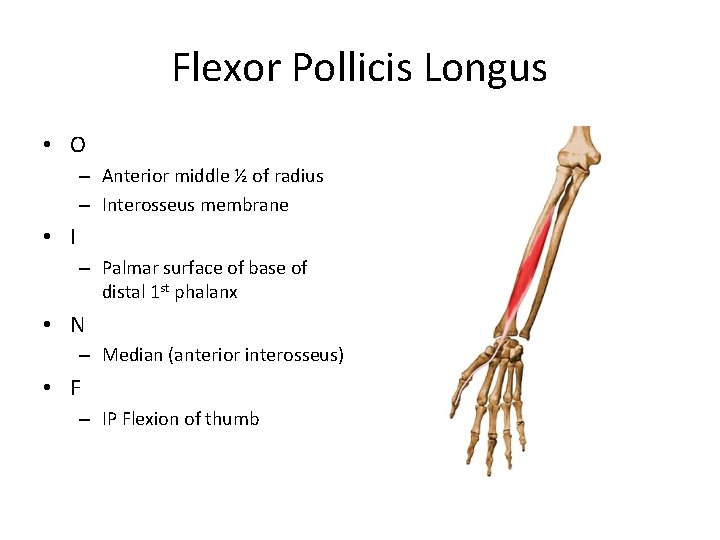
Flexor Pollicis Longus • O – Anterior middle ½ of radius – Interosseus membrane • I – Palmar surface of base of distal 1 st phalanx • N – Median (anterior interosseus) • F – IP Flexion of thumb
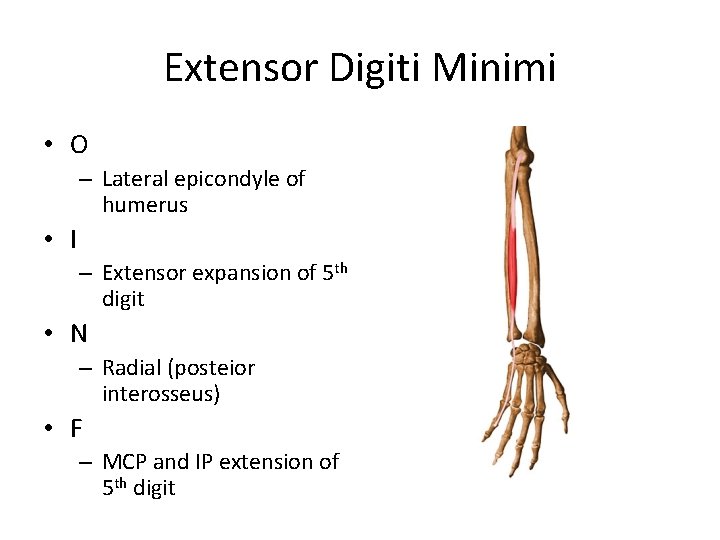
Extensor Digiti Minimi • O – Lateral epicondyle of humerus • I – Extensor expansion of 5 th digit • N – Radial (posteior interosseus) • F – MCP and IP extension of 5 th digit
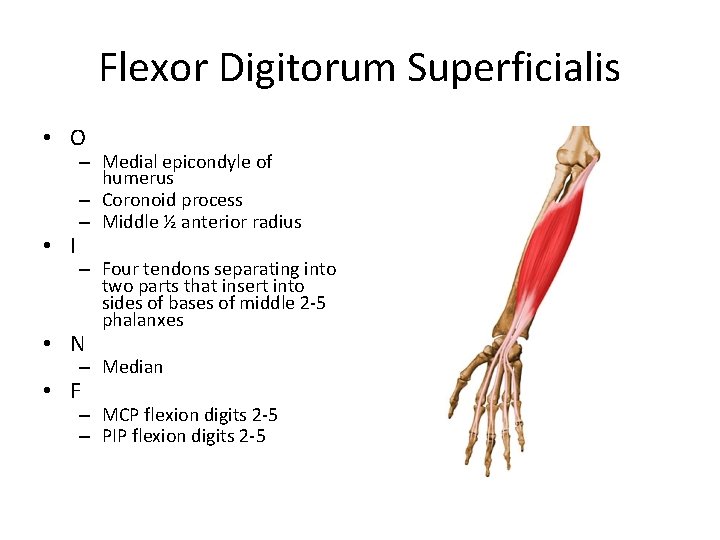
Flexor Digitorum Superficialis • O • I – Medial epicondyle of humerus – Coronoid process – Middle ½ anterior radius – Four tendons separating into two parts that insert into sides of bases of middle 2 -5 phalanxes • N – Median • F – MCP flexion digits 2 -5 – PIP flexion digits 2 -5
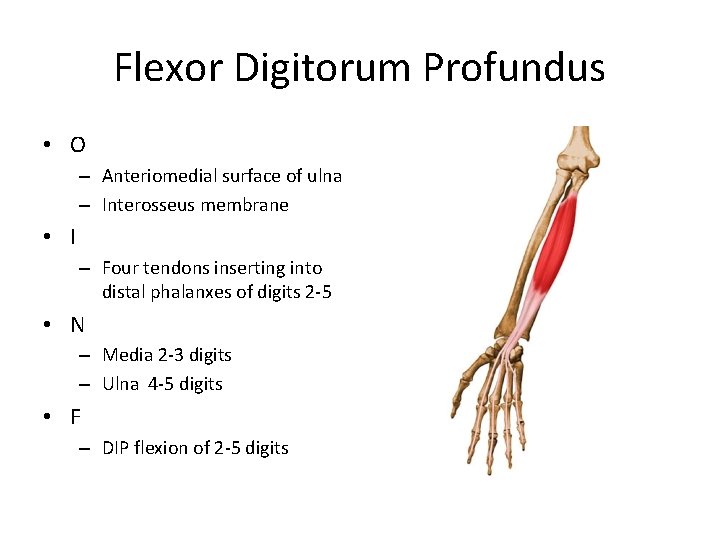
Flexor Digitorum Profundus • O – Anteriomedial surface of ulna – Interosseus membrane • I – Four tendons inserting into distal phalanxes of digits 2 -5 • N – Media 2 -3 digits – Ulna 4 -5 digits • F – DIP flexion of 2 -5 digits
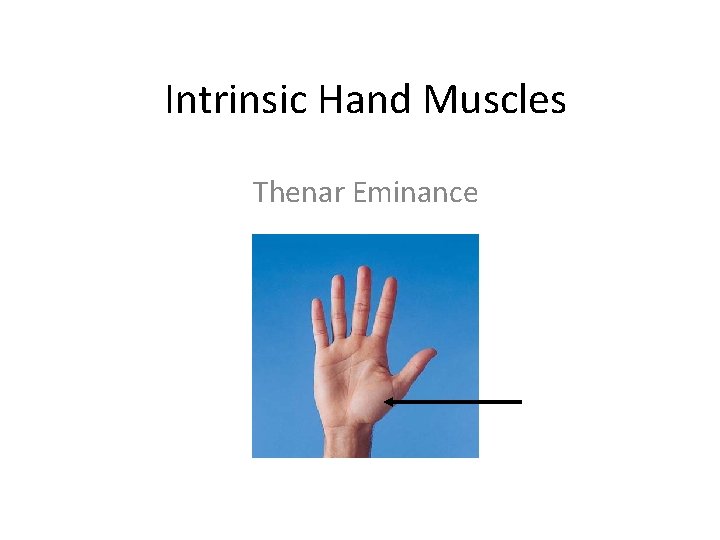
Intrinsic Hand Muscles Thenar Eminance
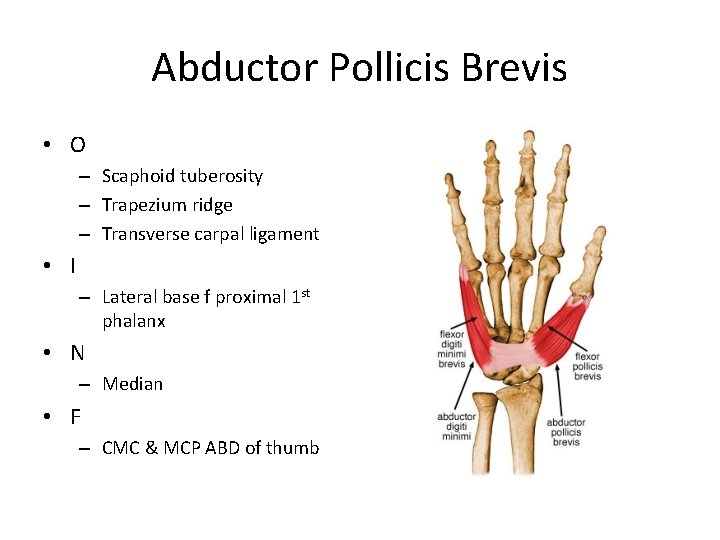
Abductor Pollicis Brevis • O – Scaphoid tuberosity – Trapezium ridge – Transverse carpal ligament • I – Lateral base f proximal 1 st phalanx • N – Median • F – CMC & MCP ABD of thumb
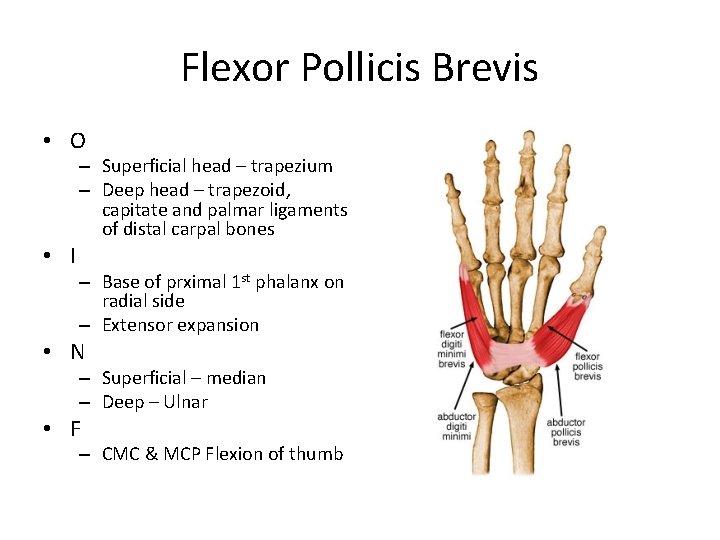
Flexor Pollicis Brevis • O • I – Superficial head – trapezium – Deep head – trapezoid, capitate and palmar ligaments of distal carpal bones – Base of prximal 1 st phalanx on radial side – Extensor expansion • N – Superficial – median – Deep – Ulnar • F – CMC & MCP Flexion of thumb
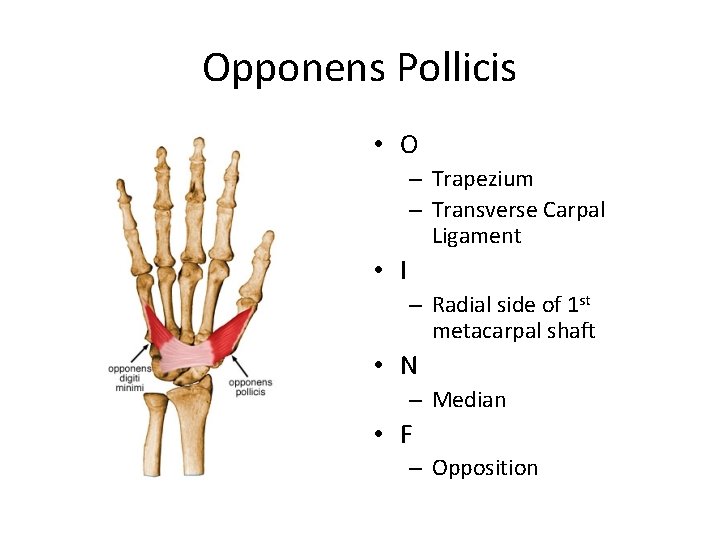
Opponens Pollicis • O – Trapezium – Transverse Carpal Ligament • I – Radial side of 1 st metacarpal shaft • N – Median • F – Opposition
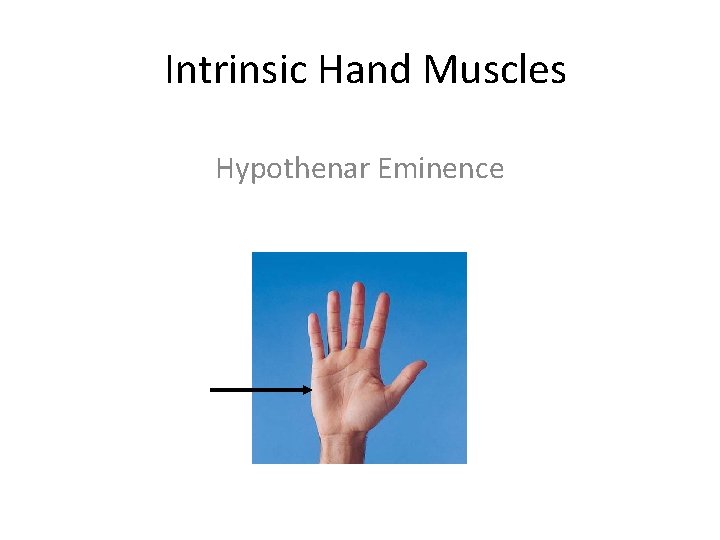
Intrinsic Hand Muscles Hypothenar Eminence
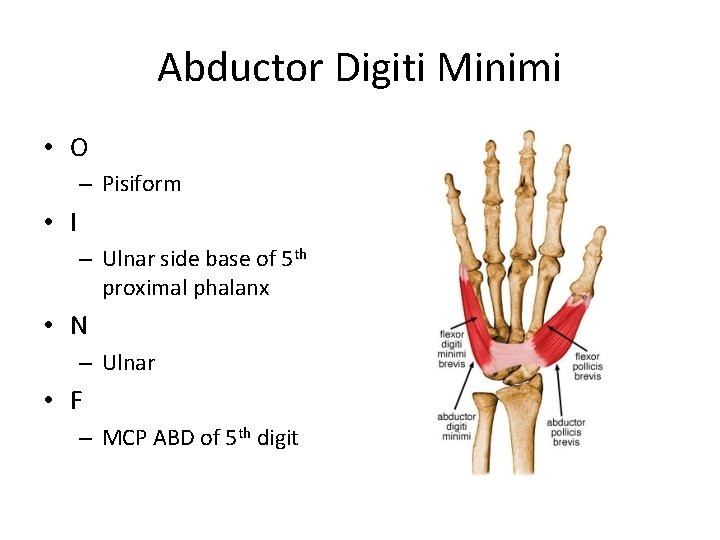
Abductor Digiti Minimi • O – Pisiform • I – Ulnar side base of 5 th proximal phalanx • N – Ulnar • F – MCP ABD of 5 th digit
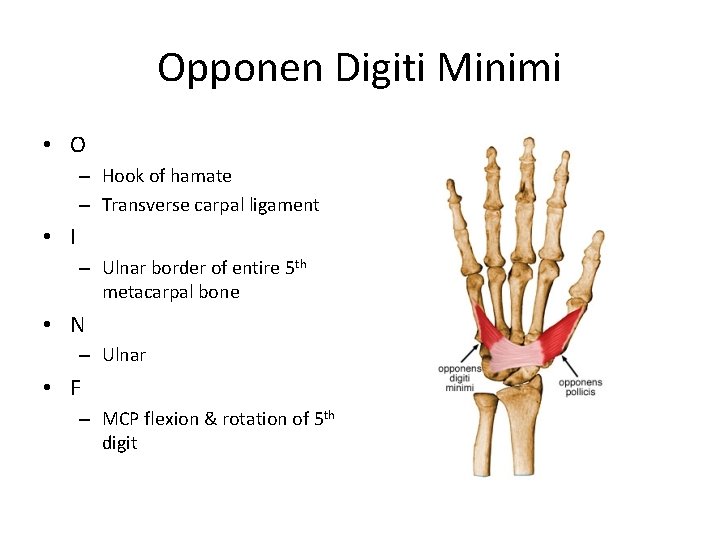
Opponen Digiti Minimi • O – Hook of hamate – Transverse carpal ligament • I – Ulnar border of entire 5 th metacarpal bone • N – Ulnar • F – MCP flexion & rotation of 5 th digit
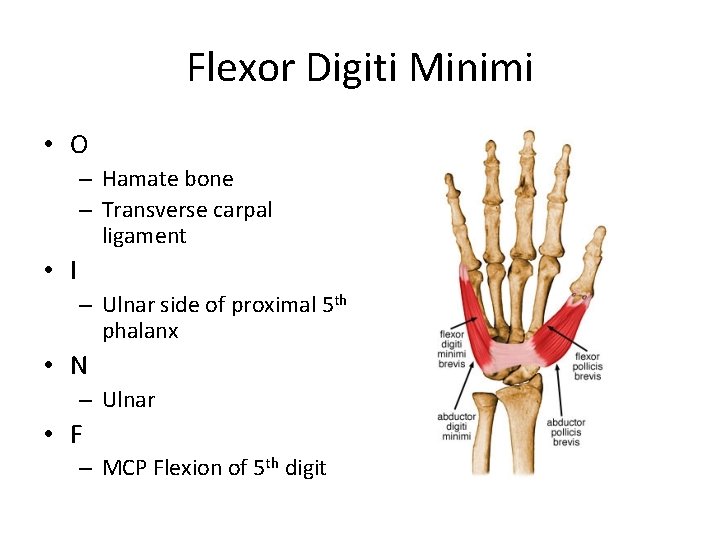
Flexor Digiti Minimi • O – Hamate bone – Transverse carpal ligament • I – Ulnar side of proximal 5 th phalanx • N – Ulnar • F – MCP Flexion of 5 th digit
Other Intrinsic Hand Muscles

Adductor Pollicis • O – Oblique Head • Capitate bone • Bases of 2 -3 metacarpals – Transverse Head • Proximal 2/3 of palmar surface of 3 rd metacarpal • I – Ulnar side of base of 1 st proximal phalanx • N – Ulnar • F – CMC ADD of thumb
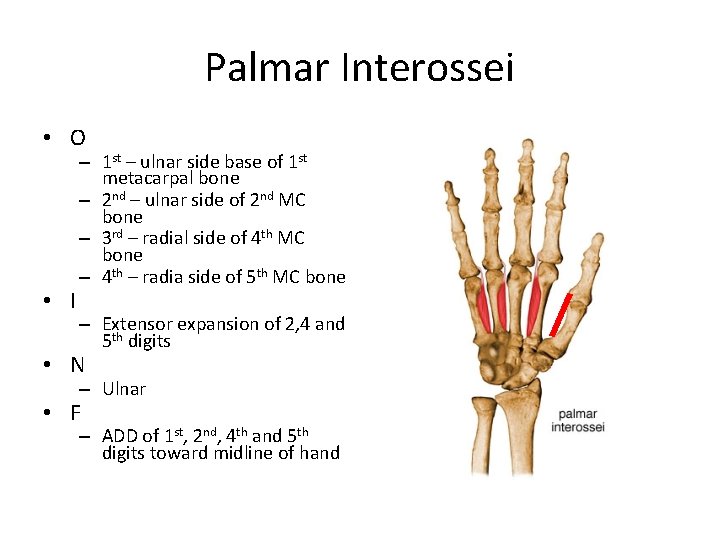
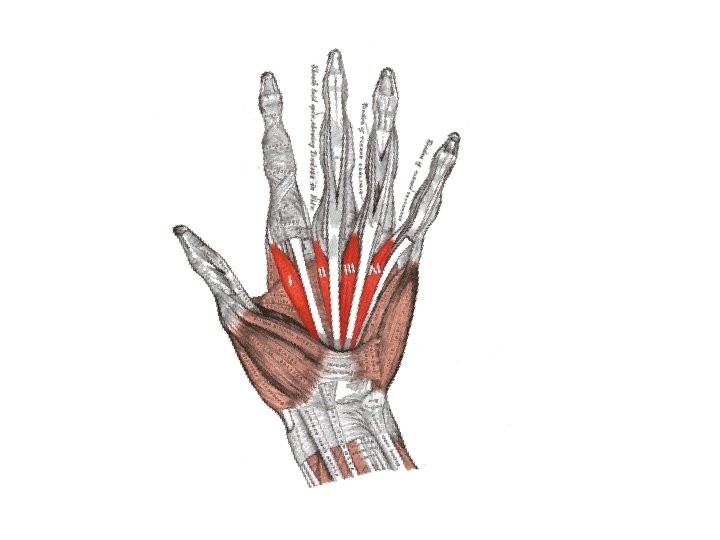
Palmar Interossei • O • I – 1 st – ulnar side base of 1 st metacarpal bone – 2 nd – ulnar side of 2 nd MC bone – 3 rd – radial side of 4 th MC bone – 4 th – radia side of 5 th MC bone – Extensor expansion of 2, 4 and 5 th digits • N – Ulnar • F – ADD of 1 st, 2 nd, 4 th and 5 th digits toward midline of hand
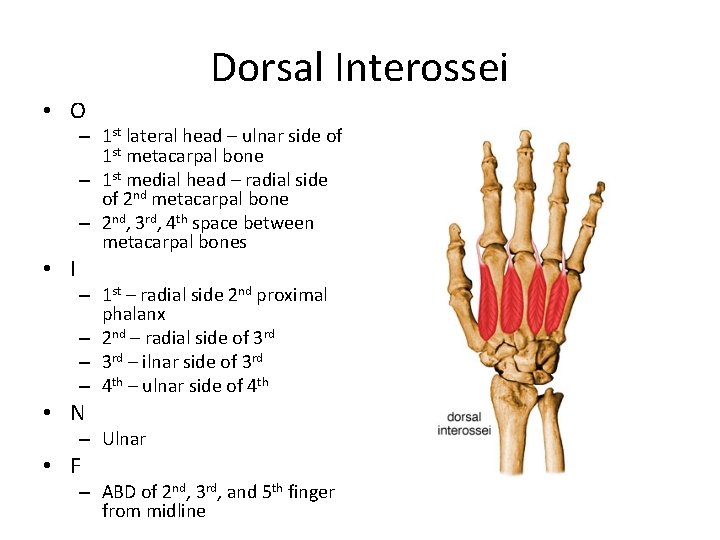
Dorsal Interossei • O • I – 1 st lateral head – ulnar side of 1 st metacarpal bone – 1 st medial head – radial side of 2 nd metacarpal bone – 2 nd, 3 rd, 4 th space between metacarpal bones – 1 st – radial side 2 nd proximal phalanx – 2 nd – radial side of 3 rd – ilnar side of 3 rd – 4 th – ulnar side of 4 th • N – Ulnar • F – ABD of 2 nd, 3 rd, and 5 th finger from midline
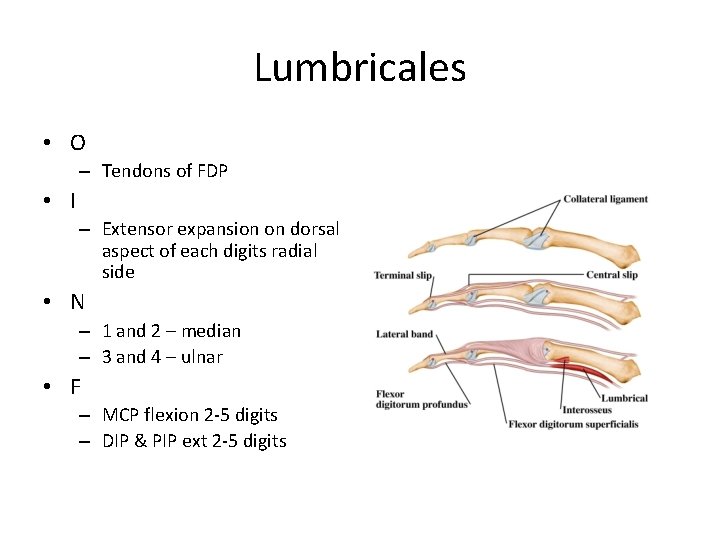
Lumbricales • O – Tendons of FDP • I – Extensor expansion on dorsal aspect of each digits radial side • N – 1 and 2 – median – 3 and 4 – ulnar • F – MCP flexion 2 -5 digits – DIP & PIP ext 2 -5 digits
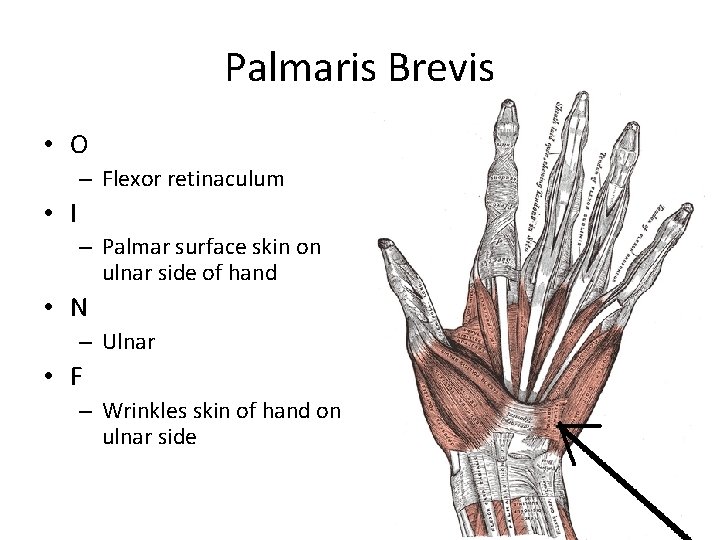
Palmaris Brevis • O – Flexor retinaculum • I – Palmar surface skin on ulnar side of hand • N – Ulnar • F – Wrinkles skin of hand on ulnar side
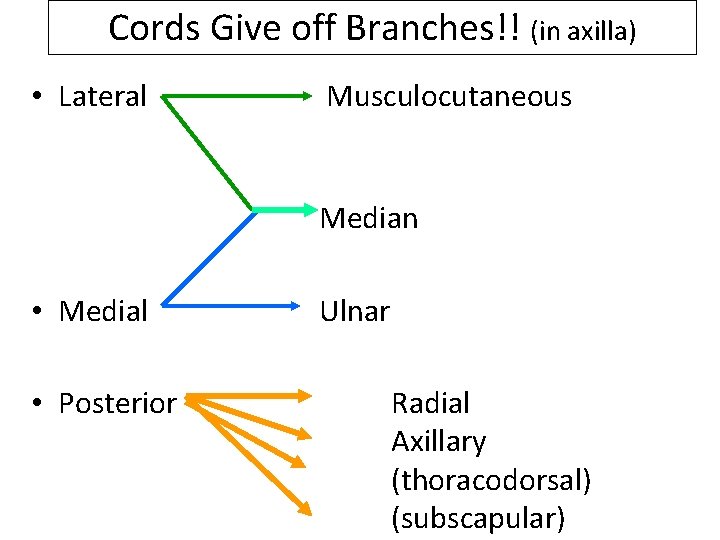
Cords Give off Branches!! (in axilla) • Lateral Musculocutaneous Median • Medial • Posterior Ulnar Radial Axillary (thoracodorsal) (subscapular)
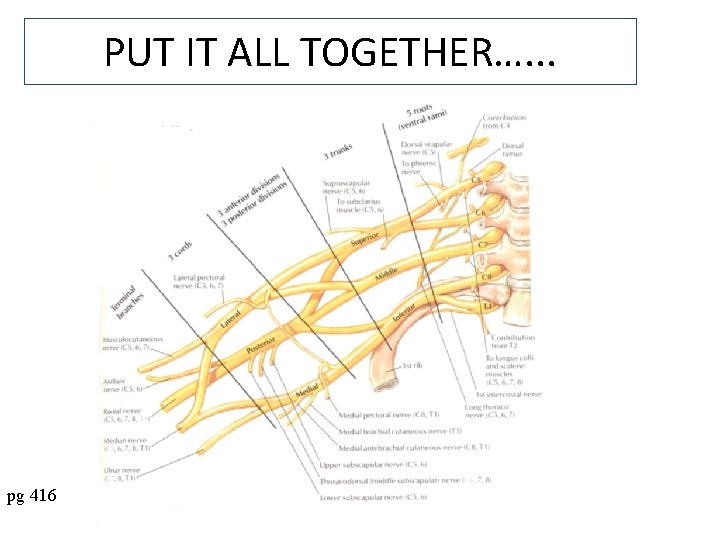
PUT IT ALL TOGETHER…. . . pg 416
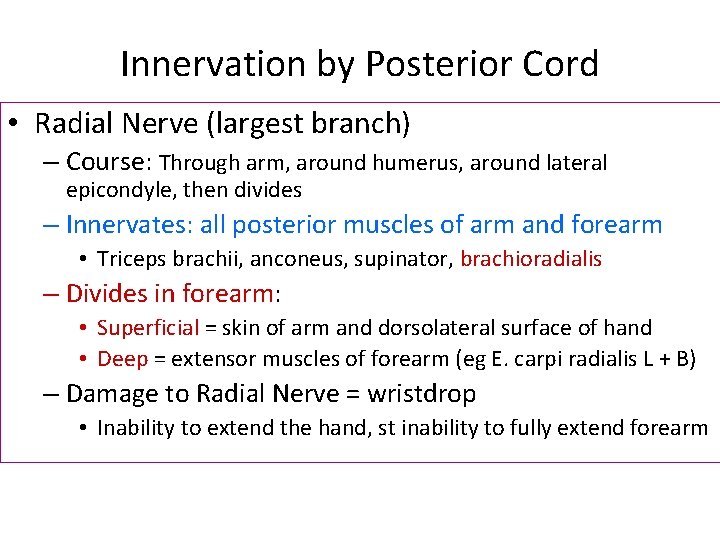
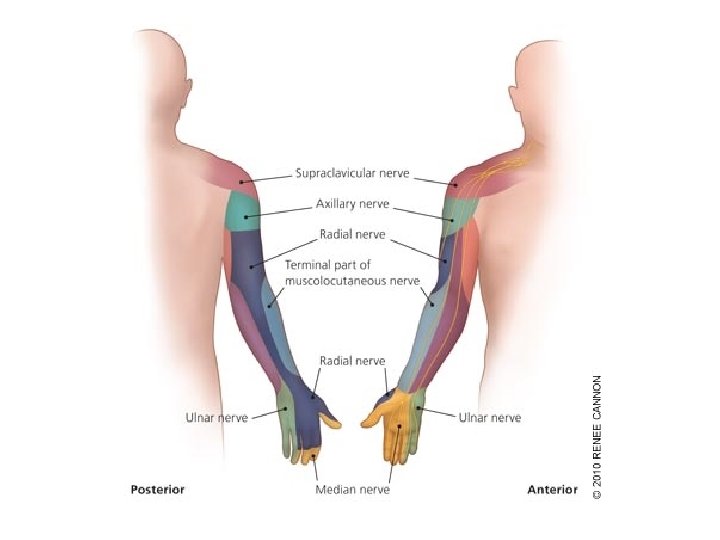
Innervation by Posterior Cord • Radial Nerve (largest branch) – Course: Through arm, around humerus, around lateral epicondyle, then divides – Innervates: all posterior muscles of arm and forearm • Triceps brachii, anconeus, supinator, brachioradialis – Divides in forearm: • Superficial = skin of arm and dorsolateral surface of hand • Deep = extensor muscles of forearm (eg E. carpi radialis L + B) – Damage to Radial Nerve = wristdrop • Inability to extend the hand, st inability to fully extend forearm
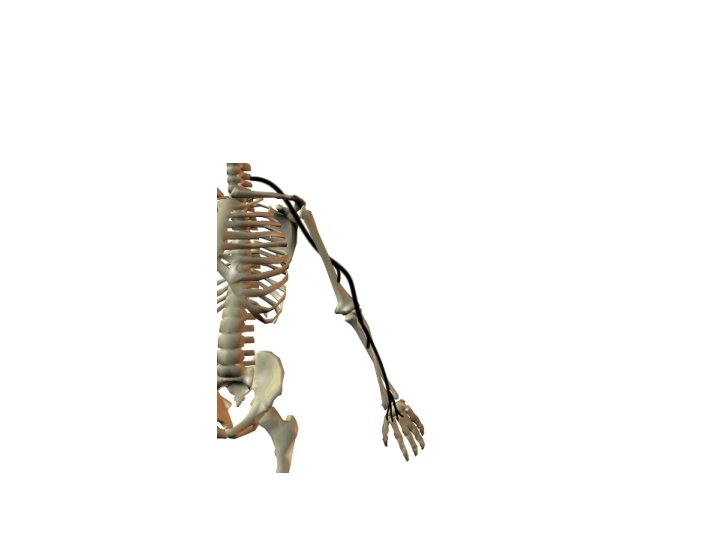
Innervation by Posterior Cord (continued) • Axillary Nerve (runs w/ humeral circumflex a. ) – Innervates: • Deltoid and Teres minor (motor inn) • Capsule of shoulder, skin of shoulder (sensory inn) • Subscapular Nerve {branches of C 5 + C 6 rami} – Innervates: Subscapularis, Teres major • Thoracodorsal Nerve (runs w/thoracodorsal a+v) – Innervates: Latissimus dorsi
Innervation by Lateral Cord • Musculocutaneous – Course: branches to arm, distal to elbow becomes cutaneous for lateral forearm skin – Innervates • Biceps brachii, brachialis, coracobrachialis (motor inn) • Skin distal to elbow (sensory) • Suprascapular (runs w/suprascapular a+v) {C 5, C 6} – Innervates: Supraspinatus, Infraspinatus
Innervation by both Lateral and Medial Cords • Median – Course: middle of brachial plexus, does not branch in arm, distal to elbow provides many branches to most forearm flexors, passes through carpal tunnel to hand to lateral palmar intrinsics – Innervates: most muscles of anterior forearm (motor inn) • (eg) most flexors, some intrinsics (thumb) – Innervates: skin of lateral 2/3 hand on palm side, dorsum of fingers 2+3 (sensory inn) – Nerve Damage = “Ape” Hand • Inability to Oppose Thumb
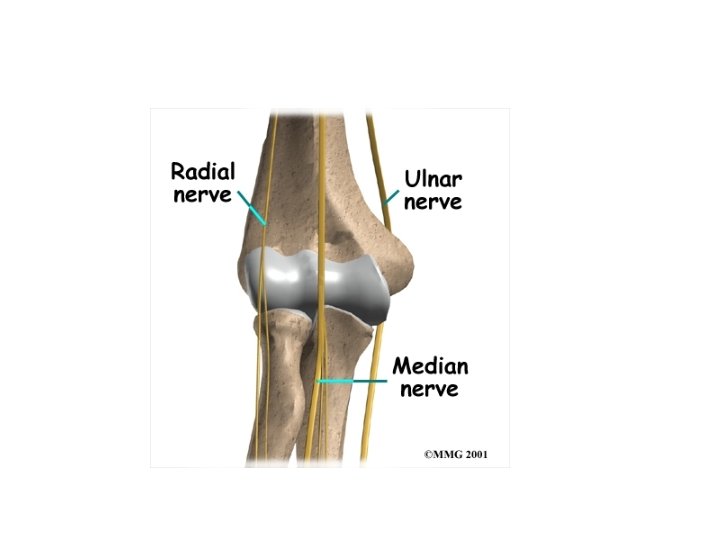
Innervation by Medial Cord • Ulnar – Course: runs along medial side of arm, behind medial epicondyle, superficial to carpal tunnel into hand, branches to supply intrinsics and skin – Innervates: • FCU and part of FDP, most intrinsics (motor inn) • Skin of medial 2/3 of hand A+P (sensory inn) – Nerve Damage: Clawhand • Inability to extend fingers at interphalangeal joints, results in permanent flexion = claw
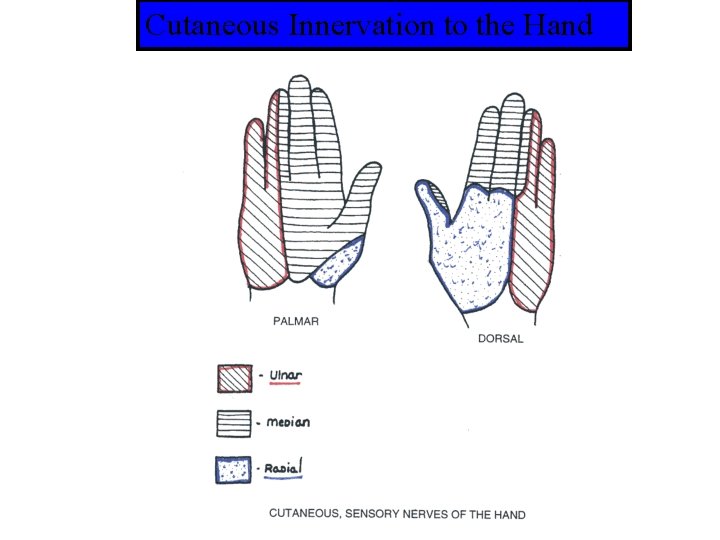
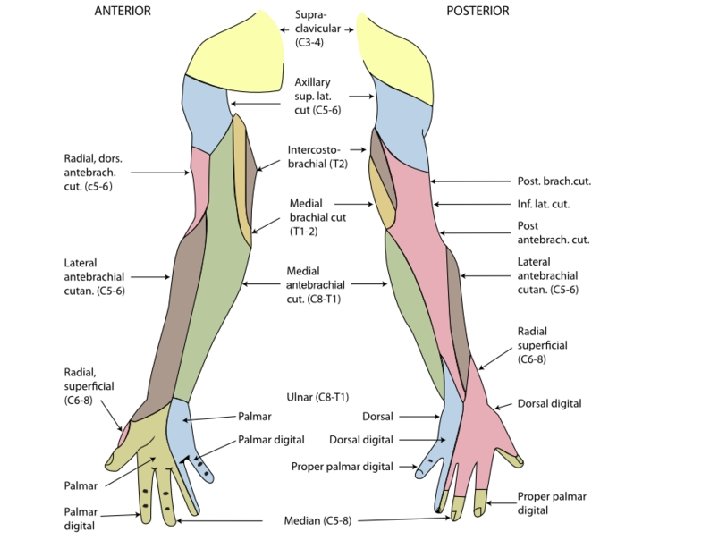
Cutaneous Innervation to the Hand
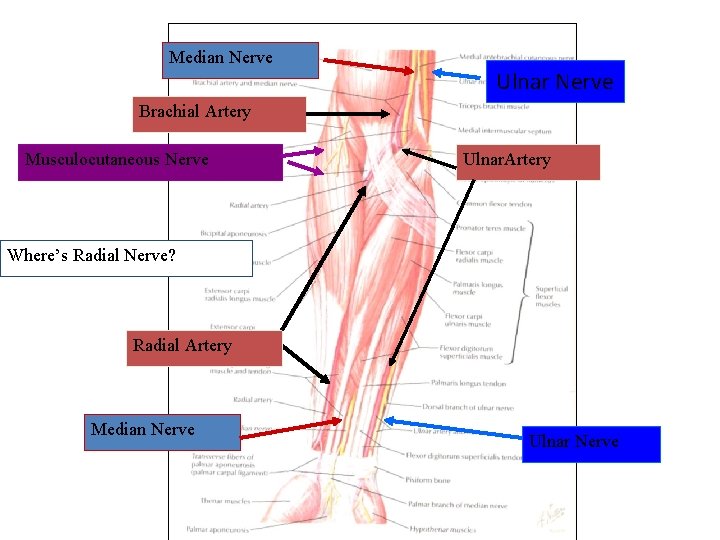
Median Nerve Ulnar Nerve Brachial Artery Musculocutaneous Nerve Ulnar. Artery Where’s Radial Nerve? Radial Artery Median Nerve Ulnar Nerve

Thank you…
- Slides: 59