
Wrapup Summary m Where is International Environmental Policy
- Slides: 31
Wrap-up Summary m Where is International Environmental Policy Headed? Hari Srinivas Professor of Environmental Policy Kwansei Gakuin University
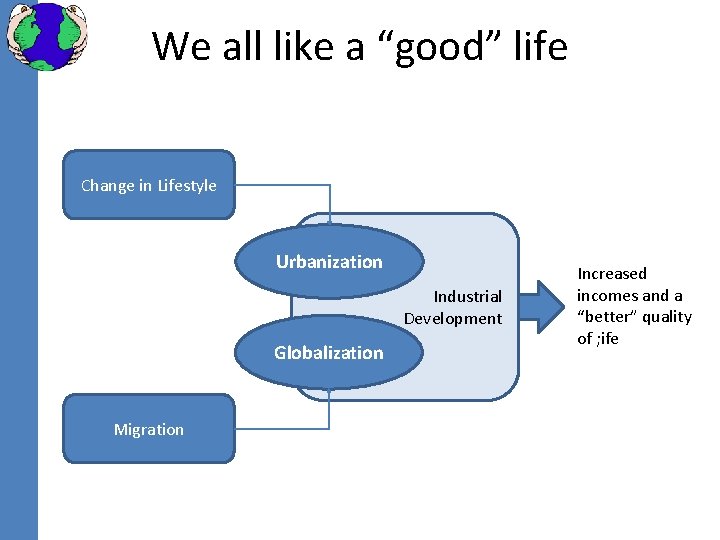
We all like a “good” life Change in Lifestyle Urbanization Industrial Development Globalization Migration Increased incomes and a “better” quality of ; ife
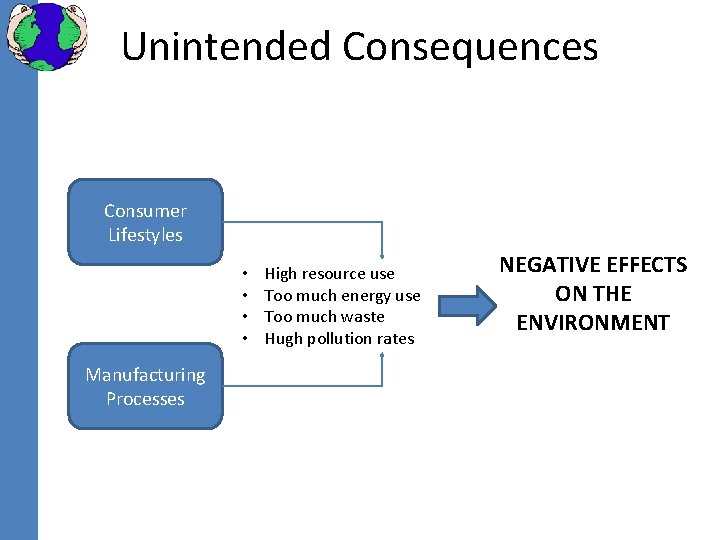
Unintended Consequences Consumer Lifestyles • • Manufacturing Processes High resource use Too much energy use Too much waste Hugh pollution rates NEGATIVE EFFECTS ON THE ENVIRONMENT
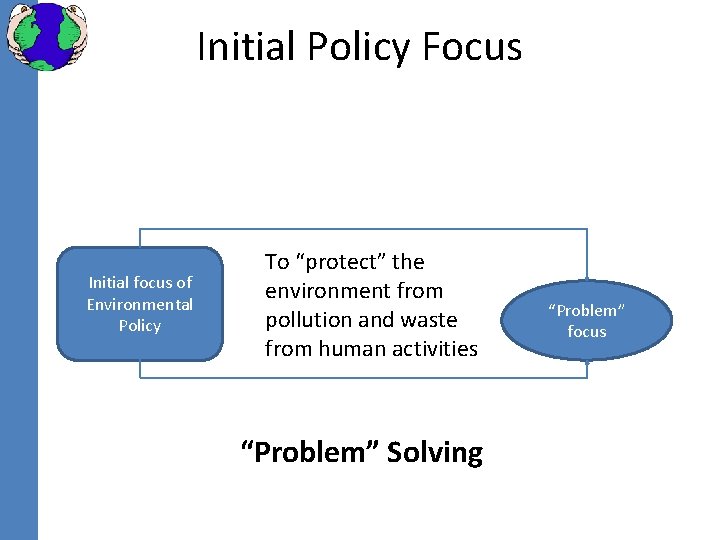
Initial Policy Focus Initial focus of Environmental Policy To “protect” the environment from pollution and waste from human activities “Problem” Solving “Problem” focus
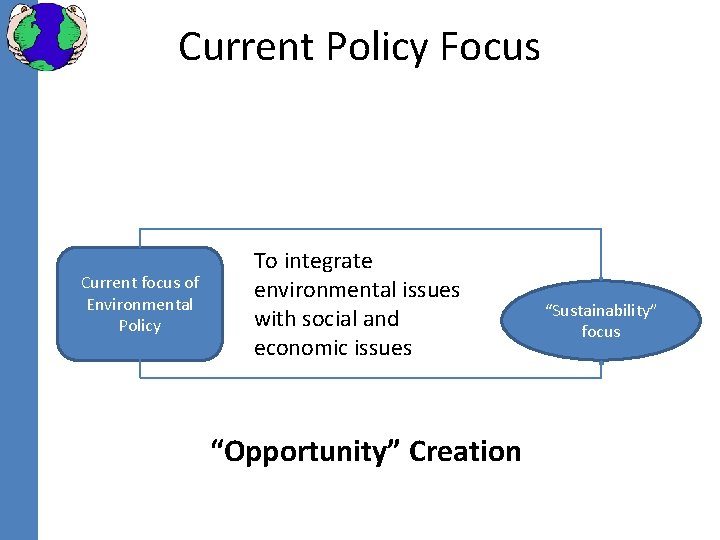
Current Policy Focus Current focus of Environmental Policy To integrate environmental issues with social and economic issues “Opportunity” Creation “Sustainability” focus
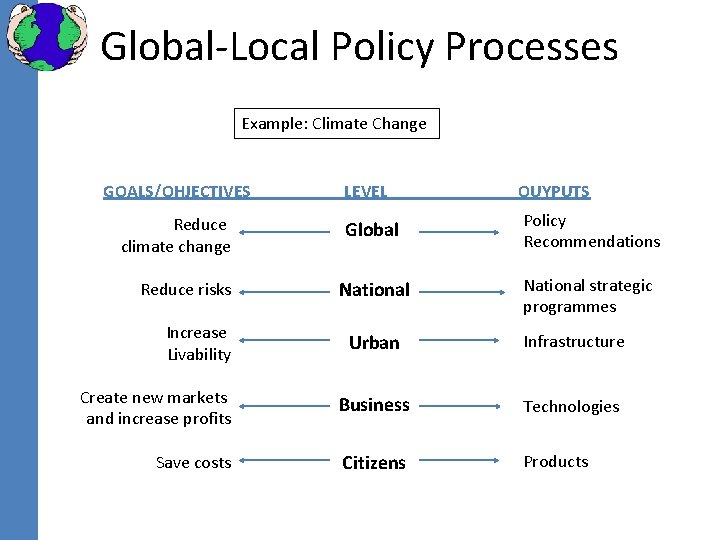
Global-Local Policy Processes Example: Climate Change GOALS/OHJECTIVES Reduce climate change Reduce risks Increase Livability LEVEL OUYPUTS Global Policy Recommendations National strategic programmes Urban Infrastructure Create new markets and increase profits Business Technologies Save costs Citizens Products
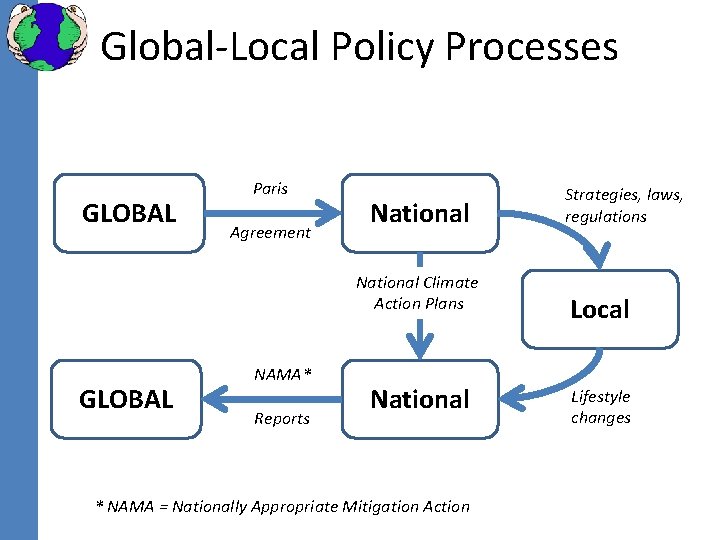
Global-Local Policy Processes GLOBAL Paris Agreement National Climate Action Plans GLOBAL NAMA* Reports National * NAMA = Nationally Appropriate Mitigation Action Strategies, laws, regulations Local Lifestyle changes
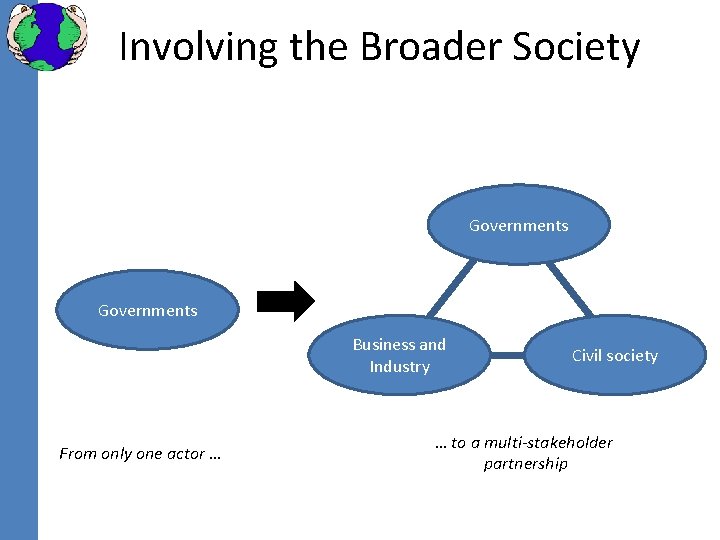
Involving the Broader Society Governments Business and Industry From only one actor … Civil society … to a multi-stakeholder partnership
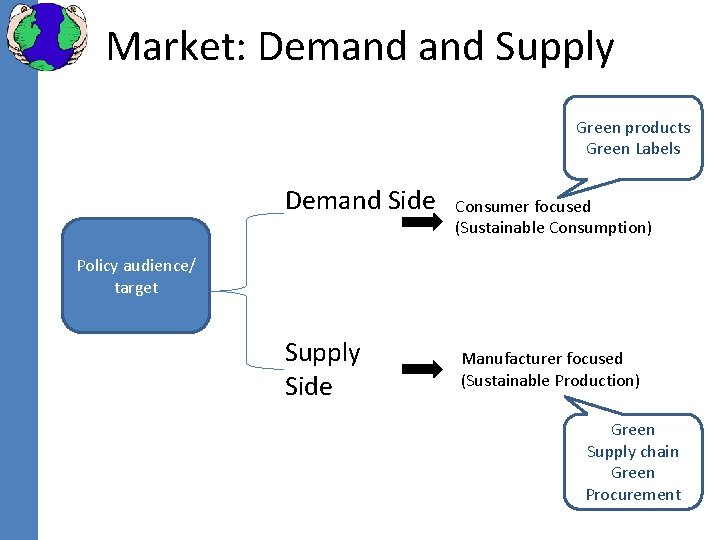
Market: Demand Supply Green products Green Labels Demand Side Consumer focused (Sustainable Consumption) Policy audience/ target Supply Side Manufacturer focused (Sustainable Production) Green Supply chain Green Procurement
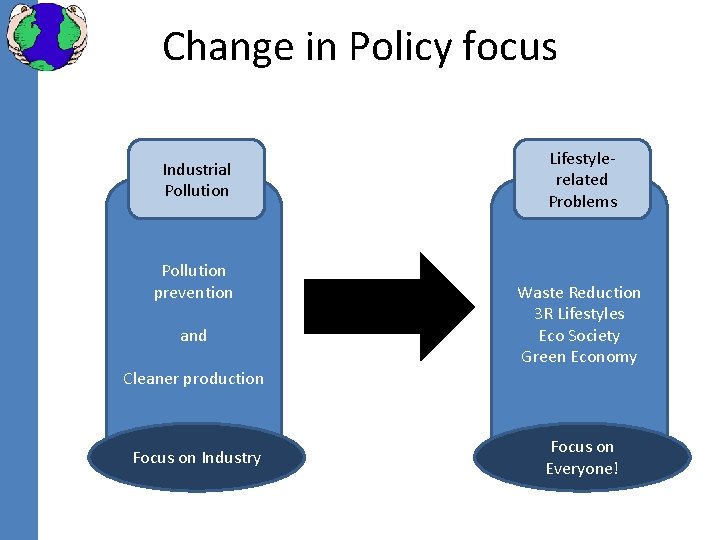
Change in Policy focus Industrial Pollution prevention and Cleaner production Focus on Industry Lifestylerelated Problems Waste Reduction 3 R Lifestyles Eco Society Green Economy Focus on Everyone!
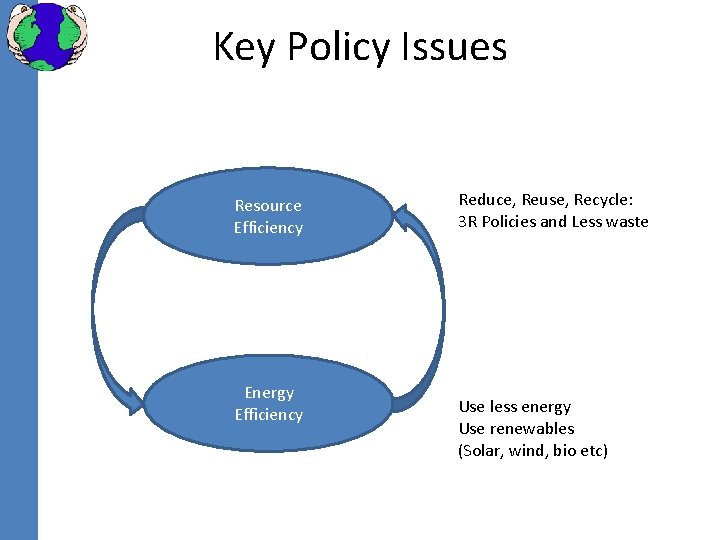
Key Policy Issues Resource Efficiency Energy Efficiency Reduce, Reuse, Recycle: 3 R Policies and Less waste Use less energy Use renewables (Solar, wind, bio etc)
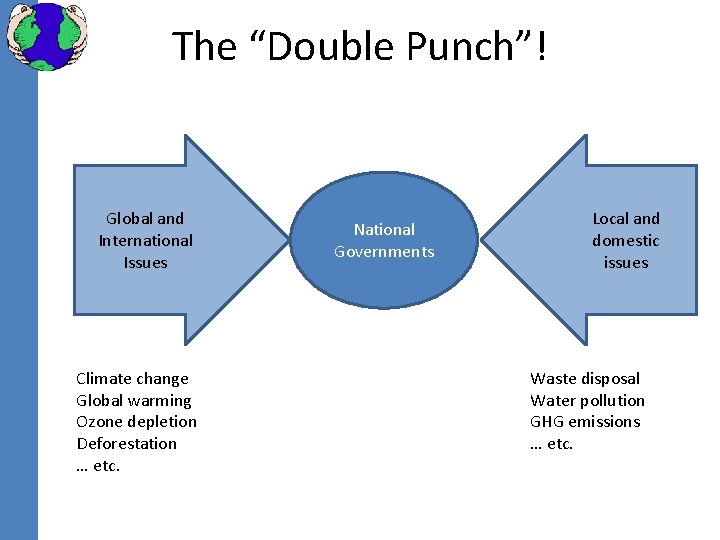
The “Double Punch”! Global and International Issues Climate change Global warming Ozone depletion Deforestation … etc. National Governments Local and domestic issues Waste disposal Water pollution GHG emissions … etc.
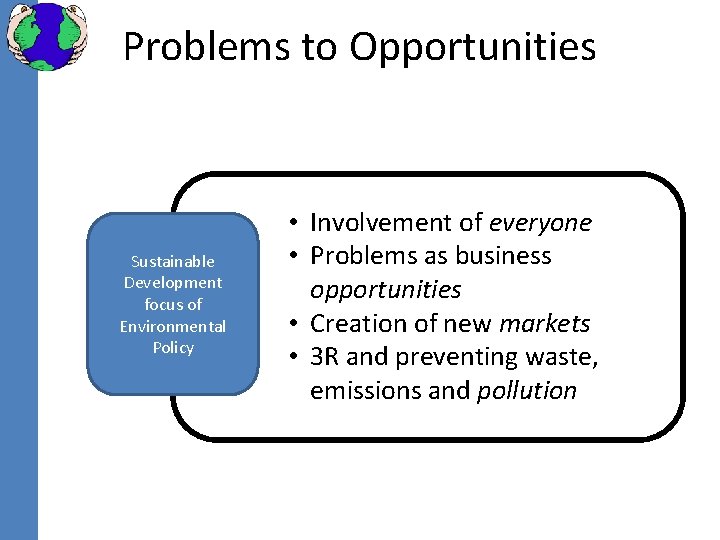
Problems to Opportunities Sustainable Development focus of Environmental Policy • Involvement of everyone • Problems as business opportunities • Creation of new markets • 3 R and preventing waste, emissions and pollution
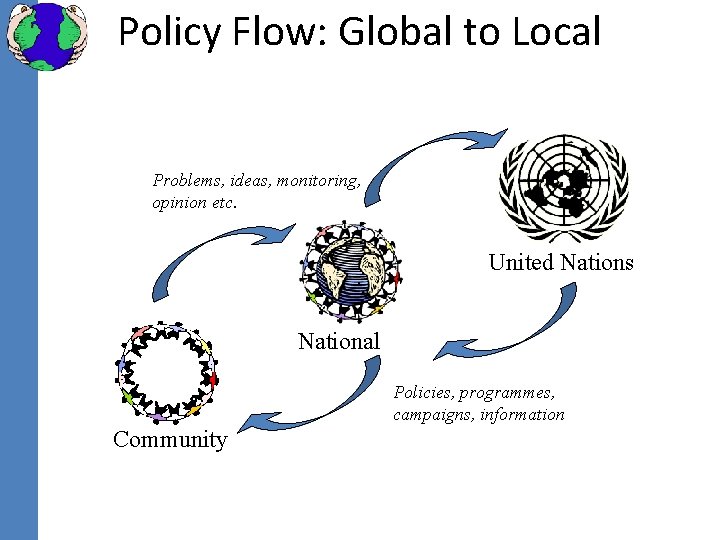
Policy Flow: Global to Local Problems, ideas, monitoring, opinion etc. United Nations National Policies, programmes, campaigns, information Community
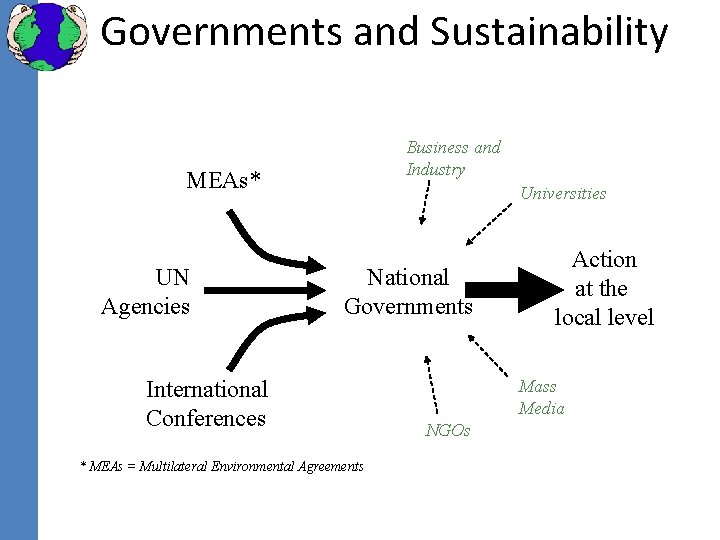
Governments and Sustainability Business and Industry MEAs* UN Agencies Universities National Governments International Conferences * MEAs = Multilateral Environmental Agreements Action at the local level Mass Media NGOs
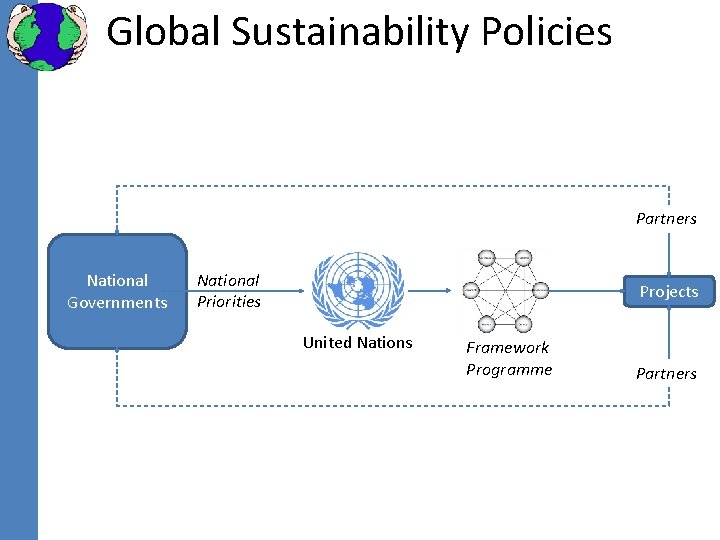
Global Sustainability Policies Partners National Governments National Priorities Projects United Nations Framework Programme Partners
Where does the UN fit in? United Nations • Policy Making? • Implementation? • Financing/Donor? • “Rich” club?
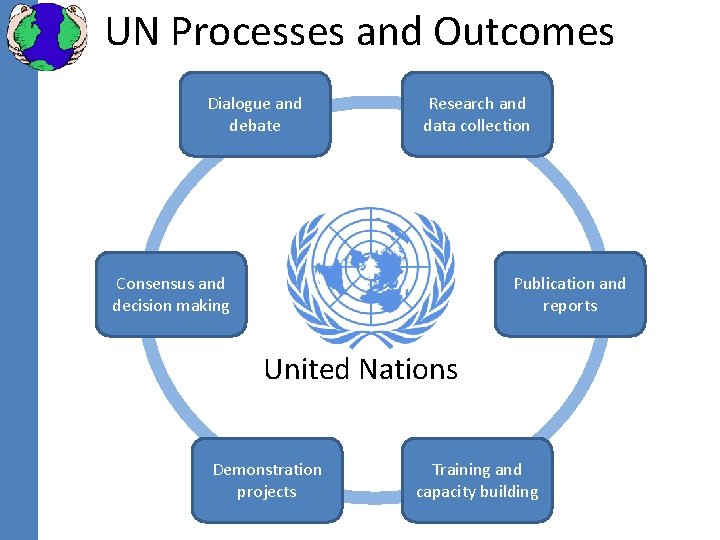
UN Processes and Outcomes Dialogue and debate Research and data collection Consensus and decision making Publication and reports United Nations Demonstration projects Training and capacity building
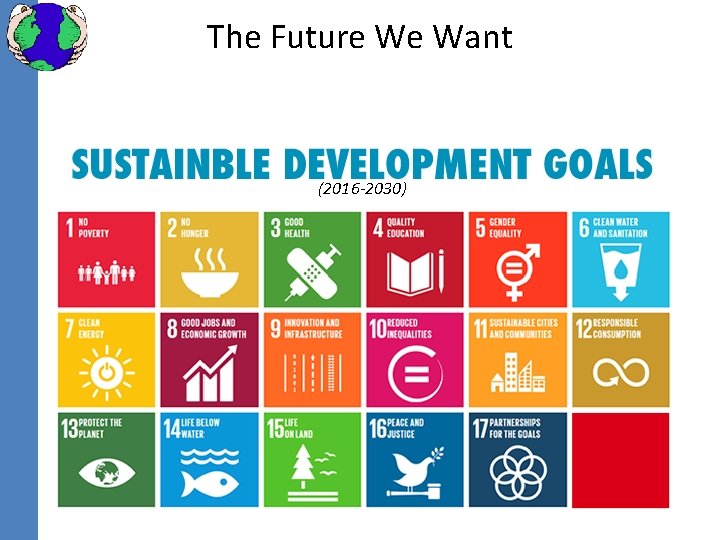
The Future We Want (2016 -2030)
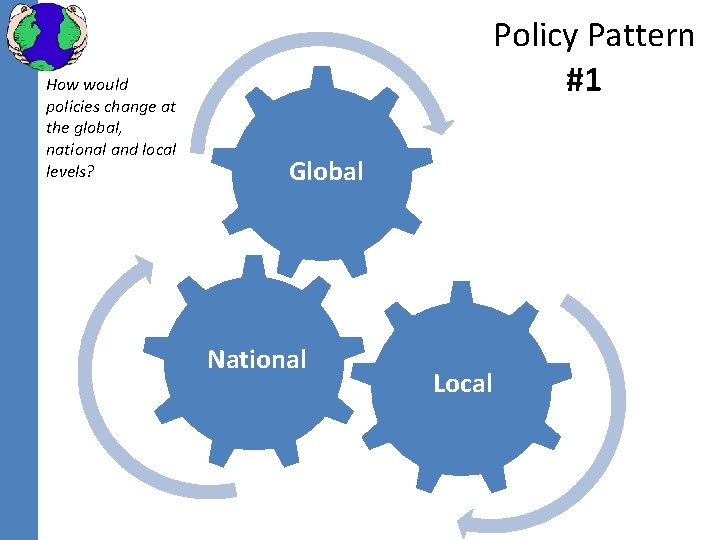
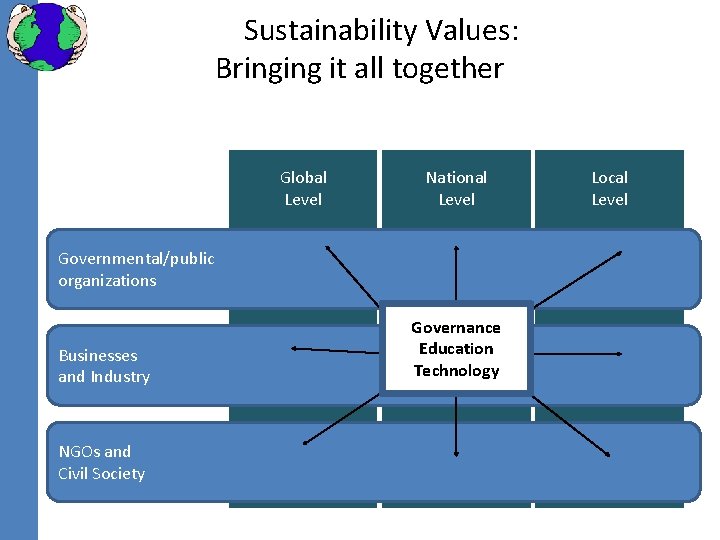
How would policies change at the global, national and local levels? Policy Pattern #1 Global National Local
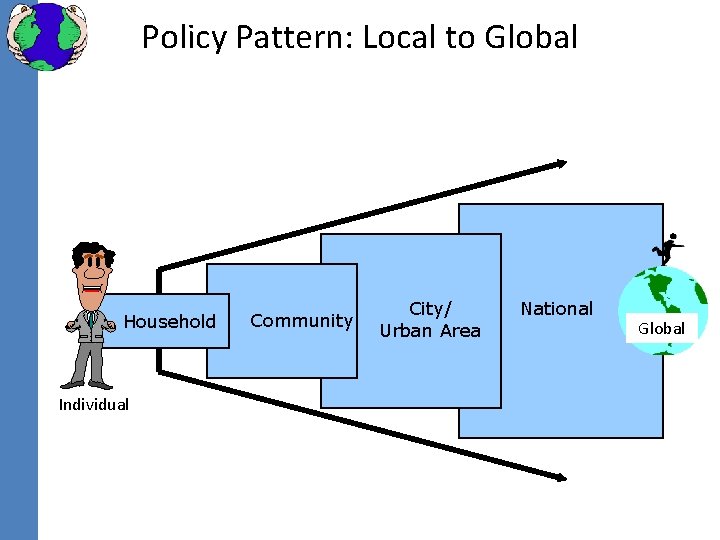
Policy Pattern: Local to Global Household Individual Community City/ Urban Area National Global
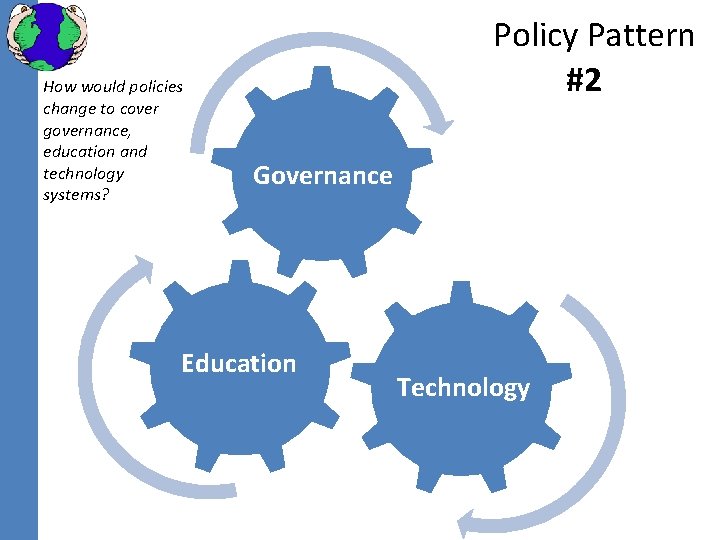
How would policies change to cover governance, education and technology systems? Policy Pattern #2 Governance Education Technology
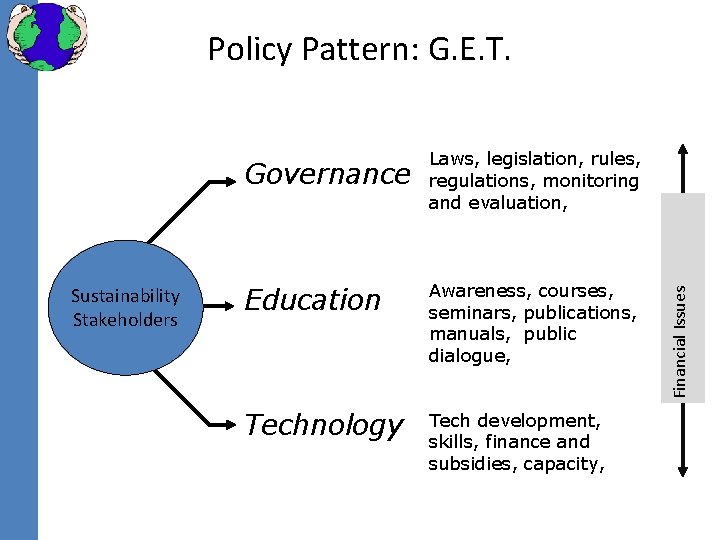
Sustainability Stakeholders Governance Laws, legislation, rules, regulations, monitoring and evaluation, Education Awareness, courses, seminars, publications, manuals, public dialogue, Technology Tech development, skills, finance and subsidies, capacity, Financial Issues Policy Pattern: G. E. T.
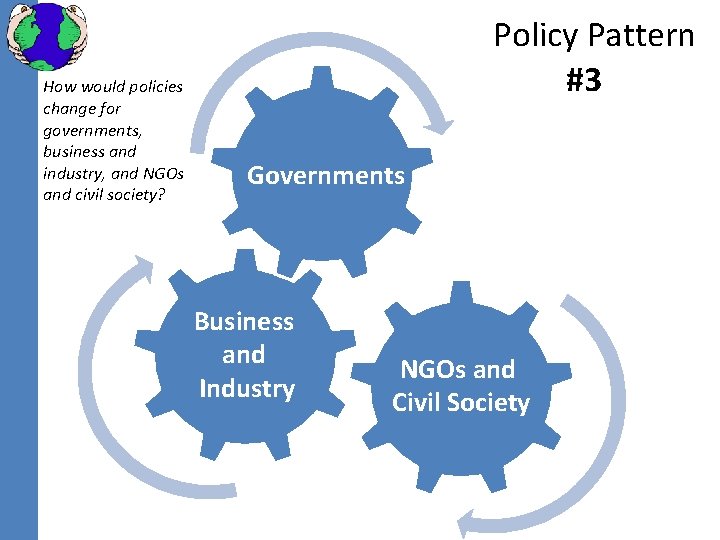
How would policies change for governments, business and industry, and NGOs and civil society? Policy Pattern #3 Governments Business and Industry NGOs and Civil Society
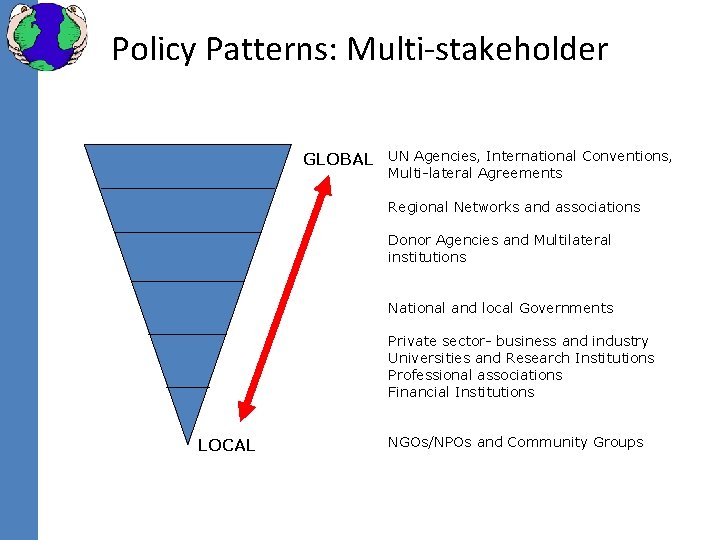
Policy Patterns: Multi-stakeholder GLOBAL UN Agencies, International Conventions, Multi-lateral Agreements Regional Networks and associations Donor Agencies and Multilateral institutions National and local Governments Private sector- business and industry Universities and Research Institutions Professional associations Financial Institutions LOCAL NGOs/NPOs and Community Groups
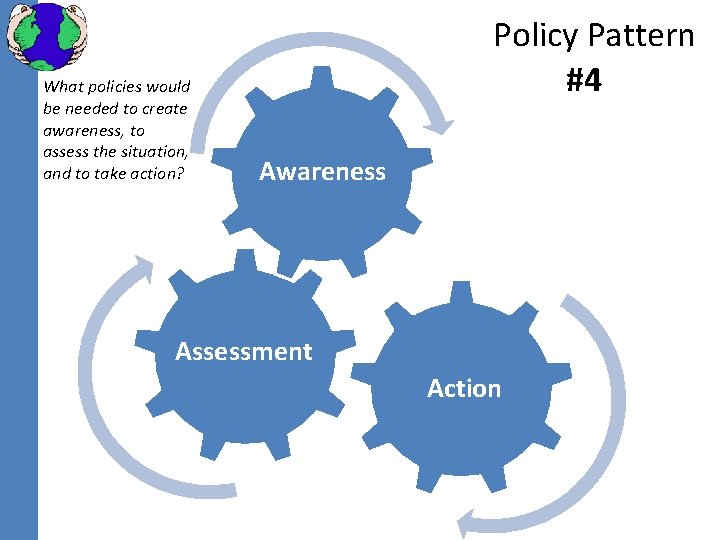
What policies would be needed to create awareness, to assess the situation, and to take action? Policy Pattern #4 Awareness Assessment Action
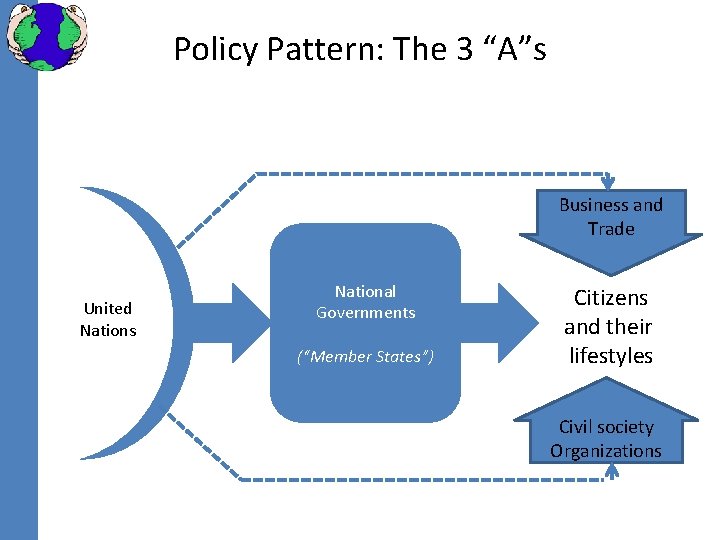
Policy Pattern: The 3 “A”s Business and Trade United Nations National Governments (“Member States”) Citizens and their lifestyles Civil society Organizations
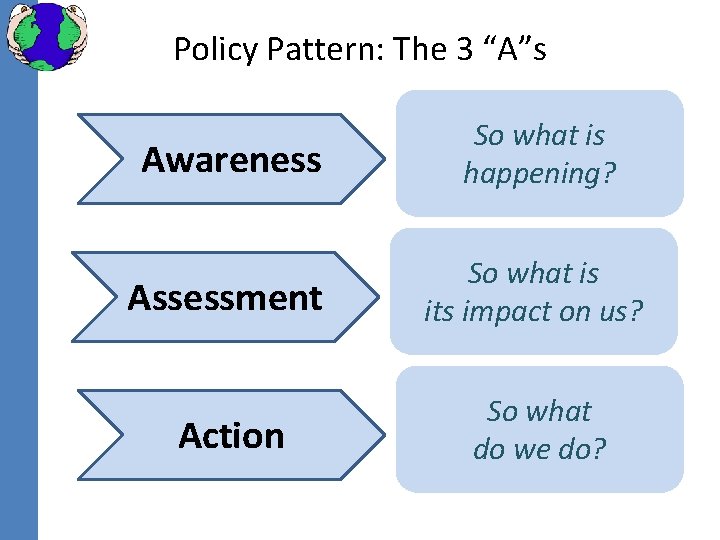
Policy Pattern: The 3 “A”s Awareness So what is happening? Assessment So what is its impact on us? Action So what do we do?
Sustainability Values: Bringing it all together Global Level National Level Governmental/public organizations Businesses and Industry NGOs and Civil Society Governance Education Technology Local Level
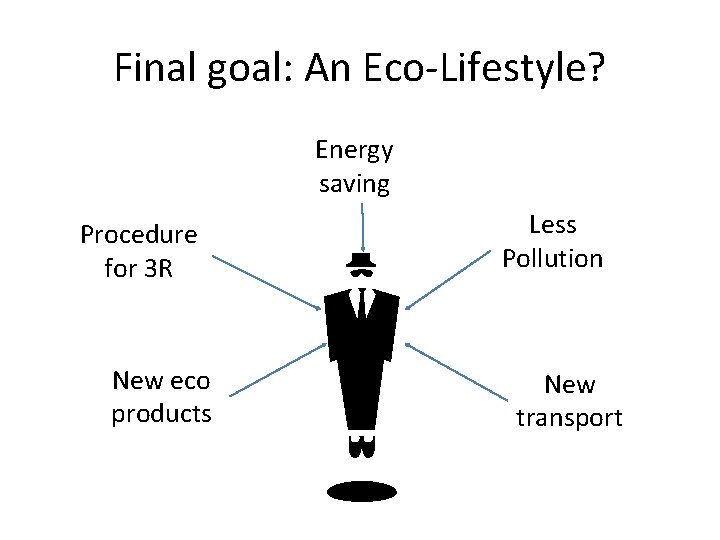
Final goal: An Eco-Lifestyle? Energy saving Procedure for 3 R New eco products m Less Pollution New transport
Thank you !! Hari Srinivas Room: I-312 http: //kg-sps. jp/blogs/srinivas/ hari. srinivas@kwansei. ac. jp