
Wr yo ite t h ur no is
- Slides: 30
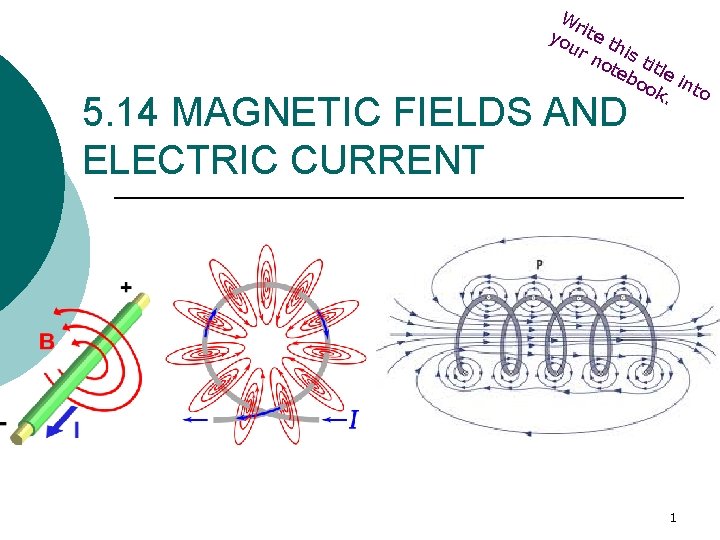
Wr yo ite t h ur no is tit teb le oo int o k. 5. 14 MAGNETIC FIELDS AND ELECTRIC CURRENT 1
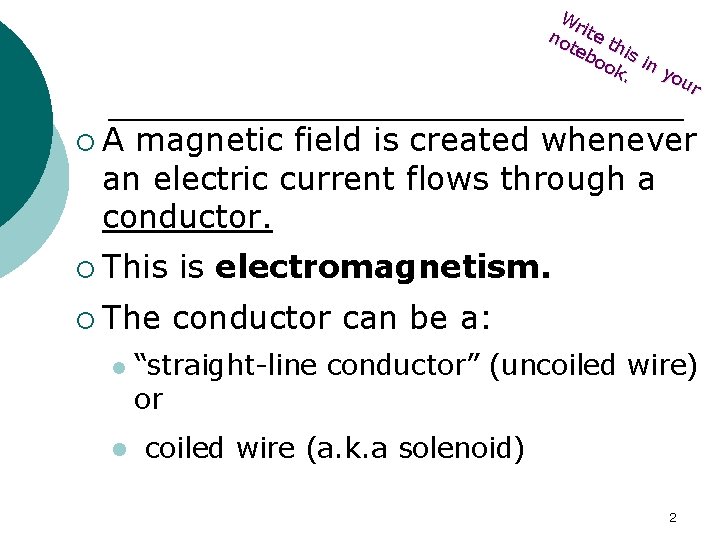
Wr no ite t teb his oo i k. n yo ur ¡A magnetic field is created whenever an electric current flows through a conductor. ¡ This is electromagnetism. ¡ The conductor can be a: l l “straight-line conductor” (uncoiled wire) or coiled wire (a. k. a solenoid) 2
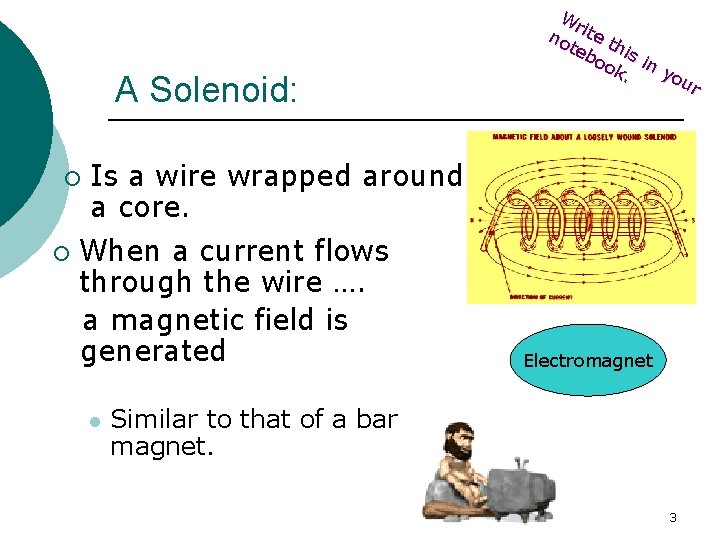
A Solenoid: ¡ ¡ Wr no ite t teb his oo i k. n yo ur Is a wire wrapped around a core. When a current flows through the wire …. a magnetic field is generated l Electromagnet Similar to that of a bar magnet. 3
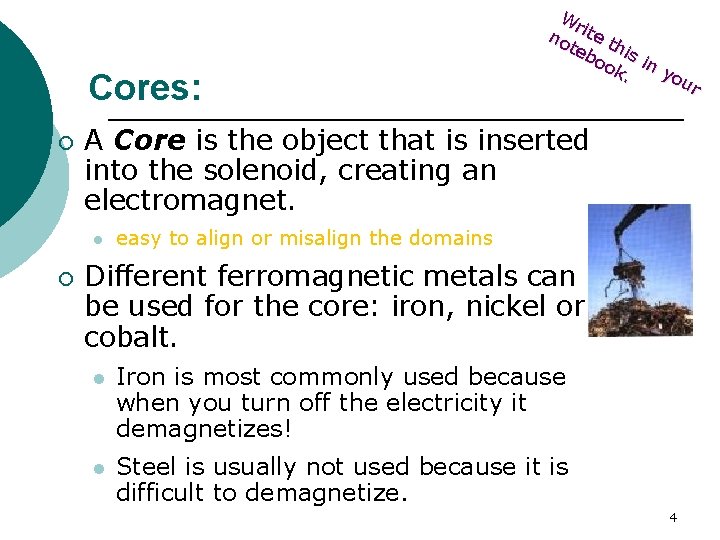
Cores: ¡ A Core is the object that is inserted into the solenoid, creating an electromagnet. l ¡ Wr no ite t teb his oo i k. n yo ur easy to align or misalign the domains Different ferromagnetic metals can be used for the core: iron, nickel or cobalt. l Iron is most commonly used because when you turn off the electricity it demagnetizes! l Steel is usually not used because it is difficult to demagnetize. 4
The “Hand” Rules ¡ ¡ ¡ There are two sets of “hand” rules that can be used to determine the direction of the magnetic field around an electrical conductor Your choice of which set of rules to use depends on which system you use to describe electric current: l Electron Flow or Conventional Current Both systems are correct, and both work, but you must be careful not to mix them up! ¡ The “Left Hand Rules” are covered in slides 6 to 11 ¡ The “Right Hand Rules” are covered in slides 12 to 17 5
Left Hand Rule 6
5. 15 The Left Hand Rules ¡ Wr no ite t teb his oo i k. n yo ur This rule will help you determine the direction of the magnetic fields created by an electric current. l The 1 st Left Hand Rule is used with a straight wire (uncoiled). l The 2 nd Left Hand Rule is used with a solenoid (or coil) l Remember electrons flow from – to + !!!! 7
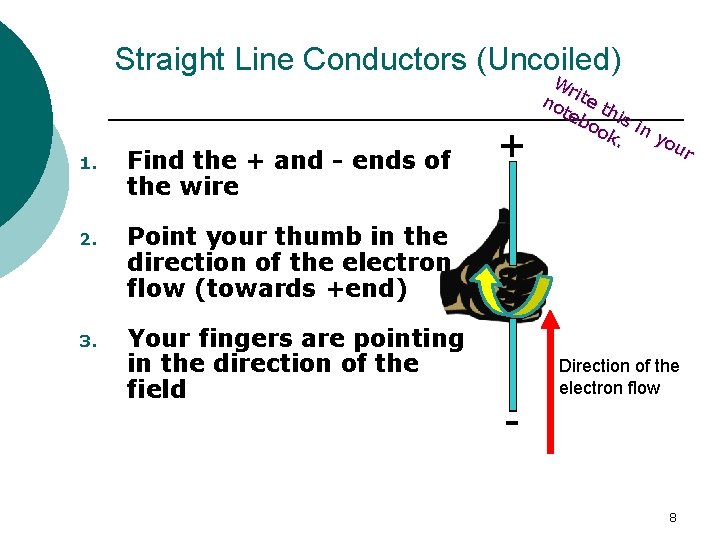
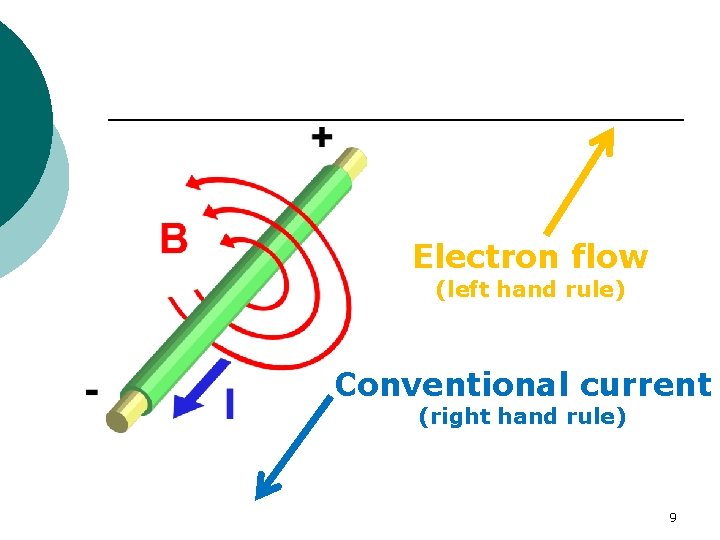
Straight Line Conductors (Uncoiled) 1. Find the + and - ends of the wire 2. Point your thumb in the direction of the electron flow (towards +end) 3. Your fingers are pointing in the direction of the field + - Wr no ite t teb his oo i k. n yo ur Direction of the electron flow 8
Electron flow (left hand rule) Conventional current (right hand rule) 9
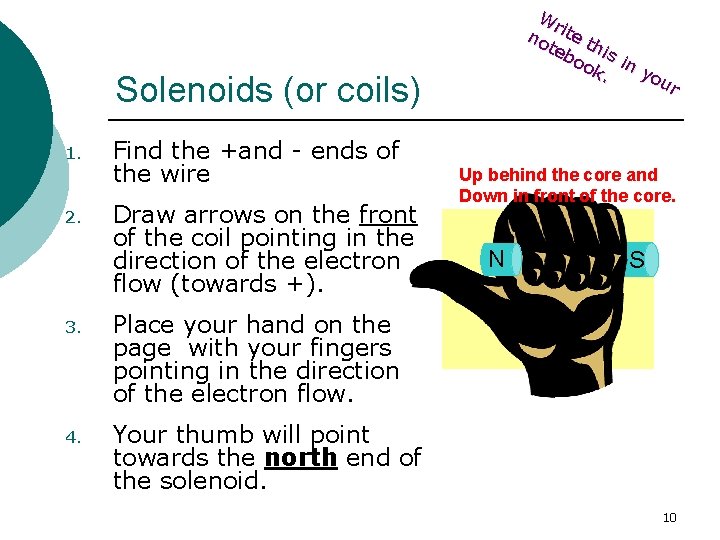
Wr no ite t teb his oo i k. n yo ur Solenoids (or coils) 1. 2. Find the +and - ends of the wire Draw arrows on the front of the coil pointing in the direction of the electron flow (towards +). 3. Place your hand on the page with your fingers pointing in the direction of the electron flow. 4. Your thumb will point towards the north end of the solenoid. Up behind the core and Down in front of the core. N + S - 10
¡ The Left Hand Rules will help you with all of the electromagnetic problems …got it? Jump to slide 18 11
The Right Hand Rules 12
Conventional Current If you use “conventional current” to describe the direction of the current, it is said to flow from the positive to the negative terminal ¡ You must use the “Right Hand Rules” ¡ 13
There are two “hand rules” that will help you to determine the direction of the magnetic fields created by electric currents. ¡ The 1 st Right Hand Rule is used with a straight line or uncoiled wire. ¡ The 2 nd Right Hand Rule is used with a solenoid (or coil) ¡ 14
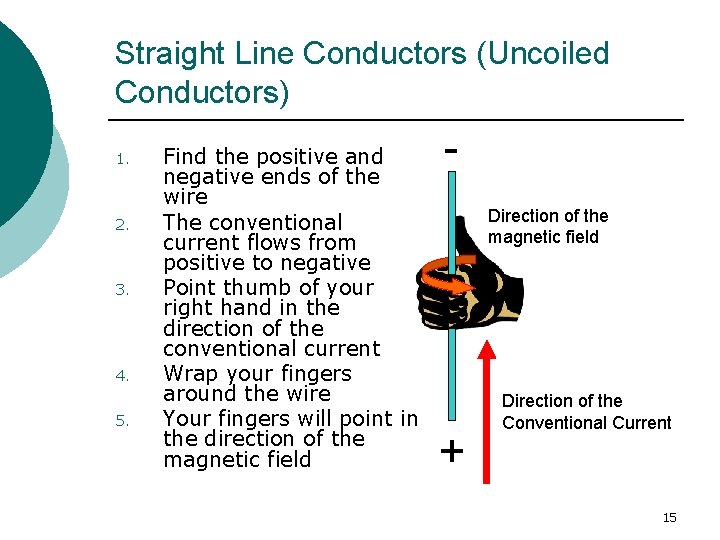
Straight Line Conductors (Uncoiled Conductors) 1. 2. 3. 4. 5. Find the positive and negative ends of the wire The conventional current flows from positive to negative Point thumb of your right hand in the direction of the conventional current Wrap your fingers around the wire Your fingers will point in the direction of the magnetic field Direction of the magnetic field + Direction of the Conventional Current 15
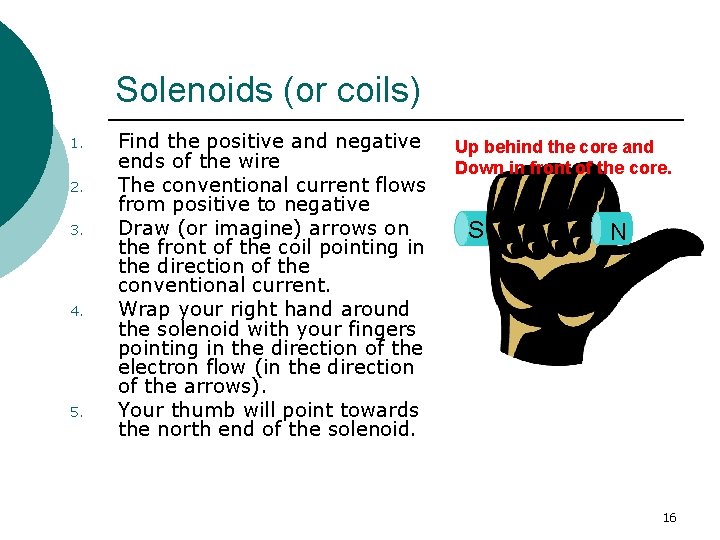
Solenoids (or coils) 1. 2. 3. 4. 5. Find the positive and negative ends of the wire The conventional current flows from positive to negative Draw (or imagine) arrows on the front of the coil pointing in the direction of the conventional current. Wrap your right hand around the solenoid with your fingers pointing in the direction of the electron flow (in the direction of the arrows). Your thumb will point towards the north end of the solenoid. Up behind the core and Down in front of the core. S N - + 16
¡ The Right Hand Rules will help you with all of the electromagnetic problems …got it? 17
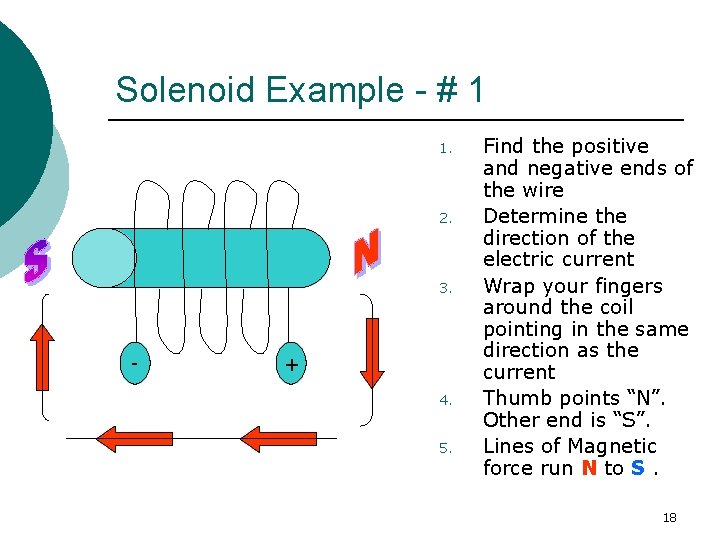
Solenoid Example - # 1 1. 2. 3. - + 4. 5. Find the positive and negative ends of the wire Determine the direction of the electric current Wrap your fingers around the coil pointing in the same direction as the current Thumb points “N”. Other end is “S”. Lines of Magnetic force run N to S. 18
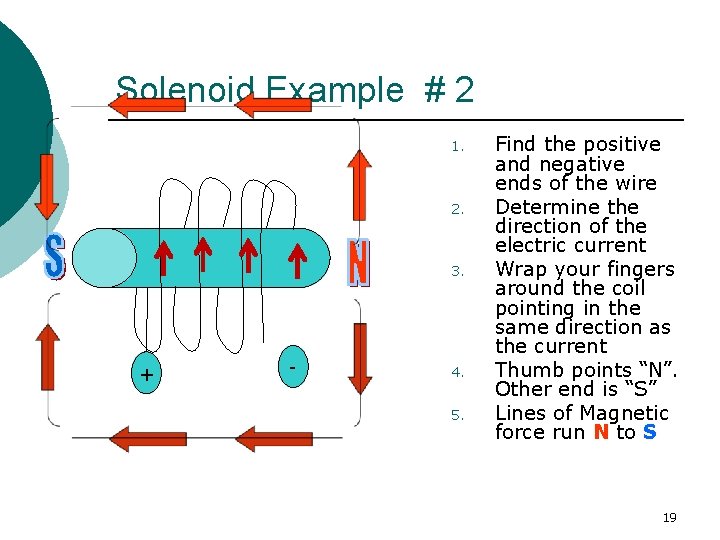
Solenoid Example # 2 1. 2. 3. + - 4. 5. Find the positive and negative ends of the wire Determine the direction of the electric current Wrap your fingers around the coil pointing in the same direction as the current Thumb points “N”. Other end is “S” Lines of Magnetic force run N to S 19
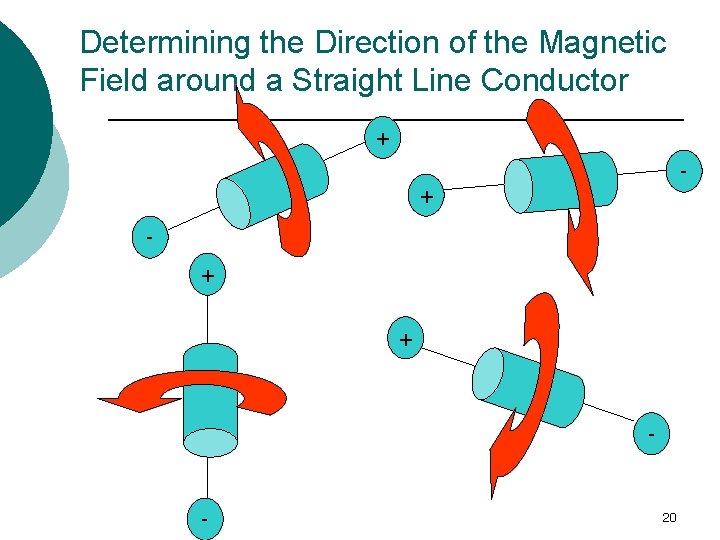
Determining the Direction of the Magnetic Field around a Straight Line Conductor + + - - 20
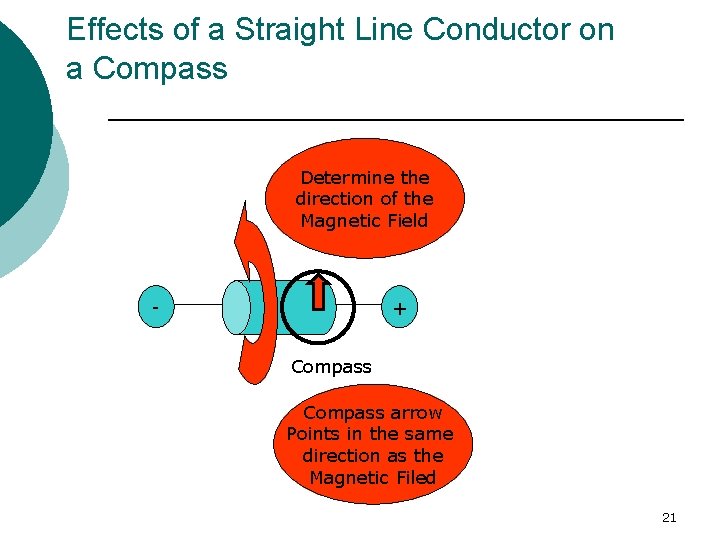
Effects of a Straight Line Conductor on a Compass Determine the direction of the Magnetic Field - + Compass arrow Points in the same direction as the Magnetic Filed 21
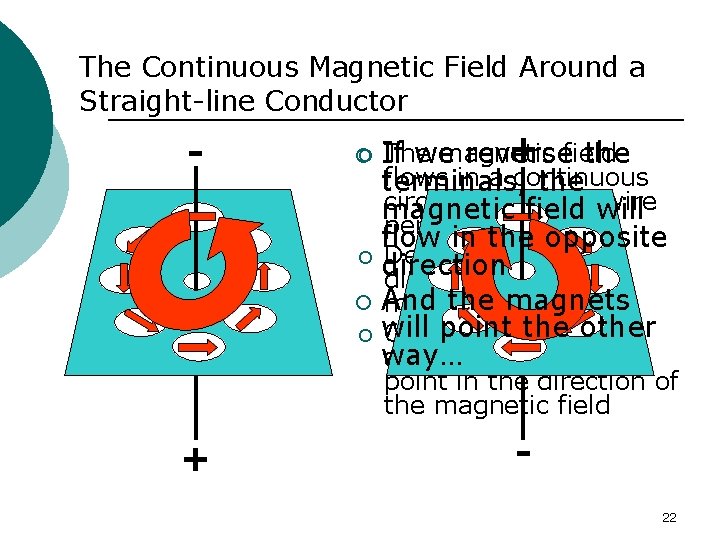
The Continuous Magnetic Field Around a Straight-line Conductor - + field The magnetic If we reverse the flows in a continuous terminals, the circle around the will wire magnetic field perpendicular to it. flow in the opposite ¡ Determine the direction of the ¡ And the magnets magnetic field point the other ¡ will Compasses placed way… around the wire will ¡ ¡ point in the direction of the magnetic field + 22
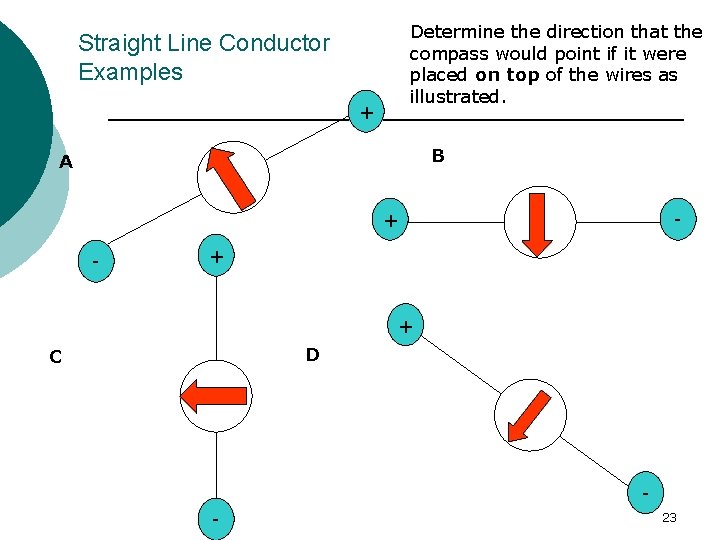
Determine the direction that the compass would point if it were placed on top of the wires as illustrated. Straight Line Conductor Examples + B A + - - + + D C - 23
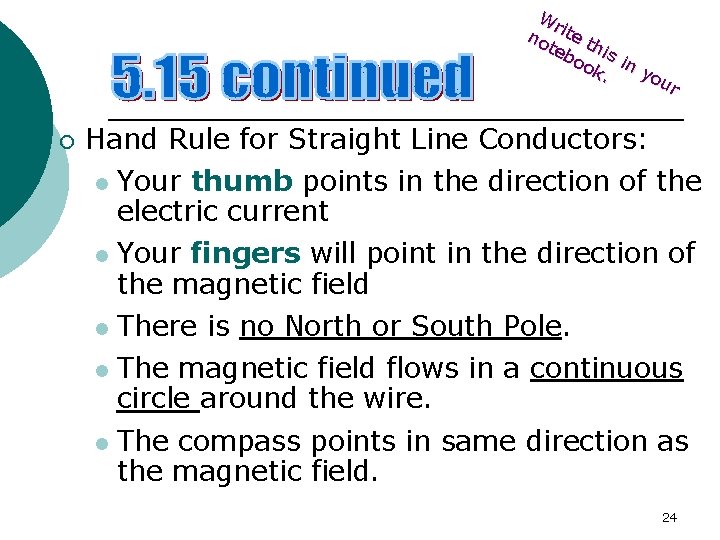
Wr no ite t teb his oo i k. n yo ur ¡ Hand Rule for Straight Line Conductors: l l l Your thumb points in the direction of the electric current Your fingers will point in the direction of the magnetic field There is no North or South Pole. The magnetic field flows in a continuous circle around the wire. The compass points in same direction as the magnetic field. 24
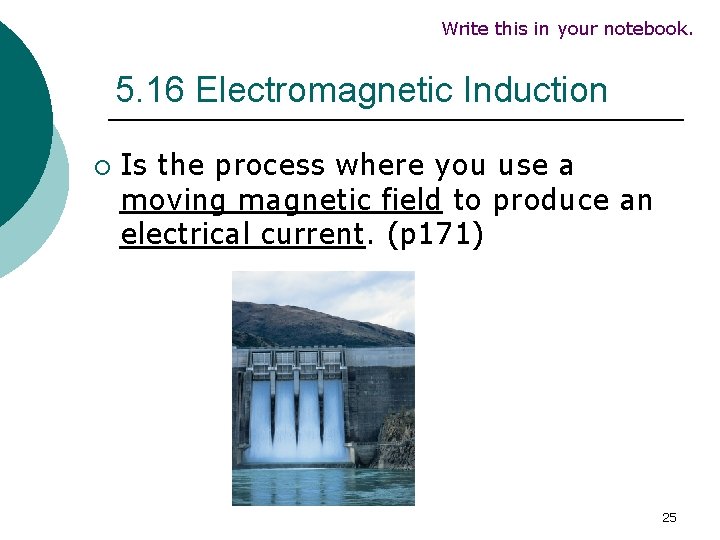
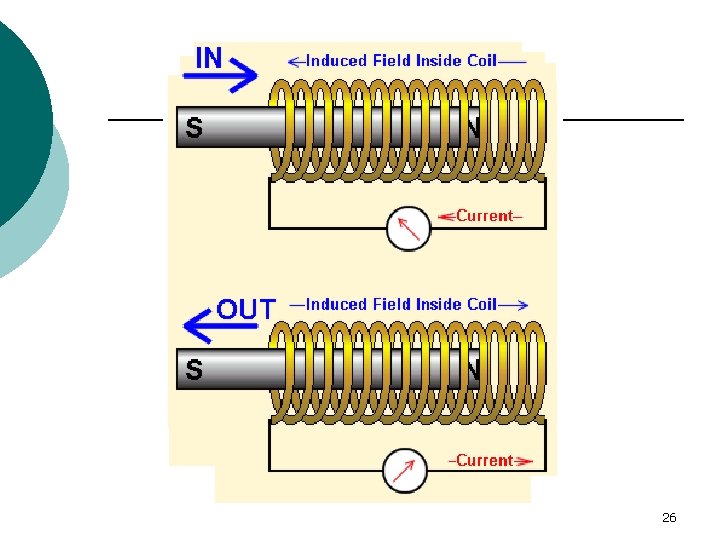
Write this in your notebook. 5. 16 Electromagnetic Induction ¡ Is the process where you use a moving magnetic field to produce an electrical current. (p 171) 25
26
27
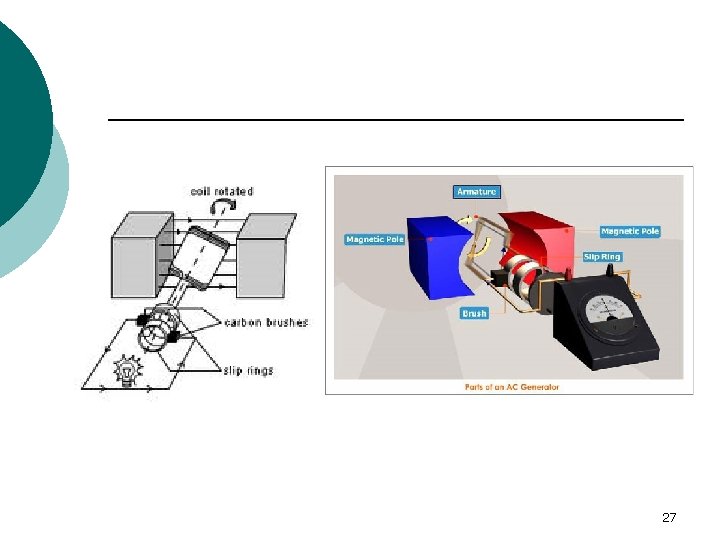
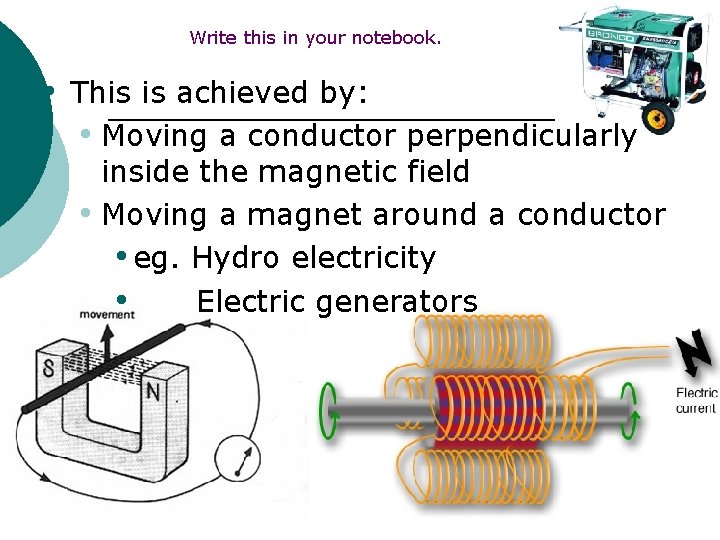
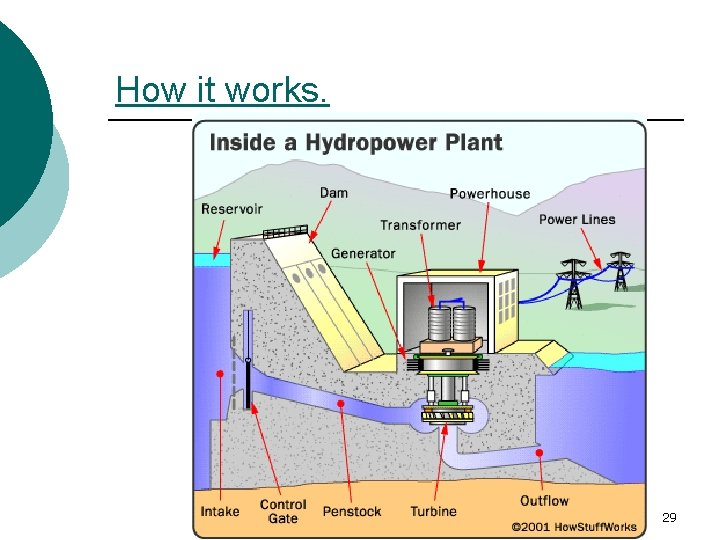
Write this in your notebook. • This is achieved by: • Moving a conductor perpendicularly • inside the magnetic field Moving a magnet around a conductor • eg. Hydro electricity • Electric generators
How it works. 29
Finish for homework if needed ¡ Textbook p 174 21 to 25 30