
WPS ELA ConceptBased Curriculum New Teacher Orientation August
WPS ELA Concept-Based Curriculum New Teacher Orientation August 21, 2018 Dena Mortensen K-5 ELA Supervisor (203) 574 -8088 dmoura@Waterbury. k 12. wt. us
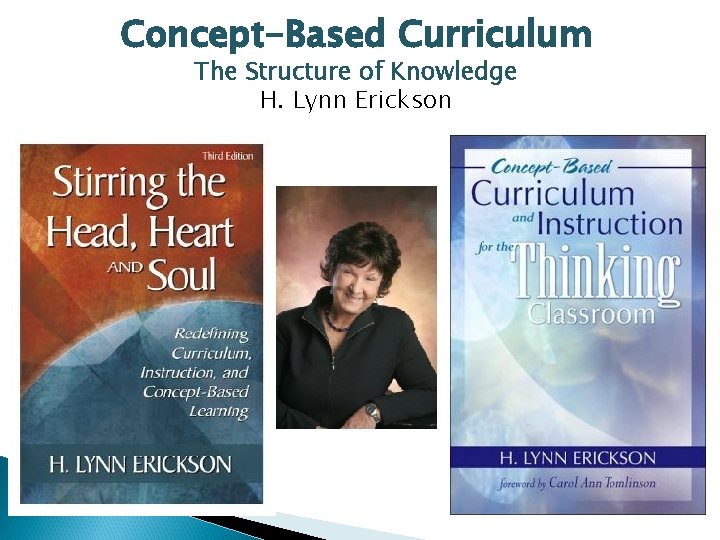
Concept-Based Curriculum The Structure of Knowledge H. Lynn Erickson
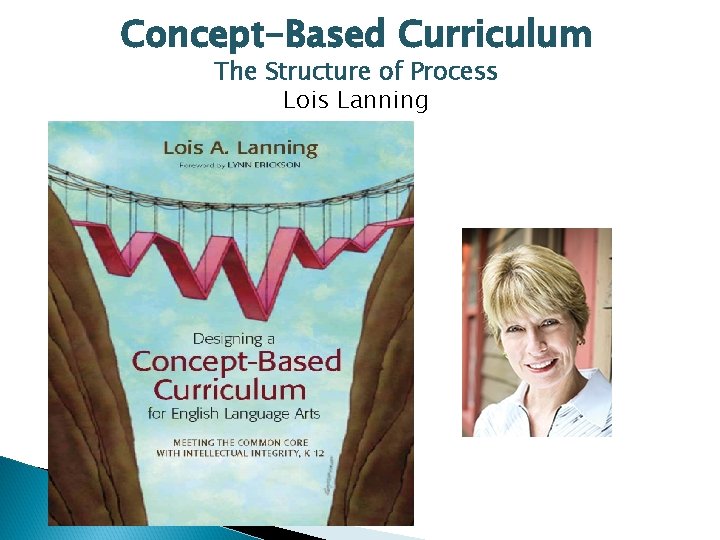
Concept-Based Curriculum The Structure of Process Lois Lanning
What is Concept-Based Curriculum? “A concept-based curriculum includes a focus on the transfer of the important conceptual transfer ideas of a discipline and facilitates synergistic thinking. ” thinking

What is Concept-Based Curriculum? Traditional curriculums are “two-dimensional”. They focus on topics and facts and are locked in time and place. Ex. The Cat in the Hat, Shiloh A concept-based curriculum pulls concepts from the topics and facts to create generalizations (understandings). Concepts and generalizations transfer. This adds the third layer (a higher level of thinking) to make the curriculum “three-dimensional”. Ex. Readers cite text to communicate and support their ideas Synergistic Thinking: Interplay between the factual levels of knowledge and conceptual thinking.
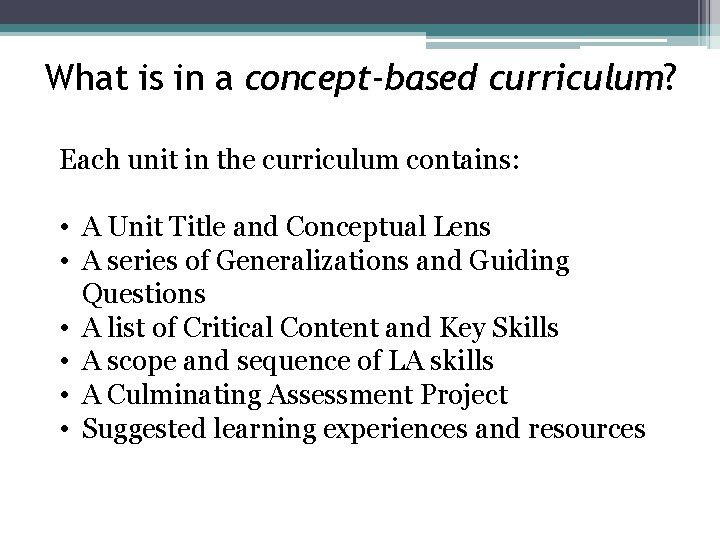
What is in a concept-based curriculum? curriculum Each unit in the curriculum contains: • A Unit Title and Conceptual Lens • A series of Generalizations and Guiding Questions • A list of Critical Content and Key Skills • A scope and sequence of LA skills • A Culminating Assessment Project • Suggested learning experiences and resources
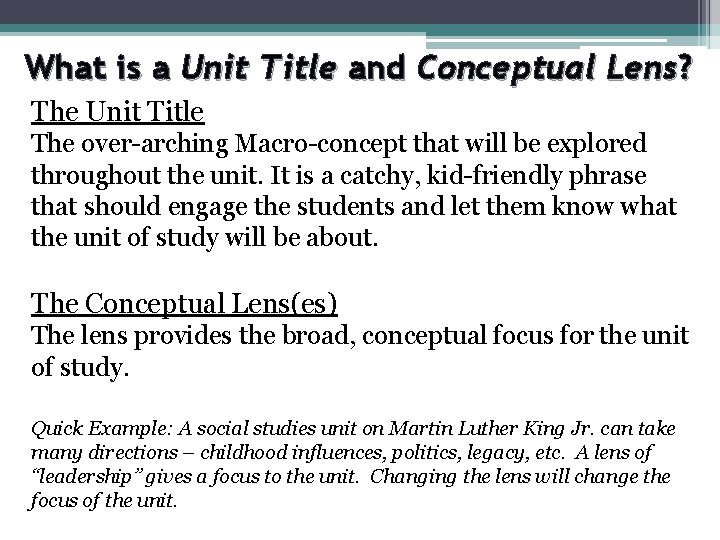
What is a Unit Title and Conceptual Lens? The Unit Title The over-arching Macro-concept that will be explored throughout the unit. It is a catchy, kid-friendly phrase that should engage the students and let them know what the unit of study will be about. The Conceptual Lens(es) The lens provides the broad, conceptual focus for the unit of study. Quick Example: A social studies unit on Martin Luther King Jr. can take many directions – childhood influences, politics, legacy, etc. A lens of “leadership” gives a focus to the unit. Changing the lens will change the focus of the unit.
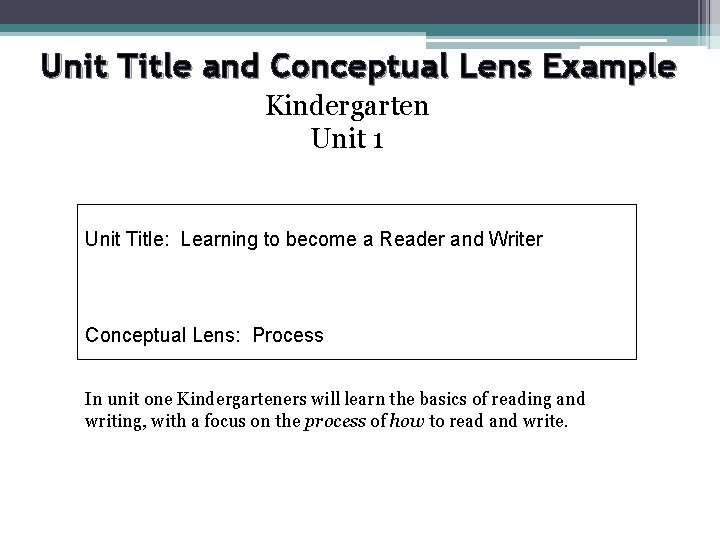
Unit Title and Conceptual Lens Example Kindergarten Unit 1 Unit Title: Learning to become a Reader and Writer Conceptual Lens: Process In unit one Kindergarteners will learn the basics of reading and writing, with a focus on the process of how to read and write.
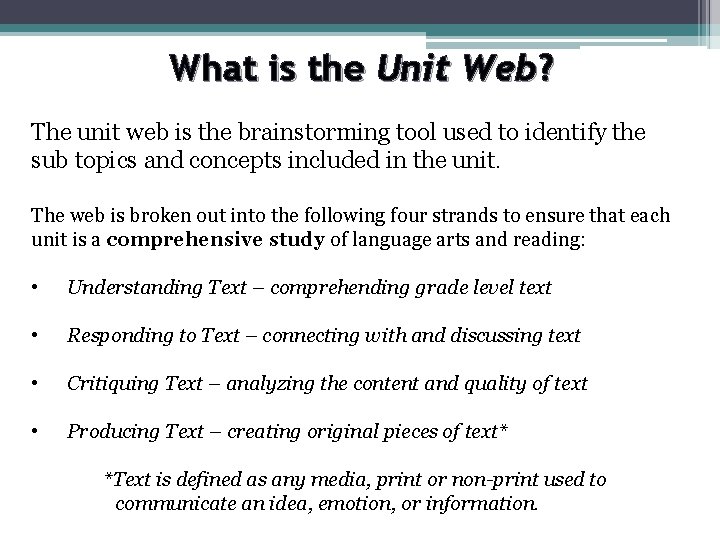
What is the Unit Web? The unit web is the brainstorming tool used to identify the sub topics and concepts included in the unit. The web is broken out into the following four strands to ensure that each unit is a comprehensive study of language arts and reading: • Understanding Text – comprehending grade level text • Responding to Text – connecting with and discussing text • Critiquing Text – analyzing the content and quality of text • Producing Text – creating original pieces of text* *Text is defined as any media, print or non-print used to communicate an idea, emotion, or information.
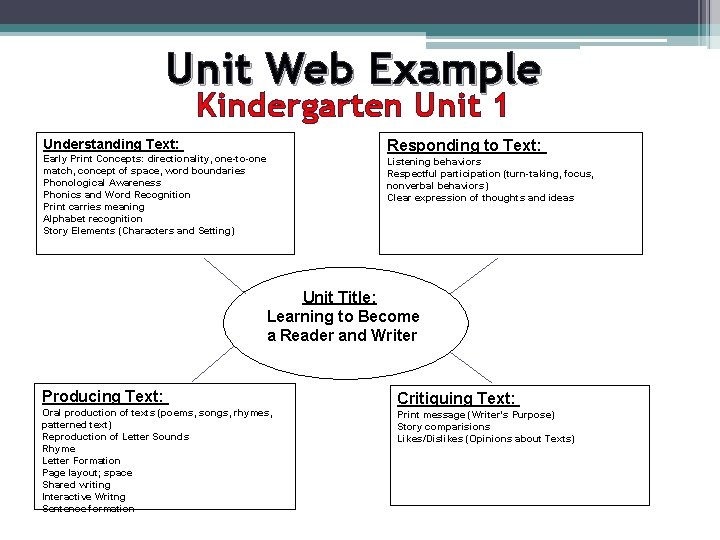
Unit Web Example Kindergarten Unit 1 Understanding Text: Early Print Concepts: directionality, one-to-one match, concept of space, word boundaries Phonological Awareness Phonics and Word Recognition Print carries meaning Alphabet recognition Story Elements (Characters and Setting) Responding to Text: Listening behaviors Respectful participation (turn-taking, focus, nonverbal behaviors) Clear expression of thoughts and ideas Unit Title: Learning to Become a Reader and Writer Producing Text: Oral production of texts (poems, songs, rhymes, patterned text) Reproduction of Letter Sounds Rhyme Letter Formation Page layout; space Shared writing Interactive Writng Sentence formation Critiquing Text: Print message (Writer’s Purpose) Story comparisions Likes/Dislikes (Opinions about Texts)
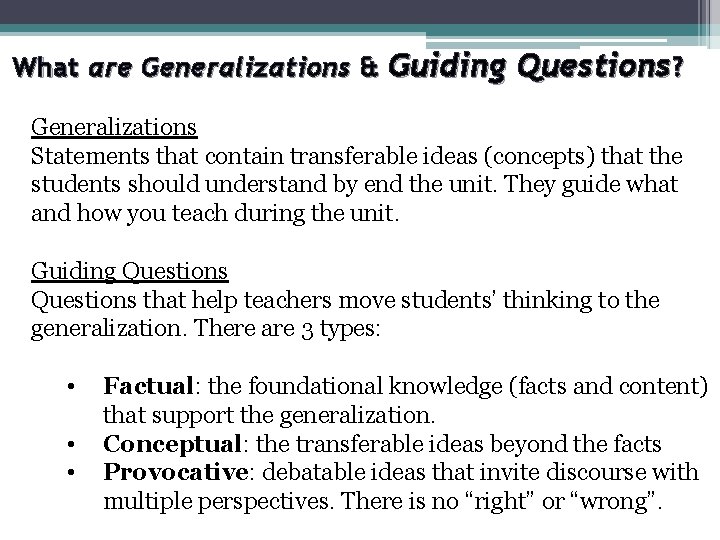
What are Generalizations & Guiding Questions? Generalizations Statements that contain transferable ideas (concepts) that the students should understand by end the unit. They guide what and how you teach during the unit. Guiding Questions that help teachers move students’ thinking to the generalization. There are 3 types: • Factual: the foundational knowledge (facts and content) that support the generalization. • Conceptual: the transferable ideas beyond the facts • Provocative: debatable ideas that invite discourse with multiple perspectives. There is no “right” or “wrong”.
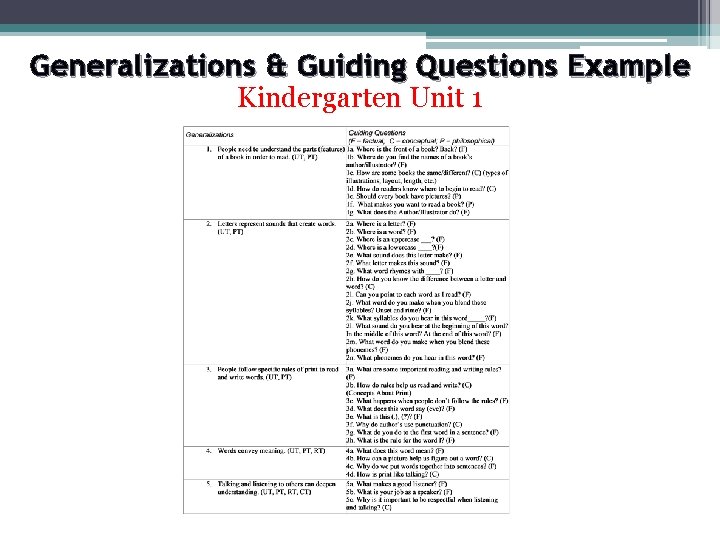
Generalizations & Guiding Questions Example Kindergarten Unit 1
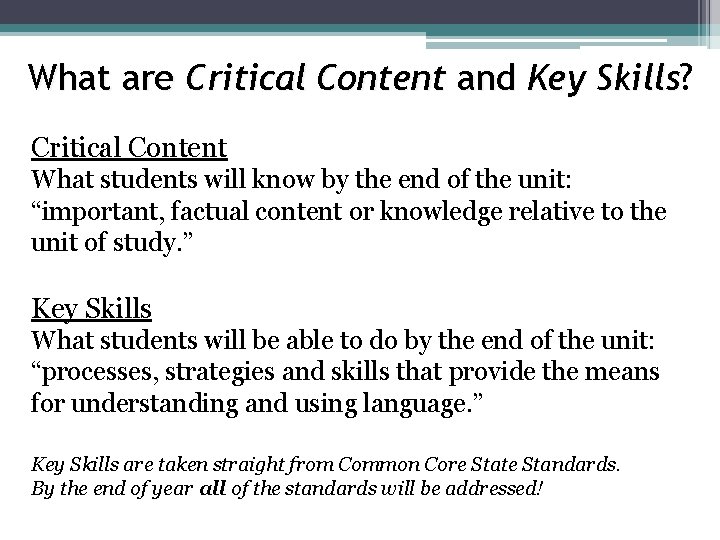
What are Critical Content and Key Skills? Skills Critical Content What students will know by the end of the unit: “important, factual content or knowledge relative to the unit of study. ” Key Skills What students will be able to do by the end of the unit: “processes, strategies and skills that provide the means for understanding and using language. ” Key Skills are taken straight from Common Core State Standards. By the end of year all of the standards will be addressed!
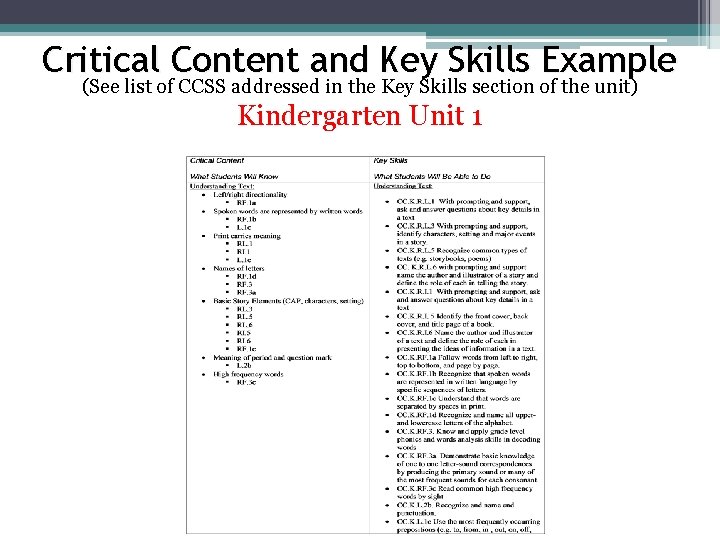
Critical Content and Key Skills Example (See list of CCSS addressed in the Key Skills section of the unit) Kindergarten Unit 1
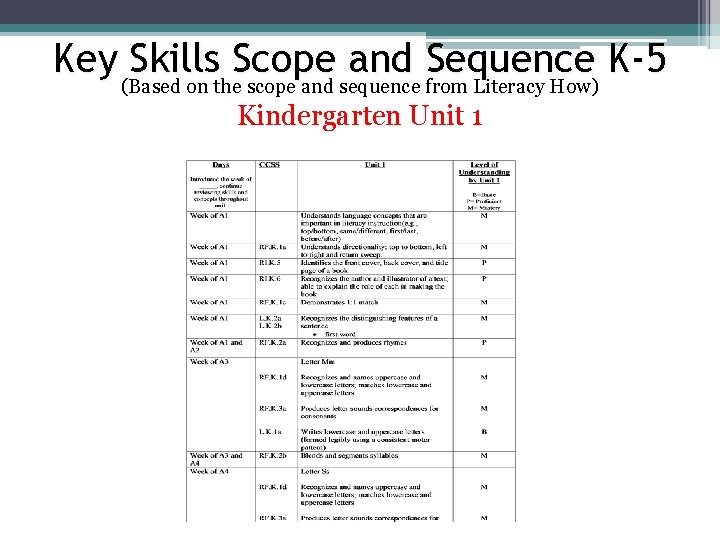
Key Skills Scope and Sequence K-5 (Based on the scope and sequence from Literacy How) Kindergarten Unit 1
What are Suggested Learning Experiences? The Suggested Learning Experiences are ideas and examples of activities to be used when creating lessons. • Suggestions are broken down by generalization to help teachers begin to decide how to teach toward each generalization within the unit. • The suggestions also include ideas to help students build up to the culminating assessment project of the unit. • This section also serves as a pacing guide for the unit.
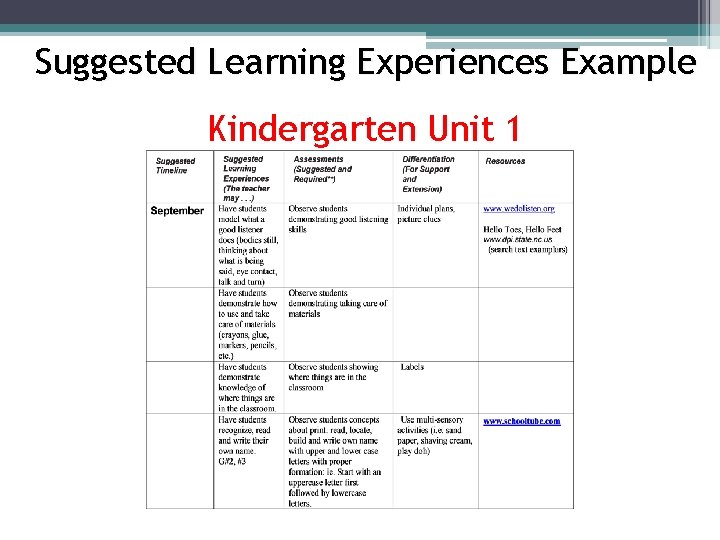
Suggested Learning Experiences Example Kindergarten Unit 1
What is a Culminating Assessment? The Culminating Assessment A required district-wide, multi-step assessment that comes at the end of the unit (at the end of each marking period). Its purpose is to gauge whether the students can demonstrate an understanding of one or two major generalizations (not all of them) as well as critical content and key skills.
Culminating Assessment Example Kindergarten Unit 1 WHAT? Create an “All About Me” book. WHY? in order to understand that … people need to understand the parts (features) of a book in order to read. HOW? Role: All of you authors are ready to create a book now that you have learned so much about how books work. Audience: Your friends and family members will read your book. Format: On the table, you will find 4 pages that will go in your book. Written at the bottom of each page is, “I like to ____. ” You will fill in the word that is missing, draw a picture at the top of each page illustrating what it is you like. When you are finished writing and illustrating, you will assemble your book and get it ready for your audience to read. Remember how the parts of a book go together so people will be able to read it. Topic: Your book will be extra special because it will be “All About You!”
Culminating Assessment Rubric Example Kindergarten Unit 1
Key Points on CBC 1. Know when to use inductive (inquiry) teaching an deductive (explicitly) teaching. 1. Use inductive teaching when leading students toward a concept or generalization (see CBC organizers) 2. Use deductive instruction when explicitly teaching reading/writing skills and strategies. 2. NEVER post or give away the generalizations (understandings) ahead of time. Students have to come to and verbalize the generalization on their own. You can post the generalization stem “I understand that”, but do not post the generalization ahead of time. 3. The ELA lesson plan template is mandatory
Lesson Plan Template (on Share. Point)
Requirements Around Lesson Planning • Lesson Plan template is mandated for all ELA subjects. • Lesson plan template is not required for small group instruction at this time. • Lesson plan template is a draft and will be updated accordingly by the district based on feedback from the teachers. • A more formal lesson plan will follow formal observations/teacher evaluation in accordance with SEED.
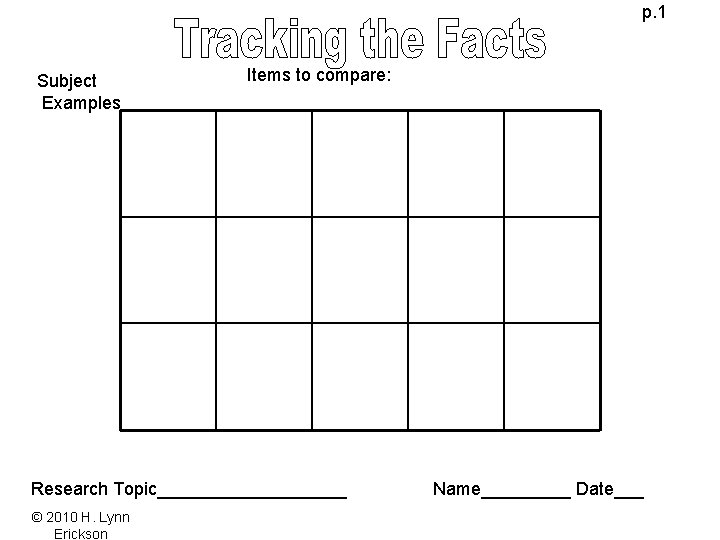
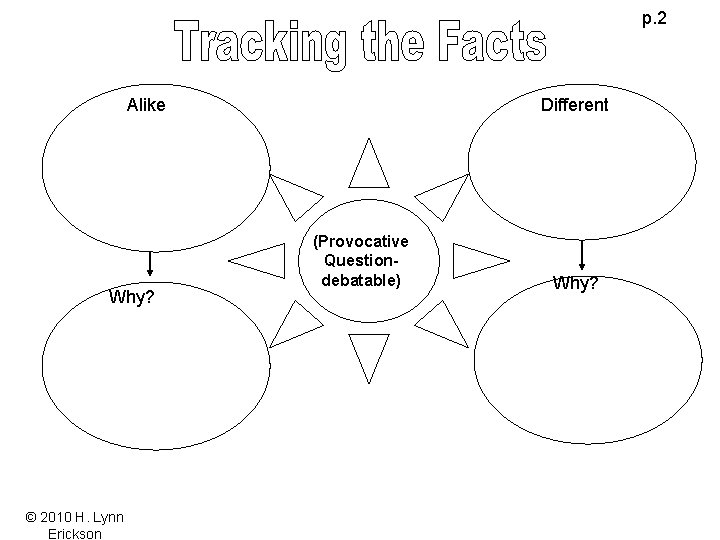
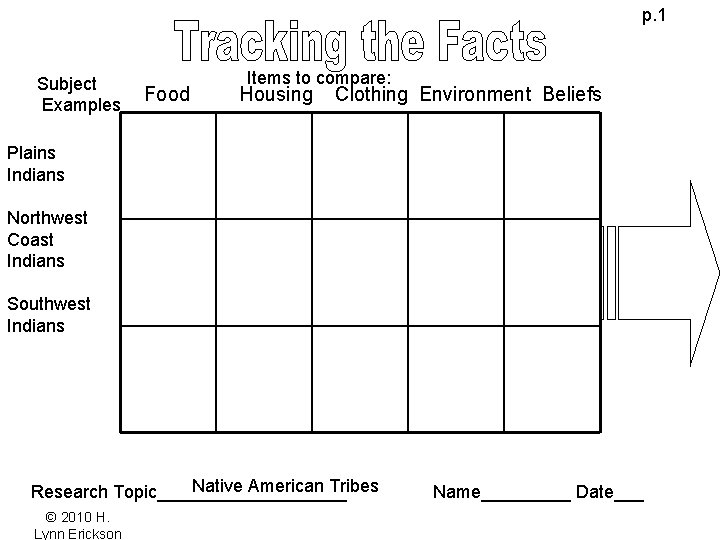
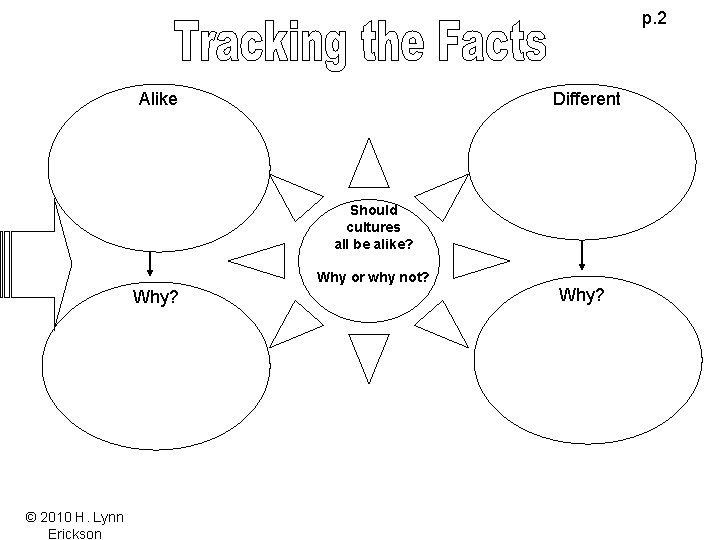
Graphic Organizers for CBC H. Lynn Erickson
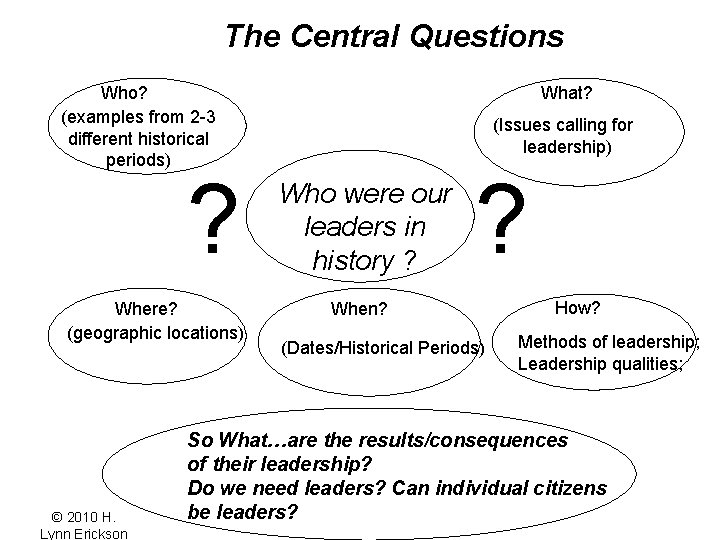
The Central Questions Who? (examples from 2 -3 different historical periods) ? Where? (geographic locations) © 2010 H. Lynn Erickson What? (Issues calling for leadership) Who were our leaders in history ? ? When? (Dates/Historical Periods) How? Methods of leadership; Leadership qualities; So What…are the results/consequences of their leadership? Do we need leaders? Can individual citizens be leaders?
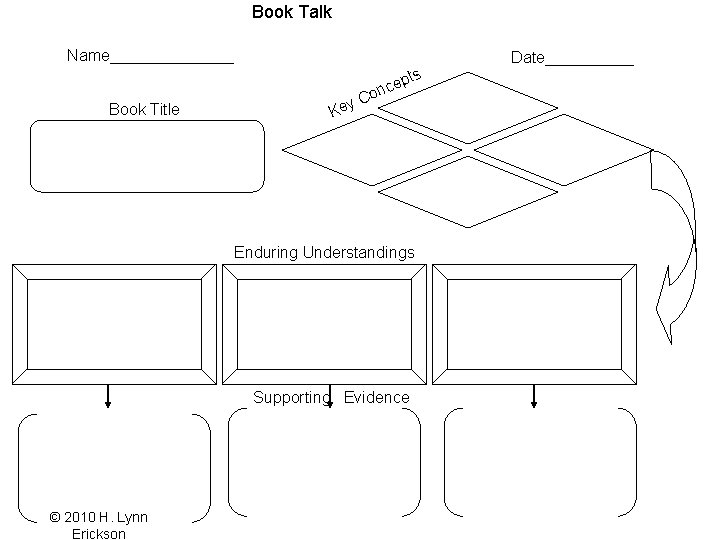
Book Talk Name_______ ts Book Title p nce o y C Ke Enduring Understandings Supporting Evidence © 2010 H. Lynn Erickson Date_____
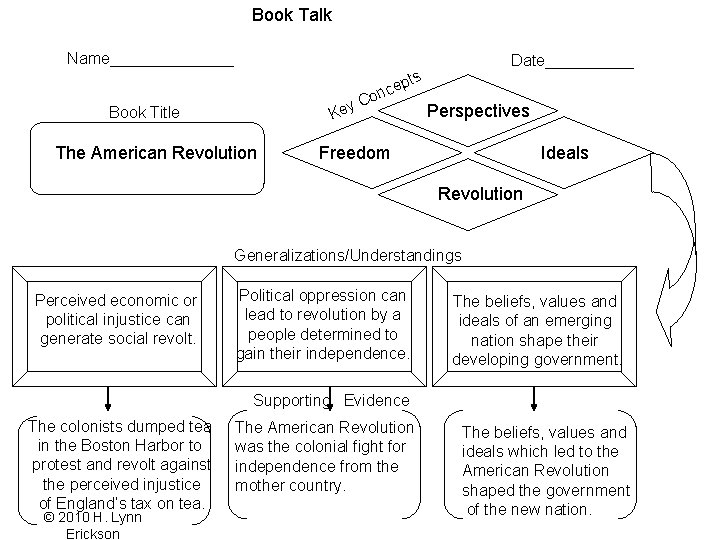
Book Talk Name_______ Date_____ ts p nce o y C Ke Book Title The American Revolution Perspectives Freedom Ideals Revolution Generalizations/Understandings Perceived economic or political injustice can generate social revolt. Political oppression can lead to revolution by a people determined to gain their independence. The beliefs, values and ideals of an emerging nation shape their developing government. Supporting Evidence The colonists dumped tea in the Boston Harbor to protest and revolt against the perceived injustice of England’s tax on tea. © 2010 H. Lynn Erickson The American Revolution was the colonial fight for independence from the mother country. The beliefs, values and ideals which led to the American Revolution shaped the government of the new nation.
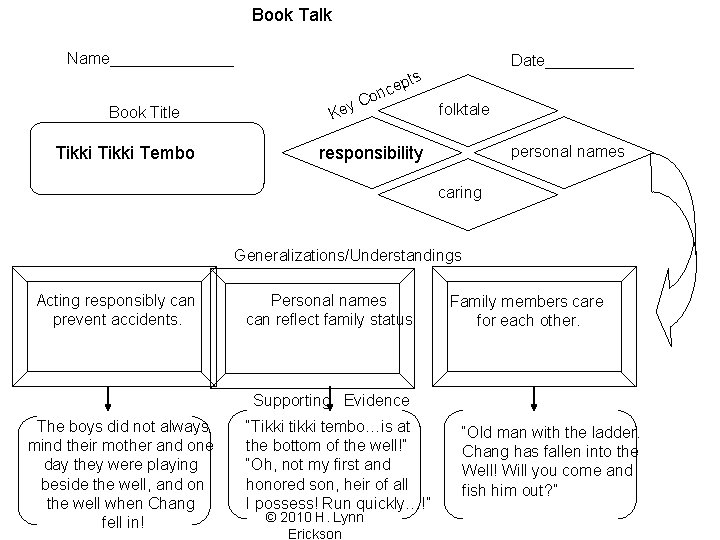
Book Talk Name_______ Date_____ ts Book Title Tikki Tembo p nce o y C Ke folktale personal names responsibility caring Generalizations/Understandings Acting responsibly can prevent accidents. Personal names can reflect family status Family members care for each other. Supporting Evidence The boys did not always mind their mother and one day they were playing beside the well, and on the well when Chang fell in! “Tikki tembo…is at the bottom of the well!” “Oh, not my first and honored son, heir of all I possess! Run quickly…!” © 2010 H. Lynn Erickson “Old man with the ladder. Chang has fallen into the Well! Will you come and fish him out? ”
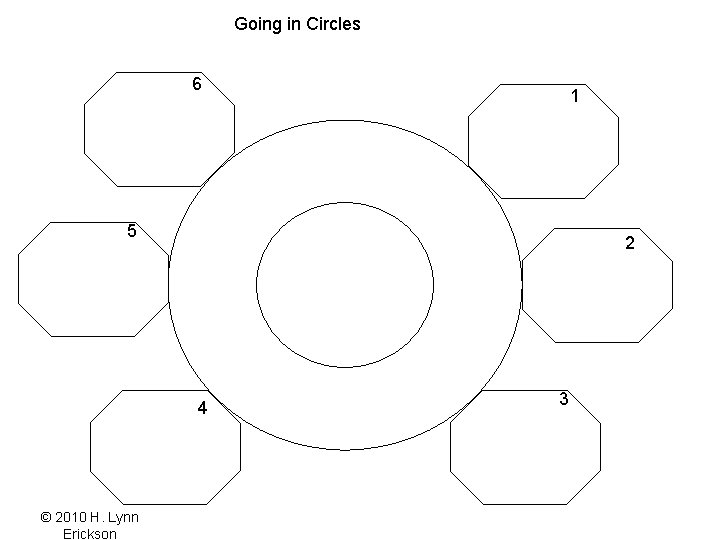
Going in Circles 6 1 5 2 4 © 2010 H. Lynn Erickson 3
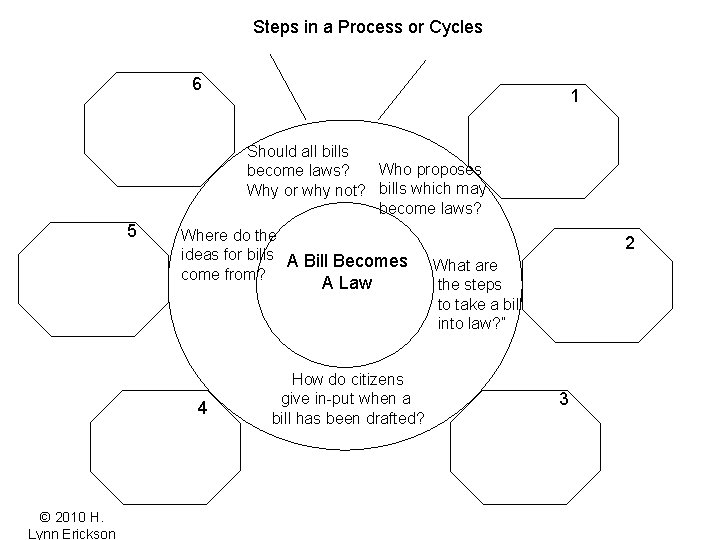
Steps in a Process or Cycles 6 1 Should all bills Who proposes become laws? Why or why not? bills which may become laws? 5 Where do the ideas for bills A Bill Becomes come from? A Law 4 © 2010 H. Lynn Erickson How do citizens give in-put when a bill has been drafted? 2 What are the steps to take a bill into law? ” 3
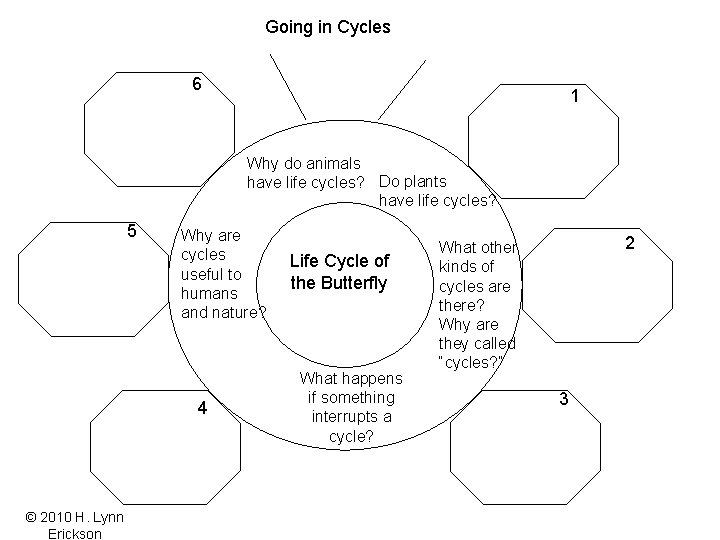
Going in Cycles 6 1 Why do animals have life cycles? Do plants have life cycles? 5 Why are cycles useful to humans and nature? 4 © 2010 H. Lynn Erickson Life Cycle of the Butterfly What happens if something interrupts a cycle? 2 What other kinds of cycles are there? Why are they called “cycles? ” 3
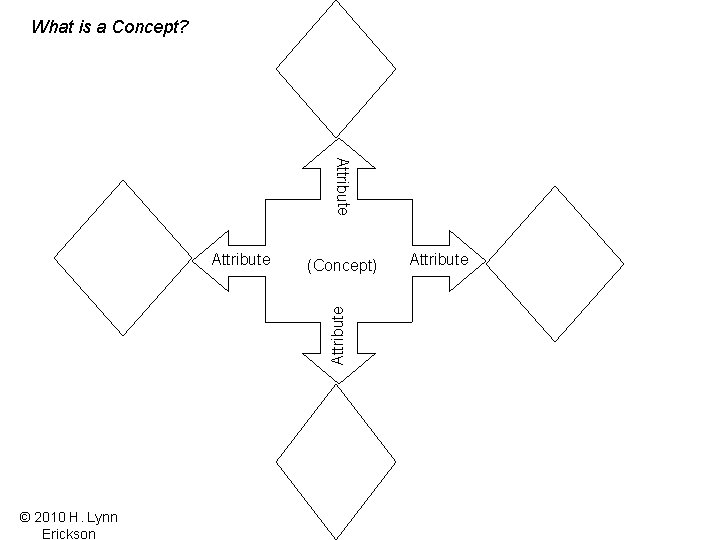
What is a Concept? Attribute (Concept) Attribute © 2010 H. Lynn Erickson Attribute
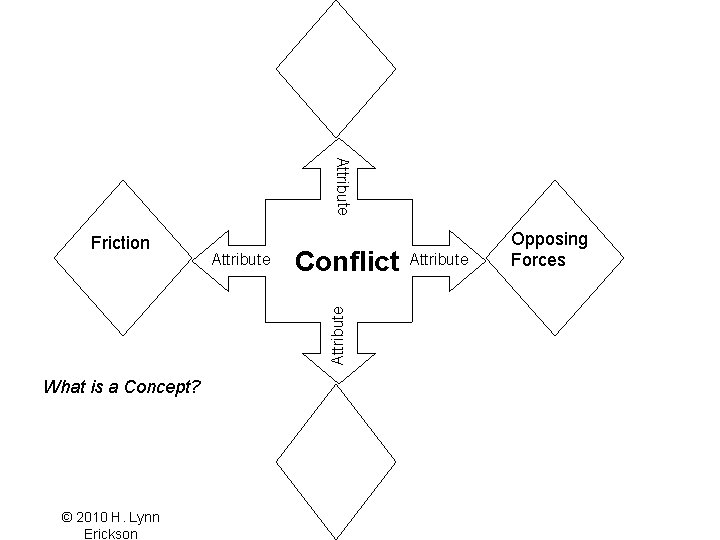
Attribute Conflict Attribute Friction What is a Concept? © 2010 H. Lynn Erickson Attribute Opposing Forces
p. 1 Subject Examples Items to compare: Research Topic__________ © 2010 H. Lynn Erickson Name_____ Date___
p. 2 Alike Why? © 2010 H. Lynn Erickson Different (Provocative Questiondebatable) Why?
p. 1 Items to compare: Subject Food Housing Clothing Environment Beliefs Examples Plains Indians Northwest Coast Indians Southwest Indians Native American Tribes Research Topic__________ © 2010 H. Lynn Erickson Name_____ Date___
p. 2 Alike Different Should cultures all be alike? Why or why not? Why? © 2010 H. Lynn Erickson Why?
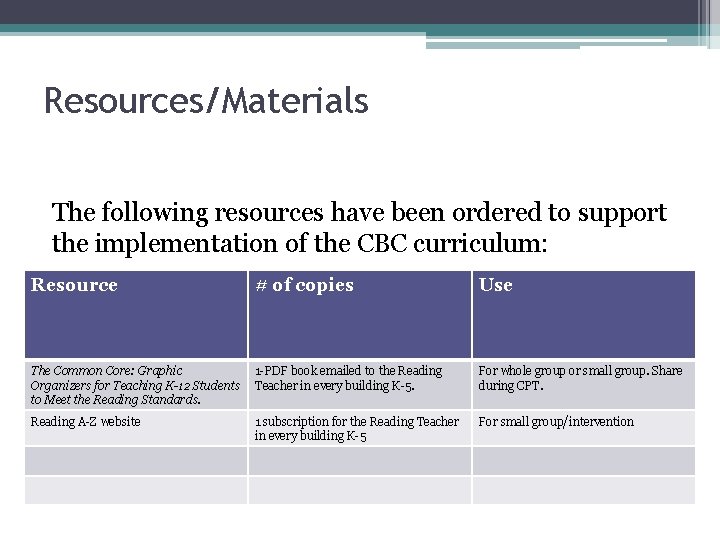
Resources/Materials The following resources have been ordered to support the implementation of the CBC curriculum: Resource # of copies Use The Common Core: Graphic Organizers for Teaching K-12 Students to Meet the Reading Standards. 1 -PDF book emailed to the Reading Teacher in every building K-5. For whole group or small group. Share during CPT. Reading A-Z website 1 subscription for the Reading Teacher in every building K-5 For small group/intervention
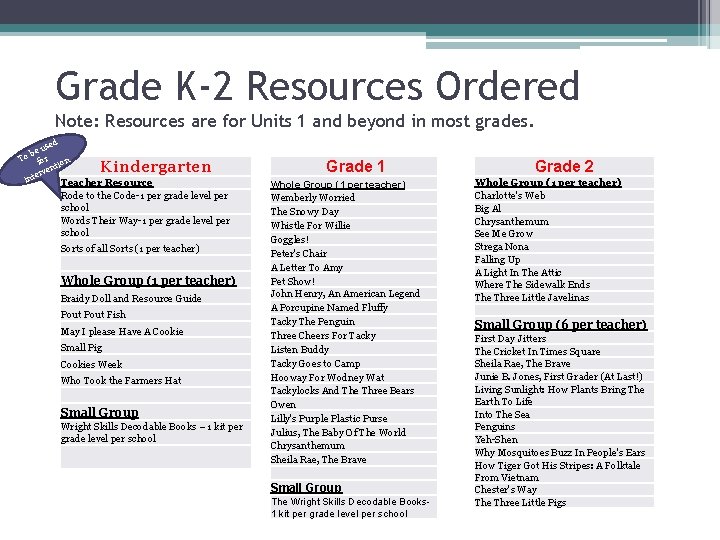
Grade K-2 Resources Ordered Note: Resources are for Units 1 and beyond in most grades. d use e b To for on nti rve e t in Kindergarten Teacher Resource Rode to the Code-1 per grade level per school Words Their Way-1 per grade level per school Sorts of all Sorts (1 per teacher) Whole Group (1 per teacher) Braidy Doll and Resource Guide Pout Fish May I please Have A Cookie Small Pig Cookies Week Who Took the Farmers Hat Small Group Wright Skills Decodable Books – 1 kit per grade level per school Grade 1 Whole Group (1 per teacher) Wemberly Worried The Snowy Day Whistle For Willie Goggles! Peter's Chair A Letter To Amy Pet Show! John Henry, An American Legend A Porcupine Named Fluffy Tacky The Penguin Three Cheers For Tacky Listen Buddy Tacky Goes to Camp Hooway For Wodney Wat Tackylocks And The Three Bears Owen Lilly's Purple Plastic Purse Julius, The Baby Of The World Chrysanthemum Sheila Rae, The Brave Small Group The Wright Skills Decodable Books- 1 kit per grade level per school Grade 2 Whole Group (1 per teacher) Charlotte's Web Big Al Chrysanthemum See Me Grow Strega Nona Falling Up A Light In The Attic Where The Sidewalk Ends The Three Little Javelinas Small Group (6 per teacher) First Day Jitters The Cricket In Times Square Sheila Rae, The Brave Junie B. Jones, First Grader (At Last!) Living Sunlight: How Plants Bring The Earth To Life Into The Sea Penguins Yeh-Shen Why Mosquitoes Buzz In People's Ears How Tiger Got His Stripes: A Folktale From Vietnam Chester's Way The Three Little Pigs
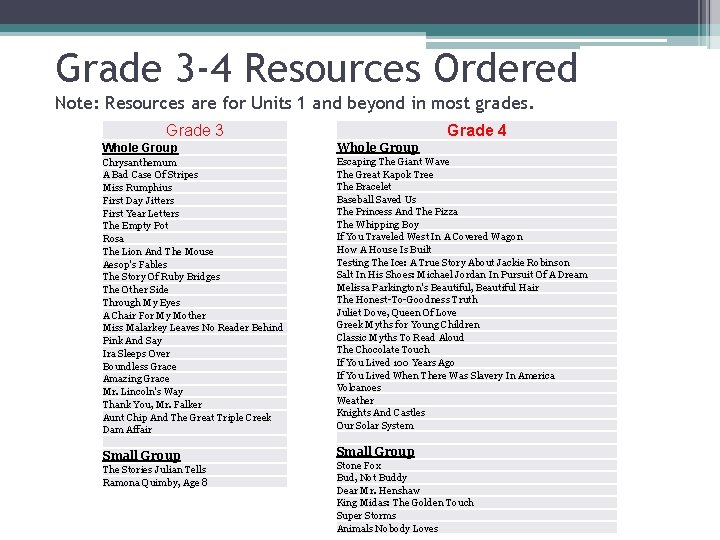
Grade 3 -4 Resources Ordered Note: Resources are for Units 1 and beyond in most grades. Grade 4 Grade 3 Whole Group Chrysanthemum A Bad Case Of Stripes Miss Rumphius First Day Jitters First Year Letters The Empty Pot Rosa The Lion And The Mouse Aesop's Fables The Story Of Ruby Bridges The Other Side Through My Eyes A Chair For My Mother Miss Malarkey Leaves No Reader Behind Pink And Say Ira Sleeps Over Boundless Grace Amazing Grace Mr. Lincoln's Way Thank You, Mr. Falker Aunt Chip And The Great Triple Creek Dam Affair Escaping The Giant Wave The Great Kapok Tree The Bracelet Baseball Saved Us The Princess And The Pizza The Whipping Boy If You Traveled West In A Covered Wagon How A House Is Built Testing The Ice: A True Story About Jackie Robinson Salt In His Shoes: Michael Jordan In Pursuit Of A Dream Melissa Parkington's Beautiful, Beautiful Hair The Honest-To-Goodness Truth Juliet Dove, Queen Of Love Greek Myths for Young Children Classic Myths To Read Aloud The Chocolate Touch If You Lived 100 Years Ago If You Lived When There Was Slavery In America Volcanoes Weather Knights And Castles Our Solar System Small Group The Stories Julian Tells Ramona Quimby, Age 8 Stone Fox Bud, Not Buddy Dear Mr. Henshaw King Midas: The Golden Touch Super Storms Animals Nobody Loves
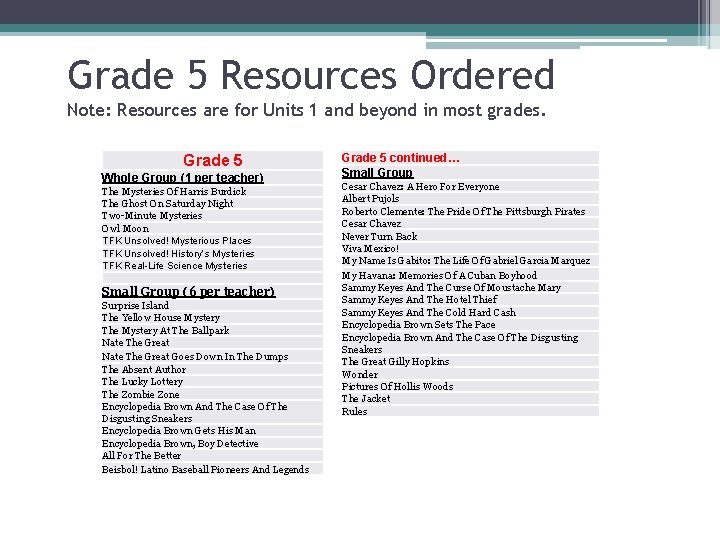
Grade 5 Resources Ordered Note: Resources are for Units 1 and beyond in most grades. Grade 5 Whole Group (1 per teacher) The Mysteries Of Harris Burdick The Ghost On Saturday Night Two-Minute Mysteries Owl Moon TFK Unsolved! Mysterious Places TFK Unsolved! History’s Mysteries TFK Real-Life Science Mysteries Small Group (6 per teacher) Surprise Island The Yellow House Mystery The Mystery At The Ballpark Nate The Great Goes Down In The Dumps The Absent Author The Lucky Lottery The Zombie Zone Encyclopedia Brown And The Case Of The Disgusting Sneakers Encyclopedia Brown Gets His Man Encyclopedia Brown, Boy Detective All For The Better Beisbol! Latino Baseball Pioneers And Legends Grade 5 continued… Small Group Cesar Chavez: A Hero For Everyone Albert Pujols Roberto Clemente: The Pride Of The Pittsburgh Pirates Cesar Chavez Never Turn Back Viva Mexico! My Name Is Gabito: The Life Of Gabriel Garcia Marquez My Havana: Memories Of A Cuban Boyhood Sammy Keyes And The Curse Of Moustache Mary Sammy Keyes And The Hotel Thief Sammy Keyes And The Cold Hard Cash Encyclopedia Brown Sets The Pace Encyclopedia Brown And The Case Of The Disgusting Sneakers The Great Gilly Hopkins Wonder Pictures Of Hollis Woods The Jacket Rules
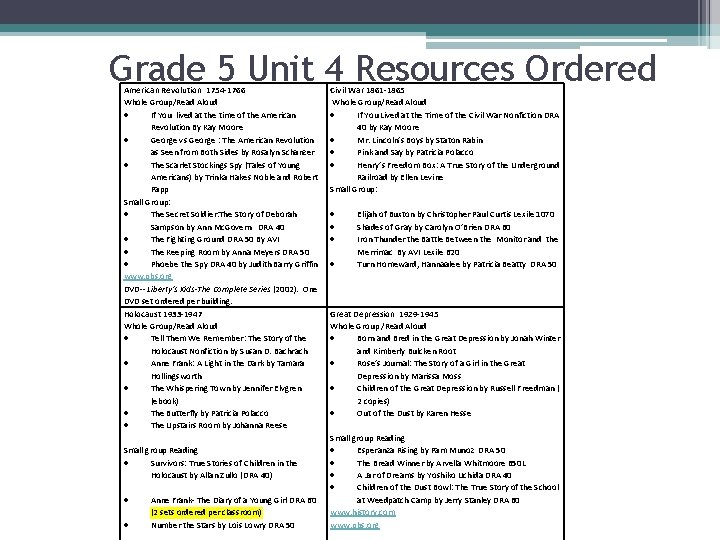
Grade 5 Unit 4 Resources Ordered American Revolution 1754 -1766 Whole Group/Read Aloud If You lived at the time of the American Revolution By Kay Moore George vs George : The American Revolution as Seen from Both Sides by Rosalyn Schanzer The Scarlet Stockings Spy (Tales of Young Americans) by Trinka Hakes Noble and Robert Papp Small Group: The Secret Soldier: The Story of Deborah Sampson by Ann Mc. Govern DRA 40 The Fighting Ground DRA 50 By AVI The Keeping Room by Anna Meyers DRA 50 Phoebe the Spy DRA 40 by Judith Barry Griffin www. pbs. org DVD-- Liberty's Kids-The Complete Series (2002). One DVD set ordered per building. Holocaust 1933 -1947 Whole Group/Read Aloud Tell Them We Remember: The Story of the Holocaust Nonfiction by Susan D. Bachrach Anne Frank: A Light in the Dark by Tamara Hollingsworth The Whispering Town by Jennifer Elvgren (ebook) The Butterfly by Patricia Polacco The Upstairs Room by Johanna Reese Small group Reading Survivors: True Stories of Children in the Holocaust by Allan Zullo (DRA 40) Anne Frank- The Diary of a Young Girl DRA 60 (2 sets ordered per classroom) Number the Stars by Lois Lowry DRA 50 Civil War 1861 -1865 Whole Group/Read Aloud If You Lived at the Time of the Civil War Nonfiction DRA 40 by Kay Moore Mr. Lincoln’s Boys by Staton Rabin Pink and Say by Patricia Polacco Henry’s Freedom Box: A True Story of the Underground Railroad by Ellen Levine Small Group: Elijah of Buxton by Christopher Paul Curtis Lexile 1070 Shades of Gray by Carolyn O’Brien DRA 60 Iron Thunder the Battle Between the Monitor and the Merrimac By AVI Lexile 620 Turn Homeward, Hannaalee by Patricia Beatty DRA 50 Great Depression 1929 -1945 Whole Group /Read Aloud Born and Bred in the Great Depression by Jonah Winter and Kimberly Bulcken Root Rose’s Journal: The Story of a Girl in the Great Depression by Marissa Moss Children of the Great Depression by Russell Freedman ( 2 copies) Out of the Dust by Karen Hesse Small group Reading Esperanza Rising by Pam Munoz DRA 50 The Bread Winner by Arvella Whitmoore 650 L A Jar of Dreams by Yoshiko Uchida DRA 40 Children of the Dust Bowl: The True Story of the School at Weedpatch Camp by Jerry Stanley DRA 60 www. history. com www. pbs. org
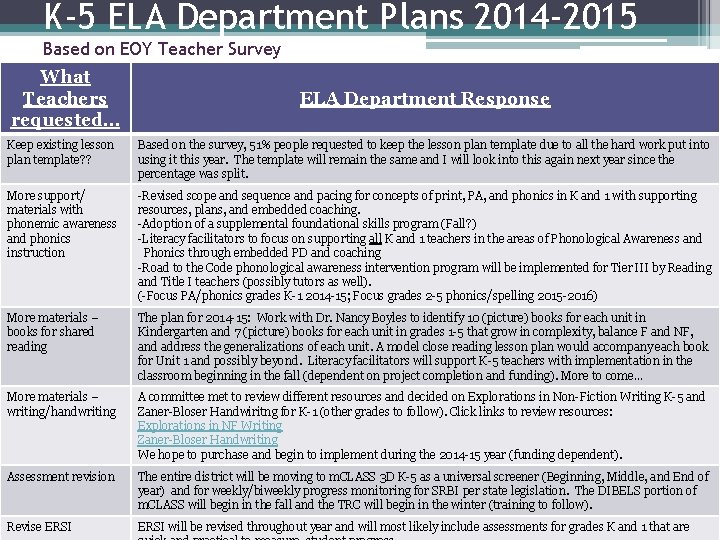
K-5 ELA Department Plans 2014 -2015 Based on EOY Teacher Survey What Teachers requested… ELA Department Response Keep existing lesson plan template? ? Based on the survey, 51% people requested to keep the lesson plan template due to all the hard work put into using it this year. The template will remain the same and I will look into this again next year since the percentage was split. More support/ materials with phonemic awareness and phonics instruction -Revised scope and sequence and pacing for concepts of print, PA, and phonics in K and 1 with supporting resources, plans, and embedded coaching. -Adoption of a supplemental foundational skills program (Fall? ) -Literacy facilitators to focus on supporting all K and 1 teachers in the areas of Phonological Awareness and Phonics through embedded PD and coaching -Road to the Code phonological awareness intervention program will be implemented for Tier III by Reading and Title I teachers (possibly tutors as well). (-Focus PA/phonics grades K-1 2014 -15; Focus grades 2 -5 phonics/spelling 2015 -2016) More materials – books for shared reading The plan for 2014 -15: Work with Dr. Nancy Boyles to identify 10 (picture) books for each unit in Kindergarten and 7 (picture) books for each unit in grades 1 -5 that grow in complexity, balance F and NF, and address the generalizations of each unit. A model close reading lesson plan would accompany each book for Unit 1 and possibly beyond. Literacy facilitators will support K-5 teachers with implementation in the classroom beginning in the fall (dependent on project completion and funding). More to come… More materials – writing/handwriting A committee met to review different resources and decided on Explorations in Non-Fiction Writing K-5 and Zaner-Bloser Handwiritng for K-1 (other grades to follow). Click links to review resources: Explorations in NF Writing Zaner-Bloser Handwriting We hope to purchase and begin to implement during the 2014 -15 year (funding dependent). Assessment revision The entire district will be moving to m. CLASS 3 D K-5 as a universal screener (Beginning, Middle, and End of year) and for weekly/biweekly progress monitoring for SRBI per state legislation. The DIBELS portion of m. CLASS will begin in the fall and the TRC will begin in the winter (training to follow). Revise ERSI will be revised throughout year and will most likely include assessments for grades K and 1 that are
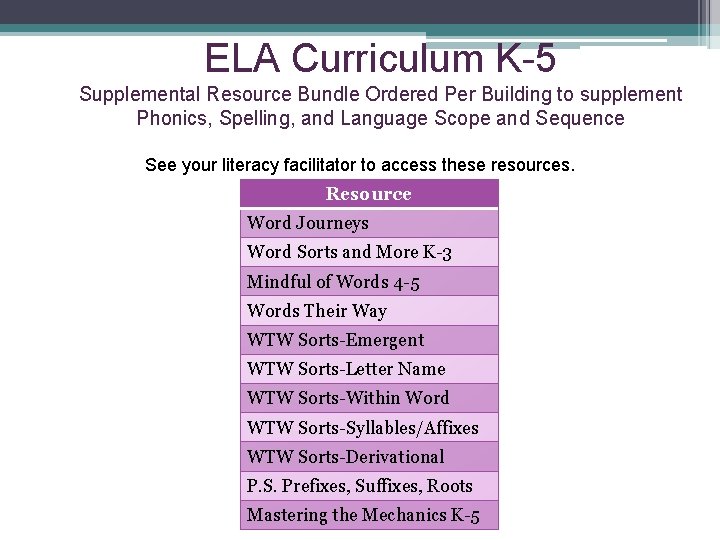
ELA Curriculum K-5 Supplemental Resource Bundle Ordered Per Building to supplement Phonics, Spelling, and Language Scope and Sequence See your literacy facilitator to access these resources. Resource Word Journeys Word Sorts and More K-3 Mindful of Words 4 -5 Words Their Way WTW Sorts-Emergent WTW Sorts-Letter Name WTW Sorts-Within Word WTW Sorts-Syllables/Affixes WTW Sorts-Derivational P. S. Prefixes, Suffixes, Roots Mastering the Mechanics K-5
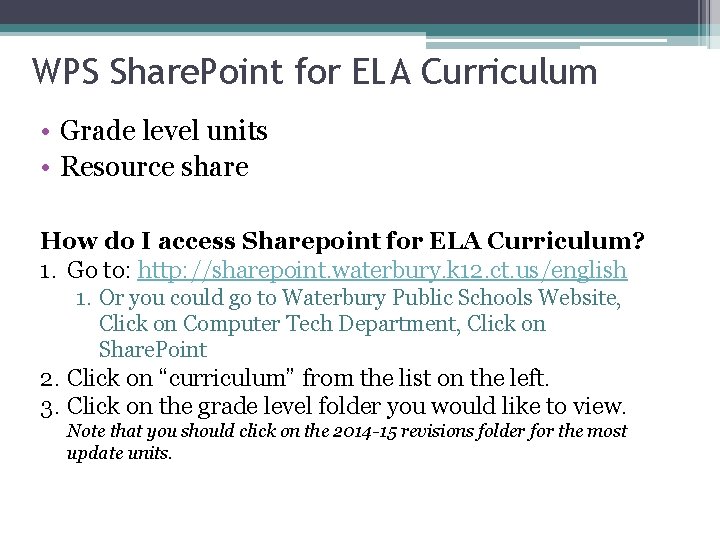
WPS Share. Point for ELA Curriculum • Grade level units • Resource share How do I access Sharepoint for ELA Curriculum? 1. Go to: http: //sharepoint. waterbury. k 12. ct. us/english 1. Or you could go to Waterbury Public Schools Website, Click on Computer Tech Department, Click on Share. Point 2. Click on “curriculum” from the list on the left. 3. Click on the grade level folder you would like to view. Note that you should click on the 2014 -15 revisions folder for the most update units.
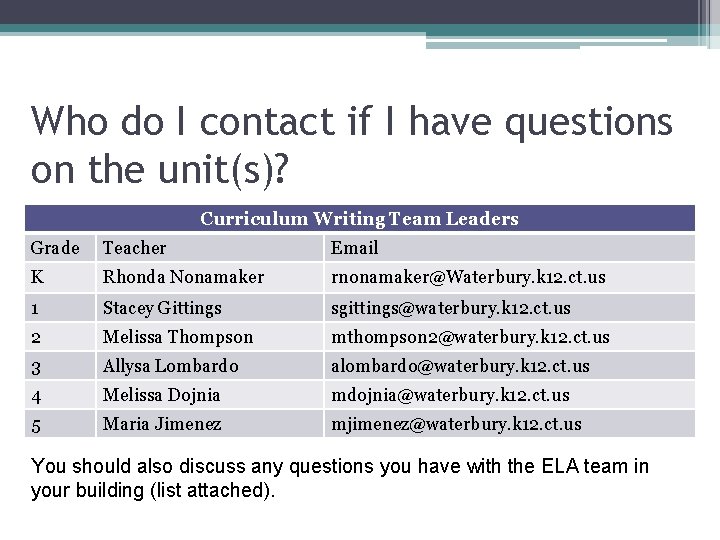
Who do I contact if I have questions on the unit(s)? Curriculum Writing Team Leaders Grade Teacher Email K Rhonda Nonamaker rnonamaker@Waterbury. k 12. ct. us 1 Stacey Gittings sgittings@waterbury. k 12. ct. us 2 Melissa Thompson mthompson 2@waterbury. k 12. ct. us 3 Allysa Lombardo alombardo@waterbury. k 12. ct. us 4 Melissa Dojnia mdojnia@waterbury. k 12. ct. us 5 Maria Jimenez mjimenez@waterbury. k 12. ct. us You should also discuss any questions you have with the ELA team in your building (list attached).
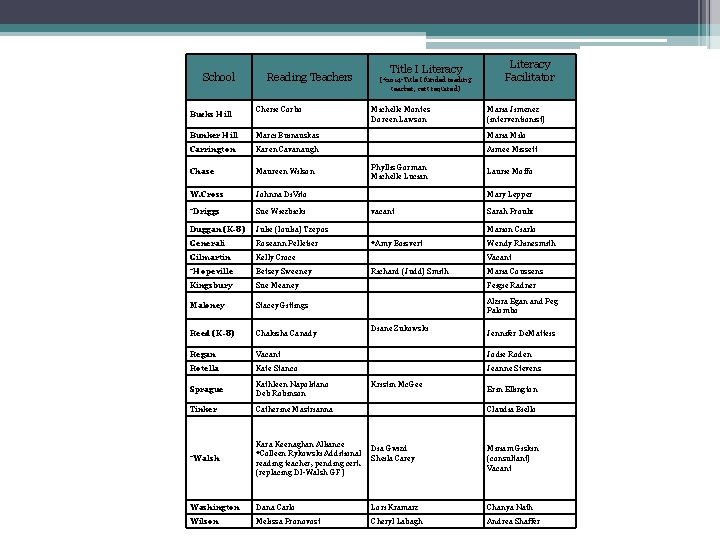
School Title I Literacy Reading Teachers (*2014 -Title I funded reading teacher, cert required) Literacy Facilitator Bucks Hill Cherie Corbo Michelle Montes Doreen Lawson Maria Jimenez (interventionist) Bunker Hill Marci Buinauskas Maria Milo Carrington Karen Cavanaugh Aimee Missett Chase Maureen Wilson Phyllis Gorman Michelle Lucian Laurie Moffo W. Cross Johnna Di. Vito Mary Lepper *Driggs Sue Wiezbicki vacant Sarah Proulx Duggan (K-8) Julie (Ioulia) Tzepos Marion Ciarlo Generali Roseann Pelletier *Amy Boisvert Wendy Rhinesmith Gilmartin Kelly Croce Vacant *Hopeville Betsey Sweeney Richard (Judd) Smith Maria Coussens Kingsbury Sue Meaney Feigie Radner Maloney Stacey Gittings Alzira Egan and Peg Palombo Reed (K-8) Chakisha Canady Diane Zukowski Jennifer De. Matteis Regan Vacant Jodie Roden Rotella Kate Stanco Jeanne Stevens Sprague Kathleen Napolitano Deb Robinson Kristin Mc. Gee Erin Ellington Tinker Catherine Mastrianna Claudia Biello *Walsh Kara Keenaghan Alliance *Colleen Rykowski Additional reading teacher, pending cert. (replacing DI-Walsh GF ) Dia Gwizd Sheila Carey Miriam Giskin (consultant) Vacant Washington Dana Carlo Lori Kramarz Chanya Nath Wilson Melissa Pronovost Cheryl Labagh Andrea Shaffer
ELA District-Wide Assessments • Beginning, Middle, and End of Year Universal Screening with m. CLASS (see district assessment calendar) • End of unit (marking period) culminating assessments • Spring administration of SBAC
Happy Teaching!!
- Slides: 49