
wounds Definition A wound is any type of


- Slides: 29
wounds
Definition: A wound is any type of injury to the skin or underlying tissues.
In general, wounds can be either open or closed. In open wounds, the skin is broken and the underlying tissue is exposed to the outside environment. In closed wounds, the skin is intact and the underlying tissue is not directly exposed to the outside world. Although open wounds can bleed and run the risk of infections, closed wounds can also be dangerous depending on the extent of tissue damage.
Classification of wounds 1 - according to the wound situations : A- open wounds. B- closed wounds.
Open Wounds : - There are six major categories of wounds; each is distinctive in its appearance and the source of the injury: 1 - Incision w. 2 - Abrasion w. 3 - Avulsion w. 4 - Laceration w. 5 - Puncture/bite w. 6 - Gunshot w.
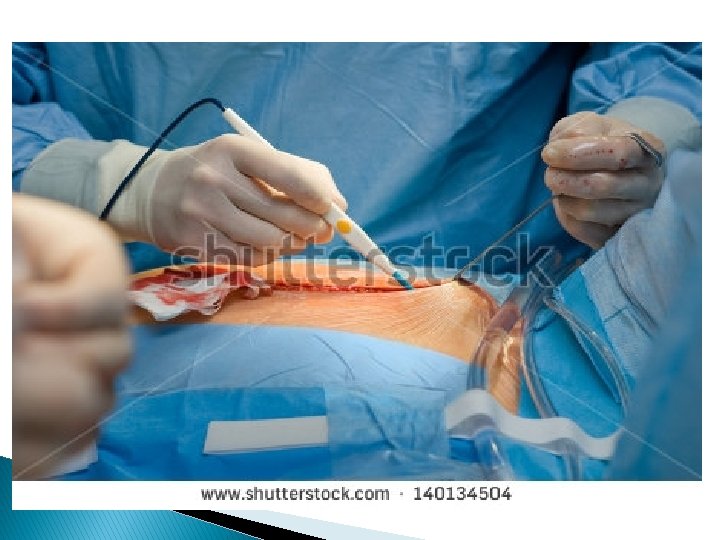
1 -Incisional wound � An incision wound is a cut in the skin caused by a sharp object such as a knife, broken glass, scissors or surgeon’s scalpel. Incision wounds are ‘neat’ and the edges of the skin are usually smooth, the wounds also called surgical wounds.
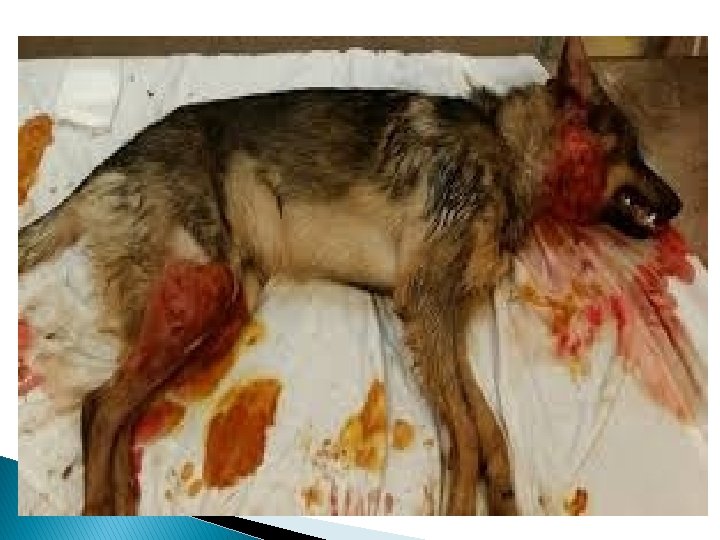
2 -Abrasion Wounds � These do not break the skin, but they can be very painful. Most commonly, abrasion occurs when a dog gets hit by a car and thrown onto the road -- this type of wound is known as "road rash. " Abrasions also result from dogfights, in which toenails and teeth may scrape the skin without breaking it. The worst abrasions occur when a dog is dragged by an automobile. Abrasions may or may not bleed, but they should receive veterinary attention as soon as possible.
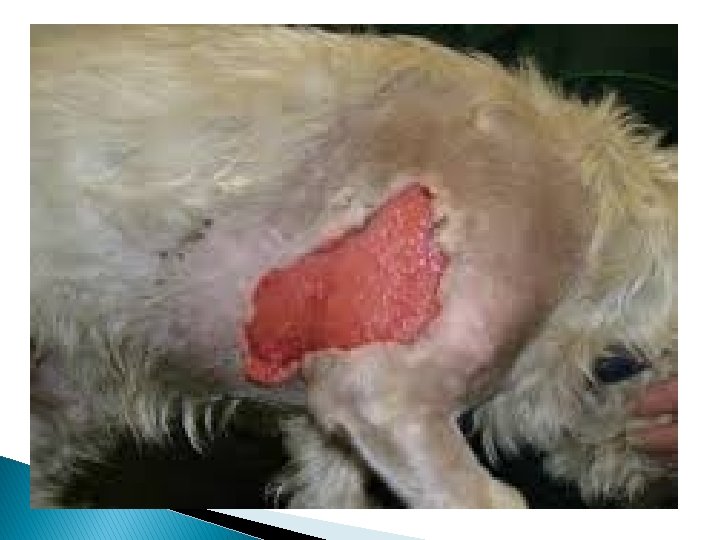
3 - Avulsion wounds � These are wounds in which a piece of tissue is torn away from the body. The most common types are avulsions of the dew claws or toes caused -- yet again -- by encounters with motor vehicles and dogfights. Although avulsions can bleed a lot, they generally are not life threatening.
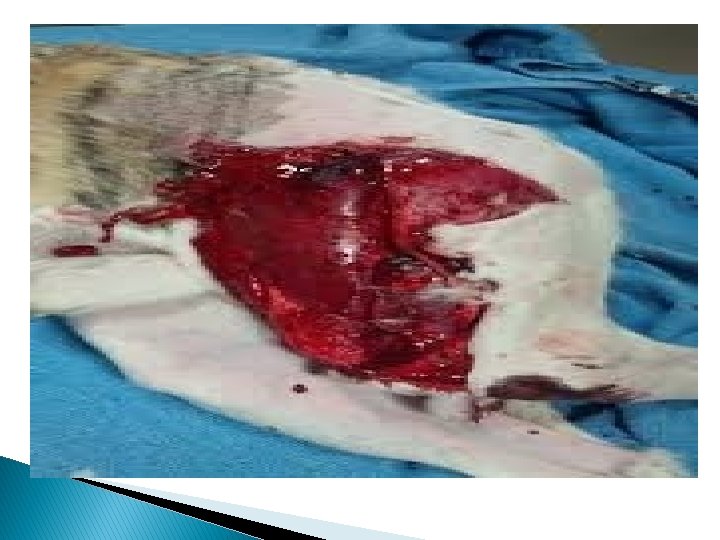
4 - Laceration Wounds � These involve cutting or tearing of the skin. Lacerations can be any size-- from half an inch to a foot or longer. Common sites of lacerations are the paw pads and the trunk. Most lacerations result from dogfights, although other causes include encounters with sharp glass, jumping over or crawling under fences, running into barbed wire and running through plate glass windows. Lacerations usually bleed profusely and require immediate medical attention.
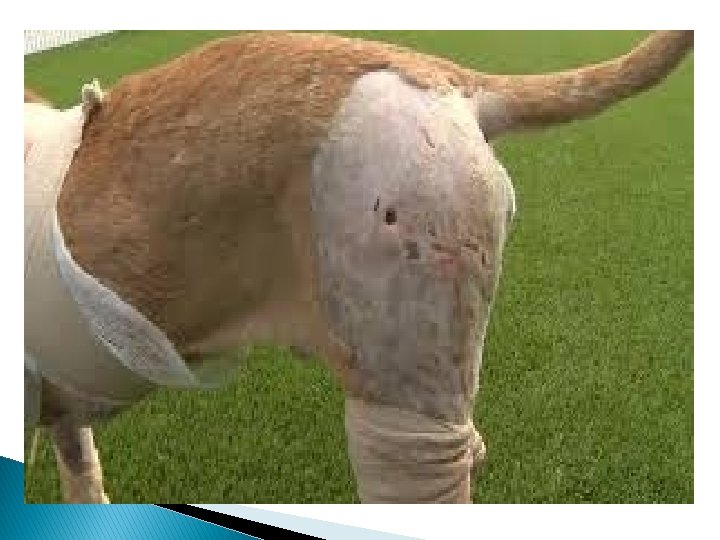
5 - Puncture wounds � These are wounds that penetrate the skin and often continue deeper into the underlying tissues -- without making a large hole. Most puncture wounds are so small that they can easily be overlooked, yet they can be more dangerous than an open laceration because they have a tendency to form pockets of pus (abscesses). The source of the puncture -perhaps a nail, a thorn or a sharp canine tooth -- carries bacteria and a small plug of skin deep into your dogs tissues. sealing the bacteria and foreign material deep inside and setting up the conditions for a painful abscess.
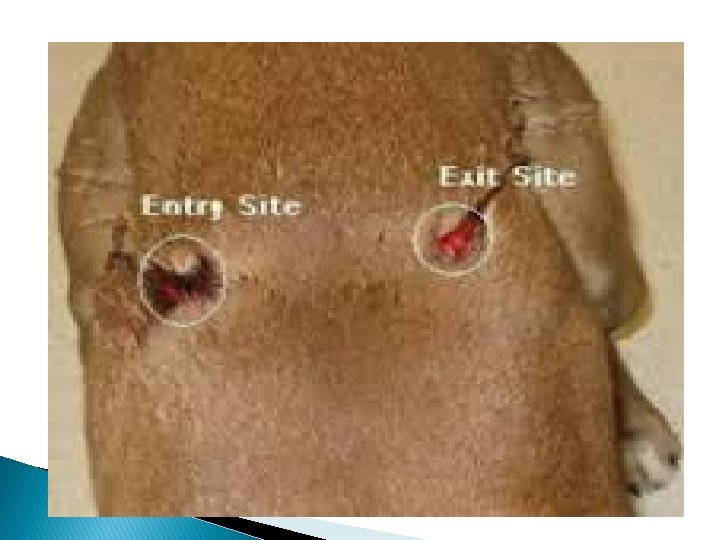
6 - Gunshot Wounds These are becoming more frequent -surprising as that may seem. Often, as with puncture wounds, the entrance wound is quite small, and you may be unaware that your dog has been shot. Tissue damage depends on the size and velocity of the bullet. , lacerate the lungs and penetrate the abdomen. If your dog has an entrance wound in the abdomen, she should receive exploratory surgery as soon as possible so that any holes in her gut can be repaired before massive abdominal infection (peritonitis) sets in.
Closed Wounds : Major types of closed wounds are: 1 - Contusion W. 2 - Hematomas W. 3 - Crush injuries.
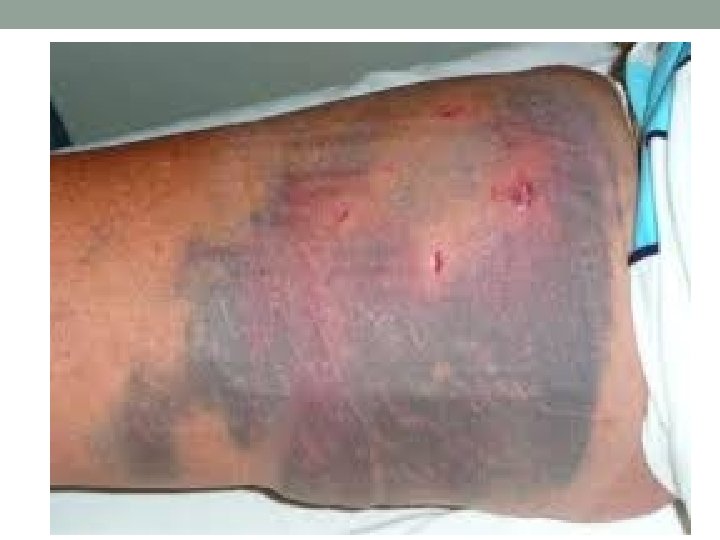
1 - Contusion Wound These are a common type of sports injury, where a direct blunt trauma can damage the small blood vessels and capillaries, muscles and underlying tissue, as well the internal organs and, in some cases, bone. Contusions present as a painful bruise with reddish to bluish discoloration that spreads over the injured area of skin.
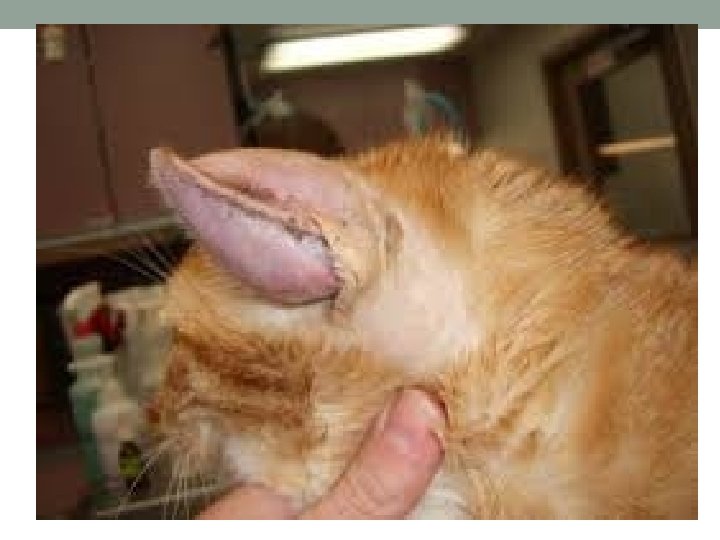
2 - Hematomas wound These include any injury that damages the small blood vessels and capillaries resulting in blood collecting and pooling in a limited space. Hematomas typically present as a painful, spongey rubbery lump-like lesion. Hematomas can be small or large, deep inside the body or just under the skin; depending on the severity and site of the trauma.
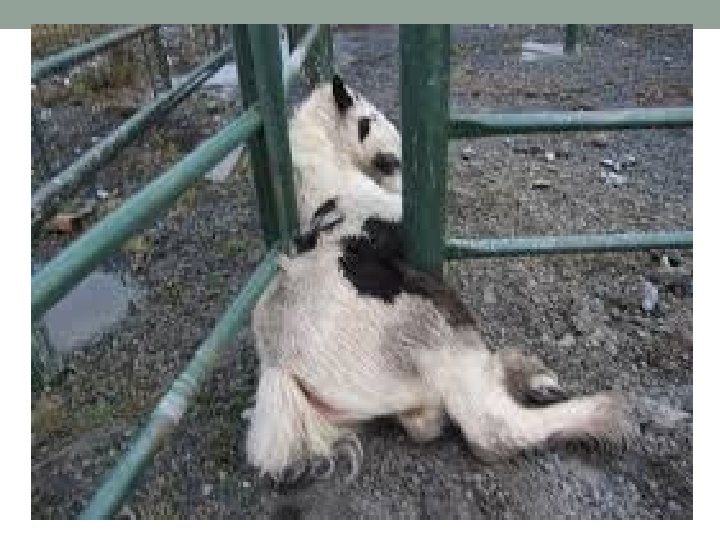
3 - Crush injuries These are usually caused by an external high pressure force that squeezes part of the body between two surfaces. The degree of injury and pain can range from a minor bruise to a complete destruction of the crushed area of the body, depending on the site, size, duration and power of the trauma.
2 -According to level of contamination a wound can be classified as: A- Clean wounds. B- Class I/Contaminated wounds. C- Class II/Contaminated wounds. D- Class III/Dirty OR Infected wounds.
Wound Treatments Treatment is different for each type of wound. However, all wound treatment must include the following: Cleansing with regular tap water to remove all foreign materials. When possible, the wound should be washed with soap. Some wounds may need flushing with medical syringes, while others may need surgical debridement to remove foreign materials or dead tissue.
Treatment should also include proper wound care and dressing, and the application of local antibiotics where needed. Some anti-inflammatory medicine and pain killers might also be prescribed to reduce discomfort and improve quality of life. If the last tetanus shot was given five or more years prior, it is recommended that a wound patient receive a new tetanus shot or a booster; especially in cases of human or animal bites, or dirty wounds
Wound healing The wound healing continuum is divided into three phases: Inflammation, Proliferation, And Maturation. During the inflammatory phase, inflammation is initiated within the wounded tissue, and this event is followed closely by removal of wound contaminants and damaged or dead tissue. The proliferative phase represents the phase of repair of wounded tissue during which blood flow, components of the extracellular matrix, and the epithelial covering of the wound are all restored. Maturation, sometimes termed the Remodeling Phase, is dominated by reorganization of collagen and return of some level of pre-wound tissue strength.
Thank You For Good Attention