
WOUNDS BURNS What is a WOUND An Injury
WOUNDS BURNS
What is a WOUND? An Injury to the Soft Tissue Area.
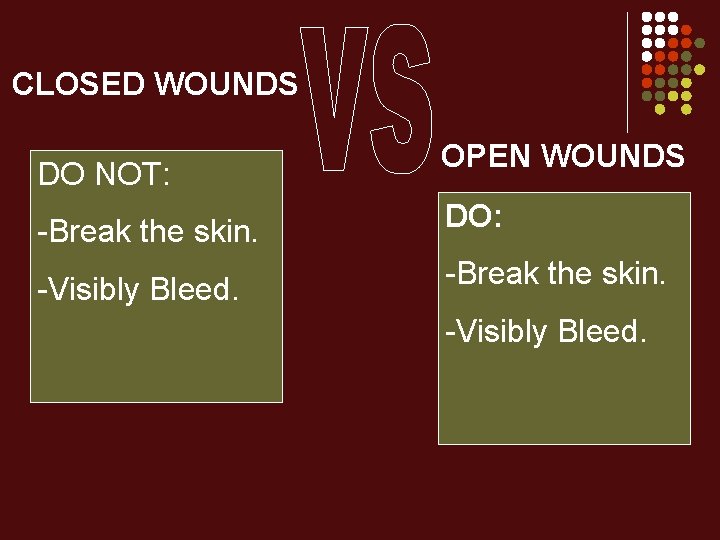
CLOSED WOUNDS DO NOT: OPEN WOUNDS -Break the skin. DO: -Visibly Bleed. -Break the skin. -Visibly Bleed.
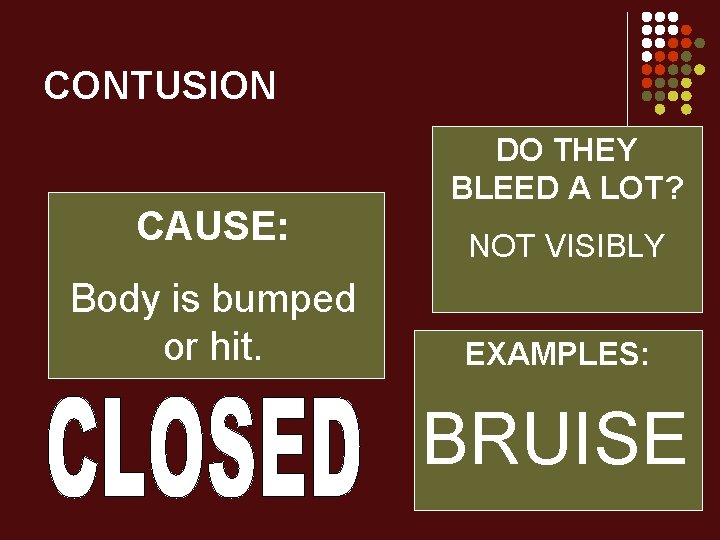
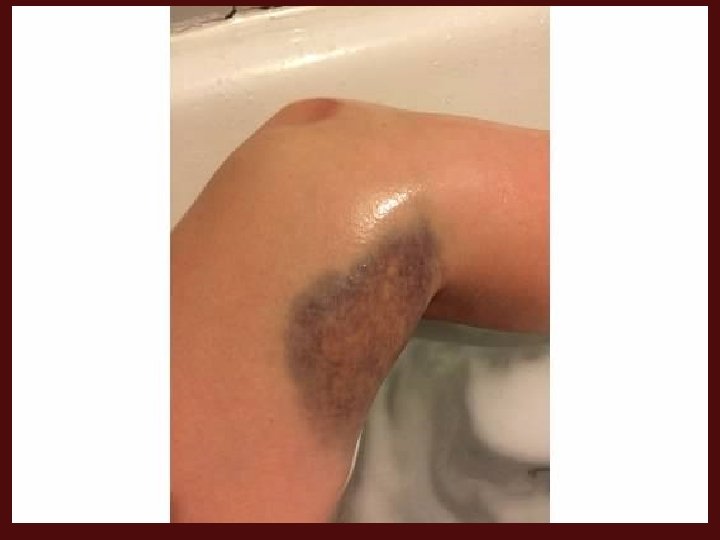
CONTUSION CAUSE: Body is bumped or hit. DO THEY BLEED A LOT? NOT VISIBLY EXAMPLES: BRUISE
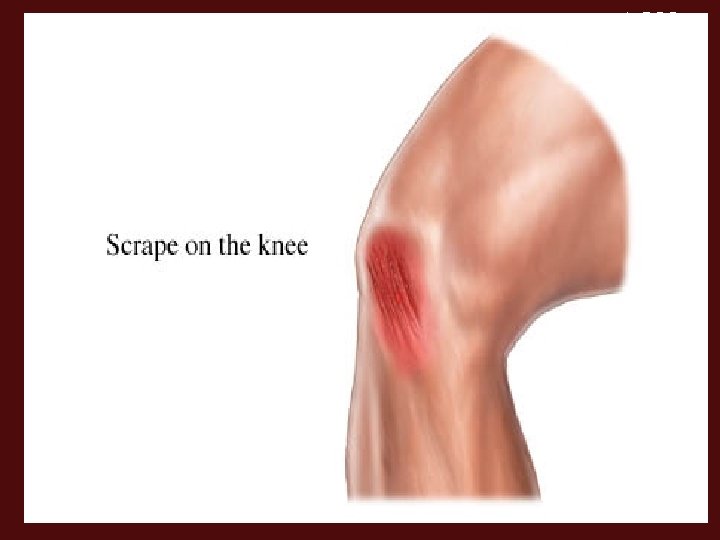
ABRASION CAUSE: Something rubbing against the skin. DO THEY BLEED A LOT? Not usually. Damage is to Capillaries. EXAMPLES: SCRAPE
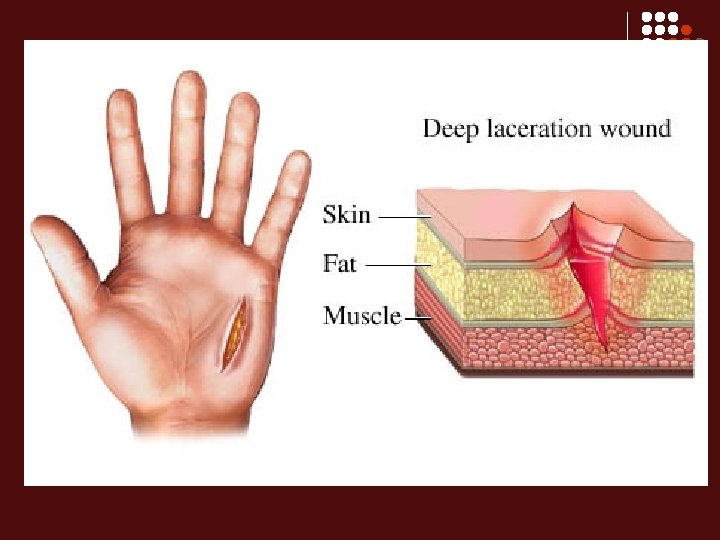
LACERATION CAUSE: DO THEY BLEED A LOT? Cut in the skin by a sharp object. Can bleed heavily or not at all. EXAMPLES: CUT
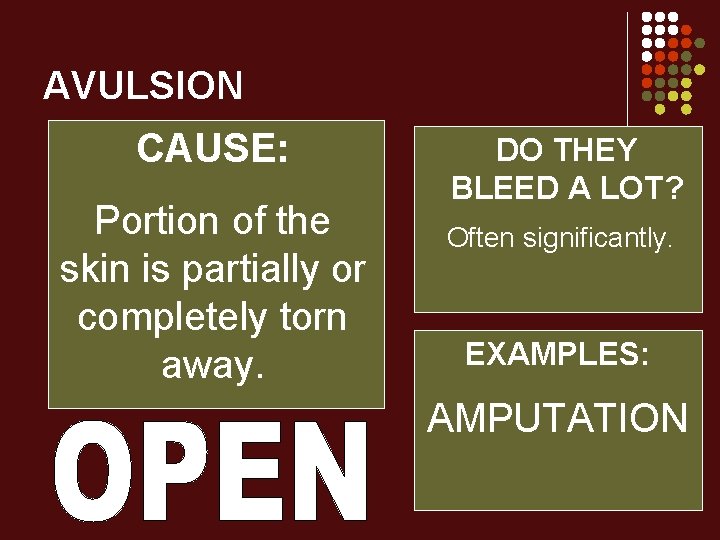
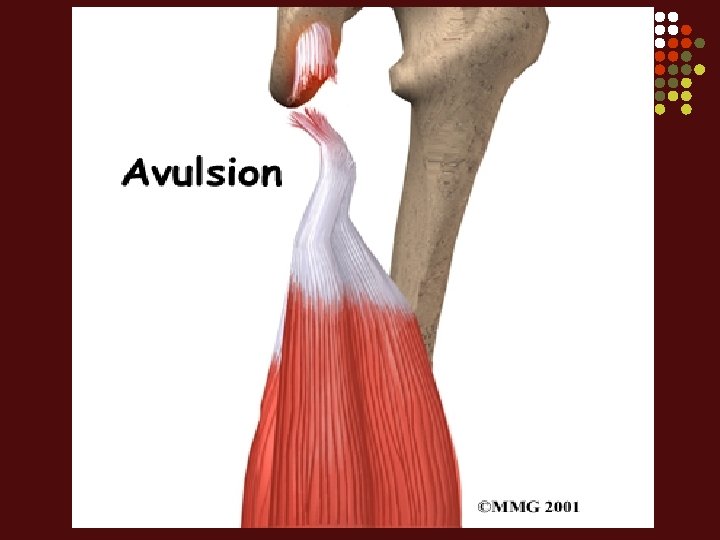
AVULSION CAUSE: Portion of the skin is partially or completely torn away. DO THEY BLEED A LOT? Often significantly. EXAMPLES: AMPUTATION
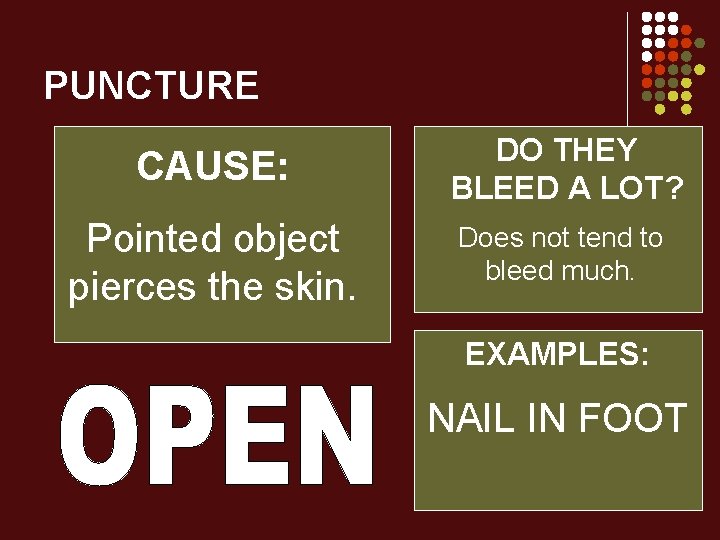
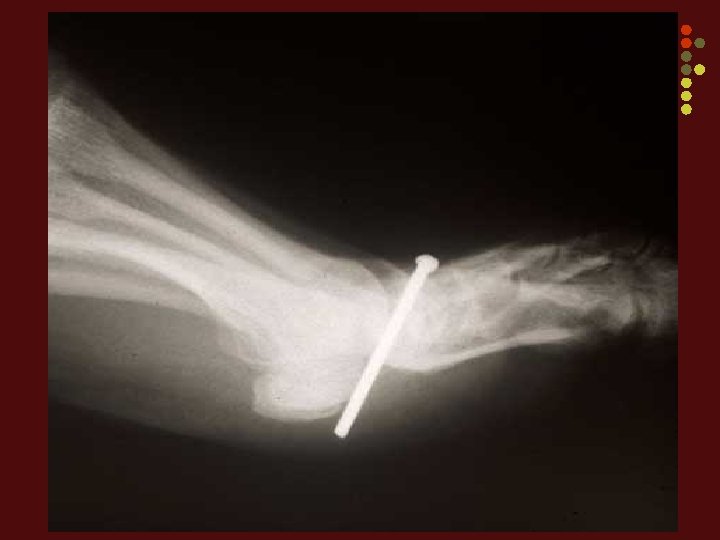
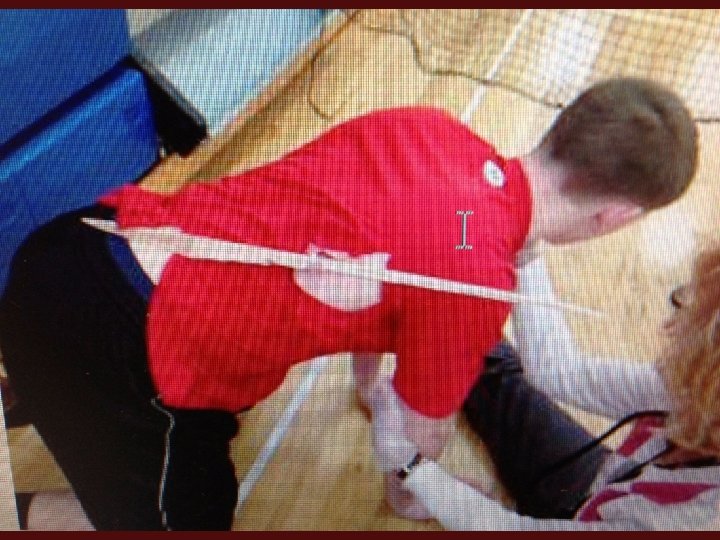
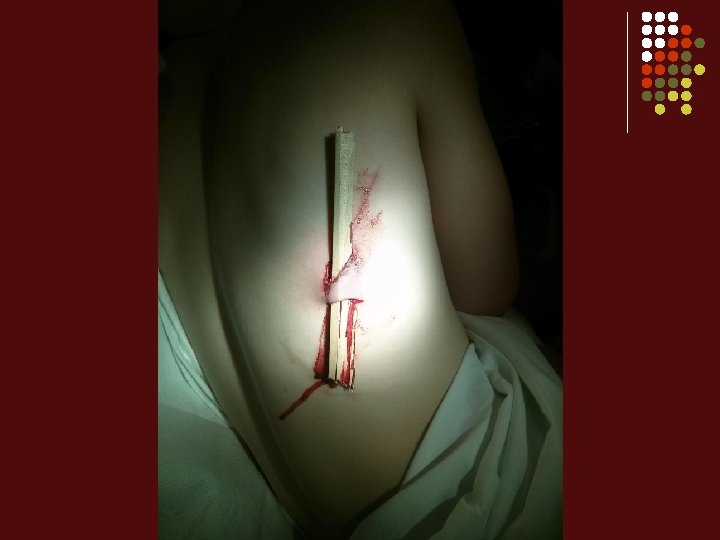
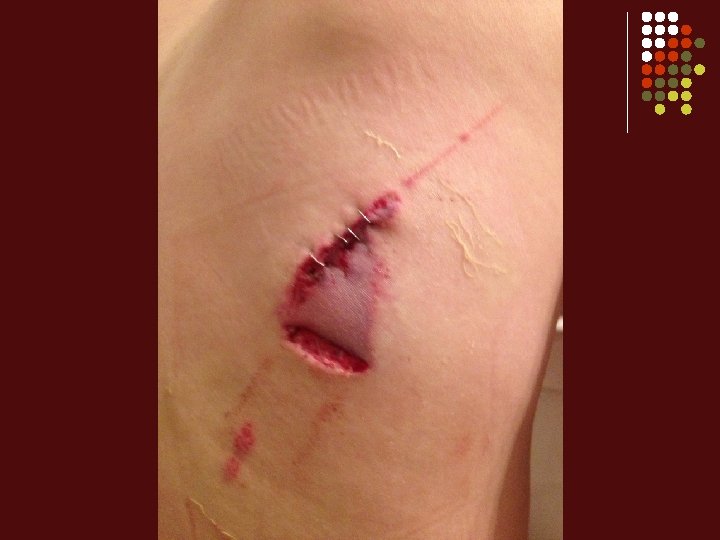
PUNCTURE CAUSE: DO THEY BLEED A LOT? Pointed object pierces the skin. Does not tend to bleed much. EXAMPLES: NAIL IN FOOT
CARING FOR CLOSED WOUNDS
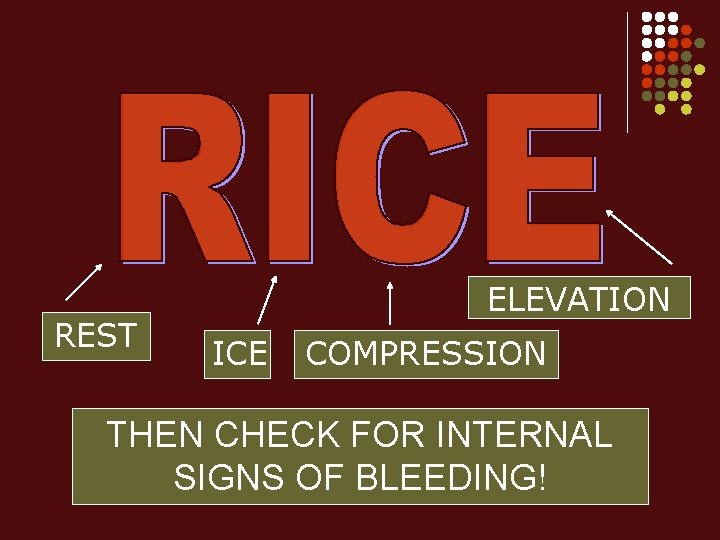
REST ELEVATION ICE COMPRESSION THEN CHECK FOR INTERNAL SIGNS OF BLEEDING!
INTERNAL SIGNS OF BLEEDING l l l Tender, swollen, bruised or hard area of the body. Rapid, weak pulse Skin that feels cool or moist or looks bluish. Vomiting or coughing up blood. Excessive thirst Becoming confused, faint, drowsy or unconscious.
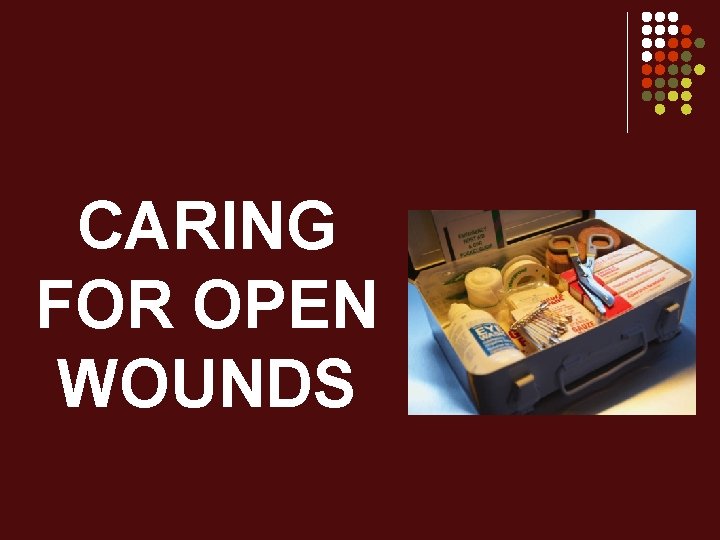
CARING FOR OPEN WOUNDS
l ALL OPEN WOUNDS NEED SOME TYPE OF COVERING! l To help control bleeding l To decrease the risk of infection.
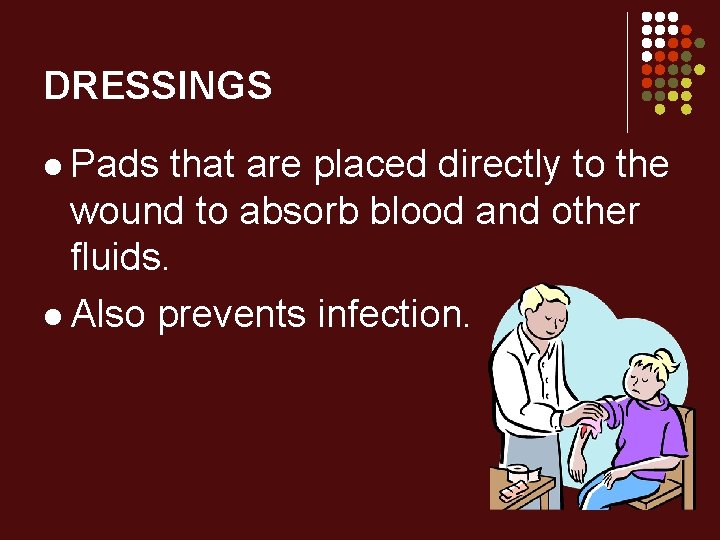
DRESSINGS l Pads that are placed directly to the wound to absorb blood and other fluids. l Also prevents infection.
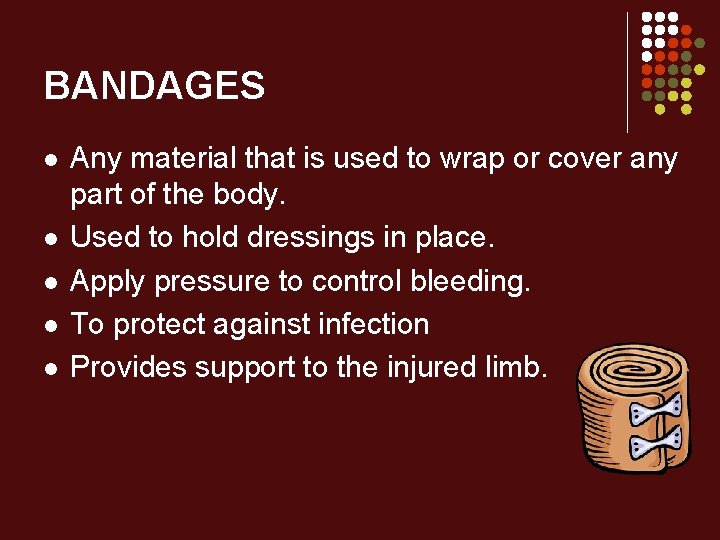
BANDAGES l l l Any material that is used to wrap or cover any part of the body. Used to hold dressings in place. Apply pressure to control bleeding. To protect against infection Provides support to the injured limb.
STEPS TO CARE: l l l l Check for feeling, warmth and color. Elevate the injured body part. Wrap bandage around the body Cover Dressing Completely! Bandage exceeds several inches beyond dressing. Do not cover fingers or toes. Secure the loose end in place with an adhesive bandage.
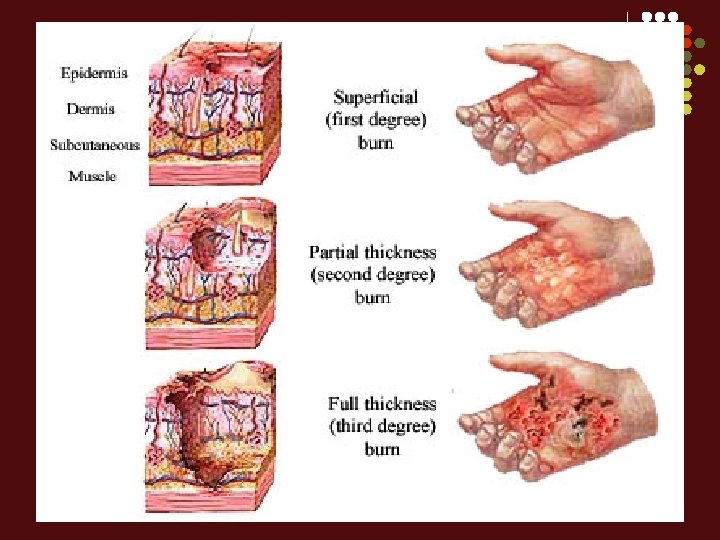
BURNS l Burns are classified by their sources: l l Heat, chemicals, electricity, radiation Also classified by depth: l Deeper the burn, worse it is. l l l Superficial (1 st Degree) Partial Thickness (2 nd Degree) Full Thickness (3 rd Degree)
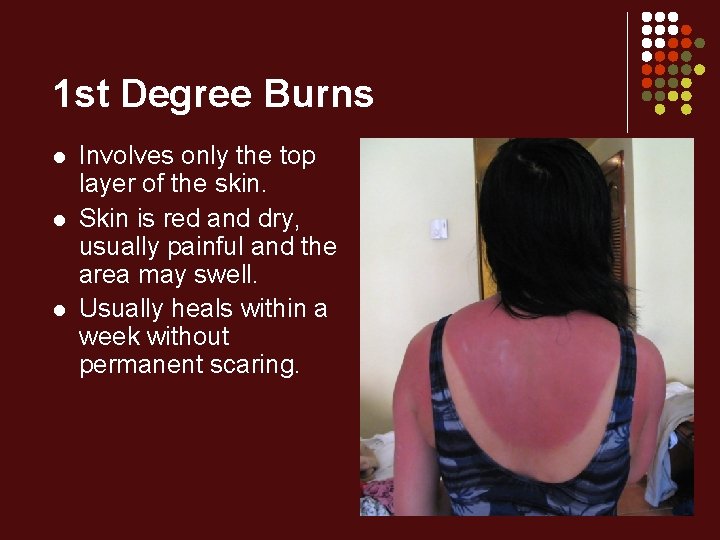
1 st Degree Burns l l l Involves only the top layer of the skin. Skin is red and dry, usually painful and the area may swell. Usually heals within a week without permanent scaring.
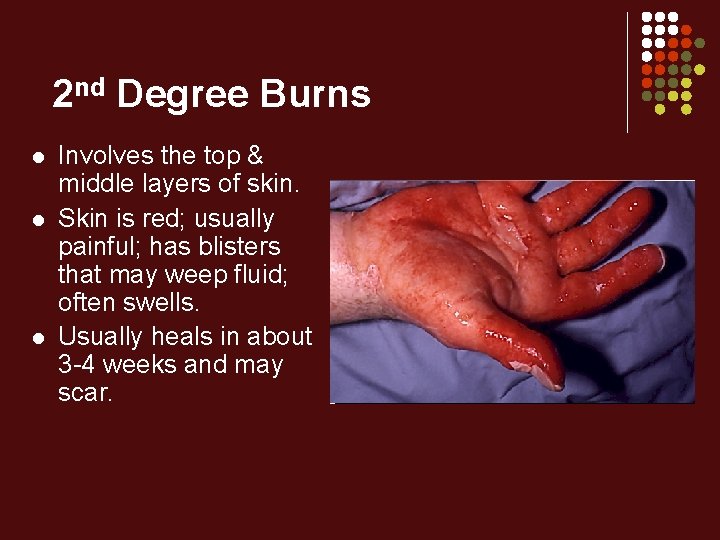
2 nd Degree Burns l l l Involves the top & middle layers of skin. Skin is red; usually painful; has blisters that may weep fluid; often swells. Usually heals in about 3 -4 weeks and may scar.
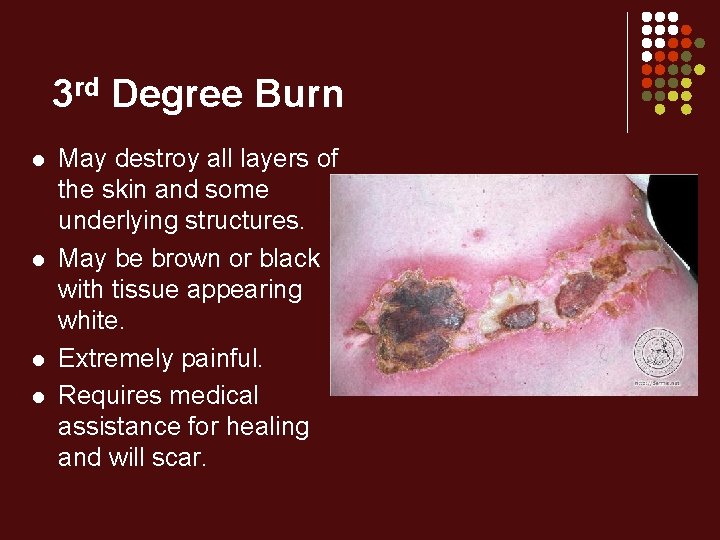
3 rd Degree Burn l l May destroy all layers of the skin and some underlying structures. May be brown or black with tissue appearing white. Extremely painful. Requires medical assistance for healing and will scar.
Steps to Caring for a Burn l l l l Stop the Burning by removing the person from the source. Check for life-threatening conditions. Cool the burn with large amounts of lukewarm running water. Cover the burn loosely with a sterile dressing. Prevent Infection. Take steps to minimize shock Keep the person from getting chilled or overheated.
- Slides: 31