
Wounds AN INJURY TO THE SOFT TISSUE CLOSED
- Slides: 38
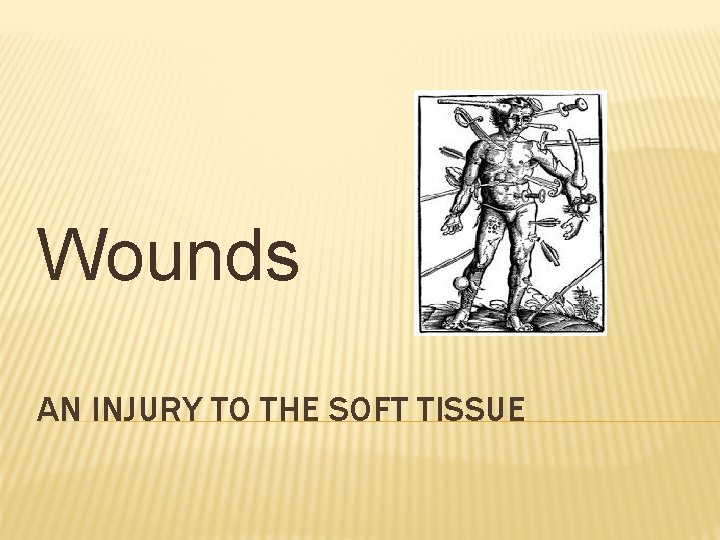
Wounds AN INJURY TO THE SOFT TISSUE
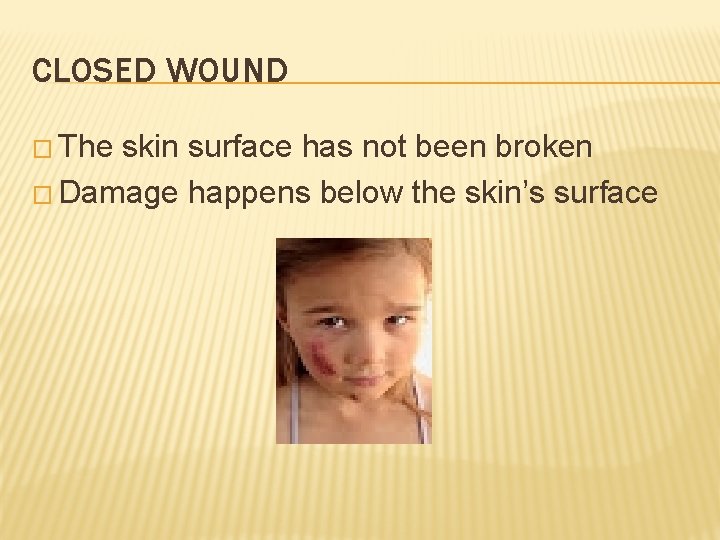
CLOSED WOUND � The skin surface has not been broken � Damage happens below the skin’s surface
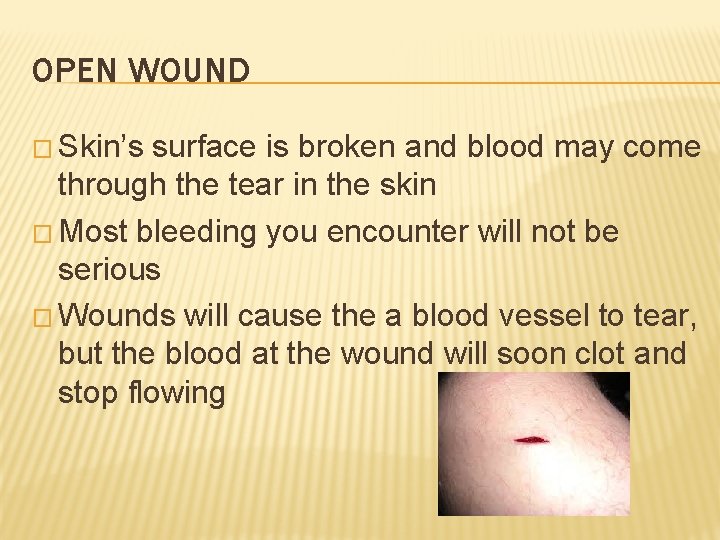
OPEN WOUND � Skin’s surface is broken and blood may come through the tear in the skin � Most bleeding you encounter will not be serious � Wounds will cause the a blood vessel to tear, but the blood at the wound will soon clot and stop flowing
OPEN WOUNDS � Sometimes, however, the damaged blood vessel will be too large or the pressure too great for the blood to clot. � This can be life threatening � This can be the case for both open and closed wounds
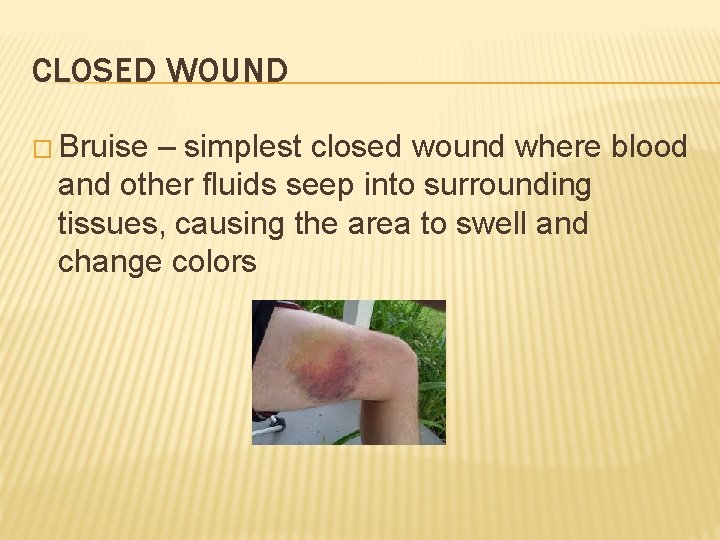
CLOSED WOUND � Bruise – simplest closed wound where blood and other fluids seep into surrounding tissues, causing the area to swell and change colors
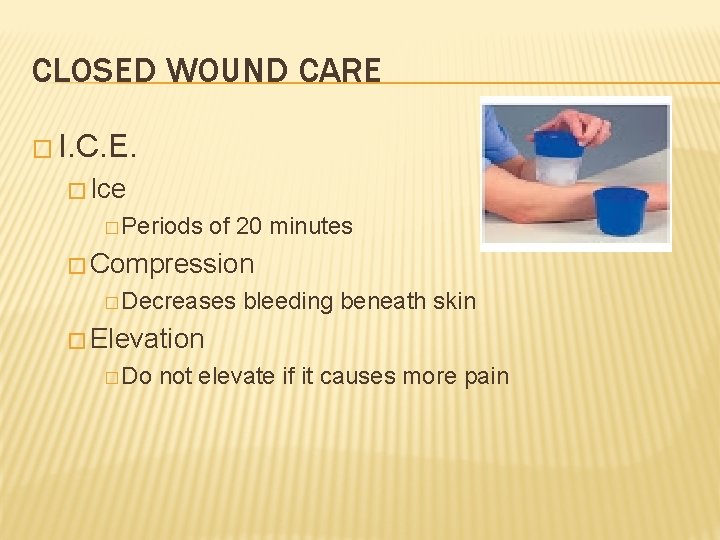
CLOSED WOUND CARE � I. C. E. � Ice � Periods of 20 minutes � Compression � Decreases bleeding beneath skin � Elevation � Do not elevate if it causes more pain
SIGNALS OF INTERNAL BLEEDING � Tender, Swollen, bruised or hard area of the body, such as the abdomen � Rapid, weak pulse � Skin feels cool or moist or looks pale or bluish � Vomiting blood or coughing up blood � Excessive thirst � Becoming confused, faint, drowsy or unconscious
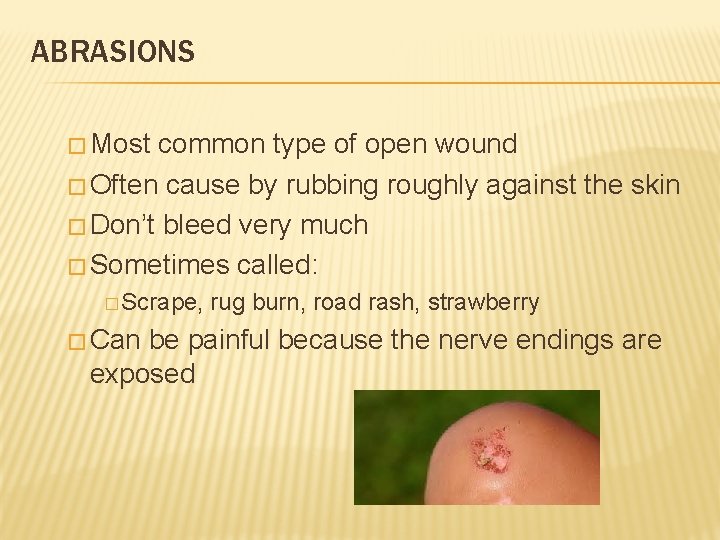
ABRASIONS � Most common type of open wound � Often cause by rubbing roughly against the skin � Don’t bleed very much � Sometimes called: � Scrape, � Can rug burn, road rash, strawberry be painful because the nerve endings are exposed
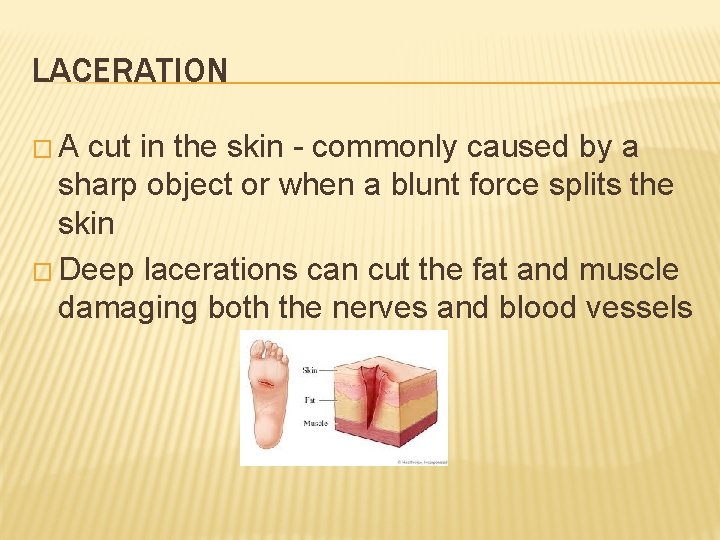
LACERATION �A cut in the skin - commonly caused by a sharp object or when a blunt force splits the skin � Deep lacerations can cut the fat and muscle damaging both the nerves and blood vessels
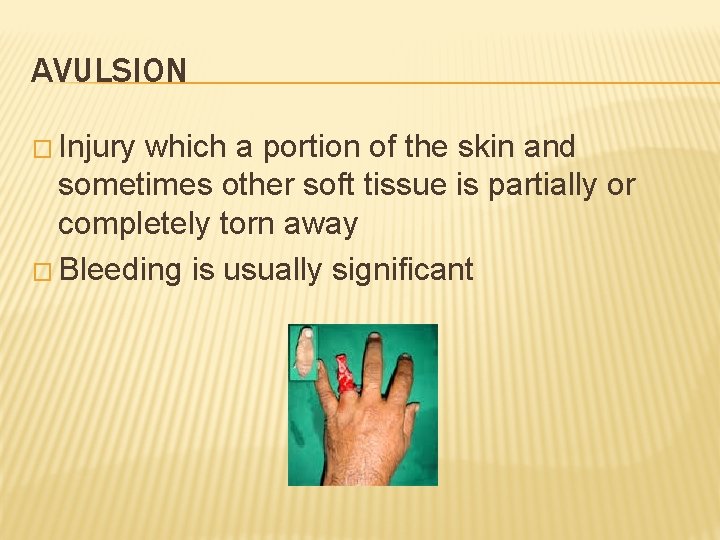
AVULSION � Injury which a portion of the skin and sometimes other soft tissue is partially or completely torn away � Bleeding is usually significant
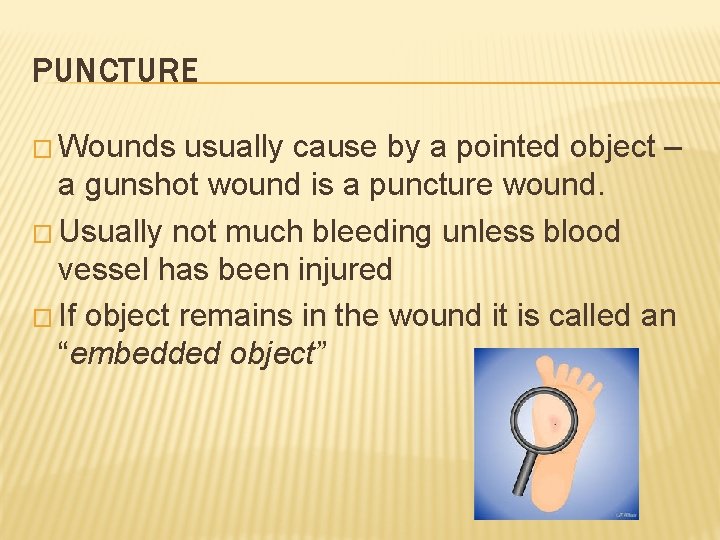
PUNCTURE � Wounds usually cause by a pointed object – a gunshot wound is a puncture wound. � Usually not much bleeding unless blood vessel has been injured � If object remains in the wound it is called an “embedded object”
CARE FOR OPEN WOUNDS � All open wounds need some type of covering to prevent infection � Dressings Pads placed directly on the wound to absorb blood and other fluids � Most are porous to allow air in �
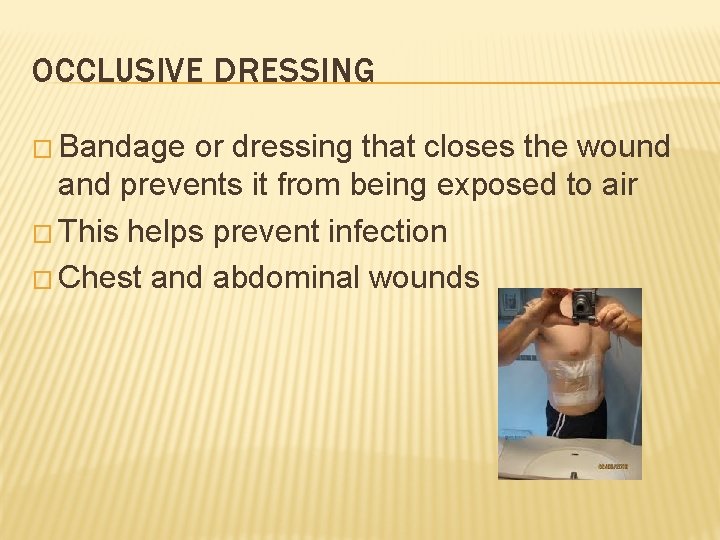
OCCLUSIVE DRESSING � Bandage or dressing that closes the wound and prevents it from being exposed to air � This helps prevent infection � Chest and abdominal wounds
BANDAGES � Material used to wrap or cover any part of the body � Used to: hold dressings in place � to apply pressure to control bleeding � provide support � to prevent infection �
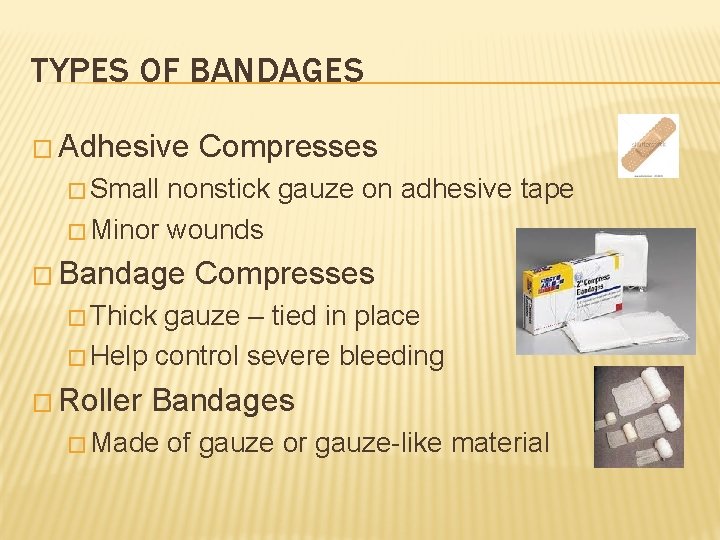
TYPES OF BANDAGES � Adhesive Compresses � Small nonstick gauze on adhesive tape � Minor wounds � Bandage Compresses � Thick gauze – tied in place � Help control severe bleeding � Roller Bandages � Made of gauze or gauze-like material
GENERAL GUIDELINES FOR ROLLER BANDAGES � Check for feeling, warmth and color or area � Secure the end of the bandage in place with a turn of the bandage � Do not cover the fingers or toes � Apply additional bandage if blood soaks through first bandage � Do not remove first bandage
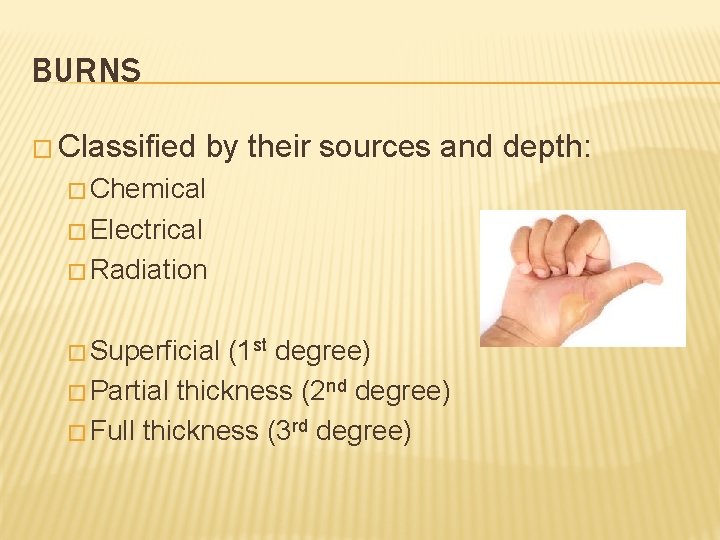
BURNS � Classified by their sources and depth: � Chemical � Electrical � Radiation � Superficial (1 st degree) � Partial thickness (2 nd degree) � Full thickness (3 rd degree)
CRITICAL BURNS � Person has: � Trouble breathing � Burn covers more than one body part and a large surface � Suspected burns to their airway. (Mouth and nose may be signs of this) � Burns to the head, neck, hands, feet or genitals � Full thickness burn and is younger than 5 or older than 60 � A burn resulting from chemicals, explosions or electricity
BURN CARE � Check scene for safety � Remove person from the source of the burn � Check for life-threatening conditions � Cool with large amounts of cold running water � Cover loosely with sterile dressing � Treat for possible shock
DO NOT!! � Apply ice or ice water � Touch with anything other than clean covering � Remove clothing stuck to burn area � Try to clean a severe burn � Break blisters � Use any kind of ointment on a severe burn
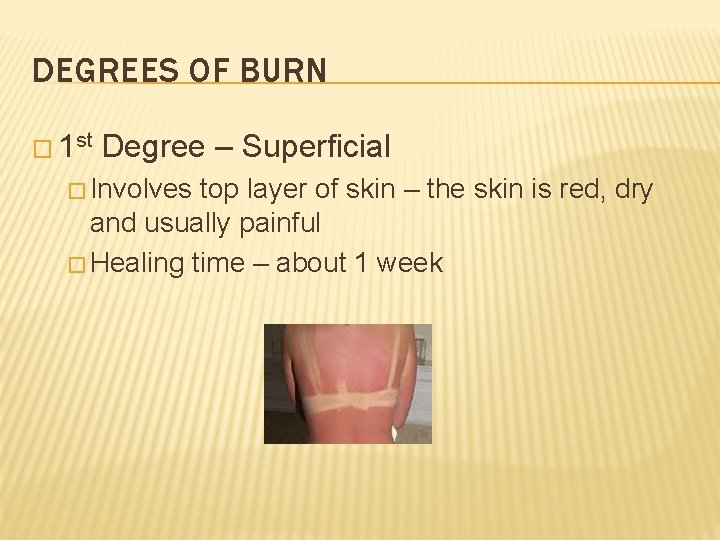
DEGREES OF BURN � 1 st Degree – Superficial � Involves top layer of skin – the skin is red, dry and usually painful � Healing time – about 1 week
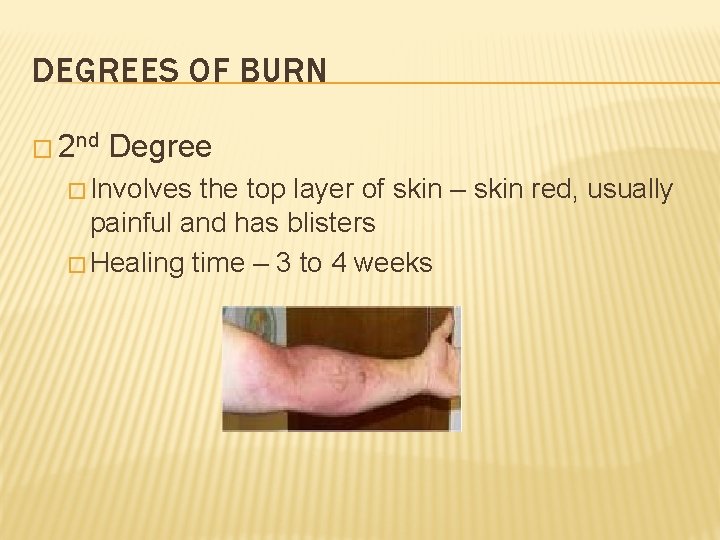
DEGREES OF BURN � 2 nd Degree � Involves the top layer of skin – skin red, usually painful and has blisters � Healing time – 3 to 4 weeks
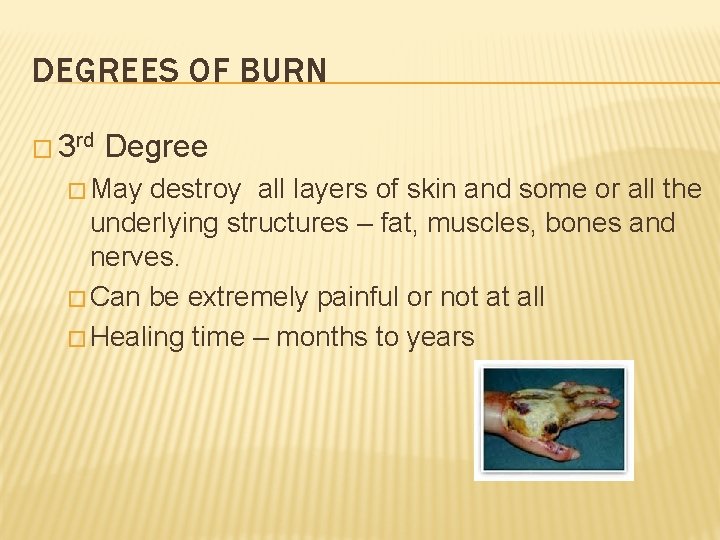
DEGREES OF BURN � 3 rd Degree � May destroy all layers of skin and some or all the underlying structures – fat, muscles, bones and nerves. � Can be extremely painful or not at all � Healing time – months to years
CHEMICAL BURNS � Remove any clothing that has chemicals on in � Flush with water for 20 minutes or until EMS arrives
ELECTRICAL BURN � Never go near a person unless power has been shut off � Be Prepared to start CPR � Care for shock and thermal burns
WOUNDS – SPECIAL SITUATIONS
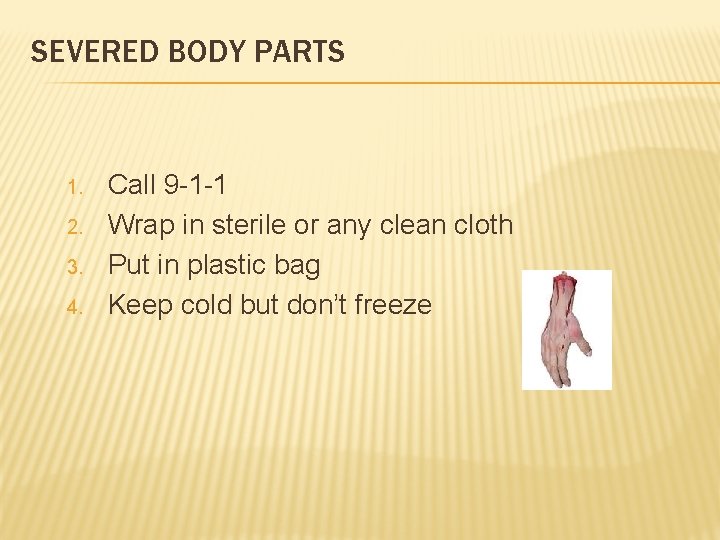
SEVERED BODY PARTS 1. 2. 3. 4. Call 9 -1 -1 Wrap in sterile or any clean cloth Put in plastic bag Keep cold but don’t freeze
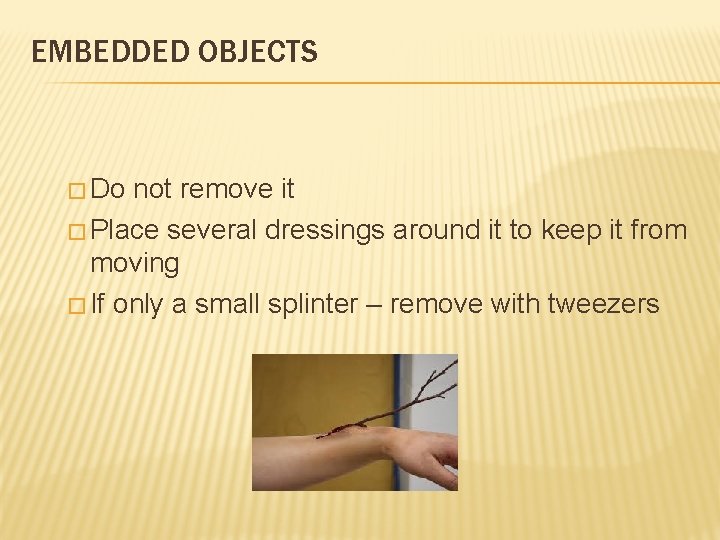
EMBEDDED OBJECTS � Do not remove it � Place several dressings around it to keep it from moving � If only a small splinter – remove with tweezers
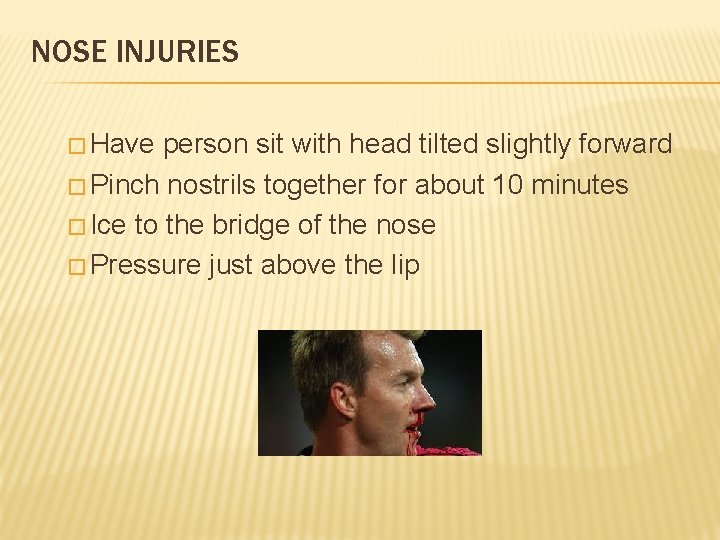
NOSE INJURIES � Have person sit with head tilted slightly forward � Pinch nostrils together for about 10 minutes � Ice to the bridge of the nose � Pressure just above the lip
MOUTH INJURIES � Have head tilted forward to allow any blood to drain from the mouth � May cause breathing problems if blood or loose teeth block airway
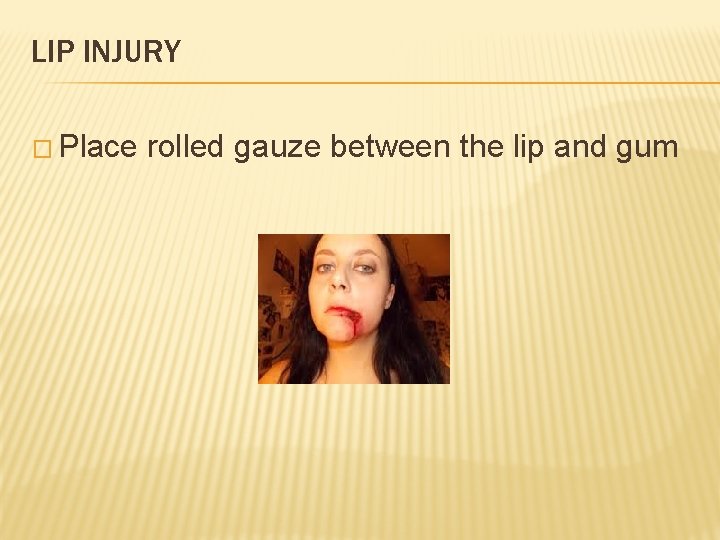
LIP INJURY � Place rolled gauze between the lip and gum
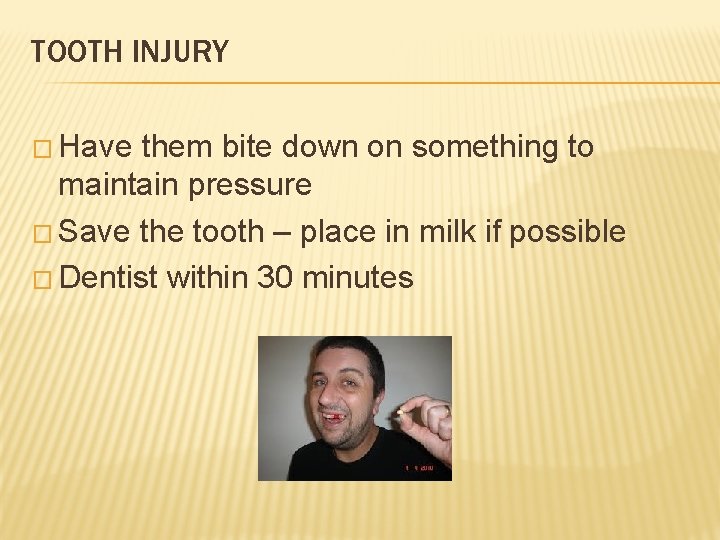
TOOTH INJURY � Have them bite down on something to maintain pressure � Save the tooth – place in milk if possible � Dentist within 30 minutes
CHEST INJURY � Leading cause of trauma deaths each year � Signs of serious chest injuries � Trouble breathing � Severe pain at site of injury � Flush, pale, ashen or bluish skin � Obvious deformity � Coughing up blood � Bruising at the site of a blunt injury � A “sucking” noise when the person breathes
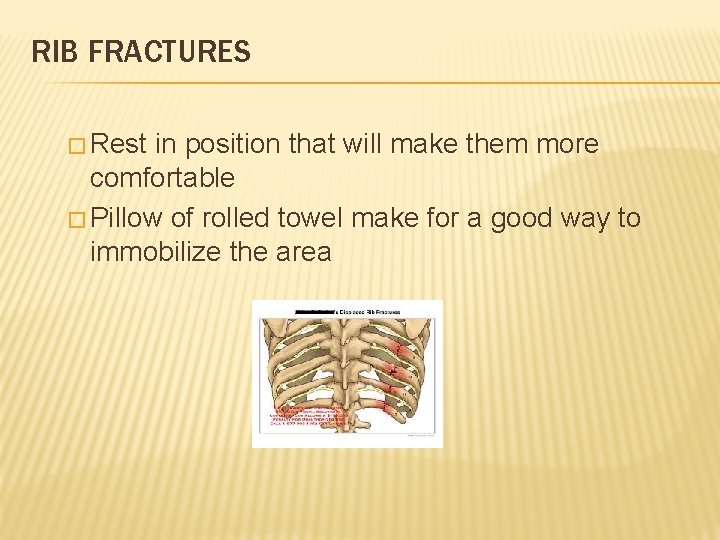
RIB FRACTURES � Rest in position that will make them more comfortable � Pillow of rolled towel make for a good way to immobilize the area
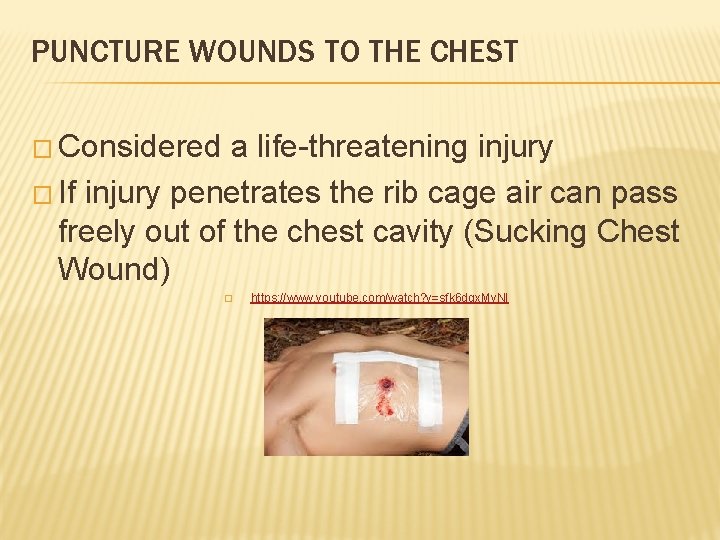
PUNCTURE WOUNDS TO THE CHEST � Considered a life-threatening injury � If injury penetrates the rib cage air can pass freely out of the chest cavity (Sucking Chest Wound) � https: //www. youtube. com/watch? v=sfk 6 dqx. Mv. NI
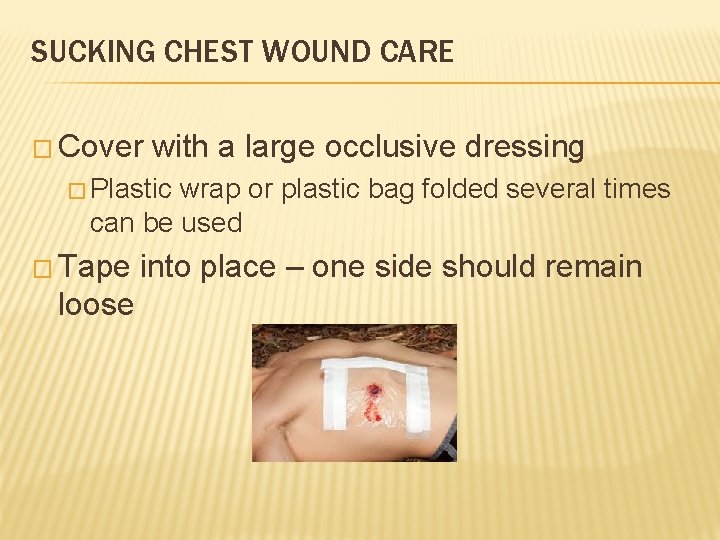
SUCKING CHEST WOUND CARE � Cover with a large occlusive dressing � Plastic wrap or plastic bag folded several times can be used � Tape loose into place – one side should remain
ABDOMINAL INJURY - SIGNS � Severe Pain � Bruising � External Bleeding � Nausea � Vomiting (can contain blood) � Weakness � Thirst � Pain, tenderness or tight feeling in the abdomen � Rigid Abdominal Muscles � Other signs of shock
ABDOMINAL INJURY - CARE � Call 9 -1 -1 � Position them on their back with knees up ** � DO NOT apply direct pressure or push in any protruding organs back in � Remove clothing from around the wound � Apply moist, sterile dressing loosely over wound then cover with a plastic wrap (if available)