
Wound Assessment Part 1 Dot Weir RN CWON


- Slides: 45
Wound Assessment: Part 1 Dot Weir, RN, CWON, CWS
Objectives 1. To describe the rationale for accurate wound assessment and documentation. 2. To recall the most common elements of a wound assessment. 3. To identify important aspects of soft tissue, wound characteristics and underlying structures.
Wound Assessment Keypoints • Foundation for developing goals and plan of care • Ultimate driver of treatment decisions (wounds are dynamic / may change often) • Evaluation of progress towards meeting goals of care (change from previous assessments) • Important to have common language to facilitate consistent documentation van Rijswijk, L, Eisenberg, M. (2014) Wound assessment and documentation. In: Krasner, D. L. (Ed). Chronic Wound Care: The Essentials. Malvern, PA. , HMP Communications
Wound Assessment Frequency and Documentation • Complete assessment generally performed weekly - Evaluation of wound status : every dressing change - Observe for significant changes both positive and negative that may require treatment change • Document per facility / agency protocol
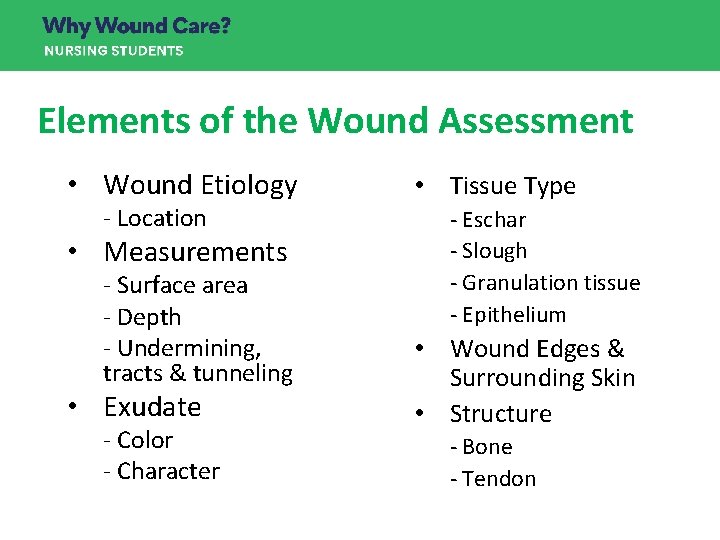
Elements of the Wound Assessment • Wound Etiology - Location • Measurements - Surface area - Depth - Undermining, tracts & tunneling • Exudate - Color - Character • Tissue Type - Eschar - Slough - Granulation tissue - Epithelium • Wound Edges & Surrounding Skin • Structure - Bone - Tendon
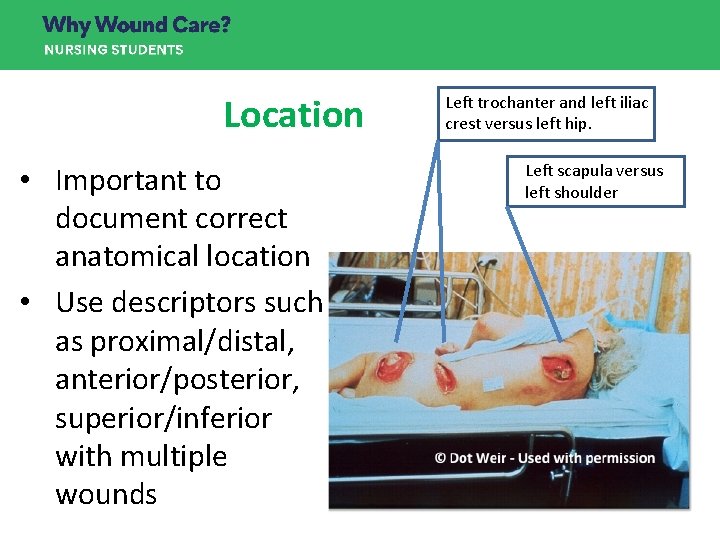
Location • Important to document correct anatomical location • Use descriptors such as proximal/distal, anterior/posterior, superior/inferior with multiple wounds Left trochanter and left iliac crest versus left hip. Left scapula versus left shoulder
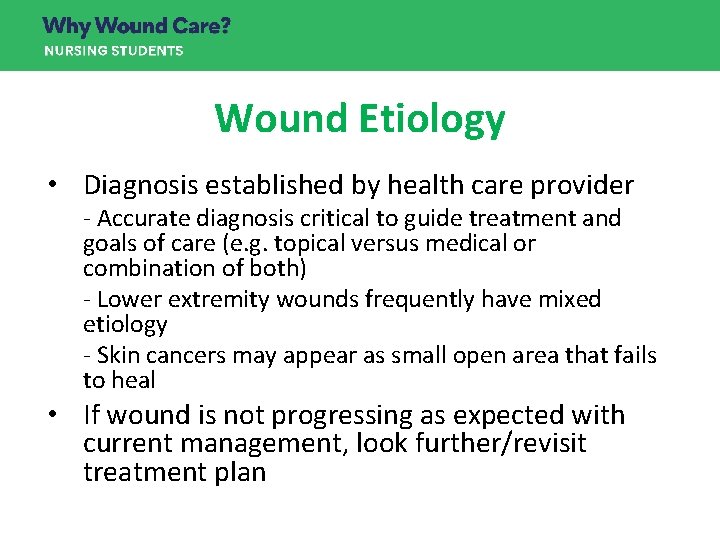
Wound Etiology • Diagnosis established by health care provider - Accurate diagnosis critical to guide treatment and goals of care (e. g. topical versus medical or combination of both) - Lower extremity wounds frequently have mixed etiology - Skin cancers may appear as small open area that fails to heal • If wound is not progressing as expected with current management, look further/revisit treatment plan
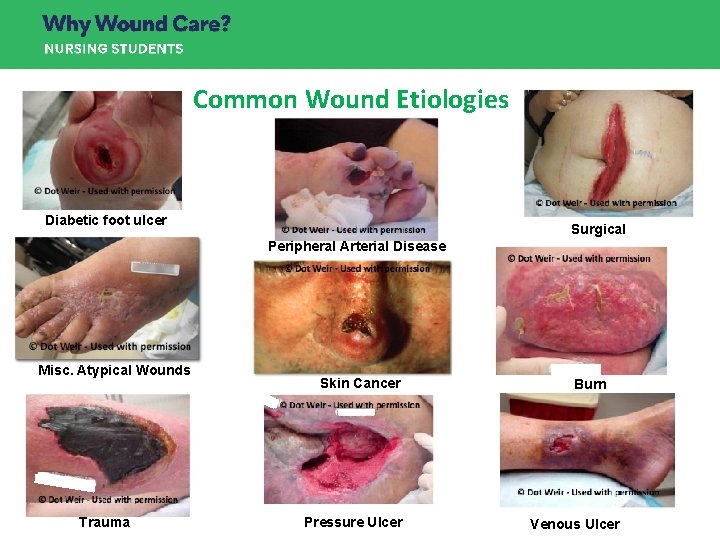
Common Wound Etiologies Diabetic foot ulcer Surgical Peripheral Arterial Disease Misc. Atypical Wounds Trauma Skin Cancer Pressure Ulcer Burn Venous Ulcer
Wound Measurements • Initial wound measurements critical as baseline to assess healing progress • Length multiplied by the width will provide approximate (though usually overstated) surface area • Length X Width X Depth can be calculated to provide approximate volume (using electronic medical records)
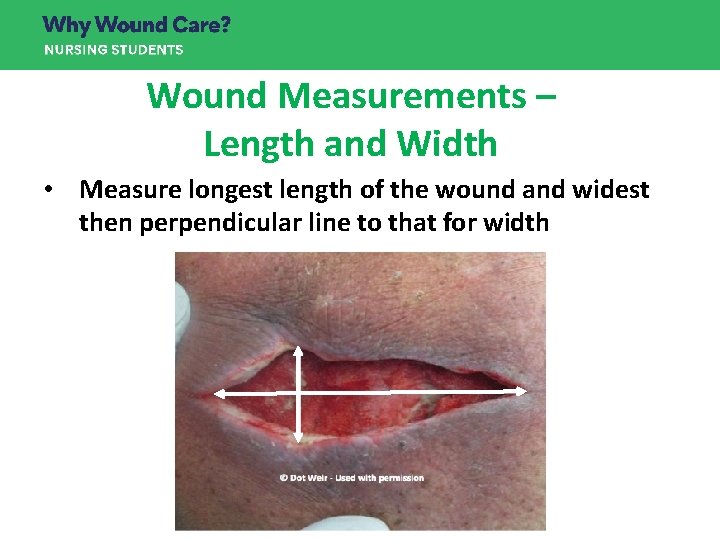
Wound Measurements – Length and Width • Measure longest length of the wound and widest then perpendicular line to that for width
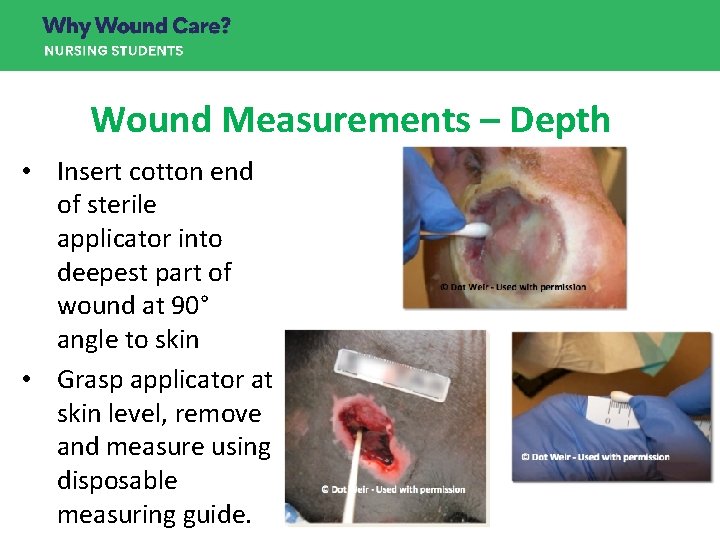
Wound Measurements – Depth • Insert cotton end of sterile applicator into deepest part of wound at 90° angle to skin • Grasp applicator at skin level, remove and measure using disposable measuring guide.
Undermining and Tracts • Undermining is an area or space parallel to the skin • Tracts (also called sinus tracts or tunneling) are narrow areas that extend beyond the depth or edge of the wound • Important to assess, measure and document to guide treatment related to dressings and packing and to establish a baseline to assess healing
Undermining, Tracts and Depth Measurements: Document Using a “Clock” Method “Undermining 5 cm from 12 to 3 o’clock”
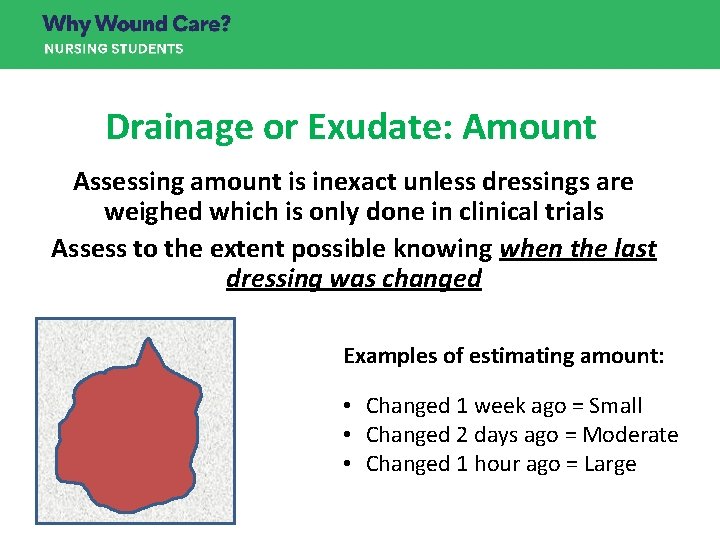
Drainage or Exudate: Amount Assessing amount is inexact unless dressings are weighed which is only done in clinical trials Assess to the extent possible knowing when the last dressing was changed Examples of estimating amount: • Changed 1 week ago = Small • Changed 2 days ago = Moderate • Changed 1 hour ago = Large
Drainage or Exudate: Color • Describe what you see • Impacted by previous treatments, bacteria • Common colors: Red, yellow, pink, tan, green
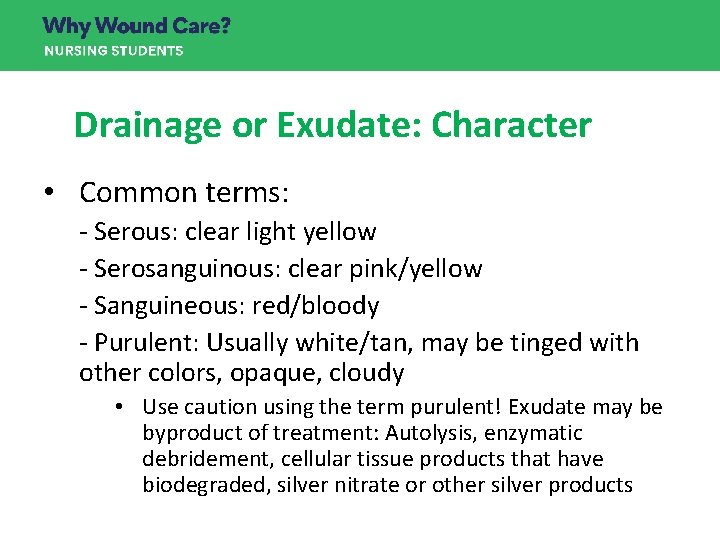
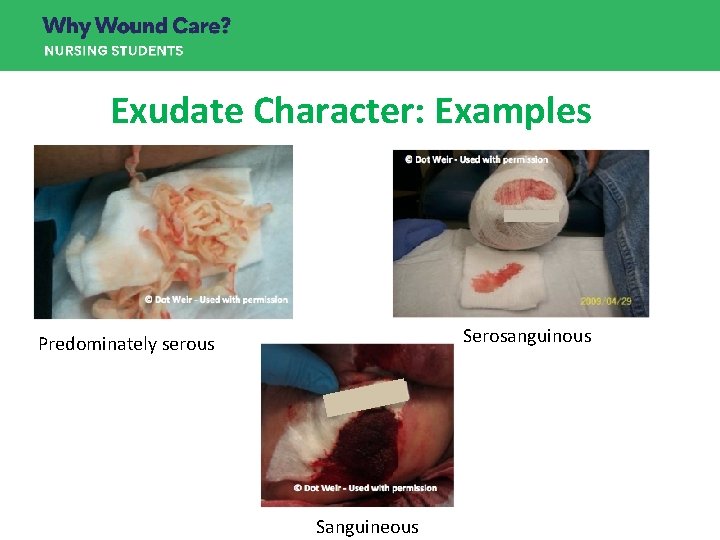
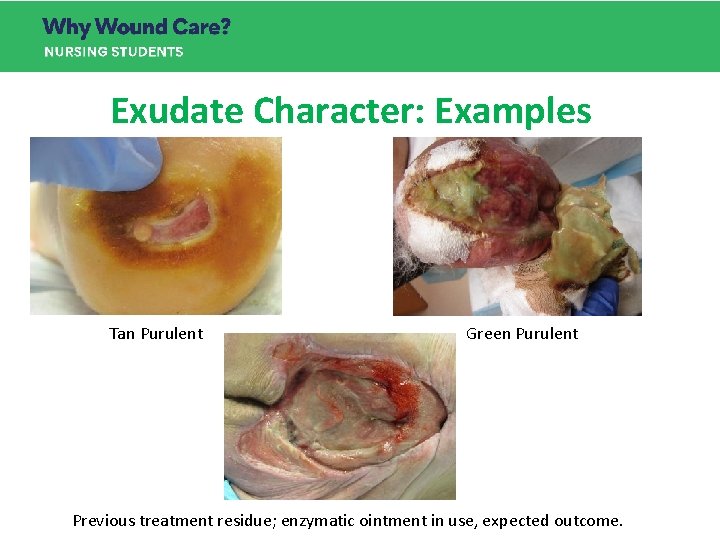
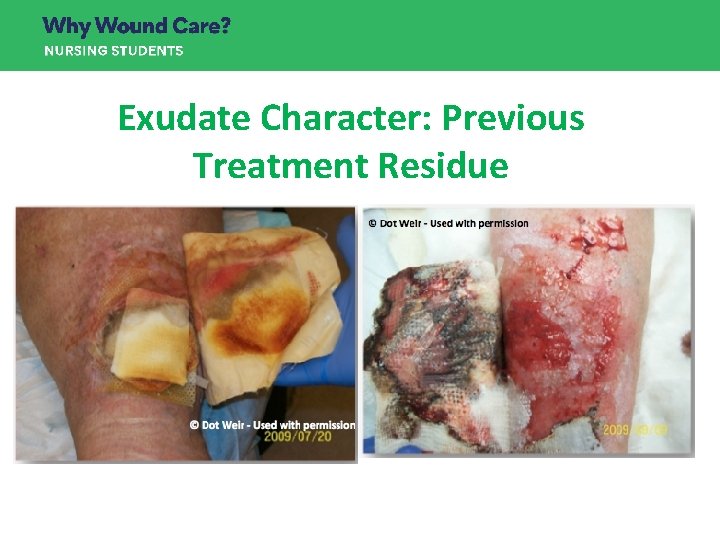
Drainage or Exudate: Character • Common terms: - Serous: clear light yellow - Serosanguinous: clear pink/yellow - Sanguineous: red/bloody - Purulent: Usually white/tan, may be tinged with other colors, opaque, cloudy • Use caution using the term purulent! Exudate may be byproduct of treatment: Autolysis, enzymatic debridement, cellular tissue products that have biodegraded, silver nitrate or other silver products
Exudate Character: Examples Serosanguinous Predominately serous Sanguineous
Exudate Character: Examples Tan Purulent Green Purulent Previous treatment residue; enzymatic ointment in use, expected outcome.
Exudate Character: Previous Treatment Residue
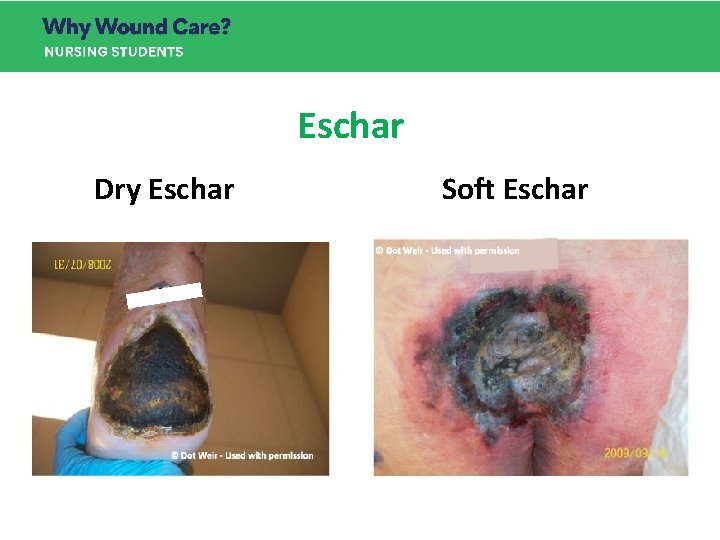
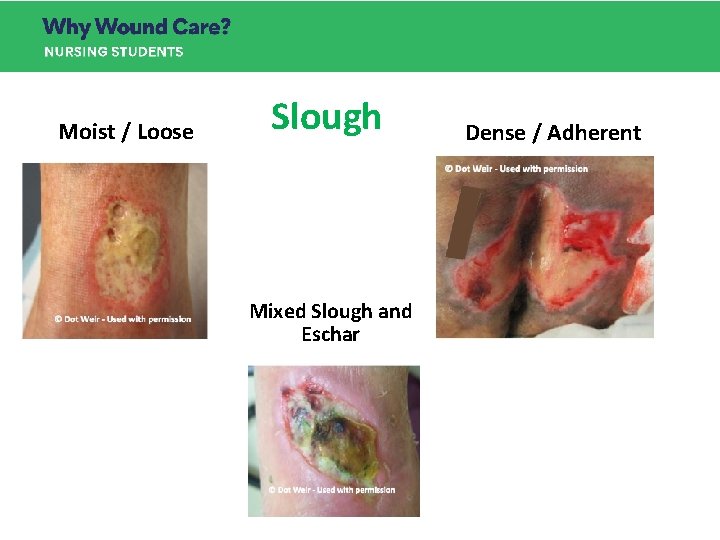
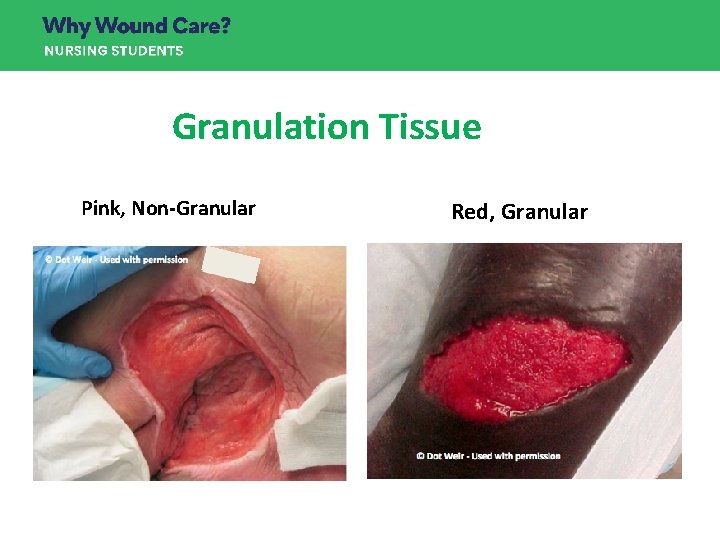
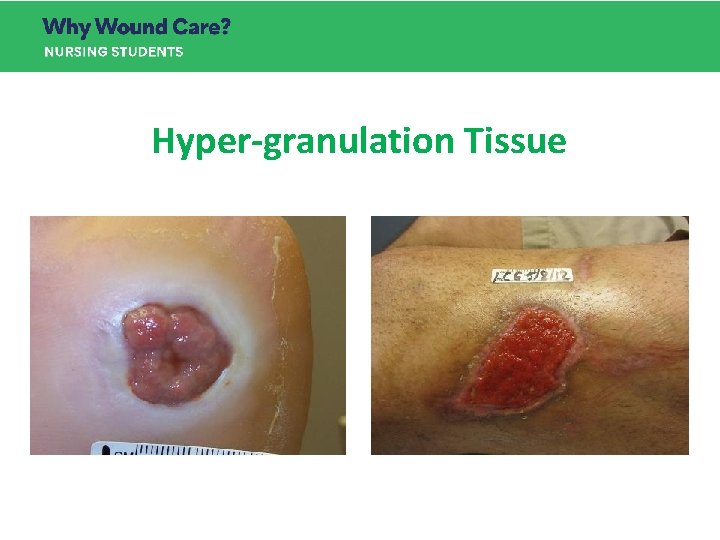
Tissue Types • Eschar: Dark in color, may be dry or moist • Slough: Necrotic tissue at some level of liquefying, may be dry or moist • Granulation: Wound in process of healing, tissue pink or red, granular in appearance • Clean non-granular: Wound bed pink or red but no evidence of healing • Hyper-granulation tissue: Tissue growth above the level of the skin
Eschar Dry Eschar Soft Eschar © Dot Weir - Used with permission
Moist / Loose Slough Mixed Slough and Eschar Dense / Adherent
Granulation Tissue Pink, Non-Granular Red, Granular
Hyper-granulation Tissue
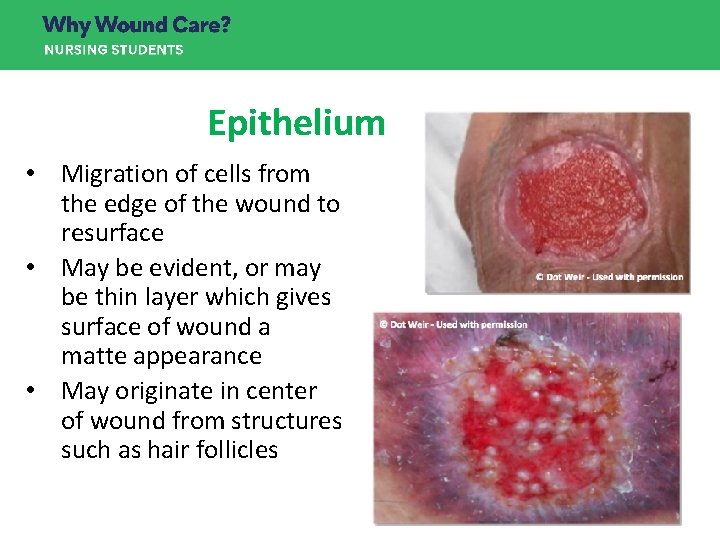
Epithelium • Migration of cells from the edge of the wound to resurface • May be evident, or may be thin layer which gives surface of wound a matte appearance • May originate in center of wound from structures such as hair follicles
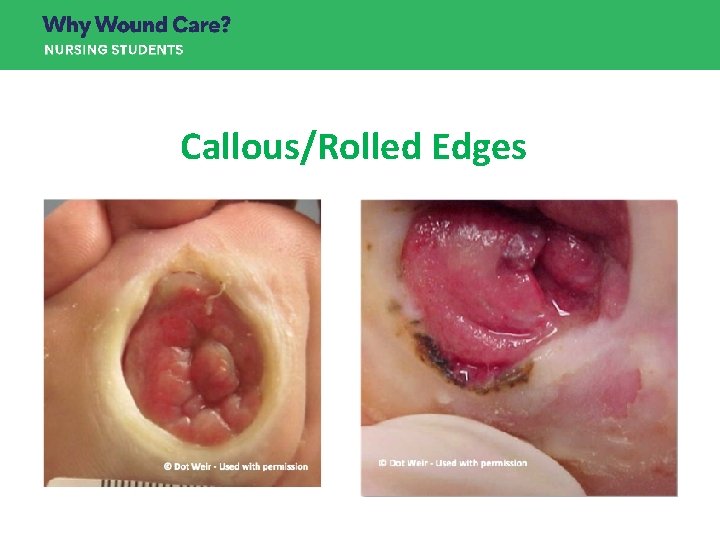
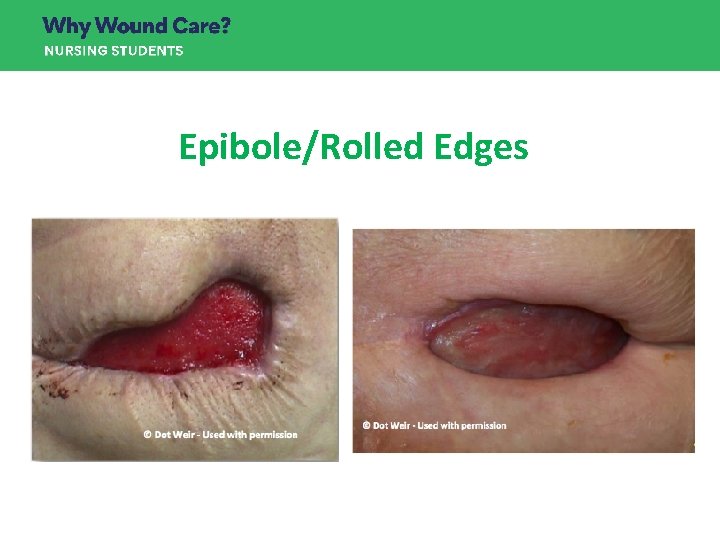
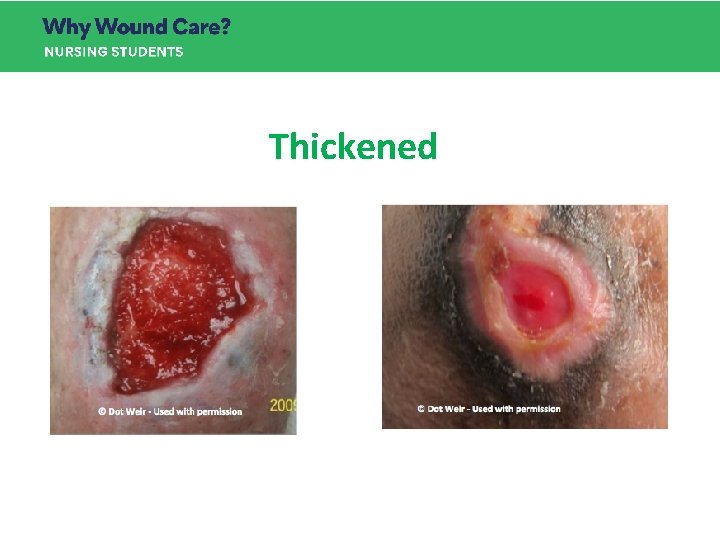
Wound Edges and Surrounding Skin • Assessing edges provides evidence of: - Trauma: Callous, tearing - Inadequate wound surface: Cells thickened at edge - Epibole: Rolled edges, migration of cells down the wound edge closing them in
Callous/Rolled Edges
Epibole/Rolled Edges
Thickened
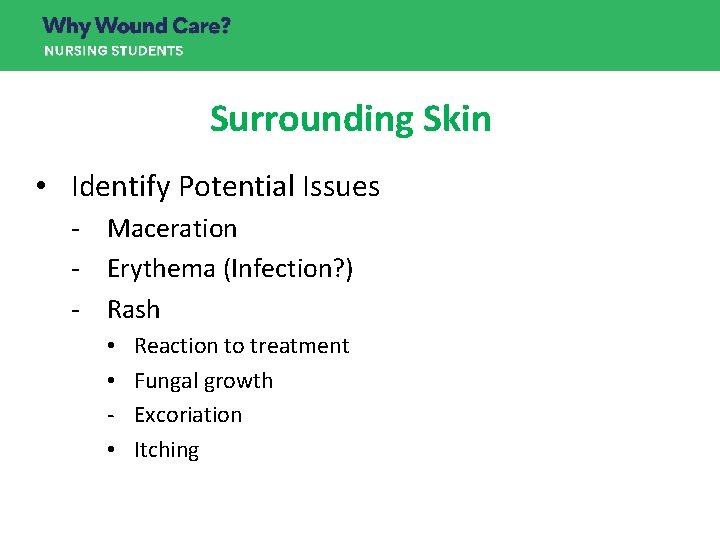
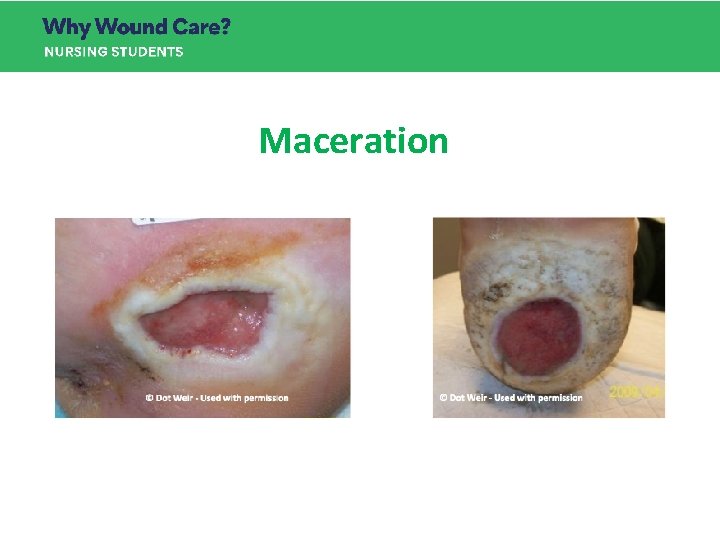
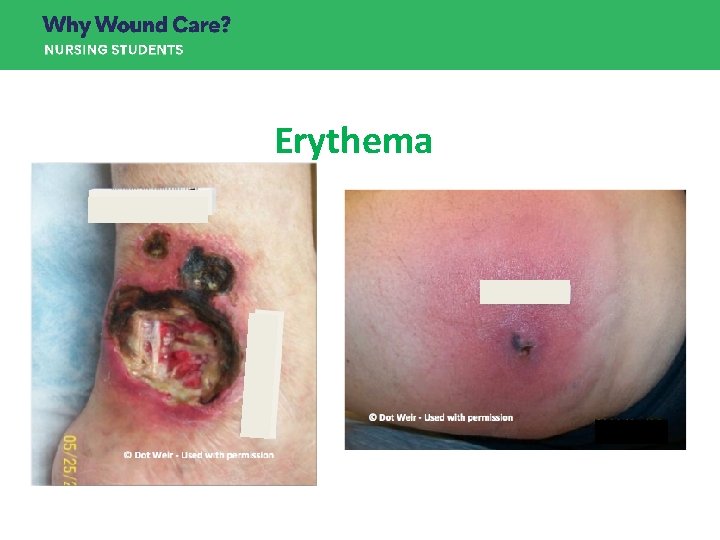
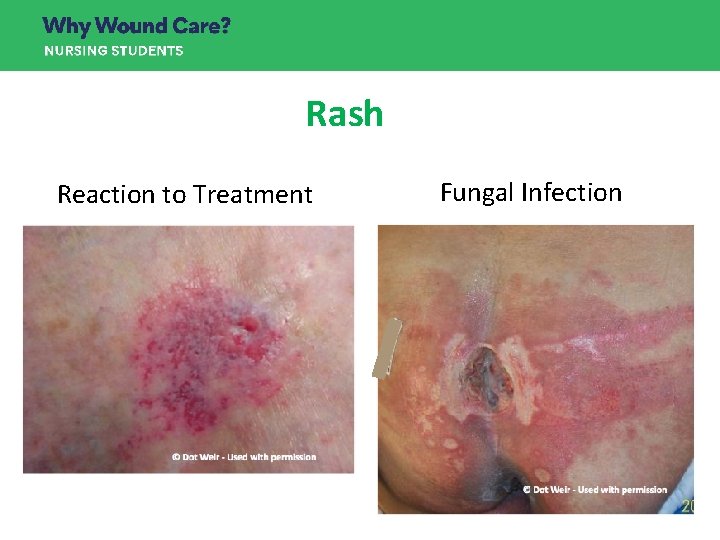
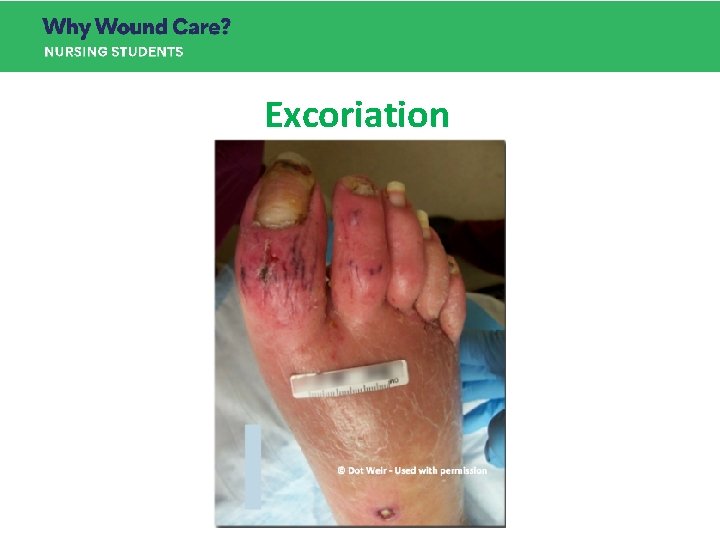
Surrounding Skin • Identify Potential Issues - Maceration - Erythema (Infection? ) - Rash • • • Reaction to treatment Fungal growth Excoriation Itching
Maceration
Erythema
Rash Reaction to Treatment Fungal Infection
Excoriation
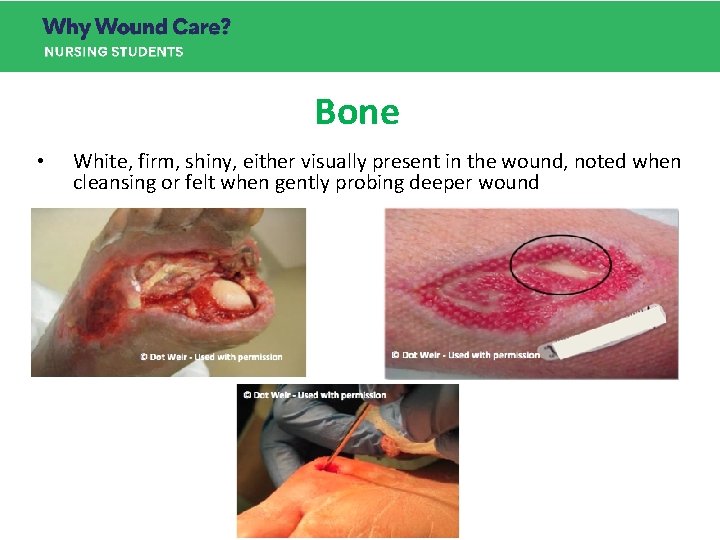
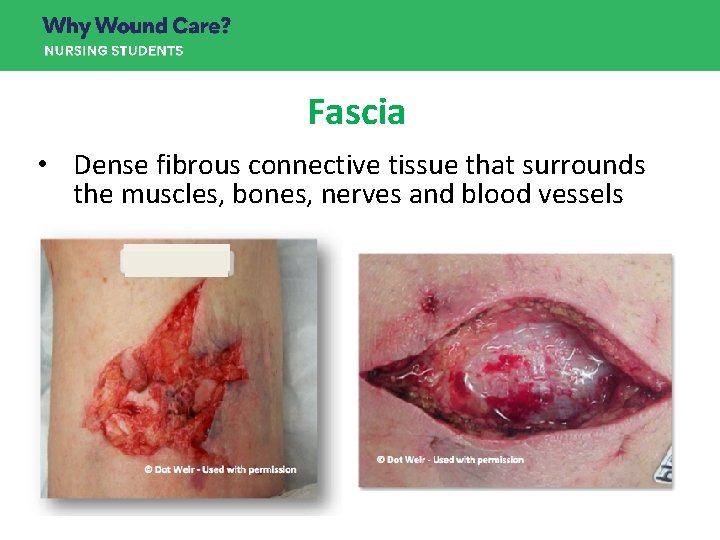
Structures • Recognizing visible or palpable deep structures such as bone, tendon or fascia is critical - Potential for migrating infection or osteomyelitis - Need to maintain moisture to prevent drying
Bone • White, firm, shiny, either visually present in the wound, noted when cleansing or felt when gently probing deeper wound
Fascia • Dense fibrous connective tissue that surrounds the muscles, bones, nerves and blood vessels
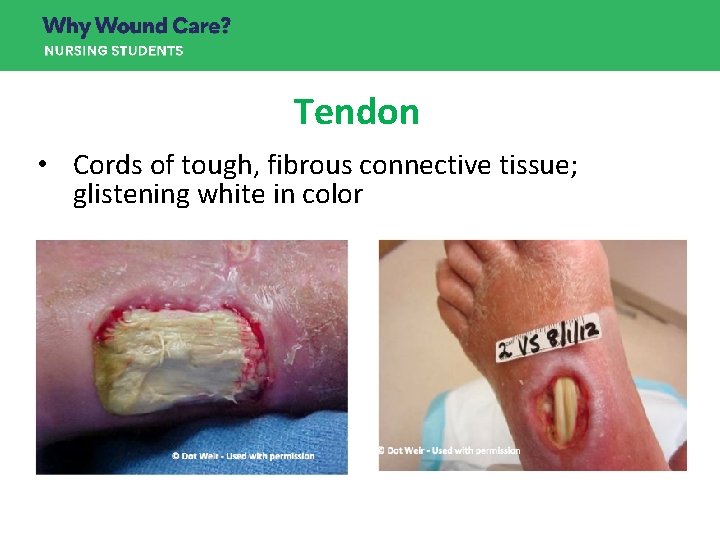
Tendon • Cords of tough, fibrous connective tissue; glistening white in color
Summary • Accurate assessment is foundation for developing plan and goals of care • Accurate assessment guides wound treatment decisions • Accurate assessment and documentation is foundation for evaluating progress towards meeting goals of care (change from previous assessments)
References • • • Van Rijswijk L, Eisenberg M. Wound assessment and documentation. In: Krasner DL, ed. Chronic Wound Care: The Essentials. Malvern, PA: HMP Communications; 2014: 29 -46. Baranoski S, Ayello E, Langemo D. Wound Assessment. In: Baranoski S, Ayello E. (eds) Wound Care Essentials, Practice Principles. Philadelphia, PA: Wolters Kluwer; 2016: 189 -219. Livingston M, Wolvos T. Wound Assessment. In: Scottsdale Wound Management Guide. Malvern, PA: HMP Communications; 2015: 1 -8.
Key Nursing Concepts Ø Ø Ø Ø Assessment Caring Communication Ethics Evidence-based practice Infection Control Pain Patient Education Prevention Self Care Deficit Safety Tissue Integrity
Key Nursing Diagnoses Ø Potential for Alteration in Skin Integrity Ø Potential for Alteration in Tissue Integrity Ø Impaired Skin Integrity Ø Impaired Tissue Integrity Ø Oral Mucous Membranes, Altered Ø Knowledge Deficit r/t Ø Self Care Deficit r/t
Key Nursing Practice Issues • Registered Nurses (RN) assess wounds; Licensed Practice Nurses monitor wounds per state nurse practice acts • Physicians diagnose wound etiology; some Advance Practice Nurses diagnose wound etiology per state nurse practice acts • Accurate wound assessment and documentation is foundation for evaluating attainment of progress towards goal of care
Websites for Further Information on Wounds - Association for the Advancement of Wound Care www. aawc 1. org - Canadian Association for Wound Care www. cawc. net - National Pressure Ulcer Advisory Panel www. npuap. org - World Union of Wound Healing Societies www. wuwhs. org - Wound Ostomy Continence Nurses Society www. wocn. org
www. Why. Wound. Care. com