
Worried well refers to A Covictims of a

- Slides: 27
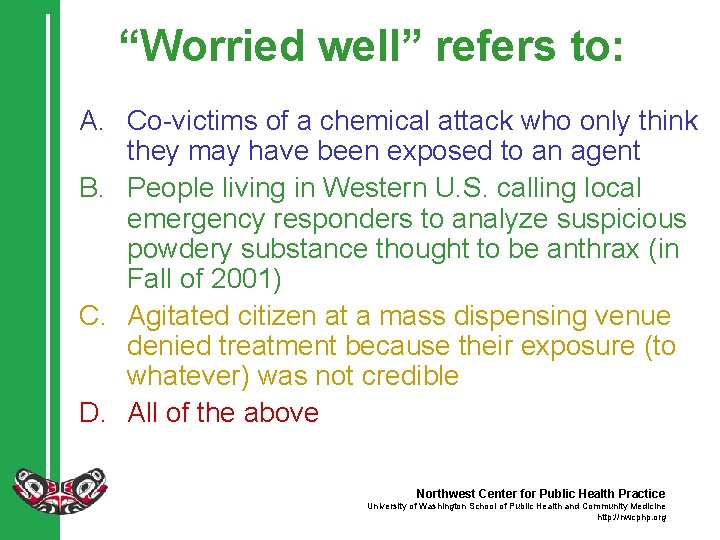
“Worried well” refers to: A. Co-victims of a chemical attack who only think they may have been exposed to an agent B. People living in Western U. S. calling local emergency responders to analyze suspicious powdery substance thought to be anthrax (in Fall of 2001) C. Agitated citizen at a mass dispensing venue denied treatment because their exposure (to whatever) was not credible D. All of the above Northwest Center for Public Health Practice University of Washington School of Public Health and Community Medicine http: //nwcphp. org
“Worried Well” Ø Not a unitary phenomena Ø May consume scarce resources in a mass casualty event Northwest Center for Public Health Practice University of Washington School of Public Health and Community Medicine http: //nwcphp. org
“Worried Well” Ø May arrive at a treatment facility first and impede access of those “really injured” Ø EMS, Public health and hospitals need plans for “worried well” Northwest Center for Public Health Practice University of Washington School of Public Health and Community Medicine http: //nwcphp. org
“Walk-Ins” Ø Most disaster victims will self-transfer (not wait for EMS) Ø May be contaminated Northwest Center for Public Health Practice University of Washington School of Public Health and Community Medicine http: //nwcphp. org
“Walk-Ins” Ø Early “walk-ins” will be “worried well” and/or most mobile and less seriously injured Ø Hospitals need to plan for walk-ins Northwest Center for Public Health Practice University of Washington School of Public Health and Community Medicine http: //nwcphp. org
Panic: A. Is almost inevitable in the aftermath of any large scale disaster B. Is rare and largely preventable C. Occurs under a circumscribed set of circumstances in which needed resources are scarce and/or escape options are limited D. B and C Northwest Center for Public Health Practice University of Washington School of Public Health and Community Medicine http: //nwcphp. org
The Myth of Panic Ø True panic is relatively rare, preventable and largely circumstantial Ø Historically, people and communities respond cooperatively and adaptively in most natural and manmade disasters: e. g. evacuation of the WTC towers on 9/11/2001 Northwest Center for Public Health Practice University of Washington School of Public Health and Community Medicine http: //nwcphp. org
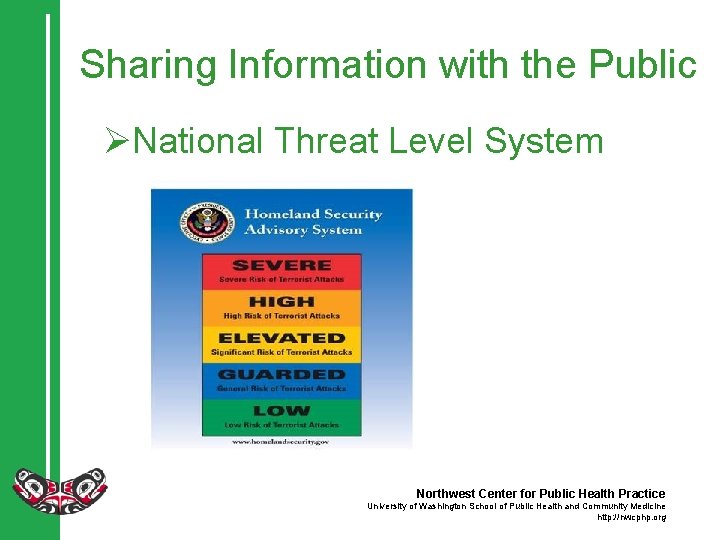
Sharing Information with the Public ØNational Threat Level System Northwest Center for Public Health Practice University of Washington School of Public Health and Community Medicine http: //nwcphp. org
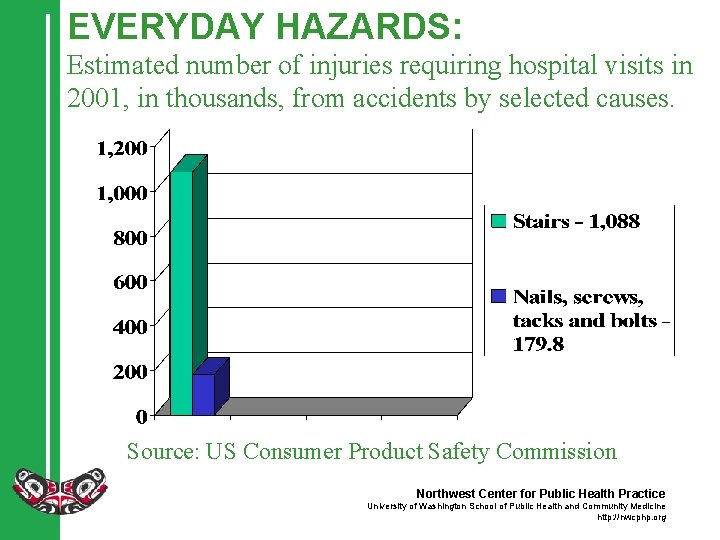
EVERYDAY HAZARDS: Estimated number of injuries requiring hospital visits in 2001, in thousands, from accidents by selected causes. Source: US Consumer Product Safety Commission Northwest Center for Public Health Practice University of Washington School of Public Health and Community Medicine http: //nwcphp. org
EVERYDAY HAZARDS: Estimated number of injuries requiring hospital visits in 2001, in thousands, from accidents by selected causes. Source: US Consumer Product Safety Commission Northwest Center for Public Health Practice University of Washington School of Public Health and Community Medicine http: //nwcphp. org
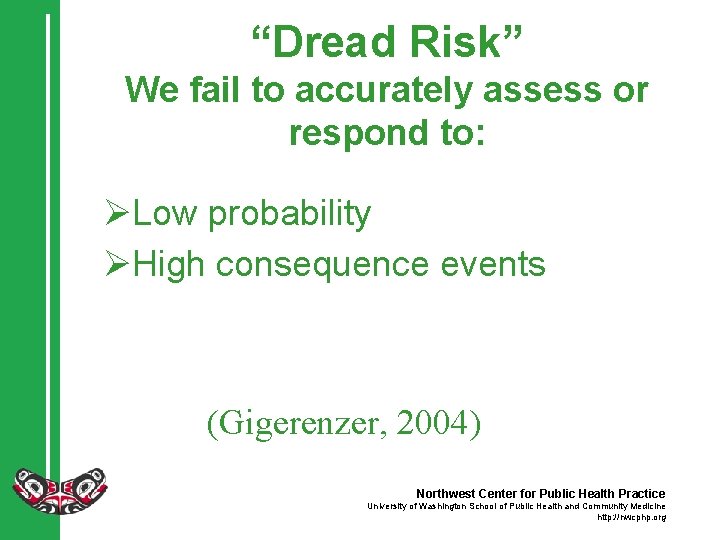
“Dread Risk” We fail to accurately assess or respond to: ØLow probability ØHigh consequence events (Gigerenzer, 2004) Northwest Center for Public Health Practice University of Washington School of Public Health and Community Medicine http: //nwcphp. org
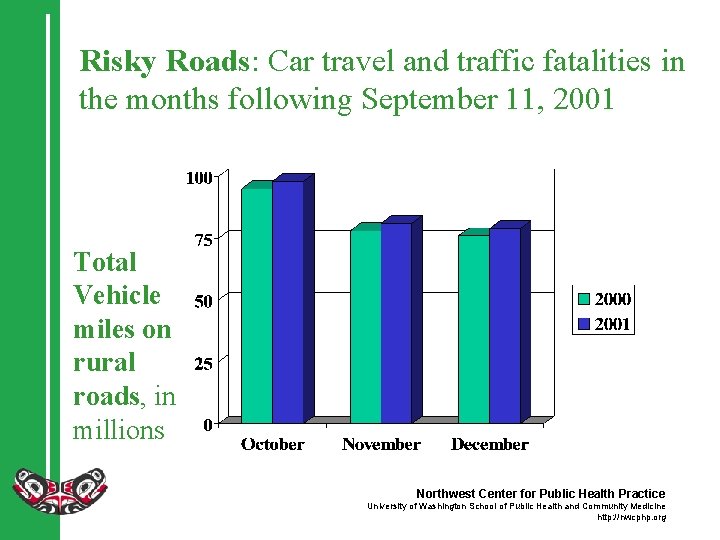
Risky Roads: Car travel and traffic fatalities in the months following September 11, 2001 Total Vehicle miles on rural roads, in millions Northwest Center for Public Health Practice University of Washington School of Public Health and Community Medicine http: //nwcphp. org
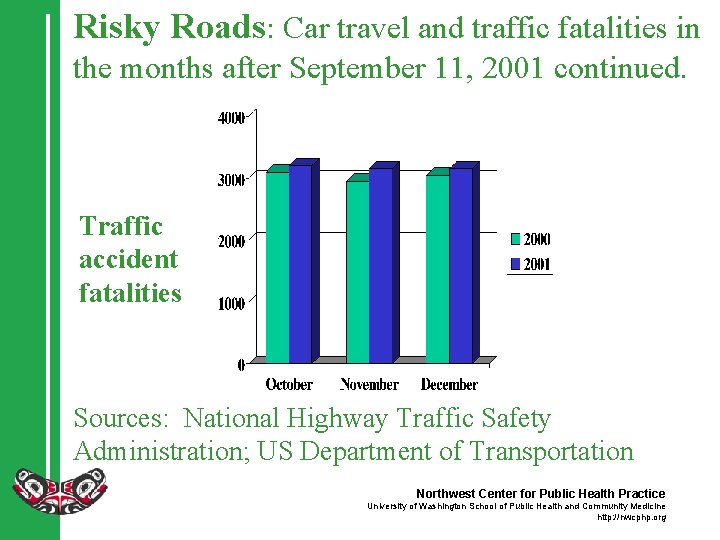
Risky Roads: Car travel and traffic fatalities in the months after September 11, 2001 continued. Traffic accident fatalities Sources: National Highway Traffic Safety Administration; US Department of Transportation Northwest Center for Public Health Practice University of Washington School of Public Health and Community Medicine http: //nwcphp. org
? Northwest Center for Public Health Practice University of Washington School of Public Health and Community Medicine http: //nwcphp. org
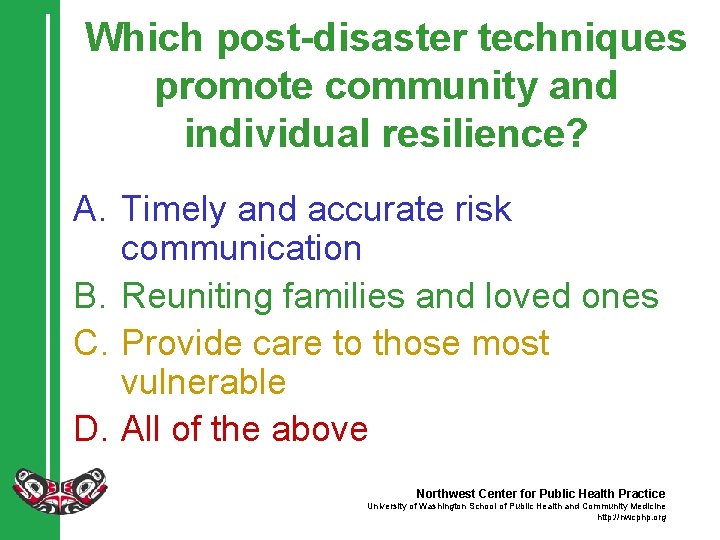
Which post-disaster techniques promote community and individual resilience? A. Timely and accurate risk communication B. Reuniting families and loved ones C. Provide care to those most vulnerable D. All of the above Northwest Center for Public Health Practice University of Washington School of Public Health and Community Medicine http: //nwcphp. org
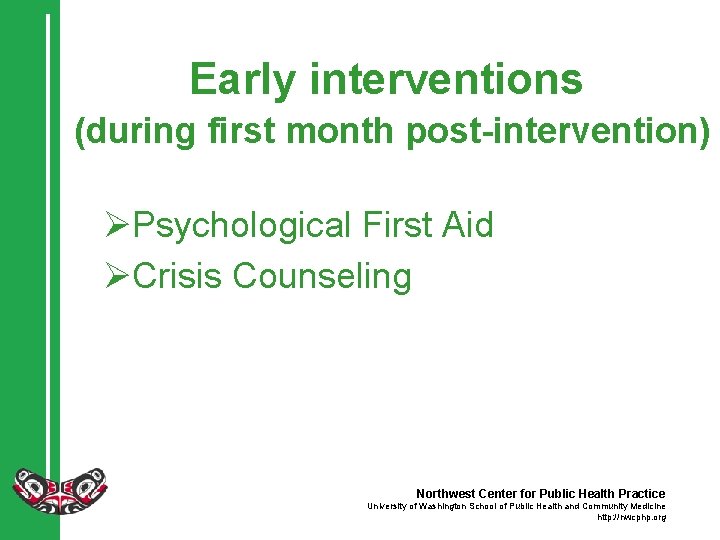
Early interventions (during first month post-intervention) ØPsychological First Aid ØCrisis Counseling Northwest Center for Public Health Practice University of Washington School of Public Health and Community Medicine http: //nwcphp. org
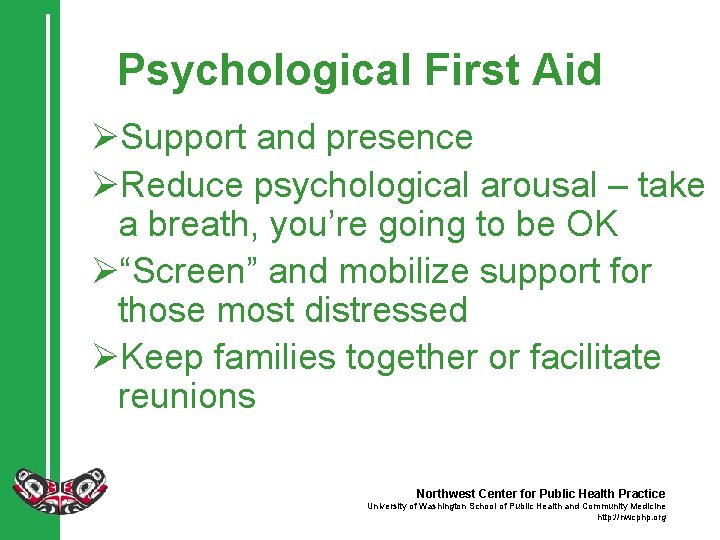
Psychological First Aid ØSupport and presence ØReduce psychological arousal – take a breath, you’re going to be OK Ø“Screen” and mobilize support for those most distressed ØKeep families together or facilitate reunions Northwest Center for Public Health Practice University of Washington School of Public Health and Community Medicine http: //nwcphp. org
Traumatic Incident Stress Information for Emergency Workers NIOSH Guidelines CDC link: http: //www. cdc. gov/niosh/unp-trinstrs. html NIOSH Guidelines CDC link: Northwest Center for Public Health Practice University of Washington School of Public Health and Community Medicine http: //nwcphp. org
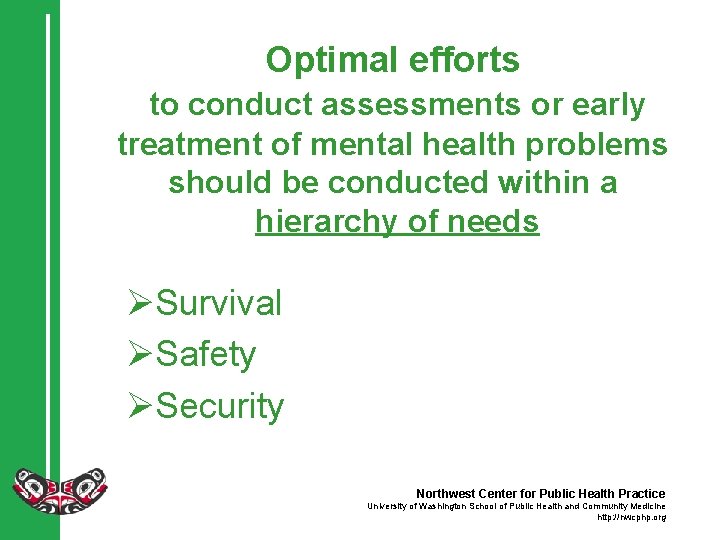
Optimal efforts to conduct assessments or early treatment of mental health problems should be conducted within a hierarchy of needs ØSurvival ØSafety ØSecurity Northwest Center for Public Health Practice University of Washington School of Public Health and Community Medicine http: //nwcphp. org
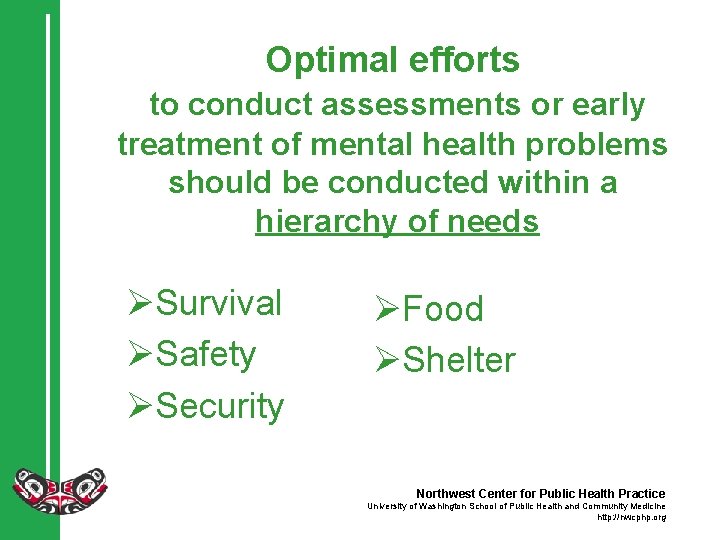
Optimal efforts to conduct assessments or early treatment of mental health problems should be conducted within a hierarchy of needs ØSurvival ØSafety ØSecurity ØFood ØShelter Northwest Center for Public Health Practice University of Washington School of Public Health and Community Medicine http: //nwcphp. org
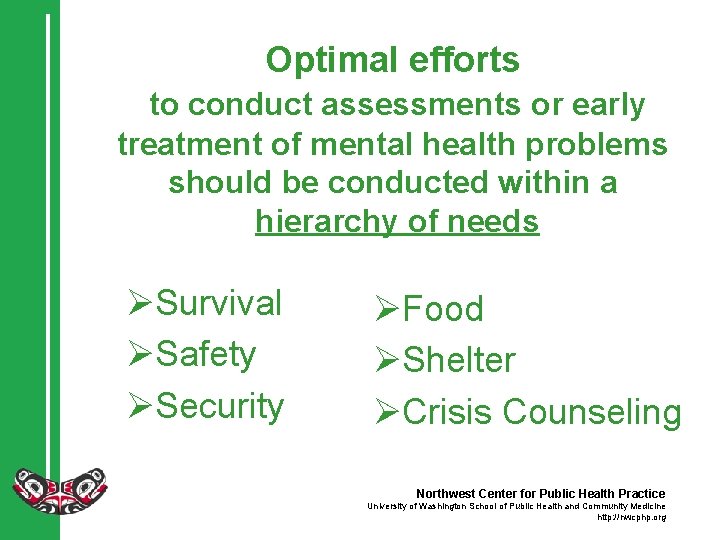
Optimal efforts to conduct assessments or early treatment of mental health problems should be conducted within a hierarchy of needs ØSurvival ØSafety ØSecurity ØFood ØShelter ØCrisis Counseling Northwest Center for Public Health Practice University of Washington School of Public Health and Community Medicine http: //nwcphp. org
Maladaptive Behavioral Outcomes Ø Posttraumatic stress disorder Ø Secondary Traumatization Ø Depression Ø Substance and alcohol abuse Northwest Center for Public Health Practice University of Washington School of Public Health and Community Medicine http: //nwcphp. org
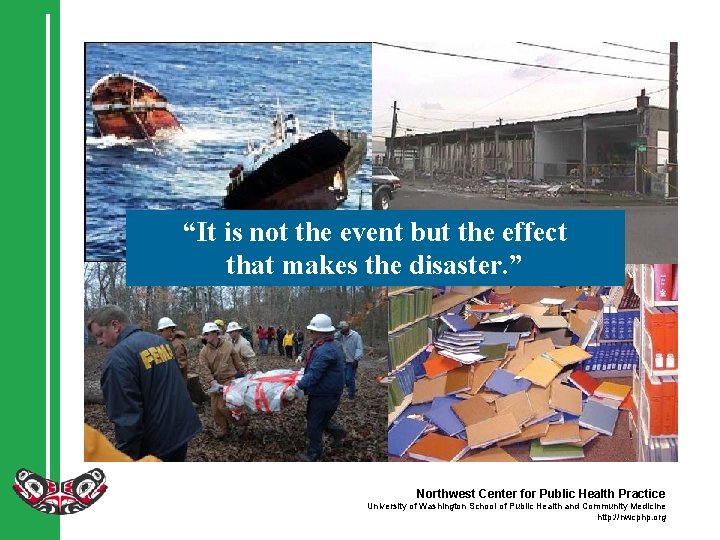
“It is not the event but the effect that makes the disaster. ” Northwest Center for Public Health Practice University of Washington School of Public Health and Community Medicine http: //nwcphp. org
Vulnerable Populations • Those with pre-existing or prior mental illness • Exposure variables • Lack of social resources Northwest Center for Public Health Practice University of Washington School of Public Health and Community Medicine http: //nwcphp. org
Vulnerable Populations (continued) • Prior exposure to violence and trauma • School aged children (< 10 y. o. ) • First responders - unique exposure & risk Beaton & Nemuth, J Traumatology 2004 Northwest Center for Public Health Practice University of Washington School of Public Health and Community Medicine http: //nwcphp. org
Northwest Center for Public Health Practice University of Washington School of Public Health and Community Medicine http: //nwcphp. org
Questions? Northwest Center for Public Health Practice University of Washington School of Public Health and Community Medicine http: //nwcphp. org