
Worms and Mollusks Chapter 27 Phylum Platyhelminthes flat



- Slides: 41
Worms and Mollusks Chapter 27
Phylum: Platyhelminthes (flat) (worm) Simplest bilateral symmetric animals showing a head and tail region. l 3 layers: endoderm, ectoderm, mesoderm l Known as acoelomates (without a coelom) l coelom : a fluid-filled body cavity l
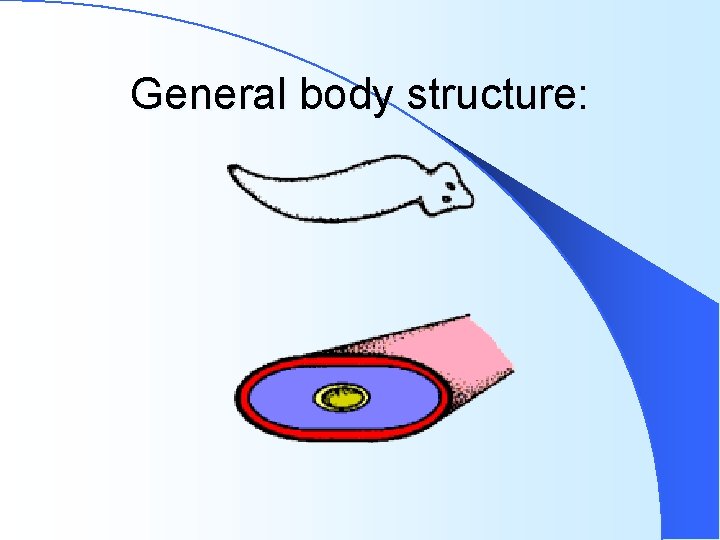
General body structure:
Feeding v Free-living flatworms can eat: v Tiny aquatic animals v Dead animals v Single opening to function as a mouth and anus. v Possess a pharynx
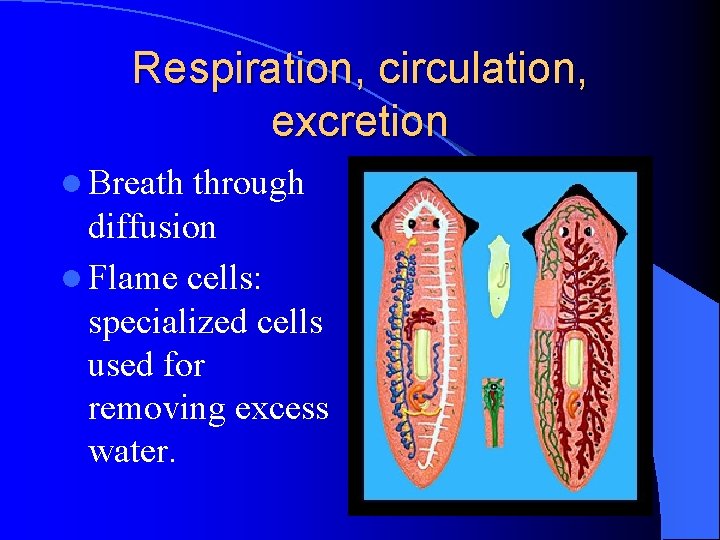
Respiration, circulation, excretion l Breath through diffusion l Flame cells: specialized cells used for removing excess water.
Planarians (c. Turbellaria) v. Free-living freshwater flatworm. v. Possess a digestive tract, mouth, pharynx, and branched intestine. v. Feed on small microscopic animals v. No skeletal, circulatory, or respiratory system
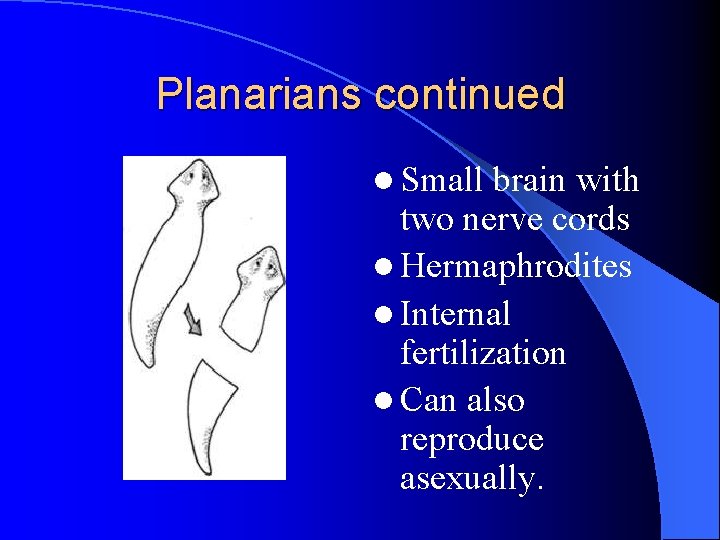
Planarians continued l Small brain with two nerve cords l Hermaphrodites l Internal fertilization l Can also reproduce asexually.
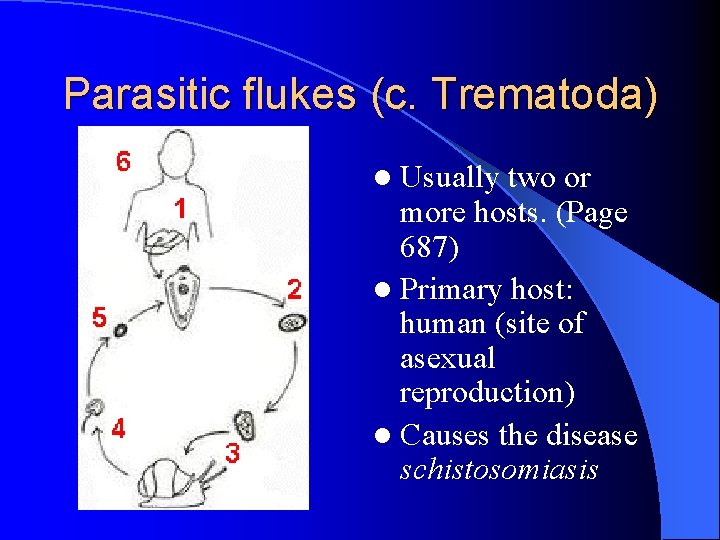
Parasitic flukes (c. Trematoda) l Usually two or more hosts. (Page 687) l Primary host: human (site of asexual reproduction) l Causes the disease schistosomiasis
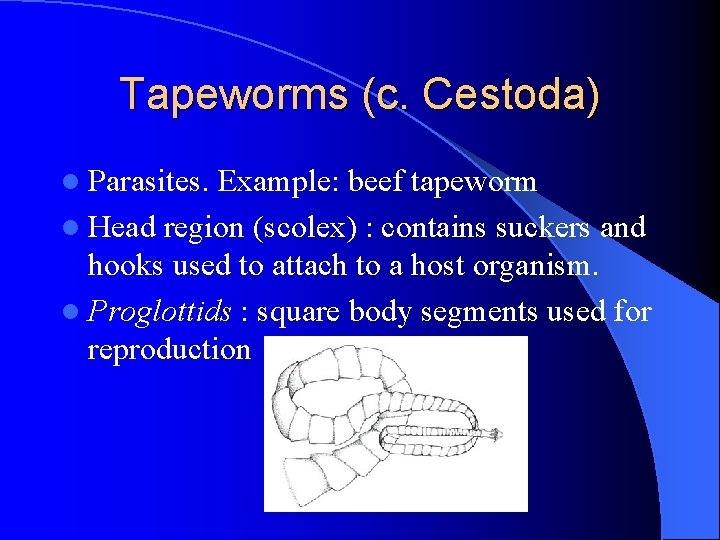
Tapeworms (c. Cestoda) l Parasites. Example: beef tapeworm l Head region (scolex) : contains suckers and hooks used to attach to a host organism. l Proglottids : square body segments used for reproduction
Phylum: Nematoda (roundworms) Ø Long cylindrical bodies Ø Often covered with a thick cuticle Ø 1 mm to 1 meter in length Ø Both free-living and parasitic Ø *** 2 body openings*** Ø Major difference from the flatworms Ø Food and wastes will NOT be mixed
Form and function § § § Eat small animals, bacteria, algae, fungi, etc Exchange gases through diffusion Possess a simple nervous system Move through contracting muscles Reproduce sexually
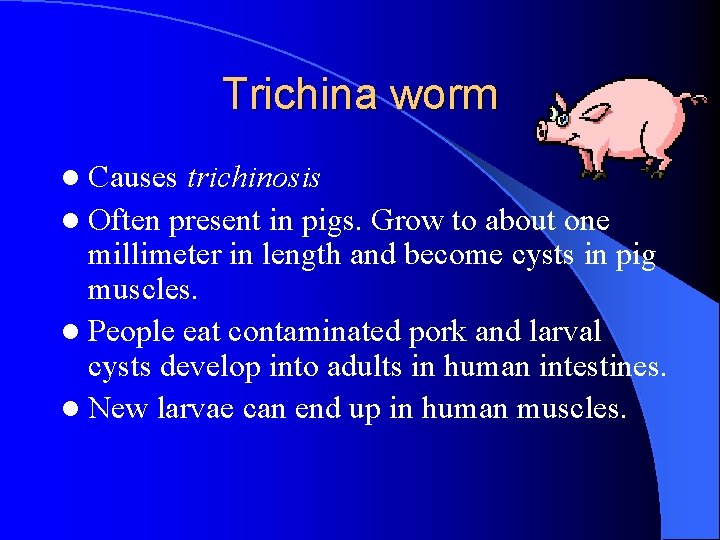
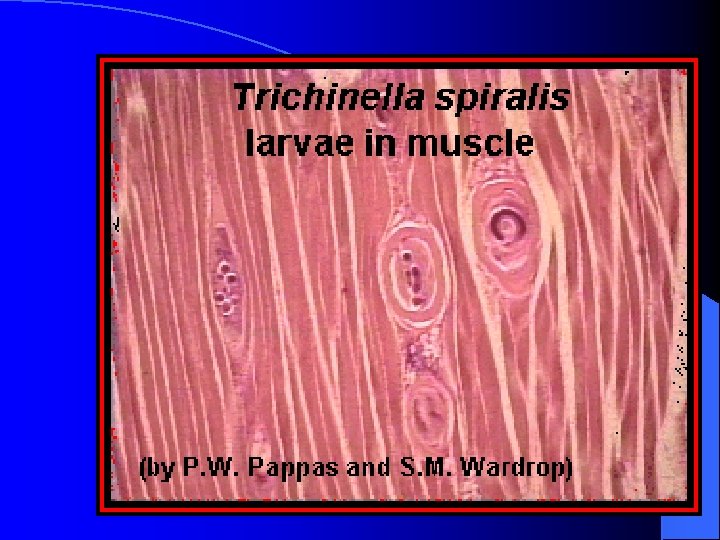
Trichina worm l Causes trichinosis l Often present in pigs. Grow to about one millimeter in length and become cysts in pig muscles. l People eat contaminated pork and larval cysts develop into adults in human intestines. l New larvae can end up in human muscles.
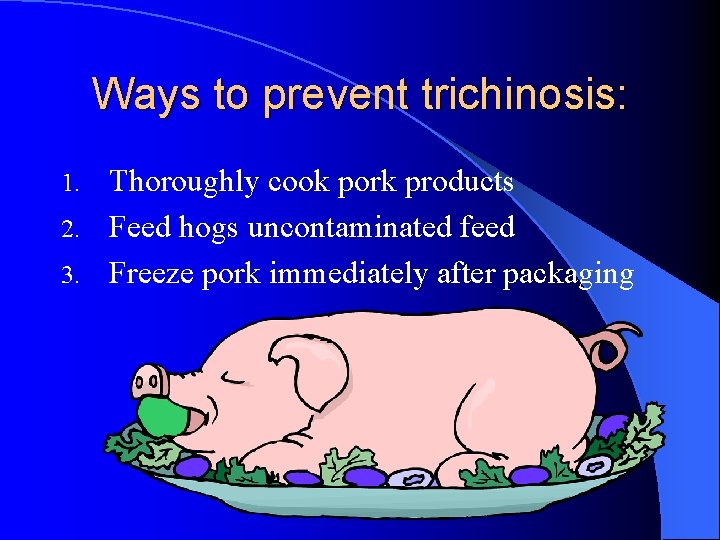
Ways to prevent trichinosis: Thoroughly cook pork products 2. Feed hogs uncontaminated feed 3. Freeze pork immediately after packaging 1.
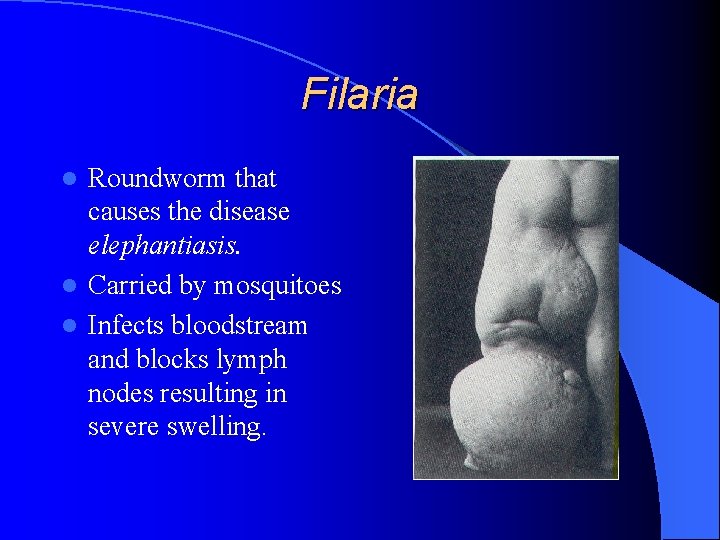
Filaria Roundworm that causes the disease elephantiasis. l Carried by mosquitoes l Infects bloodstream and blocks lymph nodes resulting in severe swelling. l
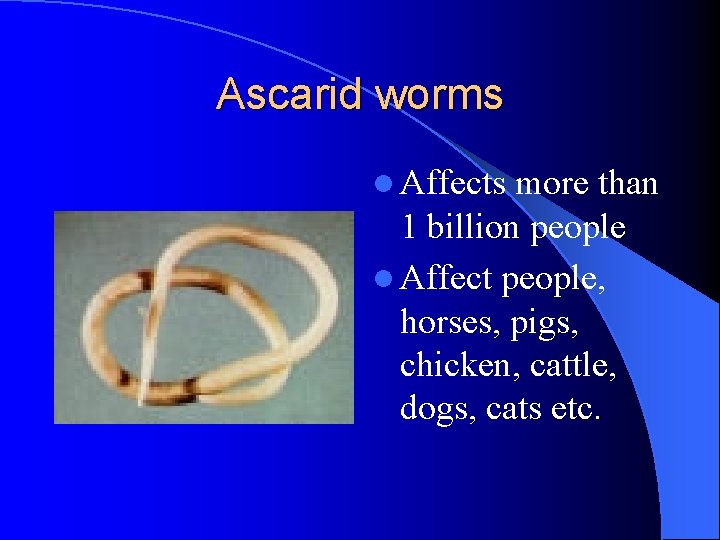
Ascarid worms l Affects more than 1 billion people l Affect people, horses, pigs, chicken, cattle, dogs, cats etc.
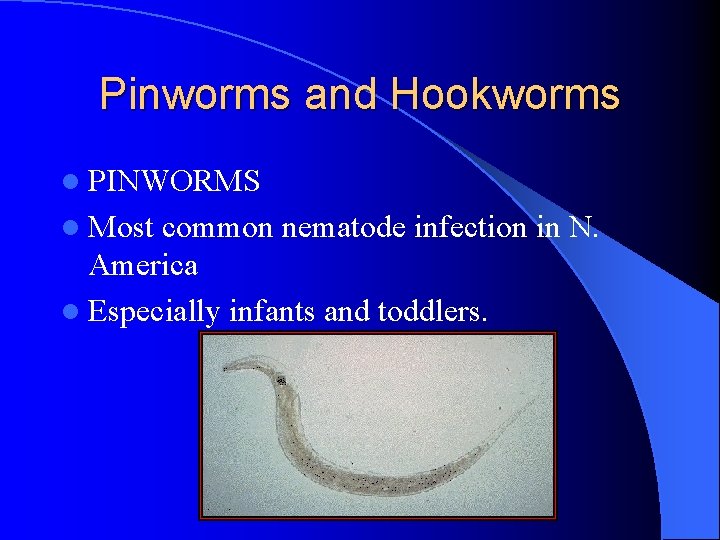
Pinworms and Hookworms l PINWORMS l Most common nematode infection in N. America l Especially infants and toddlers.
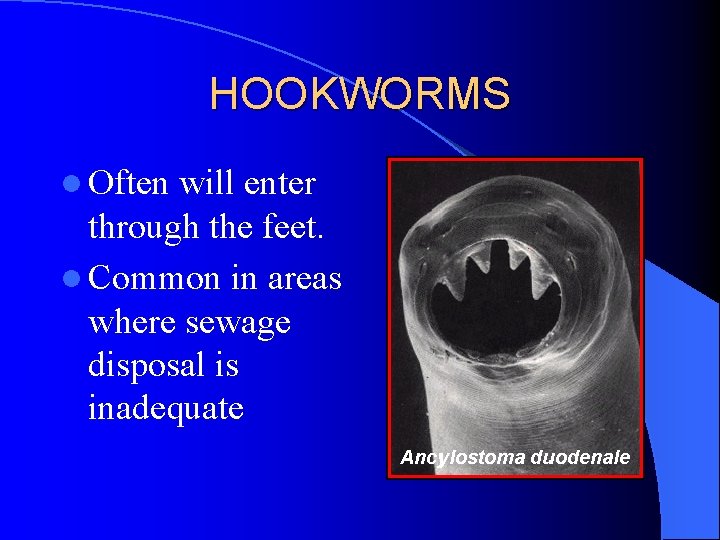
HOOKWORMS l Often will enter through the feet. l Common in areas where sewage disposal is inadequate
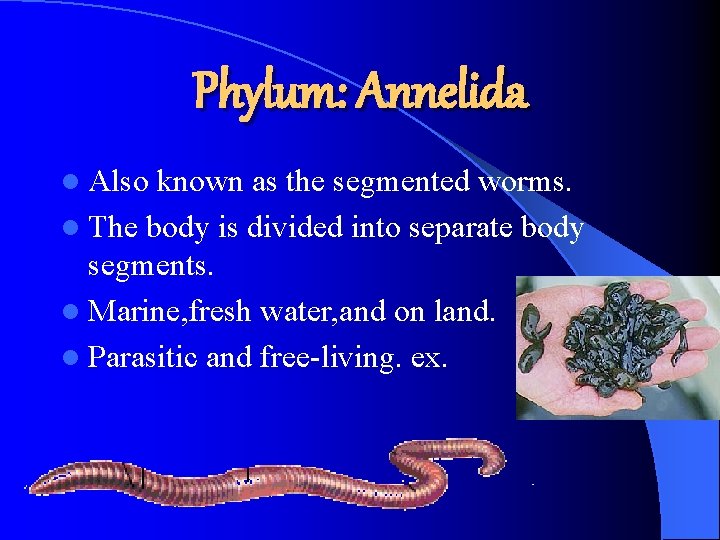
Phylum: Annelida l Also known as the segmented worms. l The body is divided into separate body segments. l Marine, fresh water, and on land. l Parasitic and free-living. ex.
…more annelid facts l “tube within a tube” body plan. l Closed circulatory system, 2 openings
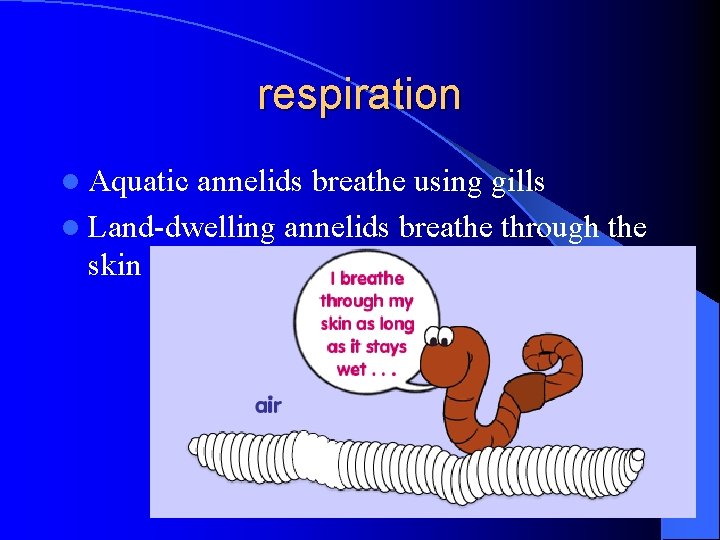
respiration l Aquatic annelids breathe using gills l Land-dwelling annelids breathe through the skin
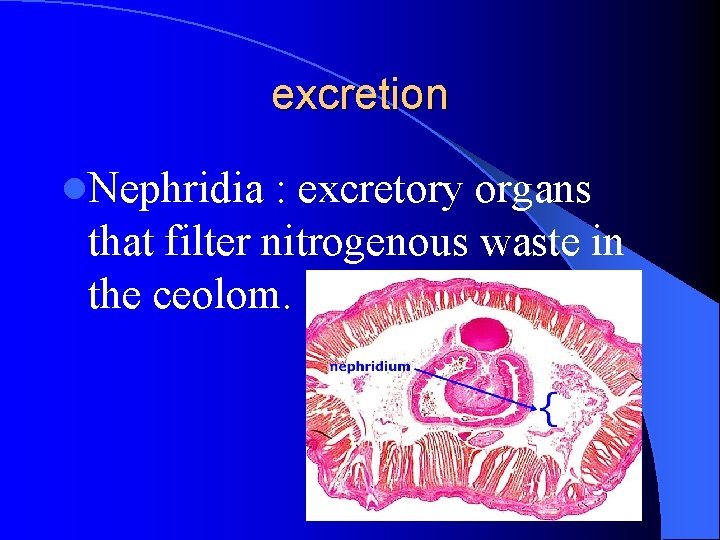
excretion l. Nephridia : excretory organs that filter nitrogenous waste in the ceolom.
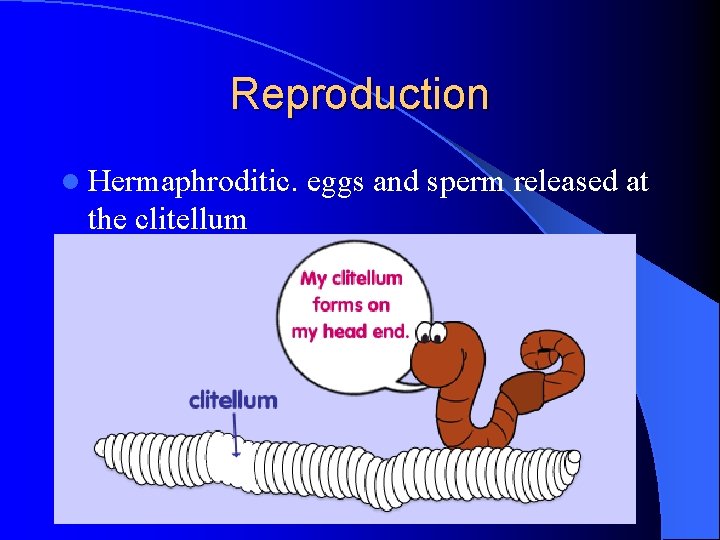
Reproduction l Hermaphroditic. the clitellum eggs and sperm released at
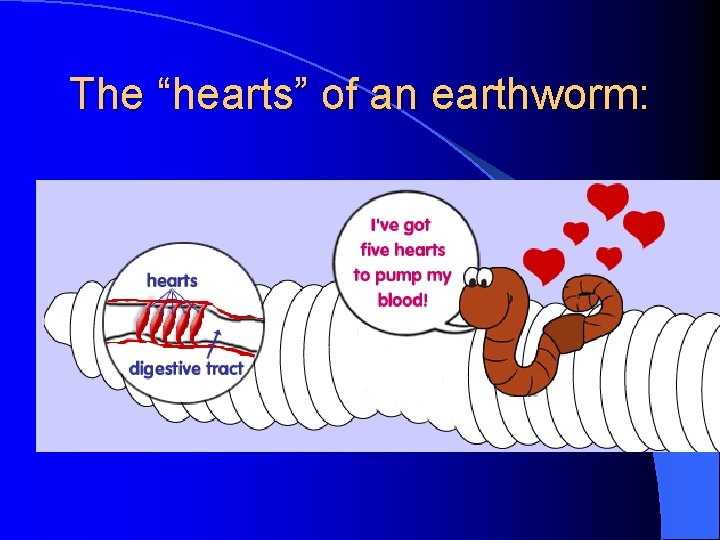
l C. Oligochaeta l First segment = prostomium l Setae = small hair-like extensions on ventral surface used for locomotion. l Possess many “hearts”
The “hearts” of an earthworm:
Ecology of Earthworms Help to aerate the soil 2) Provide nutrients in to the soil in fecal matter 3) Participate in a wide range of food chains 1)
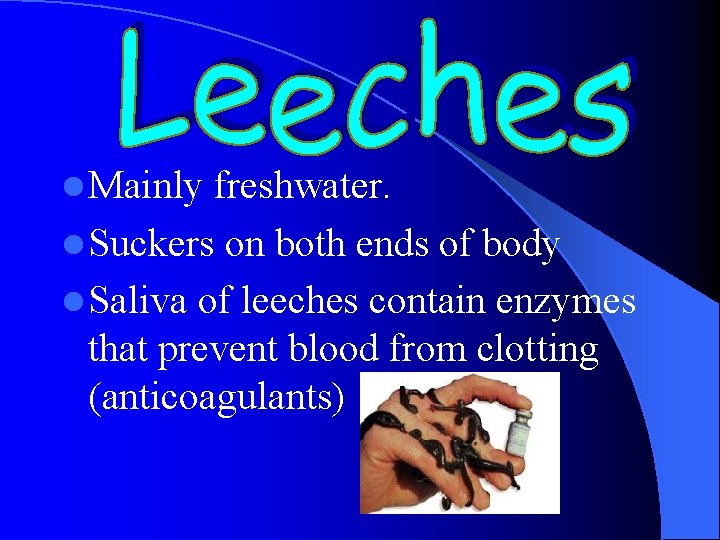
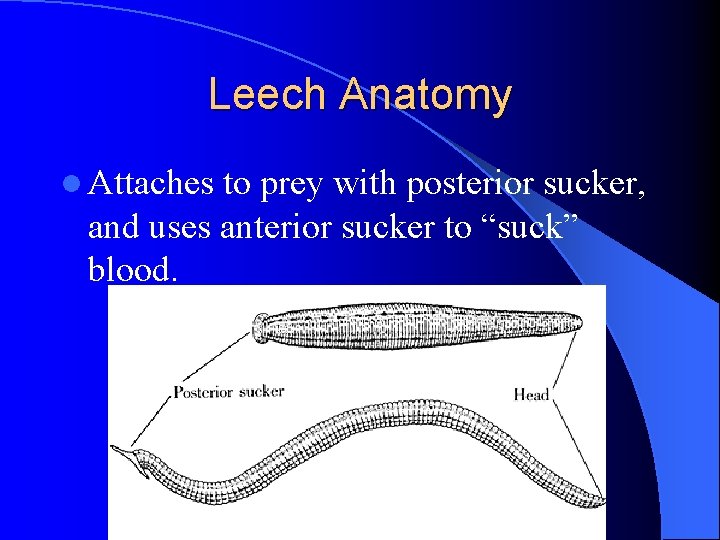
l Mainly freshwater. l Suckers on both ends of body l Saliva of leeches contain enzymes that prevent blood from clotting (anticoagulants)
Leech Anatomy l Attaches to prey with posterior sucker, and uses anterior sucker to “suck” blood.
Medicinal uses of leeches l Used to be used for “leeching” by early physicians to rid a sick person of “bad” blood. l Still used in surgery to prevent blood clotting and unwanted swelling due to excess blood.
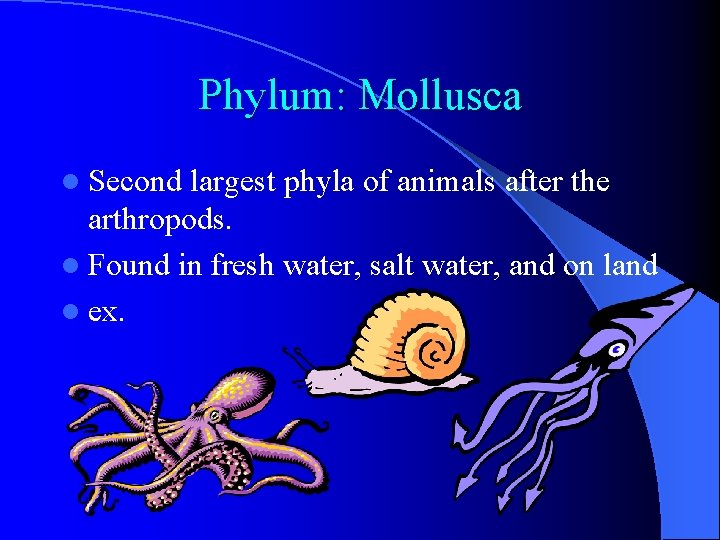
Phylum: Mollusca l Second largest phyla of animals after the arthropods. l Found in fresh water, salt water, and on land l ex.
Mollusk characteristics: l Soft bodies, 3 cell tissue layers l Many are used for food and jewelry l Possess a foot = large ventral muscle used for movement. l Most have a radula (exception: bivalves) l Mantle - fold of skin that surrounds the body organs
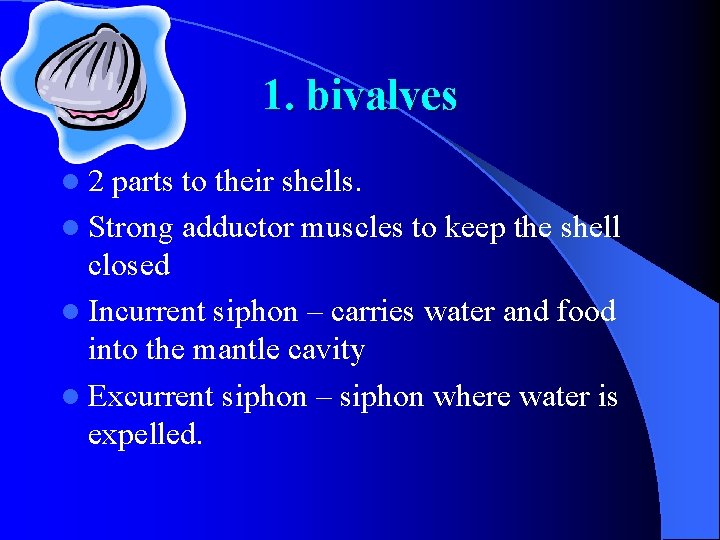
1. bivalves l 2 parts to their shells. l Strong adductor muscles to keep the shell closed l Incurrent siphon – carries water and food into the mantle cavity l Excurrent siphon – siphon where water is expelled.
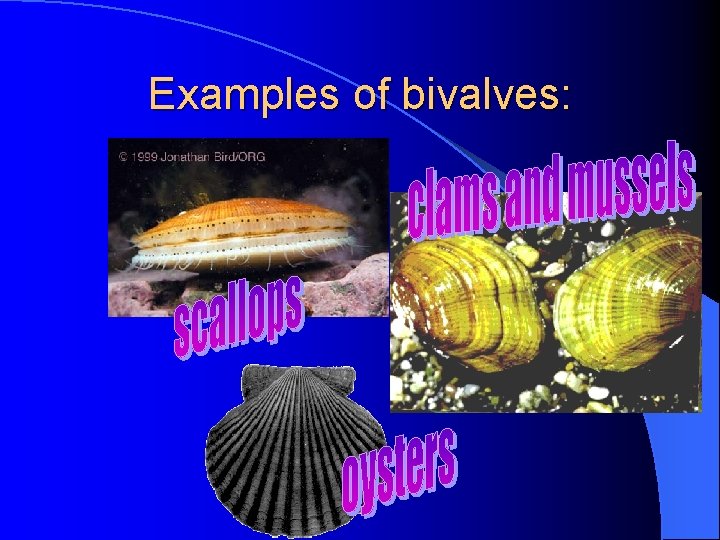
Examples of bivalves:
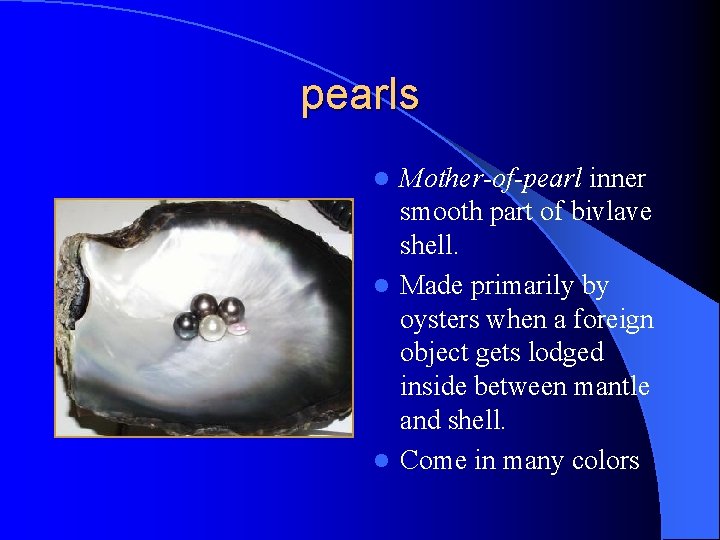
pearls Mother-of-pearl inner smooth part of bivlave shell. l Made primarily by oysters when a foreign object gets lodged inside between mantle and shell. l Come in many colors l
Reproduction and nutrition l Bivalves are filter-feeders. (plankton and small invertebrates) l Separate sexes l Sperm is released by the excurrent siphon and enters a female via the incurrent siphon where fertilization takes place.
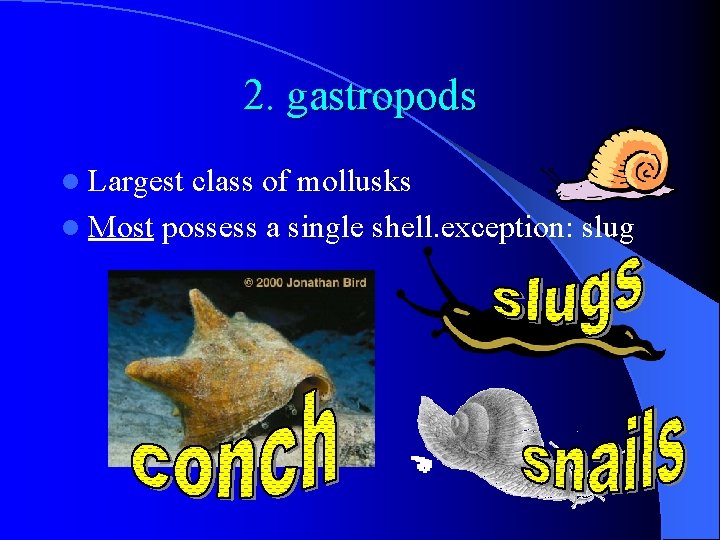
2. gastropods l Largest class of mollusks l Most possess a single shell. exception: slug
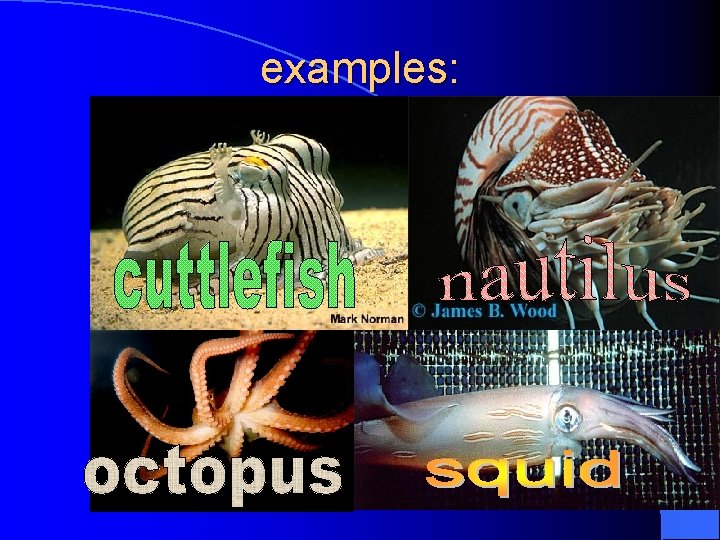
3. cephalopods l Most advanced mollusks l All are marine predators l Use tentacles to gather and manipulate food l Can swim rapidly by expelling a jet of water from their mantle cavity. l Some may discharge an inky fluid for defense l Octopus (8 arms) squid (10 tentacles)
examples: