
Worming an update Katie Kershaw BVSc MRCVS Plan
Worming – an update Katie Kershaw BVSc MRCVS
Plan • The worms • Worm control • The wormers • Resistance • RDA
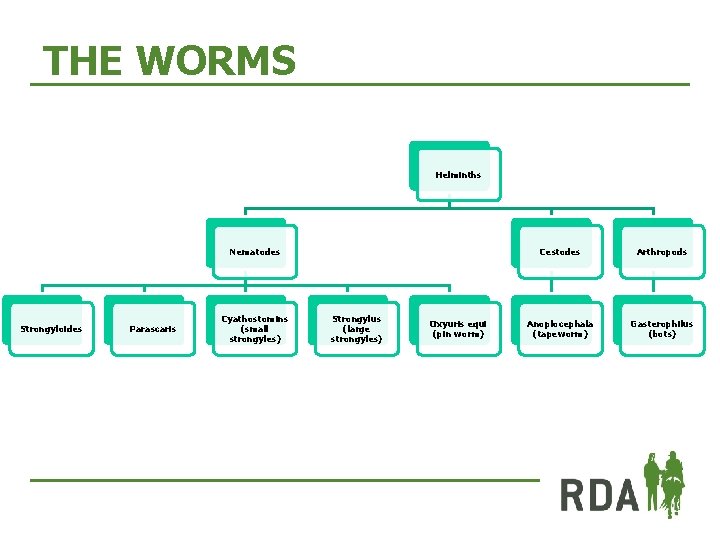
THE WORMS Helminths Nematodes Strongyloides Parascaris Cyathostomins (small strongyles) Strongylus (large strongyles) Oxyuris equi (pin worm) Cestodes Arthropods Anoplocephala (tapeworm) Gasterophilus (bots)
Strongyloids westeri – Threadworm • Age: Very young (birth – 2 months) • From the milk • Clinical signs: – Diarrhoea, lethargy, reduced weight gain • Prevention: – Treat mares before foaling? • Treatment: – Ivermectin
Tapeworms – Anoplocephala perfoliata • Age: 6 months + • Pathology: – Attach at ileocaecal junction – Hyperaemia, mucosal thickening and necrotic ulcers • Clinical Signs: – Colic? – No signs • Treatment: – Pyrantel – Praziquantel • Prevention: – 1 or 2 treatments a year?
Tapeworm Diagnosis • Faecal egg counts? – Centrifugation? – Flotation? – Poor sensitivity/specificity • ELISA – Blood – Uni of Liverpool and Rossdales – Saliva – Equisal – Exposed in last 5 months

Pinworm – Oxyuris equi • Age: 5 months + • Pathology: – Irritant proteinaceous uterine fluid, egg masses or more complex? • Clinical signs: – Itchy bottom! • Diagnosis: – Protruding from rectum? Sticky tape - microscope – NOT FEC • Treatment: – Wormer – Cleaning, disinfection • Prevention
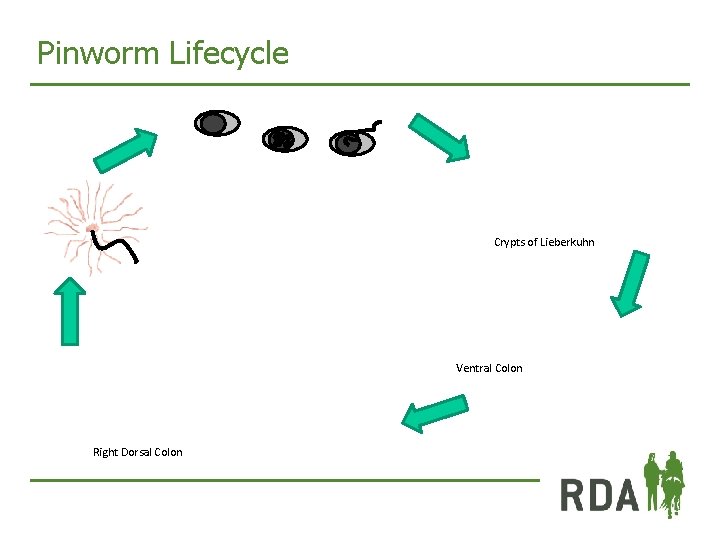
Pinworm Lifecycle Crypts of Lieberkuhn Ventral Colon Right Dorsal Colon
Bots - Gasterophilus • Age: any • Clinical signs: – Yellow dots on legs • Significance? • Treatment – Ivermectin/moxidectin – Autumn/Winter – larvae in host
Lungworm – Dictyocaulus arnfieldi • Common in donkeys (supports the whole life cycle) • Clinical signs – Few in donkeys – Coughing, breathing difficulties and inappetance in horses • Diagnosis – FEC – Sedimentation – Test the donkeys not horses (few adults in horses) • Treatment – Ivermectin/moxidectin
Liver Fluke • Usually sheep and cattle • Indirect life-cycle – Galba truncatula • Clinical signs: – Weight loss/inappetance – Raised liver parameters • Diagnosis: – FEC – low sensitivity – Serum ELISA – unknown sensitivity/specificity • Treatment: – Triclabendazole 12 mg/kg PO – resistance? !
Large Strongyles – Strongylus vulgaris • Age: 6 months + • Rare in UK now – Denmark? • Pathology: – Migration – intestinal wall – Larvae in arterioles – thromboembolic infarctions • Clinical signs: – Weight loss – Colic • Treatment: – Most wormers – no resistance known • Prevention: – Paddock maintenance
Small Strongyles – Cyathostomins Redworm
Clinical Signs • Virtually ALL grazing horses exposed • 5 -10 common types • None? • Malaise • Weight loss • Anorexia • Colic
The Encysted Stage • L 3 → HYPOBIOSIS – – – = “early L 3” Host immunity? Cold conditioning? Population density? Autumn/Winter Low/negative FEC • Re-emergence – – Larval cyathostominosis Sudden weight loss, oedema, diarrhoea Fatal in up to 50% cases Spring
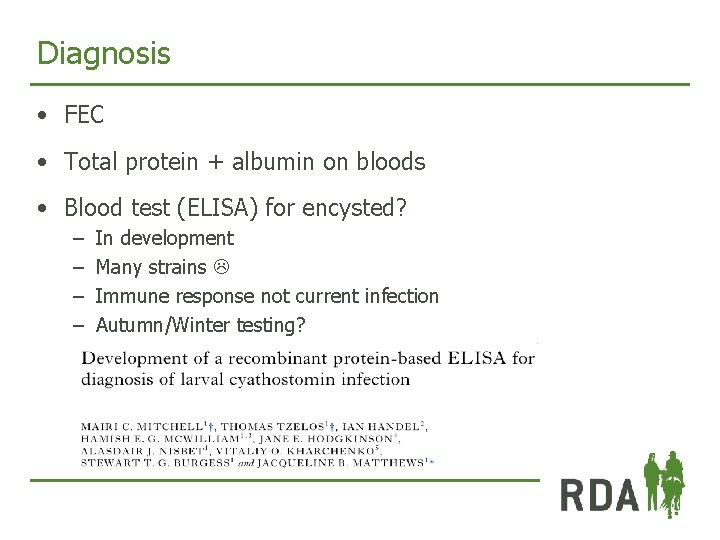
Diagnosis • FEC • Total protein + albumin on bloods • Blood test (ELISA) for encysted? – – In development Many strains Immune response not current infection Autumn/Winter testing?
Treatment • De-worming – – Ivermectin Moxidectin? Pyrantel Fenbendazole? ! • Anti-inflammatories? • Fluid therapy?
Prevention Strategies • Appropriate stocking • Poo-picking – > 2 x/week • Mixed grazing • Separate dung heaps • Pasture rotation? – Survival 6 -9 months - strongyles – Years - ascarids • Rest pasture – Only in very hot weather • Harrowing? – Spread contamination – Not hot enough to kill
Quarantine • Moxidectin + Praziquantel on arrival – Least evidence of resistance • Quarantined ≤ 3 days post treatment – Don’t spread faeces • FECRT after 10 -14 days?
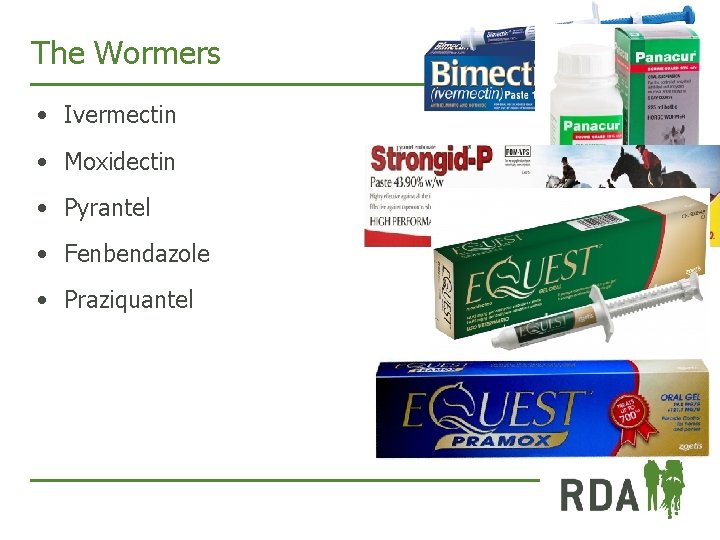
The Wormers • Ivermectin • Moxidectin • Pyrantel • Fenbendazole • Praziquantel
How long to stable a horse after worming? • Strongyles – No need – Unless environmental issues • Parascaris – 3 days?
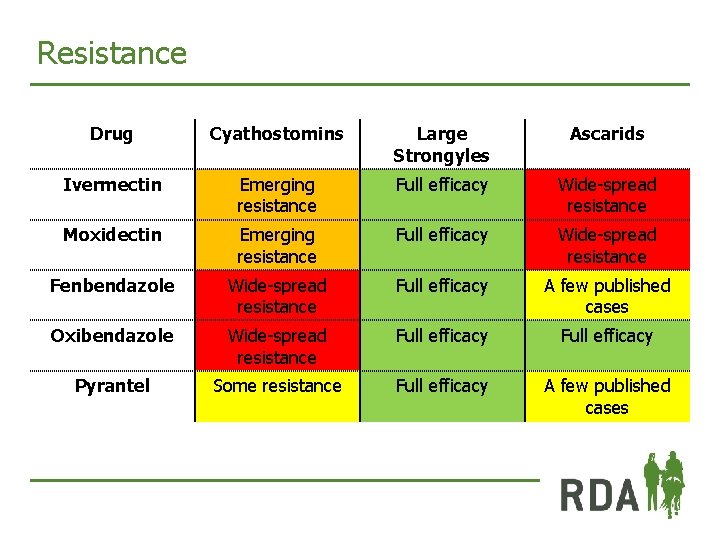
Resistance Drug Cyathostomins Large Strongyles Ascarids Ivermectin Emerging resistance Full efficacy Wide-spread resistance Moxidectin Emerging resistance Full efficacy Wide-spread resistance Fenbendazole Wide-spread resistance Full efficacy A few published cases Oxibendazole Wide-spread resistance Full efficacy Pyrantel Some resistance Full efficacy A few published cases
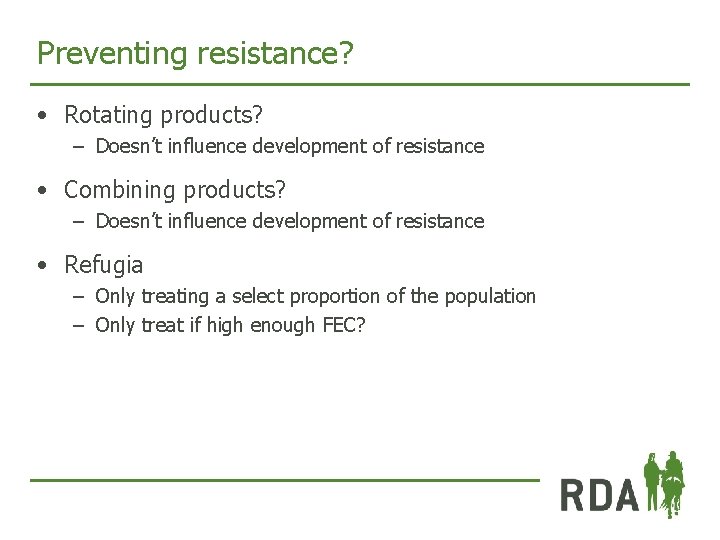
Preventing resistance? • Rotating products? – Doesn’t influence development of resistance • Combining products? – Doesn’t influence development of resistance • Refugia – Only treating a select proportion of the population – Only treat if high enough FEC?
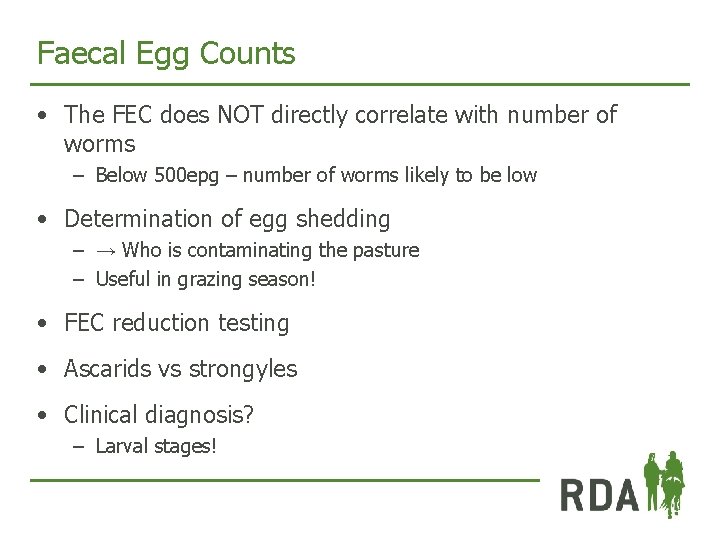
Faecal Egg Counts • The FEC does NOT directly correlate with number of worms – Below 500 epg – number of worms likely to be low • Determination of egg shedding – → Who is contaminating the pasture – Useful in grazing season! • FEC reduction testing • Ascarids vs strongyles • Clinical diagnosis? – Larval stages!
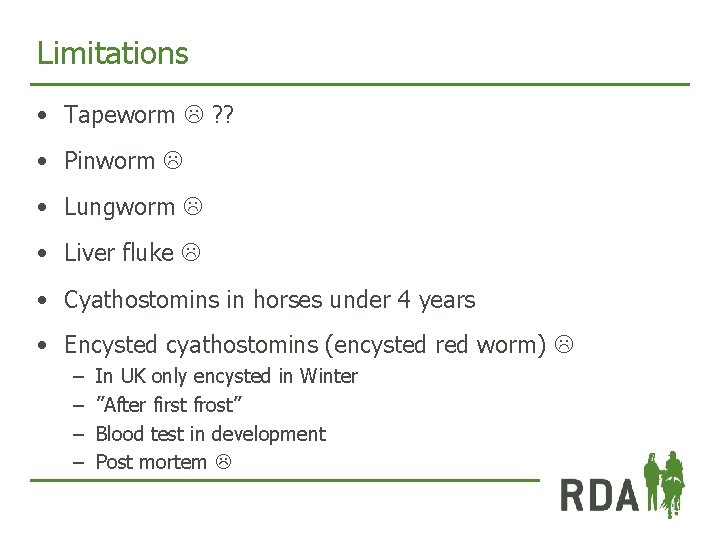
Limitations • Tapeworm ? ? • Pinworm • Lungworm • Liver fluke • Cyathostomins in horses under 4 years • Encysted cyathostomins (encysted red worm) – – In UK only encysted in Winter ”After first frost” Blood test in development Post mortem
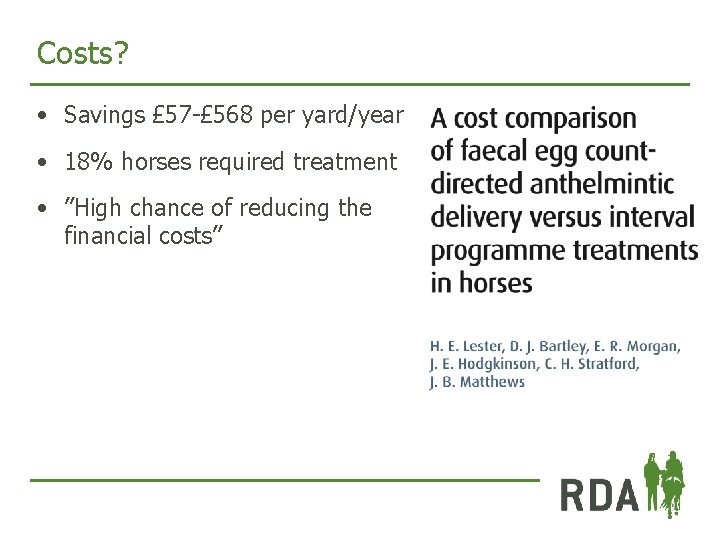
Costs? • Savings £ 57 -£ 568 per yard/year • 18% horses required treatment • ”High chance of reducing the financial costs”
How to take a sample • 3 x between March and September • >3 faecal balls and mix • Air-expelled container • Refrigerate within 12 hours • Tested within 5 days • Quantitative technique – Vet – External lab
Interpretation • Redworm vs Roundworm vs Tapeworm • <200 epg = LOW – Doesn’t currently require treatment • 250 epg – 1200 epg = MEDIUM – Requires treatment • 1200+ = HIGH – May need additional or different treatments – Discuss with own vet
Equisal • Direct order from website • Swab in mouth where bit sits • Send away • Tests for ANTIBODIES to the tapeworm • +ve = exposed in last 5 months • -ve = not exposed in last 5 months
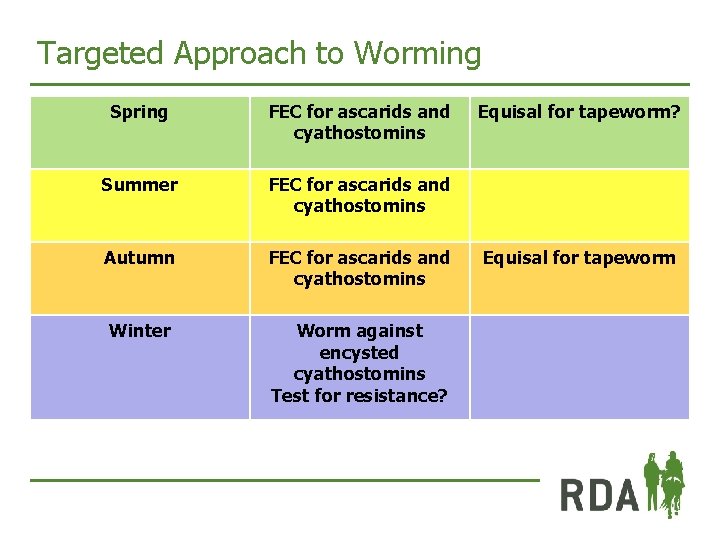
Targeted Approach to Worming Spring FEC for ascarids and cyathostomins Summer FEC for ascarids and cyathostomins Autumn FEC for ascarids and cyathostomins Winter Worm against encysted cyathostomins Test for resistance? Equisal for tapeworm
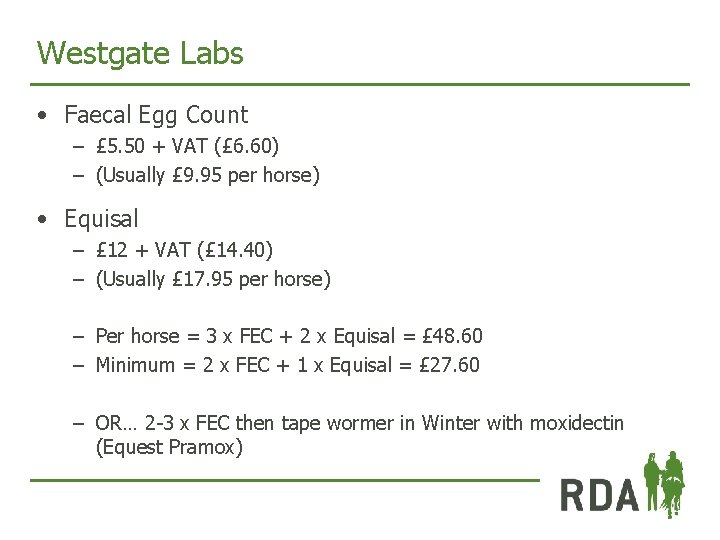
Westgate Labs • Faecal Egg Count – £ 5. 50 + VAT (£ 6. 60) – (Usually £ 9. 95 per horse) • Equisal – £ 12 + VAT (£ 14. 40) – (Usually £ 17. 95 per horse) – Per horse = 3 x FEC + 2 x Equisal = £ 48. 60 – Minimum = 2 x FEC + 1 x Equisal = £ 27. 60 – OR… 2 -3 x FEC then tape wormer in Winter with moxidectin (Equest Pramox)
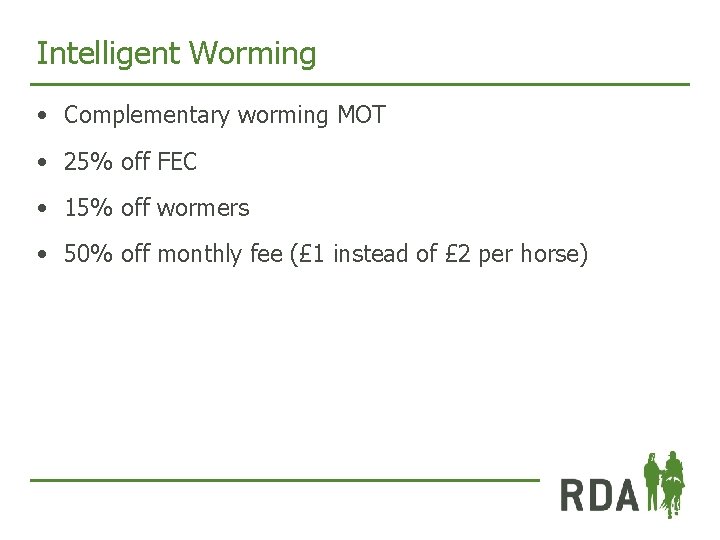
Intelligent Worming • Complementary worming MOT • 25% off FEC • 15% off wormers • 50% off monthly fee (£ 1 instead of £ 2 per horse)
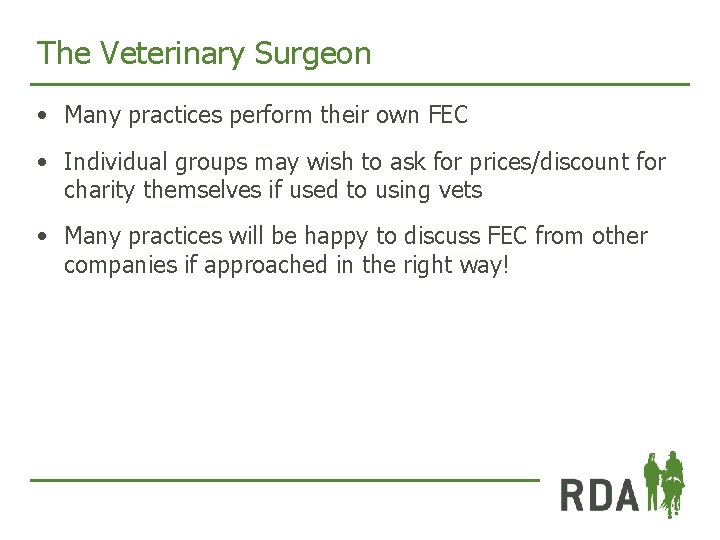
The Veterinary Surgeon • Many practices perform their own FEC • Individual groups may wish to ask for prices/discount for charity themselves if used to using vets • Many practices will be happy to discuss FEC from other companies if approached in the right way!
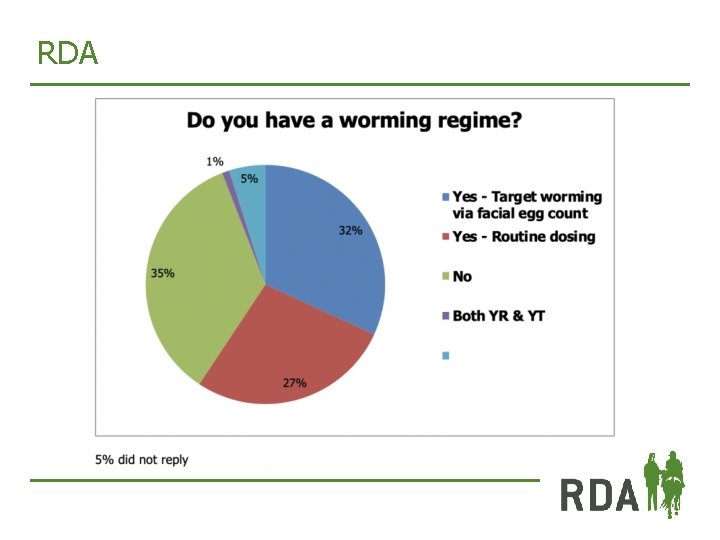
RDA
The Aim • Create relationships with Westgate/IW • Discounted FEC • Discounted Equisal • RDA specific form to encourage use • Education programme of need for targeted worming
Thank you Lets come up with a plan…
- Slides: 36