
WORM PHYLA I PLATYHELMINTHES A General Traits 1
- Slides: 29
WORM PHYLA
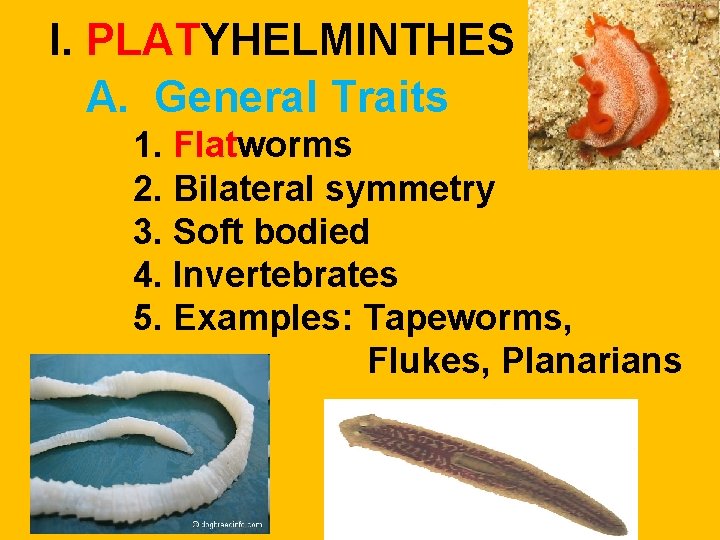
I. PLATYHELMINTHES A. General Traits 1. Flatworms 2. Bilateral symmetry 3. Soft bodied 4. Invertebrates 5. Examples: Tapeworms, Flukes, Planarians
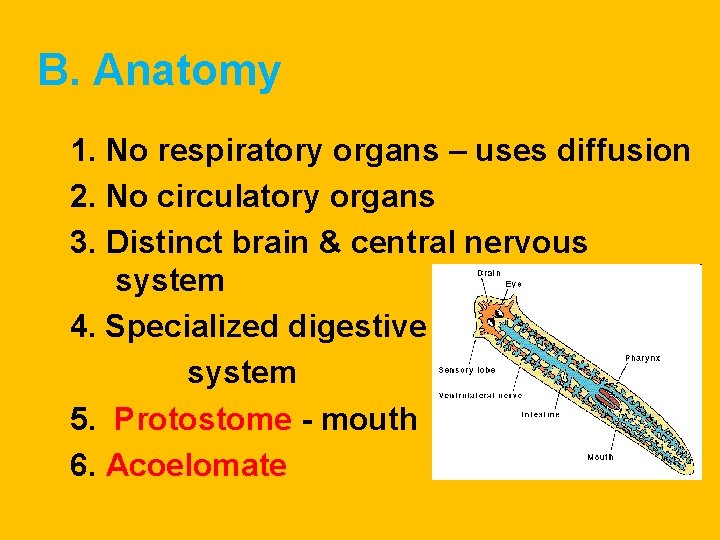
B. Anatomy 1. No respiratory organs – uses diffusion 2. No circulatory organs 3. Distinct brain & central nervous system 4. Specialized digestive system 5. Protostome - mouth 6. Acoelomate
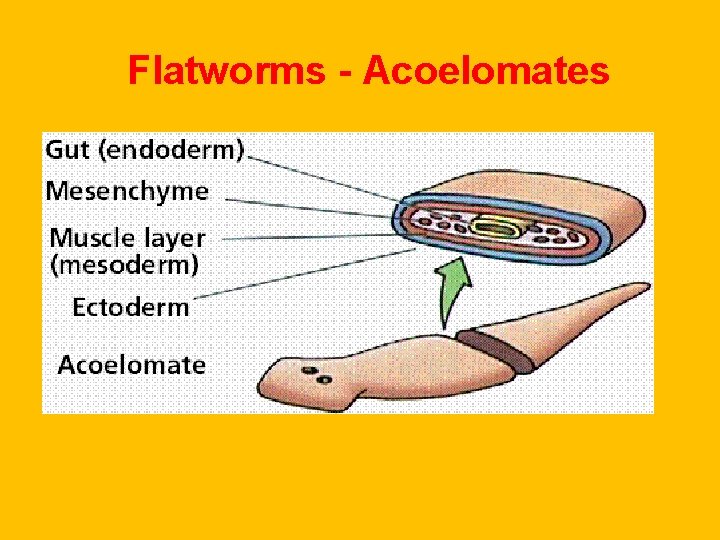
Flatworms - Acoelomates
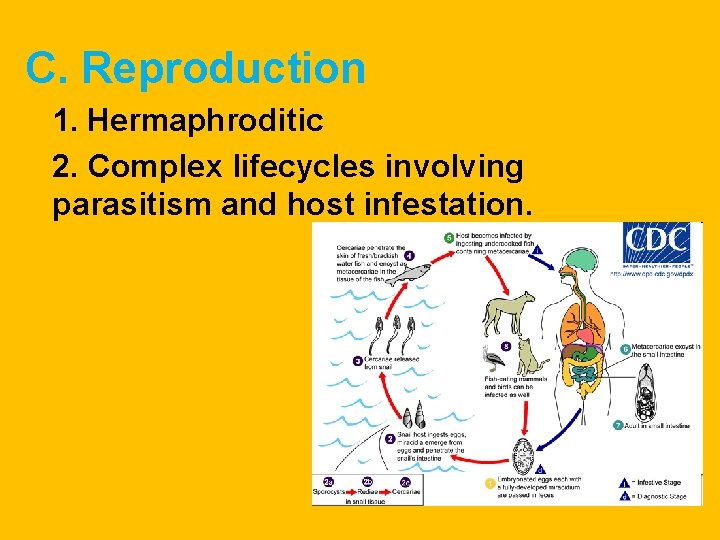
C. Reproduction 1. Hermaphroditic 2. Complex lifecycles involving parasitism and host infestation.
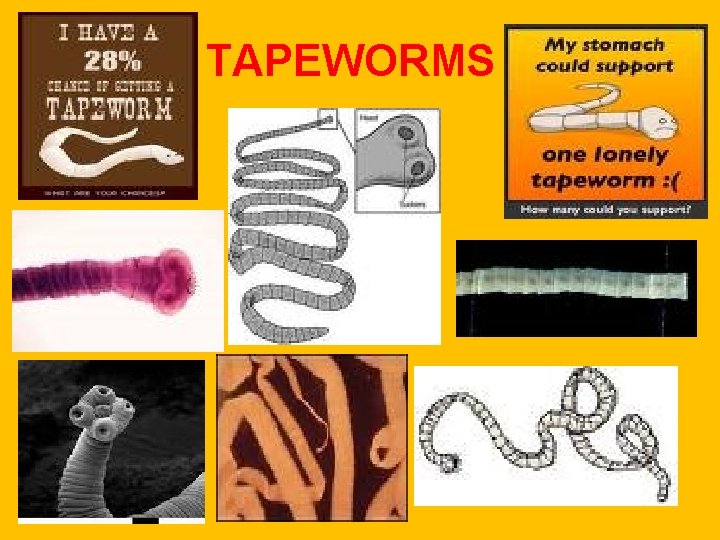
D. Platyhelminthes Phylum Classes 1. Class Cestoda Anterior end with hooks (SCOLEX) Body Divided into segments (PROGLOTTIDS) No digestive tract Nutrients absorbed through skin Parasitic – humans and animals Acoelomate Protostome Example: Tapeworm
TAPEWORMS
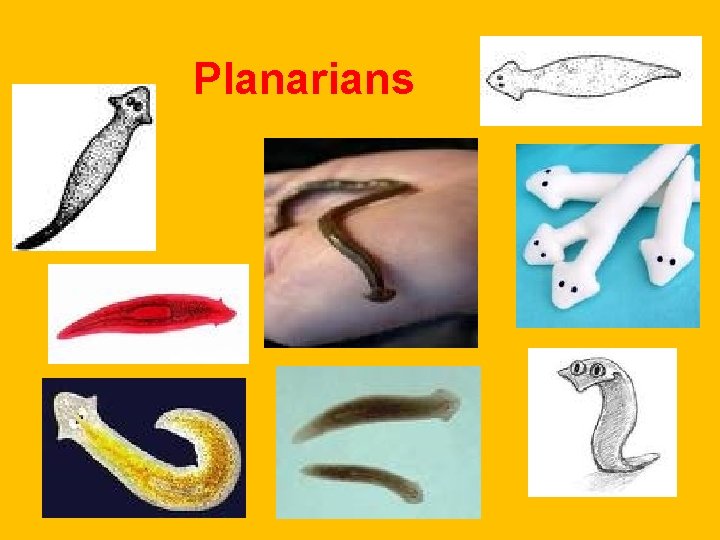
D. Phylum Platyhelminthes Classes 2. Class Turbellaria 3 000 species Habitat: Aquatic (marine) Parasitic/Commensalistic Hermaphroditic Acoelomate Protostome Pharynx Example: Planarian
Planarians
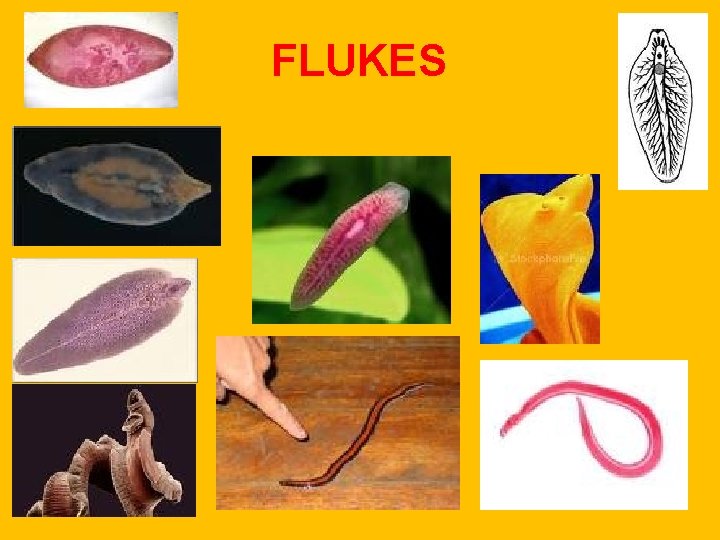
D. Phylum Platyhelminthes Classes 3. Class Trematoda 1 000 Species Hermaphroditic Have Digestive System All are Parasitic Alternate between Intermediate And Definite Host Protostome Acoelomate Example: Flukes
FLUKES
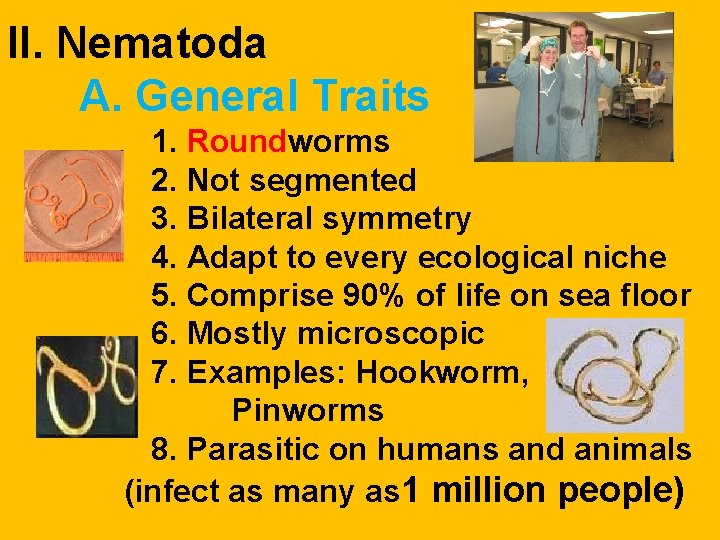
II. Nematoda A. General Traits 1. Roundworms 2. Not segmented 3. Bilateral symmetry 4. Adapt to every ecological niche 5. Comprise 90% of life on sea floor 6. Mostly microscopic 7. Examples: Hookworm, Pinworms 8. Parasitic on humans and animals (infect as many as 1 million people)
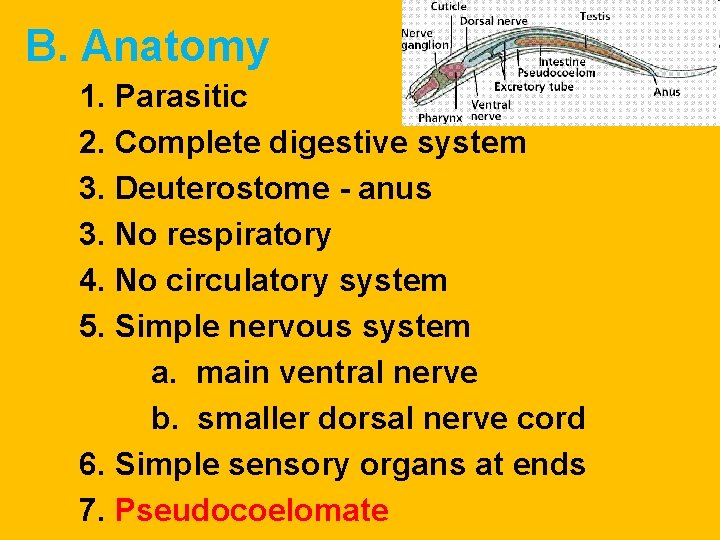
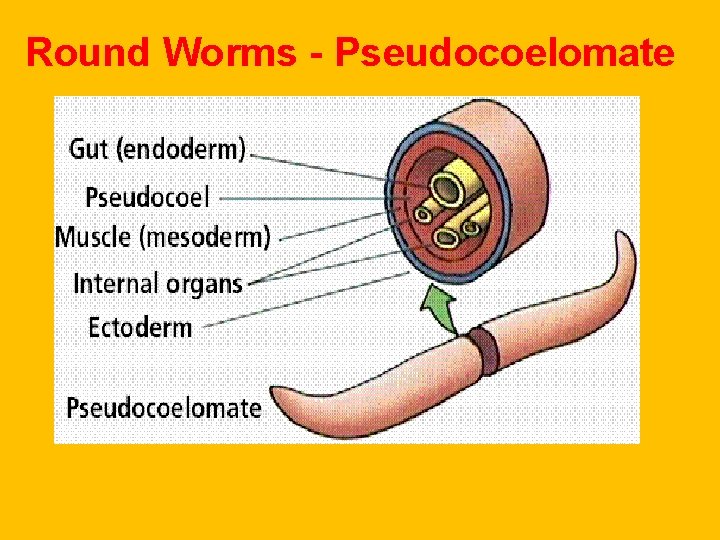
B. Anatomy 1. Parasitic 2. Complete digestive system 3. Deuterostome - anus 3. No respiratory 4. No circulatory system 5. Simple nervous system a. main ventral nerve b. smaller dorsal nerve cord 6. Simple sensory organs at ends 7. Pseudocoelomate
Round Worms - Pseudocoelomate
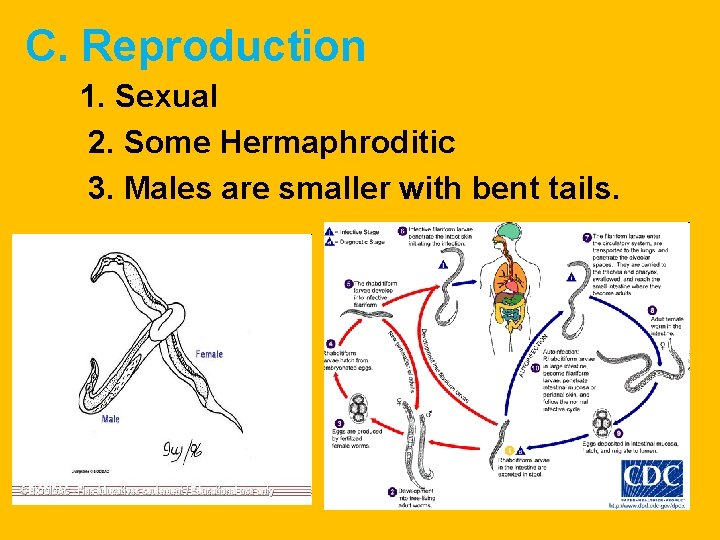
C. Reproduction 1. Sexual 2. Some Hermaphroditic 3. Males are smaller with bent tails.
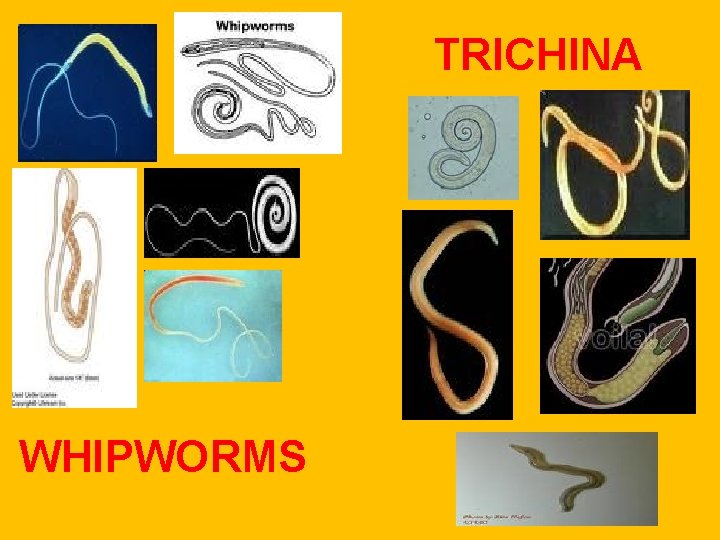
D. Phylum Nematoda Classes 1. Class Adenophorea Most Primitive of Round Worms 12 000 species worldwide Pseudocoelomates Size - microscopic to 3. 25 ft Habitat – wide variety worldwide Some Parasitic Hermaphroditic & Individual Sexes Cycle carbon/ nitrogen an breakdown organic material in the soil Protostome and Deuterostome Examples: Whipworm, Trichina
TRICHINA WHIPWORMS
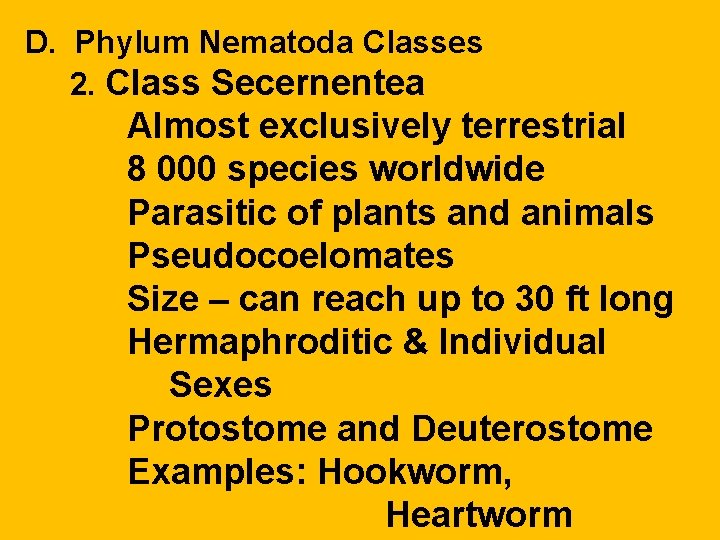
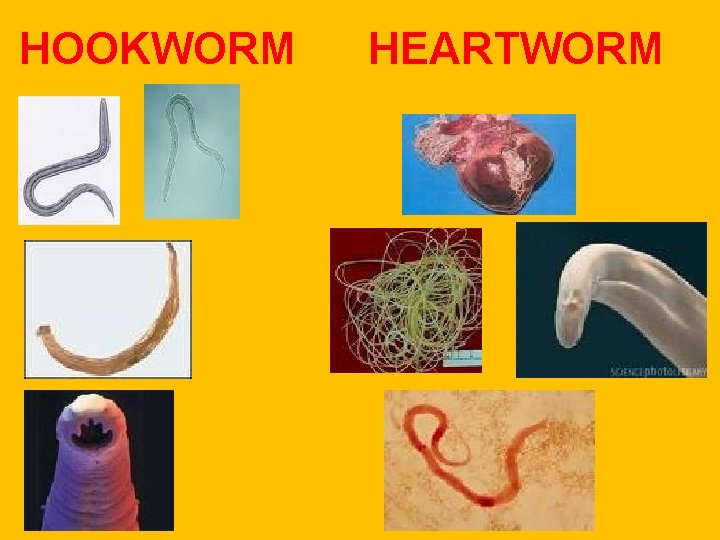
D. Phylum Nematoda Classes 2. Class Secernentea Almost exclusively terrestrial 8 000 species worldwide Parasitic of plants and animals Pseudocoelomates Size – can reach up to 30 ft long Hermaphroditic & Individual Sexes Protostome and Deuterostome Examples: Hookworm, Heartworm
HOOKWORM HEARTWORM
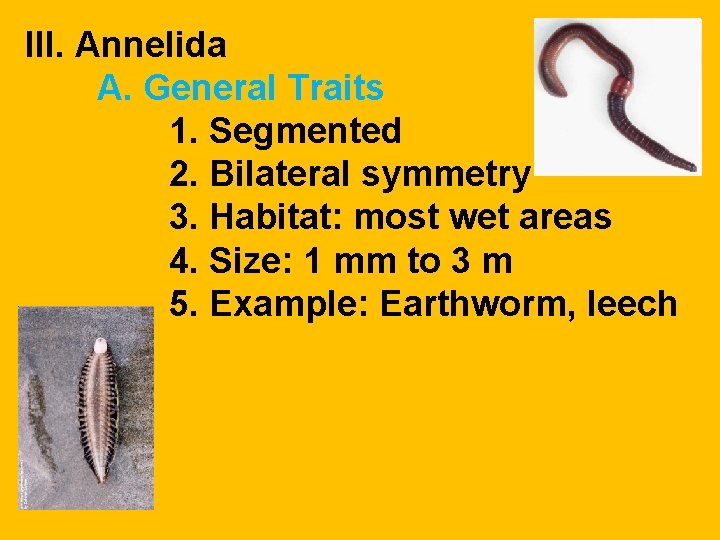
III. Annelida A. General Traits 1. Segmented 2. Bilateral symmetry 3. Habitat: most wet areas 4. Size: 1 mm to 3 m 5. Example: Earthworm, leech
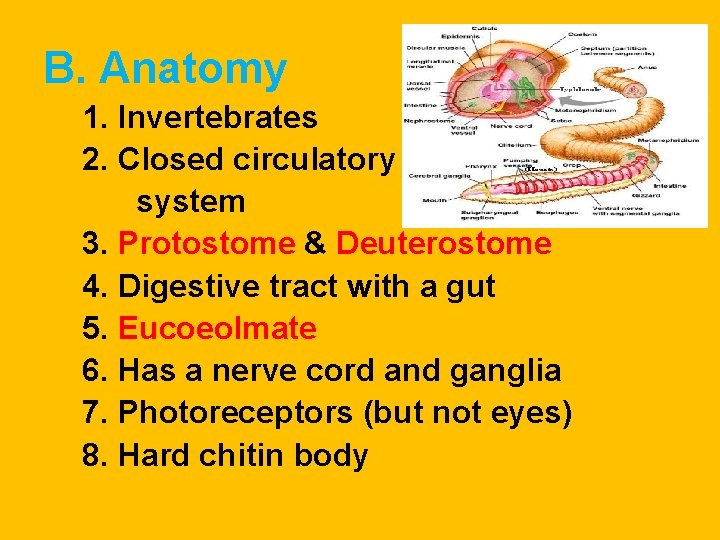
B. Anatomy 1. Invertebrates 2. Closed circulatory system 3. Protostome & Deuterostome 4. Digestive tract with a gut 5. Eucoeolmate 6. Has a nerve cord and ganglia 7. Photoreceptors (but not eyes) 8. Hard chitin body
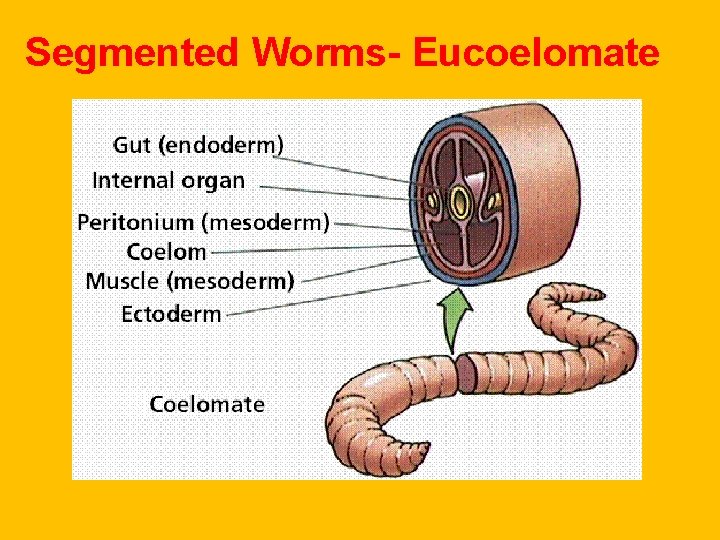
Segmented Worms- Eucoelomate
C. Reproduction 1. Asexual a. Fission - posterior part of worm breaks off forming a clone b. Regeneration 2. Sexual a. Hermaphroditic or have distinct sexes. b. Aquatic - external fertilization. c. Terrestrial - hermaphrodites which exchange gametes
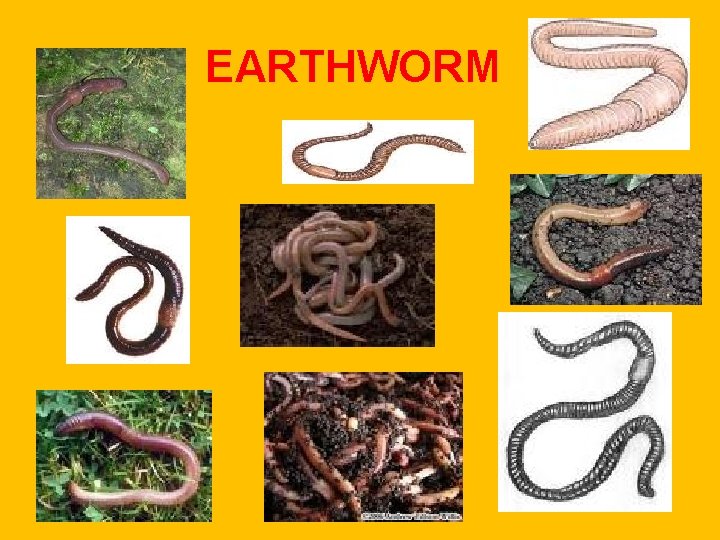
D. Phylum Annelida Classes 1. Class Oligochaeta 10 000 known species Eucoelomate Protostome and Deuterostome Size: 1/32 in. to 10 ft Habitat: Soil environments Hermaphroditic that cross-fertilize Setae – stiff, bristle hairs on ventral Surface Closed Circulatory System Example: Earthworm
EARTHWORM
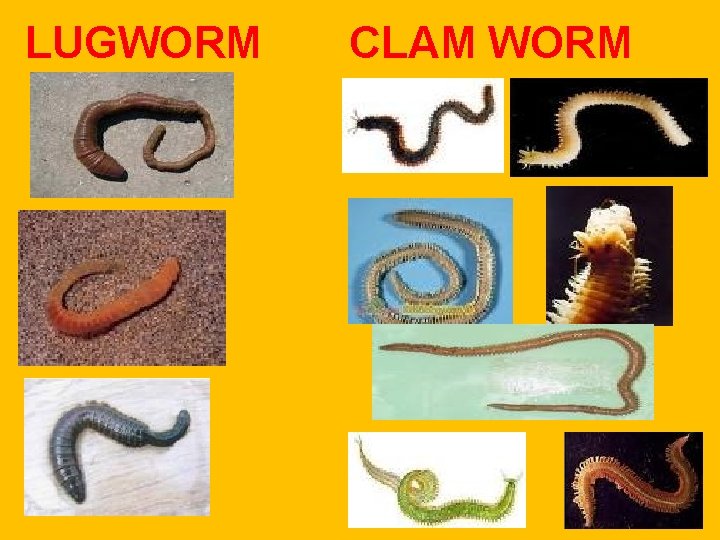
D. Phylum Annelida Classes 2. Class Polychaeta 8 000 known marine species Eucoelomate Numerous setae Protostome and Deuterostome Size: 1/8 in. to 9 ft Habitat: Marine and Fresh water; mud Errant Polychaetes – active crawlers/ swimmers Sedentary Polychaetes – live in burrows or tubes; some attached to rocks Examples: lugworms, clam worms
LUGWORM CLAM WORM
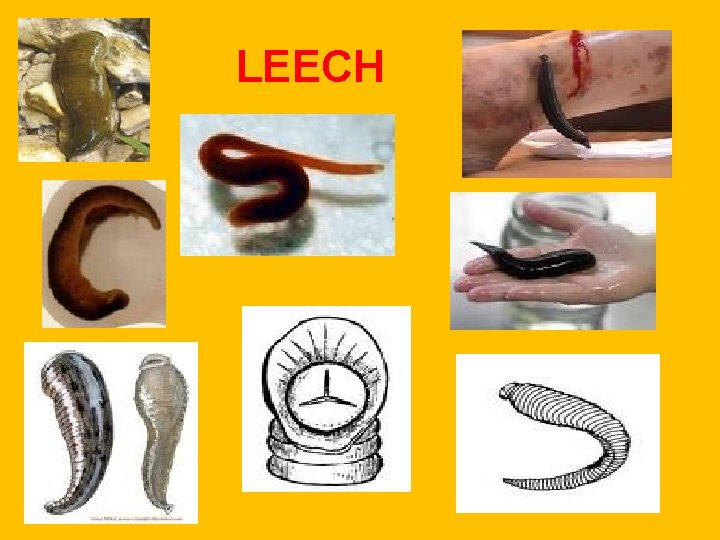
D. Phylum Annelida Classes 3. Class Hirudinea 500 species Predacious parasitic worms Eucoelomate Hermaphroditic Anterior and Posterior suckers Protostome and Deuterostome Size: ½ in. to 8 ft. 2 to 10 eyes (photoreceptor clusters) Closed Circulatory System Fixed number of body segments – 34 Examples: Leeches
LEECH