
Worlds Deserts about 15 th of land Types
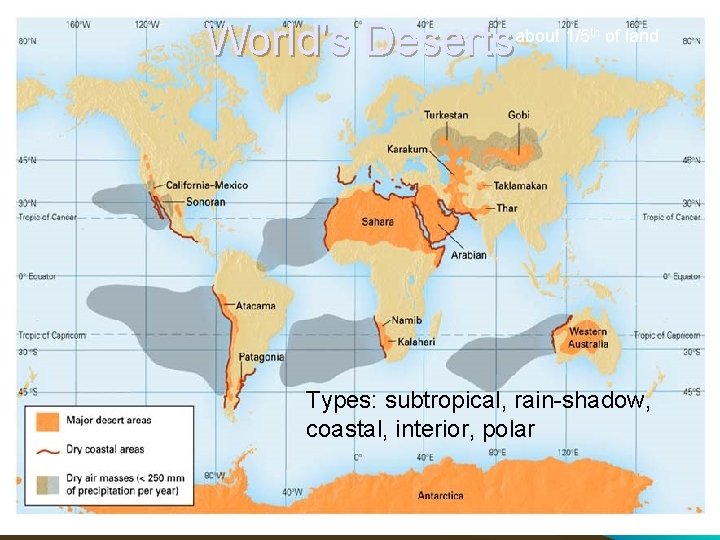
World's Deserts about 1/5 th of land Types: subtropical, rain-shadow, coastal, interior, polar
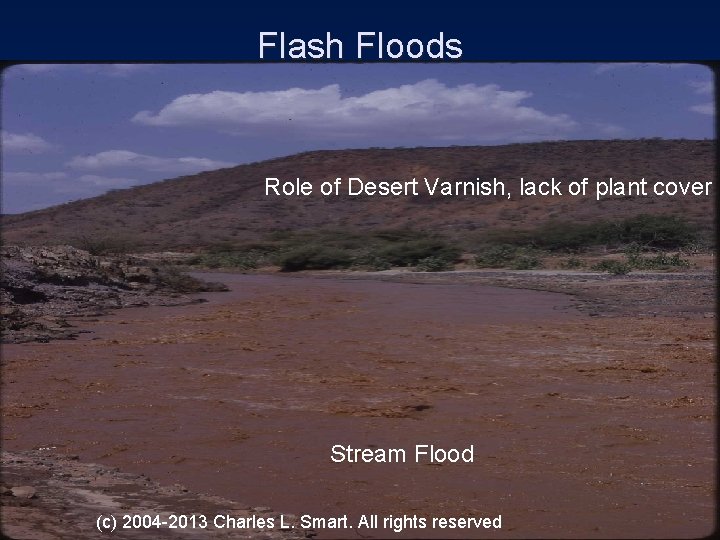
Flash Floods Role of Desert Varnish, lack of plant cover Stream Flood (c) 2004 -2013 Charles L. Smart. All rights reserved
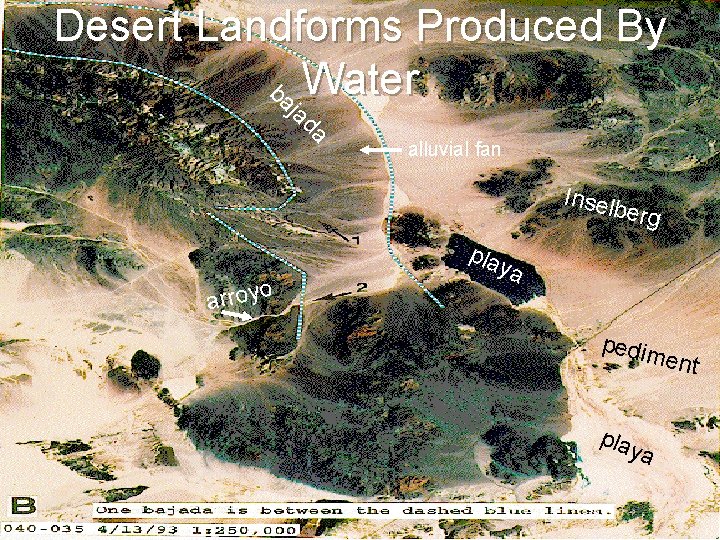
Desert Landforms Produced By ba Water ja da alluvial fan Insel berg o arroy pla ya pedim ent pla ya
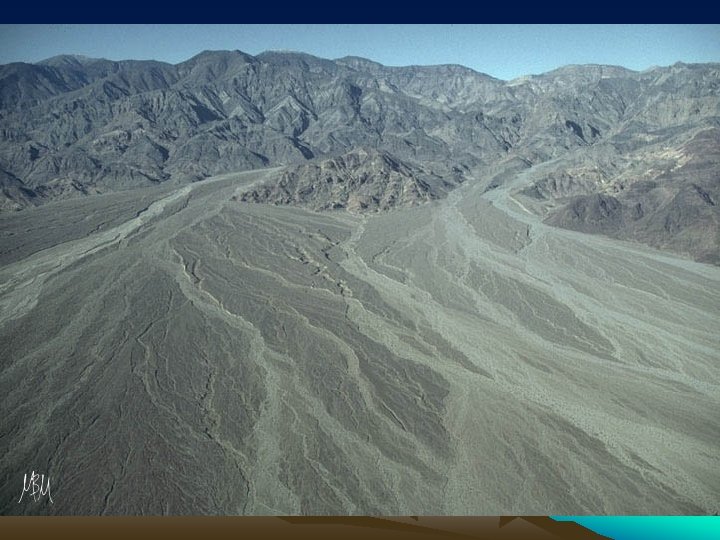
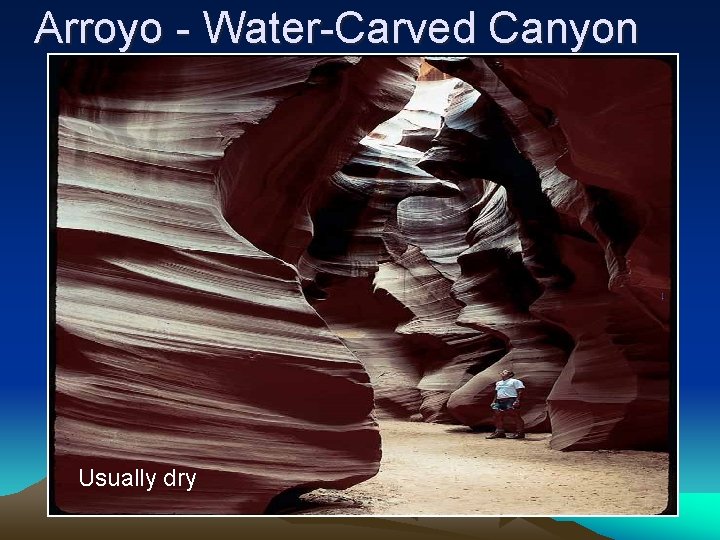
Arroyo - Water-Carved Canyon Usually dry
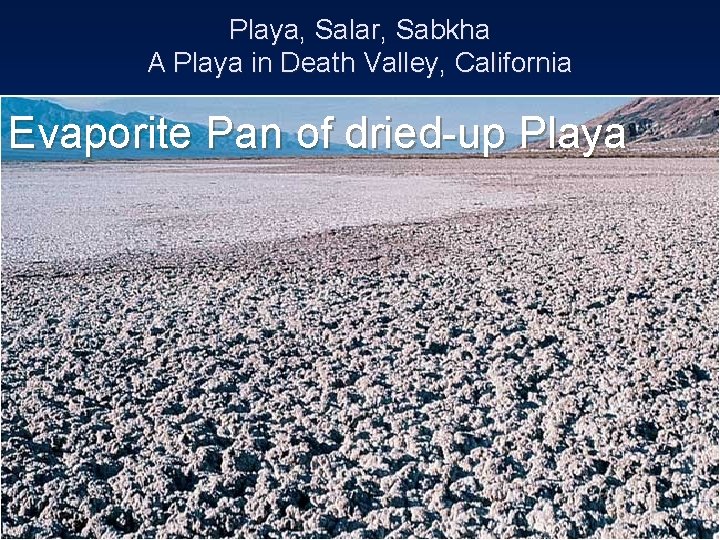
Playa, Salar, Sabkha A Playa in Death Valley, California Evaporite Pan of dried-up Playa
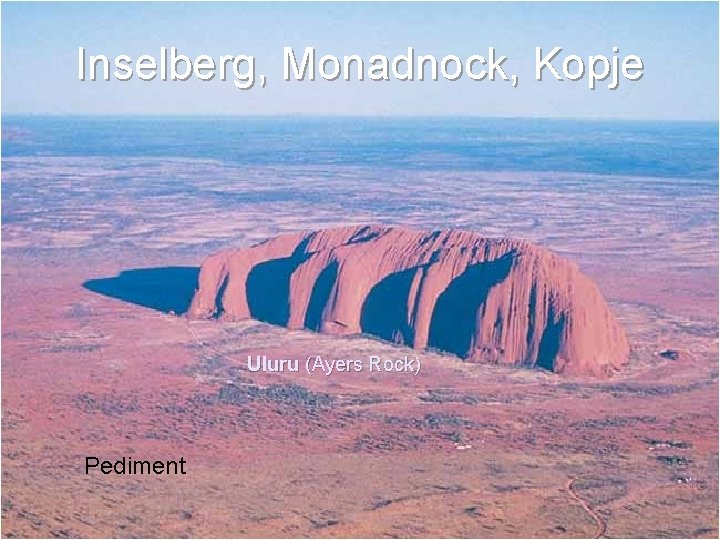
Inselberg, Monadnock, Kopje Uluru (Ayers Rock) Pediment
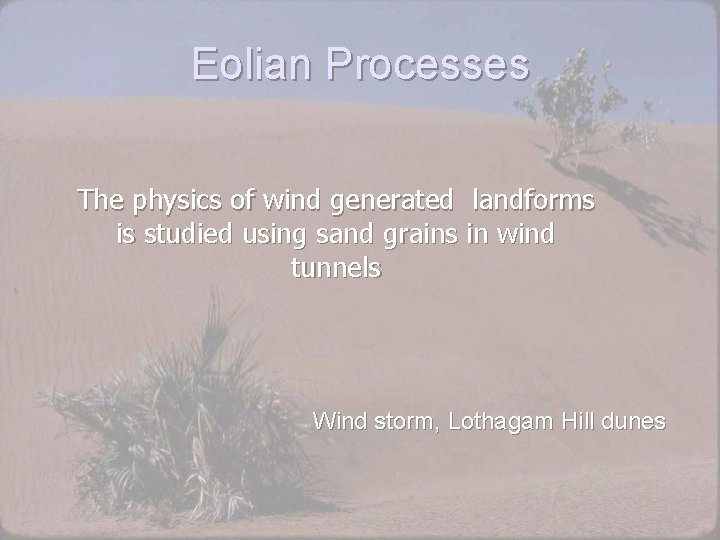
Eolian Processes The physics of wind generated landforms is studied using sand grains in wind tunnels Wind storm, Lothagam Hill dunes
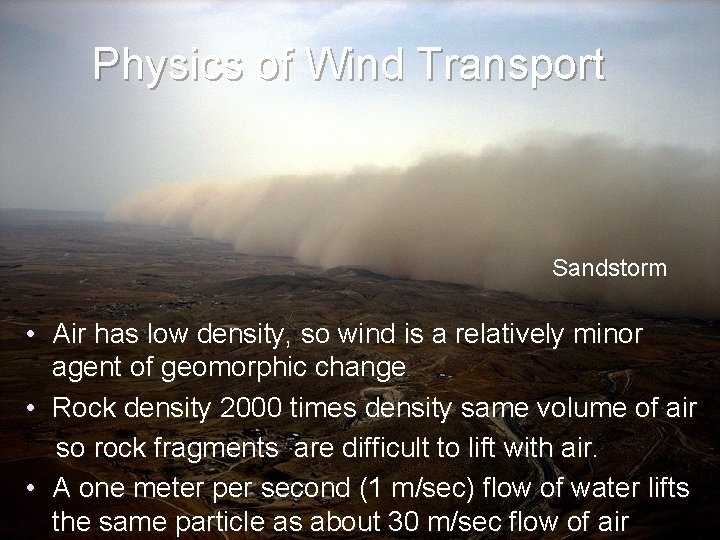
Physics of Wind Transport Sandstorm • Air has low density, so wind is a relatively minor agent of geomorphic change • Rock density 2000 times density same volume of air so rock fragments are difficult to lift with air. • A one meter per second (1 m/sec) flow of water lifts the same particle as about 30 m/sec flow of air
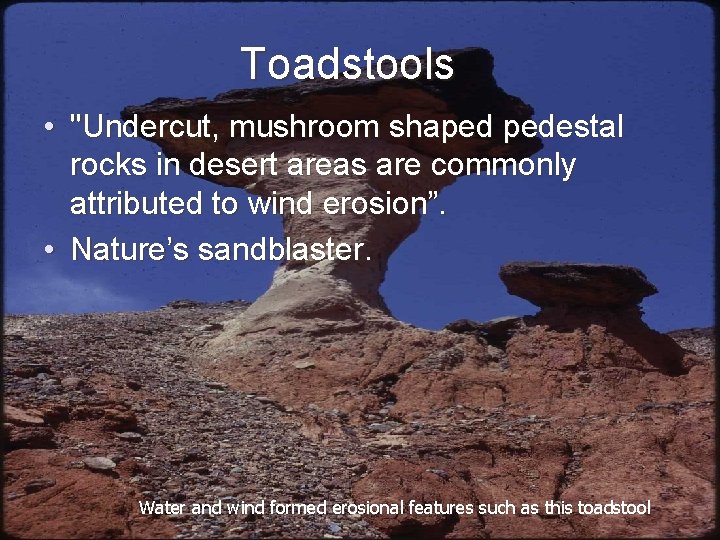
Toadstools • "Undercut, mushroom shaped pedestal rocks in desert areas are commonly attributed to wind erosion”. • Nature’s sandblaster. Water and wind formed erosional features such as this toadstool

Wind-Borne Sediment causes deflation and abrasion Sahara to Caribbean Effect on Hurricanes Surface creep
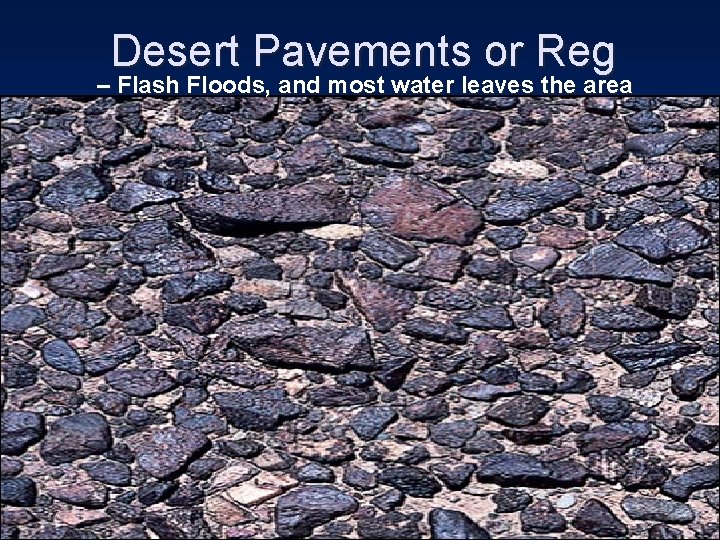
Desert Pavements or Reg – Flash Floods, and most water leaves the area
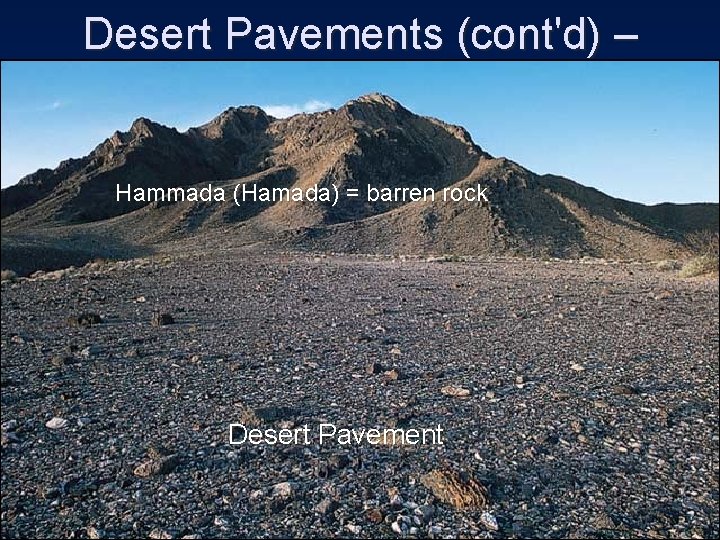
Desert Pavements (cont'd) – Hammada (Hamada) = barren rock Desert Pavement
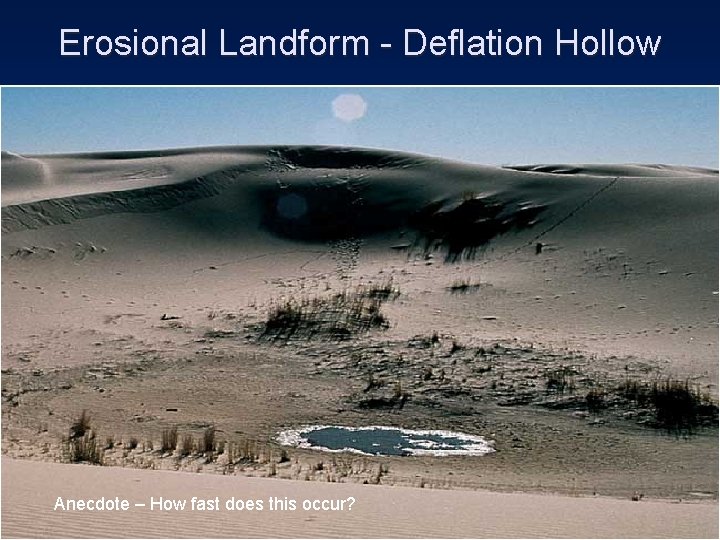
Erosional Landform - Deflation Hollow Anecdote – How fast does this occur?
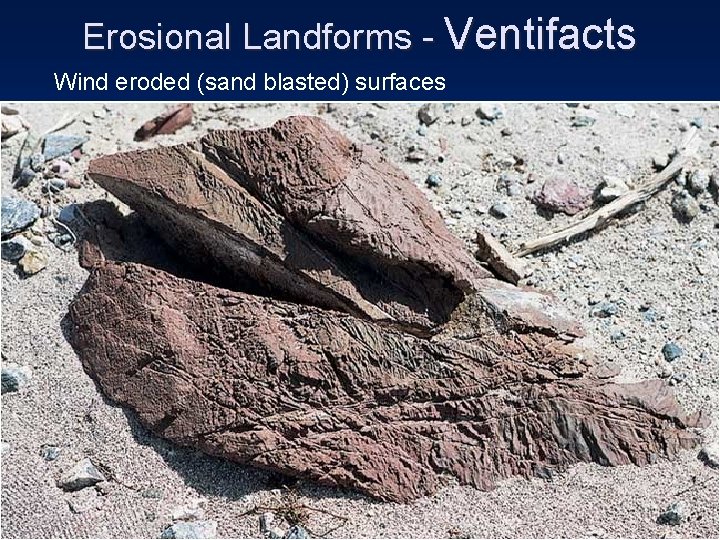
Erosional Landforms - Ventifacts Wind eroded (sand blasted) surfaces
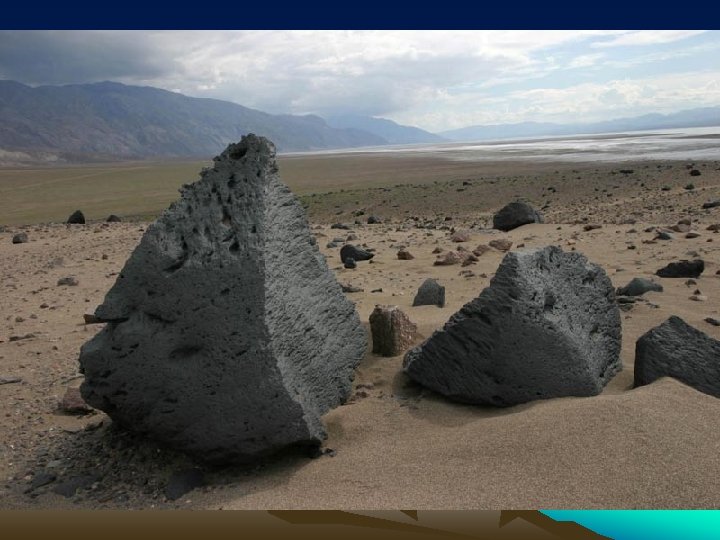

Abrasion Origin of Ventifacts
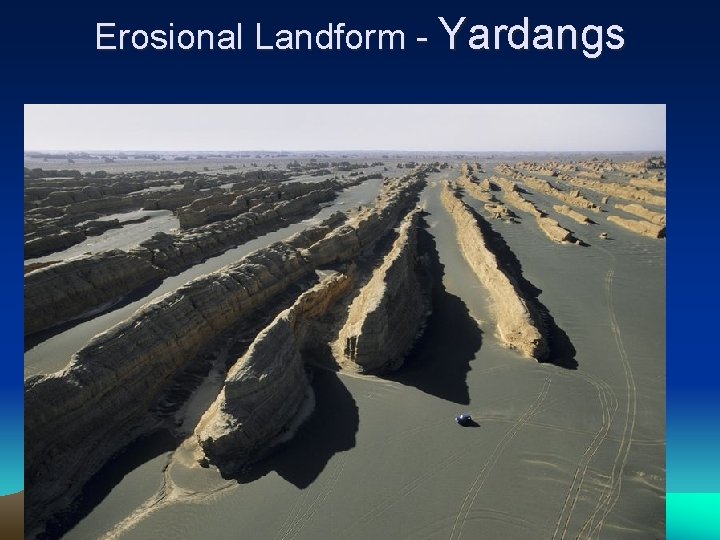
Erosional Landform - Yardangs
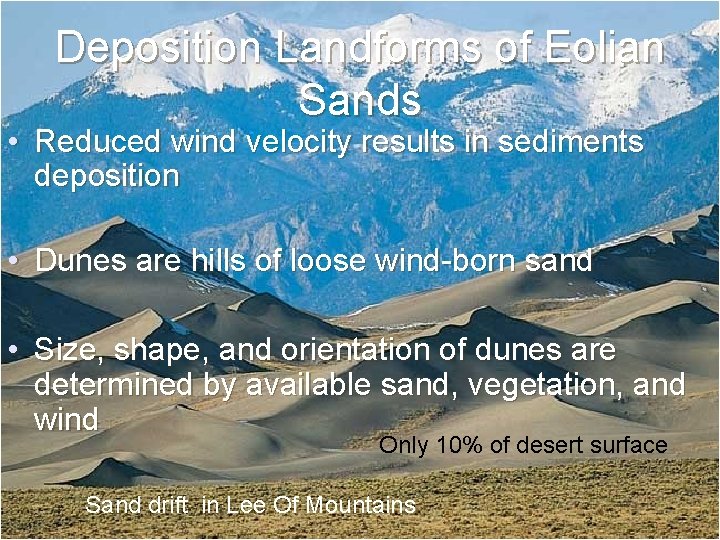
Deposition Landforms of Eolian Sands • Reduced wind velocity results in sediments deposition • Dunes are hills of loose wind-born sand • Size, shape, and orientation of dunes are determined by available sand, vegetation, and wind Only 10% of desert surface Sand drift in Lee Of Mountains
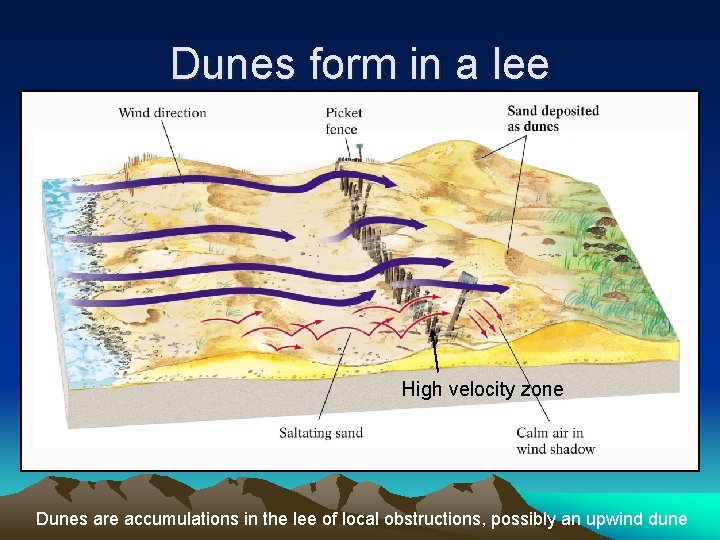
Dunes form in a lee High velocity zone Dunes are accumulations in the lee of local obstructions, possibly an upwind dune
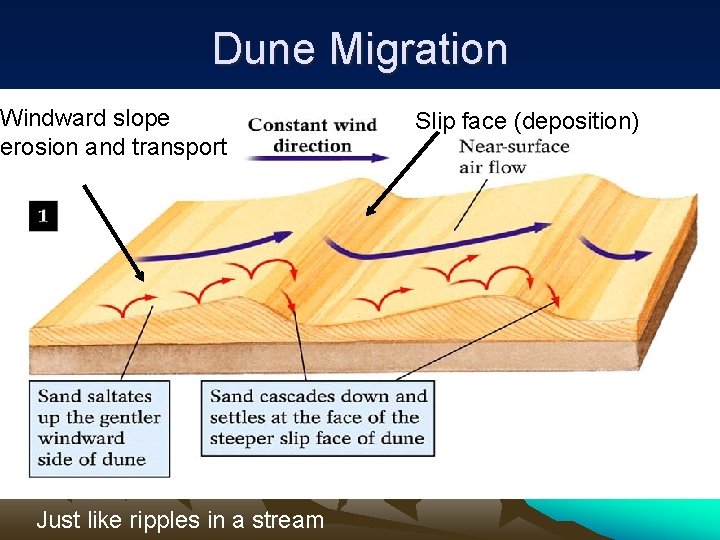
Dune Migration Windward slope erosion and transport Just like ripples in a stream Slip face (deposition)
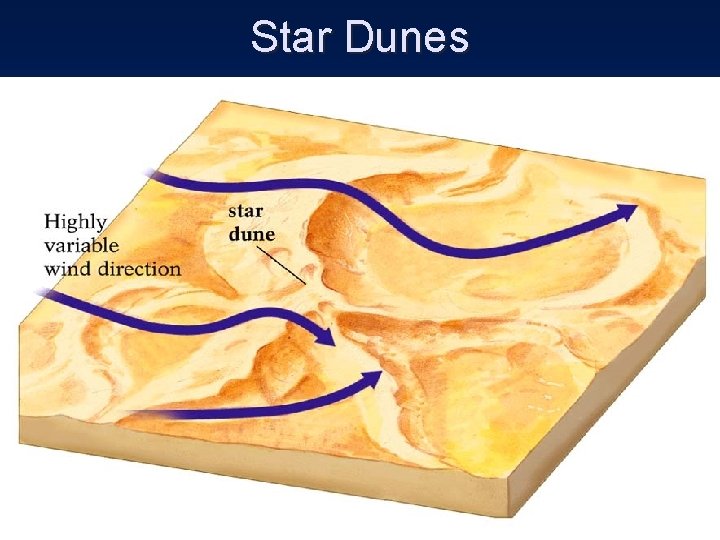
Star Dunes

Star Dunes Variable Wind Direction Copyright © Frank Eckardt 2002
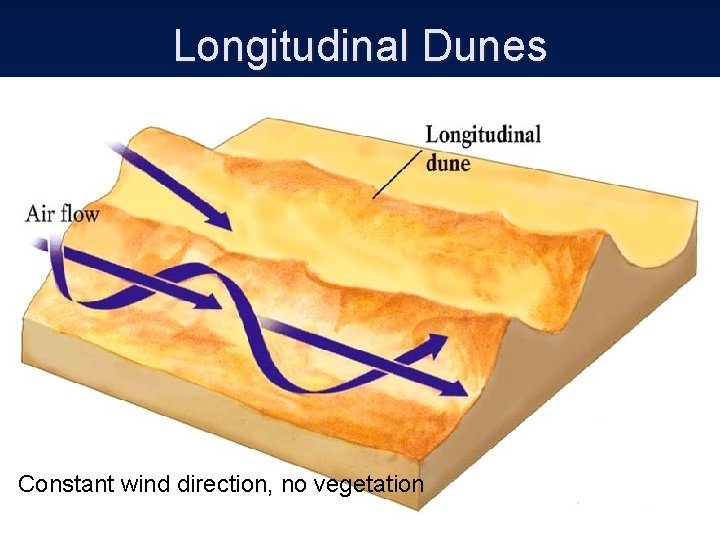
Longitudinal Dunes Constant wind direction, no vegetation
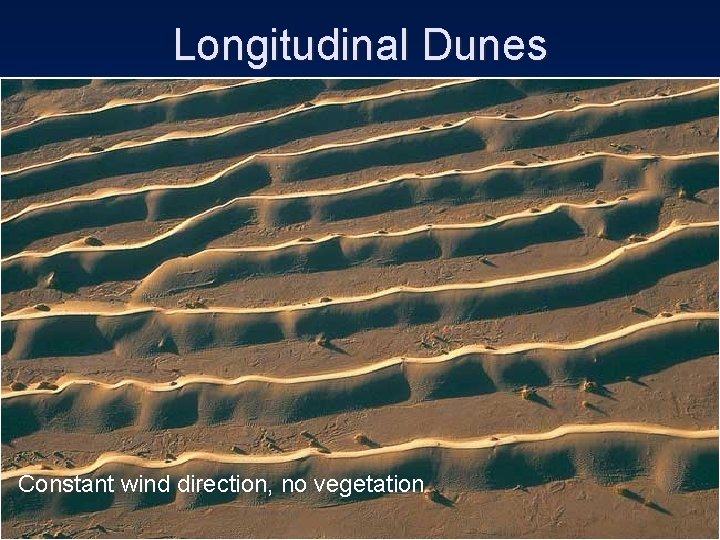
Longitudinal Dunes Constant wind direction, no vegetation
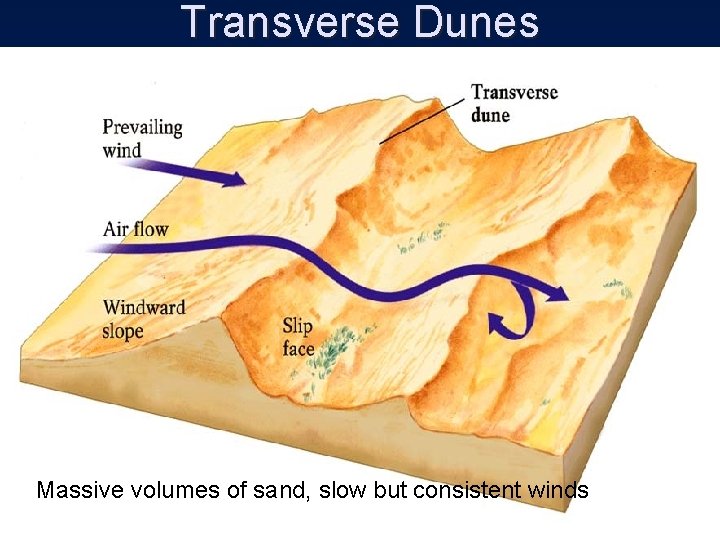
Transverse Dunes Massive volumes of sand, slow but consistent winds
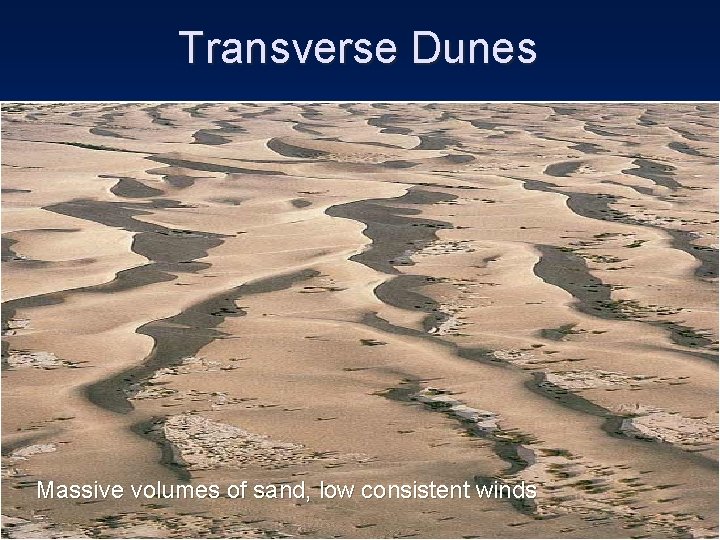
Transverse Dunes Massive volumes of sand, low consistent winds
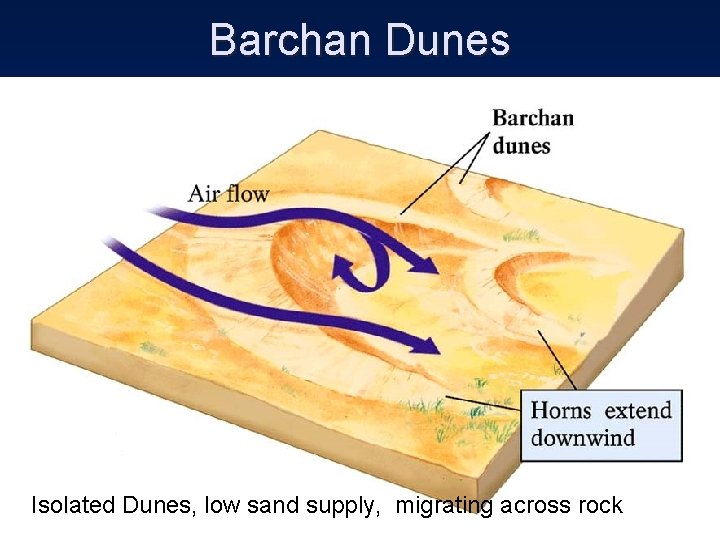
Barchan Dunes Isolated Dunes, low sand supply, migrating across rock
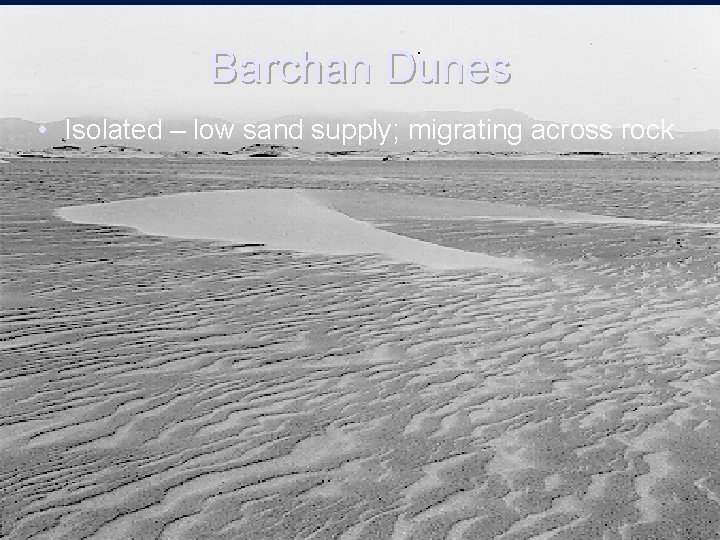
Barchan Dunes • Isolated – low sand supply; migrating across rock
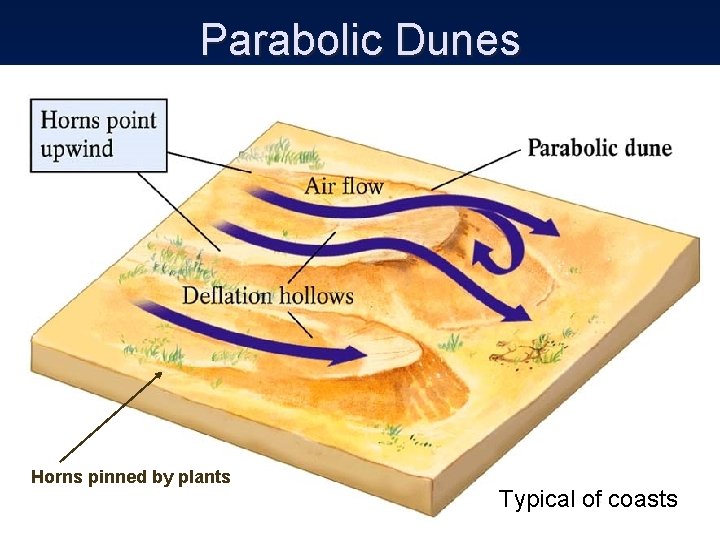
Parabolic Dunes Horns pinned by plants Typical of coasts
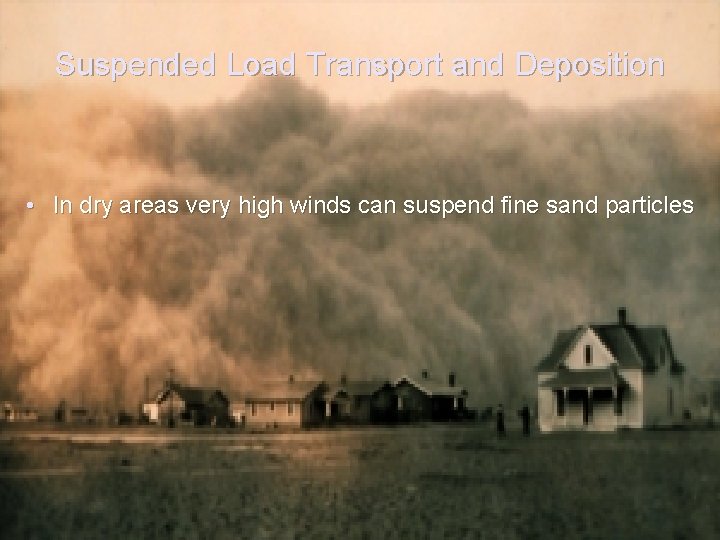
Suspended Load Transport and Deposition • In dry areas very high winds can suspend fine sand particles
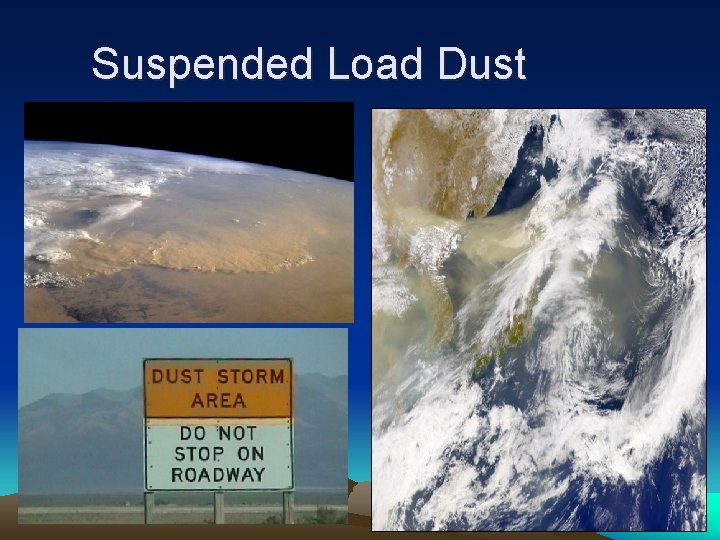
Suspended Load Dust
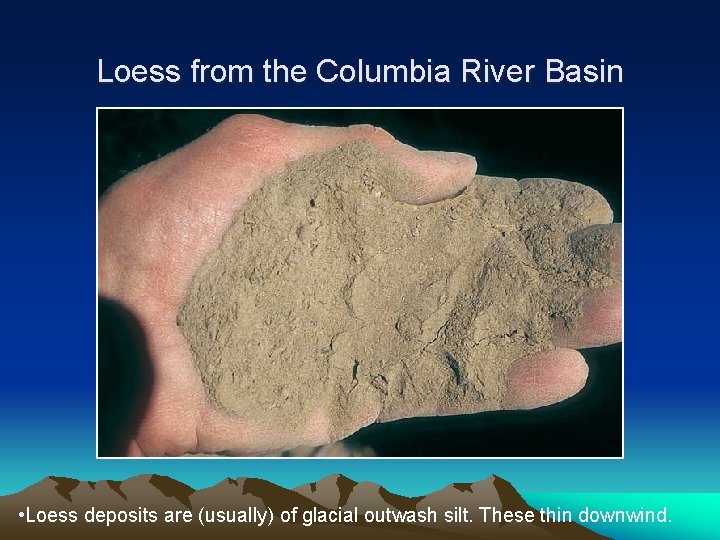
Loess from the Columbia River Basin • Loess deposits are (usually) of glacial outwash silt. These thin downwind.
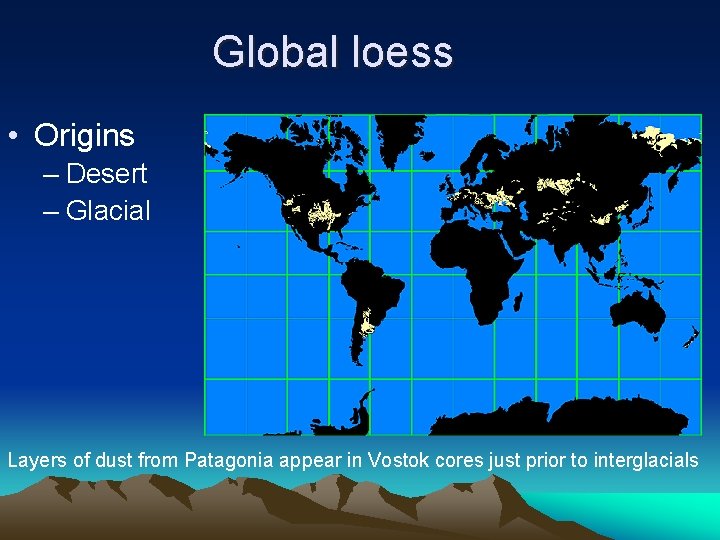
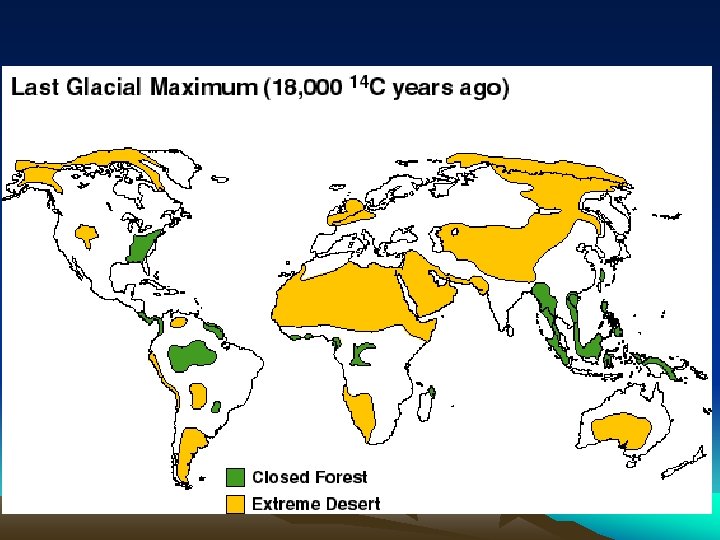
Global loess • Origins – Desert – Glacial Layers of dust from Patagonia appear in Vostok cores just prior to interglacials
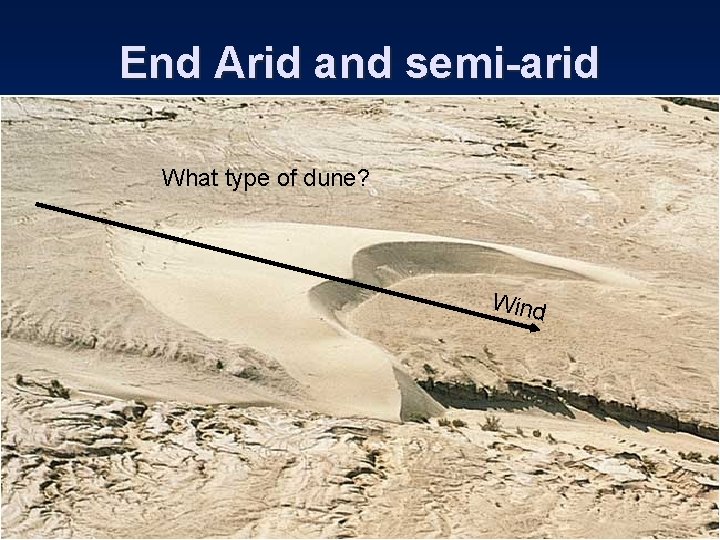
End Arid and semi-arid What type of dune? Wind
- Slides: 37