
World Wide Web History Architecture Protocols Architecture of
World Wide Web – History, Architecture, Protocols Architecture of Web Information Systems CS 431 Carl Lagoze – Spring 2004 Acks to Mc. Cracken Syracuse Univ. CS 431 - February 2, 2004
In the beginning…. CS 431 - February 2, 2004
In the beginning… CS 431 - February 2, 2004
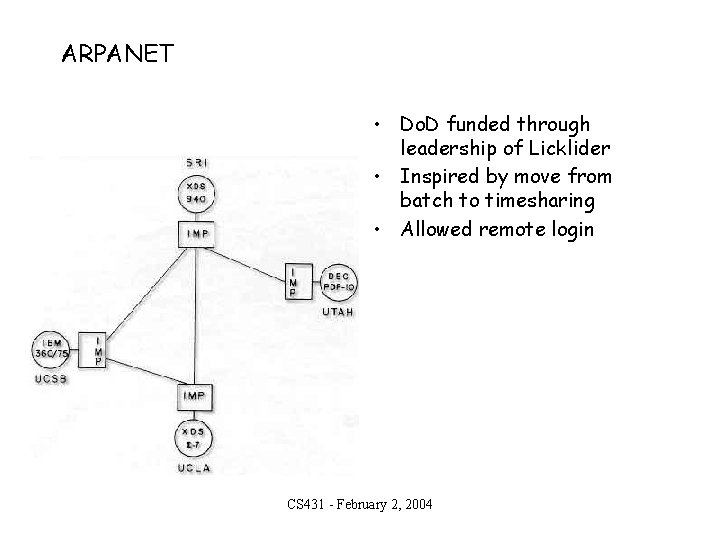
ARPANET • Do. D funded through leadership of Licklider • Inspired by move from batch to timesharing • Allowed remote login CS 431 - February 2, 2004

CS 431 - February 2, 2004

Packet Switching • Invented in early 1960’s by Baran, Davies, Kleinrock • digital, redundant, efficient, upgradeable (software) • 1969 ARPANET first network implementation CS 431 - February 2, 2004
Packet Switching • Network messages broken up into packets • Each pocket has a destination address • Pass and forward model – router gets packet, examine, decides where to send next • Message reassembled on other end CS 431 - February 2, 2004
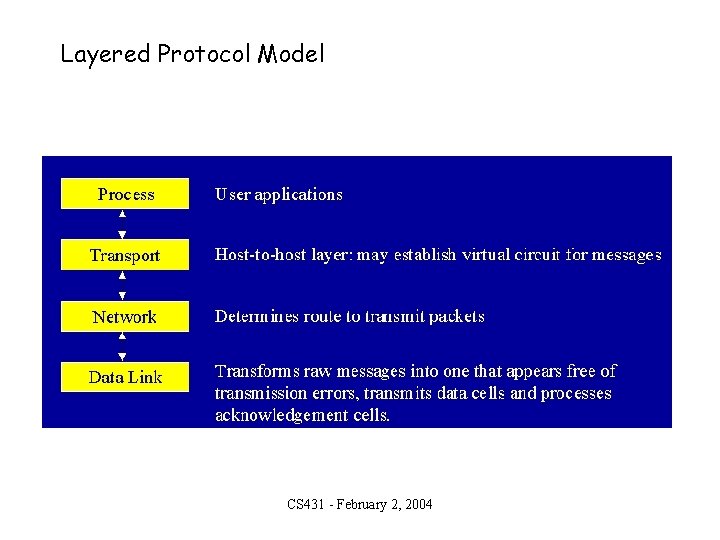
Layered Protocol Model CS 431 - February 2, 2004
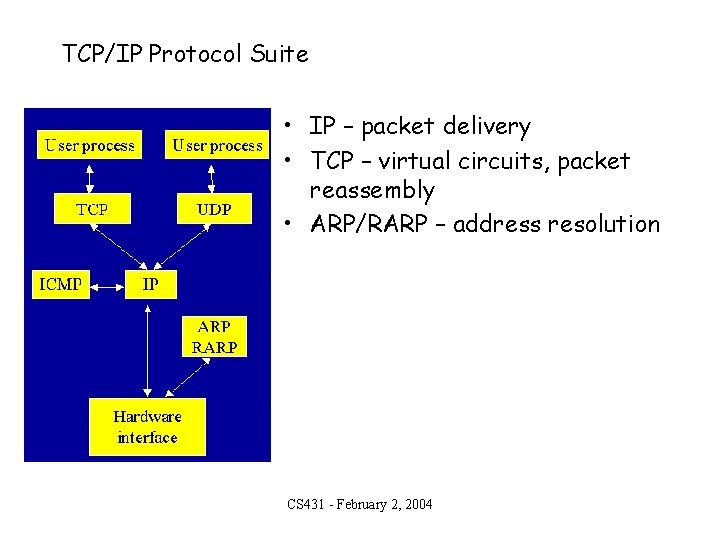
TCP/IP Protocol Suite • IP – packet delivery • TCP – virtual circuits, packet reassembly • ARP/RARP – address resolution CS 431 - February 2, 2004
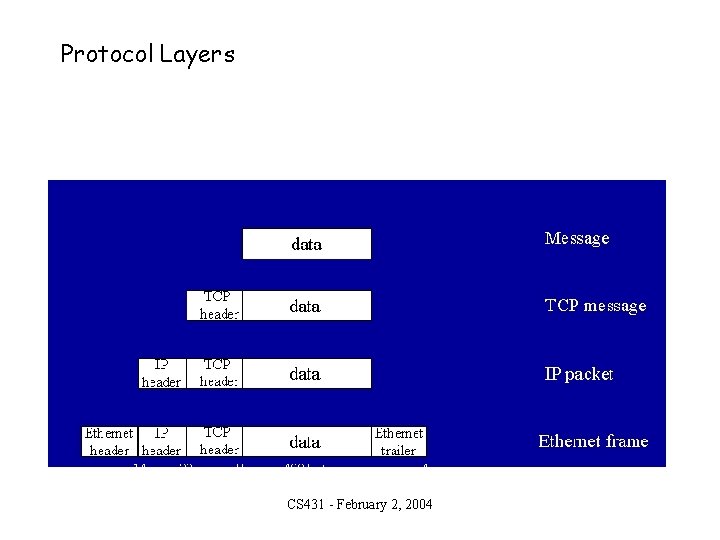
Protocol Layers CS 431 - February 2, 2004
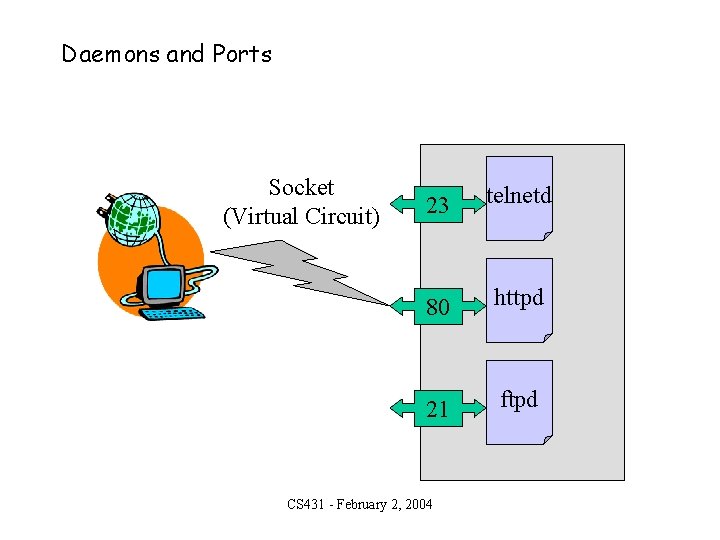
Daemons and Ports Socket (Virtual Circuit) 23 telnetd 80 httpd 21 ftpd CS 431 - February 2, 2004
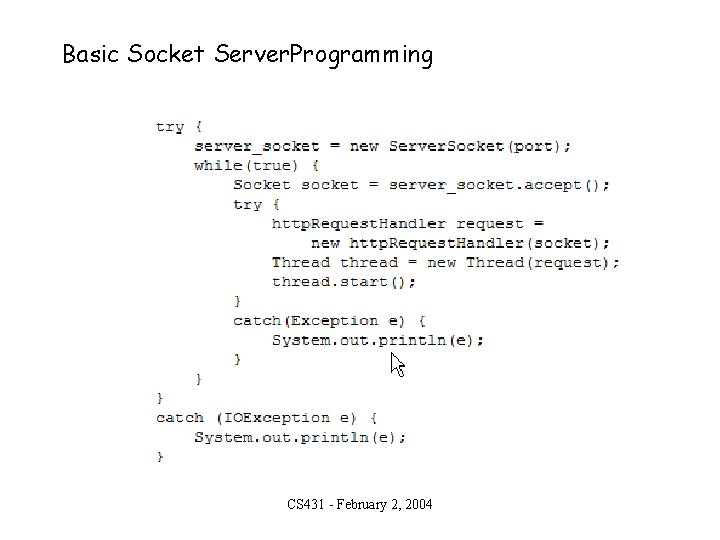
Basic Socket Server. Programming CS 431 - February 2, 2004
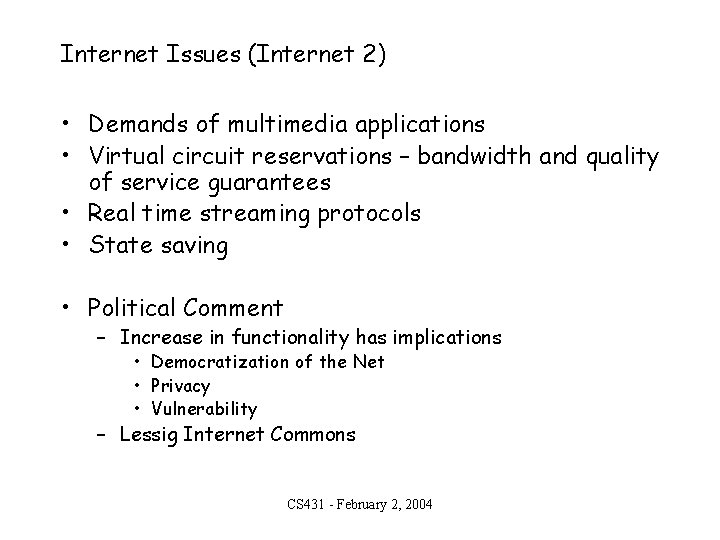
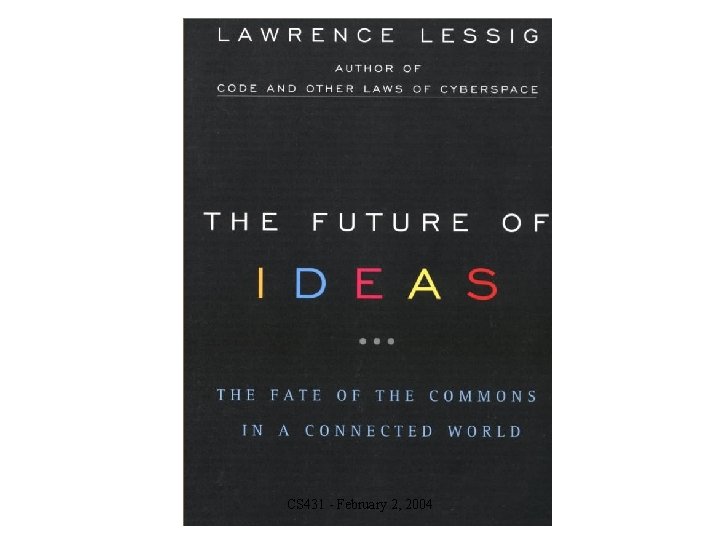
Internet Issues (Internet 2) • Demands of multimedia applications • Virtual circuit reservations – bandwidth and quality of service guarantees • Real time streaming protocols • State saving • Political Comment – Increase in functionality has implications • Democratization of the Net • Privacy • Vulnerability – Lessig Internet Commons CS 431 - February 2, 2004
CS 431 - February 2, 2004
Infrastructure and Standardization • Complex legal, economic, social, and technical process • Wasn’t invented in the information age – – Railroad track gauge and tariffs Telephone and telegraph Banking Power and Light • Not for the faint-hearted CS 431 - February 2, 2004
Internet Governance • Internet Society (ISOC) – Evolution, social & political issues • Internet Architecture Board (IAB) – Oversees standards process • Internet Engineering Task Force (IETF) – standards development • Internet Assigned Numbers Authority (IANA) and Internet Corporation for Assigned Names and Numbers (ICANN) – – DNS administration IP # assignment Protocol #’s port #’s • World Wide Web Consortium (W 3 C) – web standards and evolution CS 431 - February 2, 2004
Internet Documents • RFC’s – “Requests for Comments” to IETF community for information, standardization – http: //www. ietf. org/rfc. html • STD’s – Official IETF Internet standards – http: //www. rfc-editor. org/rfcxx 00. html • Internet Drafts – IETF working documents – http: //www. ietf. org/ID. html • W 3 C Reports (recommendations, drafts, notes) – http: //www. w 3. org/TR/ CS 431 - February 2, 2004
Well-Known Protocols • Telnet – external terminal interface, RFC 854 (1983) • FTP – file transfer, RFC 959 (1985) • SMTP – mail transport, RFC 821 (1982) • HTTP – distributed, collaborative hypermedia systems, RFC 1945 (1. 0 1996), RFC 2616 (1. 1 1999) CS 431 - February 2, 2004
Short History and Premises of the Web • Information sharing in a fluid context – CERN 1989 – Reality • Relationships are not hierarchical • Non-centralized managment • Structure can be modeled as a graph – Typed nodes (text, graphics, people, software modules) – Type relationships (depends on, refers to, made) • Hypertext (after Ted Nelson) – Human-readable information linked together in an unconstrained way. – Extend to Hypermedia • Data analysis and mining • Clean division of document display and format (browers and HTML) from access (HTTP) CS 431 - February 2, 2004
Basic Web Technologies • Document formatting – HTML • Document naming – URL’s • Document typing – MIME • Document access – HTTP CS 431 - February 2, 2004
HTTP • HTTP is… – Designed for document transfer – Generic • not tied to web browsers exclusively • can serve any data type – Stateless • no persistent client/server connection CS 431 - February 2, 2004
HTTP Session • An HTTP session consists of a client request followed by a server response • Requests and responses: – are sent in plain text – conform to the HTTP syntax – consist of start line, headers, blank line, and message body CS 431 - February 2, 2004
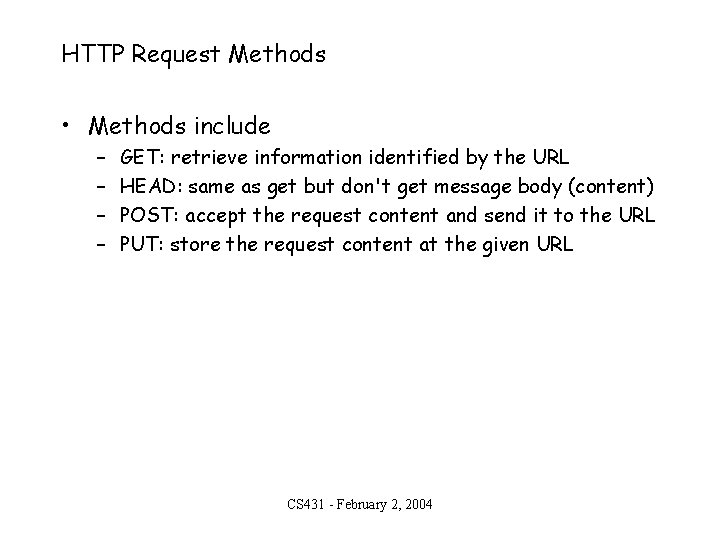
HTTP Request Methods • Methods include – – GET: retrieve information identified by the URL HEAD: same as get but don't get message body (content) POST: accept the request content and send it to the URL PUT: store the request content at the given URL CS 431 - February 2, 2004
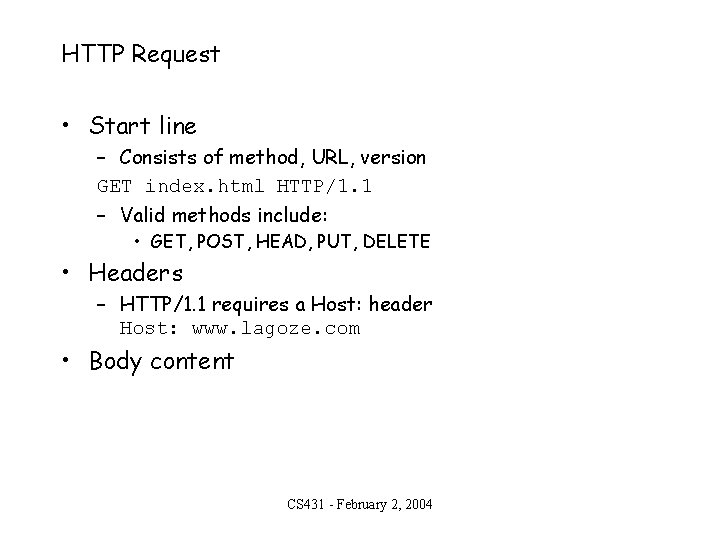
HTTP Request • Start line – Consists of method, URL, version GET index. html HTTP/1. 1 – Valid methods include: • GET, POST, HEAD, PUT, DELETE • Headers – HTTP/1. 1 requires a Host: header Host: www. lagoze. com • Body content CS 431 - February 2, 2004
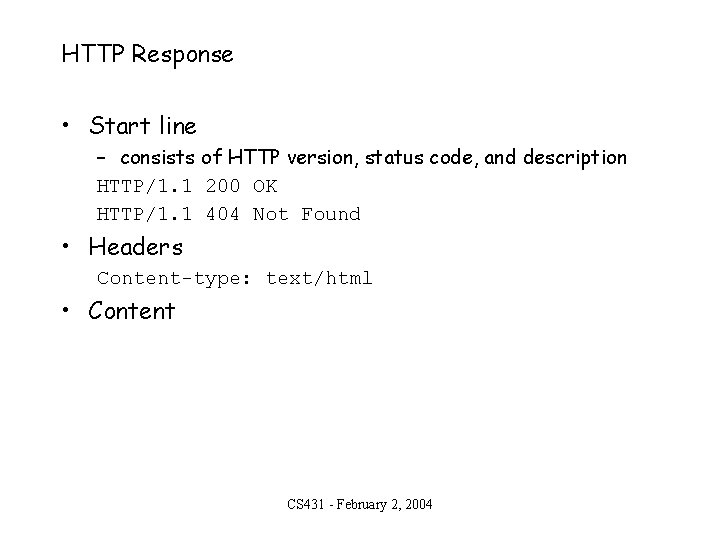
HTTP Response • Start line – consists of HTTP version, status code, and description HTTP/1. 1 200 OK HTTP/1. 1 404 Not Found • Headers Content-type: text/html • Content CS 431 - February 2, 2004
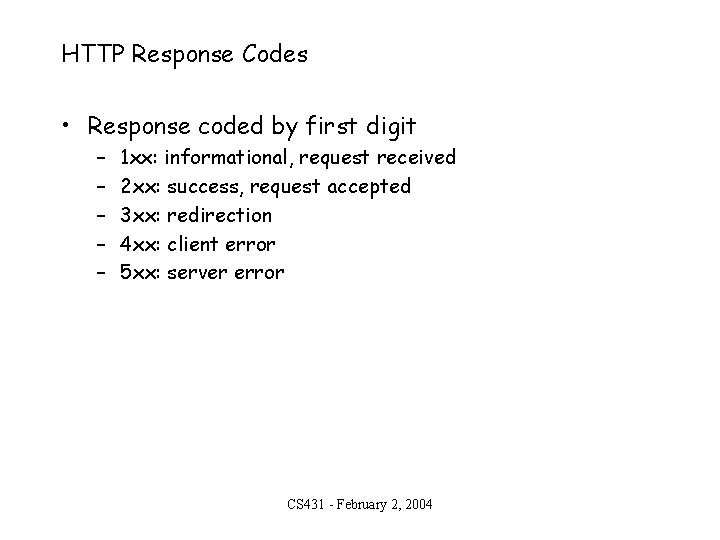
HTTP Response Codes • Response coded by first digit – – – 1 xx: informational, request received 2 xx: success, request accepted 3 xx: redirection 4 xx: client error 5 xx: server error CS 431 - February 2, 2004
HTTP Content Body • Header fields can affect content interpretation – required header field: Content-type – others: Content-Encoding, Content-Length, Expires, Last. Modified CS 431 - February 2, 2004
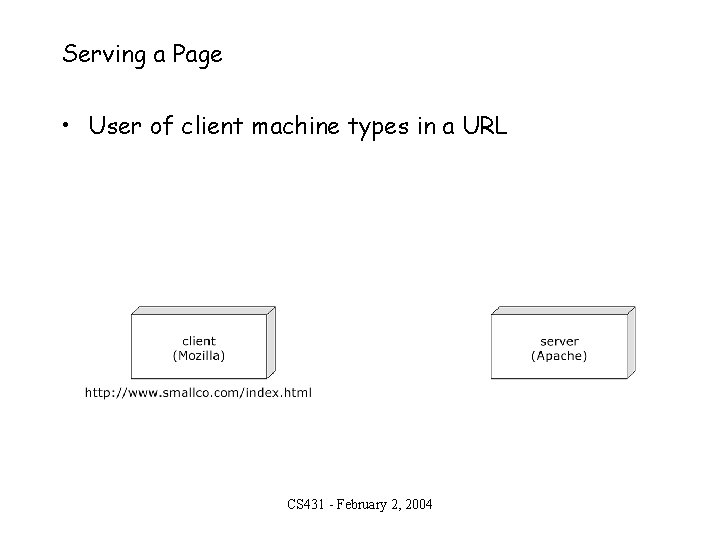
Serving a Page • User of client machine types in a URL CS 431 - February 2, 2004
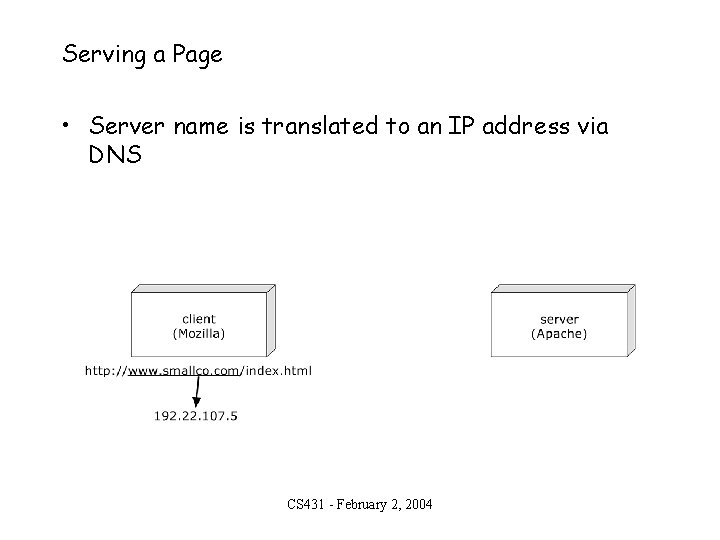
Serving a Page • Server name is translated to an IP address via DNS CS 431 - February 2, 2004
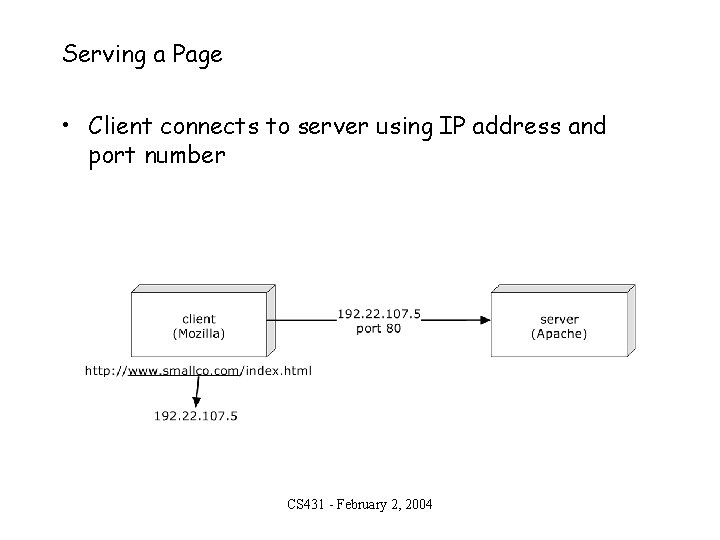
Serving a Page • Client connects to server using IP address and port number CS 431 - February 2, 2004
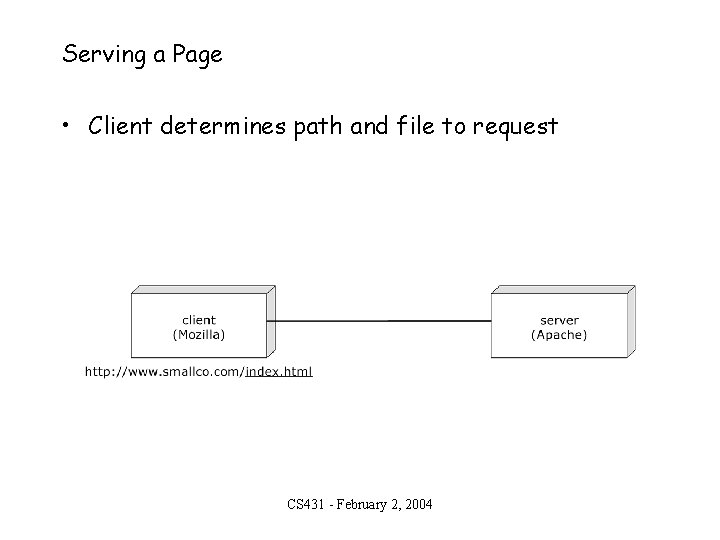
Serving a Page • Client determines path and file to request CS 431 - February 2, 2004
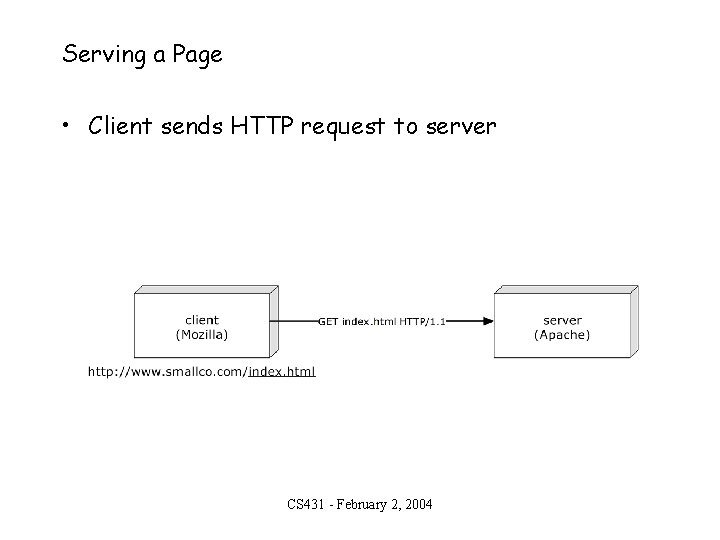
Serving a Page • Client sends HTTP request to server CS 431 - February 2, 2004
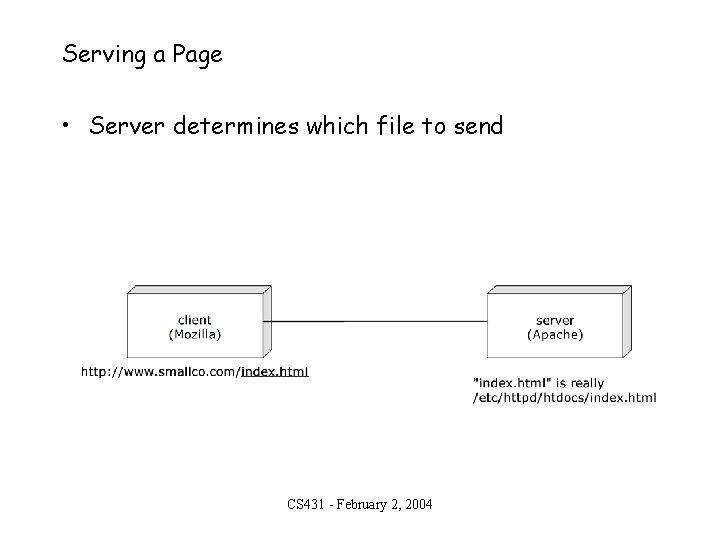
Serving a Page • Server determines which file to send CS 431 - February 2, 2004
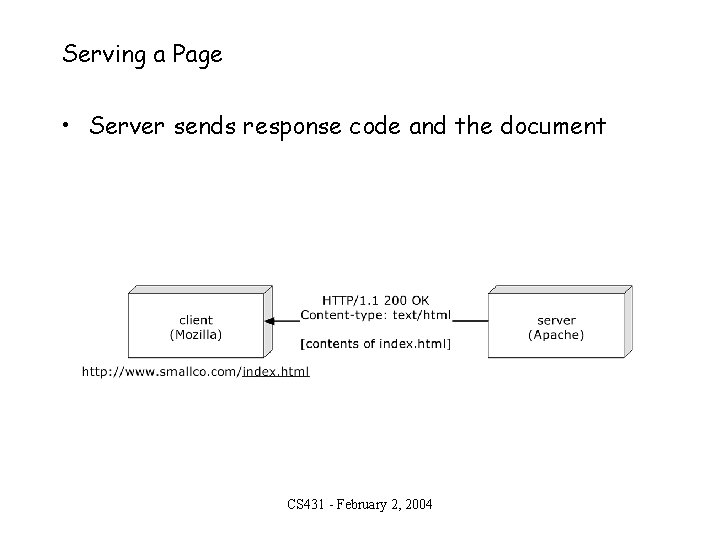
Serving a Page • Server sends response code and the document CS 431 - February 2, 2004
Serving a Page • Connection is broken CS 431 - February 2, 2004
- Slides: 35