
WORLD WAR ONE War and Peace WARFARE Technology
- Slides: 24
WORLD WAR ONE War and Peace
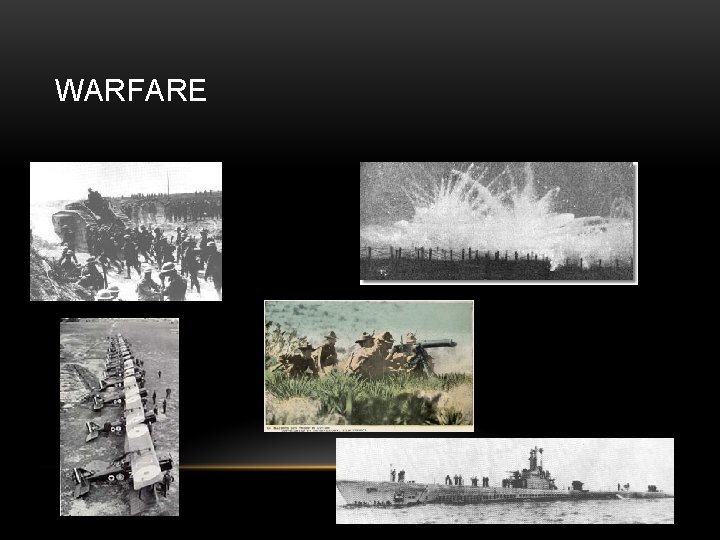
WARFARE • Technology • Industrialization and new technology made World War One highly destructive. • Machine Gun • Tank • Submarine • Poison gas • All of these new weapons and technology lead to large numbers of casualties, death and destruction.
WARFARE
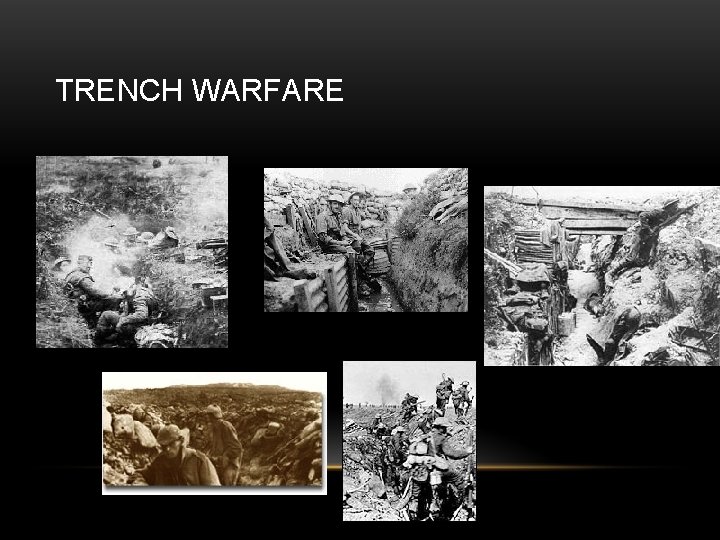
TRENCH WARFARE • When French and British troops stopped the advance of the German Army in France both sides dug in trenches. • Neither side was able to advance over the next four years. • Life in the trenches was horrid • • Rats Mud Lack of sleep Death
TRENCH WARFARE • If militarism glorified war, trench warfare did everything it could to demystify the idea of a glorious war.
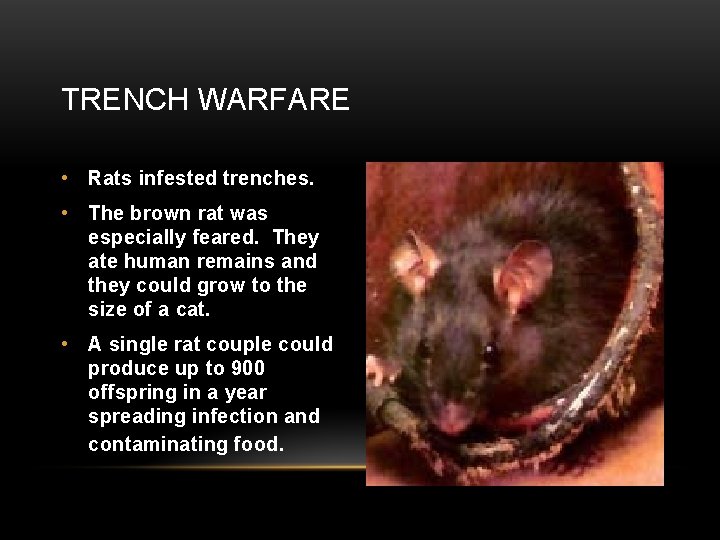
TRENCH WARFARE • Rats infested trenches. • The brown rat was especially feared. They ate human remains and they could grow to the size of a cat. • A single rat couple could produce up to 900 offspring in a year spreading infection and contaminating food.
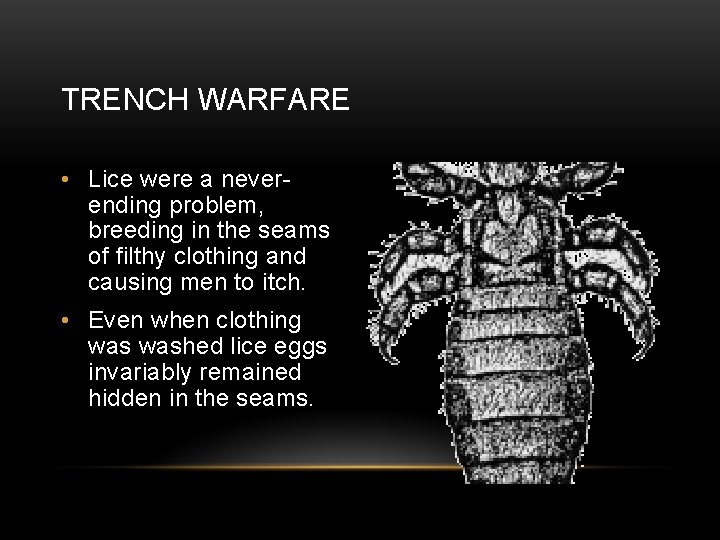
TRENCH WARFARE • Lice were a neverending problem, breeding in the seams of filthy clothing and causing men to itch. • Even when clothing washed lice eggs invariably remained hidden in the seams.
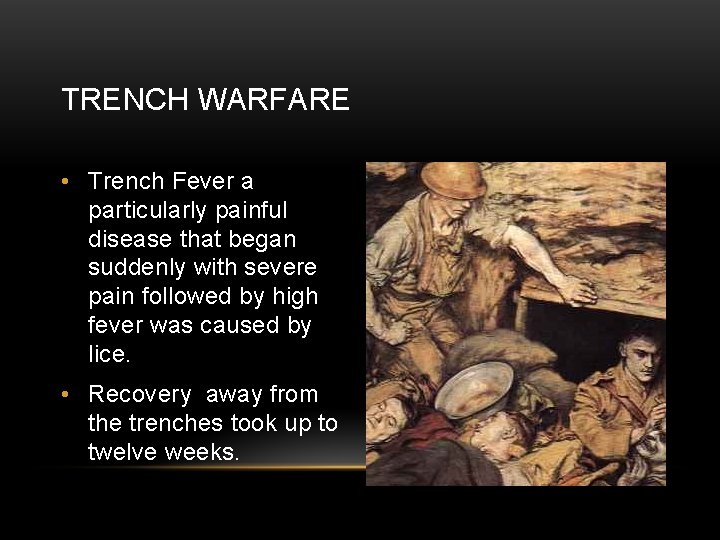
TRENCH WARFARE • Trench Fever a particularly painful disease that began suddenly with severe pain followed by high fever was caused by lice. • Recovery away from the trenches took up to twelve weeks.
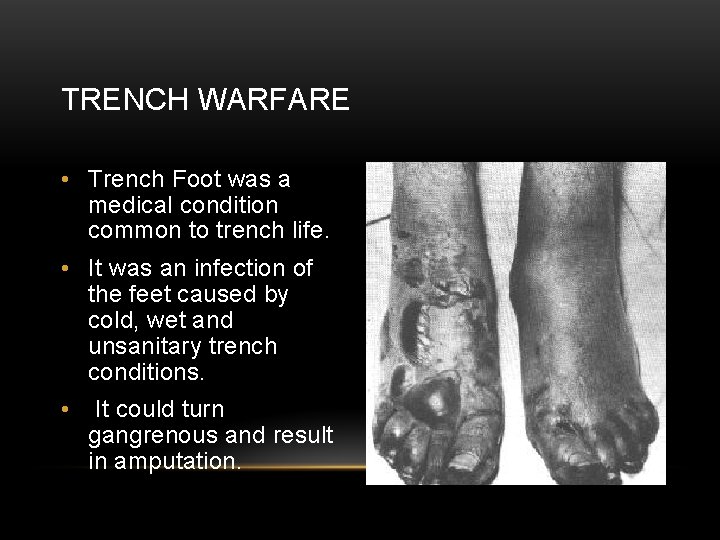
TRENCH WARFARE • Trench Foot was a medical condition common to trench life. • It was an infection of the feet caused by cold, wet and unsanitary trench conditions. • It could turn gangrenous and result in amputation.
TRENCH WARFARE • The Smell • Rotting carcasses lay around in the thousands. For example, approximately 200, 000 men were killed on the Somme battlefields, many of which lay in shallow graves. • Overflowing latrines would also give off a most offensive smell. • Men who had not been afforded the luxury of a bath in weeks or months would smell like the odor of dried sweat. The feet were generally accepted to give off the worst odor.
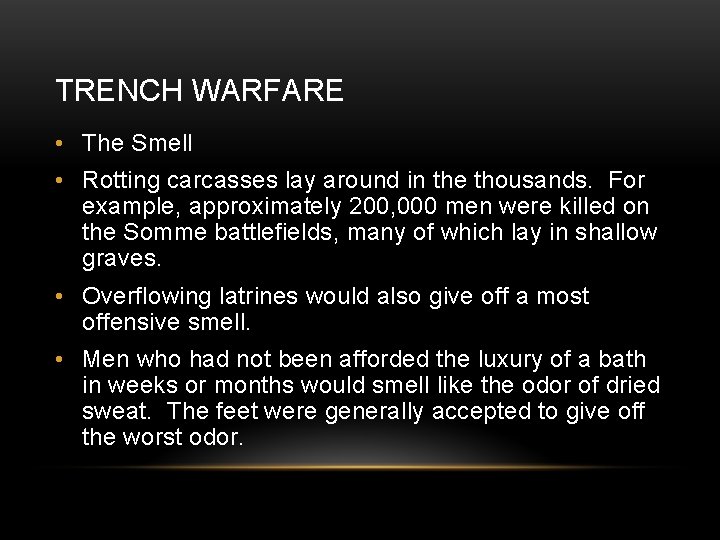
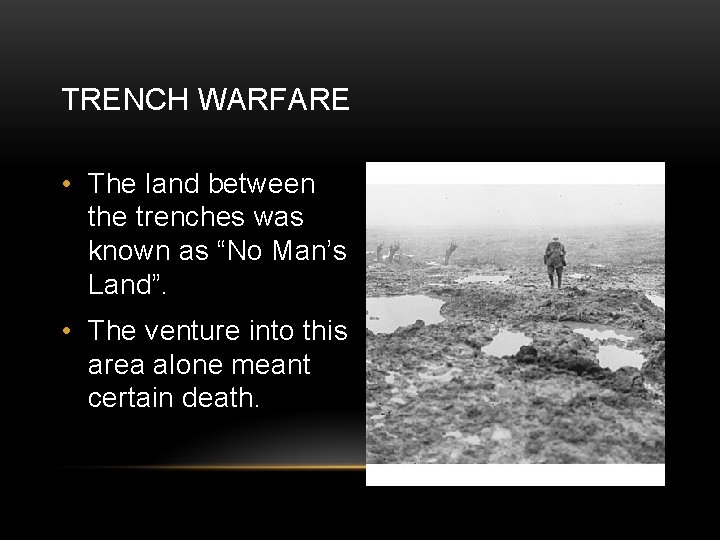
TRENCH WARFARE • The land between the trenches was known as “No Man’s Land”. • The venture into this area alone meant certain death.
TRENCH WARFARE
TRENCH WARFARE
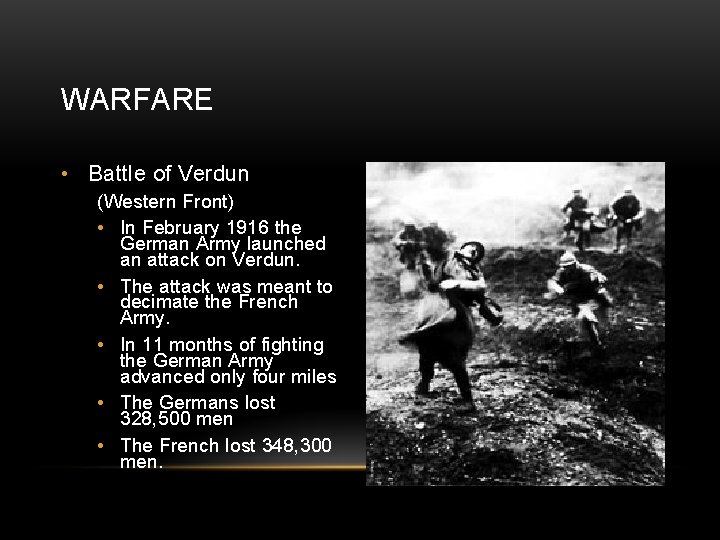
WARFARE • Battle of Verdun (Western Front) • In February 1916 the German Army launched an attack on Verdun. • The attack was meant to decimate the French Army. • In 11 months of fighting the German Army advanced only four miles • The Germans lost 328, 500 men • The French lost 348, 300 men.
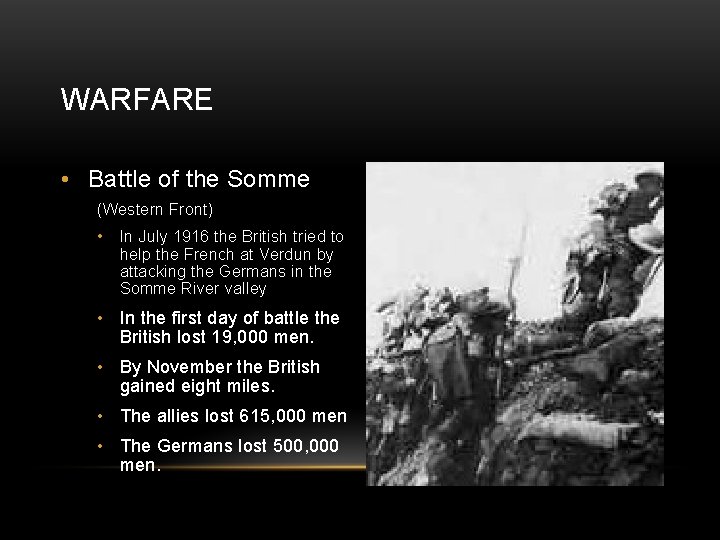
WARFARE • Battle of the Somme (Western Front) • In July 1916 the British tried to help the French at Verdun by attacking the Germans in the Somme River valley • In the first day of battle the British lost 19, 000 men. • By November the British gained eight miles. • The allies lost 615, 000 men • The Germans lost 500, 000 men.
RUSSIA’S WITHDRAW • Prior to the beginning of the war Russia had not become industrialized. • The Russian Army was ill-equipped for the war and was short of weapons, food and fuel. • In 1915 the Russians suffered the loss of 2 million men. • By 1917 there was social unrest in Russia and the government was close to collapse. • By 1917 the Russian Army refused to fight. • In November 1917 Lenin and the Communist take control of the government.
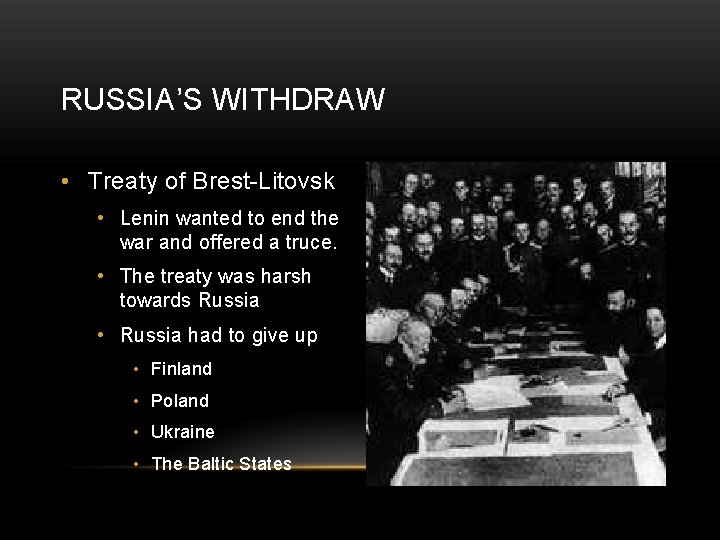
RUSSIA’S WITHDRAW • Treaty of Brest-Litovsk • Lenin wanted to end the war and offered a truce. • The treaty was harsh towards Russia • Russia had to give up • Finland • Poland • Ukraine • The Baltic States
RUSSIA’S WITHDRAW • Outcome • The German Army was able to place more troops on the Western front which angered the British and French. • The Germans tried to push towards Paris.
AMERICA JOINS THE WAR • Up until 1917 The U. S. had remained neutral. • In 1917 the German Navy began a policy of unrestricted submarine warfare and attacked any ships trying to reach Britain. • President Wilson told the Germans that if more U. S. ships were sunk the U. S. would enter the war. • The Germans ignored the warning and continued to sink U. S. ships.
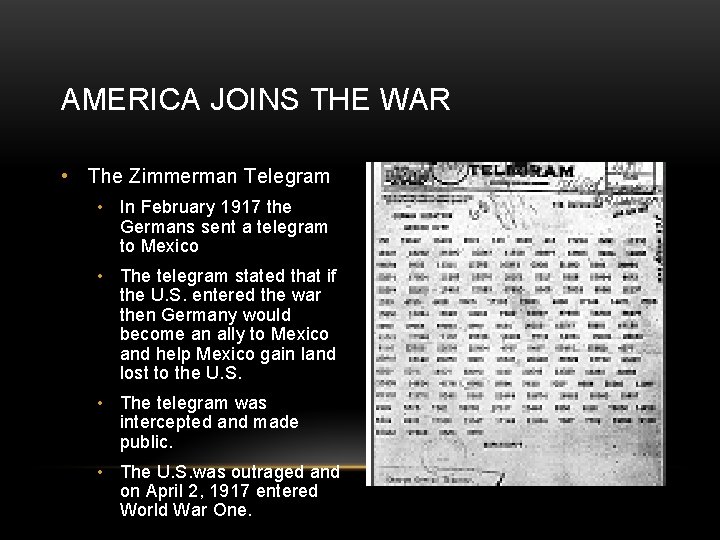
AMERICA JOINS THE WAR • The Zimmerman Telegram • In February 1917 the Germans sent a telegram to Mexico • The telegram stated that if the U. S. entered the war then Germany would become an ally to Mexico and help Mexico gain land lost to the U. S. • The telegram was intercepted and made public. • The U. S. was outraged and on April 2, 1917 entered World War One.
END OF WAR • With fresh U. S. troops and the exhaustion of four year of fighting by the German Army the Central Powers began to fall apart. • The Ottoman Empire surrendered. • In October the Austria-Hungarian Empire was overthrown and they stopped fighting. • In October the German Army mutinied and on November 9, the Kaiser stepped down. • Finally on November 11, 1918 an armistice was signed ending World War One. • On the 11 th day on the 11 th hour at the 11 th minute.
COST OF THE WAR • Casualties • 8. 5 million dead • 17 million wounded • Famine threatened many countries • Spread of disease • Economic • Factories and farms destroyed • Nations had huge war debts to repay • The allies were bitter at the Central Powers for the war. (hard feelings on both sides)
WINNERS AND LOSERS • Winners (Allies) • Britain • Losers (Central Powers) • France • Germany • Italy • Austria-Hungary • United States • Ottoman Empire
NOTE SUMMARY • Take five minutes, look over your notes and the on a separate sheet of paper label it “World War One War and Peace” and summarize your notes. • What new technology aided in the large lost of life during the war? • What were the conditions of trench warfare? • What was the outcome of most battles fought? • Why did Russia withdraw from the war and what was the impact on Russia and the rest of Europe? • How and why did America enter the war? • What were some of the final outcomes of the war?