
World War II The Pacific Theater 1941 1945
- Slides: 33
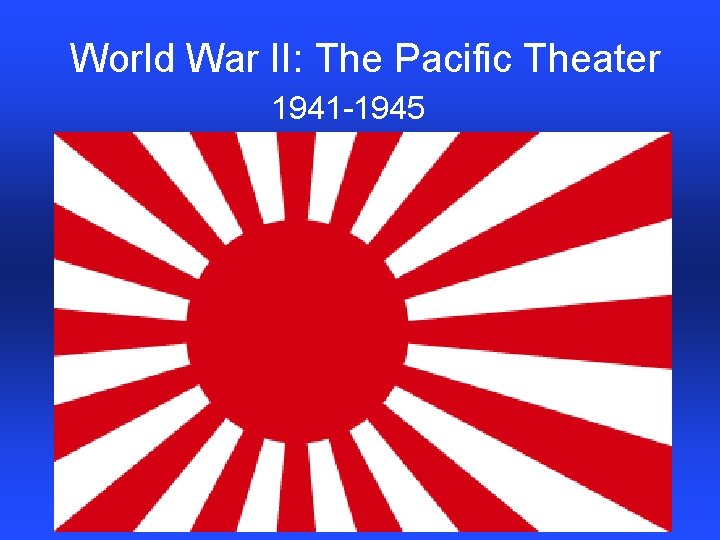
World War II: The Pacific Theater 1941 -1945
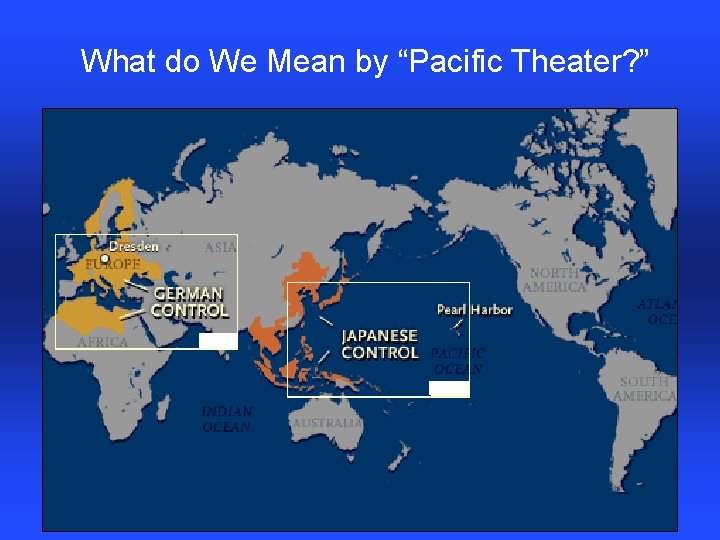
What do We Mean by “Pacific Theater? ”
“The War in the Pacific? ” ● What advances did Japan make in Asia and the Pacific in late 1941 and 1942? ● Which Allied victories turned the tide of war in the Pacific? ● What was the strategy of the United States in the struggle to reconquer the Pacific Islands? ● Why were the battles of Iwo Jima and Okinawa important? ● How did the Manhattan Project bring the war to an end?
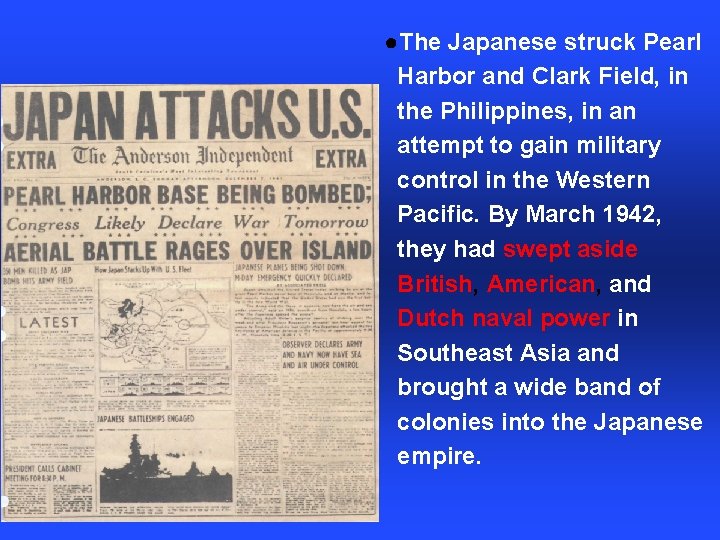
●The Japanese struck Pearl Harbor and Clark Field, in the Philippines, in an attempt to gain military control in the Western Pacific. By March 1942, they had swept aside British, American, and Dutch naval power in Southeast Asia and brought a wide band of colonies into the Japanese empire.
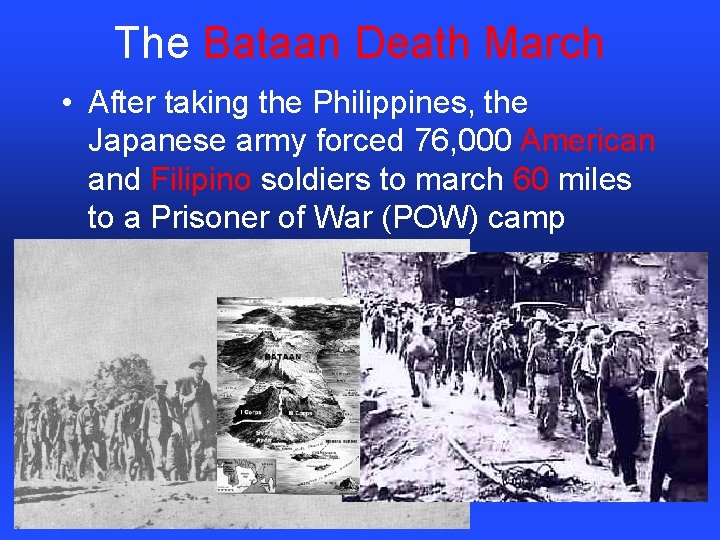
The Bataan Death March • After taking the Philippines, the Japanese army forced 76, 000 American and Filipino soldiers to march 60 miles to a Prisoner of War (POW) camp
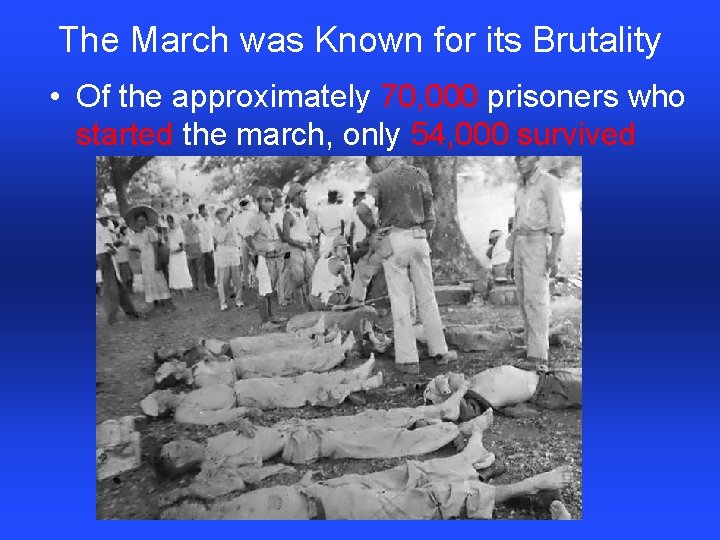
The March was Known for its Brutality • Of the approximately 70, 000 prisoners who started the march, only 54, 000 survived
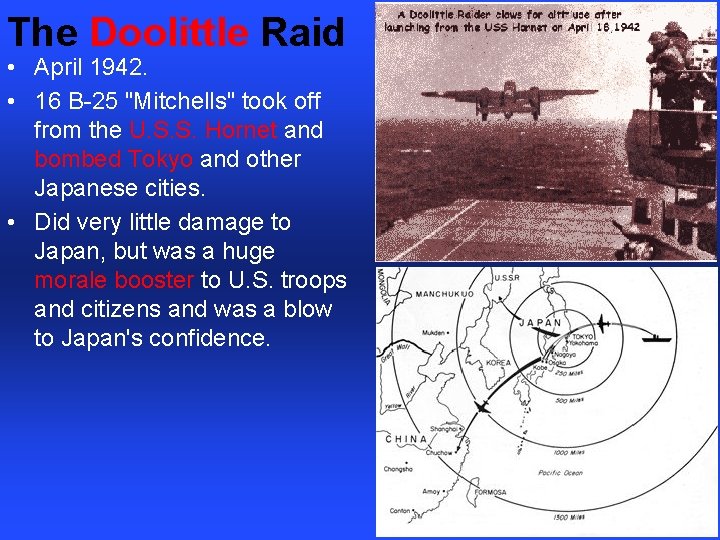
The Doolittle Raid • April 1942. • 16 B-25 "Mitchells" took off from the U. S. S. Hornet and bombed Tokyo and other Japanese cities. • Did very little damage to Japan, but was a huge morale booster to U. S. troops and citizens and was a blow to Japan's confidence.
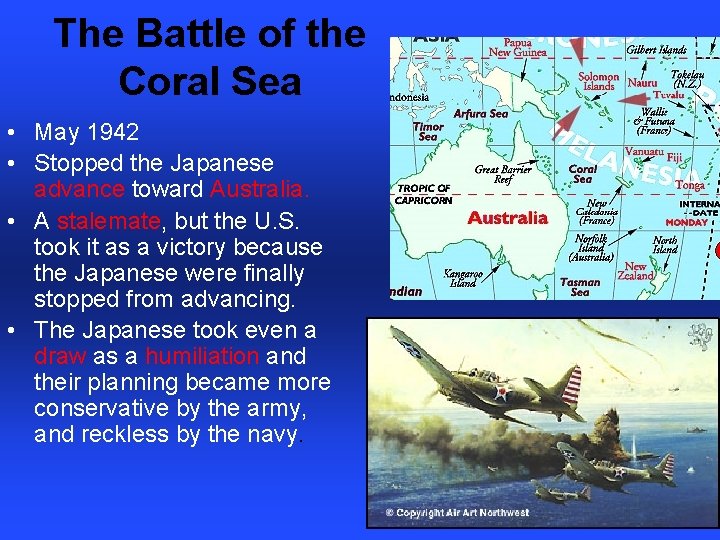
The Battle of the Coral Sea • May 1942 • Stopped the Japanese advance toward Australia. • A stalemate, but the U. S. took it as a victory because the Japanese were finally stopped from advancing. • The Japanese took even a draw as a humiliation and their planning became more conservative by the army, and reckless by the navy.
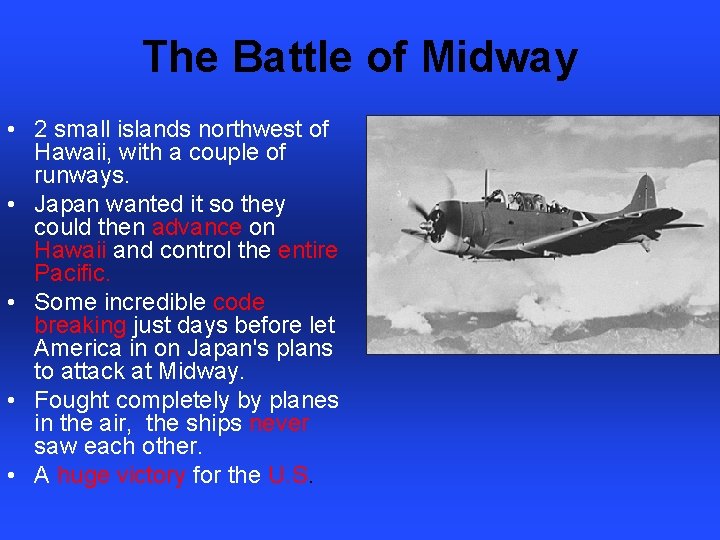
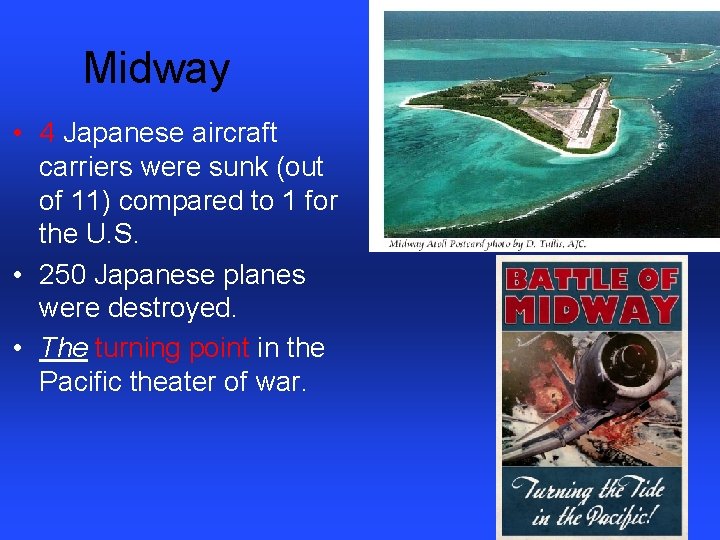
The Battle of Midway • 2 small islands northwest of Hawaii, with a couple of runways. • Japan wanted it so they could then advance on Hawaii and control the entire Pacific. • Some incredible code breaking just days before let America in on Japan's plans to attack at Midway. • Fought completely by planes in the air, the ships never saw each other. • A huge victory for the U. S.
Midway • 4 Japanese aircraft carriers were sunk (out of 11) compared to 1 for the U. S. • 250 Japanese planes were destroyed. • The turning point in the Pacific theater of war.
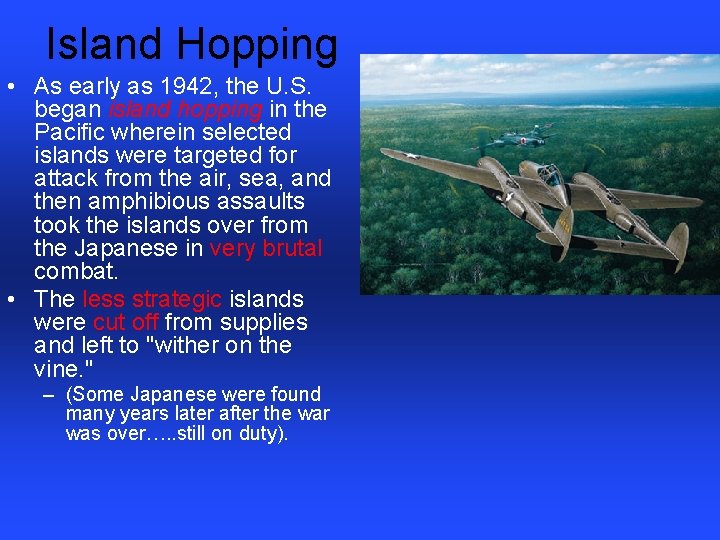
Island Hopping • As early as 1942, the U. S. began island hopping in the Pacific wherein selected islands were targeted for attack from the air, sea, and then amphibious assaults took the islands over from the Japanese in very brutal combat. • The less strategic islands were cut off from supplies and left to "wither on the vine. " – (Some Japanese were found many years later after the war was over…. . still on duty).
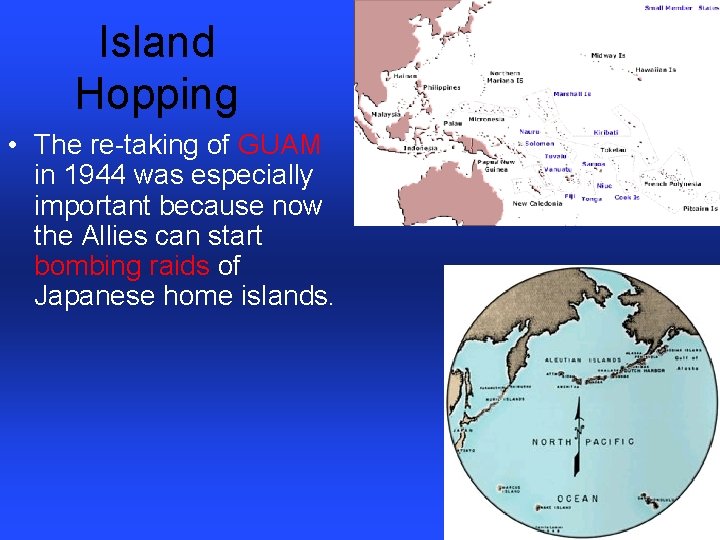
Island Hopping • The re-taking of GUAM in 1944 was especially important because now the Allies can start bombing raids of Japanese home islands.
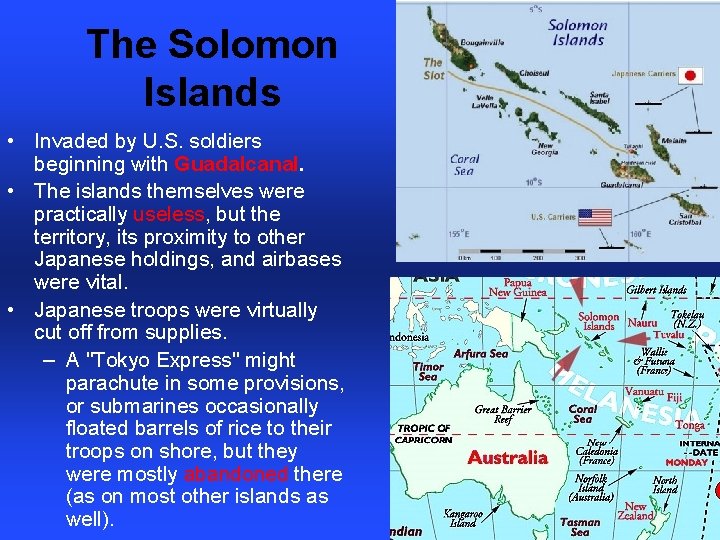
The Solomon Islands • Invaded by U. S. soldiers beginning with Guadalcanal. • The islands themselves were practically useless, but the territory, its proximity to other Japanese holdings, and airbases were vital. • Japanese troops were virtually cut off from supplies. – A "Tokyo Express" might parachute in some provisions, or submarines occasionally floated barrels of rice to their troops on shore, but they were mostly abandoned there (as on most other islands as well).
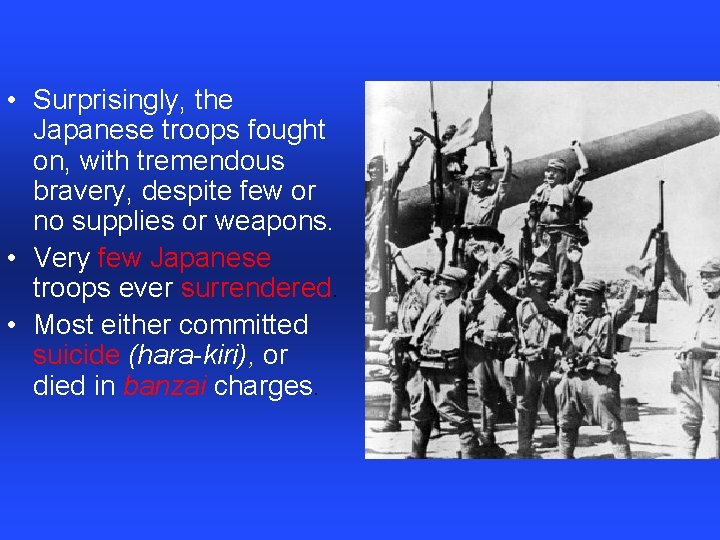
• Surprisingly, the Japanese troops fought on, with tremendous bravery, despite few or no supplies or weapons. • Very few Japanese troops ever surrendered. • Most either committed suicide (hara-kiri), or died in banzai charges.
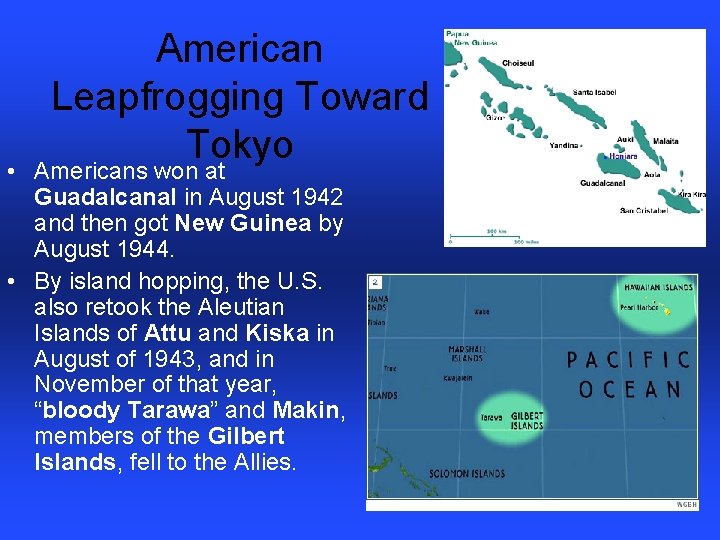
American Leapfrogging Toward Tokyo • Americans won at Guadalcanal in August 1942 and then got New Guinea by August 1944. • By island hopping, the U. S. also retook the Aleutian Islands of Attu and Kiska in August of 1943, and in November of that year, “bloody Tarawa” and Makin, members of the Gilbert Islands, fell to the Allies.
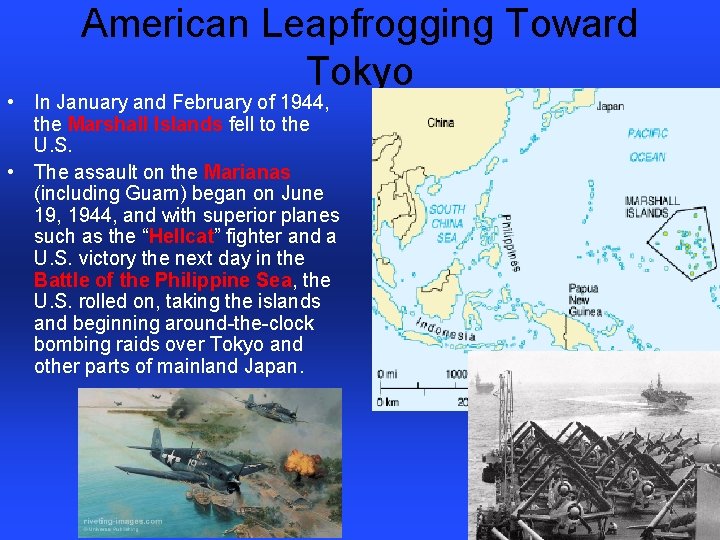
American Leapfrogging Toward Tokyo • In January and February of 1944, the Marshall Islands fell to the U. S. • The assault on the Marianas (including Guam) began on June 19, 1944, and with superior planes such as the “Hellcat” fighter and a U. S. victory the next day in the Battle of the Philippine Sea, the U. S. rolled on, taking the islands and beginning around-the-clock bombing raids over Tokyo and other parts of mainland Japan.
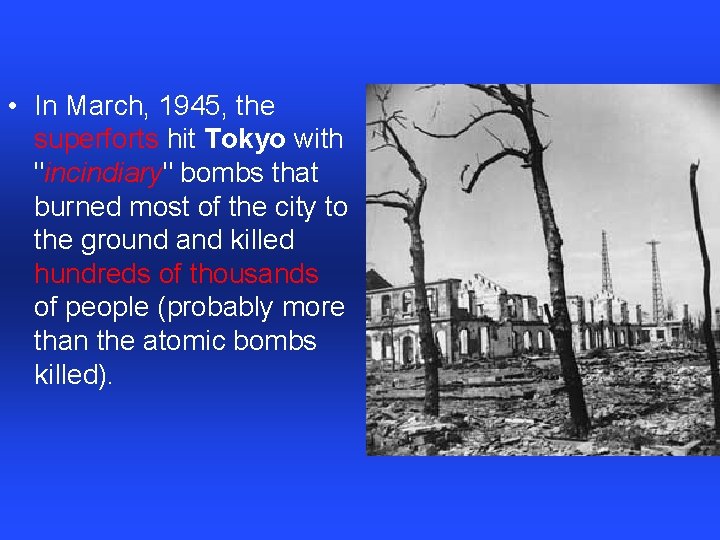
• In March, 1945, the superforts hit Tokyo with "incindiary" bombs that burned most of the city to the ground and killed hundreds of thousands of people (probably more than the atomic bombs killed).
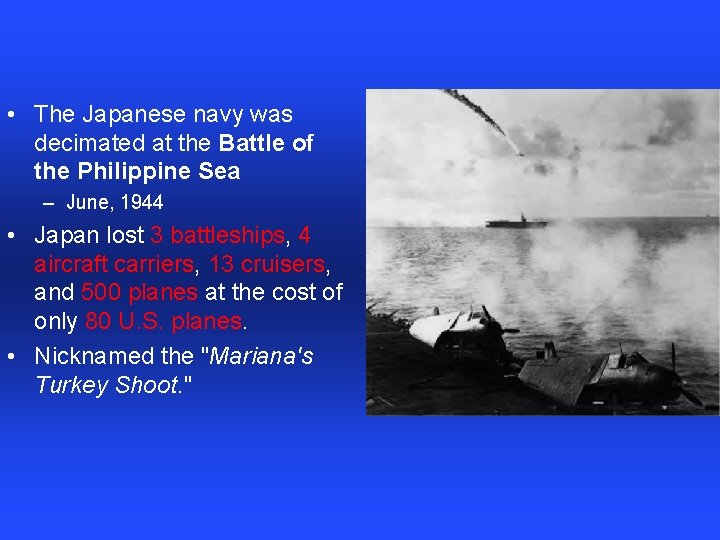
• The Japanese navy was decimated at the Battle of the Philippine Sea – June, 1944 • Japan lost 3 battleships, 4 aircraft carriers, 13 cruisers, and 500 planes at the cost of only 80 U. S. planes. • Nicknamed the "Mariana's Turkey Shoot. "
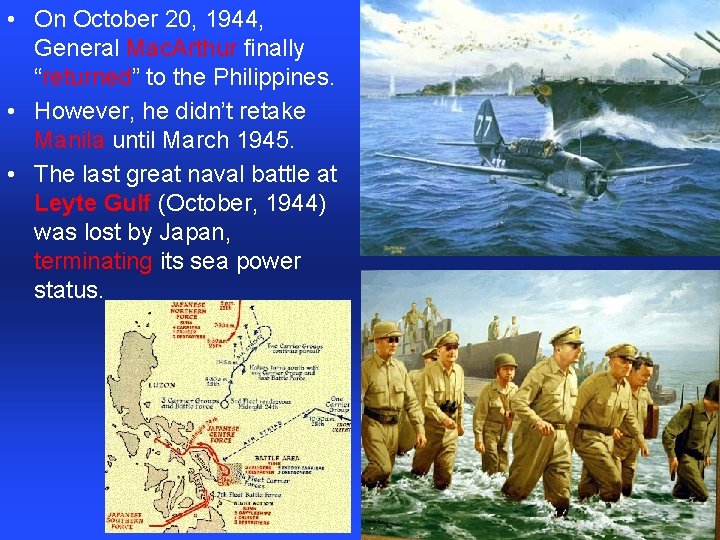
• On October 20, 1944, General Mac. Arthur finally “returned” to the Philippines. • However, he didn’t retake Manila until March 1945. • The last great naval battle at Leyte Gulf (October, 1944) was lost by Japan, terminating its sea power status.
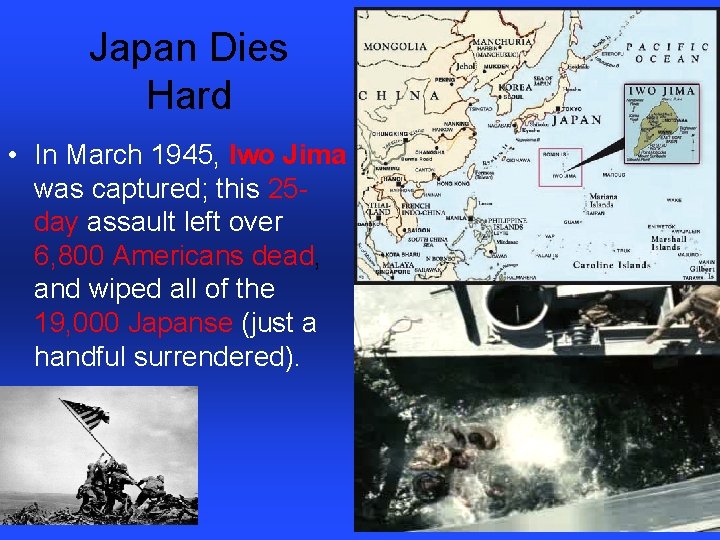
Japan Dies Hard • In March 1945, Iwo Jima was captured; this 25 day assault left over 6, 800 Americans dead, and wiped all of the 19, 000 Japanse (just a handful surrendered).
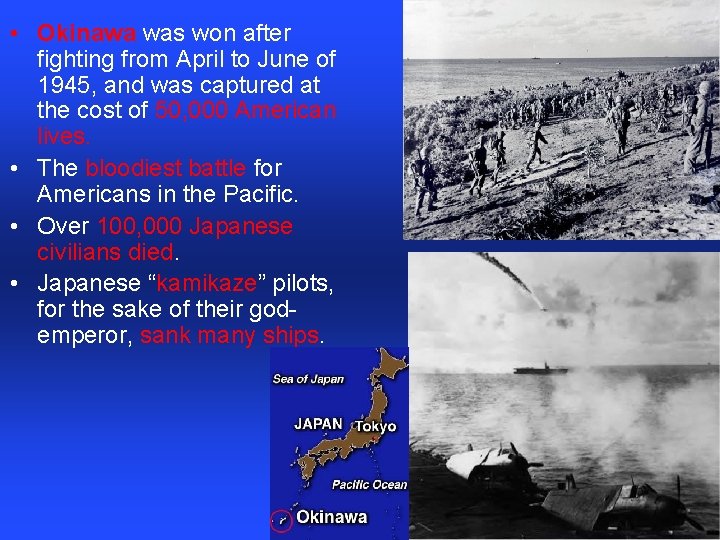
• Okinawa was won after fighting from April to June of 1945, and was captured at the cost of 50, 000 American lives. • The bloodiest battle for Americans in the Pacific. • Over 100, 000 Japanese civilians died. • Japanese “kamikaze” pilots, for the sake of their godemperor, sank many ships.
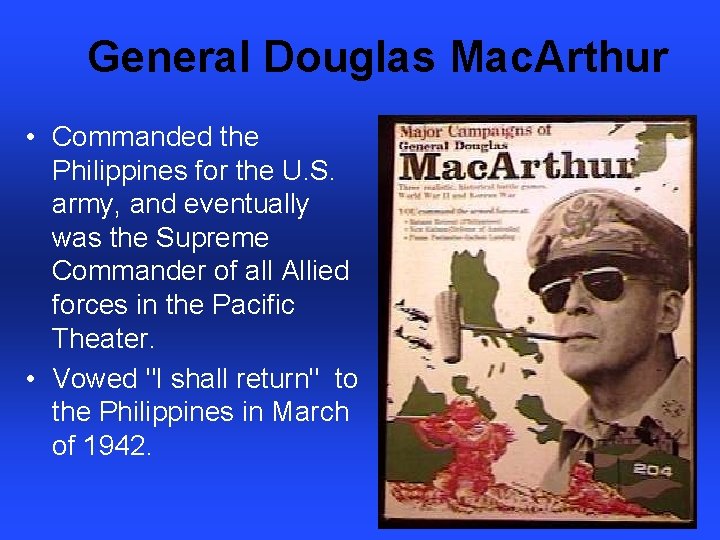
General Douglas Mac. Arthur • Commanded the Philippines for the U. S. army, and eventually was the Supreme Commander of all Allied forces in the Pacific Theater. • Vowed "I shall return" to the Philippines in March of 1942.
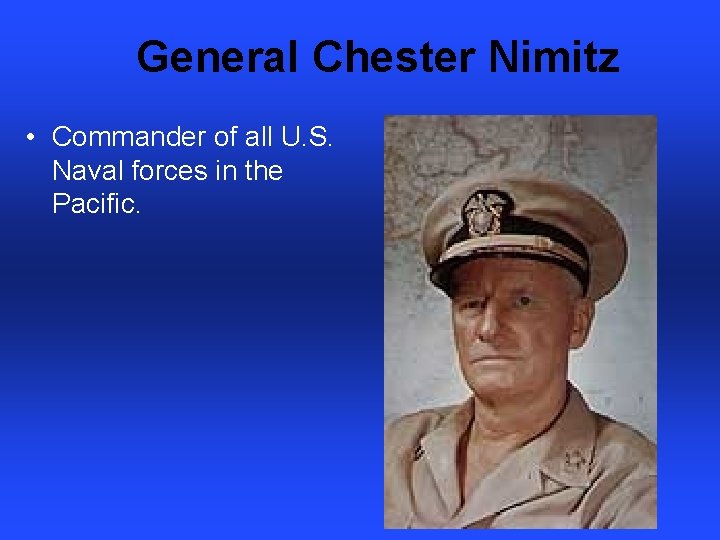
General Chester Nimitz • Commander of all U. S. Naval forces in the Pacific.
What did Einstein Think? • “Because of the danger that Hitler might be the first to have the bomb, I signed a letter to the President which had been drafted by Szilard. Had I known that the fear was not justified, I would not have participated in opening this Pandora’s Box, nor would Szilard. For my distrust of governments was not limited to Germany” – Albert Einstein
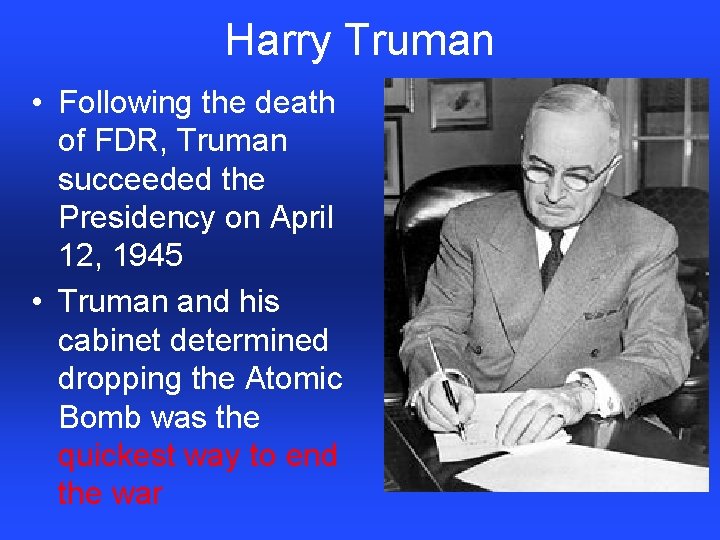
Harry Truman • Following the death of FDR, Truman succeeded the Presidency on April 12, 1945 • Truman and his cabinet determined dropping the Atomic Bomb was the quickest way to end the war
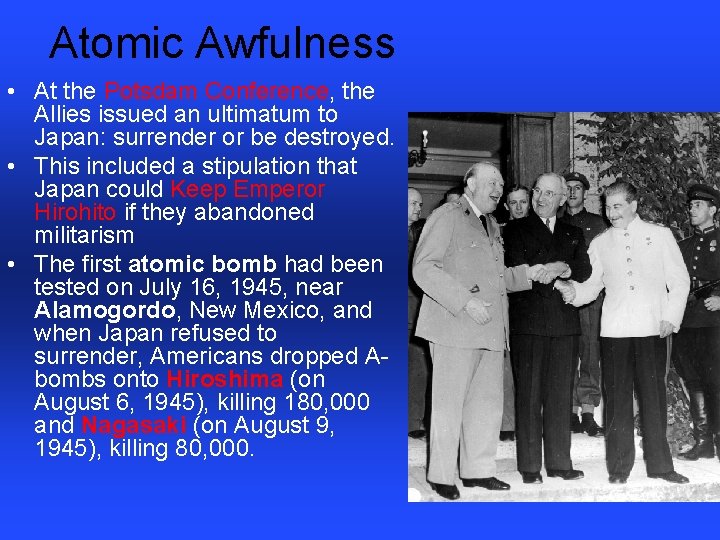
Atomic Awfulness • At the Potsdam Conference, the Allies issued an ultimatum to Japan: surrender or be destroyed. • This included a stipulation that Japan could Keep Emperor Hirohito if they abandoned militarism • The first atomic bomb had been tested on July 16, 1945, near Alamogordo, New Mexico, and when Japan refused to surrender, Americans dropped Abombs onto Hiroshima (on August 6, 1945), killing 180, 000 and Nagasaki (on August 9, 1945), killing 80, 000.
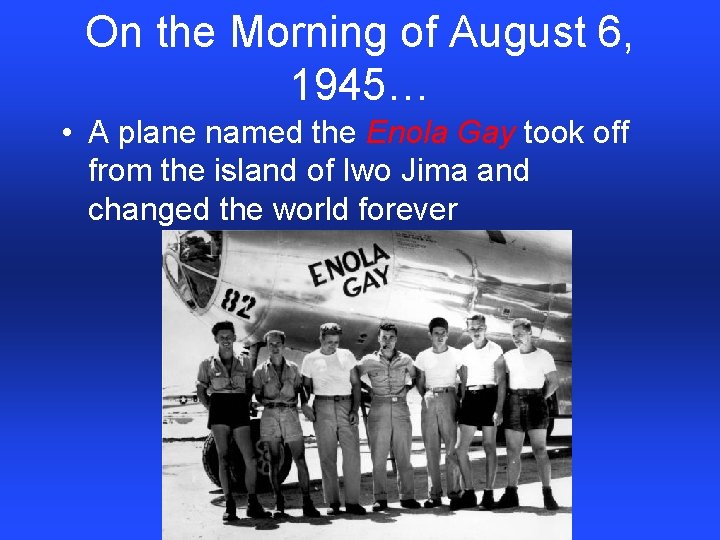
On the Morning of August 6, 1945… • A plane named the Enola Gay took off from the island of Iwo Jima and changed the world forever
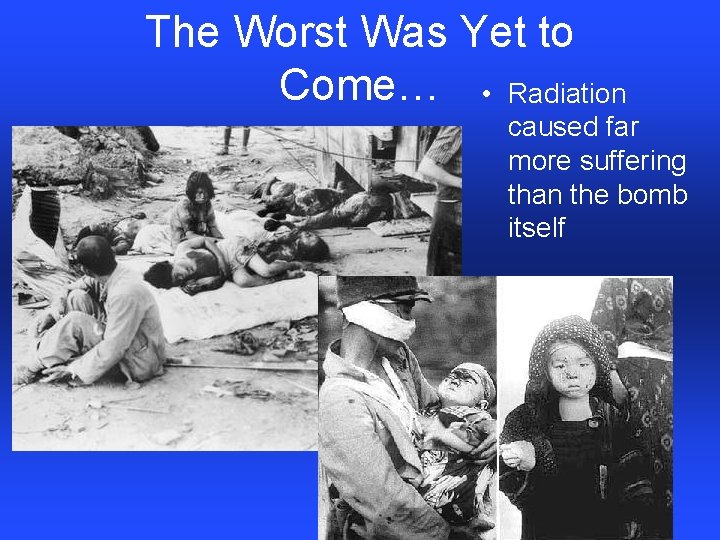
The Worst Was Yet to Come… • Radiation caused far more suffering than the bomb itself
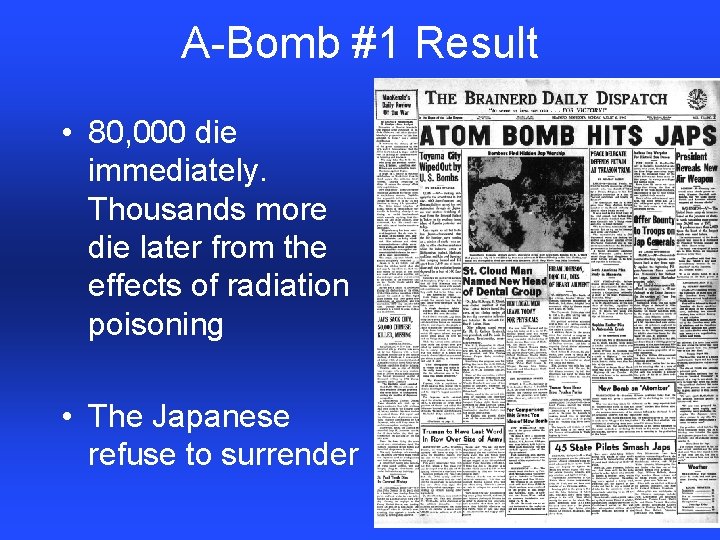
A-Bomb #1 Result • 80, 000 die immediately. Thousands more die later from the effects of radiation poisoning • The Japanese refuse to surrender
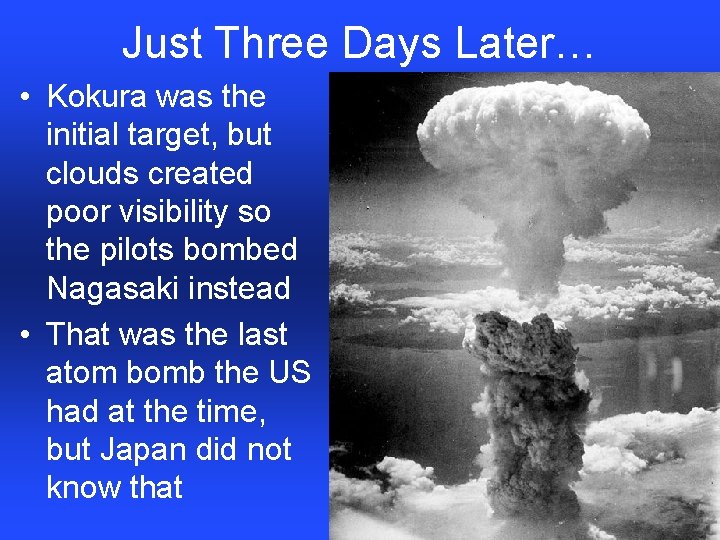
Just Three Days Later… • Kokura was the initial target, but clouds created poor visibility so the pilots bombed Nagasaki instead • That was the last atom bomb the US had at the time, but Japan did not know that
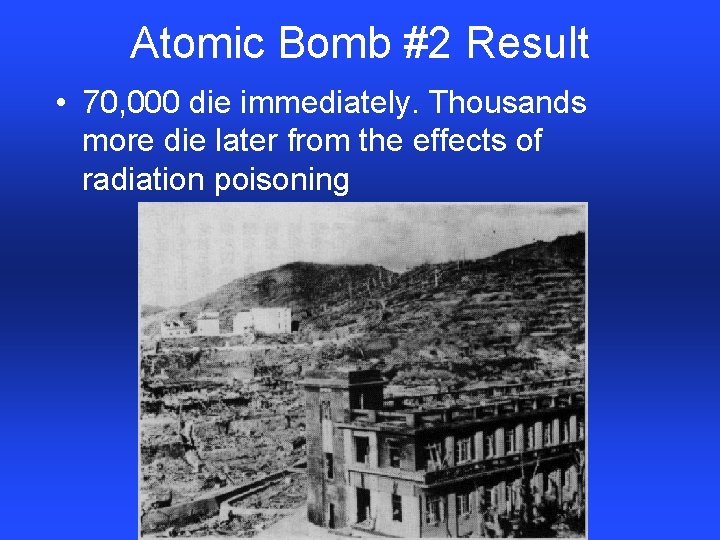
Atomic Bomb #2 Result • 70, 000 die immediately. Thousands more die later from the effects of radiation poisoning
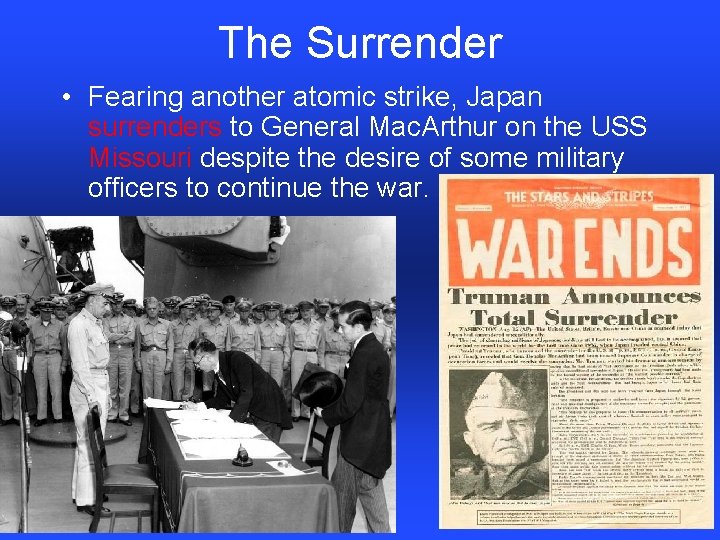
The Surrender • Fearing another atomic strike, Japan surrenders to General Mac. Arthur on the USS Missouri despite the desire of some military officers to continue the war.
Conditions of the Surrender • Emperor Hirohito had to declare to the Japanese people that he was not a divine presence on Earth • Japan was forced to demilitarize; they could only go to war if they were attacked • US drew up a new constitution for a constitutional monarchy in Japan • Land Labor Reforms – Redistribution of land – Legalization of unions • Right to vote for all citizens over 20