
World War II Neutrality of the 1930s A

- Slides: 16
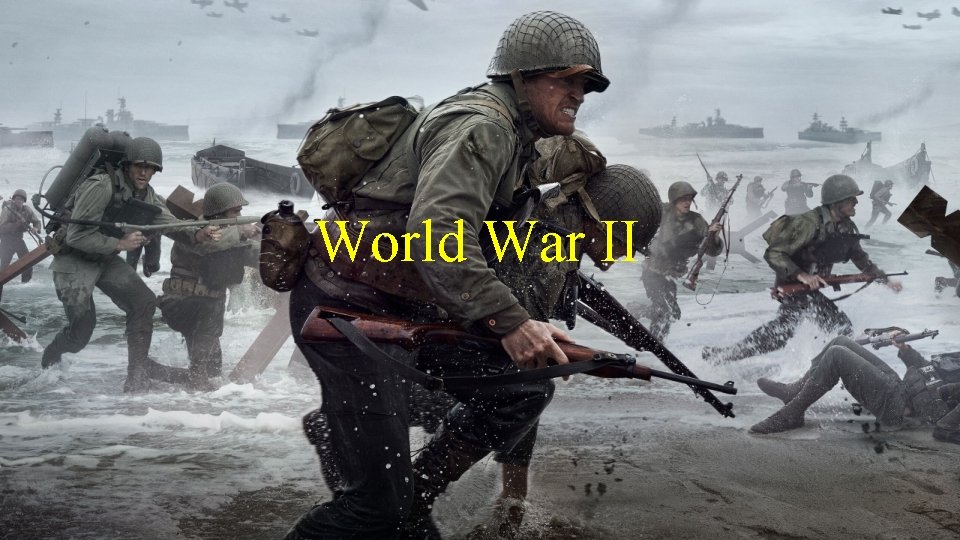
World War II
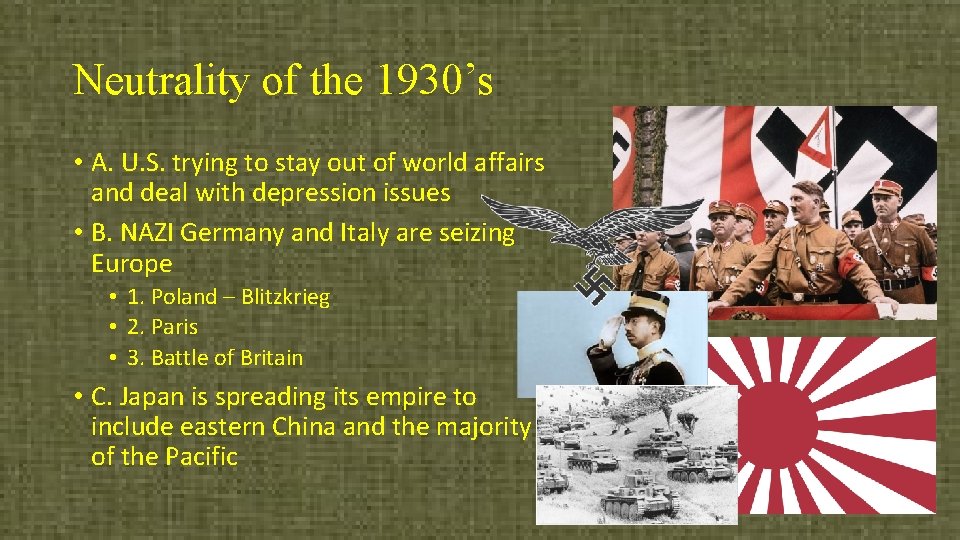
Neutrality of the 1930’s • A. U. S. trying to stay out of world affairs and deal with depression issues • B. NAZI Germany and Italy are seizing Europe • 1. Poland – Blitzkrieg • 2. Paris • 3. Battle of Britain • C. Japan is spreading its empire to include eastern China and the majority of the Pacific
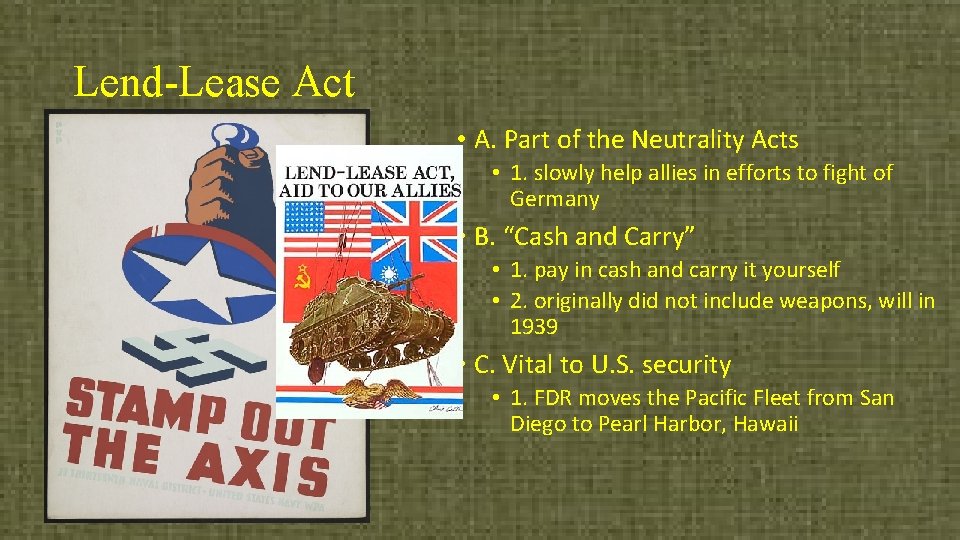
Lend-Lease Act • A. Part of the Neutrality Acts • 1. slowly help allies in efforts to fight of Germany • B. “Cash and Carry” • 1. pay in cash and carry it yourself • 2. originally did not include weapons, will in 1939 • C. Vital to U. S. security • 1. FDR moves the Pacific Fleet from San Diego to Pearl Harbor, Hawaii
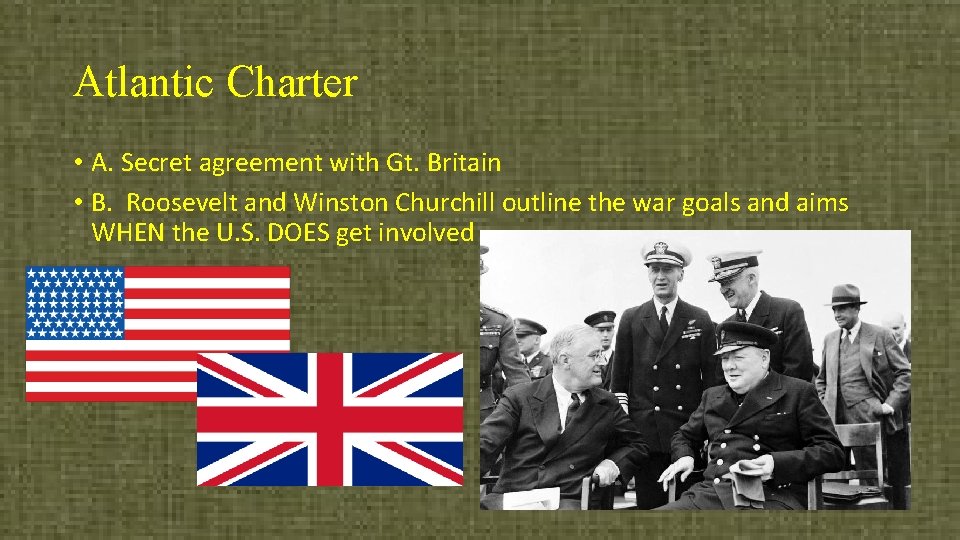
Atlantic Charter • A. Secret agreement with Gt. Britain • B. Roosevelt and Winston Churchill outline the war goals and aims WHEN the U. S. DOES get involved
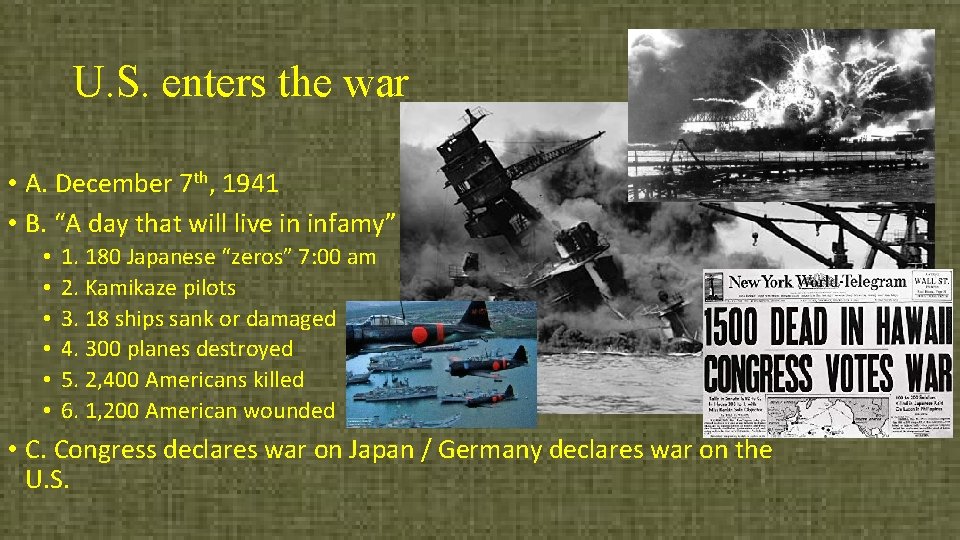
U. S. enters the war • A. December 7 th, 1941 • B. “A day that will live in infamy” • • • 1. 180 Japanese “zeros” 7: 00 am 2. Kamikaze pilots 3. 18 ships sank or damaged 4. 300 planes destroyed 5. 2, 400 Americans killed 6. 1, 200 American wounded • C. Congress declares war on Japan / Germany declares war on the U. S.
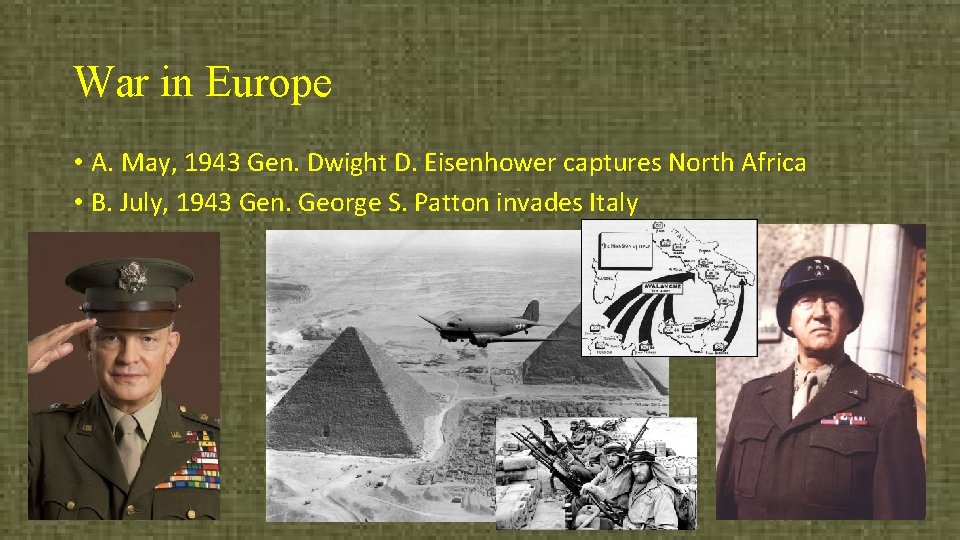
War in Europe • A. May, 1943 Gen. Dwight D. Eisenhower captures North Africa • B. July, 1943 Gen. George S. Patton invades Italy
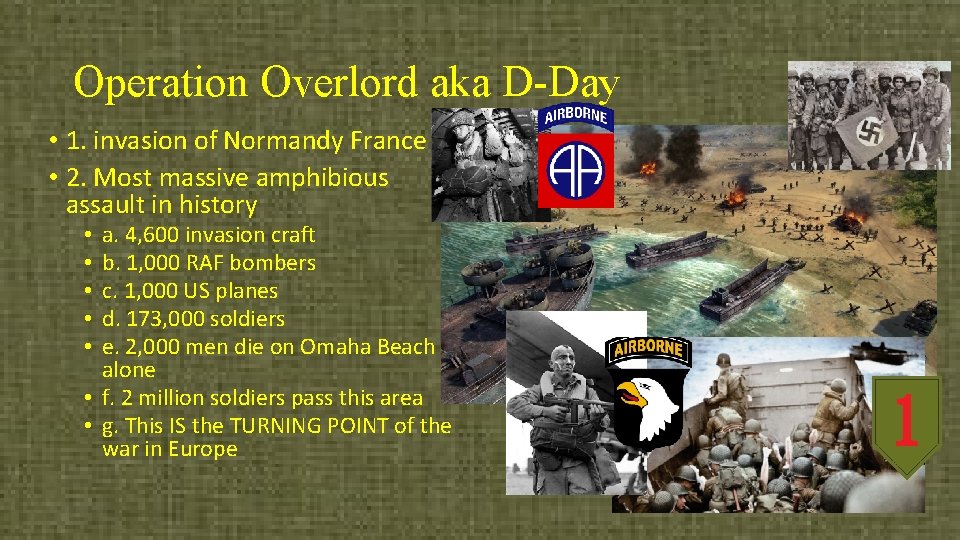
Operation Overlord aka D-Day • 1. invasion of Normandy France • 2. Most massive amphibious assault in history a. 4, 600 invasion craft b. 1, 000 RAF bombers c. 1, 000 US planes d. 173, 000 soldiers e. 2, 000 men die on Omaha Beach alone • f. 2 million soldiers pass this area • g. This IS the TURNING POINT of the war in Europe • • •
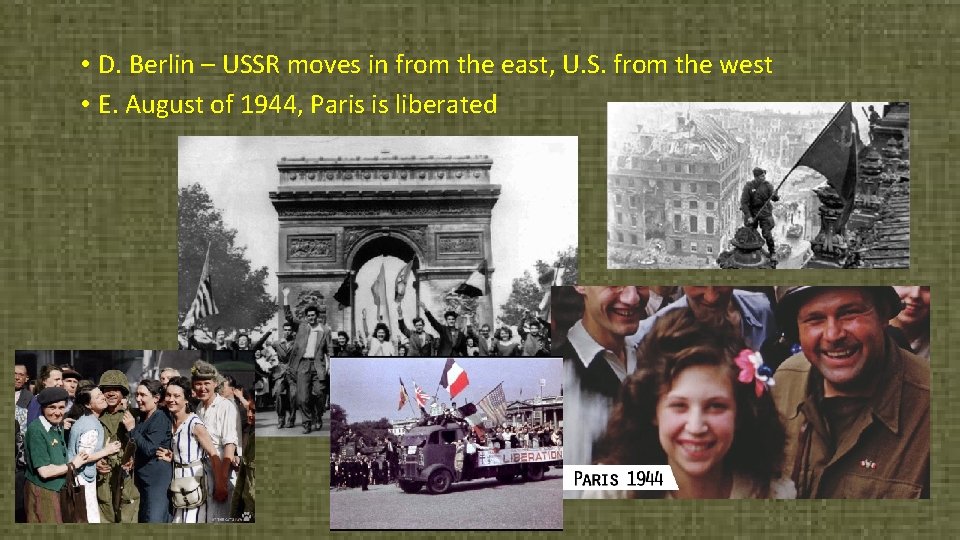
• D. Berlin – USSR moves in from the east, U. S. from the west • E. August of 1944, Paris is liberated
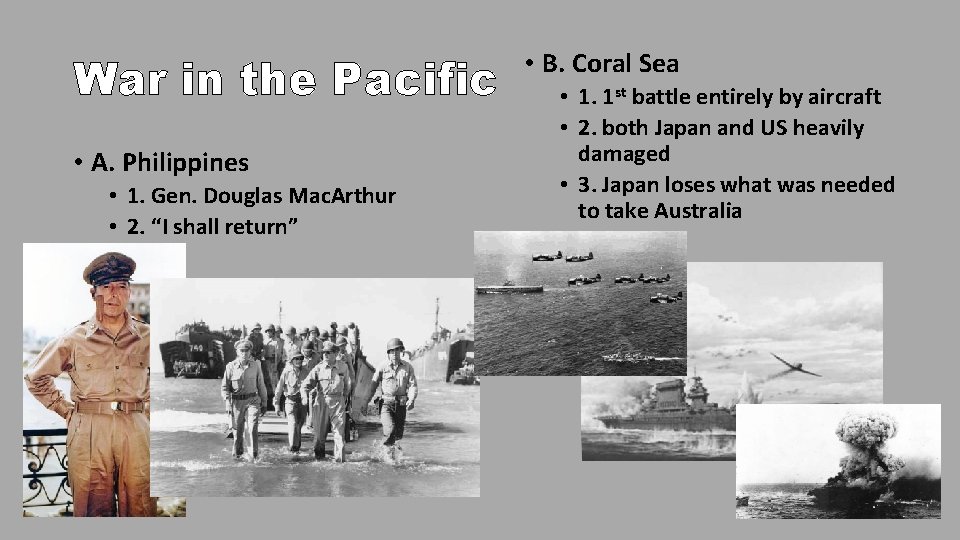
War in the Pacific • A. Philippines • 1. Gen. Douglas Mac. Arthur • 2. “I shall return” • B. Coral Sea • 1. 1 st battle entirely by aircraft • 2. both Japan and US heavily damaged • 3. Japan loses what was needed to take Australia
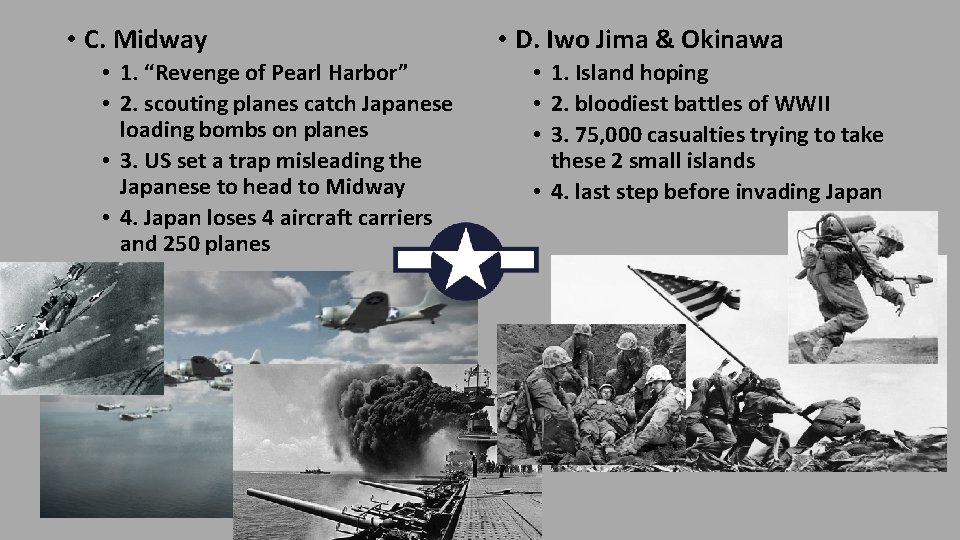
• C. Midway • 1. “Revenge of Pearl Harbor” • 2. scouting planes catch Japanese loading bombs on planes • 3. US set a trap misleading the Japanese to head to Midway • 4. Japan loses 4 aircraft carriers and 250 planes • D. Iwo Jima & Okinawa • 1. Island hoping • 2. bloodiest battles of WWII • 3. 75, 000 casualties trying to take these 2 small islands • 4. last step before invading Japan
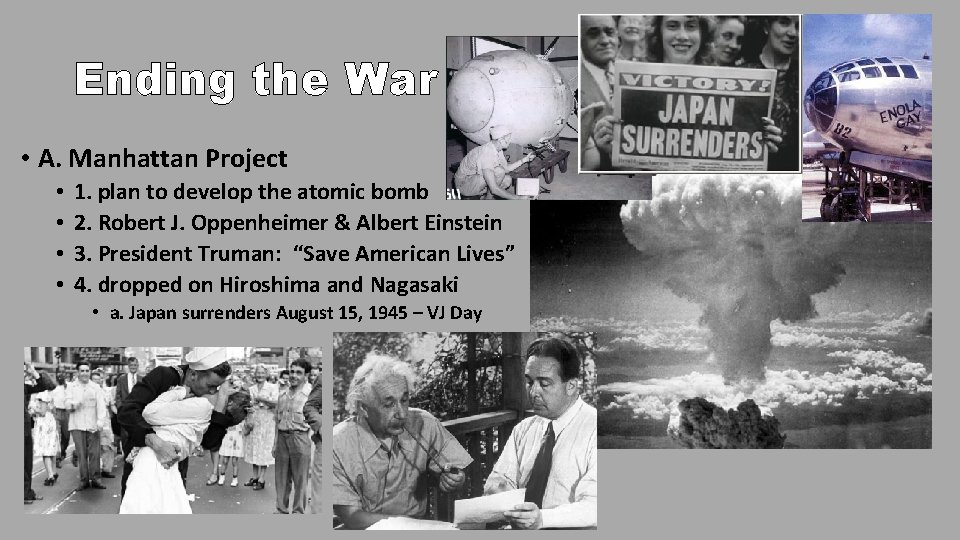
Ending the War • A. Manhattan Project • • 1. plan to develop the atomic bomb 2. Robert J. Oppenheimer & Albert Einstein 3. President Truman: “Save American Lives” 4. dropped on Hiroshima and Nagasaki • a. Japan surrenders August 15, 1945 – VJ Day
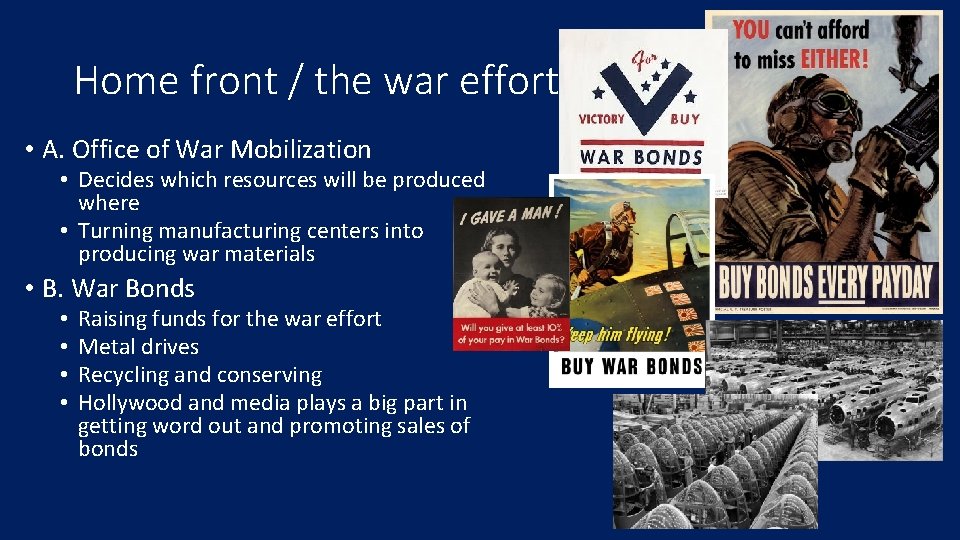
Home front / the war effort • A. Office of War Mobilization • Decides which resources will be produced where • Turning manufacturing centers into producing war materials • B. War Bonds • • Raising funds for the war effort Metal drives Recycling and conserving Hollywood and media plays a big part in getting word out and promoting sales of bonds
• C. Rationing • Car pooling – drive share • Fats, metals etc. • Rain checks or “stamps” for future items to be sold / purchased
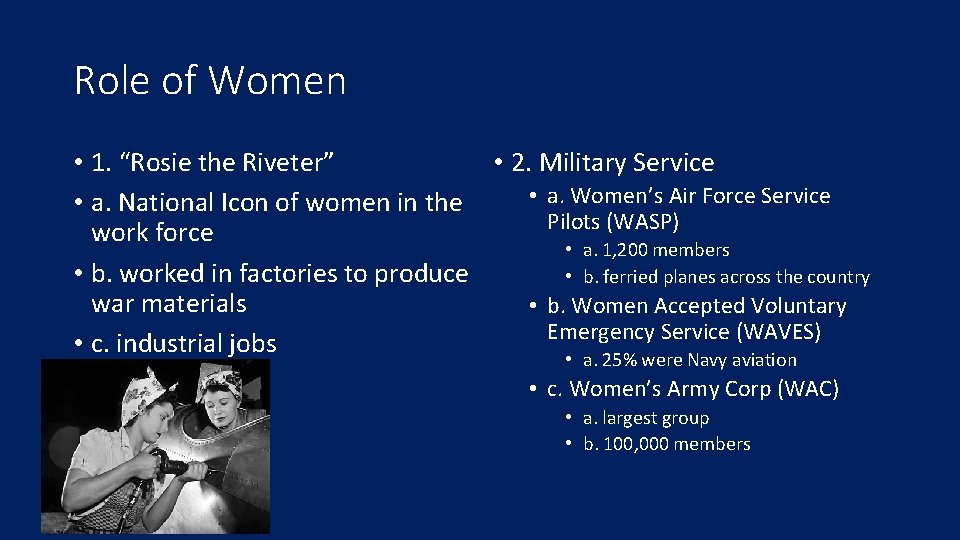
Role of Women • 1. “Rosie the Riveter” • 2. Military Service • a. Women’s Air Force Service • a. National Icon of women in the Pilots (WASP) work force • a. 1, 200 members • b. worked in factories to produce • b. ferried planes across the country war materials • b. Women Accepted Voluntary Emergency Service (WAVES) • c. industrial jobs • a. 25% were Navy aviation • c. Women’s Army Corp (WAC) • a. largest group • b. 100, 000 members
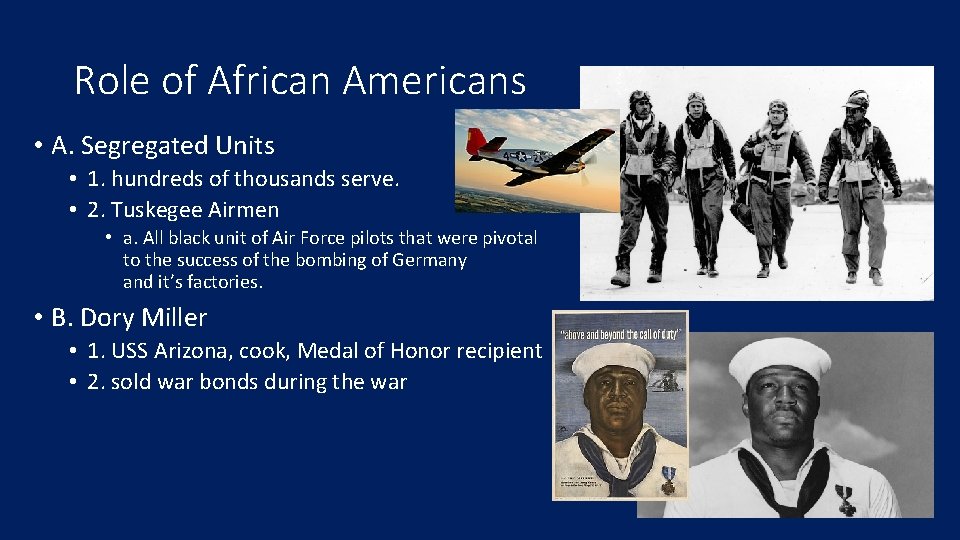
Role of African Americans • A. Segregated Units • 1. hundreds of thousands serve. • 2. Tuskegee Airmen • a. All black unit of Air Force pilots that were pivotal to the success of the bombing of Germany and it’s factories. • B. Dory Miller • 1. USS Arizona, cook, Medal of Honor recipient • 2. sold war bonds during the war
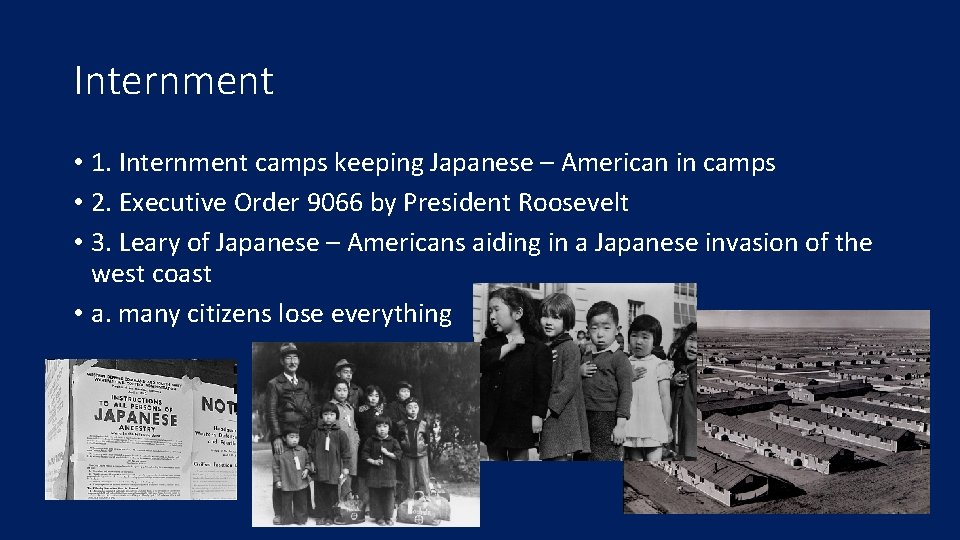
Internment • 1. Internment camps keeping Japanese – American in camps • 2. Executive Order 9066 by President Roosevelt • 3. Leary of Japanese – Americans aiding in a Japanese invasion of the west coast • a. many citizens lose everything