
World War II Goal 10 When September 1
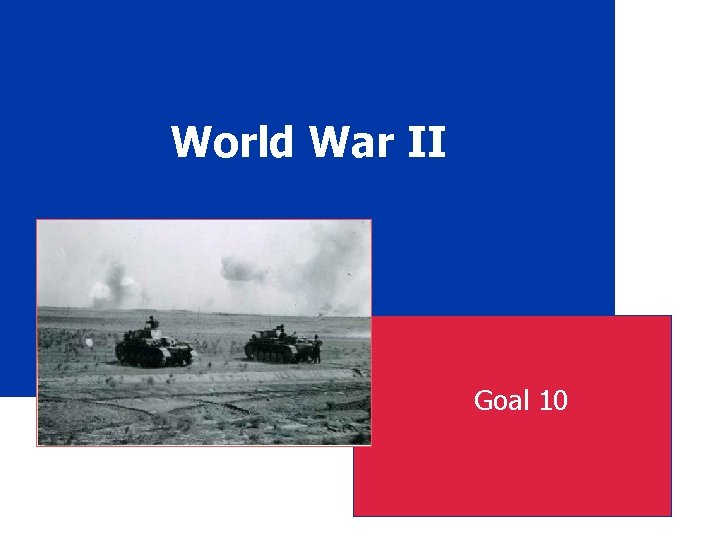
World War II Goal 10
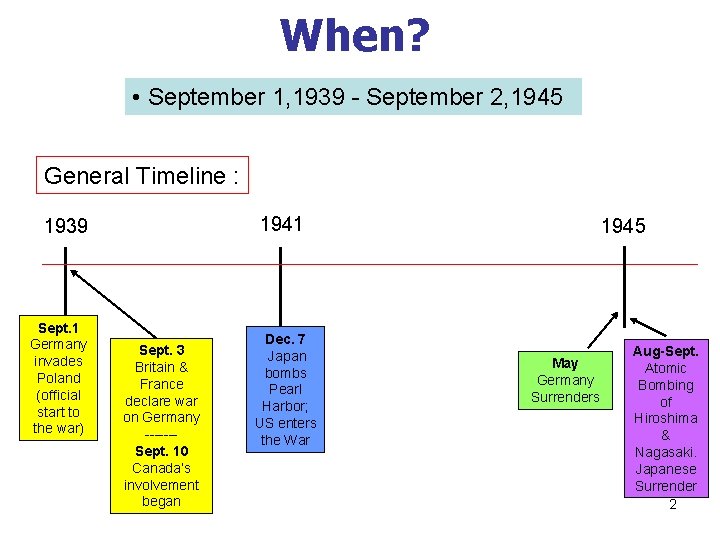
When? • September 1, 1939 - September 2, 1945 General Timeline : 1941 1939 Sept. 1 Germany invades Poland (official start to the war) 2 Sept. 3 Britain & France declare war on Germany ------Sept. 10 Canada’s involvement began Dec. 7 Japan bombs Pearl Harbor; US enters the War 1945 May Germany Surrenders Aug-Sept. Atomic Bombing of Hiroshima & Nagasaki. Japanese Surrender 2

Who were the Alliances (teams)? Allies Axis (major powers) Great Britain Germany Russia Italy France Japan Canada United States 3 3
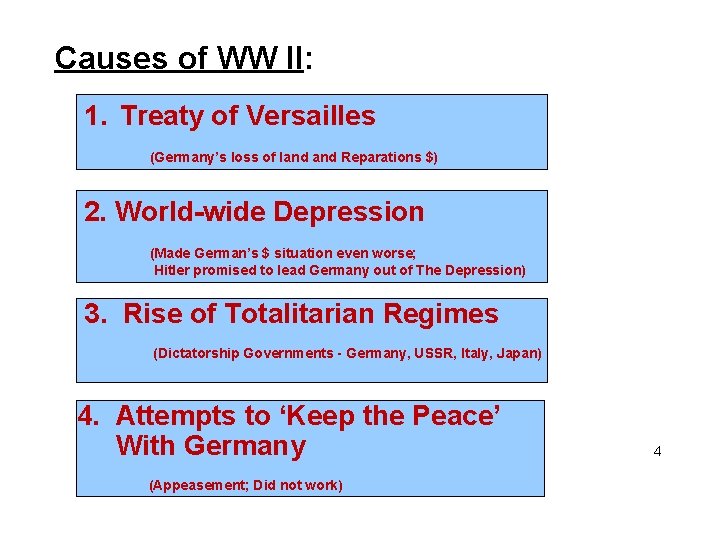
Causes of WW II: 1. Treaty of Versailles (Germany’s loss of land Reparations $) 2. World-wide Depression (Made German’s $ situation even worse; Hitler promised to lead Germany out of The Depression) 3. Rise of Totalitarian Regimes (Dictatorship Governments - Germany, USSR, Italy, Japan) 4. Attempts to ‘Keep the Peace’ With Germany (Appeasement; Did not work) 4
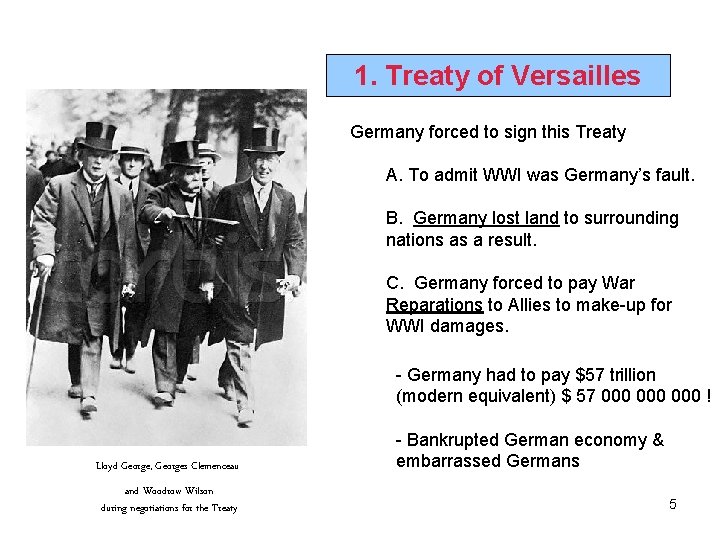
1. Treaty of Versailles Germany forced to sign this Treaty A. To admit WWI was Germany’s fault. B. Germany lost land to surrounding nations as a result. C. Germany forced to pay War Reparations to Allies to make-up for WWI damages. - Germany had to pay $57 trillion (modern equivalent) $ 57 000 000 ! Lloyd George, Georges Clemenceau 5 and Woodrow Wilson during negotiations for the Treaty - Bankrupted German economy & embarrassed Germans 5
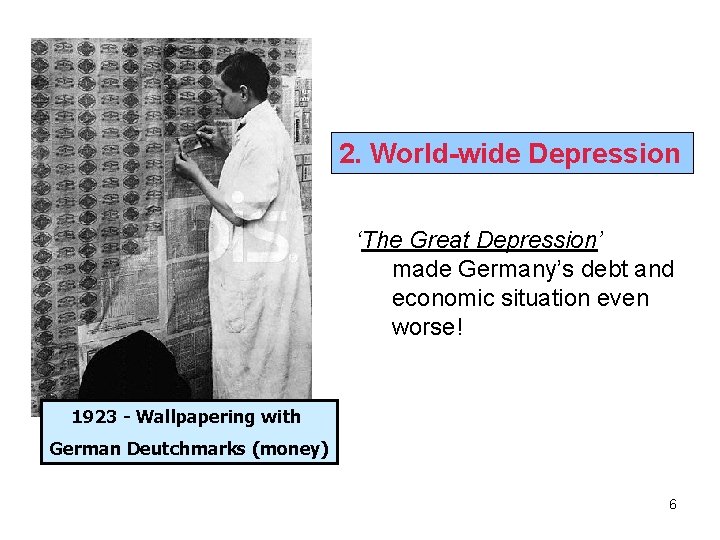
2. World-wide Depression ‘The Great Depression’ made Germany’s debt and economic situation even worse! 1923 - Wallpapering with German Deutchmarks (money) 6 6
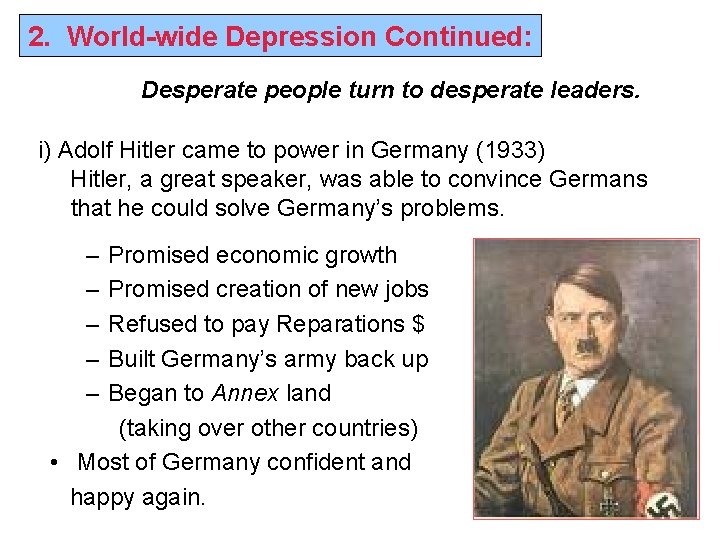
2. World-wide Depression Continued: Desperate people turn to desperate leaders. i) Adolf Hitler came to power in Germany (1933) Hitler, a great speaker, was able to convince Germans that he could solve Germany’s problems. – – – Promised economic growth Promised creation of new jobs Refused to pay Reparations $ Built Germany’s army back up Began to Annex land (taking over other countries) • Most of Germany confident and happy again. 7
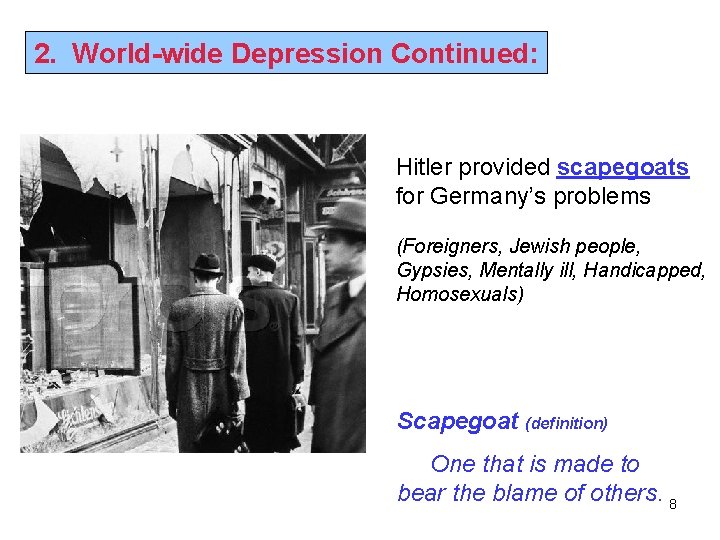
2. World-wide Depression Continued: Hitler provided scapegoats for Germany’s problems (Foreigners, Jewish people, Gypsies, Mentally ill, Handicapped, Homosexuals) Scapegoat (definition) 8 One that is made to bear the blame of others. 8
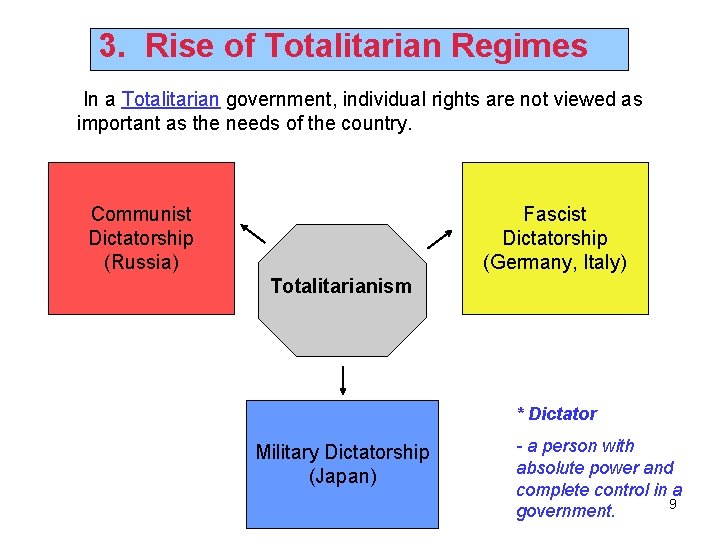
3. Rise of Totalitarian Regimes In a Totalitarian government, individual rights are not viewed as important as the needs of the country. Communist Dictatorship (Russia) Fascist Dictatorship (Germany, Italy) Totalitarianism * Dictator Military Dictatorship (Japan) 9 - a person with absolute power and complete control in a 9 government.
3. Rise of Totalitarian Regimes How did dictators rise to power? • Hard feelings left from WWI • Germans hated the Treaty of Versailles – Blamed for war, had to pay for it and had to demilitarize • Other countries felt bitter as well – Italy, Russia, Japan • Led to the creation of totalitarian governments in which a single party or leader (dictator) controls government, economy and social aspects • Bitter nations started to realize that the League of Nations was long on words but short on action – Couldn’t back up its policies
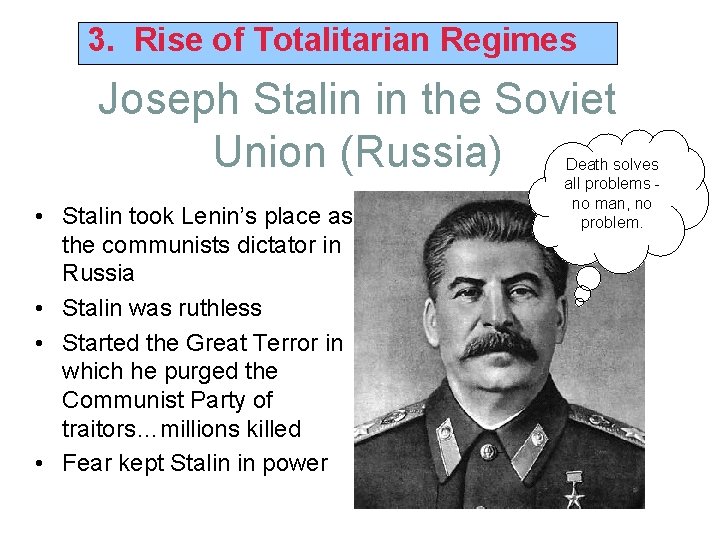
3. Rise of Totalitarian Regimes Joseph Stalin in the Soviet Union (Russia) • Stalin took Lenin’s place as the communists dictator in Russia • Stalin was ruthless • Started the Great Terror in which he purged the Communist Party of traitors…millions killed • Fear kept Stalin in power Death solves all problems no man, no problem.
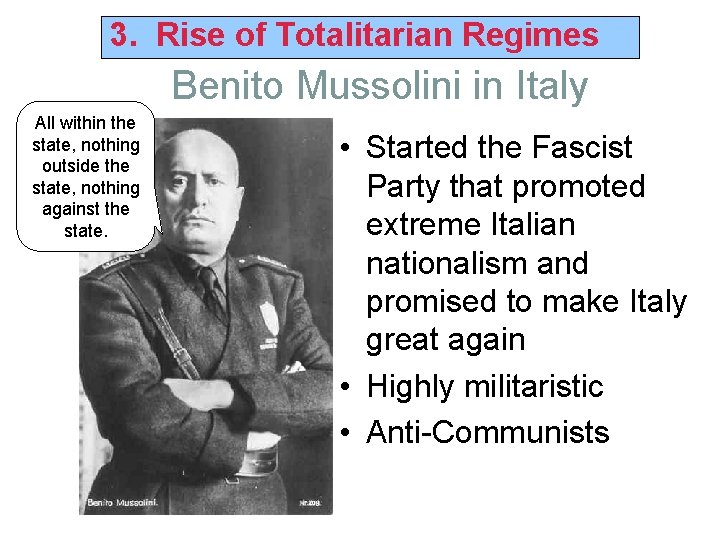
3. Rise of Totalitarian Regimes Benito Mussolini in Italy All within the state, nothing outside the state, nothing against the state. • Started the Fascist Party that promoted extreme Italian nationalism and promised to make Italy great again • Highly militaristic • Anti-Communists
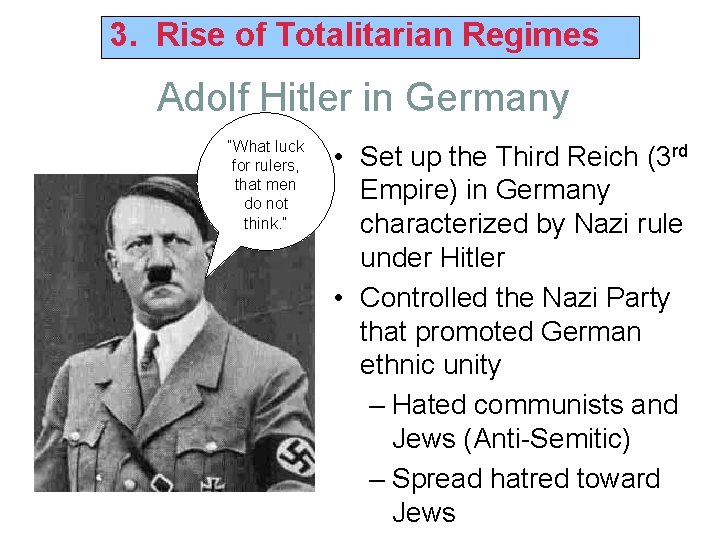
3. Rise of Totalitarian Regimes Adolf Hitler in Germany “What luck for rulers, that men do not think. ” • Set up the Third Reich (3 rd Empire) in Germany characterized by Nazi rule under Hitler • Controlled the Nazi Party that promoted German ethnic unity – Hated communists and Jews (Anti-Semitic) – Spread hatred toward Jews
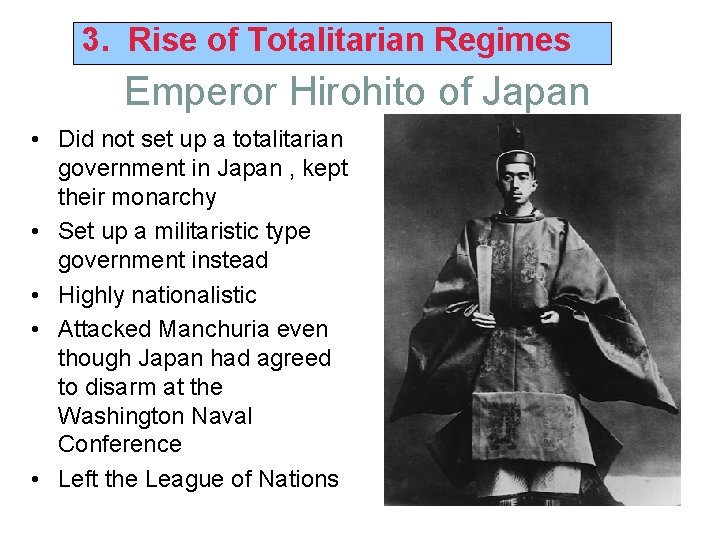
3. Rise of Totalitarian Regimes Emperor Hirohito of Japan • Did not set up a totalitarian government in Japan , kept their monarchy • Set up a militaristic type government instead • Highly nationalistic • Attacked Manchuria even though Japan had agreed to disarm at the Washington Naval Conference • Left the League of Nations
4. Attempts to ‘Keep the Peace’ (Appease) This led to policies of “Appeasement” Appeasement: give dictators what they want and hope that they won’t want anything else. • People wanted to avoid another war at all costs! • The Allies thought that if they simply ‘relaxed’ the terms of the Treaty of Versailles, Germany would be satisfied and peace could prevail. • However, giving Germany what they wanted did NOT work! Hitler began to demand more! 15 15
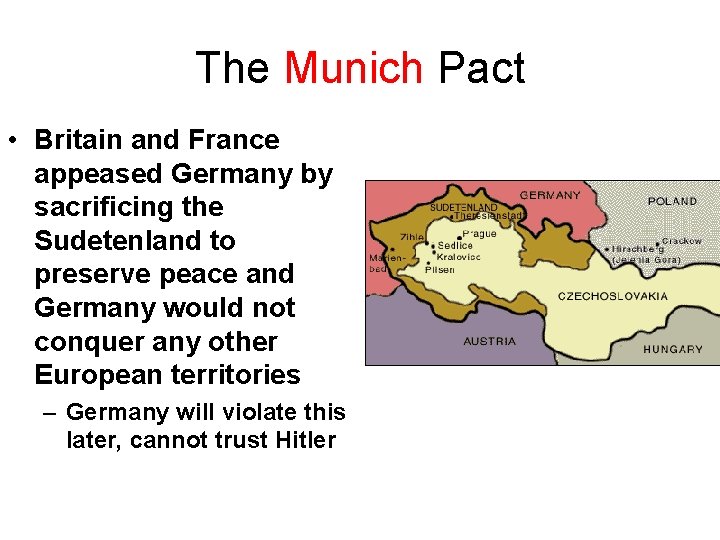
The Munich Pact • Britain and France appeased Germany by sacrificing the Sudetenland to preserve peace and Germany would not conquer any other European territories – Germany will violate this later, cannot trust Hitler
Appeasement Fails…War • Hitler violated the Munich Pact by taking all of Czechoslovakia…appeasement is not working • Britain and France will take action and agree to protect Poland (Hitler’s next move) • Non-Aggression Pact was signed between Russia and Germany in which both agreed not to attack one another and agree to attack Poland from two directions • September 1, 1939: Germany attacks Poland • War declarations start
Hitler’s Success • Took Poland, then Denmark and Norway • Turned to Netherlands, Belgium and Luxemburg • Took France in just 35 days – These successes scared US and led to US helping Allies with supplies • Germany used a mixture of total war (attacking civilians and economic resources) and blitzkrieg – Means “lightning warfare” – Emphasized speed and power to penetrate deep into an enemies territory – Tanks and planes come in first, then motorized vehicles and infantry – Highly effective German technique
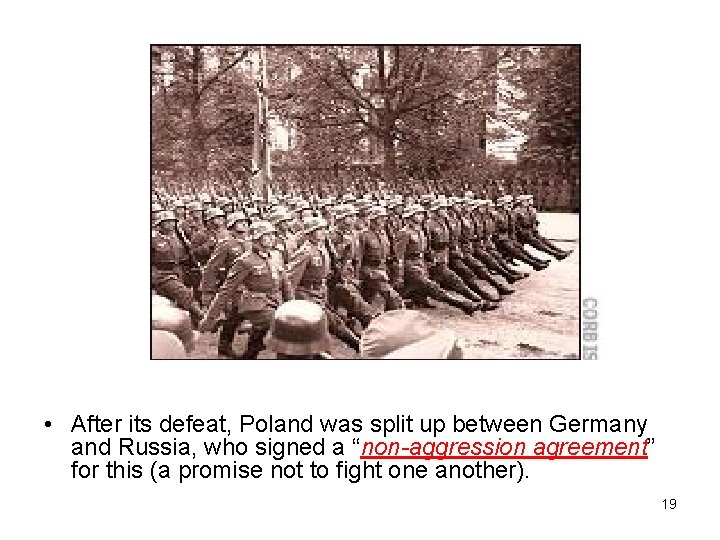
• After its defeat, Poland was split up between Germany and Russia, who signed a “non-aggression agreement” for this (a promise not to fight one another). 19
Conscription • Being forced to join the armed services (the war). 20
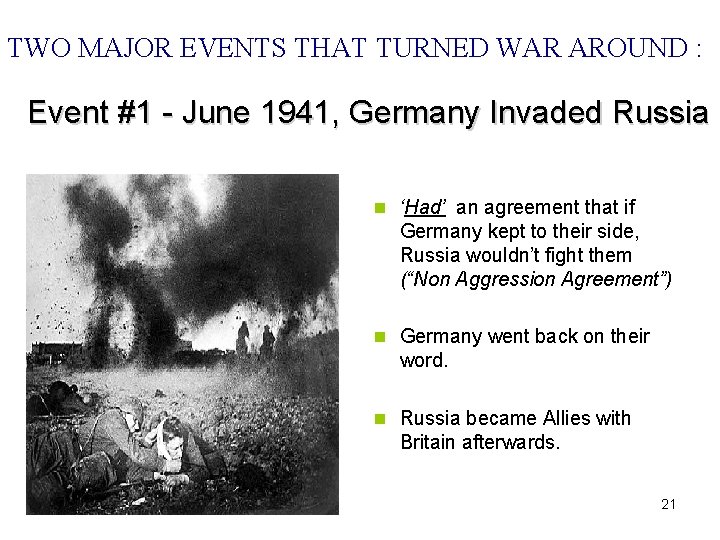
TWO MAJOR EVENTS THAT TURNED WAR AROUND : Event #1 - June 1941, Germany Invaded Russia n ‘Had’ an agreement that if Germany kept to their side, Russia wouldn’t fight them (“Non Aggression Agreement”) n Germany went back on their word. n Russia became Allies with Britain afterwards. 21
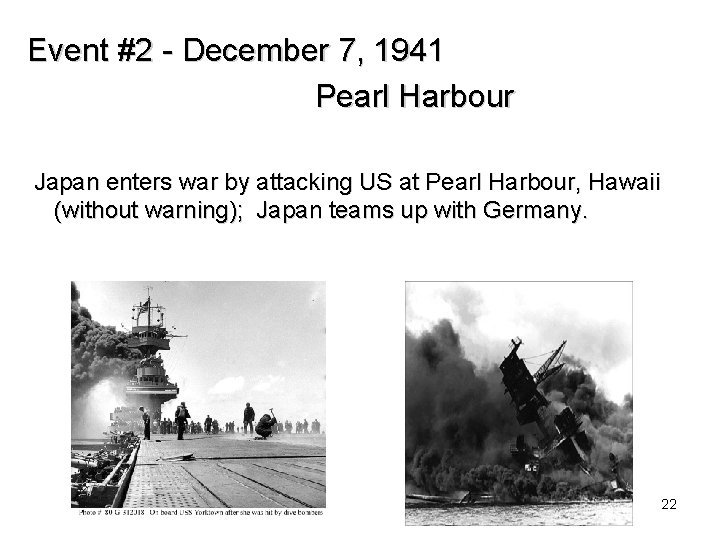
Event #2 - December 7, 1941 Pearl Harbour Japan enters war by attacking US at Pearl Harbour, Hawaii (without warning); Japan teams up with Germany. 22
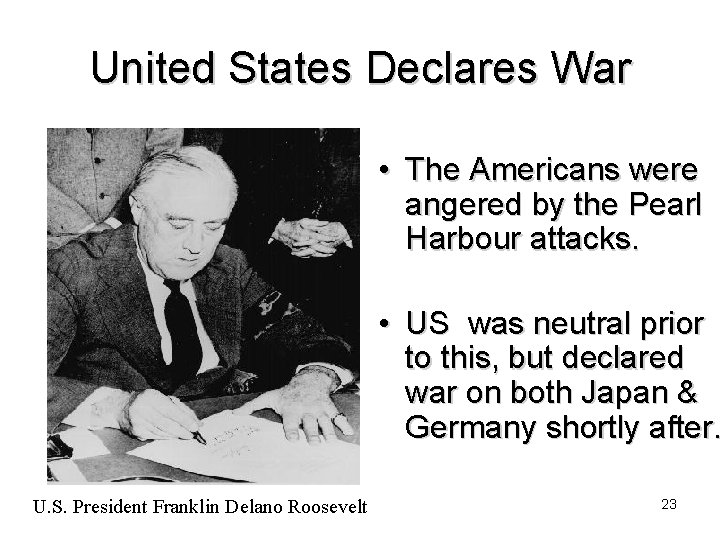
United States Declares War • The Americans were angered by the Pearl Harbour attacks. • US was neutral prior to this, but declared war on both Japan & Germany shortly after. U. S. President Franklin Delano Roosevelt 23
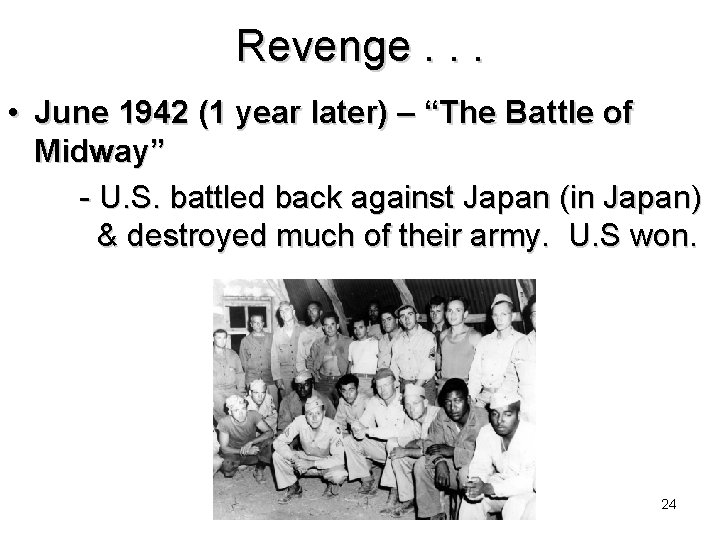
Revenge. . . • June 1942 (1 year later) – “The Battle of Midway” - U. S. battled back against Japan (in Japan) & destroyed much of their army. U. S won. 24
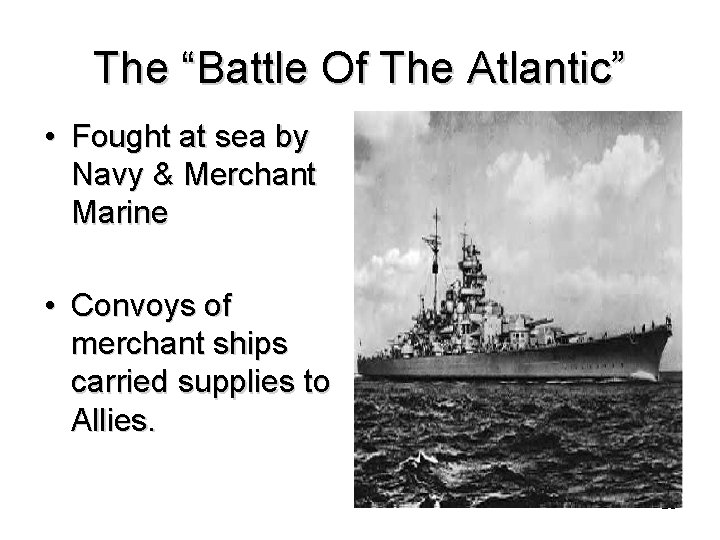
The “Battle Of The Atlantic” • Fought at sea by Navy & Merchant Marine • Convoys of merchant ships carried supplies to Allies. 25
Allies Hit Germany Hard: D-day June 6, 1944 – Allies landed in Normandy, France starting the invasion against Germany 26
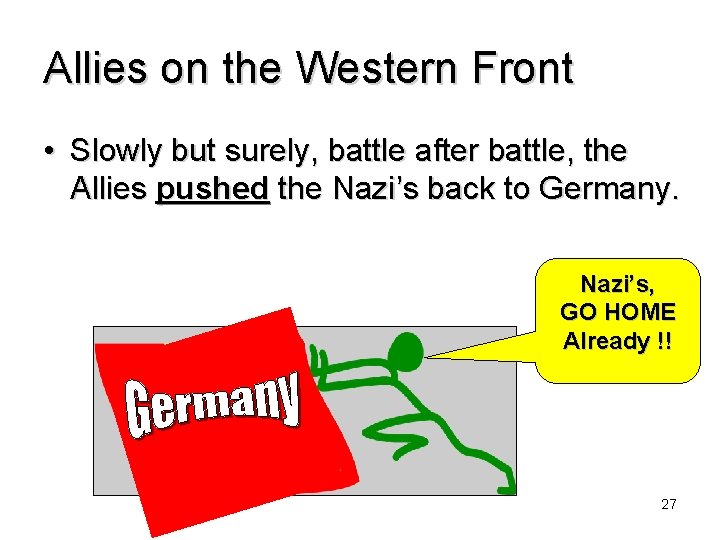
Allies on the Western Front • Slowly but surely, battle after battle, the Allies pushed the Nazi’s back to Germany. Nazi’s, GO HOME Already !! 27
France is Freed • September 1944 (3 months after D-Day) – The Allies liberated (freed) France from the German forces. 28
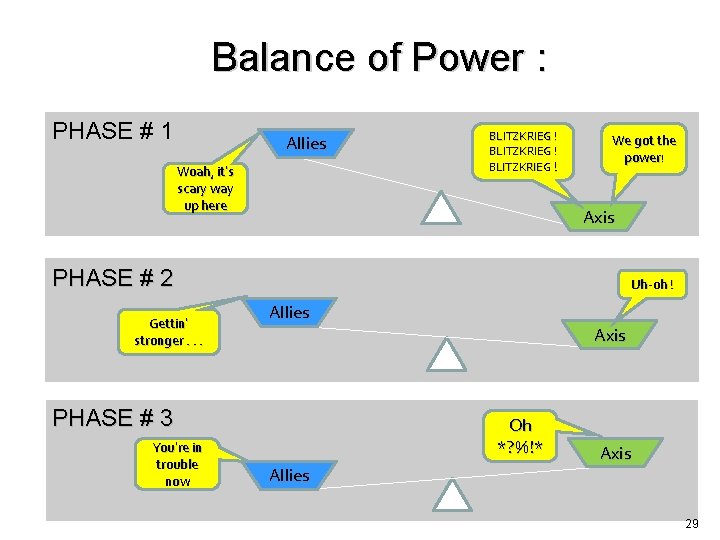
Balance of Power : PHASE # 1 Allies Woah, it’s scary way up here BLITZKRIEG ! We got the power! Axis PHASE # 2 Gettin’ stronger. . . Uh-oh ! Allies PHASE # 3 You’re in trouble now Axis Oh *? %!* Allies Axis 29 29
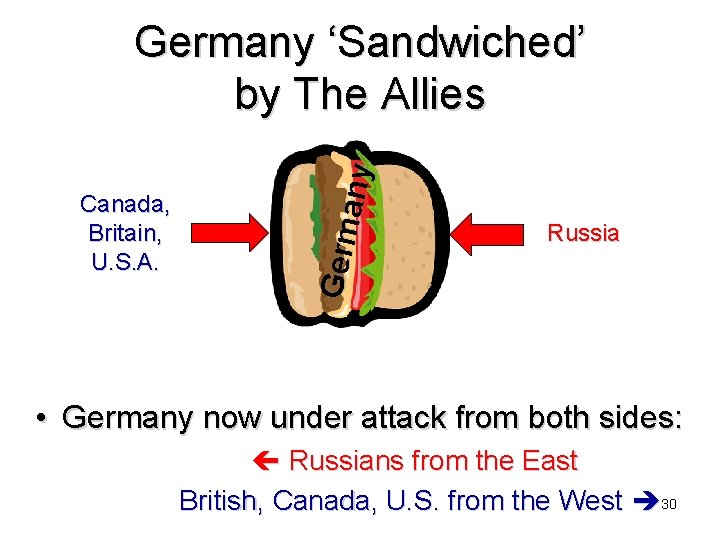
Canada, Britain, U. S. A. Germ any Germany ‘Sandwiched’ by The Allies Russia • Germany now under attack from both sides: Russians from the East British, Canada, U. S. from the West 30
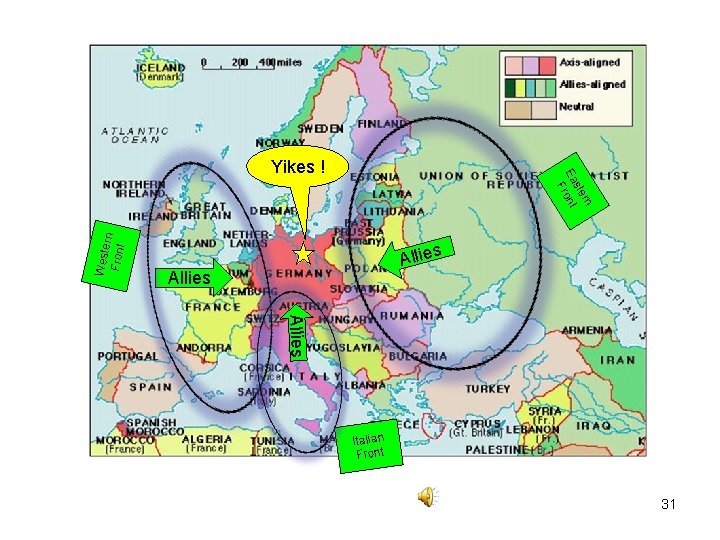
West ern Front rn ste Ea ront F Yikes ! Allies Italian Front 31
War of the Pacific • After Germany was finally defeated, the Allies focused on defeating Japan. • Canada was preparing to join in this Pacific War, however, the war ended abruptly because of. . . 32
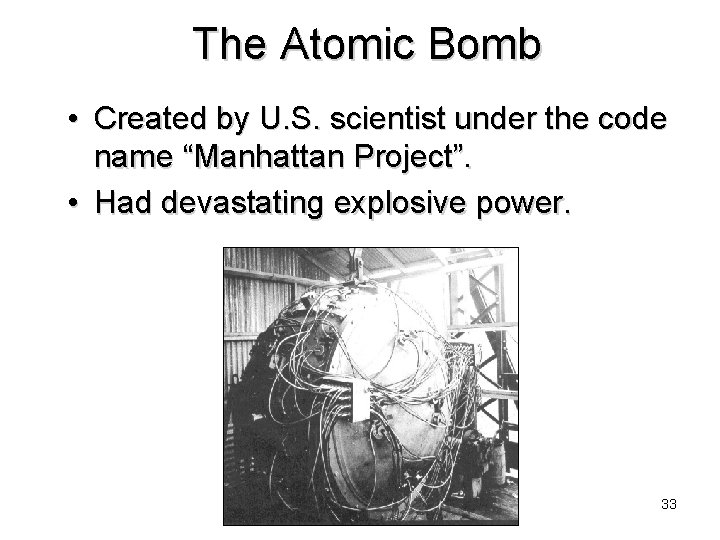
The Atomic Bomb • Created by U. S. scientist under the code name “Manhattan Project”. • Had devastating explosive power. 33
Big Decision. . . • New U. S. President Harry S. Truman had to decide whether to use this weapon; as many Japanese civilians would be killed by it. • Decided that using it would stop the Japanese from continuing the war & would therefore save lives. 34
U. S. Drops 2 Atomic Bombs on Japan • August 6 th & 9 th 1945: – U. S. dropped atomic bomb on Hiroshima, Japan (first atomic bomb ever). – Almost the entire cities of Hiroshima & Nagasaki were destroyed instantly. – Japan surrendered Sept. 2, 1945. 35
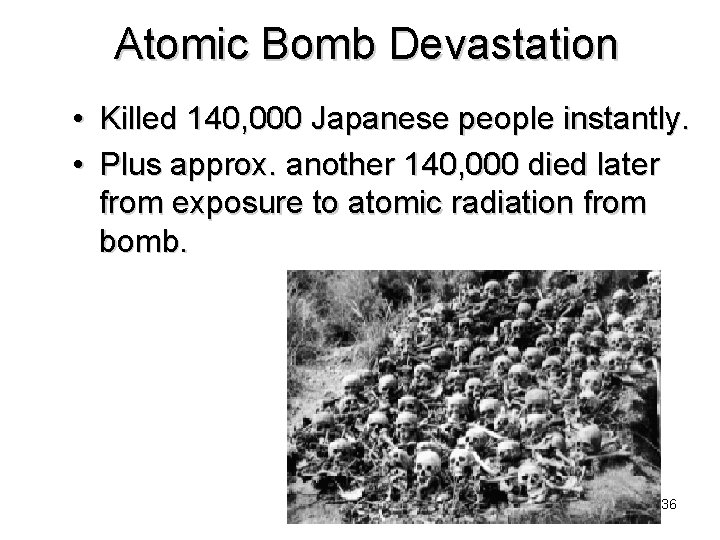
Atomic Bomb Devastation • Killed 140, 000 Japanese people instantly. • Plus approx. another 140, 000 died later from exposure to atomic radiation from bomb. 36
Controversial Decision • The use of atomic bombs by the U. S. on Japan, remains one of the most controversial decisions ever made in World War II ( and in history ). • What do you think? ? ? – Should the Americans have used atomic bombs on Japan as a means to end WW II? 37
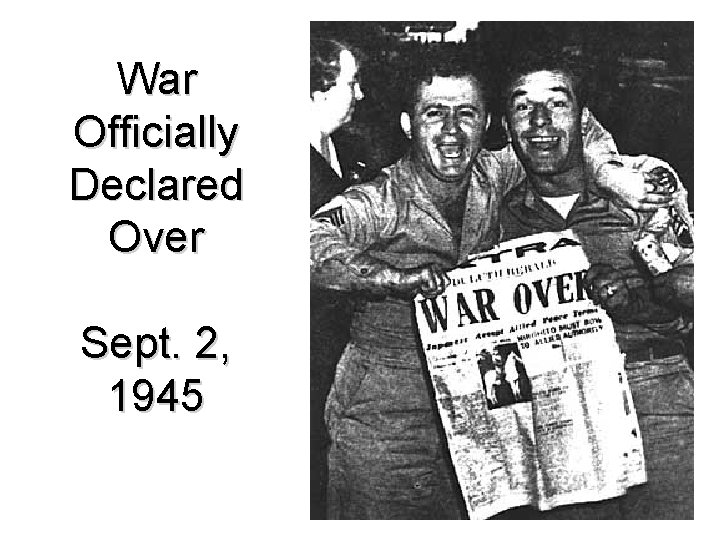
War Officially Declared Over Sept. 2, 1945 38
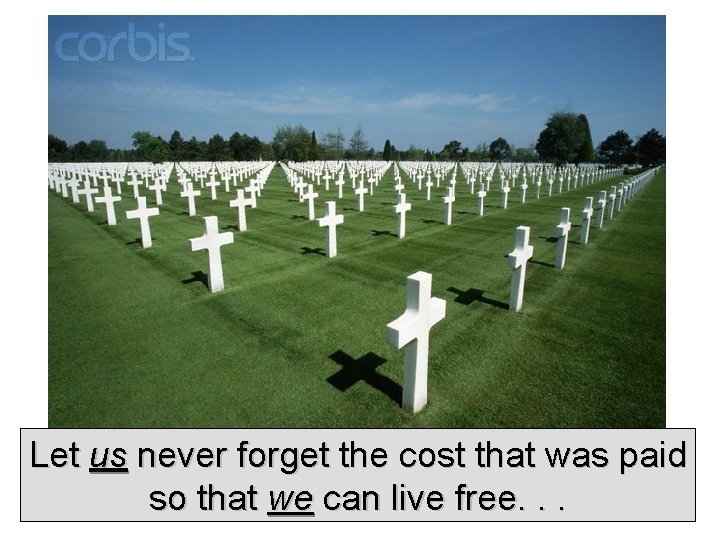
Let us never forget the cost that was paid so that we can live free. . . 39
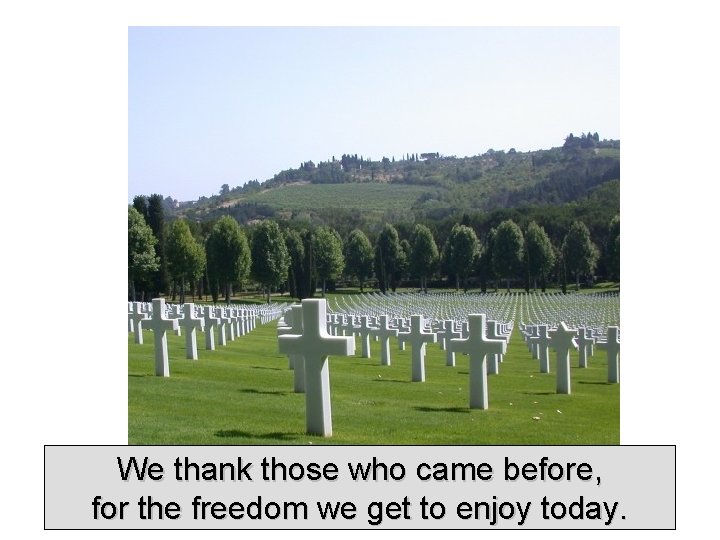
We thank those who came before, for the freedom we get to enjoy today. 40
What was the Holocaust ? • The Holocaust occurred before and during WW II (pre-1939 to 1945) • Jewish people were persecuted, discriminated against and killed because of their religion. • WW II helped the Nazis “cover up” the Holocaust and allowed them the opportunity 41 to mass murder Jewish people.
Anti-Semitism • Prejudice or hatred towards Jewish people. • Existed and was allowed for far too long. 42
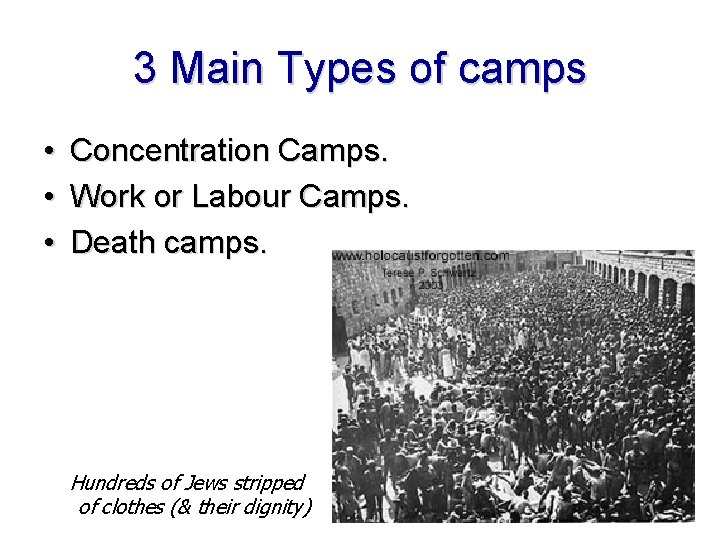
3 Main Types of camps • • • Concentration Camps. Work or Labour Camps. Death camps. Hundreds of Jews stripped of clothes (& their dignity) 43
Death Camps Began in 1941. Prisoners died of: - starvation - complete exhaustion from being overworked - beatings, shootings - gas chambers. 20, 000 people were killed each day. 44
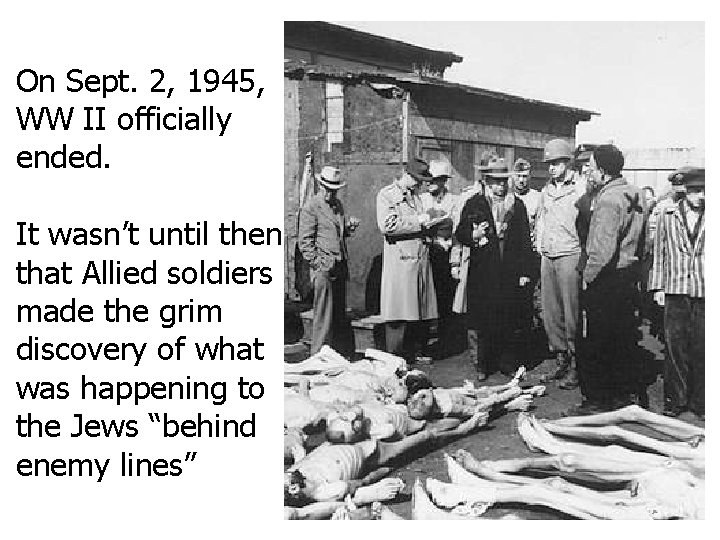
On Sept. 2, 1945, WW II officially ended. It wasn’t until then that Allied soldiers made the grim discovery of what was happening to the Jews “behind enemy lines” 45
The Events of World War II shaped the world as we know it today. 46
Many important lessons can be learned from the events of WW II. May today’s generation never forget these important lessons. . . 47
- Slides: 47