
World War II CHAPTER 17 LESSON 2 DAY

- Slides: 16
World War II CHAPTER 17 LESSON 2 DAY 2
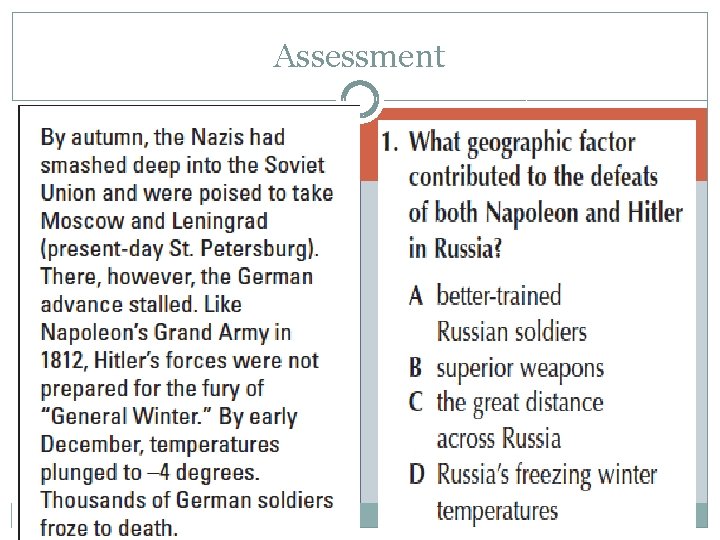
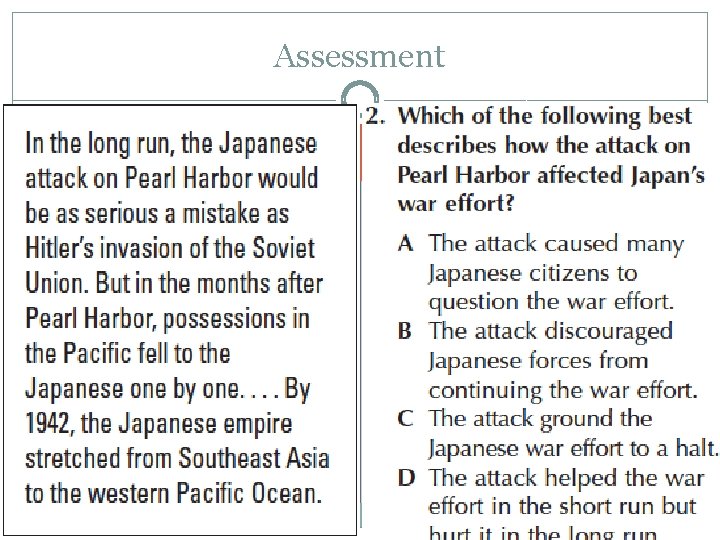
Assessment
Objective �Students will be able to the major events and leaders of WWII.
Pearl Harbor Video �Pearl Harbor
DBQ �Handout: FDR Speech �Answer questions individually on a separate sheet of paper. Once completed, compare answers with your partner next to you in your group.
Japan at War �Recall Japan’s early expansions and aggressive behavior. Most Americans wanted to stay out of the growing war overseas. �Over U. S. objections, Japan moved its forces into French Indochina to get at the natural resources. U. S. responded by banning the sale of oil to Japan. �Japan begins peace talks w/ U. S. , while secretly planning for war.
Japan at War �**On December 7, 1941, Japan launches a surprise attack on the U. S. naval base at Pearl Harbor in HI. �The attack lasted 2 hours. 2, 400 Americans died; 200 planes destroyed; and 8 battleships were sunk or damaged. � How do you think the attack on Pearl Harbor affected U. S. public opinion about involvement in the war?
The American Response �Before the attack, the U. S. followed a strict policy of isolationism (avoiding involvement in the affairs of other nations). �In 1930 s, Congress passed a series of neutrality acts, preventing the U. S. from taking sides or becoming involved in any European wars. �After Pearl Harbor, on Dec. 8, 1941, Congress declares war on Japan. Germany and Italy than declare war on the U. S. WWII is now a global war.
Assessment
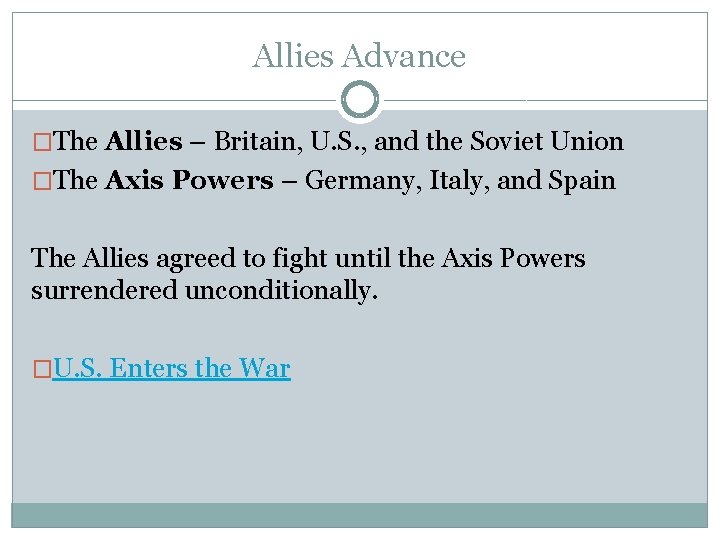
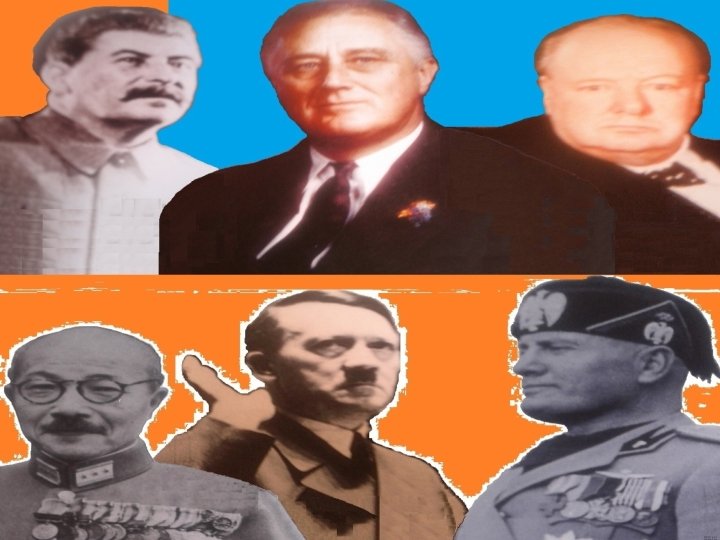
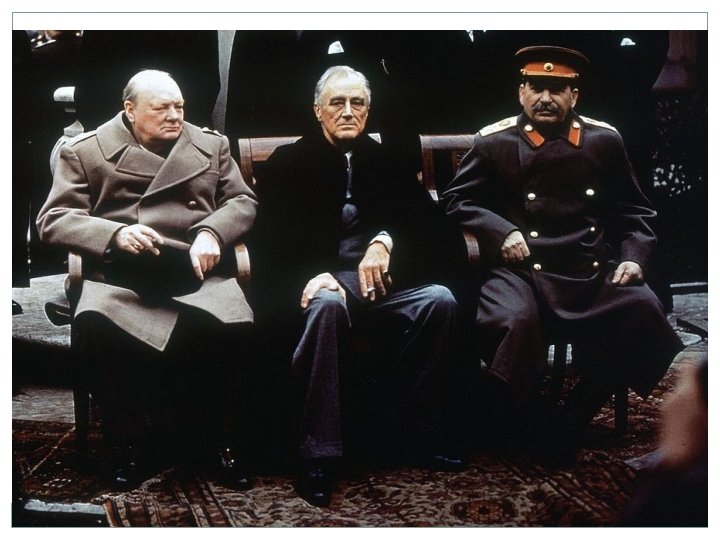
Allies Advance �The Allies – Britain, U. S. , and the Soviet Union �The Axis Powers – Germany, Italy, and Spain The Allies agreed to fight until the Axis Powers surrendered unconditionally. �U. S. Enters the War
Allies Advance �Once the U. S. enters the War, the Axis Powers’ advance is halted �In 1943, Germany suffers its worst defeat by the Soviets at the Battle of Stalingrad, considered one of the most important battles of the war. �Axis lost 800, 000 troops; 1. 1 million Soviets died.
“Island Hopping” • Was a U. S. military strategy to capture Japanese-held islands in the Pacific • Utilized combined attacks of U. S. Army, Marines, and Navy • Focused on capturing some islands and bypassing others to get closer and closer to Japan