
World War II Causes and Contributions to WWII
World War II
Causes and Contributions to WWII o o o o Rise of nationalism Rise of militarism Disputed territorial claims World War I Treaty of Versailles League of Nations Great Depression
The Growth of European Fascism o From “fasces, ” Roman symbol of authority n o o Axe surrounded by wooden rods Originates with Benito Mussolini Influenced Europe, Asia, Latin America
Fascism in Italy o o Poor showing of post-WWI Italian government n Public disappointed with weak territorial gains n Economic and social turmoil Mussolini, former newspaper editor, electoral successes in 1921 March on Rome October, King Emmanuel III offers him prime ministership 1926 seizes power as Il Duce, “the leader”
Adolf Hitler (1889 -1945) and the Nazi Party o o o 1921 becomes Chairman of the National Socialist German Workers’ Party (Nazis) Attempts to overthrow government in 1923 n Writes autobiography Mein Kampf in jail, massively popular Capitalizes on public discontent with post-war era n War guilt clause n Reparation payments n Inability of major parties to come to consensus n Anti-semitism
Consolidation of Power o o o Nazis become single largest party in parliament, 1930 -1932 Weak president Paul von Hindenburg (1847 -1934) appoints Hitler as Chancellor Suppresses opposition, abrogates constitutional and civil rights n Makes the Nazis the sole legal party n Destroyes train unions n Purges judiciary, civil service of perceived enemies
The Racial State o o o Theories of racial superiority, racial purity Policies of eugenics n Compulsory sterilization of 30, 000 Germans n Abortions illegal for healthy Germans, mandatory for “hereditary ill” and “racial aliens” n “Euthanasia” program kills 200, 000 people with physical or mental handicaps between 1939 -1945 Precursors to massacres of Jews, gypsies
Anti-Semitism o o o Influence of 19 th-century racism 1935 Nuremburg laws define Jew on racial basis n Prohibits marriages between Jews and non-Jews n Removal of Jews from civil service, schools n Liquidation of Jewish-owned businesses or purchase by non-Jews Kristallnacht: major country-wide pogrom on Jews, November 9 -10, 1938 n “night of broken glass”
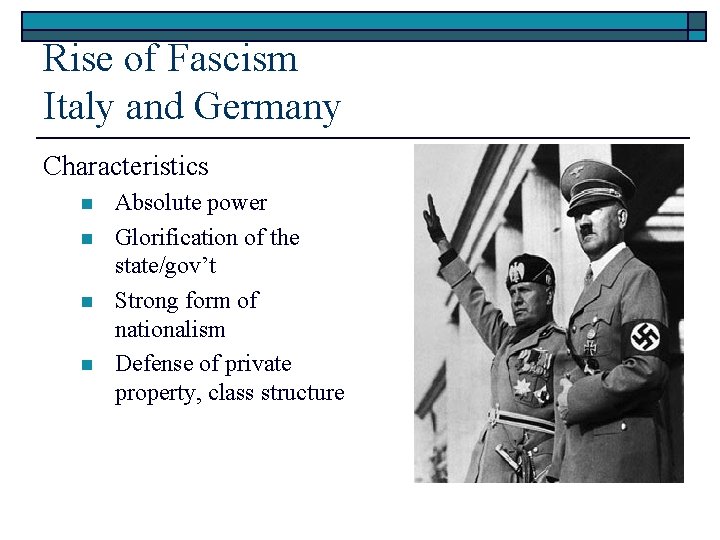
Rise of Fascism Italy and Germany Characteristics n n Absolute power Glorification of the state/gov’t Strong form of nationalism Defense of private property, class structure
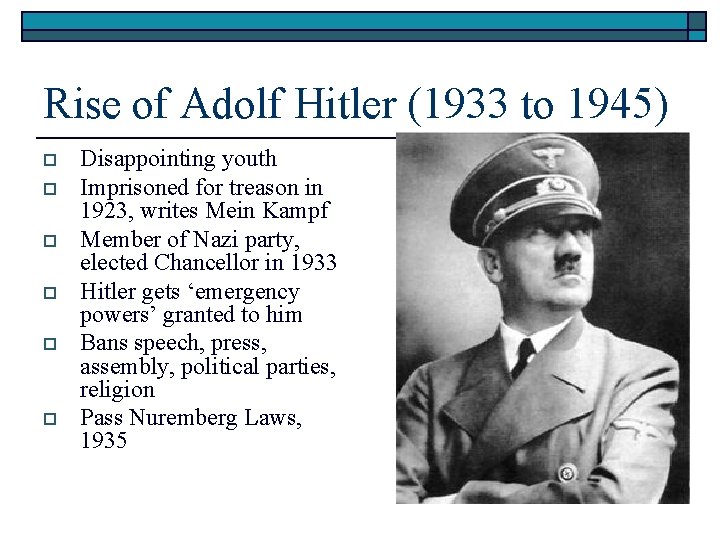
Rise of Adolf Hitler (1933 to 1945) o o o Disappointing youth Imprisoned for treason in 1923, writes Mein Kampf Member of Nazi party, elected Chancellor in 1933 Hitler gets ‘emergency powers’ granted to him Bans speech, press, assembly, political parties, religion Pass Nuremberg Laws, 1935
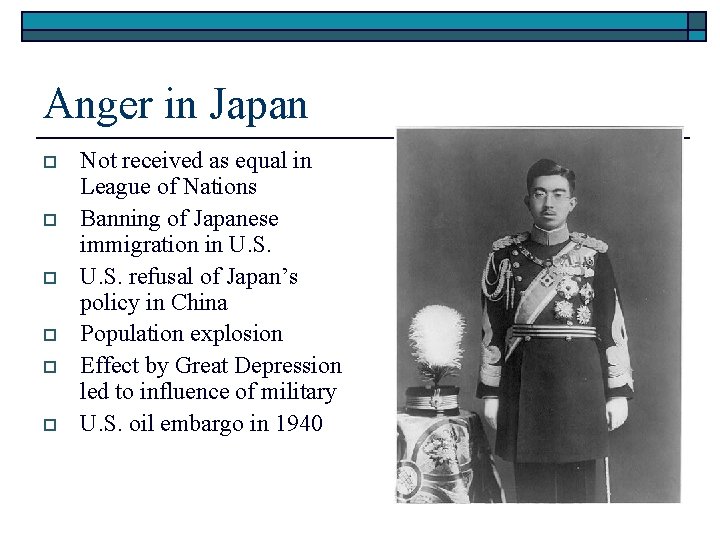
Anger in Japan o o o Not received as equal in League of Nations Banning of Japanese immigration in U. S. refusal of Japan’s policy in China Population explosion Effect by Great Depression led to influence of military U. S. oil embargo in 1940
Japan’s War in China o o Conquest of Chinese Manchuria 1931 -1932 Full-scale invasion in 1937 The Rape of Nanjing n Ariel bombing of urban center n 400, 000 Chinese used for bayonet practice, massacred n 7, 000 women raped n 1/3 of all homes destroyed Japan signs Tripartite Pact with Germany, Italy (1940), Non-Aggression Pact with USSR (1941)
Axis Acts of Aggression o o o Japan invades Manchuria, 1931 Italy invades Ethiopia Germany invades the Rhineland (1936), Austria (1938), Czechoslovakia (1938) n Hitler is appeased at Munich Conference
Italian Aggression o Benito Mussolini invades Ethiopia with overpowering force n o 2, 000 Italian troops killed, 275, 000 Ethiopians killed Also takes Libya, Albania
Pre-WWII Agreements o o o Rome-Berlin Axis Nazi-Soviet Nonaggression Pact - 1939 Tripartite Pact – 1940 (United States becomes the target)
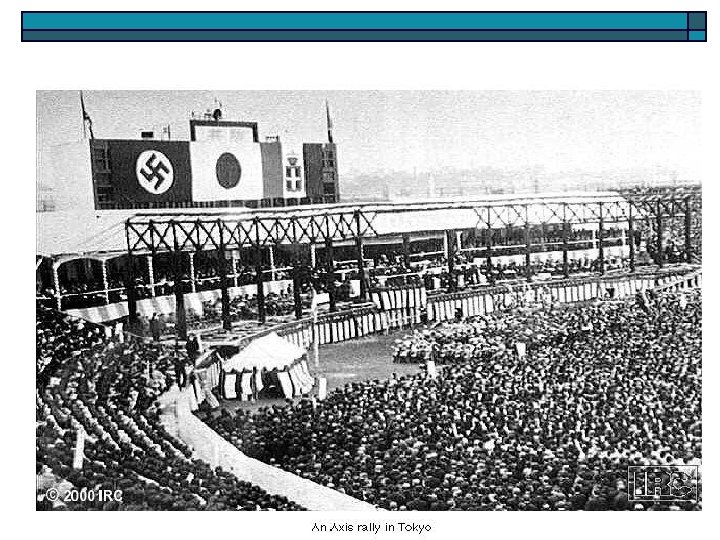
Axis Rally in Tokyo
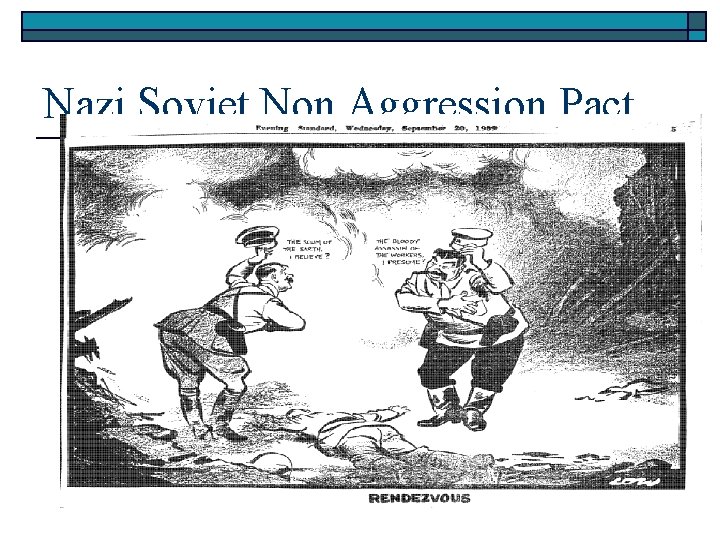
Nazi Soviet Non Aggression Pact
World War II Beginning until 1942
The Second World War o o o Allies vs. Axis Powers Italy, Germany and Japan form Axis “Revisionists: ” wished to revise post-World War I peace treaties Allies initially follow policy of appeasement War erupts 1939, global by 1941, over 1945
European Theatre o o Sept. 1, 1939 – Germany invades Poland, GB and France declare war April 1940 – Norway and Denmark fall May 1940 – Germans takeover Northern France Aug 1940 – Germany air bombs Britain
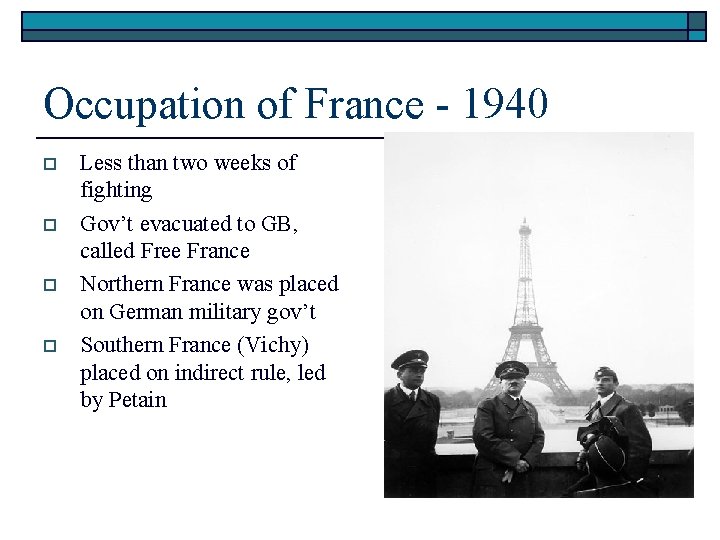
Occupation of France - 1940 o o Less than two weeks of fighting Gov’t evacuated to GB, called Free France Northern France was placed on German military gov’t Southern France (Vichy) placed on indirect rule, led by Petain
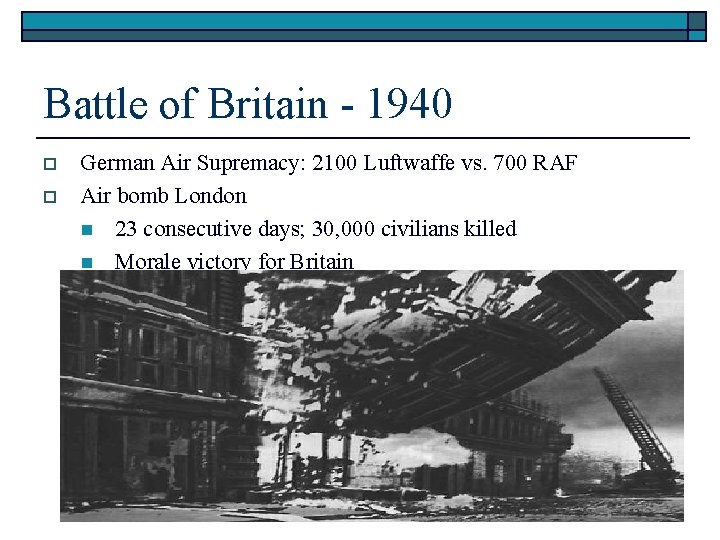
Battle of Britain - 1940 o o German Air Supremacy: 2100 Luftwaffe vs. 700 RAF Air bomb London n 23 consecutive days; 30, 000 civilians killed n Morale victory for Britain
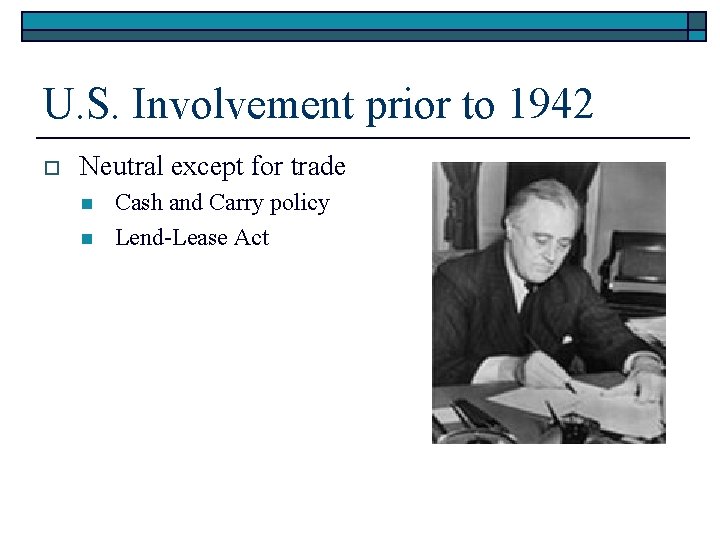
U. S. Involvement prior to 1942 o Neutral except for trade n n Cash and Carry policy Lend-Lease Act
US in WWII before Pearl Harbor o o o US initiates “cash and carry” policy to supply Allies with arms “lend-lease” program: US lends war goods to Allies, leases naval bases in return US freezes Japanese assets in US US places embargo on oil shipments to Japanese Defense Minister Tojo Hideki (18841948) plans for war with US
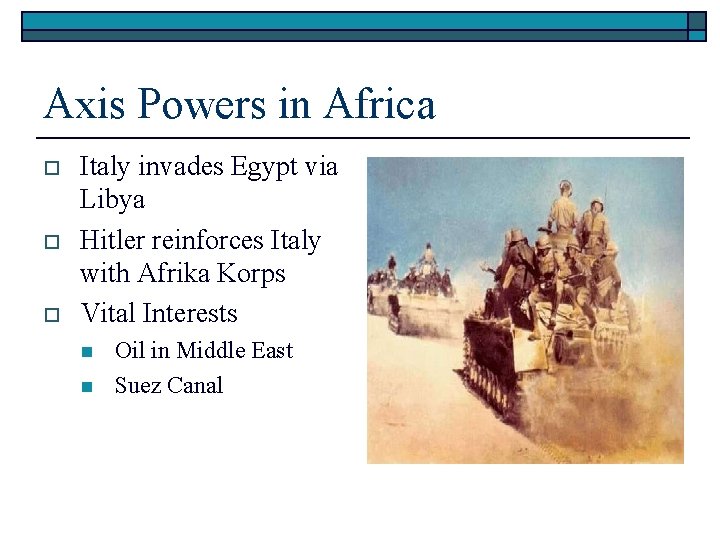
Axis Powers in Africa o o o Italy invades Egypt via Libya Hitler reinforces Italy with Afrika Korps Vital Interests n n Oil in Middle East Suez Canal
Operation Barbarossa o o Invasion of Soviet Union – June 1941 Penetrated 100 miles in USSR Will be stopped by Soviet winter 90% of German deaths will occur on eastern front
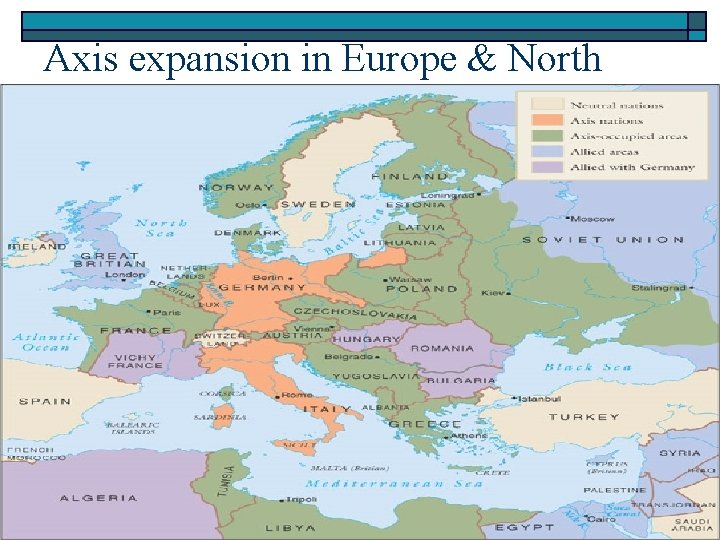
Axis expansion in Europe & North Africa
The Pacific Theatre o o o The Greater East Asia Co-Prosperity Sphere – War in Asia Japan occupied Manchuria, 1931 Invaded French Indochina , 1940 n o Acquired Korea, 1905 Became a menace to British and American interests in the area
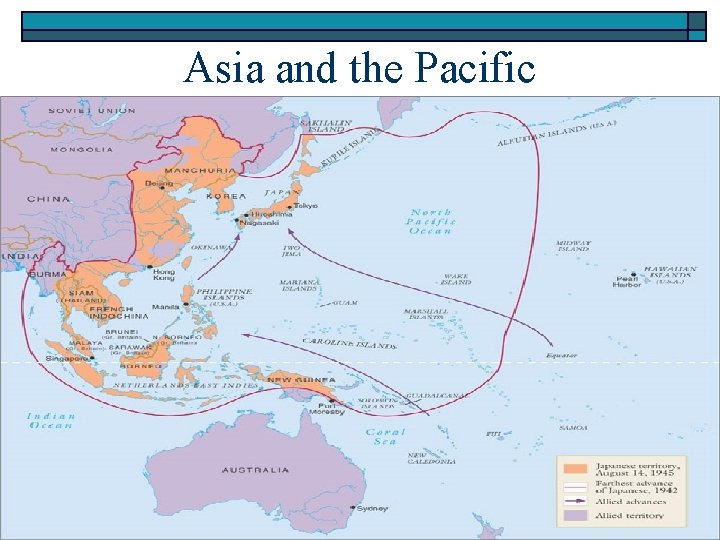
Asia and the Pacific
World War II The Turning Points
Turning Points in 1941 and 1942 o o Japanese attack on Pearl Harbor in 1941 Hitler’s defeat at Stalingrad in 1943 Axis defeat at El Alemein in 1942 Japanese defeat at Midway in 1942
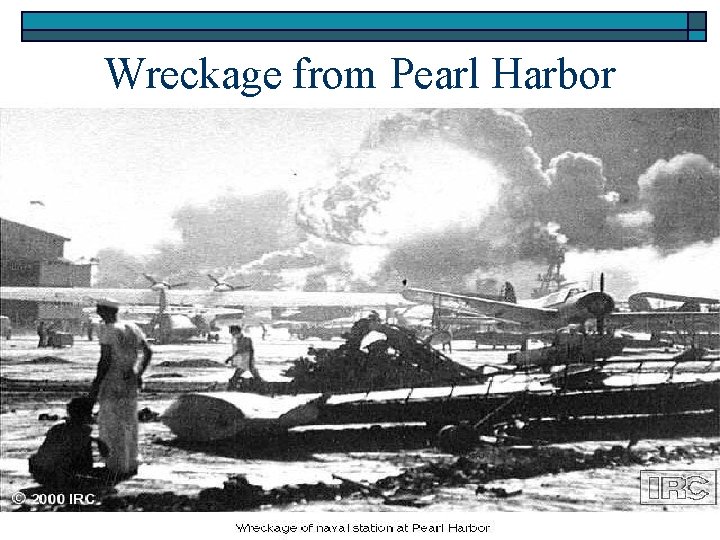
Wreckage from Pearl Harbor
Operation Overlord - 1944 o o o June 6, 1944; D-Day- invasion of Normandy, France Two prong attack: Attack on Germany from west and east May 7, 1945: V-E Day; unconditional surrender by Germany
Allied Victory in Europe o o Red Army (USSR) gains offensive after Stalingrad (February 1943) British, US forces attack in North Africa, Italy D-Day: June 6, 1944, British and US forces land in France US, Britain bomb German cities n o Dresden, February 1945: 135, 000 Germans killed in shelters 30 April 1945 Hitler commits suicide, 8 May Germany surrenders
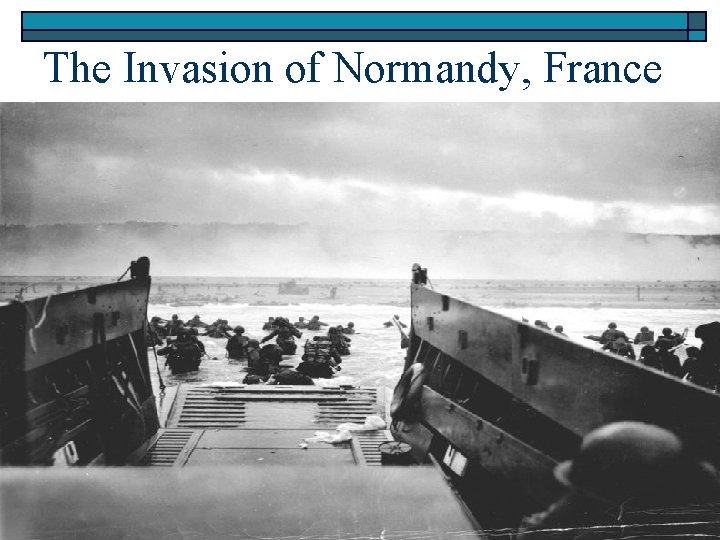
The Invasion of Normandy, France
Island Hopping o o o The use of blockade and strategic attacks on Japanese-held islands August 6 and 9; atomic bombs dropped on Hiroshima and Nagasaki August 14, 1945: V-J Day
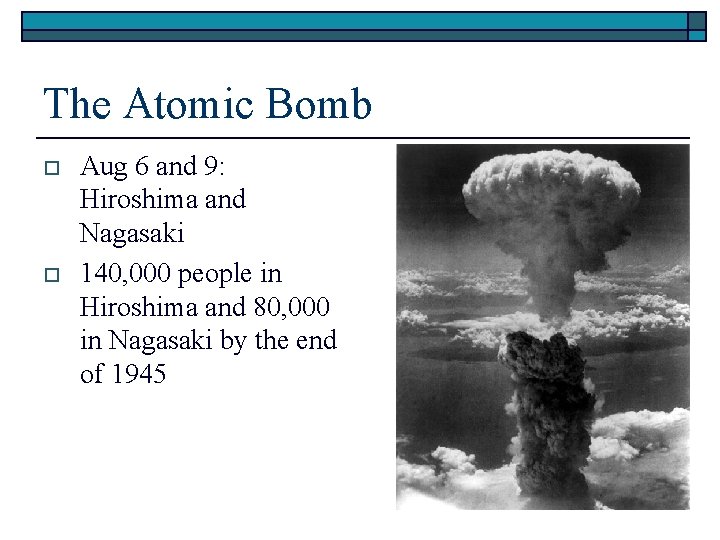
The Atomic Bomb o o Aug 6 and 9: Hiroshima and Nagasaki 140, 000 people in Hiroshima and 80, 000 in Nagasaki by the end of 1945
Japanese Surrender o US firebombs Tokyo, March 1945 n n o o 100, 000 killed 25% of buildings destroyed Atomic bombs dropped on Hiroshima and Nagasaki, August 1945 Emperor Hirohito (1901 -1989) surrenders unconditionally September 2, 1945
Total War o o o Japan - Rape of Nanking – 12/1937 n 300, 000 die due to rape, murder, torture Germany - Bombing of Britain – 8/1940 n 30, 000 civilians die Germany - Siege at Leningrad – 9/1941 n 3 year siege: 1 million Russian civilians die Great Britain - Firebombing of Dresden - 2/1945 n 2 day attack: 24 -40, 000 civilians die United States - Firebombing of Tokyo 3/1945 n 80, 000 killed, millions homeless
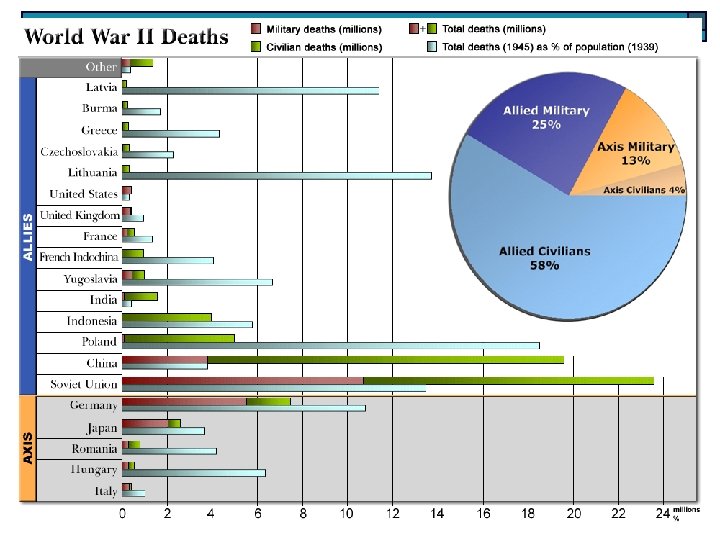
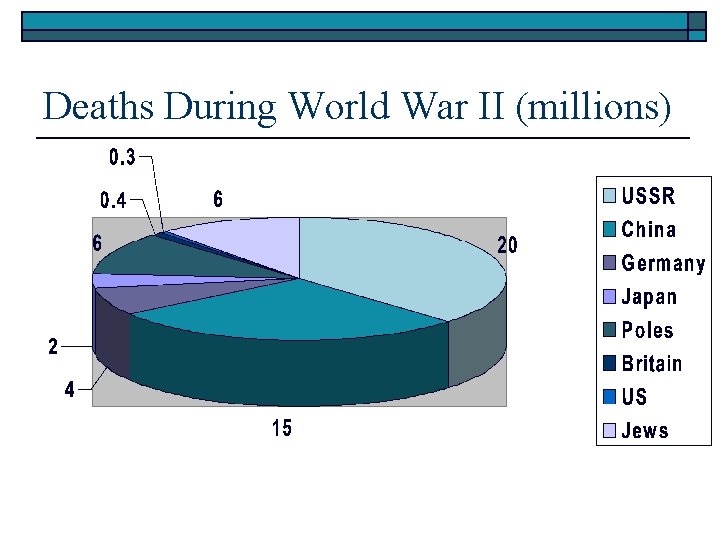
Deaths During World War II (millions)
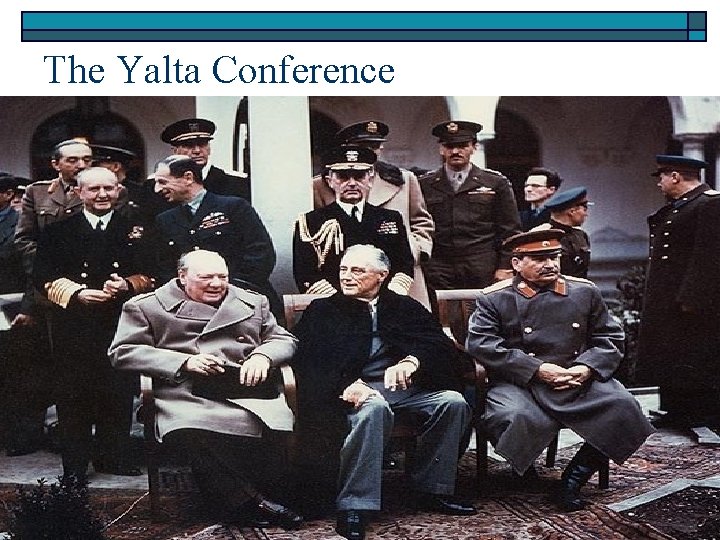
The Yalta Conference
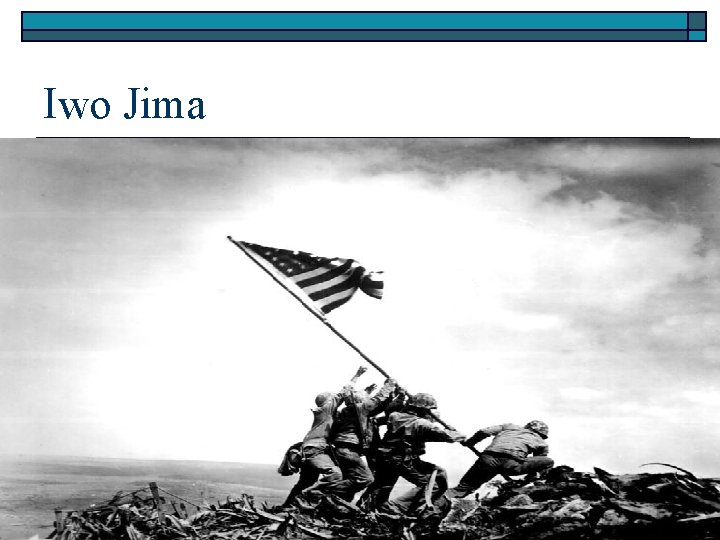
Iwo Jima
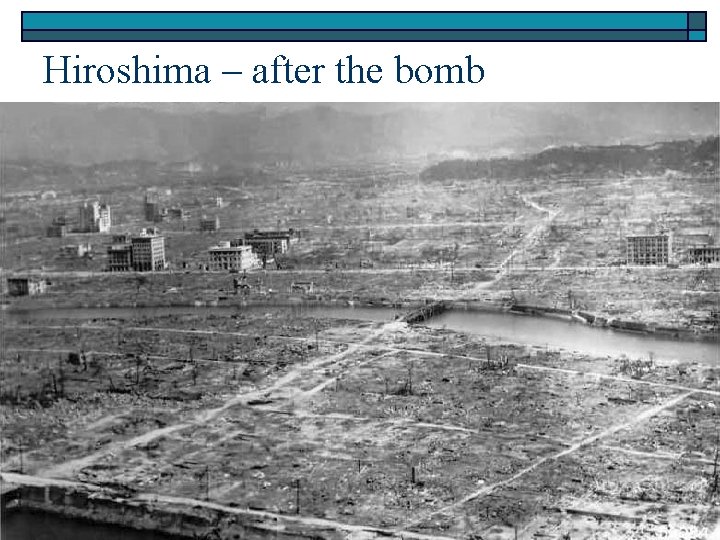
Hiroshima – after the bomb
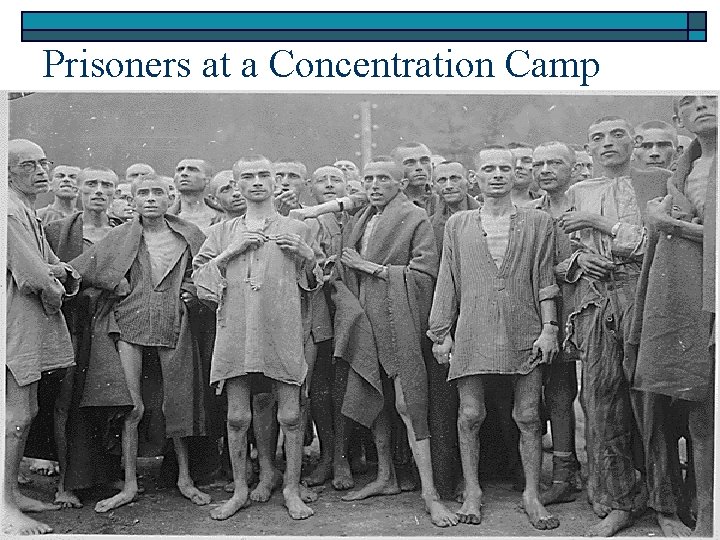
Prisoners at a Concentration Camp
Nazi Genocide and the Jews o Jews primary target of Nazi genocidal efforts n o Nazis initially encouraged Jewish emigration n o Other groups also slated for destruction: Roma (Gypsies), Homosexuals, Jehovah’s Witnesses Few countries willing to accept Jewish refugees Aborted plans to deport Jews to Madagascar, reservation in Poland
The Final Solution o o mobile killing squads follow German army into USSR with Operation Barbarossa Round up of Jews and others, machine-gun executions of 1. 4 million Later in 1941 decided on “Final Solution: ” deportation of all European Jews to Death Camps Plans solidified at Wannsee Conference, January 1942
The Holocaust o o o Jews deported from ghettos all over Europe in cattle cars, spring 1942 Destination: six specially designed Death Camps in Eastern Europe Technologically advanced, assembly-line style of murder through poison gas (Zyklon B) Corpses destroyed in crematoria Estimated number of Jews killed: 5. 7 million
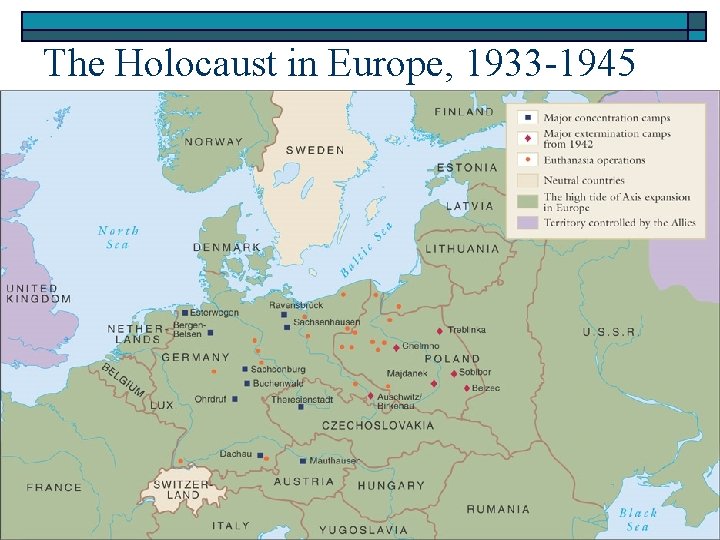
The Holocaust in Europe, 1933 -1945
Women and the War o o WAVES (Women Appointed for Volunteer Emergency Service) US, Great Britain bar women from serving in combat units Soviet, Chinese forces include women fighters Women very active in resistance movements
“Comfort Women” o o o Asian women forced into prostitution by Japanese forces 20/30 men per day, in war zones “Comfort Houses, ” “Consolation Centers” n o Killed when infected with venereal disease Large-scale massacres at end of war to hide crimes n Social ostracism for survivors
- Slides: 51