
World War II 1939 1945 Vocabulary l l
World War II (1939 -1945)
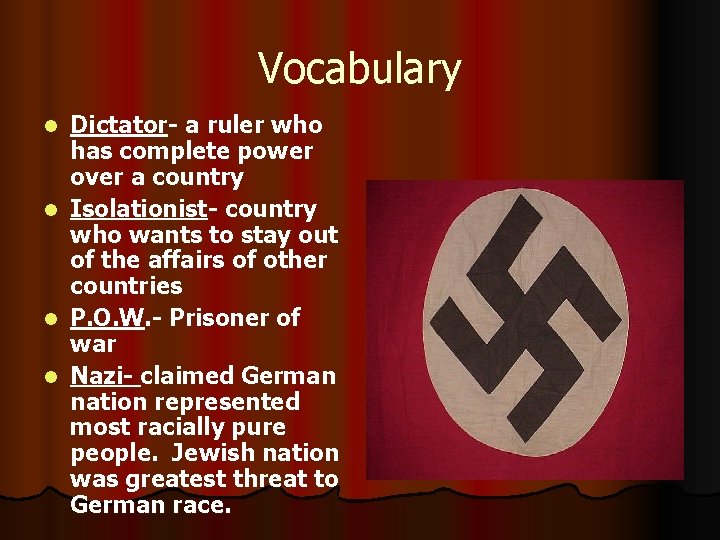
Vocabulary l l Dictator- a ruler who has complete power over a country Isolationist- country who wants to stay out of the affairs of other countries P. O. W. - Prisoner of war Nazi- claimed German nation represented most racially pure people. Jewish nation was greatest threat to German race.
Start of WWII l September 1, 1939, Germany invades Poland. l Hitler (Germany) was trying to take back land they lost to Poland after WWI. l France and Great Britain declare war on Germany on September 3, 1939.
Pearl Harbor l American naval base in Hawaii in which Japan launched a surprise attack on l December 7, 1941 l More than 3, 400 people died or suffered wounds in the attack. l The attack brought the U. S. into World War II.
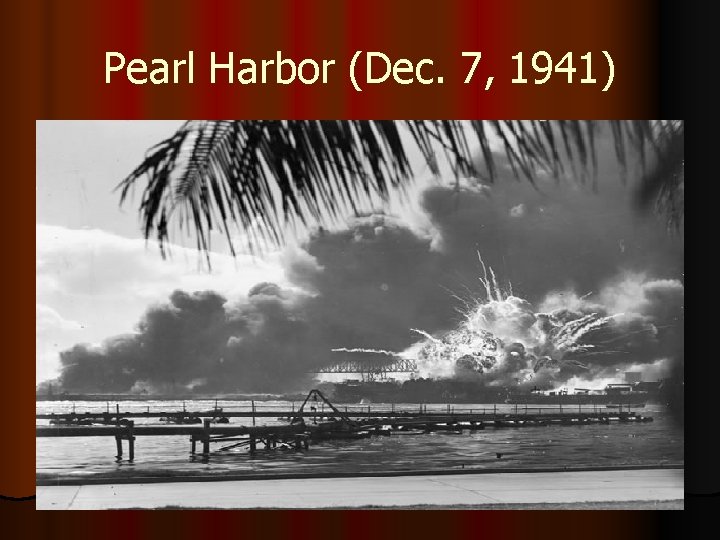
Pearl Harbor (Dec. 7, 1941)
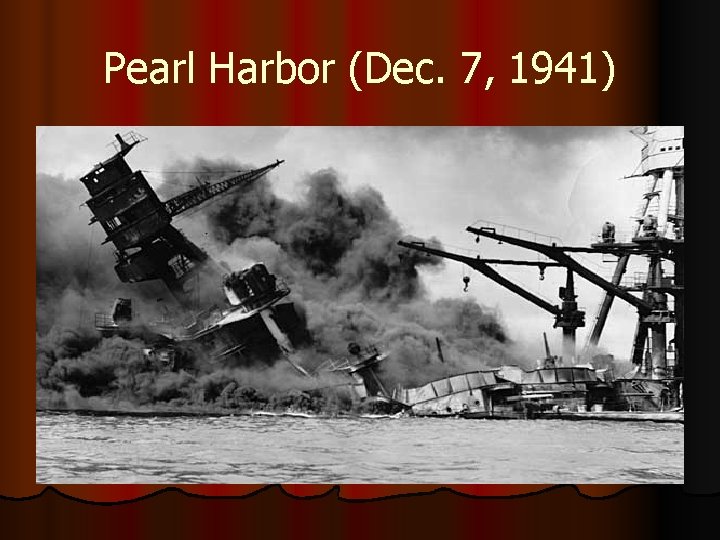
Pearl Harbor (Dec. 7, 1941)
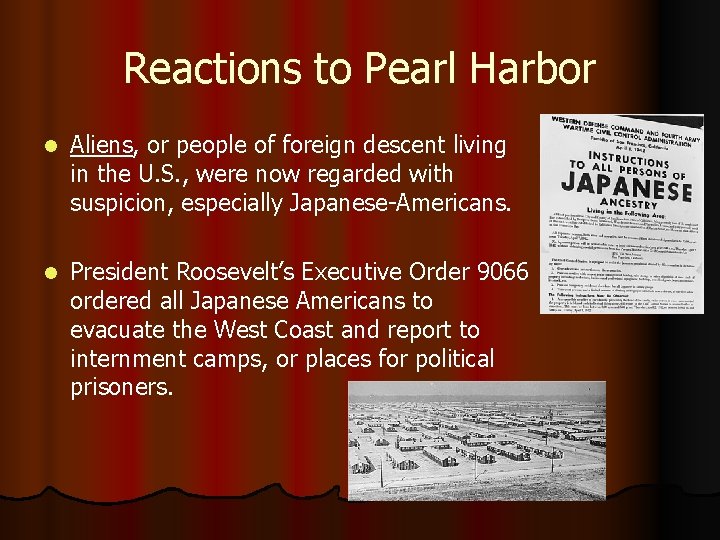
Reactions to Pearl Harbor l Aliens, or people of foreign descent living in the U. S. , were now regarded with suspicion, especially Japanese-Americans. l President Roosevelt’s Executive Order 9066 ordered all Japanese Americans to evacuate the West Coast and report to internment camps, or places for political prisoners.
Axis Powers l Germany, Italy, and Japan
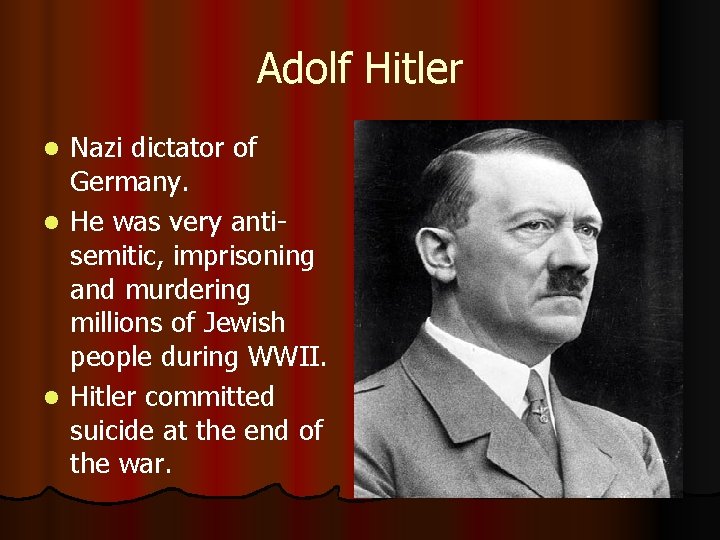
Adolf Hitler Nazi dictator of Germany. l He was very antisemitic, imprisoning and murdering millions of Jewish people during WWII. l Hitler committed suicide at the end of the war. l
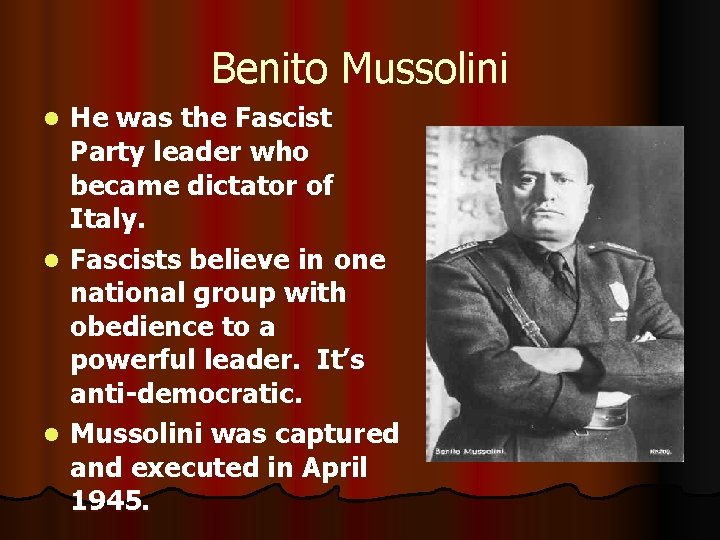
Benito Mussolini He was the Fascist Party leader who became dictator of Italy. l Fascists believe in one national group with obedience to a powerful leader. It’s anti-democratic. l Mussolini was captured and executed in April 1945. l
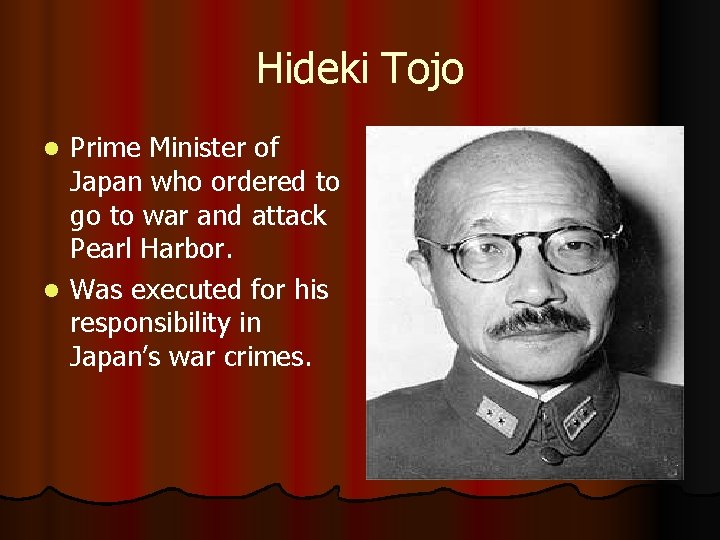
Hideki Tojo Prime Minister of Japan who ordered to go to war and attack Pearl Harbor. l Was executed for his responsibility in Japan’s war crimes. l
Allied Powers l U. S. , Great Britain, France, Russia, and China
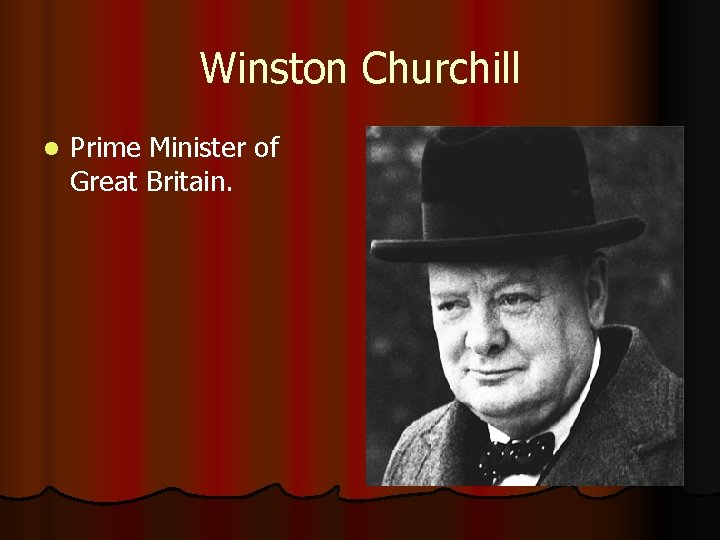
Winston Churchill l Prime Minister of Great Britain.
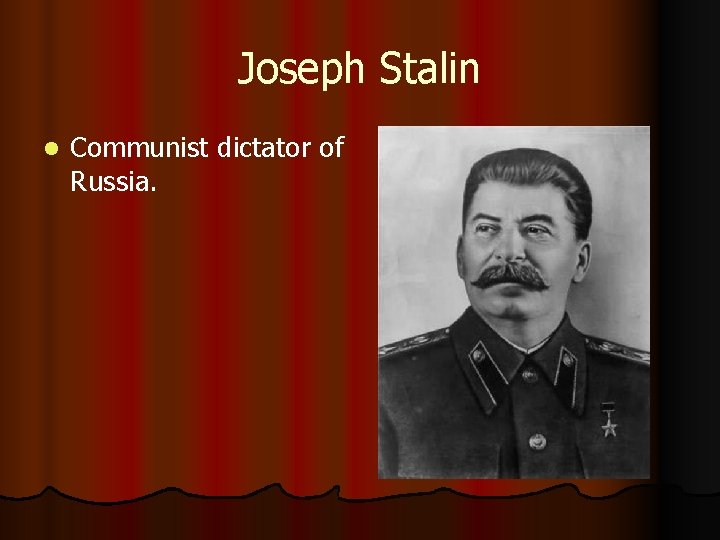
Joseph Stalin l Communist dictator of Russia.
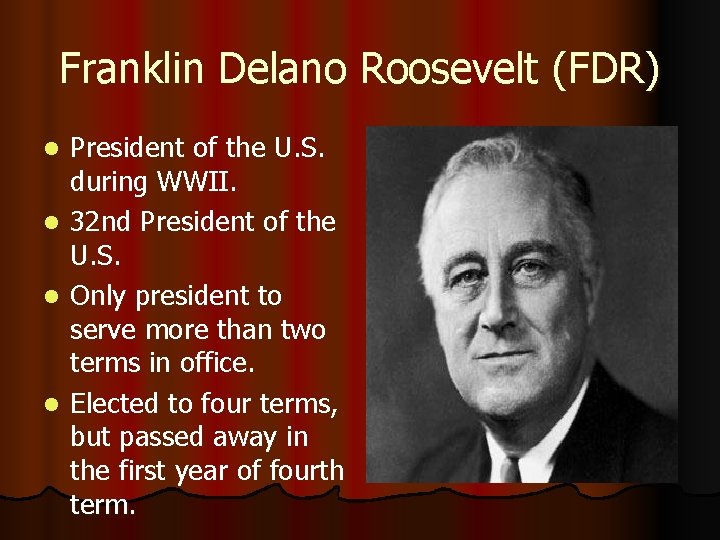
Franklin Delano Roosevelt (FDR) l l President of the U. S. during WWII. 32 nd President of the U. S. Only president to serve more than two terms in office. Elected to four terms, but passed away in the first year of fourth term.
22 nd Amendment (1951) l FDR’s never-before-seen four elections to office led to the 22 nd amendment, which set the term limits for the President of U. S. l A President can serve no more than 2 terms and no more than 10 years total.
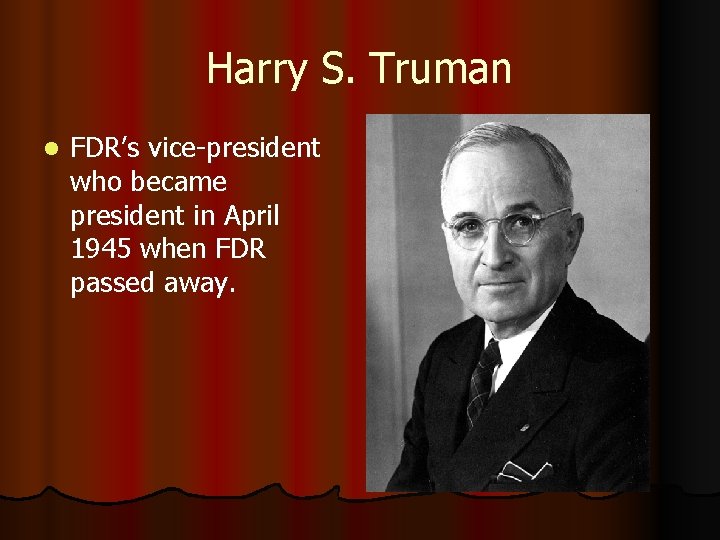
Harry S. Truman l FDR’s vice-president who became president in April 1945 when FDR passed away.
Texans in WWII l l l More than 750, 000 Texans served in war including 12, 000 women. 22, 000 Texans died 40 P. O. W. camps with more than 50, 000 prisoners - more than any other state Texas served as a training ground for the war with 15 major military bases and 40 airfields. Additionally, the Naval flight-training base in Corpus Christi was the largest in the world. Texans at home rationed (cut back) items such as food, shoes, and gasoline to support American soldiers.
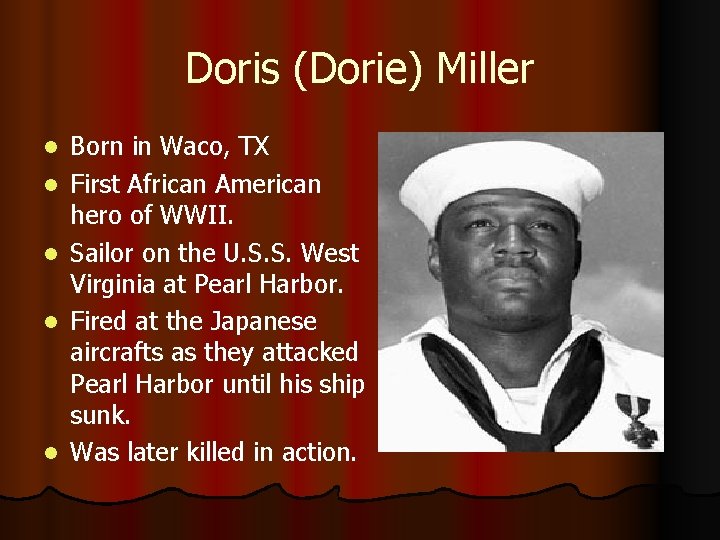
Doris (Dorie) Miller l l l Born in Waco, TX First African American hero of WWII. Sailor on the U. S. S. West Virginia at Pearl Harbor. Fired at the Japanese aircrafts as they attacked Pearl Harbor until his ship sunk. Was later killed in action.
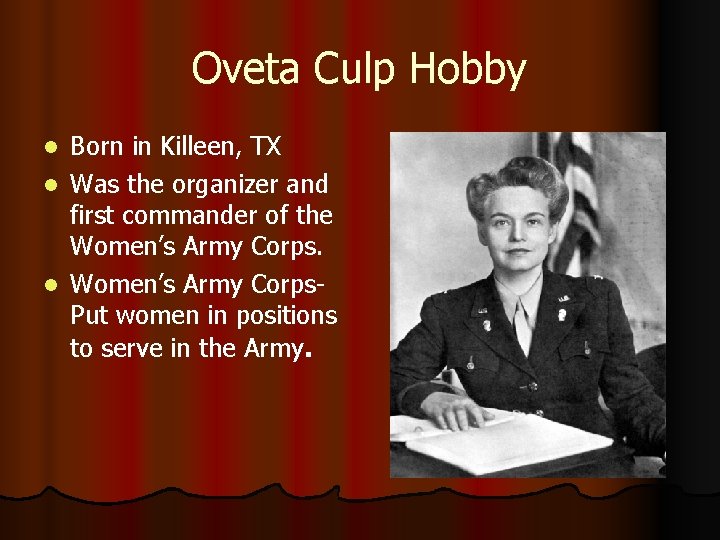
Oveta Culp Hobby Born in Killeen, TX l Was the organizer and first commander of the Women’s Army Corps. l Women’s Army Corps. Put women in positions to serve in the Army. l
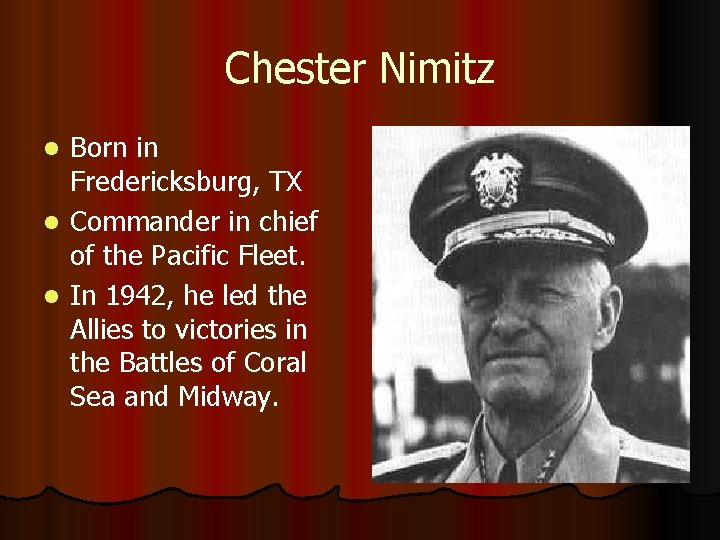
Chester Nimitz Born in Fredericksburg, TX l Commander in chief of the Pacific Fleet. l In 1942, he led the Allies to victories in the Battles of Coral Sea and Midway. l
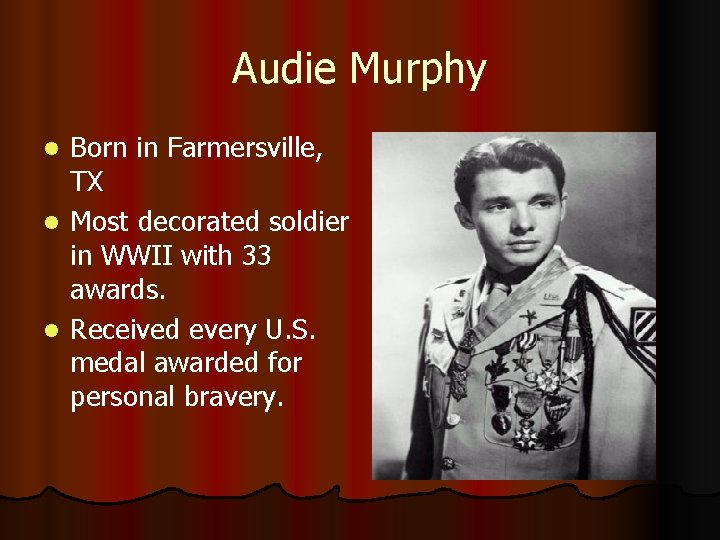
Audie Murphy Born in Farmersville, TX l Most decorated soldier in WWII with 33 awards. l Received every U. S. medal awarded for personal bravery. l
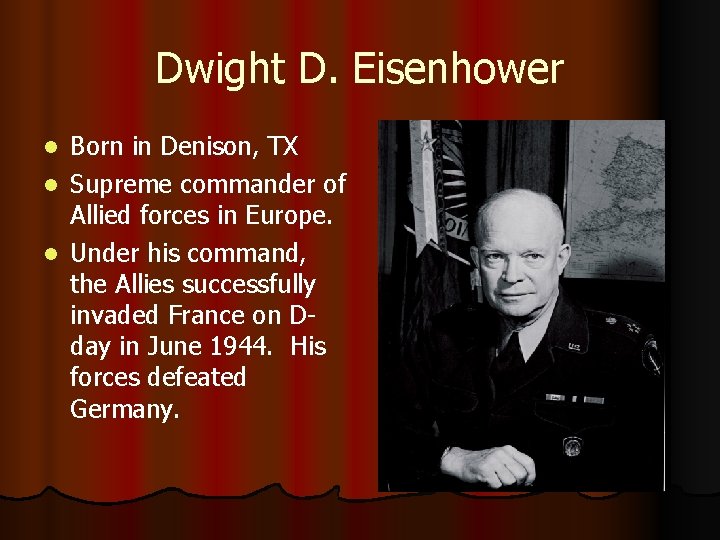
Dwight D. Eisenhower Born in Denison, TX l Supreme commander of Allied forces in Europe. l Under his command, the Allies successfully invaded France on Dday in June 1944. His forces defeated Germany. l
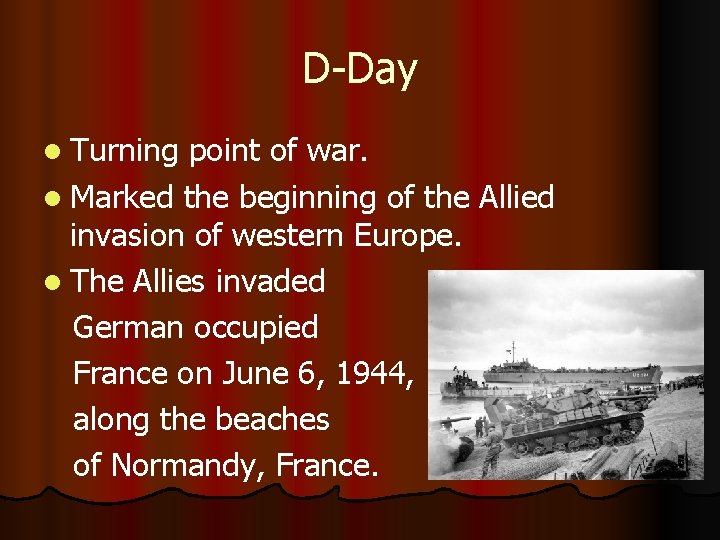
D-Day l Turning point of war. l Marked the beginning of the Allied invasion of western Europe. l The Allies invaded German occupied France on June 6, 1944, along the beaches of Normandy, France.
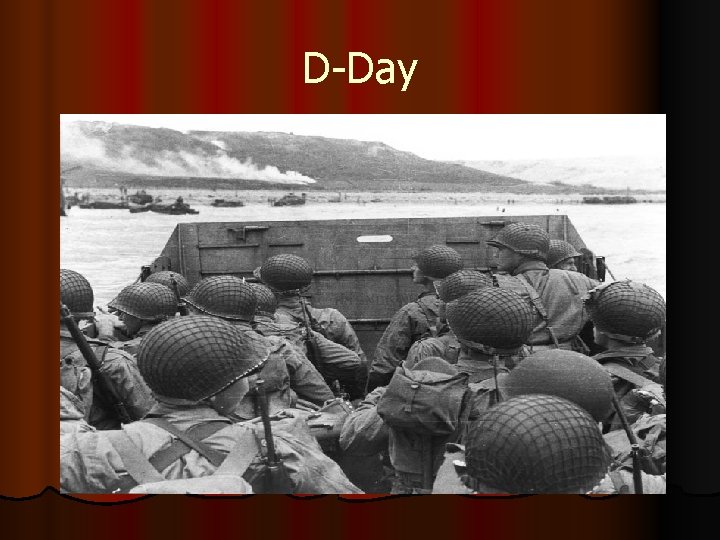
D-Day
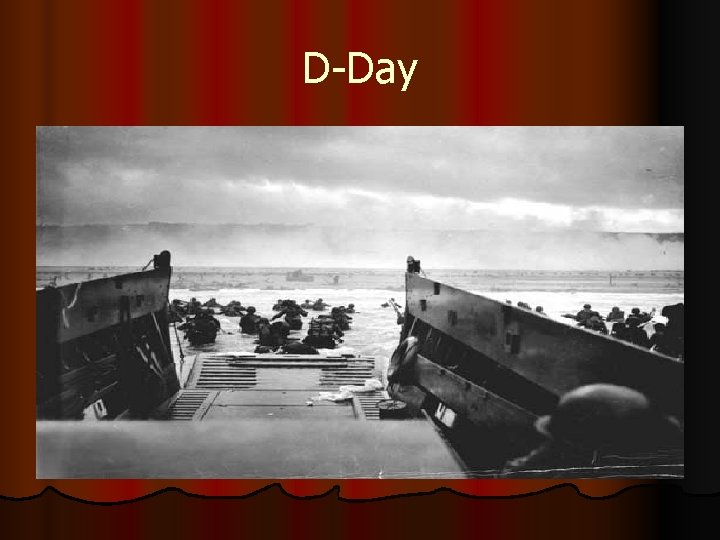
D-Day
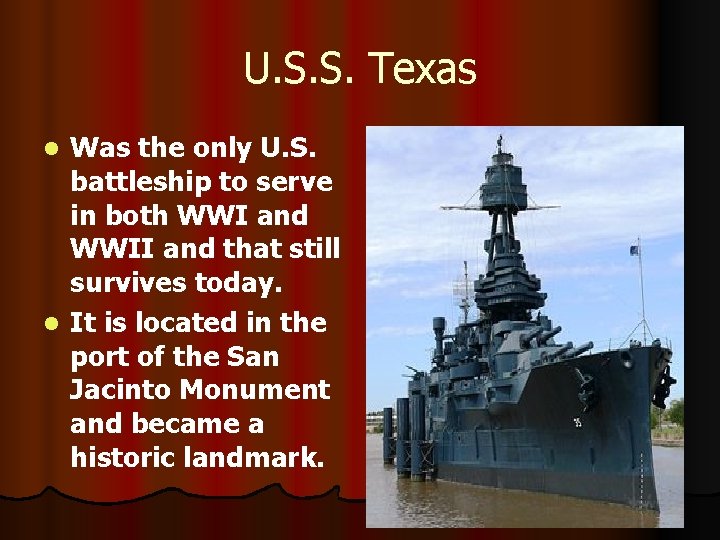
U. S. S. Texas Was the only U. S. battleship to serve in both WWI and WWII and that still survives today. l It is located in the port of the San Jacinto Monument and became a historic landmark. l
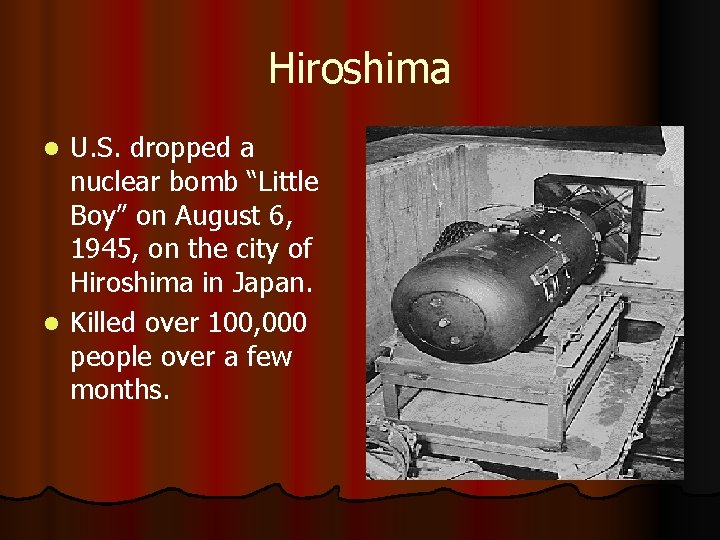
Hiroshima U. S. dropped a nuclear bomb “Little Boy” on August 6, 1945, on the city of Hiroshima in Japan. l Killed over 100, 000 people over a few months. l
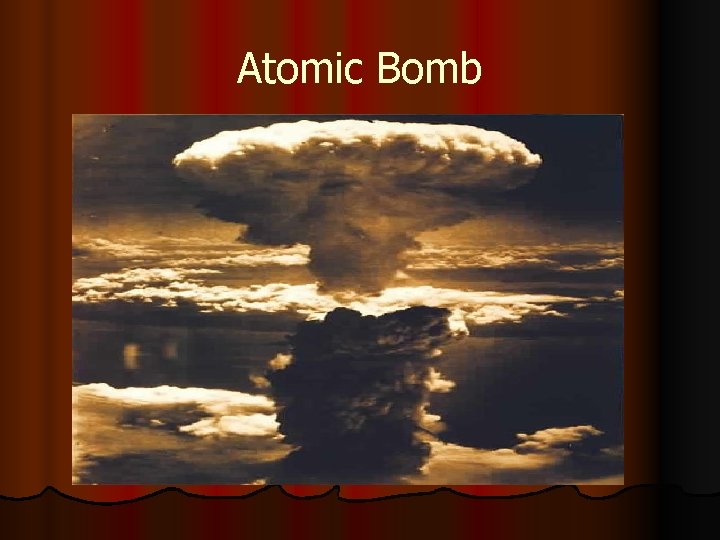
Atomic Bomb

Atomic Bomb Video https: //www. washingtonpost. com/posttv/na tional/watch-the-first-atomic-bombexplosion/2015/07/16/d 0 e 4119 a-2 bc 3 -11 e 5960 f-22 c 4 ba 982 ed 4_video. html
Nagasaki l U. S. dropped the second nuclear bomb “Fat Man” on the city of Nagasaki in Japan on August 9, 1945. l Killed between 60, 000 -80, 000. l Japan surrendered 6 days later to the Allies.
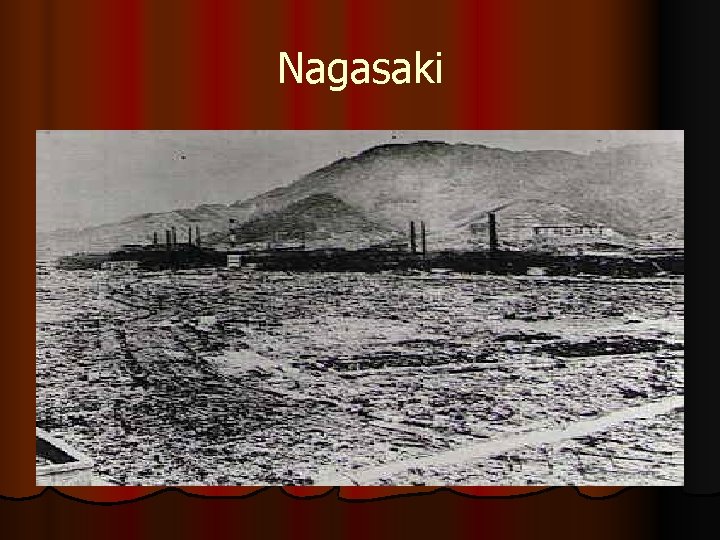
Nagasaki
WWII Over l Ended on September 2, 1945, with Japan signing surrender on the U. S. S. Missouri in Tokyo Bay. l Over 22 -25 million soldiers killed. l Between 60 -70 million people killed during WWII.
Effects of WWII on American Society l Economic opportunities for women increased l Women had to work in jobs previously reserved for men l People bought war bonds to help pay for the war l People planted victory gardens l People used meat, sugar and other goods sparingly
Texas after WWII l l l Many Texans moved from rural areas to cities (urban) during the war to take industrial jobs. People from other countries and states and soldiers returning from the war also moved to cities in Texas. TX changed from a rural state to an urban society. The TX economy used to be dominated by farming and oil. TX started to change to large industries.
- Slides: 35