
World War II 1939 1945 How it All
- Slides: 40
World War II 1939 -1945
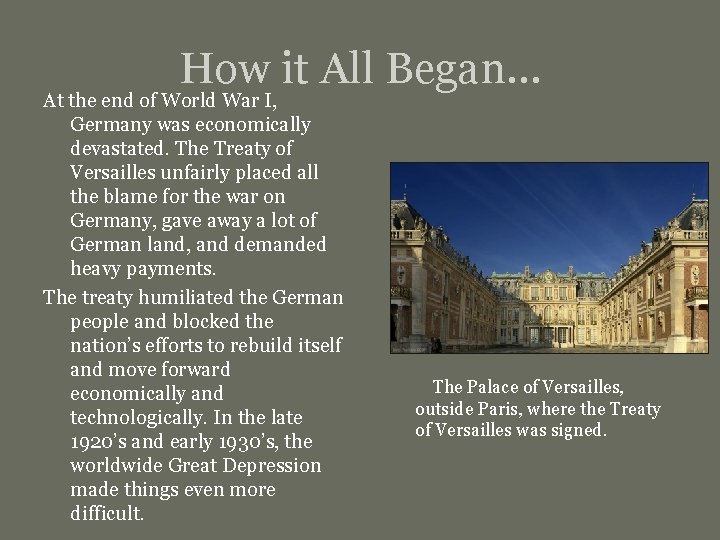
How it All Began… At the end of World War I, Germany was economically devastated. The Treaty of Versailles unfairly placed all the blame for the war on Germany, gave away a lot of German land, and demanded heavy payments. The treaty humiliated the German people and blocked the nation’s efforts to rebuild itself and move forward economically and technologically. In the late 1920’s and early 1930’s, the worldwide Great Depression made things even more difficult. The Palace of Versailles, outside Paris, where the Treaty of Versailles was signed.
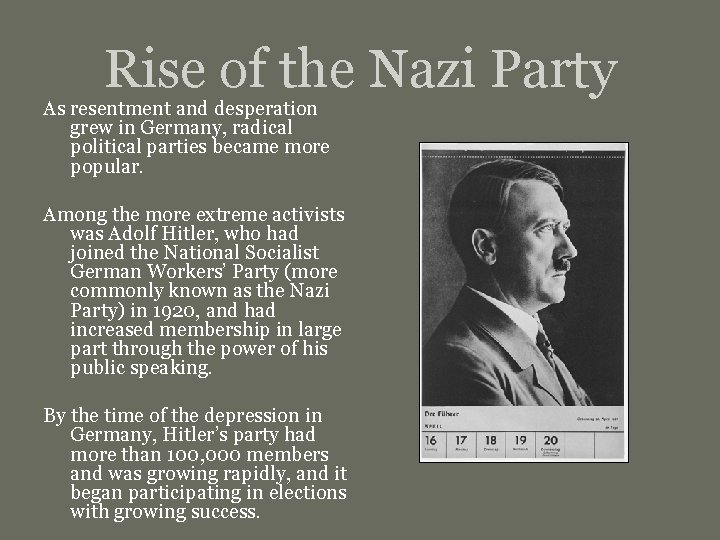
Rise of the Nazi Party As resentment and desperation grew in Germany, radical political parties became more popular. Among the more extreme activists was Adolf Hitler, who had joined the National Socialist German Workers’ Party (more commonly known as the Nazi Party) in 1920, and had increased membership in large part through the power of his public speaking. By the time of the depression in Germany, Hitler’s party had more than 100, 000 members and was growing rapidly, and it began participating in elections with growing success.
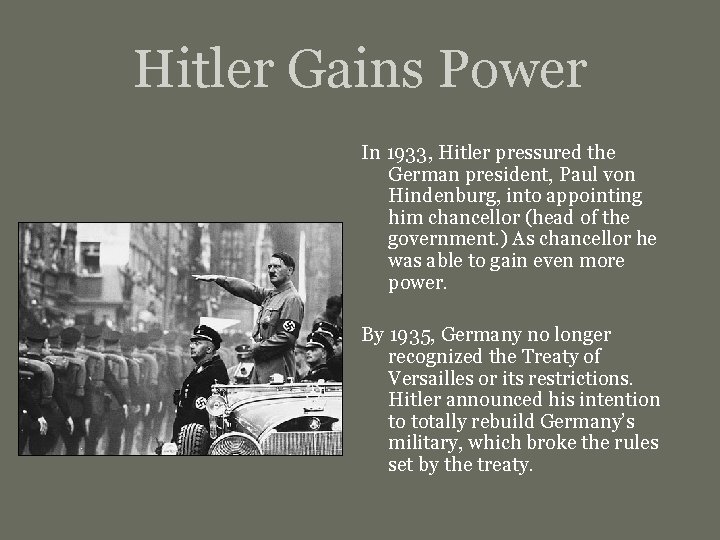
Hitler Gains Power In 1933, Hitler pressured the German president, Paul von Hindenburg, into appointing him chancellor (head of the government. ) As chancellor he was able to gain even more power. By 1935, Germany no longer recognized the Treaty of Versailles or its restrictions. Hitler announced his intention to totally rebuild Germany’s military, which broke the rules set by the treaty.
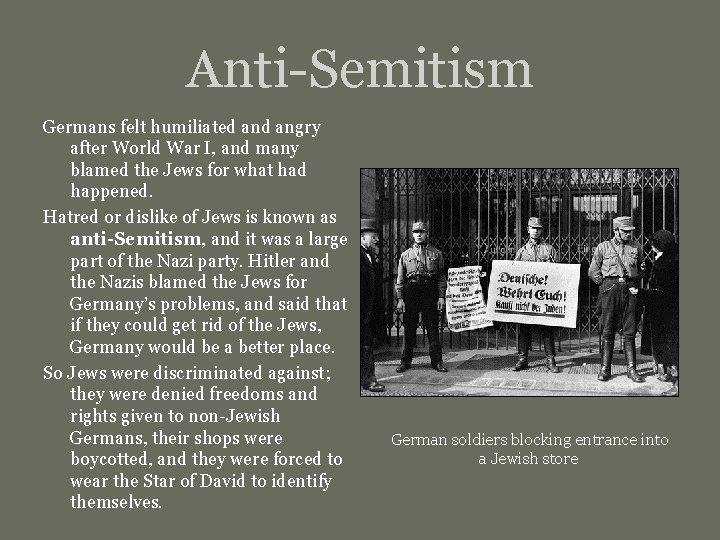
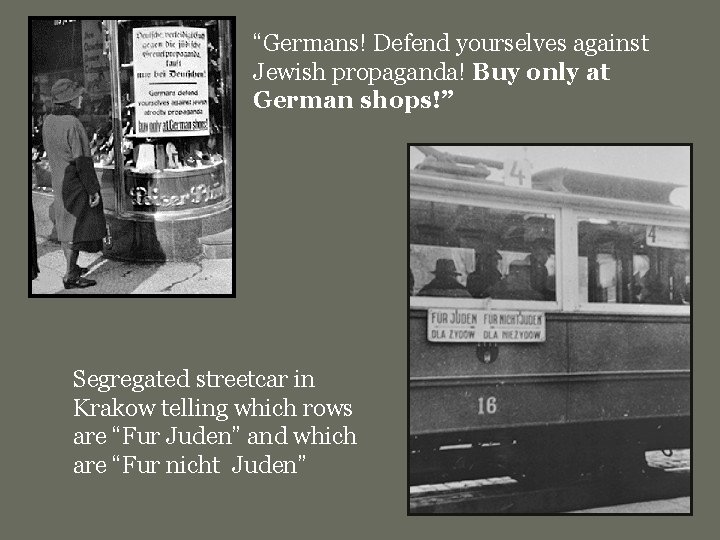
Anti-Semitism Germans felt humiliated angry after World War I, and many blamed the Jews for what had happened. Hatred or dislike of Jews is known as anti-Semitism, and it was a large part of the Nazi party. Hitler and the Nazis blamed the Jews for Germany’s problems, and said that if they could get rid of the Jews, Germany would be a better place. So Jews were discriminated against; they were denied freedoms and rights given to non-Jewish Germans, their shops were boycotted, and they were forced to wear the Star of David to identify themselves. German soldiers blocking entrance into a Jewish store
“Germans! Defend yourselves against Jewish propaganda! Buy only at German shops!” Segregated streetcar in Krakow telling which rows are “Fur Juden” and which are “Fur nicht Juden”
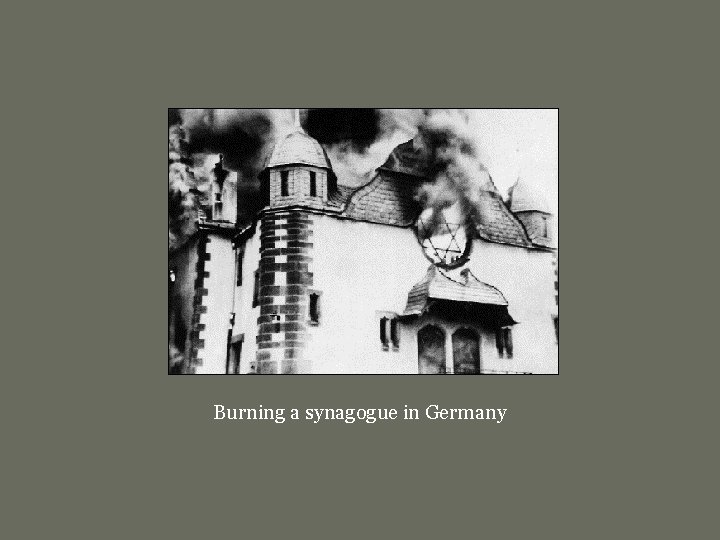
Burning a synagogue in Germany
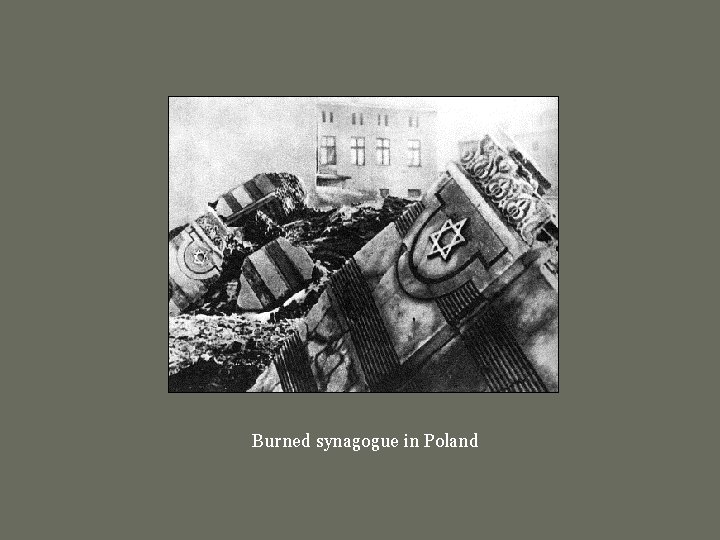
Burned synagogue in Poland
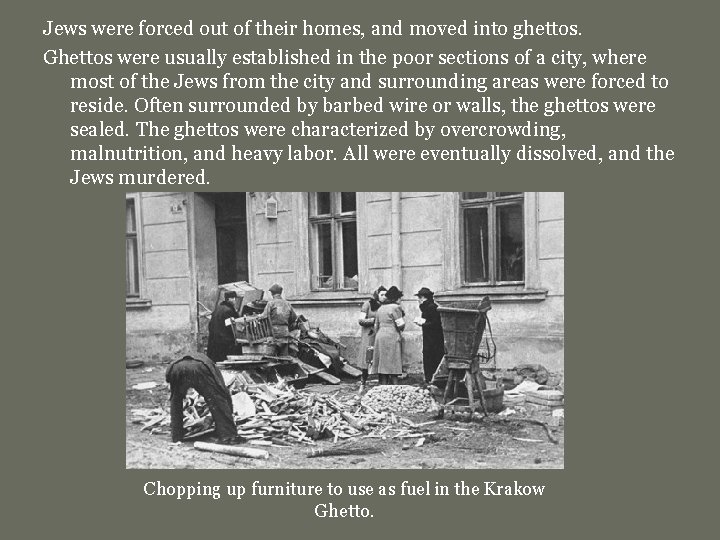
Jews were forced out of their homes, and moved into ghettos. Ghettos were usually established in the poor sections of a city, where most of the Jews from the city and surrounding areas were forced to reside. Often surrounded by barbed wire or walls, the ghettos were sealed. The ghettos were characterized by overcrowding, malnutrition, and heavy labor. All were eventually dissolved, and the Jews murdered. Chopping up furniture to use as fuel in the Krakow Ghetto.
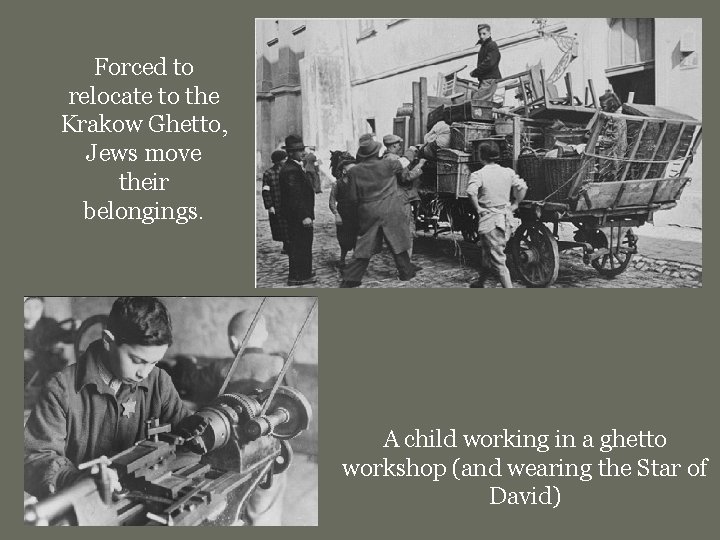
Forced to relocate to the Krakow Ghetto, Jews move their belongings. A child working in a ghetto workshop (and wearing the Star of David)
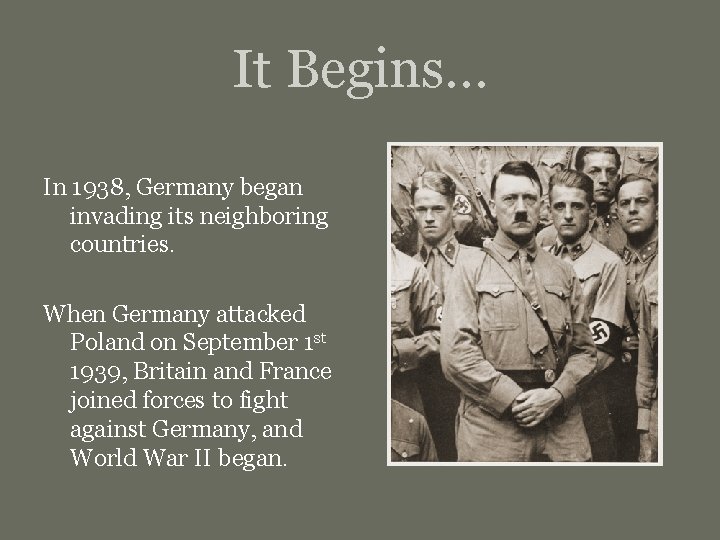
It Begins… In 1938, Germany began invading its neighboring countries. When Germany attacked Poland on September 1 st 1939, Britain and France joined forces to fight against Germany, and World War II began.
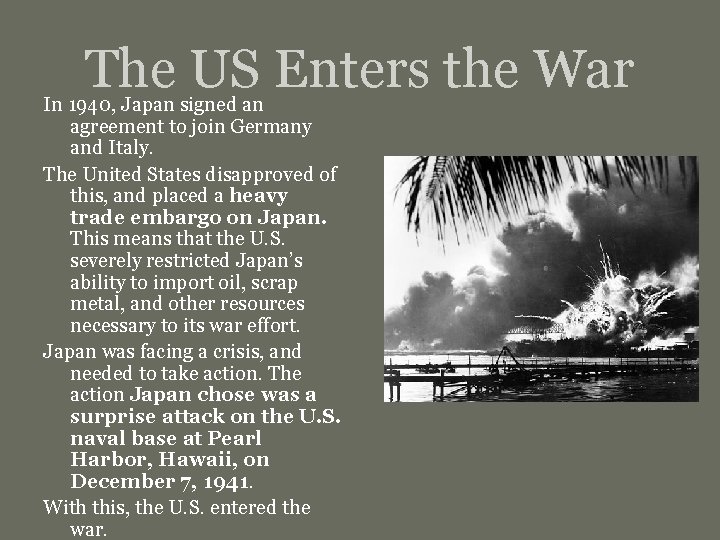
The US Enters the War In 1940, Japan signed an agreement to join Germany and Italy. The United States disapproved of this, and placed a heavy trade embargo on Japan. This means that the U. S. severely restricted Japan’s ability to import oil, scrap metal, and other resources necessary to its war effort. Japan was facing a crisis, and needed to take action. The action Japan chose was a surprise attack on the U. S. naval base at Pearl Harbor, Hawaii, on December 7, 1941. With this, the U. S. entered the war.
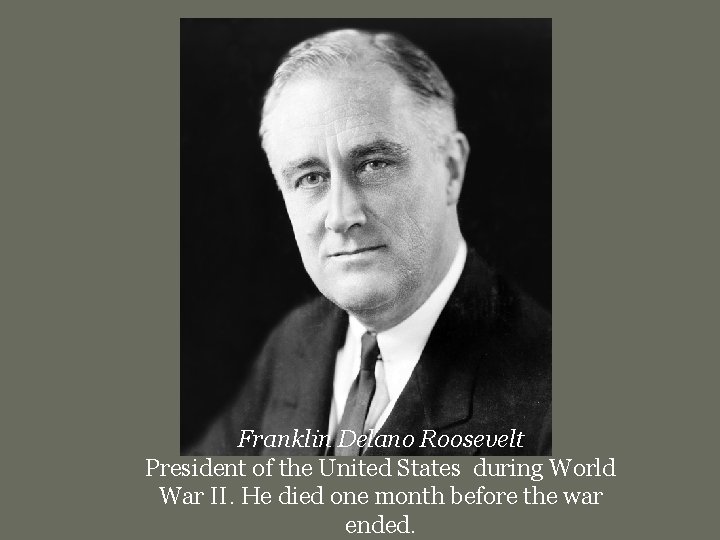
Franklin Delano Roosevelt President of the United States during World War II. He died one month before the war ended.
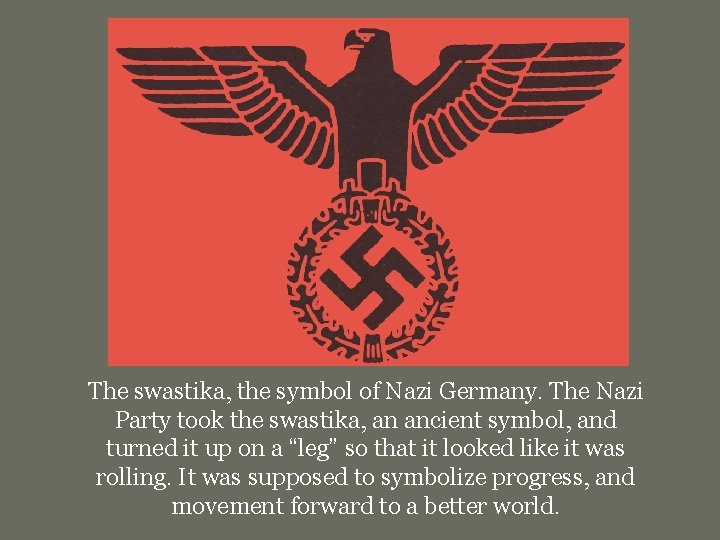
The swastika, the symbol of Nazi Germany. The Nazi Party took the swastika, an ancient symbol, and turned it up on a “leg” so that it looked like it was rolling. It was supposed to symbolize progress, and movement forward to a better world.
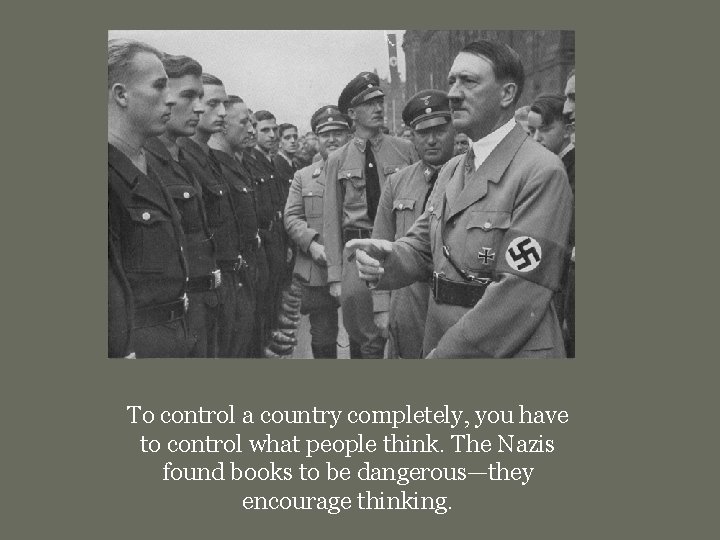
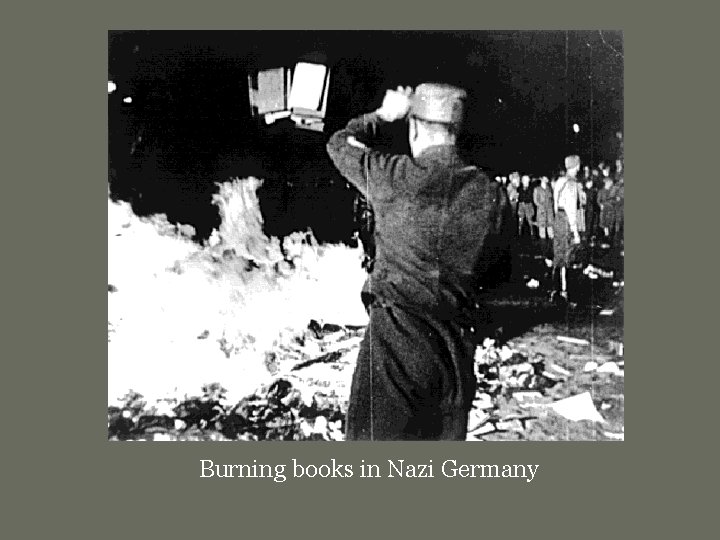
To control a country completely, you have to control what people think. The Nazis found books to be dangerous—they encourage thinking.
Burning books in Nazi Germany
The Holocaust 1 : a sacrifice consumed by fire 2 : a thorough destruction especially by fire. (i. e. a nuclear holocaust) 3: a mass slaughter of European civilians and especially Jews by the Nazis during World War II - usually used with the b : a mass slaughter of people; especially genocide.
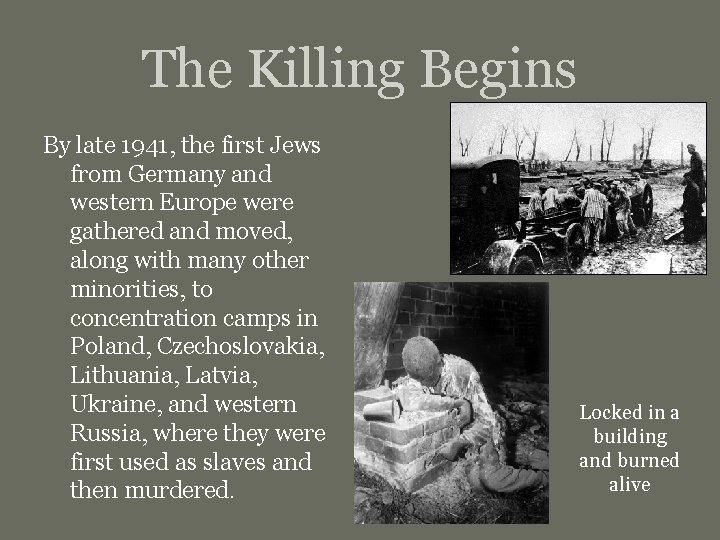
The Killing Begins By late 1941, the first Jews from Germany and western Europe were gathered and moved, along with many other minorities, to concentration camps in Poland, Czechoslovakia, Lithuania, Latvia, Ukraine, and western Russia, where they were first used as slaves and then murdered. Locked in a building and burned alive
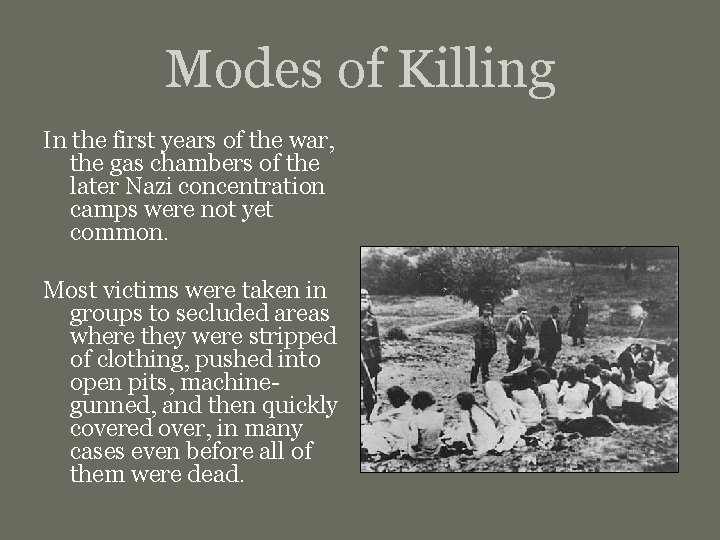
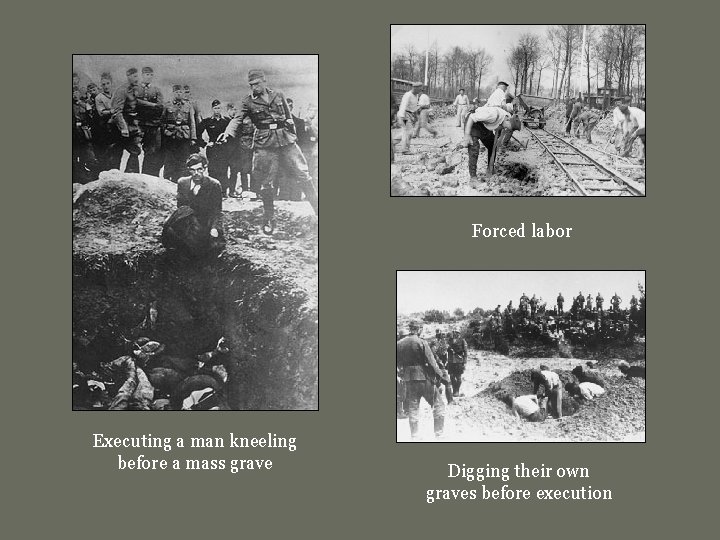
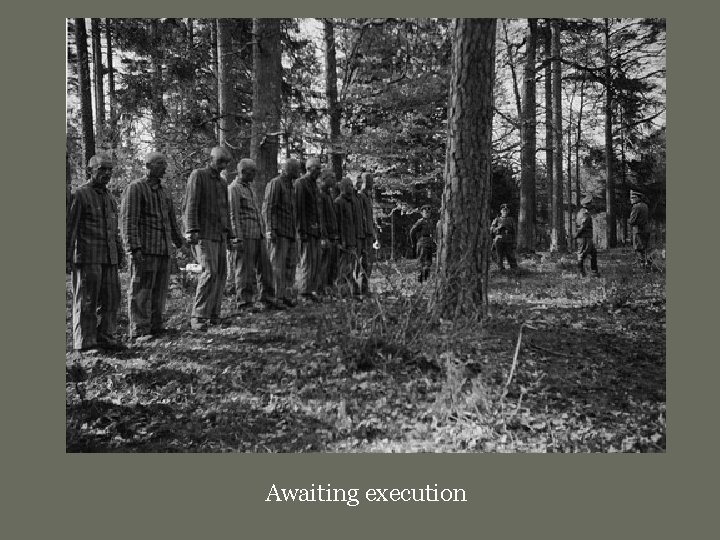
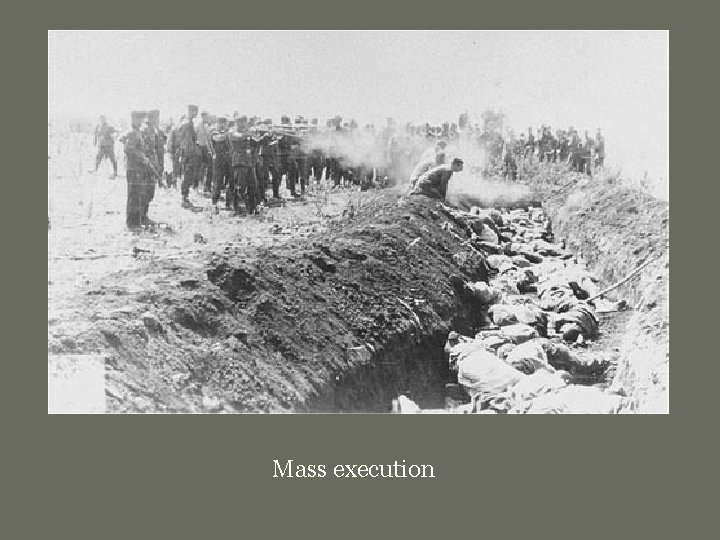
Modes of Killing In the first years of the war, the gas chambers of the later Nazi concentration camps were not yet common. Most victims were taken in groups to secluded areas where they were stripped of clothing, pushed into open pits, machinegunned, and then quickly covered over, in many cases even before all of them were dead.
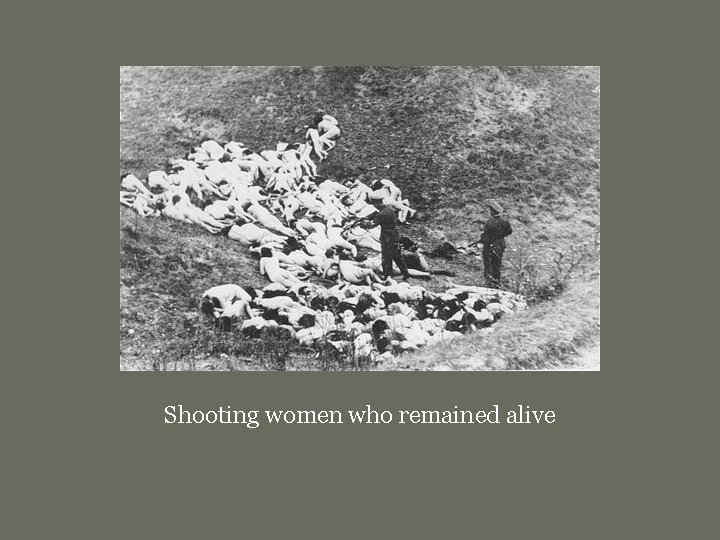
Shooting women who remained alive
Forced labor Executing a man kneeling before a mass grave Digging their own graves before execution
Awaiting execution
Mass execution
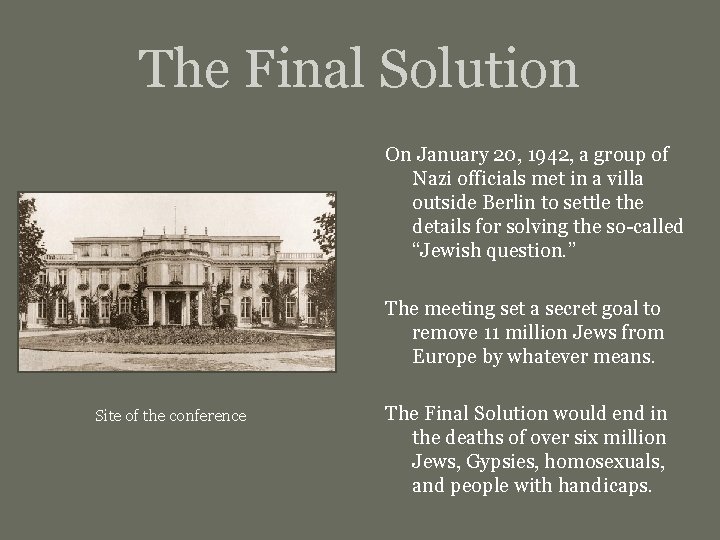
The Final Solution On January 20, 1942, a group of Nazi officials met in a villa outside Berlin to settle the details for solving the so-called “Jewish question. ” The meeting set a secret goal to remove 11 million Jews from Europe by whatever means. Site of the conference The Final Solution would end in the deaths of over six million Jews, Gypsies, homosexuals, and people with handicaps.
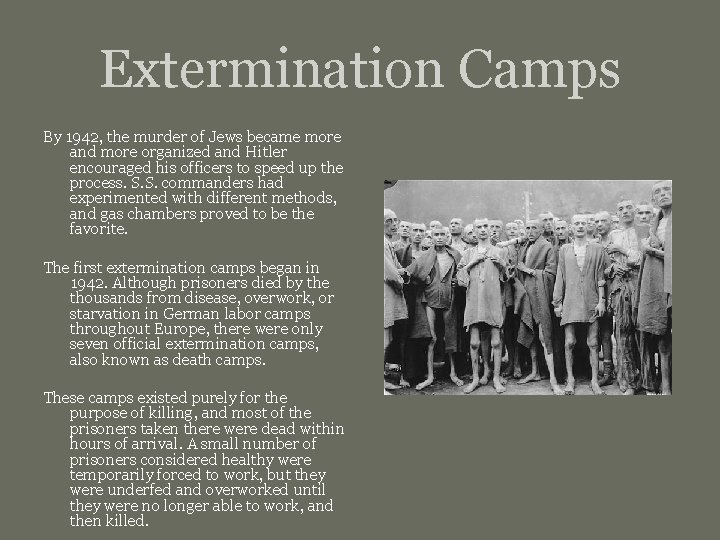
Extermination Camps By 1942, the murder of Jews became more and more organized and Hitler encouraged his officers to speed up the process. S. S. commanders had experimented with different methods, and gas chambers proved to be the favorite. The first extermination camps began in 1942. Although prisoners died by the thousands from disease, overwork, or starvation in German labor camps throughout Europe, there were only seven official extermination camps, also known as death camps. These camps existed purely for the purpose of killing, and most of the prisoners taken there were dead within hours of arrival. A small number of prisoners considered healthy were temporarily forced to work, but they were underfed and overworked until they were no longer able to work, and then killed.
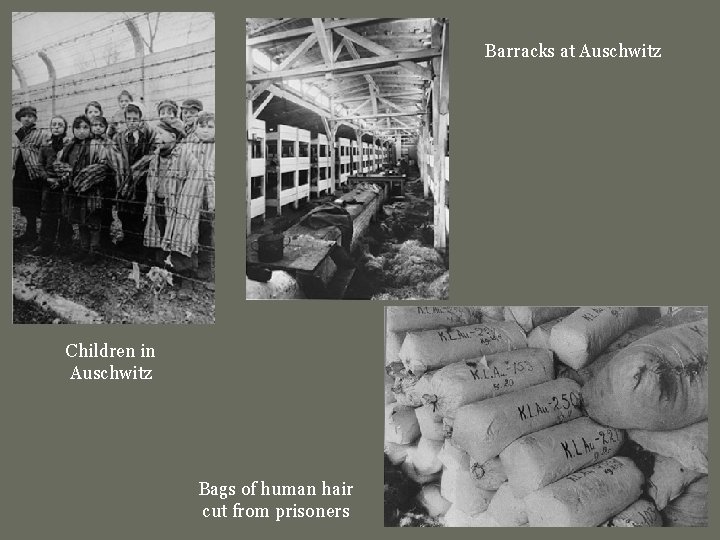
Barracks at Auschwitz Children in Auschwitz Bags of human hair cut from prisoners
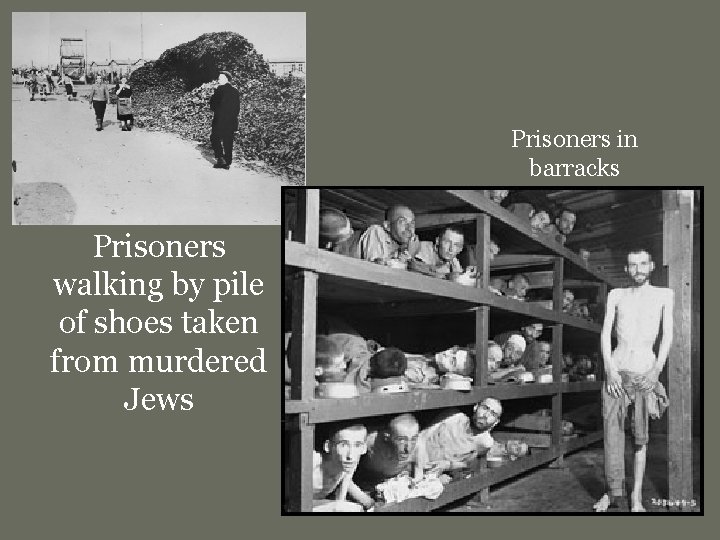
Prisoners in barracks Prisoners walking by pile of shoes taken from murdered Jews
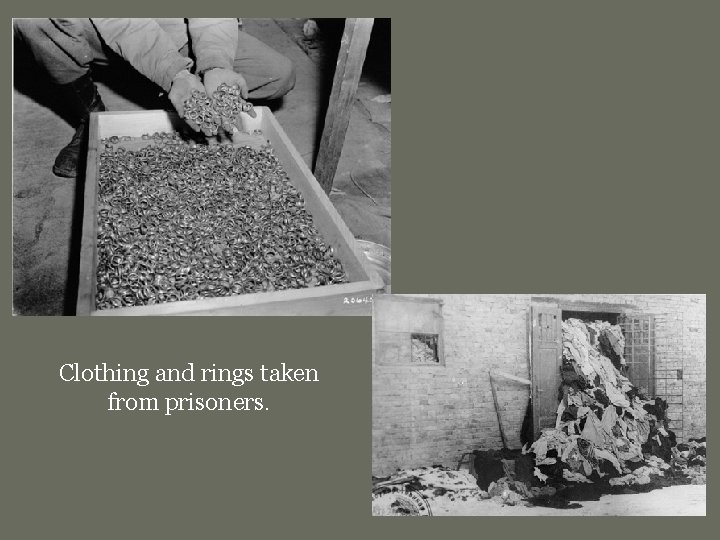
Clothing and rings taken from prisoners.
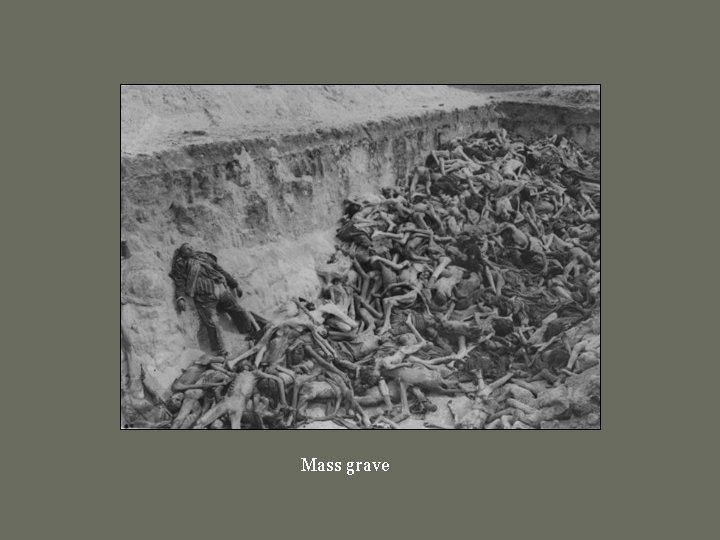
Mass grave
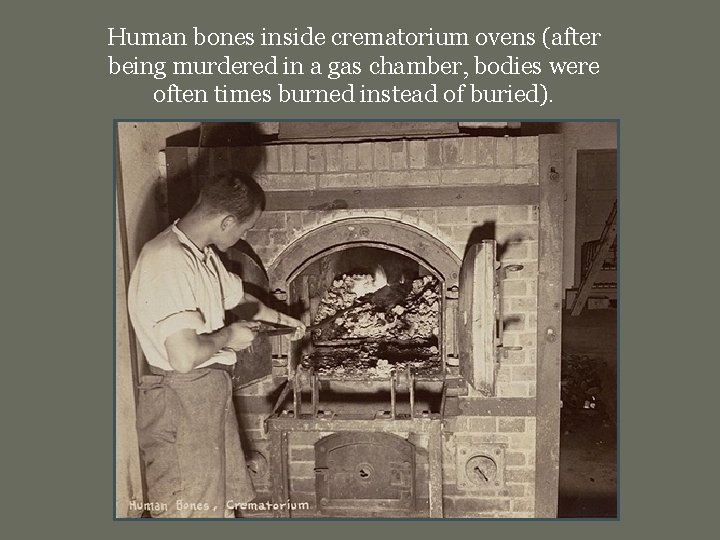
Human bones inside crematorium ovens (after being murdered in a gas chamber, bodies were often times burned instead of buried).
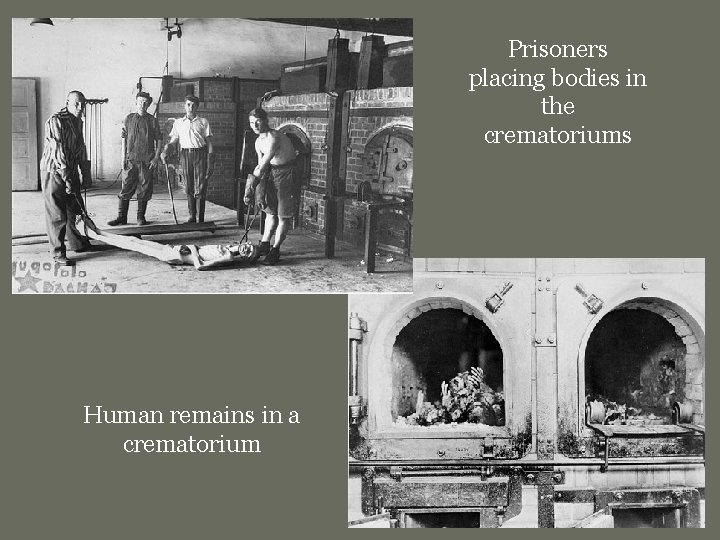
Prisoners placing bodies in the crematoriums Human remains in a crematorium
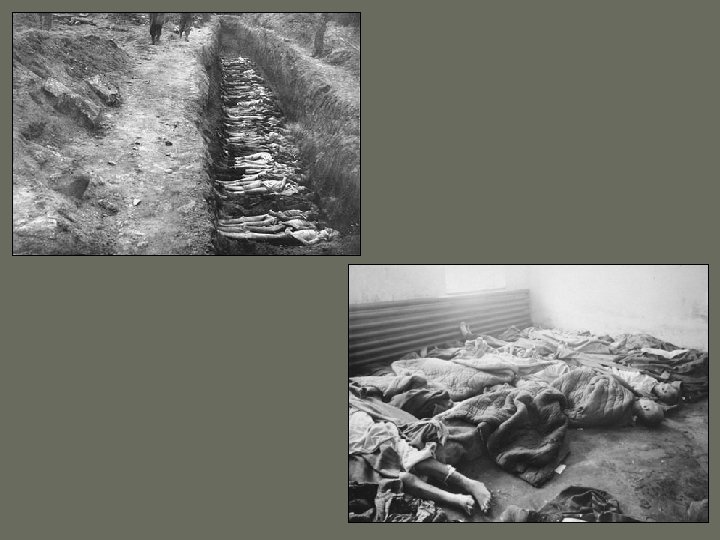
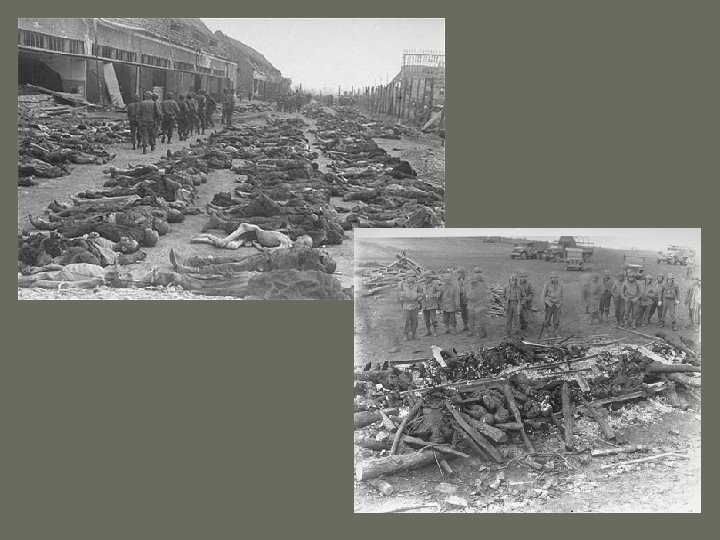
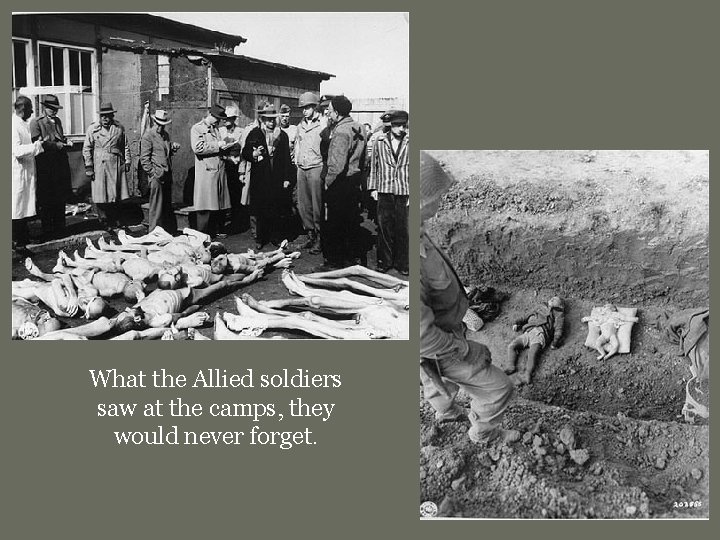
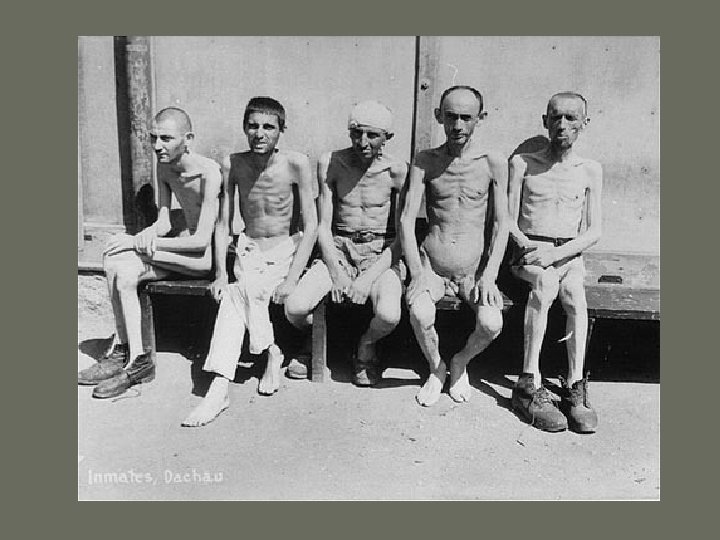
What the Allied soldiers saw at the camps, they would never forget.
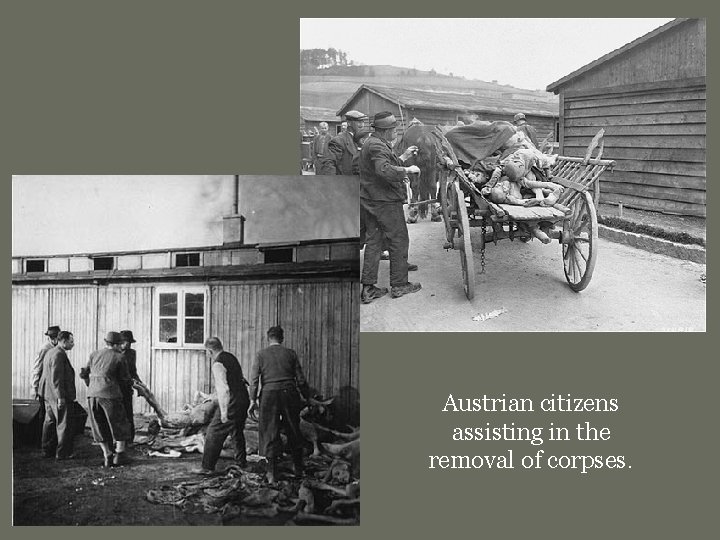
Austrian citizens assisting in the removal of corpses.
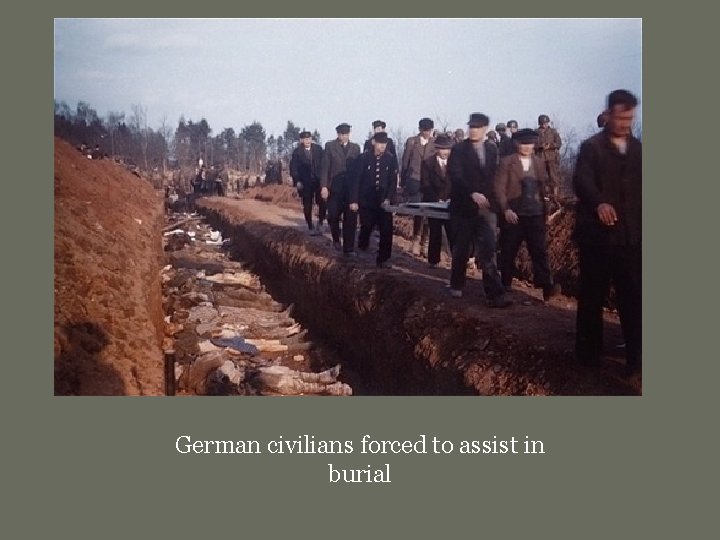
German civilians forced to assist in burial
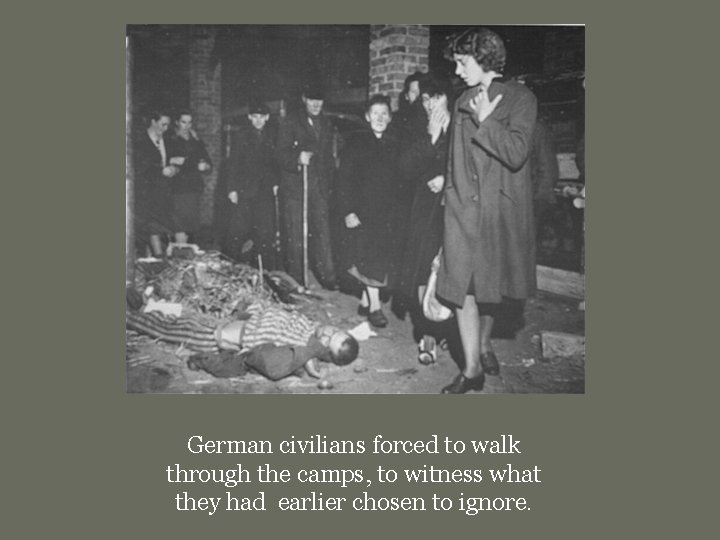
German civilians forced to walk through the camps, to witness what they had earlier chosen to ignore.
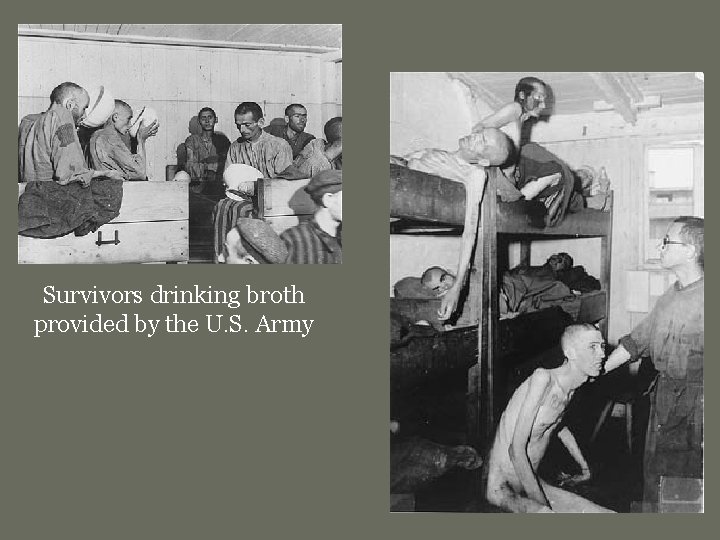
Survivors drinking broth provided by the U. S. Army
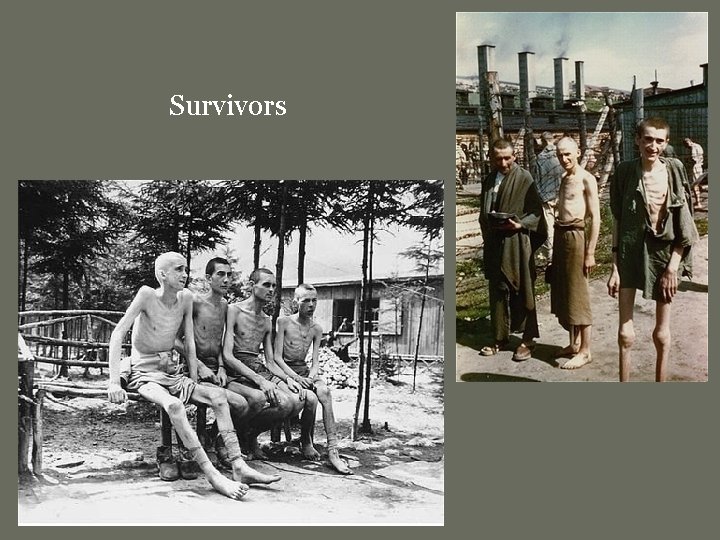
Survivors