
WORLD WAR I WAR HORSE https www youtube
-WORLD WAR I-
WAR HORSE • https: //www. youtube. com/watch? v=g 0 s. Nx_h. Oddg
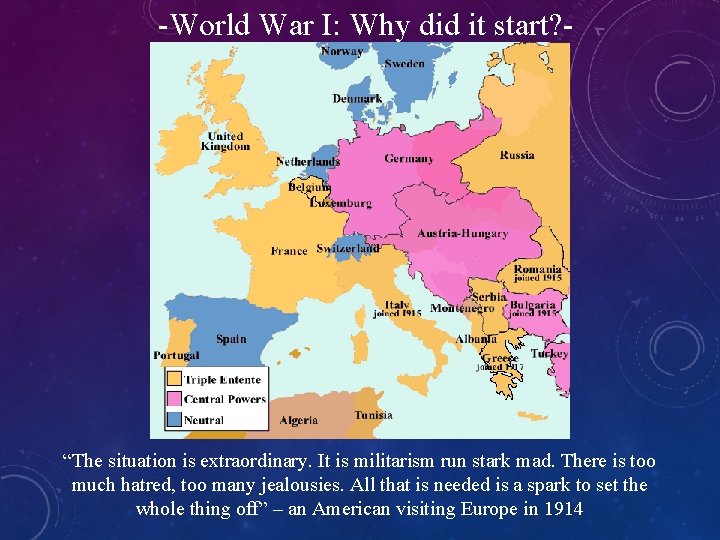
-World War I: Why did it start? - “The situation is extraordinary. It is militarism run stark mad. There is too much hatred, too many jealousies. All that is needed is a spark to set the whole thing off” – an American visiting Europe in 1914
OUTBREAK OF WWI • https: //www. youtube. com/watch? v=d. HSQAEam 2 yc
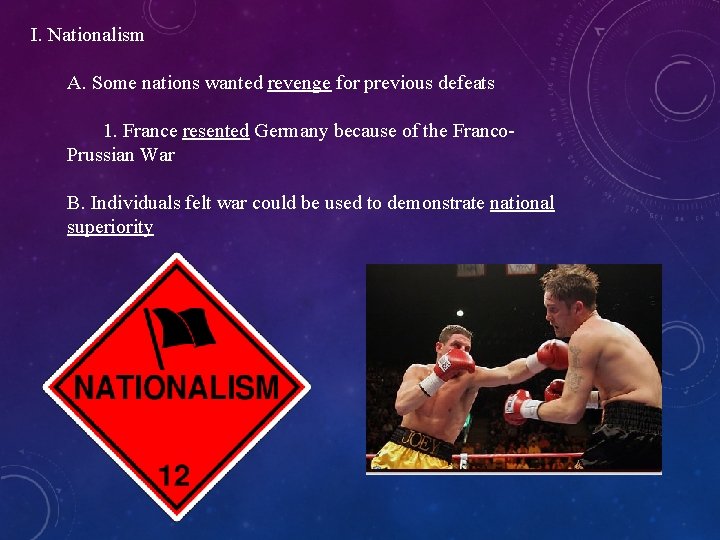
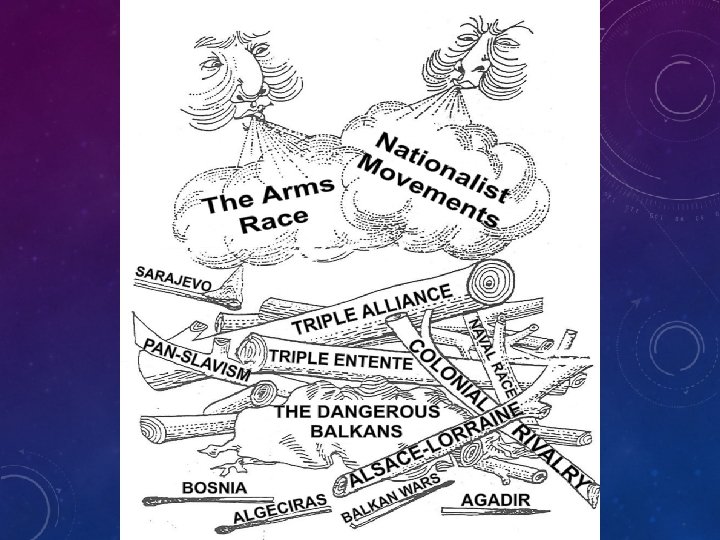
I. Nationalism A. Some nations wanted revenge for previous defeats 1. France resented Germany because of the Franco. Prussian War B. Individuals felt war could be used to demonstrate national superiority
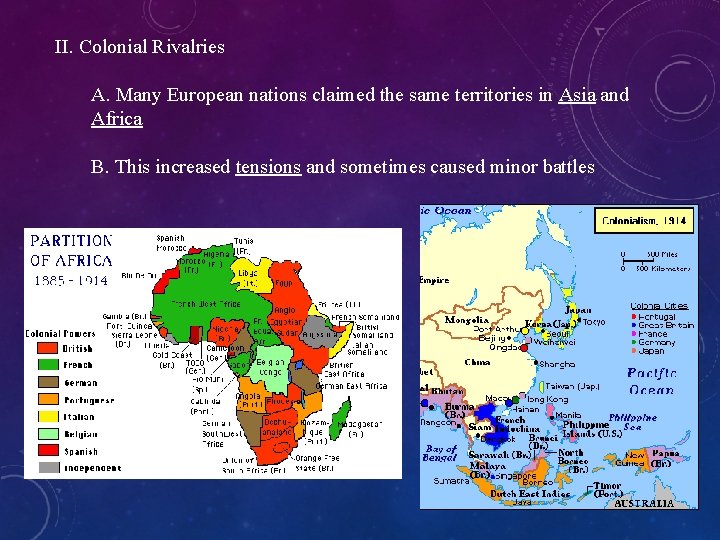
II. Colonial Rivalries A. Many European nations claimed the same territories in Asia and Africa B. This increased tensions and sometimes caused minor battles
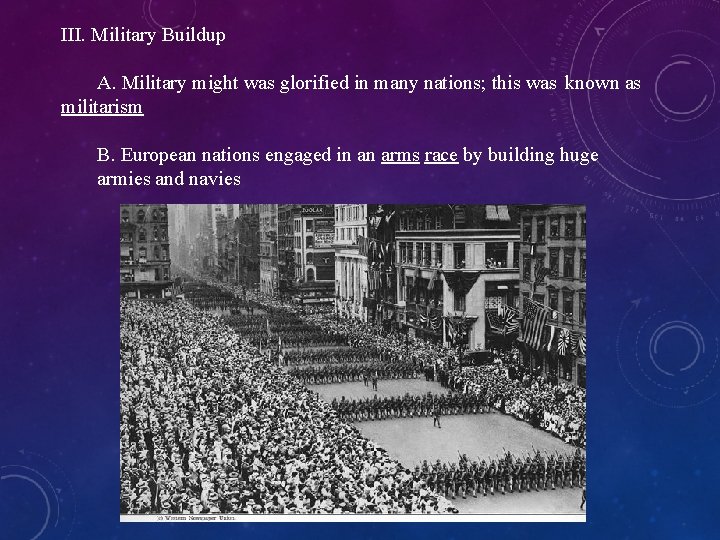
III. Military Buildup A. Military might was glorified in many nations; this was known as militarism B. European nations engaged in an arms race by building huge armies and navies
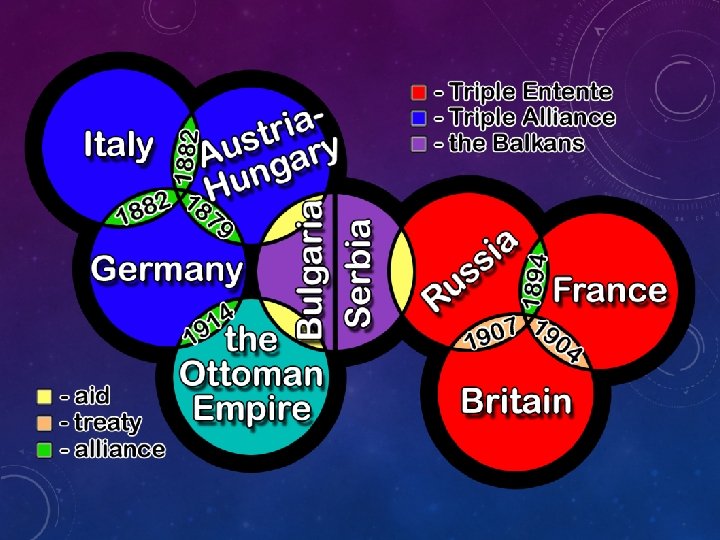
IV. The Triple Alliance A. In the late 1800 s German Chancellor Otto Von Bismarck wanted to create an alliance that would isolate France B. The Triple Alliance was signed in 1882 by Germany, Russia, and Austria-Hungary
V. The Triple Entente A. Russia left the Triple Alliance in the 1890 s because of a rivalry with Austria-Hungary B. In 1907 France, Russia, and Britain signed a mutual defense agreement 1. These three nations pledged to defend each other against either Germany or Austria-Hungary C. The Alliance System meant that one minor incident result in a large scale war could
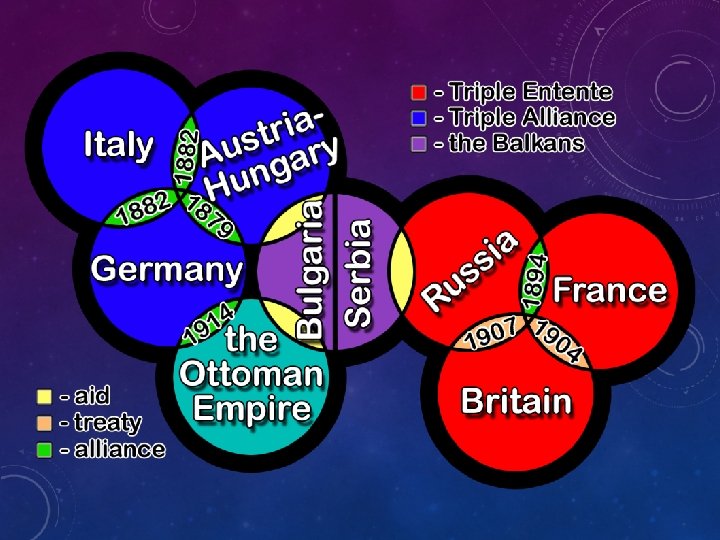
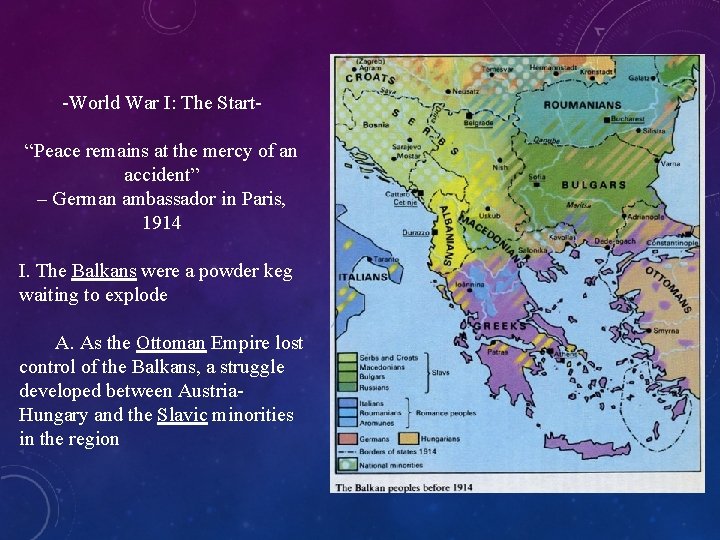
-World War I: The Start“Peace remains at the mercy of an accident” – German ambassador in Paris, 1914 I. The Balkans were a powder keg waiting to explode A. As the Ottoman Empire lost control of the Balkans, a struggle developed between Austria. Hungary and the Slavic minorities in the region
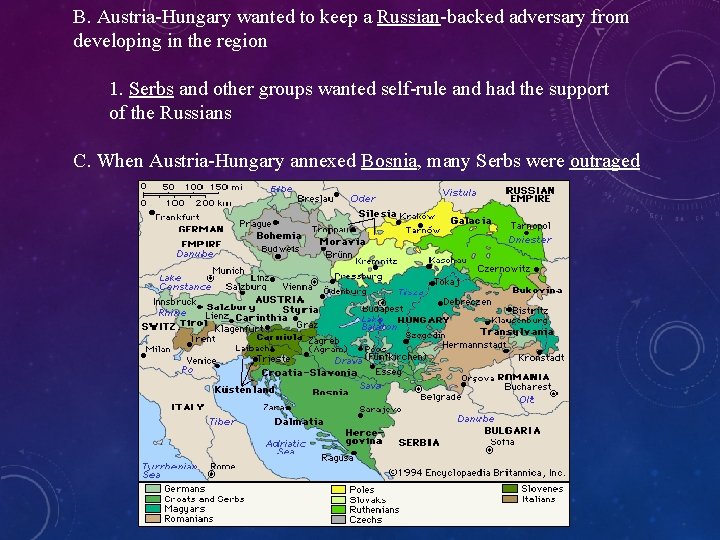
B. Austria-Hungary wanted to keep a Russian-backed adversary from developing in the region 1. Serbs and other groups wanted self-rule and had the support of the Russians C. When Austria-Hungary annexed Bosnia, many Serbs were outraged
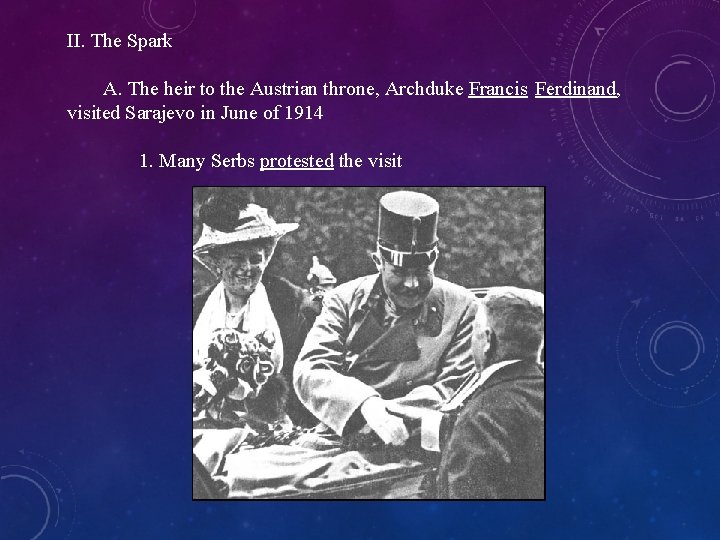
II. The Spark A. The heir to the Austrian throne, Archduke Francis Ferdinand, visited Sarajevo in June of 1914 1. Many Serbs protested the visit
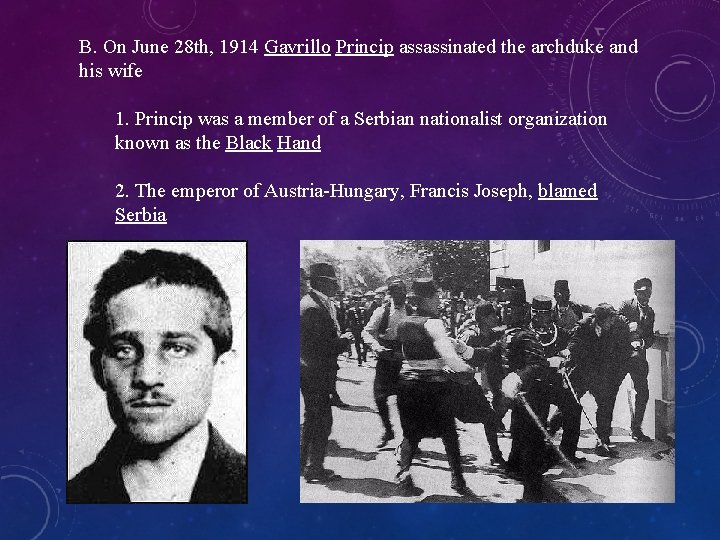
B. On June 28 th, 1914 Gavrillo Princip assassinated the archduke and his wife 1. Princip was a member of a Serbian nationalist organization known as the Black Hand 2. The emperor of Austria-Hungary, Francis Joseph, blamed Serbia
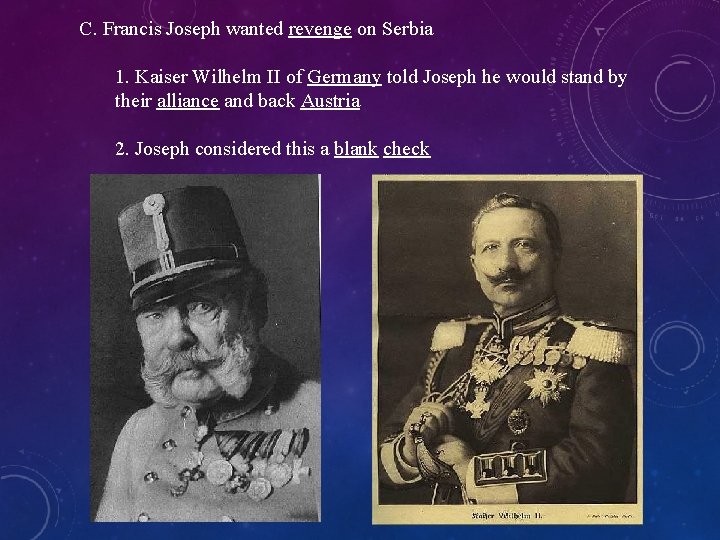
C. Francis Joseph wanted revenge on Serbia 1. Kaiser Wilhelm II of Germany told Joseph he would stand by their alliance and back Austria 2. Joseph considered this a blank check
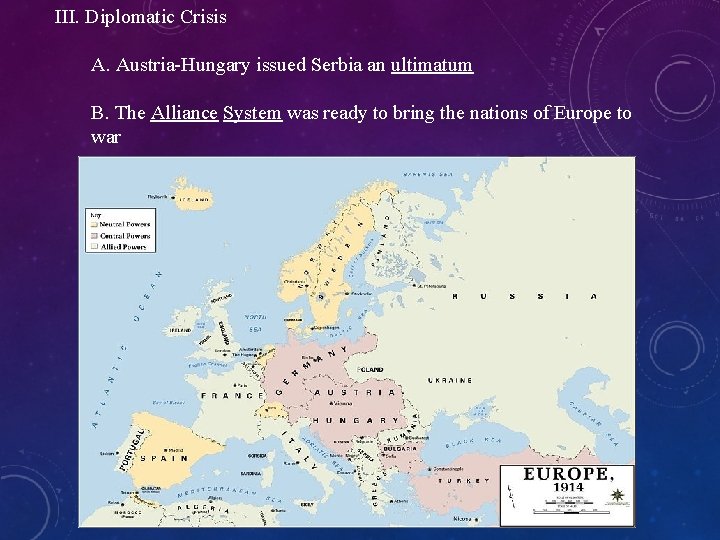
III. Diplomatic Crisis A. Austria-Hungary issued Serbia an ultimatum B. The Alliance System was ready to bring the nations of Europe to war
ASSASSINATION OF ARCHDUKE FRANZ FERDINAND • https: //www. youtube. com/watch? v=Of. O 7 Tduev. HA
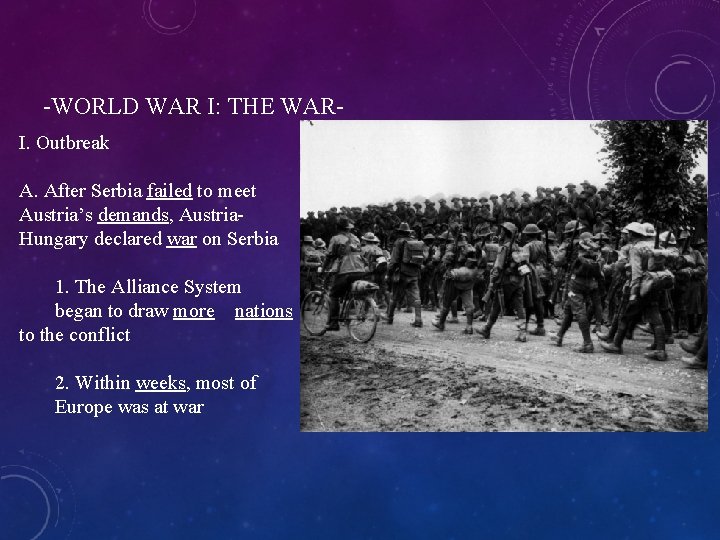
-WORLD WAR I: THE WARI. Outbreak A. After Serbia failed to meet Austria’s demands, Austria. Hungary declared war on Serbia 1. The Alliance System began to draw more nations to the conflict 2. Within weeks, most of Europe was at war
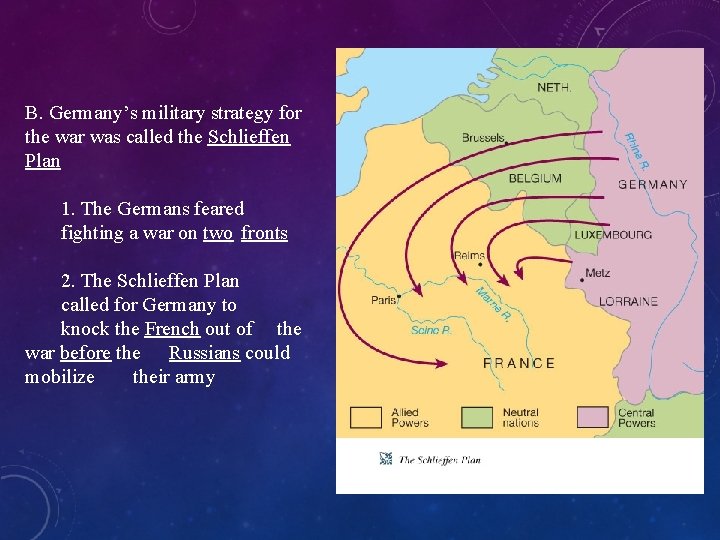
B. Germany’s military strategy for the war was called the Schlieffen Plan 1. The Germans feared fighting a war on two fronts 2. The Schlieffen Plan called for Germany to knock the French out of the war before the Russians could mobilize their army
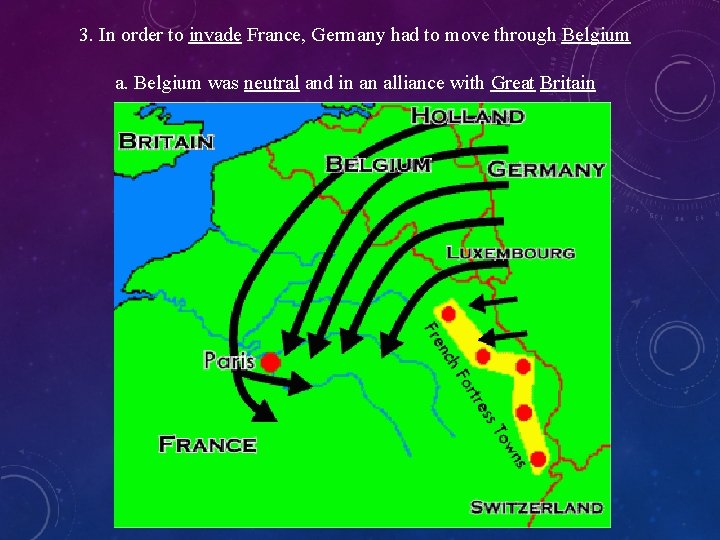
3. In order to invade France, Germany had to move through Belgium a. Belgium was neutral and in an alliance with Great Britain
C. World War I developed between the Allies and the Central Powers 1. Allies included Britain, France, Russia, and the United States a. Russia left the war in 1917, the same year the U. S. joined 2. The Central Powers included Germany, Austria-Hungary, and the Ottoman Empire
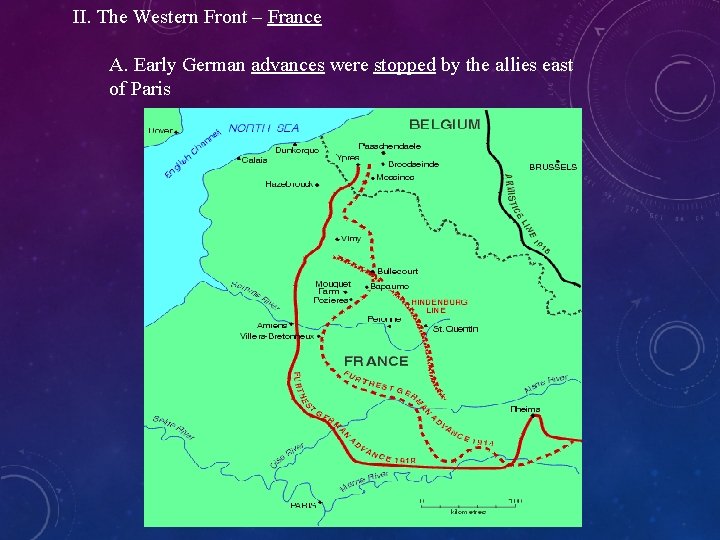
II. The Western Front – France A. Early German advances were stopped by the allies east of Paris
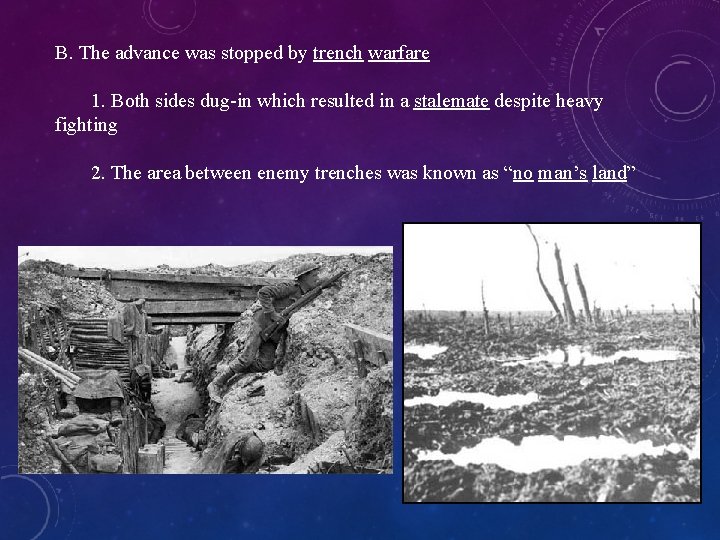
B. The advance was stopped by trench warfare 1. Both sides dug-in which resulted in a stalemate despite heavy fighting 2. The area between enemy trenches was known as “no man’s land”
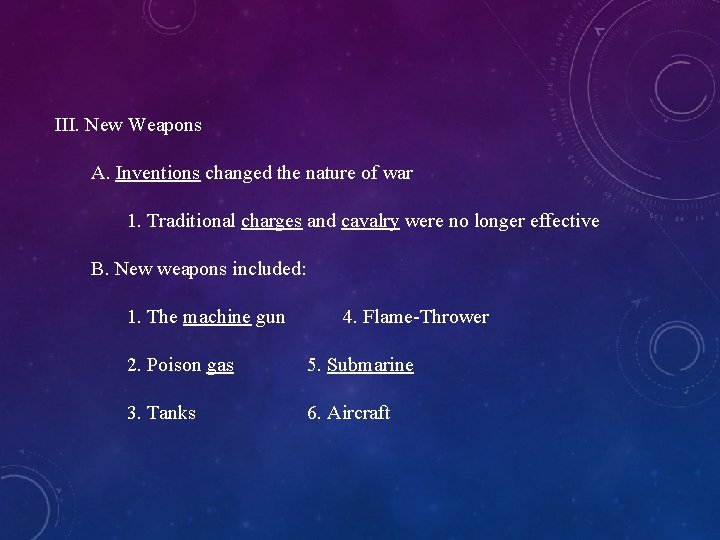
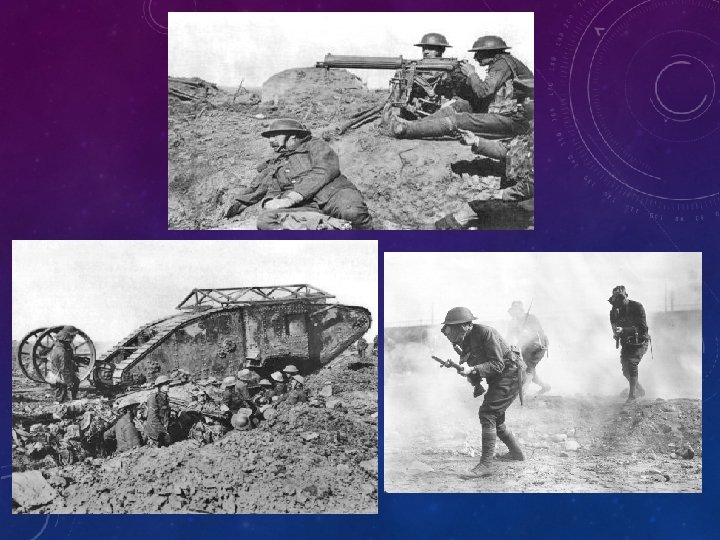
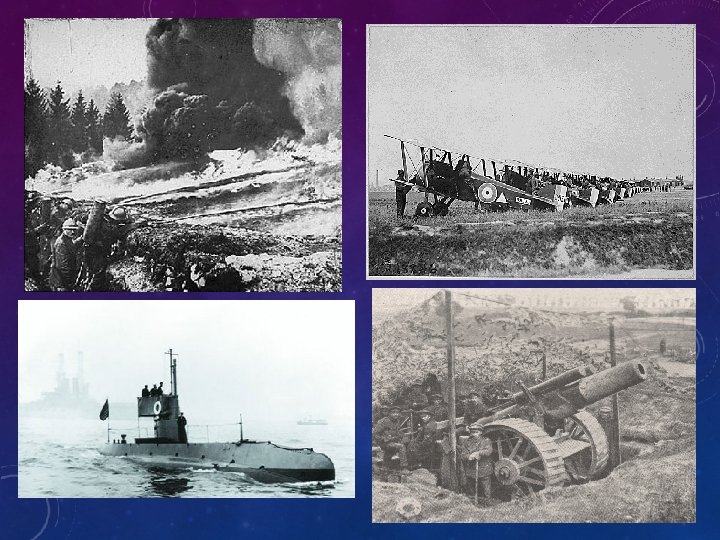
III. New Weapons A. Inventions changed the nature of war 1. Traditional charges and cavalry were no longer effective B. New weapons included: 1. The machine gun 4. Flame-Thrower 2. Poison gas 5. Submarine 3. Tanks 6. Aircraft
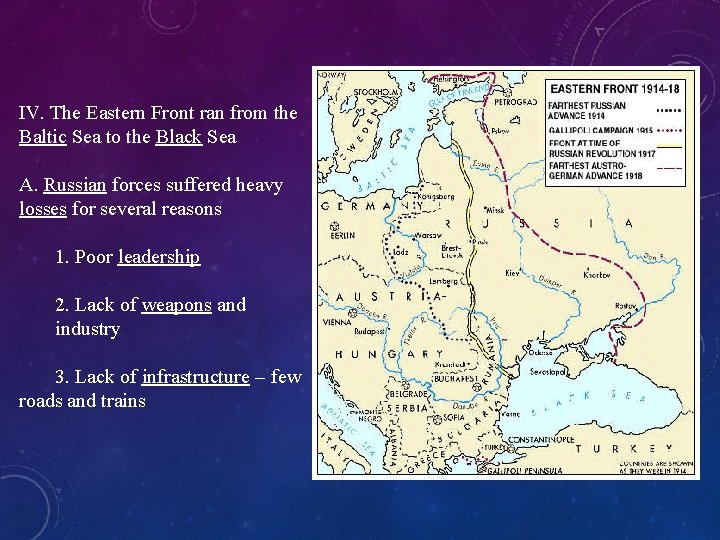
IV. The Eastern Front ran from the Baltic Sea to the Black Sea A. Russian forces suffered heavy losses for several reasons 1. Poor leadership 2. Lack of weapons and industry 3. Lack of infrastructure – few roads and trains
WWI REVIEW • https: //www. youtube. com/watch? v=d. HSQAEam 2 yc
WWI REVIEW • https: //www. youtube. com/watch? v=_XPZQ 0 LAl. R 4
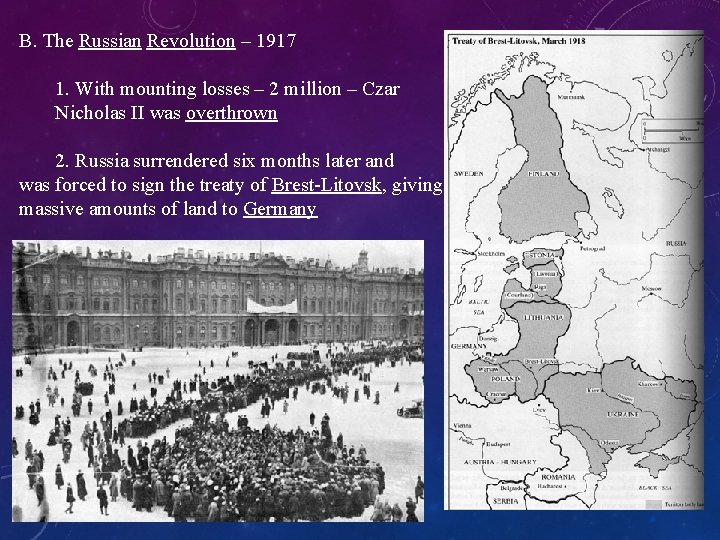
B. The Russian Revolution – 1917 1. With mounting losses – 2 million – Czar Nicholas II was overthrown 2. Russia surrendered six months later and was forced to sign the treaty of Brest-Litovsk, giving massive amounts of land to Germany
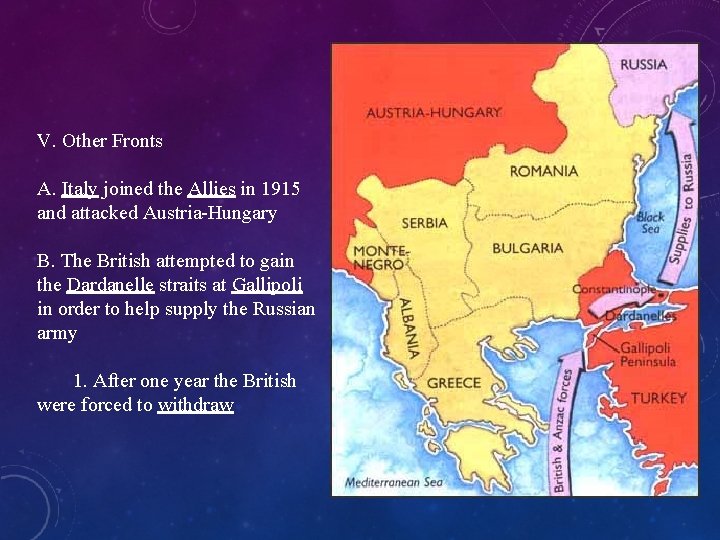
V. Other Fronts A. Italy joined the Allies in 1915 and attacked Austria-Hungary B. The British attempted to gain the Dardanelle straits at Gallipoli in order to help supply the Russian army 1. After one year the British were forced to withdraw
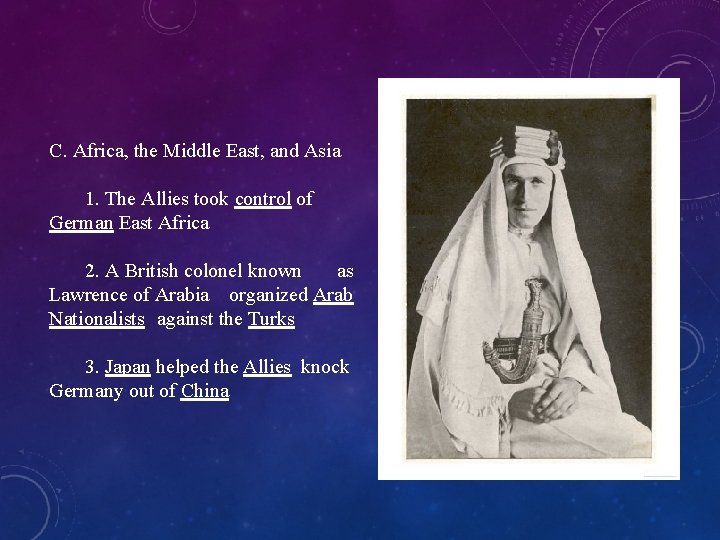
C. Africa, the Middle East, and Asia 1. The Allies took control of German East Africa 2. A British colonel known as Lawrence of Arabia organized Arab Nationalists against the Turks 3. Japan helped the Allies knock Germany out of China
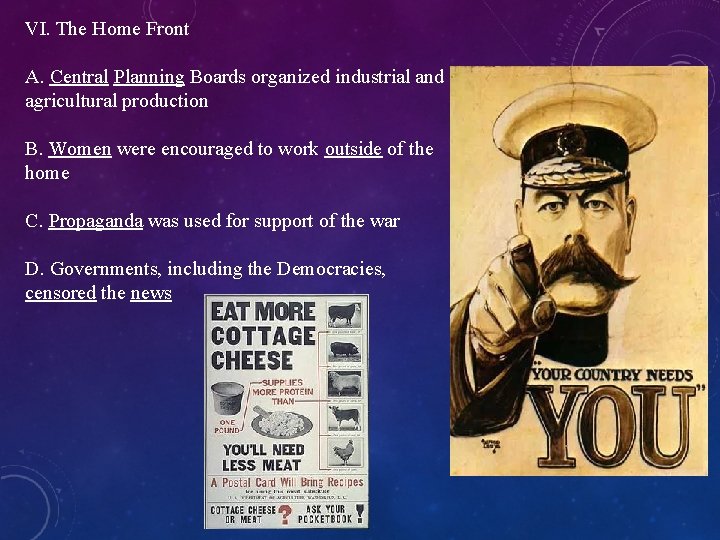
VI. The Home Front A. Central Planning Boards organized industrial and agricultural production B. Women were encouraged to work outside of the home C. Propaganda was used for support of the war D. Governments, including the Democracies, censored the news
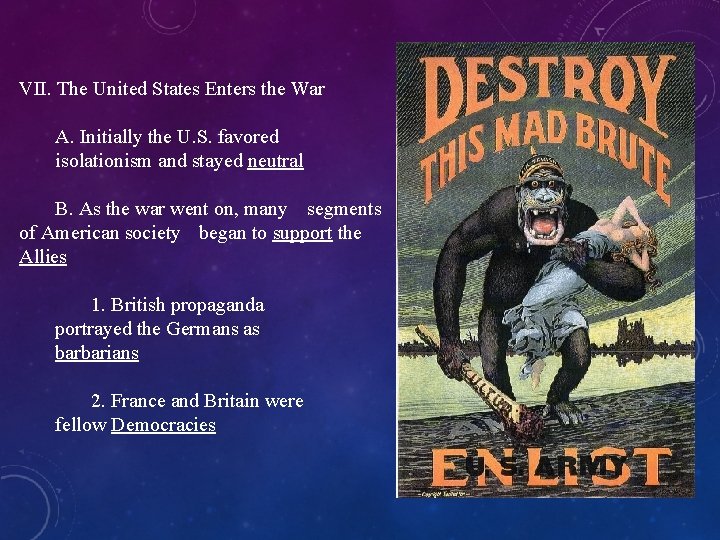
VII. The United States Enters the War A. Initially the U. S. favored isolationism and stayed neutral B. As the war went on, many segments of American society began to support the Allies 1. British propaganda portrayed the Germans as barbarians 2. France and Britain were fellow Democracies
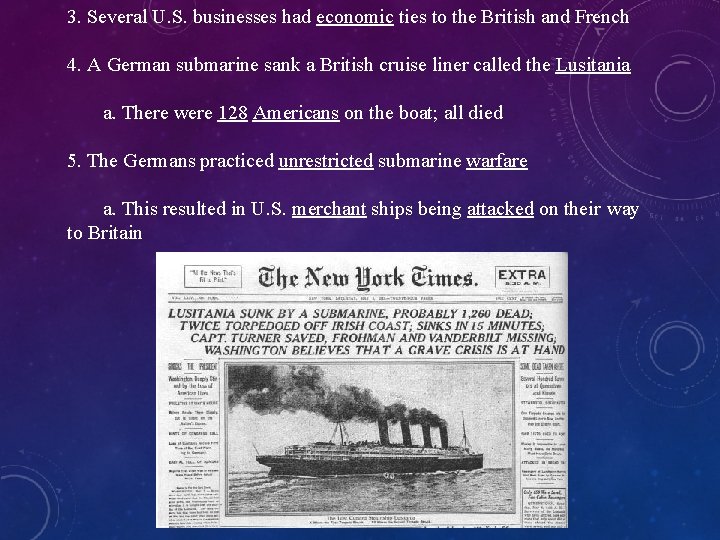
3. Several U. S. businesses had economic ties to the British and French 4. A German submarine sank a British cruise liner called the Lusitania a. There were 128 Americans on the boat; all died 5. The Germans practiced unrestricted submarine warfare a. This resulted in U. S. merchant ships being attacked on their way to Britain
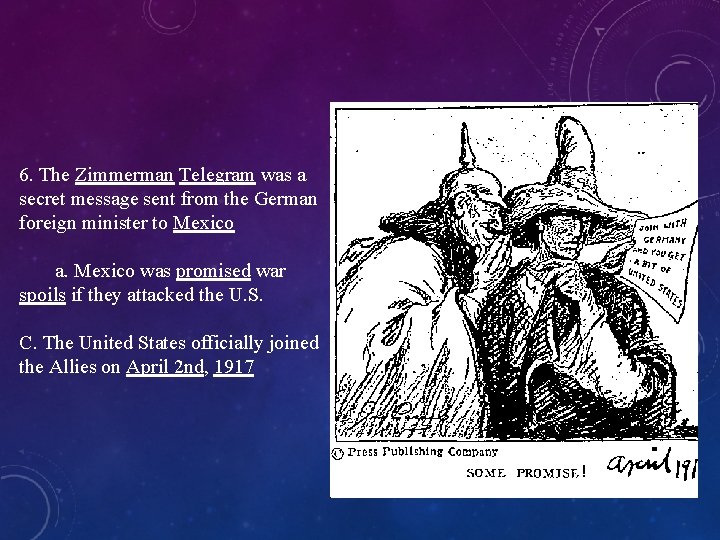
6. The Zimmerman Telegram was a secret message sent from the German foreign minister to Mexico a. Mexico was promised war spoils if they attacked the U. S. C. The United States officially joined the Allies on April 2 nd, 1917
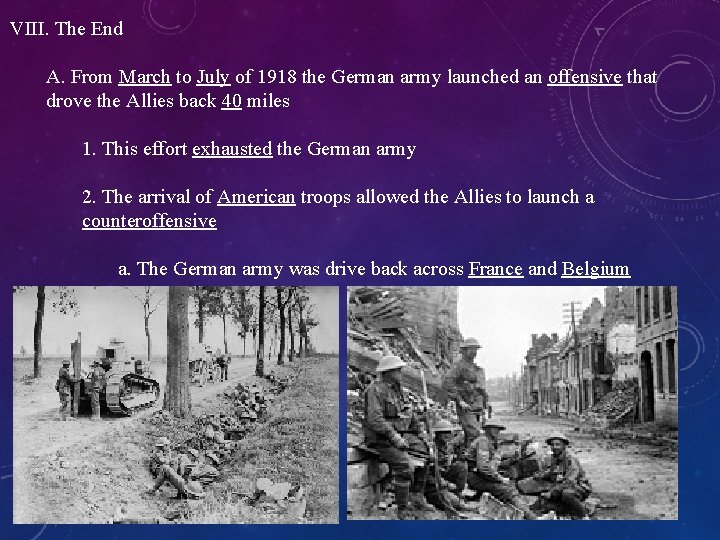
VIII. The End A. From March to July of 1918 the German army launched an offensive that drove the Allies back 40 miles 1. This effort exhausted the German army 2. The arrival of American troops allowed the Allies to launch a counteroffensive a. The German army was drive back across France and Belgium
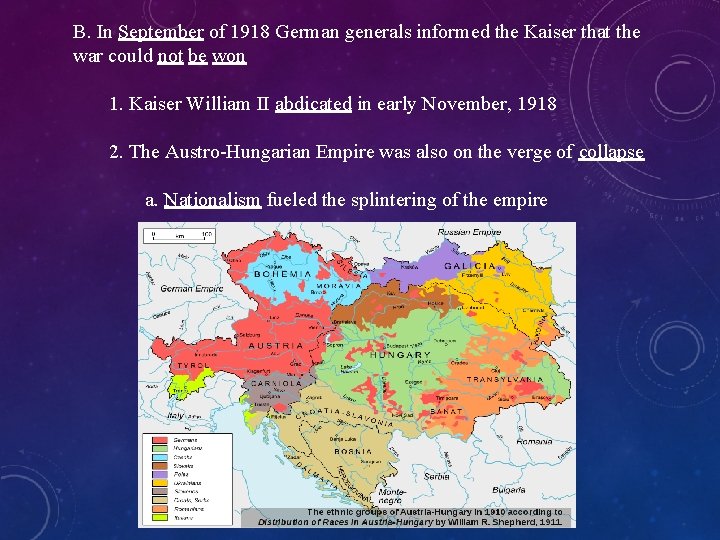
B. In September of 1918 German generals informed the Kaiser that the war could not be won 1. Kaiser William II abdicated in early November, 1918 2. The Austro-Hungarian Empire was also on the verge of collapse a. Nationalism fueled the splintering of the empire
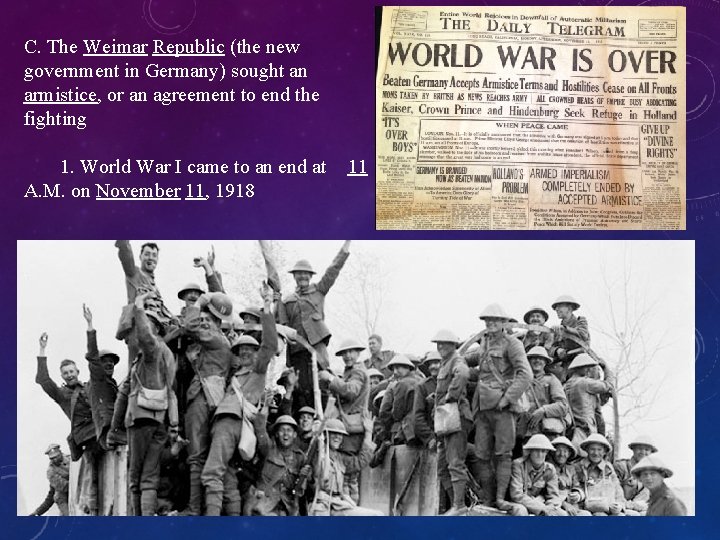
C. The Weimar Republic (the new government in Germany) sought an armistice, or an agreement to end the fighting 1. World War I came to an end at 11 A. M. on November 11, 1918
- Slides: 41