
World War I on The Home Front Life
- Slides: 14
World War I on The Home Front Life in the United States during WWI
How did the war affect Americans at home? For the first time, the government played a major role in Americans’ daily lives, taking on new powers to regulate industry, draft soldiers, and shape public opinion. The war required sacrifice, but it also brought new opportunities.
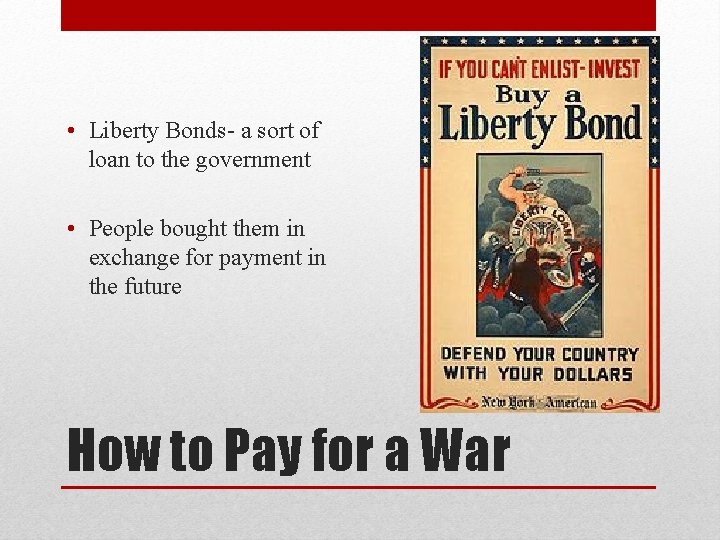
• Liberty Bonds- a sort of loan to the government • People bought them in exchange for payment in the future How to Pay for a War
• War Revenue Act of 1917 - established higher taxes and increased taxes for wealthy • Borrowed Money- National Debt went from $1. 2 billion to $25. 5 billion Government Actions to Pay
The federal government took control of the wartime economy. The Council of National Defense created federal agencies to oversee food production, fuel distribution, and railroads. $ Bernard Baruch headed the War Industries Board (WIB), which regulated war-related businesses. The Food Administration, led by Herbert Hoover, set prices for agricultural products.
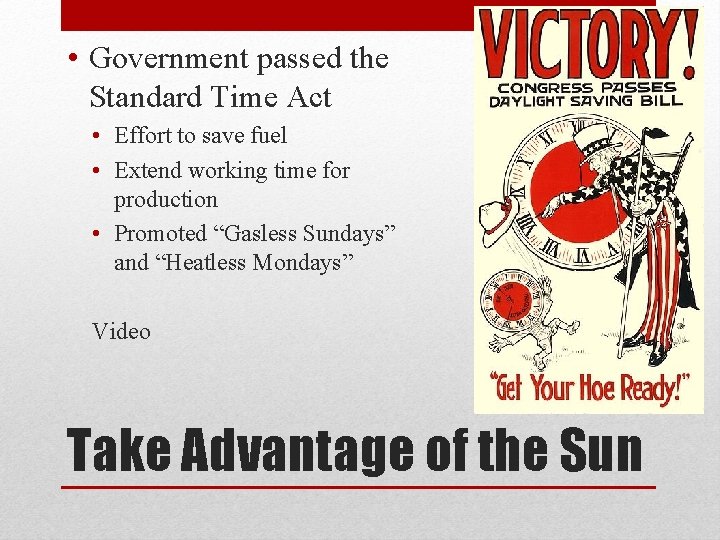
• Government passed the Standard Time Act • Effort to save fuel • Extend working time for production • Promoted “Gasless Sundays” and “Heatless Mondays” Video Take Advantage of the Sun
• Banned the “manufacture, sale or transportation” of alcohol in the U. S. • Why would this be beneficial to the war effort? • Most alcohols made with grapes and wheat– save for the troops th The 18 Amendment
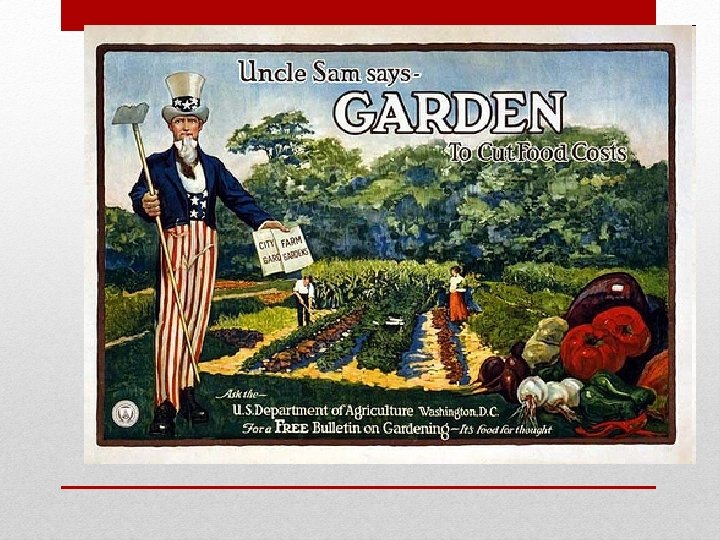
• President Hoover and the Government asked Americans to: • Plant “Victory Gardens” • Have “Meatless Mondays” and “Wheatless Wednesdays” Why would the government do this? Would you do this if your government asked you to during a war? Do Your Part
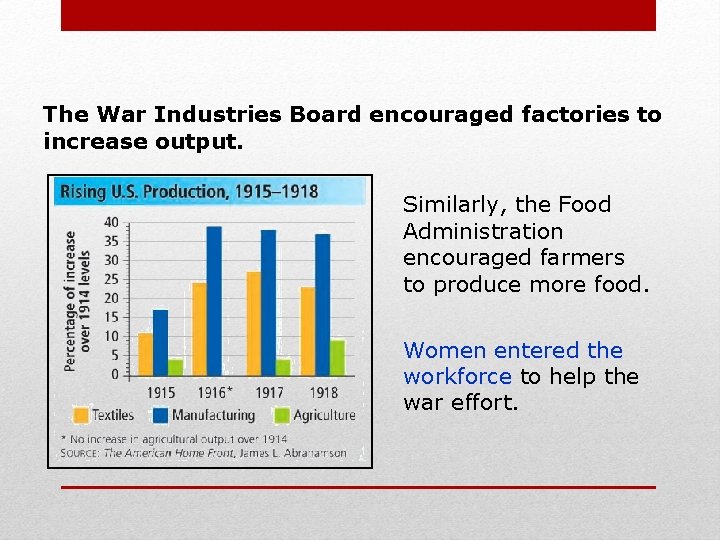
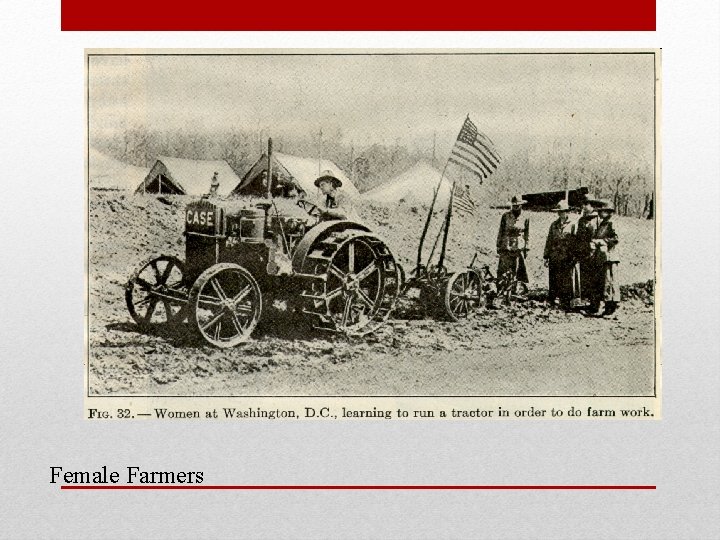
The War Industries Board encouraged factories to increase output. Similarly, the Food Administration encouraged farmers to produce more food. Women entered the workforce to help the war effort.
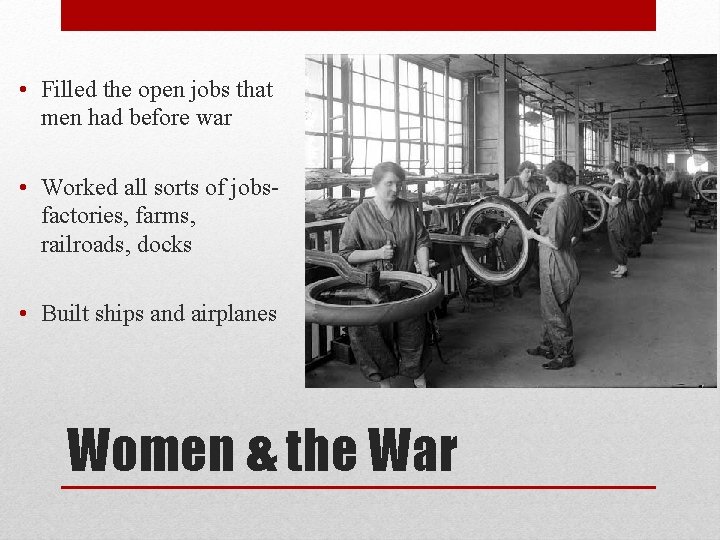
• Filled the open jobs that men had before war • Worked all sorts of jobsfactories, farms, railroads, docks • Built ships and airplanes Women & the War
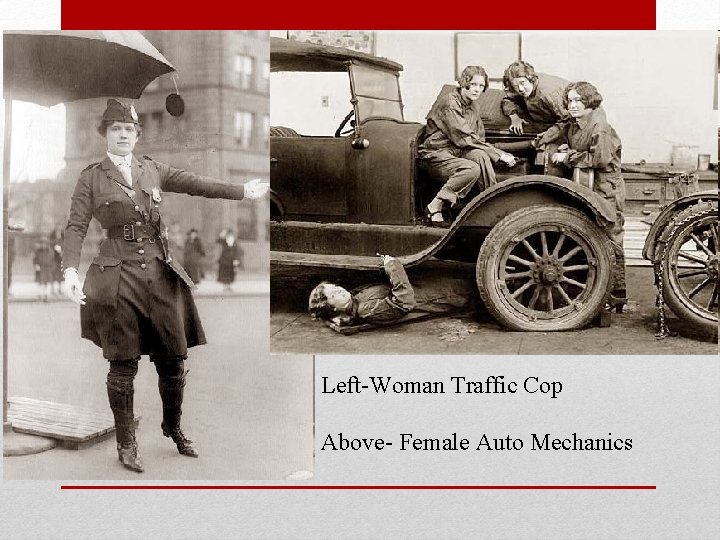
Left-Woman Traffic Cop Above- Female Auto Mechanics
Female Farmers
• About 1 million women joined the workforce during WWI • After the war, many of them were forced to leave by employers to give jobs back to men • Video Women in the Workforce