
World War I Mr Wilson AP World History
- Slides: 34
World War I Mr. Wilson AP World History Wren High School
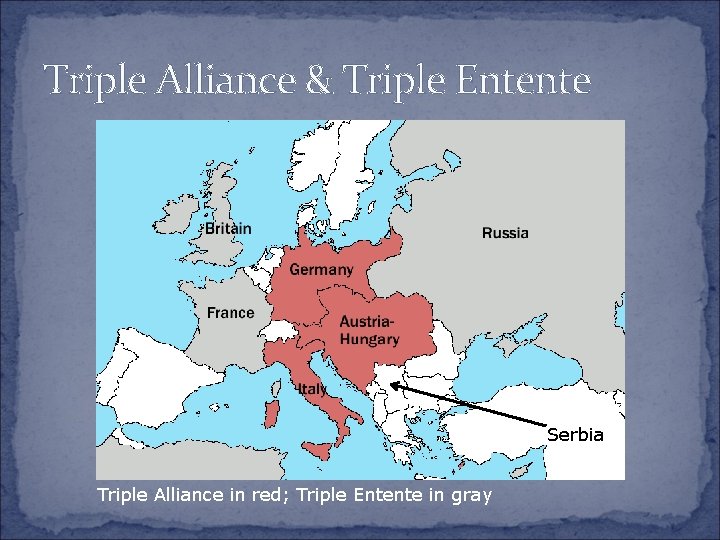
MAIN causes of World War I Militarism Size of European militaries double between 1890 & 1914 Alliances Austria, Germany, & Italy form the Triple Alliance in 1882 England, France, & Russia form the Triple Entente in 1907 Imperialism Race for remaining territory after 1880 created tension Nationalism Decline of Ottoman Empire led to Balkanization Serbs (Slavs) desire an independent Serbia Russia supports idea of Serbia; Austria-Hungary rejects it
Triple Alliance & Triple Entente Serbia Triple Alliance in red; Triple Entente in gray
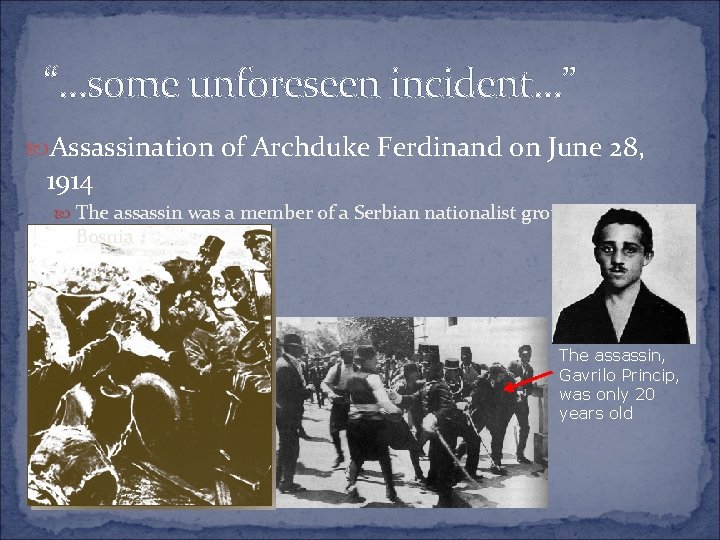
“…some unforeseen incident…” Assassination of Archduke Ferdinand on June 28, 1914 The assassin was a member of a Serbian nationalist group called Young Bosnia The assassin, Gavrilo Princip, was only 20 years old
“…the spark to fall in a flash…and blow Europe sky high” Austria-Hungary issued a list of ten demands to Serbia called the July Ultimatum Serbia accepted 9 of the 10 demands Austria-Hungary declared war on Serbia on July 28, 1914 Russia immediately mobilized its army “The Guns of August” Germany declared war on Russia on August 1, 1914 Germany declared war on France on August 3, 1914 Great Britain declared war on Germany on August 4, 1914
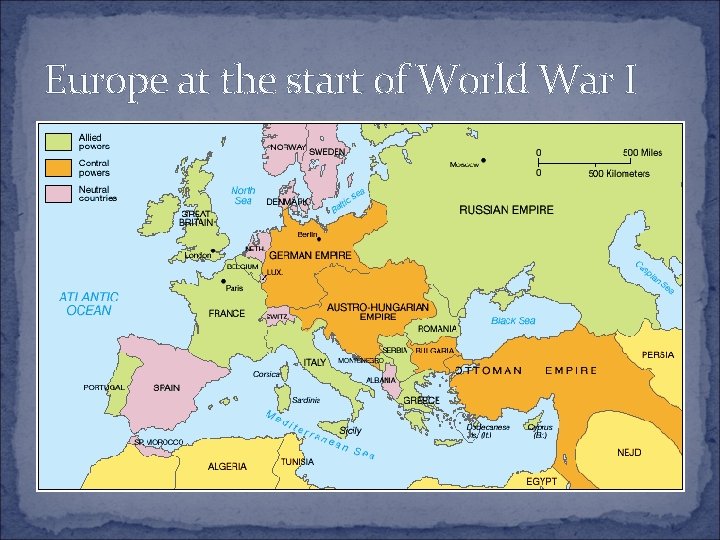
Europe at the start of World War I
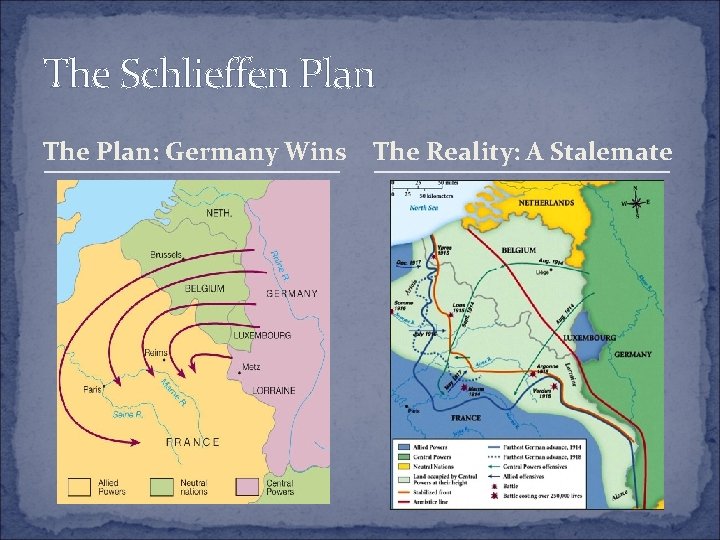
The Schlieffen Plan The Plan: Germany Wins The Reality: A Stalemate
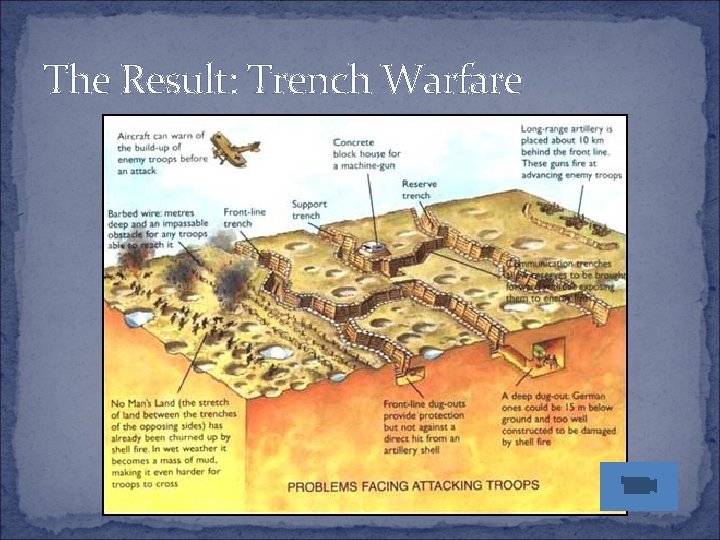
The Result: Trench Warfare
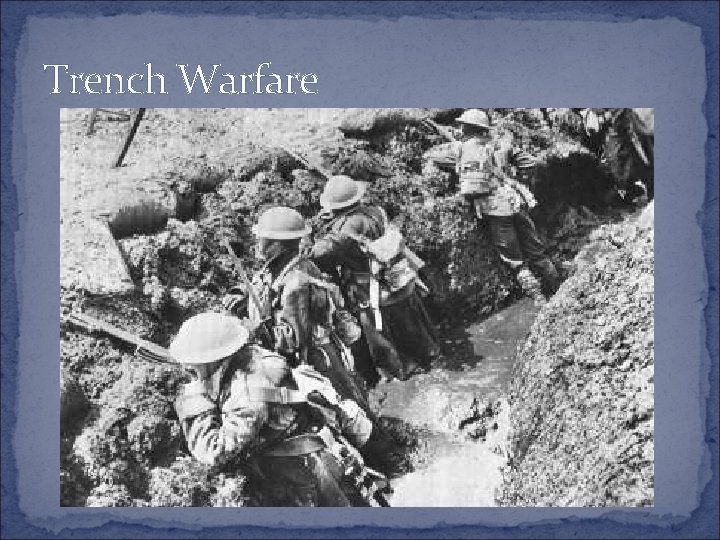
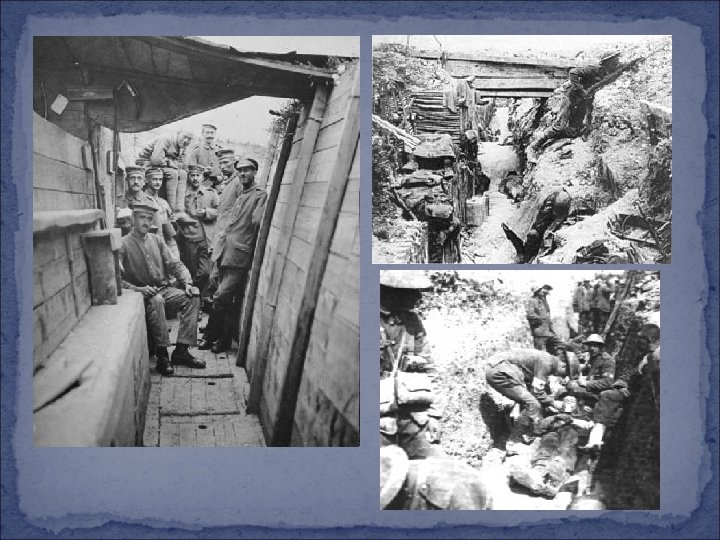
Trench Warfare
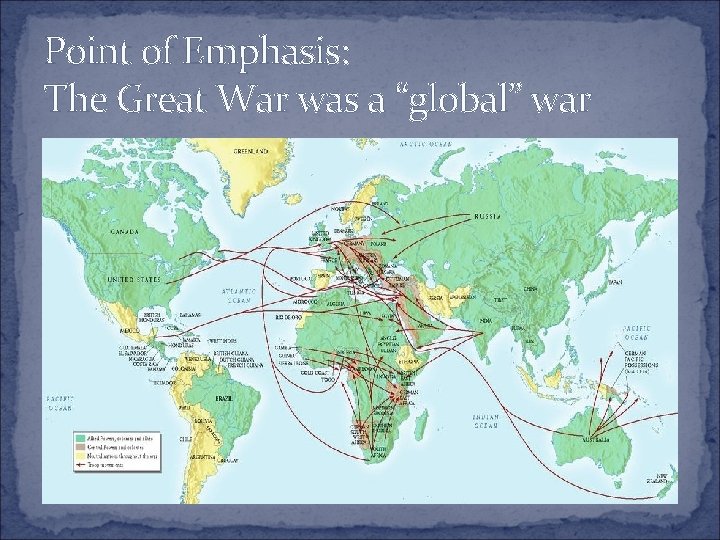
Point of Emphasis: The Great War was a “global” war
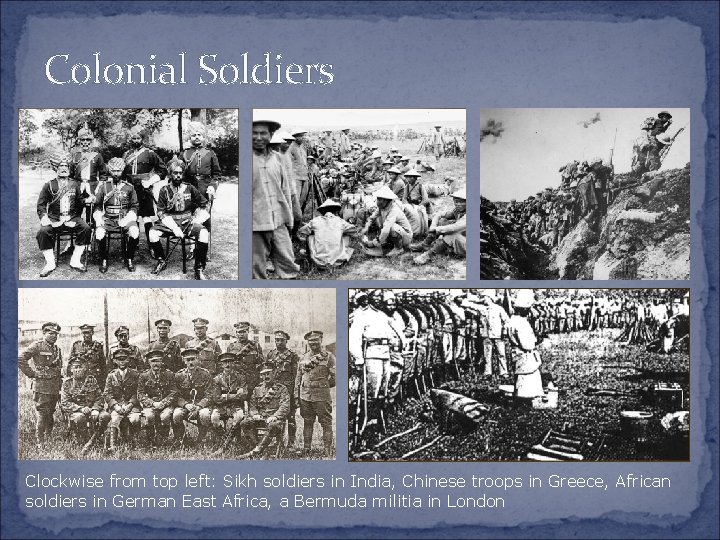
Colonial Soldiers Clockwise from top left: Sikh soldiers in India, Chinese troops in Greece, African soldiers in German East Africa, a Bermuda militia in London
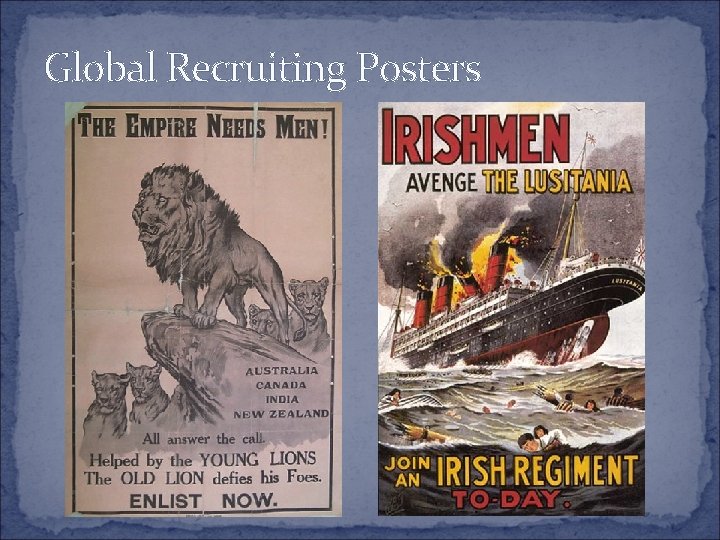
Global Recruiting Posters
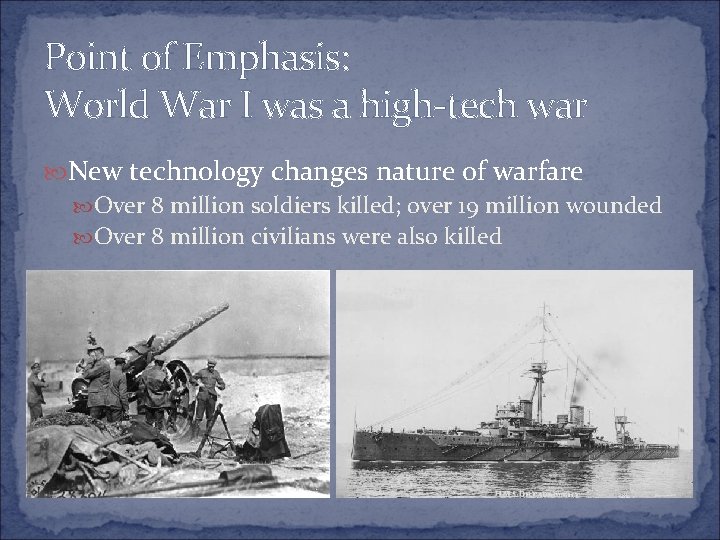
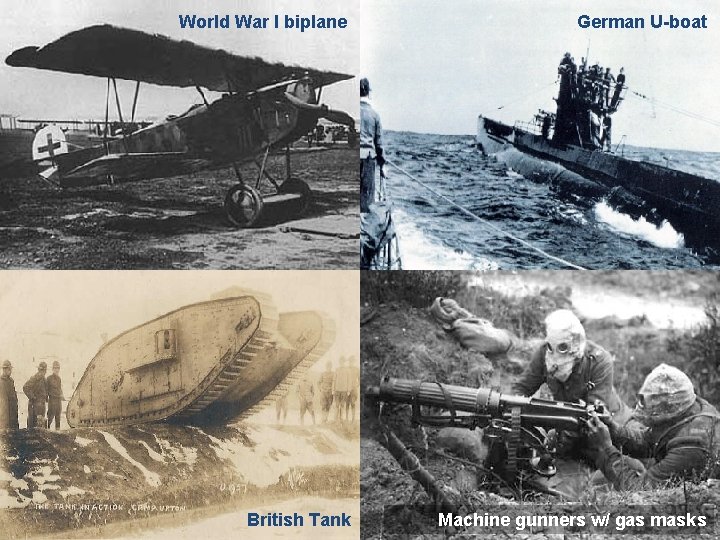
Point of Emphasis: World War I was a high-tech war New technology changes nature of warfare Over 8 million soldiers killed; over 19 million wounded Over 8 million civilians were also killed
World War I biplane German U-boat British Tank Machine gunners w/ gas masks
Point of Emphasis: World War I was a Total War Definition of Total War Conflict in which the participating countries devote all of their resources to the war effort Aspects of Total War Mandatory military conscription (a. k. a. the draft) Control of the economy & nationalization of industry Rationing of food and other essentials The Home Front Women, children, ethnic minorities, etc. are considered a vital part of the war effort Propaganda
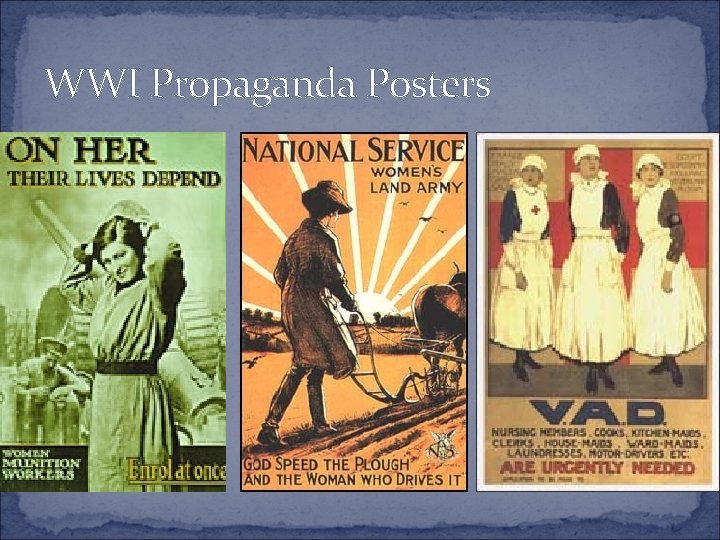
WWI Propaganda Posters
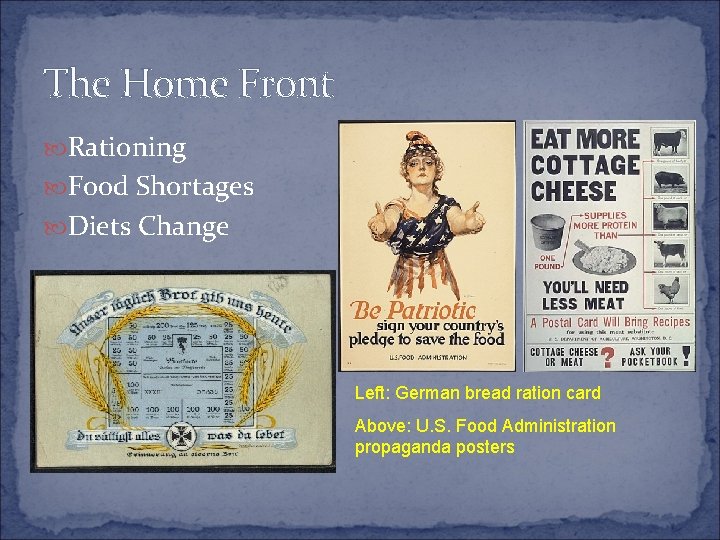
The Home Front Rationing Food Shortages Diets Change Left: German bread ration card Above: U. S. Food Administration propaganda posters
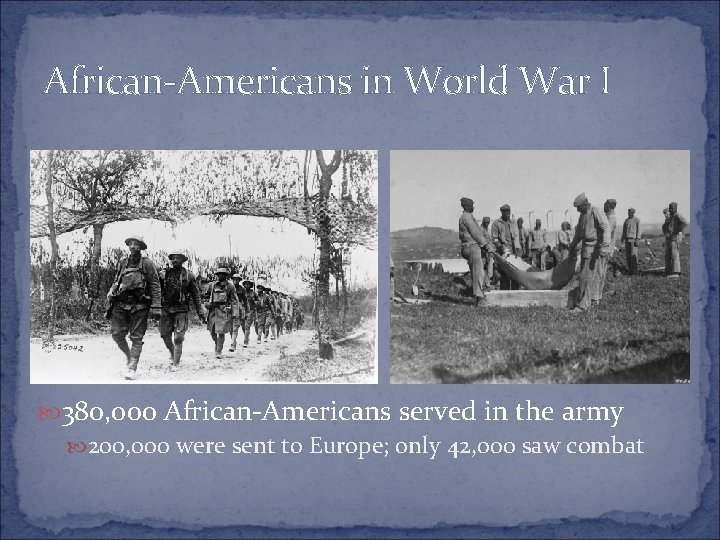
African-Americans in World War I 380, 000 African-Americans served in the army 200, 000 were sent to Europe; only 42, 000 saw combat
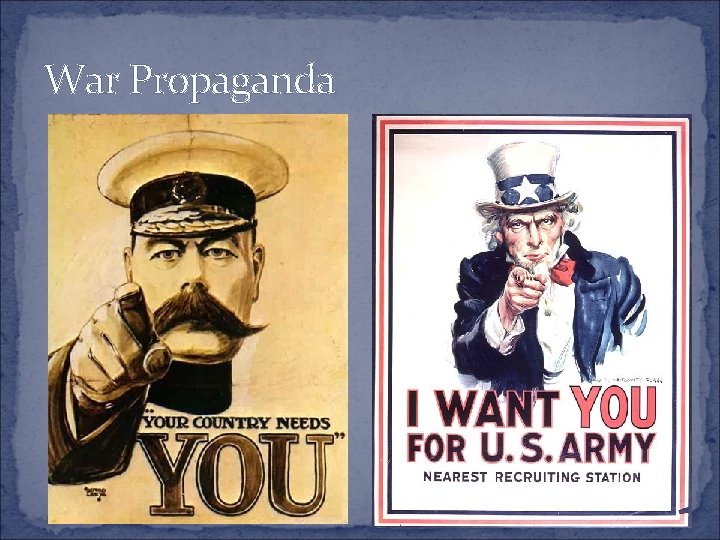
War Propaganda
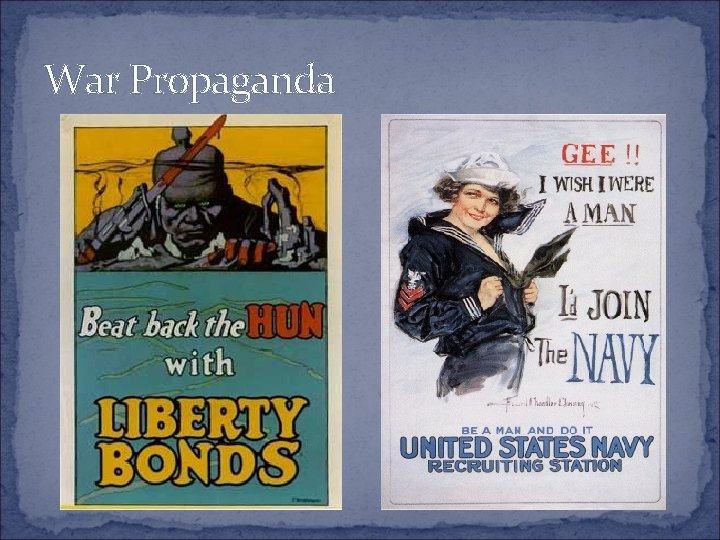
War Propaganda
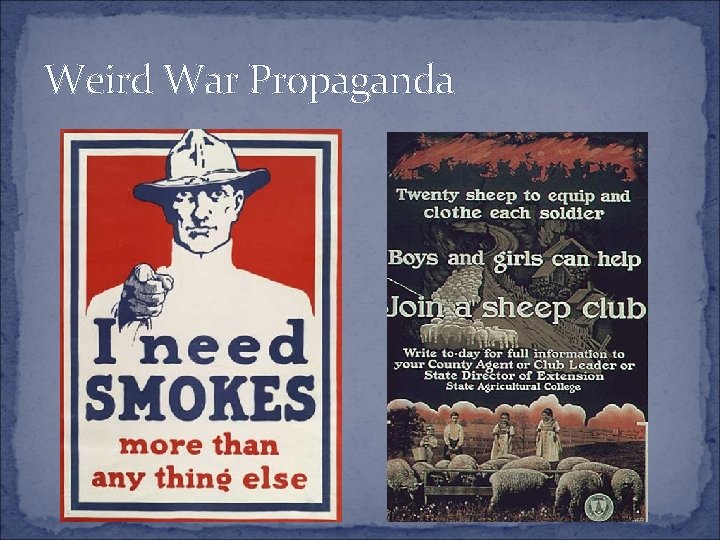
Weird War Propaganda
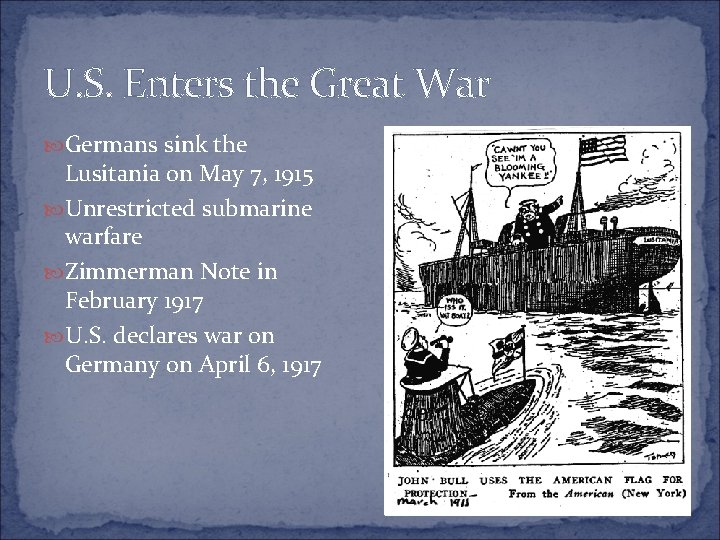
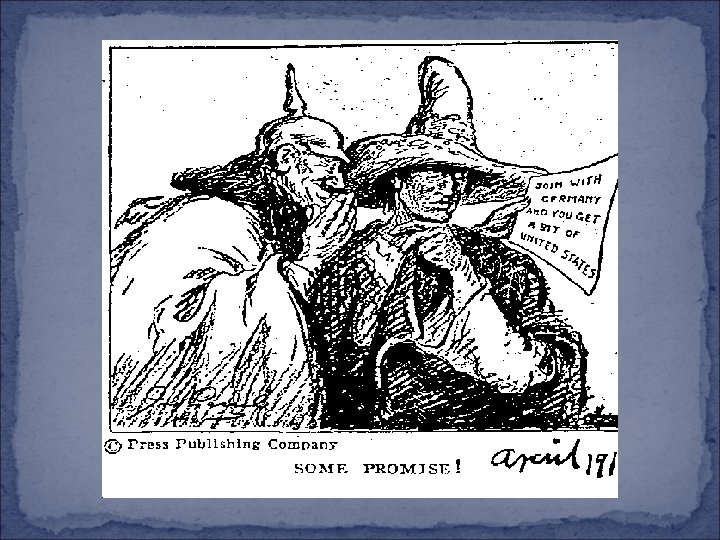
U. S. Enters the Great War Germans sink the Lusitania on May 7, 1915 Unrestricted submarine warfare Zimmerman Note in February 1917 U. S. declares war on Germany on April 6, 1917
1918 -1919 Influenza Epidemic One of the most devastating outbreaks of disease in modern times Mass movement during World War I spread the flu around the world Spread to the trenches of the Great War “Spanish” flu kills 30 million people worldwide Kills 550, 000 in the United States Kills 12. 5 million in India and China
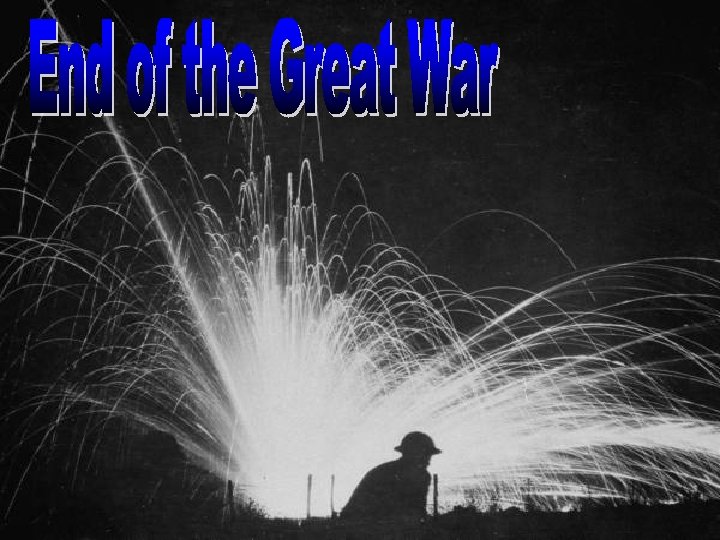
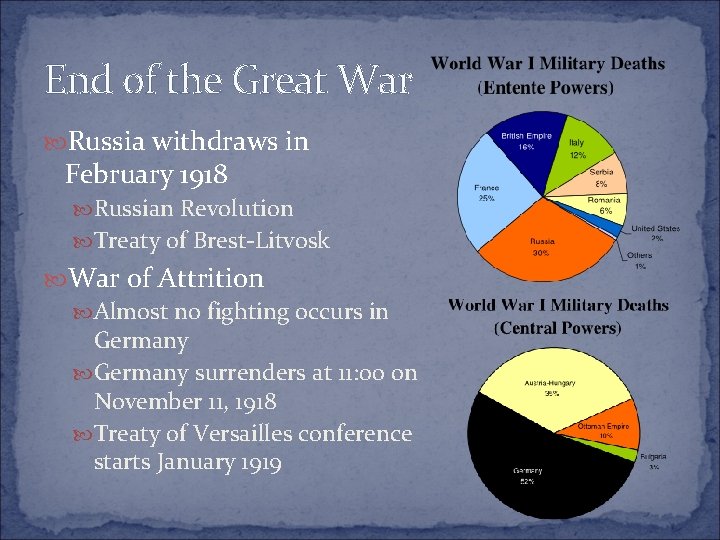
End of the Great War Russia withdraws in February 1918 Russian Revolution Treaty of Brest-Litvosk War of Attrition Almost no fighting occurs in Germany surrenders at 11: 00 on November 11, 1918 Treaty of Versailles conference starts January 1919
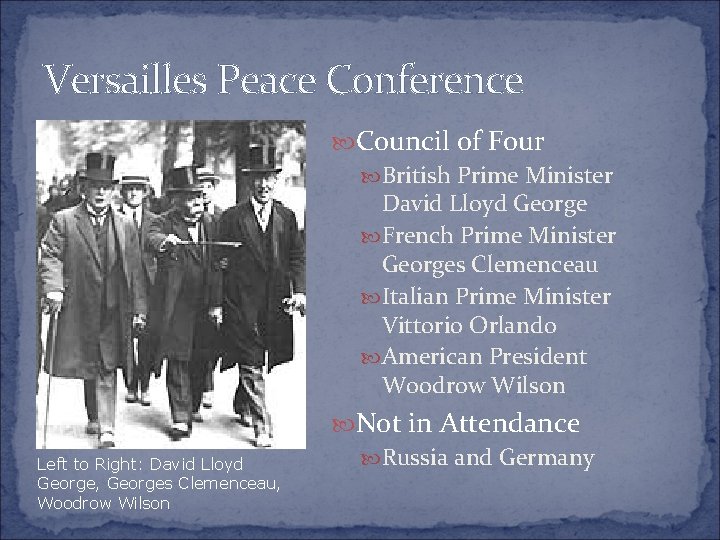
Versailles Peace Conference Council of Four British Prime Minister David Lloyd George French Prime Minister Georges Clemenceau Italian Prime Minister Vittorio Orlando American President Woodrow Wilson Left to Right: David Lloyd George, Georges Clemenceau, Woodrow Wilson Not in Attendance Russia and Germany
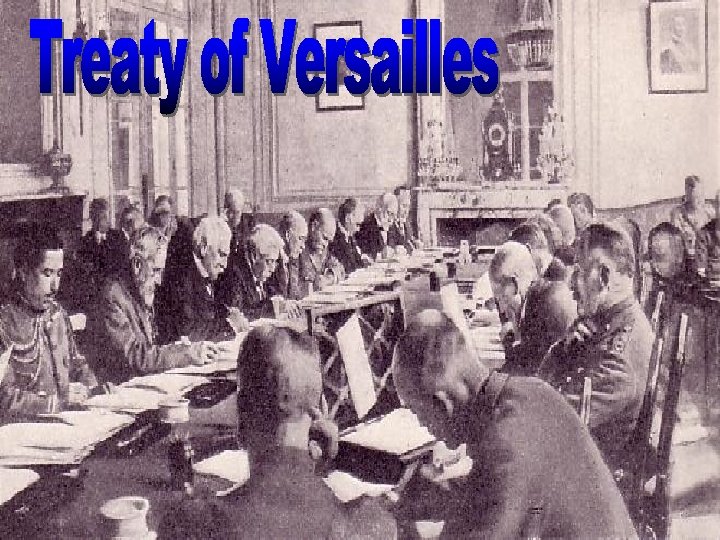
Treaty of Versailles Puts tremendous Wilson’s 14 points amount of blame on Point number 14 is Germany, expects very resented in the German apology for United States and the war and monetary Treaty of Versailles is settlements which they never ratified by the could not afford Congress. Lays the groundwork Why? It created a for WWII, Italy and league of nations and Japan did not get much people were very afraid territory, Russia lost of the alliances territory.
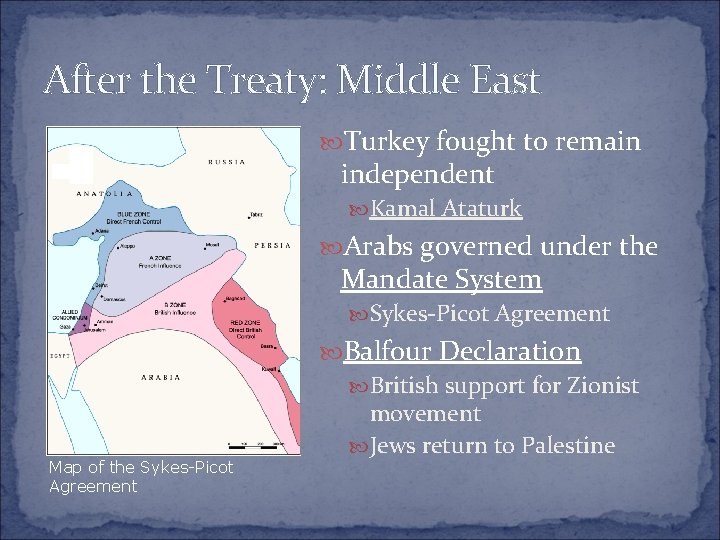
After the Treaty: Middle East Turkey fought to remain independent Kamal Ataturk Arabs governed under the Mandate System Sykes-Picot Agreement Map of the Sykes-Picot Agreement Balfour Declaration British support for Zionist movement Jews return to Palestine
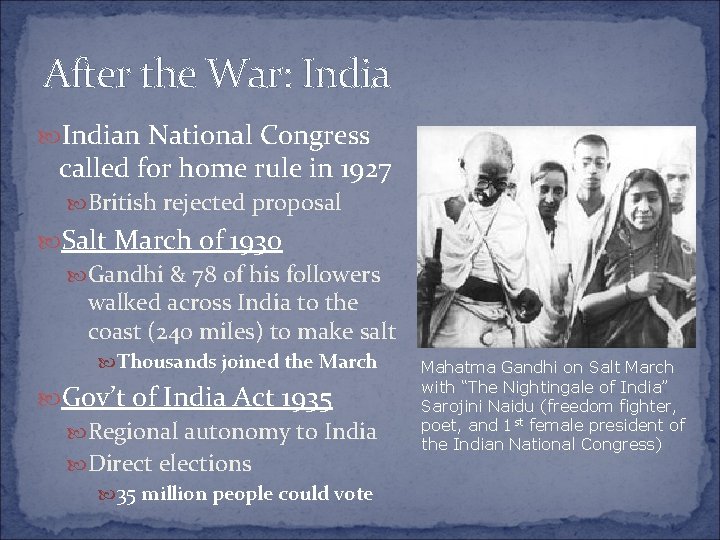
After the War: Indian National Congress called for home rule in 1927 British rejected proposal Salt March of 1930 Gandhi & 78 of his followers walked across India to the coast (240 miles) to make salt Thousands joined the March Gov’t of India Act 1935 Regional autonomy to India Direct elections 35 million people could vote Mahatma Gandhi on Salt March with “The Nightingale of India” Sarojini Naidu (freedom fighter, poet, and 1 st female president of the Indian National Congress)