
World War I Industrial Warfare Learning Objectives Understand
World War I Industrial Warfare
Learning Objectives • Understand how new, industrial-age weapons impacted the conduct of World War I
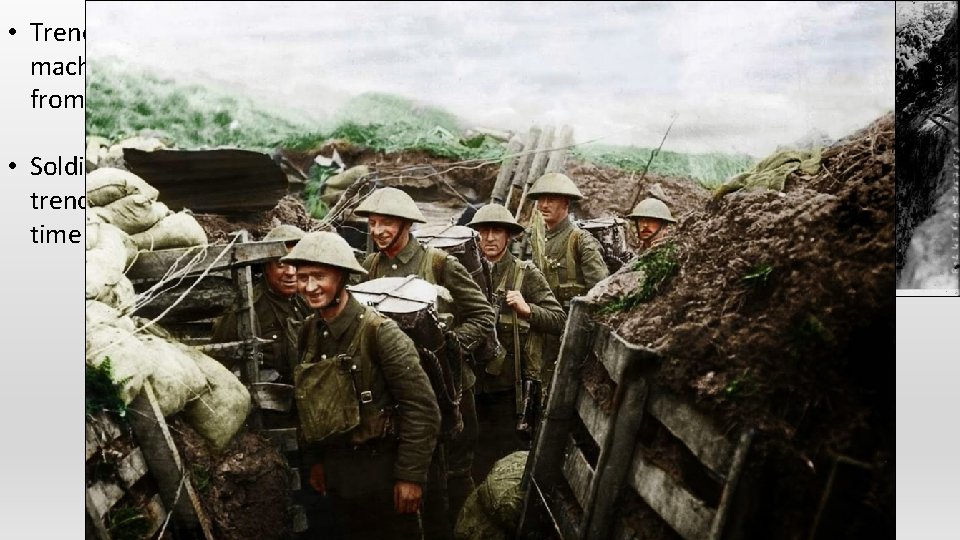
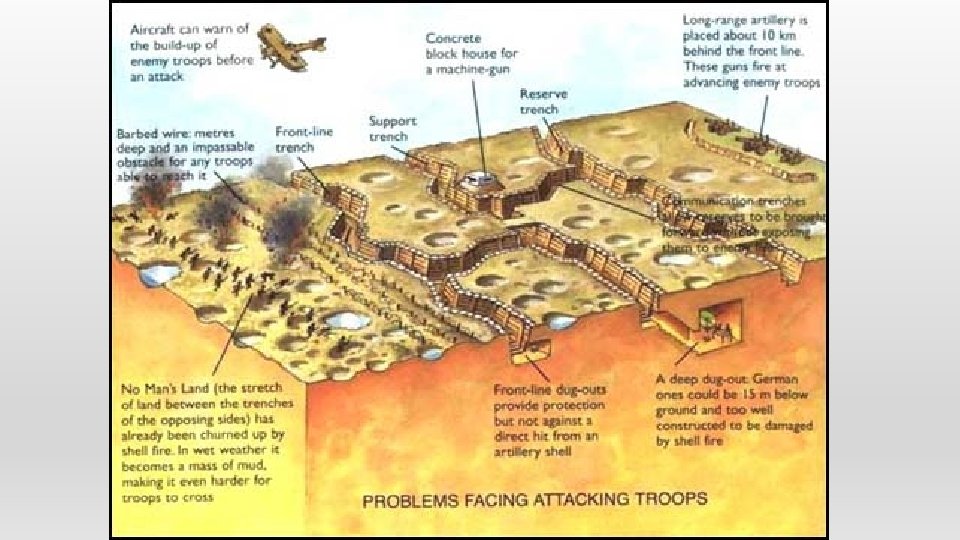
• Trenches offered good protection from machine gun & rifle fire; moderate protection from artillery fire • Soldiers rotated to the front lines; lived in the trench 24 hours a day for up to 10 days at a time
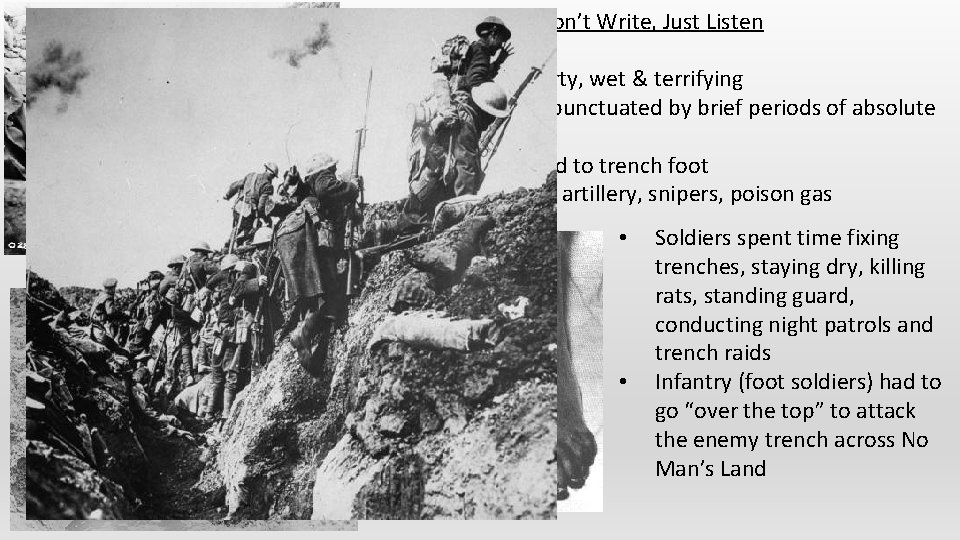
Don’t Write, Just Listen • • Trenches were dirty, wet & terrifying Lots of boredom punctuated by brief periods of absolute terror Wet conditions led to trench foot Death at random: artillery, snipers, poison gas • • Soldiers spent time fixing trenches, staying dry, killing rats, standing guard, conducting night patrols and trench raids Infantry (foot soldiers) had to go “over the top” to attack the enemy trench across No Man’s Land
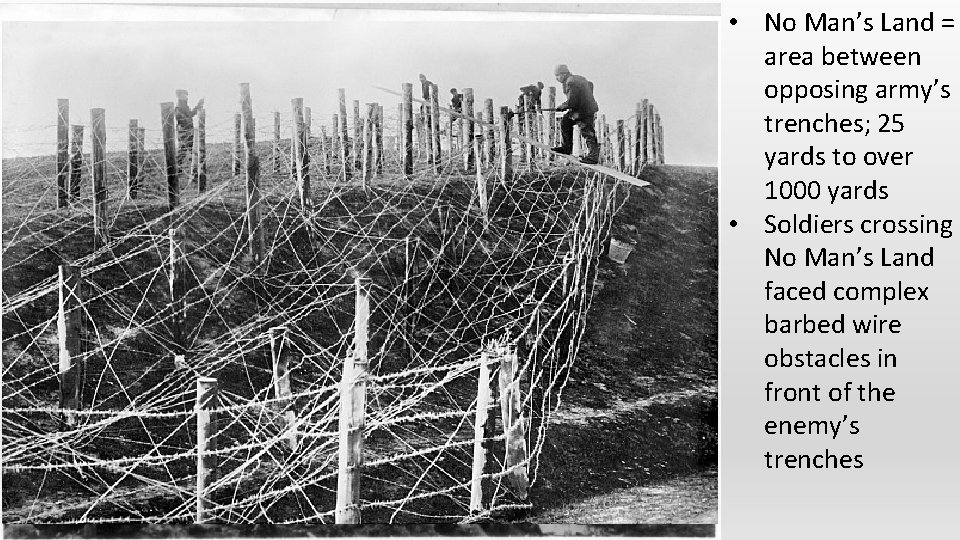
• No Man’s Land = area between opposing army’s trenches; 25 yards to over 1000 yards • Soldiers crossing No Man’s Land faced complex barbed wire obstacles in front of the enemy’s trenches
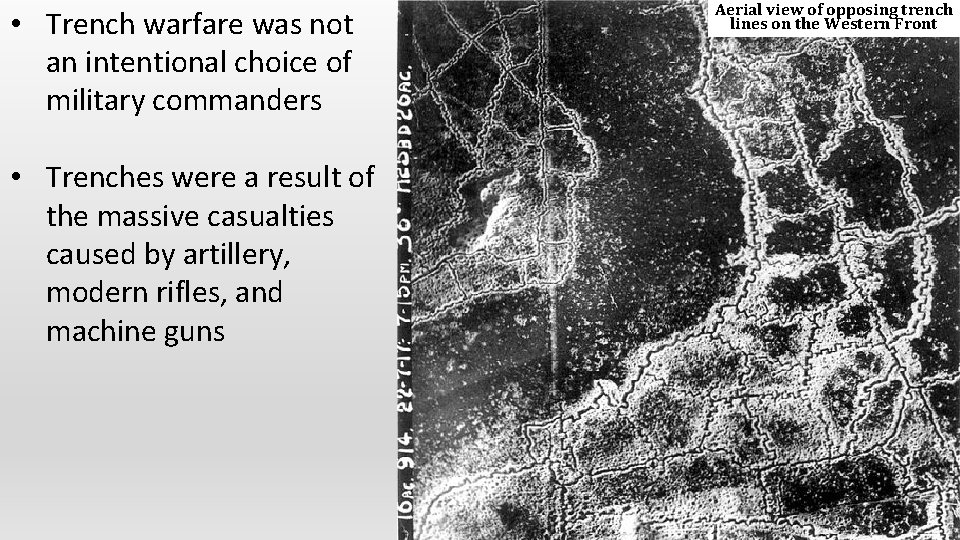
• Trench warfare was not an intentional choice of military commanders • Trenches were a result of the massive casualties caused by artillery, modern rifles, and machine guns Aerial view of opposing trench lines on the Western Front
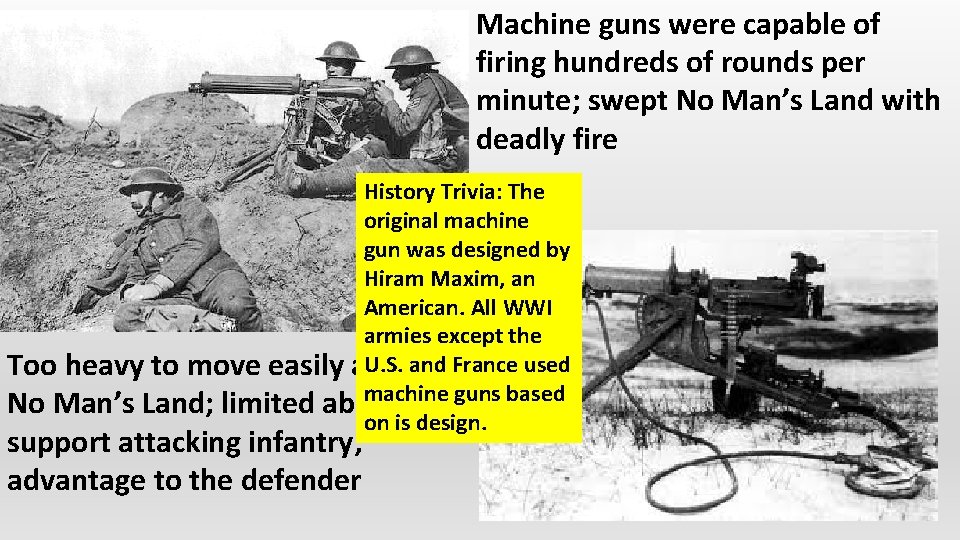
Machine guns were capable of firing hundreds of rounds per minute; swept No Man’s Land with deadly fire History Trivia: The original machine gun was designed by Hiram Maxim, an American. All WWI armies except the U. S. and France used Too heavy to move easily across machine guns based No Man’s Land; limited ability to on is design. support attacking infantry; advantage to the defender
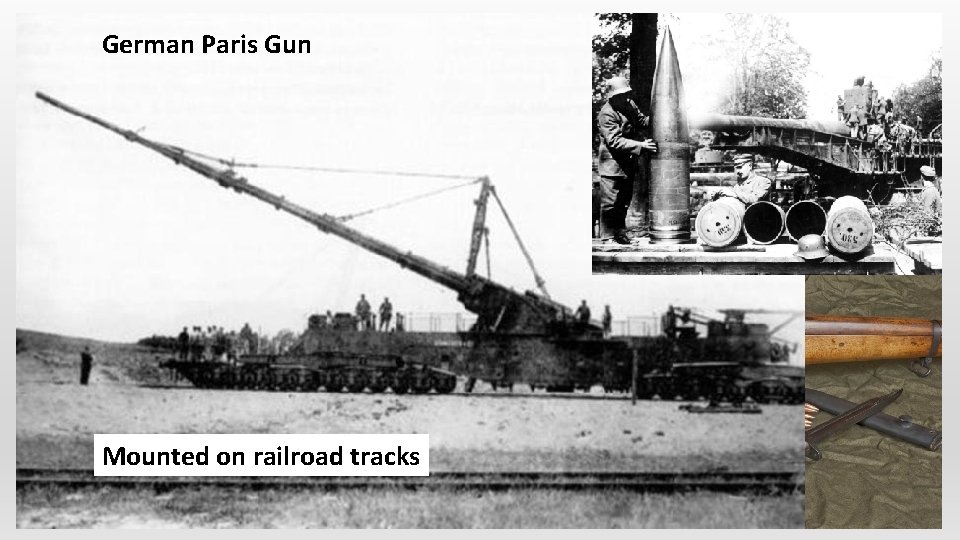
German Paris Gun Rifles developed between 1890 and 1910 fired three times onpredecessors railroad tracks – faster Mounted than their from 5 to 15 rounds per minute Advances in steel production and chemistry made artillery more accurate, powerful, fasterfiring
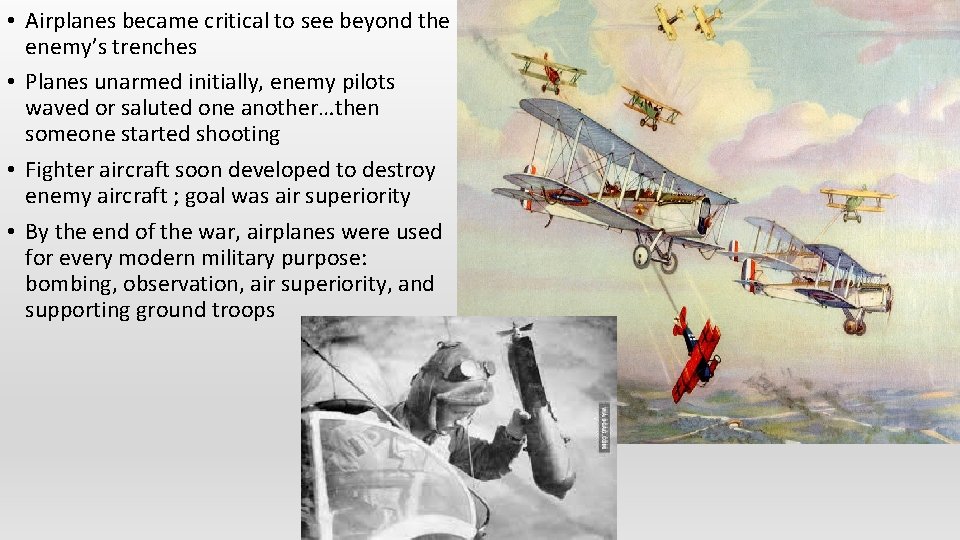
• Airplanes became critical to see beyond the enemy’s trenches • Planes unarmed initially, enemy pilots waved or saluted one another…then someone started shooting • Fighter aircraft soon developed to destroy enemy aircraft ; goal was air superiority • By the end of the war, airplanes were used for every modern military purpose: bombing, observation, air superiority, and supporting ground troops
WW I on the Twitter • Directions: • Choose one of the following characters • develop 2 tweets (160 characters) with hashtags for your character 1: British infantry soldier about to go “over the top” and attack the enemy trenches 2: German machine gunner defending against an infantry attack 3: British medic treating wounded after an infantry attack 4: British pilot under attack by a German fighter plane 5: German soldier standing guard in a trench at night
Assignment • Reminder – Section 10. 1 reading guide due next class • Quiz Friday
- Slides: 12